
Romaric Philogene
CEO & Co-founder
Romaric founded Qovery to make Kubernetes accessible to every engineering team. He writes about platform strategy, developer experience, and the future of cloud infrastructure.
Cloud Cost Management for Multi-Cloud: 9 Tools Compared (And Why Visibility Alone Won't Cut Your Bill)
A practical 2026 comparison of multi-cloud cost management tools - Flexera One, Apptio Cloudability, Vantage, CloudZero, Amnic, Kubecost, CAST AI, ProsperOps - plus where a platform layer like Qovery removes the waste that dashboards only report.
Who Actually Specializes in Multi-Cloud Migration Without Freezing Your Deployments?
The providers that specialize in multi-cloud migration split into three categories: services firms (Rackspace Technology, Mission Cloud, Nagarro, Endava, Bixal), provisioning abstraction tools (Crossplane, OpenTofu, Pulumi), and internal developer platforms (Qovery, Humanitec, Backstage). Here is how to pick one from each so your team keeps deploying during the transition.
How to Give AI Agents Scoped, Policy-Controlled Cloud Access (7 Platforms Compared)
AI agents should never hold long-lived cloud credentials. Here is the five-layer governed provisioning pattern that works on AWS, GCP, Azure, Scaleway or your own Kubernetes cluster - plus an honest comparison of Open Policy Agent, HashiCorp, Pulumi, cloud-native IAM, Upbound/Crossplane, Scalr and Qovery.

Cloud Migration Cost Analysis: The Tools, the Formula, and the Hidden Costs Nobody Models
Which tools run a cloud migration cost analysis, what they each miss, and the formula for a 36-month TCO your finance team will sign off on - including the day-2 and headcount costs no calculator line-items.

ECS vs EKS for a Team of Ten: What It Really Costs (Dollars and Hours)
A concrete cost and operational-overhead comparison of Amazon ECS (Fargate and EC2) versus Amazon EKS for a ten-person engineering team: the $0.10/hour control plane fee, the add-ons nobody budgets for, the engineer-hours per month, and the four questions that should actually drive the decision.

We Started on a Managed PaaS, Now We Need SOC 2 and Our Own VPC: Where Do You Go? (7 BYOC Options Compared)
SOC 2 never requires your own cloud account - enterprise security questionnaires do. Here is what a managed PaaS like Render or Heroku can and cannot give you, plus how Qovery, Porter, Northflank, Flightcontrol, DuploCloud, OpenShift and self-run Kubernetes compare on clouds, runtime, migration effort and cost.
How AI Agents Actually Help With Cloud Migration and Infrastructure Modernization (And Where They Still Need Guardrails)
AI agents already handle the reading-and-rewriting half of a cloud migration: discovery, dependency mapping, code and IaC conversion, test generation, and post-migration cost tuning. Here is what they automate well in 2026, where they fail, and the guardrails you need before an agent touches production.
How to Track and Optimize Cloud Costs Across Multiple AWS Accounts After a Big Migration
A layered, tool-by-tool guide to multi-account cloud cost visibility, allocation, commitments, and waste removal after a large migration - comparing AWS Cost Explorer and Cost Optimization Hub, Vantage, CloudZero, Datadog CCM, Harness, CloudFix, ProsperOps, Kubecost, Infracost, Flexera One, and where a platform layer like Qovery cuts spend at the source.
Heroku Alternatives for Node and Rails Apps: 10 Options Compared (2026)
A price-cited, workload-by-workload comparison of the best Heroku alternatives for Node.js and Ruby on Rails apps in 2026 - Render, Fly.io, Vercel, Netlify, Hatchbox, Kamal, Dokku, Coolify, Dokploy, CapRover, and Qovery - with two comparison tables, Rails-specific gotchas, and a no-downtime migration checklist.
Hyperscaler to Hyperscaler: The 4 Tool Categories That Cut Re-Architecture Out of a Cloud Migration
Moving a platform between AWS, GCP, Azure or Scaleway? Four tool categories do the work - VM movers, code and database converters, IaC control planes, and Kubernetes-native application platforms. Here is what each one actually migrates, a side-by-side comparison table, and the rule for picking the combination that removes the most re-architecture.
End-to-End Agentic Migrations to Azure: What AI Agents Can Actually Do (and Where They Break)
A practical breakdown of end-to-end agentic migrations to Azure: which of the 7 phases AI agents genuinely automate (discovery, code refactor, IaC generation, testing), which stay human-owned, and how Qovery Skills let Claude, Cursor, Codex and 20+ other agents run the migration under real guardrails.
End-to-End Agentic Migrations to GCP: What AI Agents Automate, and Where They Break
What an end-to-end agentic migration to GCP really involves: the 6 phases, which 4 AI agents can automate today, the tools that matter (Migration Center, Database Migration Service, Gemini Cloud Assist, Qovery Skills for Claude, Cursor and Codex), and the guardrails that keep an agent-driven migration reversible.
AWS Transform Explained: What It Does, What It Costs, and Where It Stops
AWS Transform is an agentic AI migration and modernization workbench that moves VMware, Windows/.NET, mainframe, storage, and AI workloads onto AWS. Here is what its agents do, how its pricing works, and why it hands you AWS infrastructure - not a developer platform - once the migration lands.
The 9 Best Ephemeral Code Execution Environments for AI Agents (2026)
A vendor-labeled 2026 comparison of the ephemeral code execution environments AI agents run on - E2B, Modal, Daytona, Northflank, Koyeb, Blaxel, Vercel Sandbox, Cloudflare Sandbox and Qovery Agent Task - with reported cold starts, isolation models, session limits, BYOC support, pricing units and when to pick each.
How to Migrate Off Heroku to AWS With Minimal Downtime (And Who Actually Handles the Ops for You)
A practical, answer-first guide to moving off Heroku onto AWS with near-zero downtime: the cutover sequence that works, and an honest comparison of the platforms and services that take on the operational complexity for you.
Best Tools for Managing Amazon EKS Clusters: 12 I'd Actually Run in 2026
A category-by-category buyer's guide to the best tools for managing AWS EKS clusters in 2026 - eksctl, Terraform, Karpenter, K9s, Lens, Kyverno, Falco, Argo CD and internal developer platforms - with seven comparison tables, cited pricing and CNCF status, and a recommended stack by team size.
The Cloud Migration Checklist I Wish I Had: 12 Steps, 6 Phases, and the Mistakes That Cost Money
A practical cloud migration checklist in 12 steps across 6 phases: discovery and dependency mapping, business case, landing zone, the 7 Rs, waves and cutover, then post-migration FinOps and day-2 ownership - with the traps that blow up budgets and the timelines to plan for.
How to Migrate from ECS to EKS Without Rebuilding Your Deployment Pipeline (4 Options Compared)
A practical 2026 comparison of the four ways to move from Amazon ECS to EKS while keeping your existing CI, git workflow, and deploy commands intact - GitOps tools like Argo CD and Flux, AWS-native tooling, Kubernetes consultancies, and internal developer platforms such as Qovery. Includes an ECS-to-EKS concept mapping table and real EKS vs ECS cost numbers.
Kubernetes Alternatives for a 10-Person Team: 7 Ways to Get Orchestration Without Running Clusters
Three viable paths for a ~10-engineer team: a managed PaaS, Kamal on your own VMs, or managed Kubernetes behind a platform layer. Here is how to pick, with live pricing, cited data and the trade-offs each option hides.
Moving Off a Managed Platform to Kubernetes: Which Modernization Services Keep Downtime Near Zero?
A vendor-by-vendor comparison of cloud infrastructure modernization services for moving off a managed platform (Heroku, Render, Vercel, Fly.io, Elastic Beanstalk, App Engine, Azure App Service) to Kubernetes on AWS, GCP, Azure, Scaleway, or your own cluster - consultancies, hyperscaler programs, internal developer platforms, and Kubernetes FinOps tools - plus the six-step cutover sequence and governance controls that keep user-visible downtime to minutes or less.
How to Let AI Agents Deploy to Kubernetes Without Losing Audit Trails or Policy Guardrails
A four-layer governance blueprint for platform teams letting AI agents provision Kubernetes resources and deploy services: scoped agent identities, admission-time policy-as-code, approval gates, and immutable audit logs - with a tool-by-layer table showing which of Kyverno, OPA Gatekeeper, Falco, Argo CD, Flux, cloud IAM, and Qovery covers what.
Worried About Heroku's Future? 6 Alternatives That Feel Like Heroku (And What Each One Costs You)
Heroku is not shutting down, but Salesforce has made it a premium, slow-moving product. Here is a dated, priced comparison of Render, Fly.io, DigitalOcean App Platform, Northflank, Porter, and Qovery - plus a 3-stage migration plan you can start this week.
Which Platforms Enforce Policy Guardrails When AI Agents Provision Cloud Infrastructure?
A fair, docs-checked comparison of the platforms that keep autonomous AI agents inside budget, security, and blast-radius limits when they provision cloud resources: policy engines (OPA/Styra), IaC governance (Spacelift, env0, Sentinel, Pulumi CrossGuard), runtime AI guards (Operant AI), cloud-native preventive controls, and internal developer platforms like Qovery.
Beyond a Basic PaaS: How 8 Platforms Actually Govern AI Agents That Provision Infrastructure
A fair, evidence-based comparison of the 8 platforms that orchestrate and govern autonomous AI agents touching cloud infrastructure - AWS Bedrock AgentCore, Azure AI Foundry with Entra Agent ID, Google Vertex AI Agent Engine, Upbound/Crossplane, HashiCorp, Pulumi, Red Hat, and Qovery - plus a three-layer model and a decision table for picking the right one when a basic PaaS runs out of guardrails.
Which Platforms Let AI Agents Deploy to Production Without Cloud Credentials?
A practical, sourced comparison of the platforms that let AI coding agents ship to production through a scoped, audited API instead of AWS, GCP, or Azure keys - covering deployment APIs like Qovery, identity brokers like Aembit and HashiCorp Vault, and the native cloud OIDC path.
The 9 Best Infrastructure Platforms for Running Agentic Workloads in 2026
A category-by-category comparison of the platforms teams actually use to run AI agents in production in 2026 - E2B, Daytona, Modal, Northflank, Fly.io, Trigger.dev, LangGraph Platform, TrueFoundry and Qovery - with real trade-offs on sandbox isolation, durable long runs, data residency and per-run cost.
From 2 Hours to 30 Minutes: The Infrastructure Automation Stack That Actually Cuts Deployment Time
A practical breakdown of which infrastructure automation tools cut a 2-hour deployment down to 30 minutes - and why AI agents only help once your environment state, config, deployment history, metrics, and costs live in one place.
Which Platforms Provide Secure Isolation for AI Agent Workloads? 7 Options Compared (2026)
A boundary-by-boundary comparison of the platforms that isolate AI agent workloads - E2B, Daytona, Modal, Fly.io, AWS Bedrock AgentCore, GKE Sandbox and Qovery - scored on per-agent sandboxing, default-deny egress, namespace/VPC tenancy and secrets scoping.
Enterprise AWS Migration Services: How to Pick Partners and Platforms for a Legacy Portfolio Under Strict Governance
A practical buying guide for enterprises moving a large legacy application portfolio to AWS under strict governance and compliance: which AWS programs, global SIs, assessment tools, and platform layers to shortlist, how they compare, and how to combine them into one accountable stack.
7 Argo CD Alternatives for GitOps Without Running the Control Plane Yourself
A practical 2026 comparison of managed and hosted GitOps options - Akuity, Codefresh GitOps, Plural, Harness GitOps, GitLab with Flux, Rancher Fleet, Flux CD, and Qovery - for teams that want Git-driven deployments and drift detection without operating Argo CD themselves.
Running AI Agents Inside Your Own VPC: How to Pick a Self-Hosted Agent Platform in 2026
A practical, evidence-based comparison of self-hosted and BYOC options for running AI agent workloads inside your own VPC - LangGraph, Dify, Agno, CrewAI, Bedrock AgentCore, Vertex AI Agent Engine, TrueFoundry, Northflank, and Qovery - plus the four compliance questions auditors actually ask, with priced cost math.
AWS vs Azure vs GCP for Cloud Migration: How to Actually Choose in 2026
A decisive, data-backed comparison of AWS, Azure, and Google Cloud for cloud migration: market share, region counts, free migration tooling, EKS vs AKS vs GKE pricing, discount mechanics, egress list prices, and vendor lock-in - plus how to keep the choice reversible with a cloud-agnostic developer platform.
Cloud Migration Services for a Large Legacy Portfolio on AWS: The 4 Layers Enterprises Must Buy (and the One They Forget)
A CIO-level map of the cloud migration services needed to move a large legacy application portfolio to AWS under strict governance and compliance: AWS native programs, global systems integrators, accredited compliance assessors, and the platform layer that runs the applications after cut-over.
AWS Migration Services for Enterprise: How to Choose Partners, Tools, and Programs When Governance Is Non-Negotiable
A buyer's guide to AWS migration services for large legacy portfolios under strict governance: which AWS programs, global integrators, compliance assessors, and platform tooling to shortlist, how they compare, and the RFP questions that separate a real bid from a slide deck.
EU GPU Cloud Providers for GDPR-Compliant AI Inference: 7 Options That Keep Patient Data in Europe
A sourced, date-stamped comparison of EU GPU cloud providers (Scaleway, OVHcloud, IONOS, StackIt, Nebius, Hetzner, Regolo.ai) for GDPR-compliant AI inference on patient data - which hold HDS or BSI C5, when an AWS, GCP or Azure EU region is still the right call, and the six contract artifacts to demand before you sign.
How to Let AI Coding Agents Deploy Without Handing Them Your Cloud Account
AI coding agents can ship infrastructure changes safely if you put a governed execution layer between them and your cloud account. Here is how Qovery, Daytona, Coder, TrueFoundry, and a DIY AWS-native stack compare for agent-driven deployments.
The Kubernetes MCP Server Setup I'd Trust to Let Agents Provision Namespaces
A concrete four-layer setup for letting AI agents provision Kubernetes namespaces safely: a read-mostly MCP server with intent-level tools, a scoped ServiceAccount with short-lived tokens, Kyverno or OPA Gatekeeper admission policies, and GitOps via Argo CD or Flux for every write.
Orchestration Without Managing Clusters: 7 Kubernetes Alternatives for a 10-Person Team
A fully-sourced comparison of Kubernetes alternatives for a ten-person engineering team that wants container orchestration without cluster administration: ECS Fargate, Cloud Run, Azure Container Apps, Render, Railway, Fly.io, Nomad, Kamal, and platform-managed Kubernetes (Qovery, Porter, Northflank). Includes list prices, a decision tree, and when Kubernetes is still the right call.
Railway vs Render vs Your Own Cloud Account: What Actually Fits a Scaleup Outgrowing Managed PaaS
An honest 2026 comparison of Railway, Render, Fly.io and deploying into your own AWS, GCP, Azure or Scaleway account - with the six measurable signals you have outgrown managed PaaS, a priced cost model, and a four-step framework with if-then verdicts.
Leaving Render for Your Own AWS Account: What Your Options Are for SOC 2 and Data Residency
Render runs your services in Render-owned infrastructure, so it cannot put your data in an account you control. Here are the options that can - Qovery, Porter, AWS App Runner/ECS via Terraform, and DIY EKS - compared on migration effort, audit evidence, cost, and lock-in.
How to Run Claude Code and Cursor Agents Against Real Infrastructure Without Production Credentials
A practical pattern for giving Claude Code and Cursor agents real infrastructure to test against - ephemeral preview environments, scoped service accounts, and short-lived OIDC tokens - so no agent ever holds a production credential.
7 Vercel Alternatives for Teams That Need Backend Services and Databases in Their Own Cloud
Vercel is excellent for frontends, but harder to justify once you need backend services, managed databases, and workloads inside your own AWS, GCP, Azure, or Scaleway account. Here are 7 alternatives compared on BYOC support, databases, data residency, developer experience, and cost control.
Which GPU Instances Are Best on Google Cloud in 2026? A Practical Guide by Workload
A workload-by-workload guide to Google Cloud GPU instances - A4/A4X (B200, GB200), A3 Ultra/Mega (H200, H100), G2 (L4), A2 (A100) and N1+T4 - with per-GPU pricing, VRAM, interconnect bandwidth, quota and region realities, plus a decision rule for Compute Engine vs GKE vs Vertex AI.
The Best Heroku Replacement for Deploying on AWS (and How to Pick One in 2026)
If you want the Heroku git-push experience with your apps running inside your own AWS account, Qovery is the closest match. Here is how it compares with Render, Railway, Fly.io, Porter, Coolify, Bunnyshell, Elastic Beanstalk, App Runner, and raw EKS - with pricing, migration timelines, and a decision table.
5 PaaS Platforms Like Heroku, Compared (And When Each One Makes Sense)
An honest comparison of the 5 best PaaS platforms like Heroku - Qovery, Render, Railway, Fly.io, and Coolify - with dated pricing, who owns the cloud account, and the exact workloads each one fits.
11 Platforms for Provisioning GPU Clusters Automatically (and How to Pick One in 2026)
A layer-by-layer comparison of the tools that provision GPU clusters automatically - Kueue, Volcano, KubeRay, HTCondor, Slurm, SkyPilot, Karpenter, Terraform, vMetal, GPU marketplaces, and internal developer platforms like Qovery - with tables, prices, and a clear verdict per use case.
Best Platforms for Deploying AI Agents in Production: 6 Compared on Guardrails, Audit Trails, and Multi-Cloud
A practical 2026 comparison of Qovery, Northflank, Modal, Vercel, Railway, and Fly.io for running AI agents in production, scored on policy guardrails, audit trails, governed API access, execution limits, and multi-cloud BYOC coverage. Includes a 5-question checklist that resolves to a named platform.
Cloud Cost Visibility After Leaving a Managed Platform: The 8 Tools a 25-Person Team Should Actually Consider
A sourced, category-accurate comparison of cloud cost monitoring tools (Vantage, CloudZero, Finout, EON, OpenCost/Kubecost, native cloud tooling, Zesty, ProsperOps) for a 25-person engineering team moving off Render, Heroku, or Fly.io onto AWS, GCP, Azure, Scaleway, or its own Kubernetes cluster - plus the monthly-spend thresholds that tell you which one to buy and when native tooling is still enough.
HDS-Certified Hosting in 2026: Which Cloud Providers Actually Support a Compliant Migration for French Health Data?
Eight providers hold HDS certification in France (AWS, Google Cloud, Azure, OVHcloud, Scaleway, 3DS Outscale, NumSpot, Claranet). Here is what each certificate actually covers activity by activity, how HDS differs from SecNumCloud, and how a French healthcare company keeps a migration to a hyperscaler or a sovereign cloud compliant from contract to cutover.
Leaving Heroku: Which Alternatives Need the Least Re-Architecture?
A 7-criteria scoring rubric (0-2 points each, 14 max) for picking a Heroku alternative by how much re-architecture it forces on you, with a fair scored side-by-side of Render, Railway, Fly.io, Vercel, DigitalOcean App Platform, Aptible, Neon, Upstash, self-hosted PaaS, and Qovery.
Phased Cloud Migration: The 5-Layer Tool Stack That Keeps Deploys Fast and Uptime Boring
A tool-by-tool guide to running a phased migration off your current platform provider: what to use for provisioning, delivery, traffic cutover, data replication, and developer self-service - and how to keep deployment frequency high while both stacks run in parallel.
AI Agents Provisioning Infrastructure: Which Platforms Actually Give You Audit Trails, Policy Enforcement and Budget Guardrails?
A buyer-facing comparison of eight infrastructure automation platforms on the four governance criteria that matter when AI agents provision resources: audit trail completeness, policy-as-code enforcement, budget guardrails, and human approval workflows.
Azure AKS Migration Tools: The 5-Layer Stack That Keeps Compliance On From Day One
The exact tools that keep an enterprise Kubernetes migration to Azure AKS governed from day one: Azure Policy for AKS, Kyverno, OPA Gatekeeper, Flux (microsoft.flux), Argo CD, Velero, Azure Backup for AKS, Terraform and Azure Landing Zones - plus where an internal developer platform like Qovery fits, and what it does not replace.
GCP or AWS for Your First Production Deployment? A No-DevOps-Team Decision Guide
An answer-first comparison of Google Cloud and AWS for a startup's first production deployment with no DevOps hire: what each provider actually makes easier, what day-2 work stays identical on both, and how to keep the choice reversible.
The Governed AKS Migration Stack: 6 Control Layers and the Tools That Cover Each One
A concrete, answer-first field guide to the platforms and tools that make an enterprise Kubernetes migration to Azure AKS governed from day one: Terraform or Bicep, Azure Policy for AKS, Kyverno, OPA Gatekeeper, Flux v2, Argo CD, Velero, Azure Backup for AKS, Defender for Containers - plus where an internal developer platform like Qovery fits and what it explicitly does not replace.
Automating AKS: 8 Platforms That Provision Node Pools, Networking, and Scaling For You
An answer-first comparison of the platforms that automate infrastructure provisioning on Azure Kubernetes Service - node pools, VNet and CNI networking, autoscaling, upgrades, and developer environments - covering AKS native automation, Terraform, Crossplane, Humanitec, Rafay, Azure Red Hat OpenShift, Spot by NetApp Ocean, and Qovery.
Is Google Cloud Cheaper Than AWS? A Per-Service Cost Breakdown (2026)
Google Cloud is typically slightly cheaper than AWS on on-demand compute thanks to automatic sustained-use discounts, while AWS wins at committed scale, on Graviton, and on spot depth. Here is the per-service breakdown for compute, Kubernetes, storage, databases, and egress - with sourced list prices and an "as of" date.
Best Cloud Platforms for DORA Compliance: How EU Fintech Teams Should Actually Choose
No cloud provider is "DORA-compliant" on your behalf. Here is how EU fintechs should pick a cloud (AWS, Google Cloud, Azure, Scaleway, or their own Kubernetes cluster), a GRC tool (LogicGate, Resolver, SureCloud, Vendorica), and a DORA-compliant delivery layer that produces the change, restore and exit evidence auditors ask for.
The 9 Best Tools for Automating Deployments on Google Cloud (2026)
A practical, opinionated comparison of the best tools for automating deployments on Google Cloud Platform in 2026 - Cloud Build, Cloud Deploy, Terraform, OpenTofu, Pulumi, Config Connector, GitHub Actions, GitLab CI, Argo CD, and Qovery - with four decision tables for picking the right stack for your team size.
GCP vs AWS for Startups: Which One Should You Actually Pick in 2026?
An answer-first comparison of Google Cloud and AWS for startups in 2026: credits, real pricing mechanics, GKE vs EKS, AI/ML stacks, hiring, and lock-in - plus how to run both clouds side by side with one developer workflow, with five comparison tables and a 90-day setup plan.
Top GitOps Tools for Kubernetes in 2026: 12 Options Compared, Plus What Changes When Agents Write the YAML
A practical comparison of 12 GitOps tools for Kubernetes - Argo CD, Flux CD, Kargo, Argo Rollouts, Flagger, Kyverno, OPA Gatekeeper, External Secrets, Akuity, Codefresh GitOps, Qovery and more - grouped by the job they do, and what each layer needs now that AI agents open pull requests and GPU workloads run on your clusters.
8 Backstage Alternatives for Developer Portals (And How to Pick One in 2026)
A practical 2026 comparison of the best Backstage alternatives - Port, Cortex, OpsLevel, Roadie, Spotify Portal, Atlassian Compass, Humanitec, Encore.dev, and Qovery - with the two buying questions that decide it: who maintains the plugins, and does the tool actually deploy anything?
The 12 Tools I Actually Use to Automate Kubernetes Deployments (2026)
A practitioner's category-by-category breakdown of the best tools for automating Kubernetes deployments in 2026 - Argo CD, Flux CD, Helm, Kustomize, KEDA, Kyverno, OPA Gatekeeper, Karpenter, Cluster Autoscaler, Rancher, Portainer, Terraform and Crossplane - plus which 3 to 5 you actually need, and how a platform like Qovery automates the whole chain from cluster creation to upgrades in under 15 minutes.
How to Deploy Sandbox Environments on Kubernetes: 5 Approaches, Ranked by Isolation and Cost
A practitioner's guide to deploying sandbox environments on Kubernetes: namespace-per-sandbox, GitOps per-PR environments, virtual clusters, ephemeral clusters, and hardened runtimes for untrusted AI agent code - with comparison tables of isolation boundary, creation time, cost driver, and cleanup for each.
Hybrid Cloud Migration Providers: 15 Options Compared (System Integrators, MSPs, Boutique Firms, and Platform Tools)
A named, categorized list of 15 hybrid cloud migration providers - global system integrators, managed service providers, cloud vendor professional services, boutique consultancies, and the platform layer you keep after go-live. Includes four comparison tables, budget and timeline ranges, and the eight questions to ask before you sign.
Migrating off Heroku to AWS without killing your deploy speed: the tools that actually help
A practical guide to moving off a managed platform like Heroku onto AWS without losing git-push deploys, preview environments, or developer velocity - with a side-by-side comparison of AWS App Runner, ECS Fargate, EKS, Render, Railway, Fly.io, Vercel, Porter, Northflank BYOC, Terraform, and Qovery, plus a 5-phase migration sequence and how to get the migration itself funded by AWS.
Which Platforms Help With Kubernetes Deployment Without the Overhead?
A direct comparison of the platforms that reduce Kubernetes operational overhead - managed distributions, GitOps tools, and internal developer platforms - and how to pick the right layer for your team size.
Claude Routines Need a Governed Home: Centralizing What Your AI Agents Can Reach
Claude Routines are a great automation primitive. But the network rules that decide what an agent can reach are set per engineer - and that's the real enterprise risk. Here's why Routines need a centrally governed home.
What Is an MCP Server for Infrastructure? How AI Agents Deploy Safely
An MCP server is the standardized bridge that lets AI agents like Claude Code and Cursor operate real infrastructure - deploy apps, provision databases, manage environments - through one governed API. Here's how MCP servers work for infrastructure, why they matter, and how to give agents production access without losing control.
The Best AI Coding Agent Sandboxes Compared (2026)
AI coding agent sandboxes compared for 2026: OpenAI Codex, Cursor cloud agents, Claude Code, GitHub Copilot agent and Qovery.
How the market pulled us into becoming an agentic platform
We didn't decide to become an agentic platform - our customers pulled us there. Here's why infrastructure breaks first when agents show up, the problems nobody planned for, and how to move fast with control.
What Is an Agentic Infrastructure Platform - and Why Every Company Needs One
An agentic infrastructure platform is a new category of infrastructure control plane designed for AI agents. It unifies the fragmented toolchain behind one API so agents can operate infrastructure - not just run code - with governance built into every operation. Here's why every company needs one.
Coding Agents Write the Code. Who Verifies It Works? We Built the Answer.
Coding agents are good at reading a spec and producing code. But producing code is one step in a longer process. The real loop is Spec -> Code -> Deploy -> Test -> Verify -> Ship. Agents stop at step two.
OpenAI Just Proved Our Thesis: Everyone Is a Builder Now. Here's What Comes Next.
OpenAI reports 5M weekly Codex users - 20% non-developers, growing 3x faster. Six role plugins, hosted Sites, zero enterprise governance. The governed runtime is what's missing.
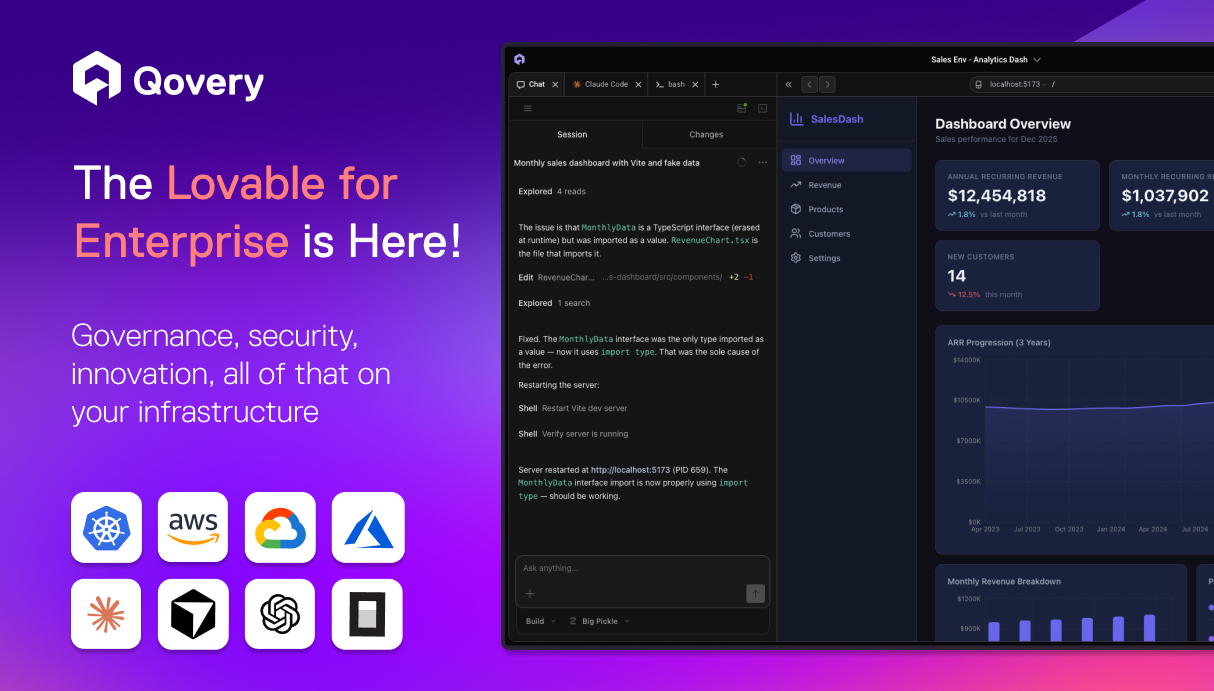
The Lovable Experience. Enterprise Governance. Your Infrastructure. We Built It.
Introducing the AI Builder Portal - the governed alternative to Lovable and Bolt.new for enterprise. Same one-click builder experience, running on your Kubernetes cluster, under your governance.
$500 Million in One Month: What Happens When AI Has No Guardrails
A company burned $500M in Claude credits because nobody set a limit. Uber exhausted its 2026 AI budget. Microsoft canceled Claude Code licenses. The problem isn't AI - it's the total absence of governance around how people use it.
How CTOs Are Building AI-Native Organizations (A Practical Framework)
The best CTOs aren't waiting for AI adoption to happen organically. They're building a system: mapping maturity, aligning leadership, empowering champions, and creating governance that accelerates instead of restricts. Here's the framework.
Your Company Has 10x More Developers Than You Think
The low-code promise failed for 15 years. AI builders delivered in 15 months. Here's what actually changed, why the engineer in me resisted it, and what it means for every CTO.
Don't Ban the Builders - Govern Them
AI tools turned everyone into a builder. Your sales team, your finance team, your CEO - they're all shipping apps now. The answer isn't to ban them. It's to give them a governed platform they actually want to use.
Cursor Cloud Agents Are Incredible - Until You Need Production Governance
Cursor Cloud Agents are excellent for individual developers. Here is where they fall short once AI-written code has to reach production.
AI DevOps in 2026: How AI Coding Tools Are Breaking Your CI/CD Pipeline (and How to Fix It)
AI coding tools multiplied output and made CI/CD the bottleneck. How to handle far more deploys per engineer without adding headcount.
Claude Code Sandbox: The Complete Guide to Sandboxing AI Agents in Production
How to sandbox Claude Code, Codex and other AI coding agents for production, comparing local Docker, Daytona, E2B and Qovery approaches.
Lovable, Bolt, and Replit Are Wonderful - Until Your CISO Finds Out
Non-technical teams are building apps on Lovable, Bolt.new, and Replit with company data and zero governance. Here's why that's a compliance nightmare - and what enterprise platform teams should deploy instead.
Build with Claude Code, Deploy with Qovery
AI coding tools eliminated the 'writing code' bottleneck. But deploying that code? Still a mess. Here's how Claude Code + Qovery Skill lets you go from idea to production in a single prompt - with enterprise-grade guardrails.
Shadow IT Is Back - And Vibe Coding Made It 10x Worse
AI coding tools are the new Shadow IT - but instead of rogue Trello boards, they have OAuth access to your code repos, cloud accounts, and production databases. Here's what's already gone wrong, and how platform engineering fixes it.
Qovery Skill for AI Agents: Deploy Apps in One Prompt
Use Qovery from Claude Code, OpenCode, Codex, and 20+ AI Coding agents
How Kubernetes works at enterprise scale: mastering Day-2 operations
Kubernetes is a distributed orchestration engine that automates container deployment and scaling. At an enterprise level, its core mechanisms-control planes, schedulers, and worker nodes-provide foundational infrastructure resiliency. However, operating these components natively across thousands of clusters creates massive configuration drift, requiring intent-based control planes to manage Day-2 FinOps, RBAC, and multi-cloud abstraction globally.
Managed Kubernetes comparison: EKS vs. GKE for multi-cloud fleets
When comparing Amazon EKS and Google Kubernetes Engine (GKE), GKE often provides a more automated, hands-off experience with its Autopilot mode and rapid release channels. EKS excels in hybrid cloud integrations and government cloud support. However, at fleet scale, organizations frequently use both, requiring an agentic control plane to enforce global cost governance and standardize Day-2 operations across multi-cloud environments.
Beyond Compute Constraints: Why AI Success is an Orchestration Problem
As the AI race shifts from hardware acquisition to GPU utilization, success is now an orchestration problem. Learn how to bridge the 84% capacity gap, eliminate "ghost" expenses, and leverage AI infrastructure copilots to maximize ROI in 2026.
EKS vs. AKS: choosing the right managed Kubernetes for enterprise scale
EKS vs AKS compared on control plane cost, cluster and node limits, identity, upgrades and compliance, with guidance on which to pick.
EKS vs Scaleway Kubernetes Kapsule: Which to Choose?
EKS or Scaleway Kapsule? Compare managed Kubernetes platforms based on control plane costs, IAM complexity, and autoscaling to find the right fit for your team.

7 things no one will ever tell you about Kubernetes
Provisioning an Amazon EKS cluster takes ten minutes. Managing its lifecycle takes six months. Teams typically assume managed Kubernetes means zero operations, only to discover that AWS leaves worker node upgrades, ingress controllers, and IAM role mappings entirely to the customer. Treat cluster creation as the start of your operational burden, not the end.
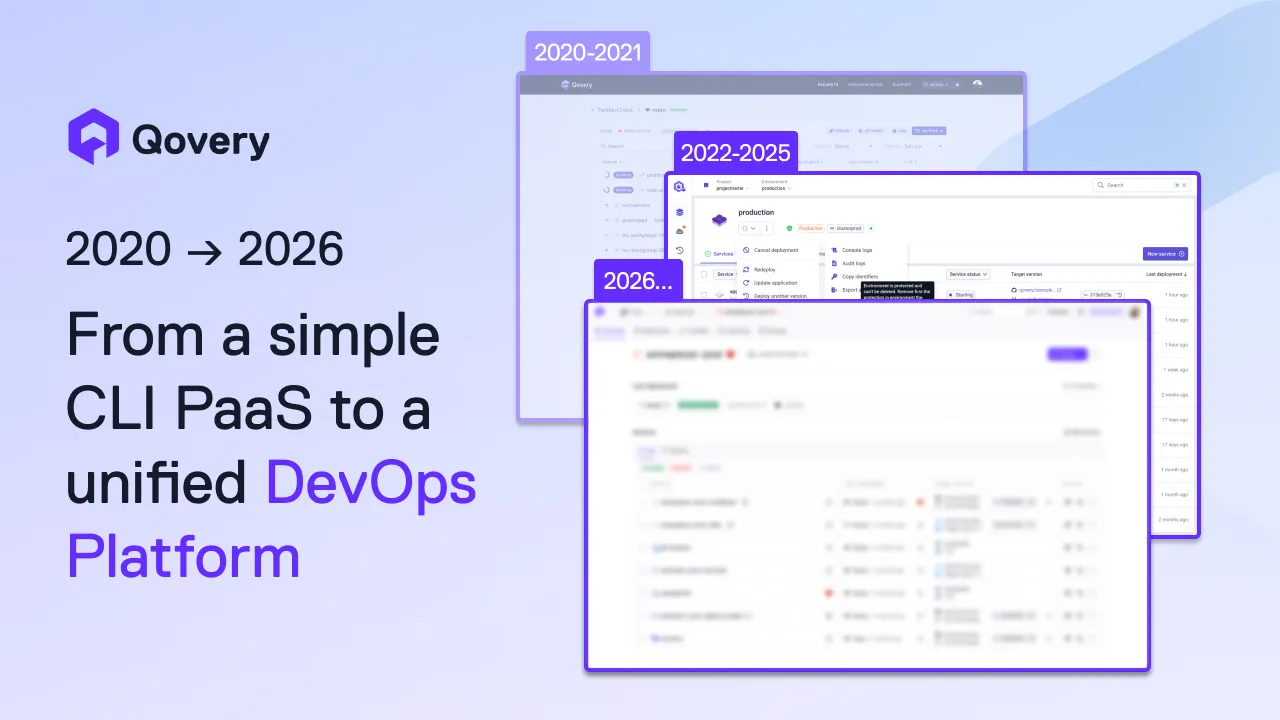
From a simple CLI PaaS to a unified DevOps Platform (2020 → 2026)
Six years of Qovery, and the philosophy behind every pivot
The DevOps Guide to Docker Monitoring: Tools, Best Practices, and Unified Observability
Docker container monitoring tools compared, from Prometheus and cAdvisor to commercial APM, plus what to actually monitor and why.
NGINX Ingress Controller End of Maintenance by March 2026
Kubernetes NGINX ingress maintainers have announced that the project will move into end-of-life mode and stop being actively maintained by March 2026. Parts of the NGINX Kubernetes ecosystem are already deprecated or archived.
Our rebrand: setting a new standard for DevOps automation
Qovery unveils its new brand identity, reinforcing its mission to make DevOps simple, intuitive, and powerful. Discover how our DevOps automation platform simplifies infrastructure, scaling, security, and innovation across the full DevOps lifecycle.
We've raised $13M Series A to make DevOps so simple, it feels unfair
I'm excited to announce our $13M Series A, led by IRIS and Crane Venture Partners with support from Datadog founders and Speedinvest. This investment will fuel our mission to make DevOps simple and scalable, expand in the US and Europe, and accelerate product innovation.
Top 10 End-to-End Testing Products for Web Applications in 2026
In the realm of software development and testing, end-to-end (E2E) testing plays a pivotal role in ensuring the robustness and reliability of web applications. Unlike unit or integration testing, which focuses on specific components or integrations between them, end-to-end testing evaluates the entire system as a whole. This includes testing the flow from the user's perspective, from start to finish, and often involves multiple systems and components working in unison. An end-to-end testing product aims to simplify this comprehensive process, providing tools and environments to simulate real-world user scenarios, ensuring that the application performs seamlessly in actual production environments.
Why the Internal Developer Platform is the Next Big Thing After CI/CD
Continuous Integration and Continuous Deployment (CI/CD) revolutionized how we build and release software, automating many integration and deployment processes. However, as the complexity of software and infrastructure grows, there's a pressing need for solutions that go beyond CI/CD. Enter the Internal Developer Platform (IDP) – the next giant leap in software development.
Deploy a Production-Ready AKS Cluster on Azure in 10 Minutes
Launch a production-ready Azure AKS cluster in under 10 minutes, no scripts or DevOps expertise required. Learn how Qovery simplifies AKS setup with full observability, autoscaling, and zero maintenance.
Deploy a Production-Ready EKS Cluster in 10 Minutes
Quickly deploy a production-ready Amazon EKS cluster in just 10 minutes. This step-by-step guide covers essential setup and best practices for running scalable, secure Kubernetes workloads on AWS.

3 Reasons Why Finding a Qovery Alternative is So Hard
Since 2020, Qovery has taken a contrarian approach in a market dominated by short-term compromises. In the crowded landscape of platform solutions, many offer a similar "yet-another-PaaS" experience. But we took a different approach, making three deliberate bets that set Qovery apart and make it much harder for alternatives to replicate.
Internal Developer Platform (IDP) vs. Platform as a Service (PaaS)
The realm of cloud computing presents a myriad of solutions to organizations seeking to optimize their development and deployment processes. Two primary contenders in this domain are Internal Developer Platforms (IDPs) and Platform as a Service (PaaS). While both aim to abstract infrastructure complexities, their modalities and offerings significantly diverge. This article elucidates the core differences and similarities between IDPs and PaaS, supplemented with practical examples and notable products in each category, to provide a comprehensive understanding for organizations navigating this critical decision.
Top 10 Internal Developer Portals to Streamline Your DevOps
Ten internal developer portals compared, including Backstage, Port and Cortex, and how a portal differs from a developer platform.
Internal Developer Portal vs. Internal Developer Platform: Which to Choose?
The world of software development is replete with acronyms that often confuse more than they clarify. One such term is "IDP," which stands for both Internal Developer Portal and Internal Developer Platform. Despite sharing an acronym, these two tools serve distinctly different yet complementary roles in the modern software development ecosystem. This article aims to delineate these two concepts and illustrate their significance in the emerging field of Platform Engineering.

How We Built an Agentic DevOps Copilot to Automate Infrastructure Tasks and Beyond
At Qovery, our goal is simple: eliminate the grunt work of DevOps. The idea of an assistant that can understand developer intent and autonomously take action on infrastructure has always felt like the holy grail. In February 2025, we started building that assistant - our DevOps Copilot. Today, our Agentic DevOps Copilot is live in Alpha. It helps developers automate deployments, optimize infrastructure, and answer advanced configuration questions. But getting here took multiple iterations. Here’s a look at the 4 technical phases that shaped its design and reliability.
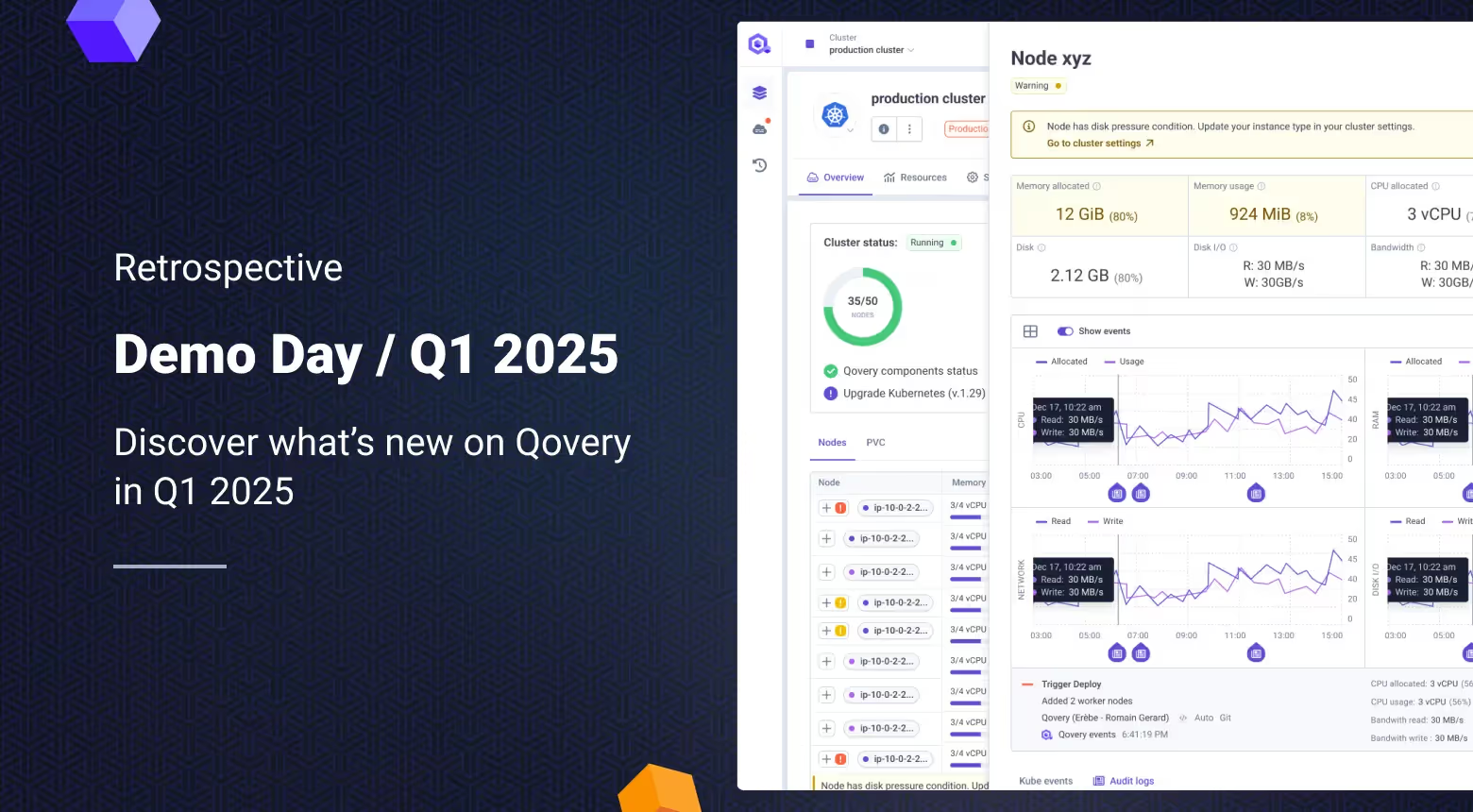
What’s New in Qovery Q1 2025: Faster Deployments, Smarter Scaling, and More Control
Over the last three months, we’ve focused on solving three core challenges our users face: delivering faster, improving resiliency, and gaining tighter control over cloud infrastructure. Today, we’re excited to share the new features we rolled out in Q1 2025 - all built to help teams ship faster, with more confidence, and lower operational overhead.
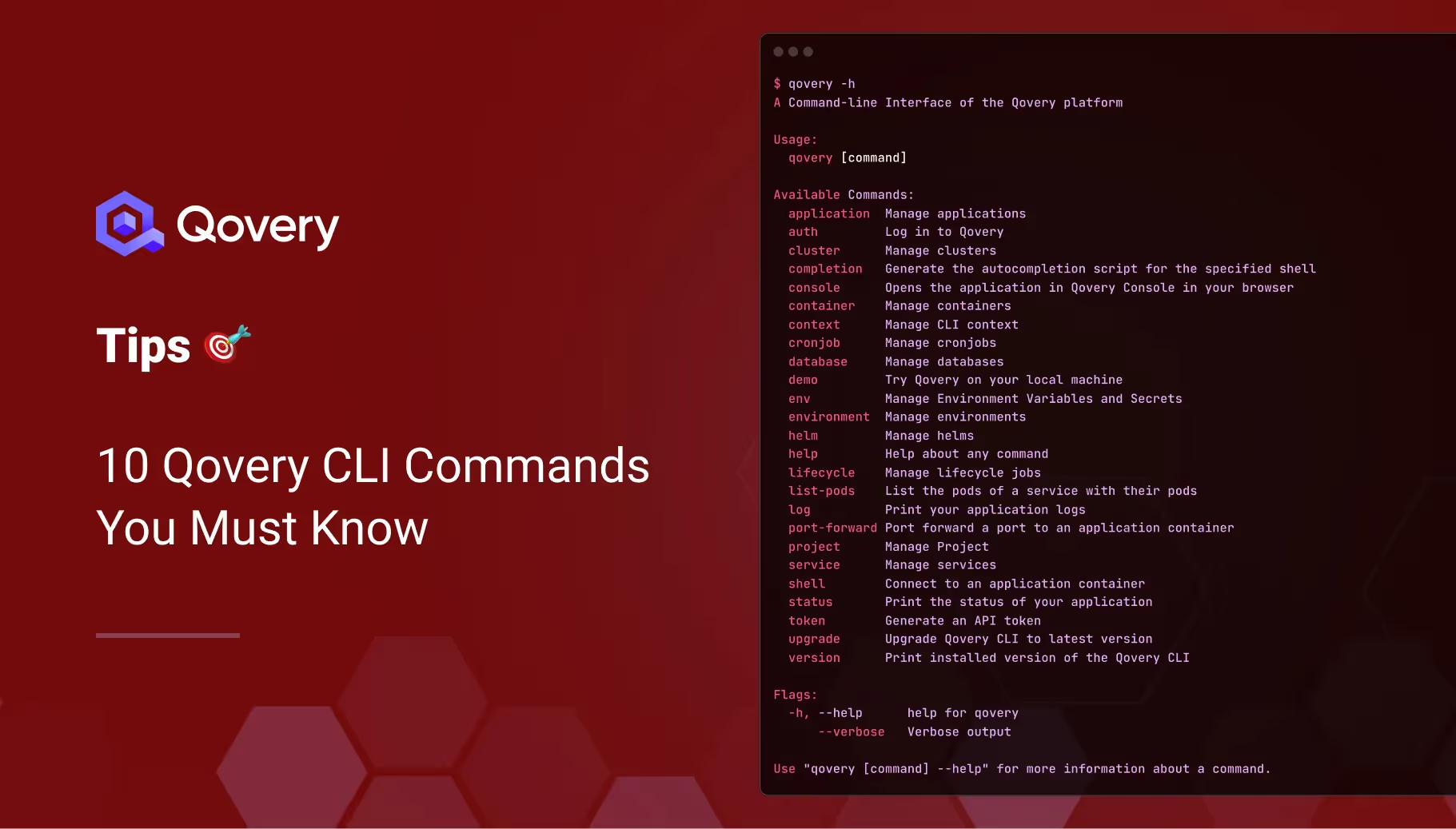
The Top 10 Qovery CLI Commands You Must Know
The Qovery CLI gives developers full control of their infrastructure from the terminal. Whether you're deploying apps, managing environments, or debugging issues, these commands will save you time and clicks.
GenAI: A New Paradigm for Problem-Solving with Undefined Inputs
Traditional programming is built around well-defined inputs and deterministic logic. Developers write functions that take structured inputs, apply a predefined set of operations, and return a structured output. This model works well when the input space is predictable, but it struggles with problems where inputs are ambiguous, unstructured, or constantly evolving.
2024 - What a Year - Welcome 2025
As we wrap up 2024, we are proud of everything we’ve accomplished together. This year was all about listening to our users, solving real problems, and continuing to build the tools you need to move fast without the headaches of DevOps complexity. From launching new features to expanding partnerships and empowering teams worldwide, 2024 was packed with milestones. None of this would have been possible without you, our amazing community. Let’s take a moment to reflect on what made 2024 so special.
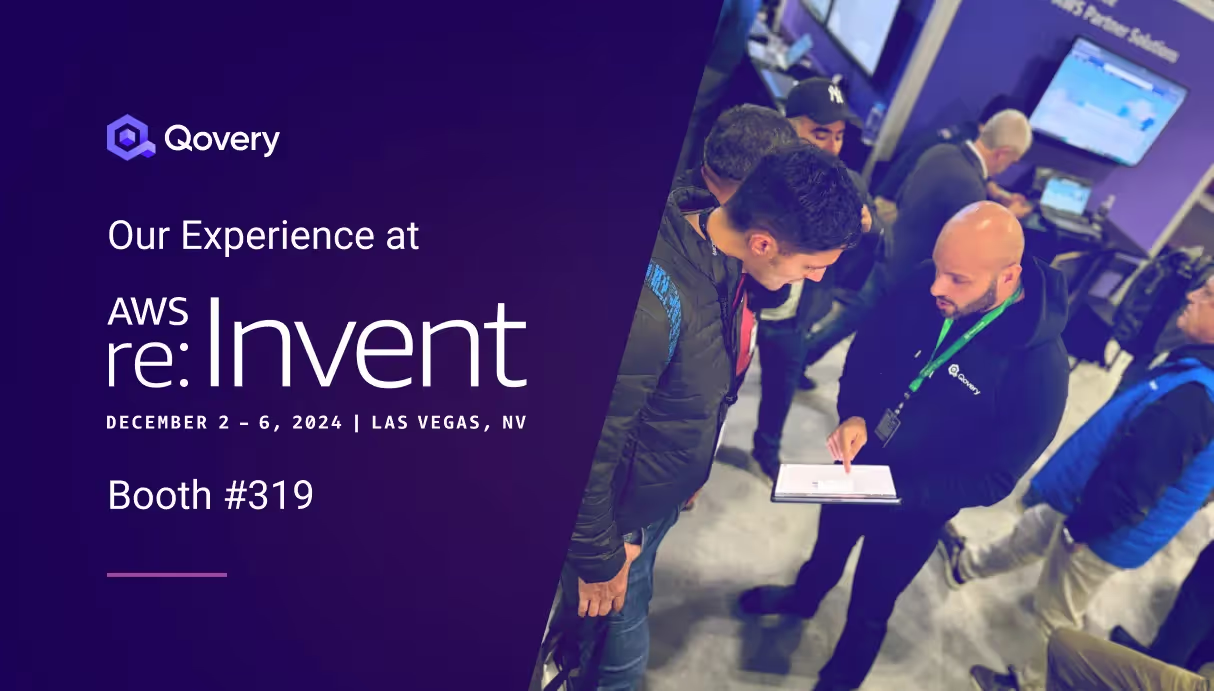
Our Experience at AWS re:Invent 2024
Last week, I had the incredible opportunity to attend AWS re:Invent 2024 in Las Vegas with Pierre (CTO), Morgan (CRO), and Alessandro (Lead PM) from the Qovery team. Re:Invent brought together over 60,000 cloud enthusiasts, and being part of it was both exhilarating and inspiring. For me, this wasn’t just about pitching our product; it was about sharing our passion for solving real-world problems, meeting amazing people, and embracing the energy of this global cloud community. Here are the lessons I learned from re:Invent.
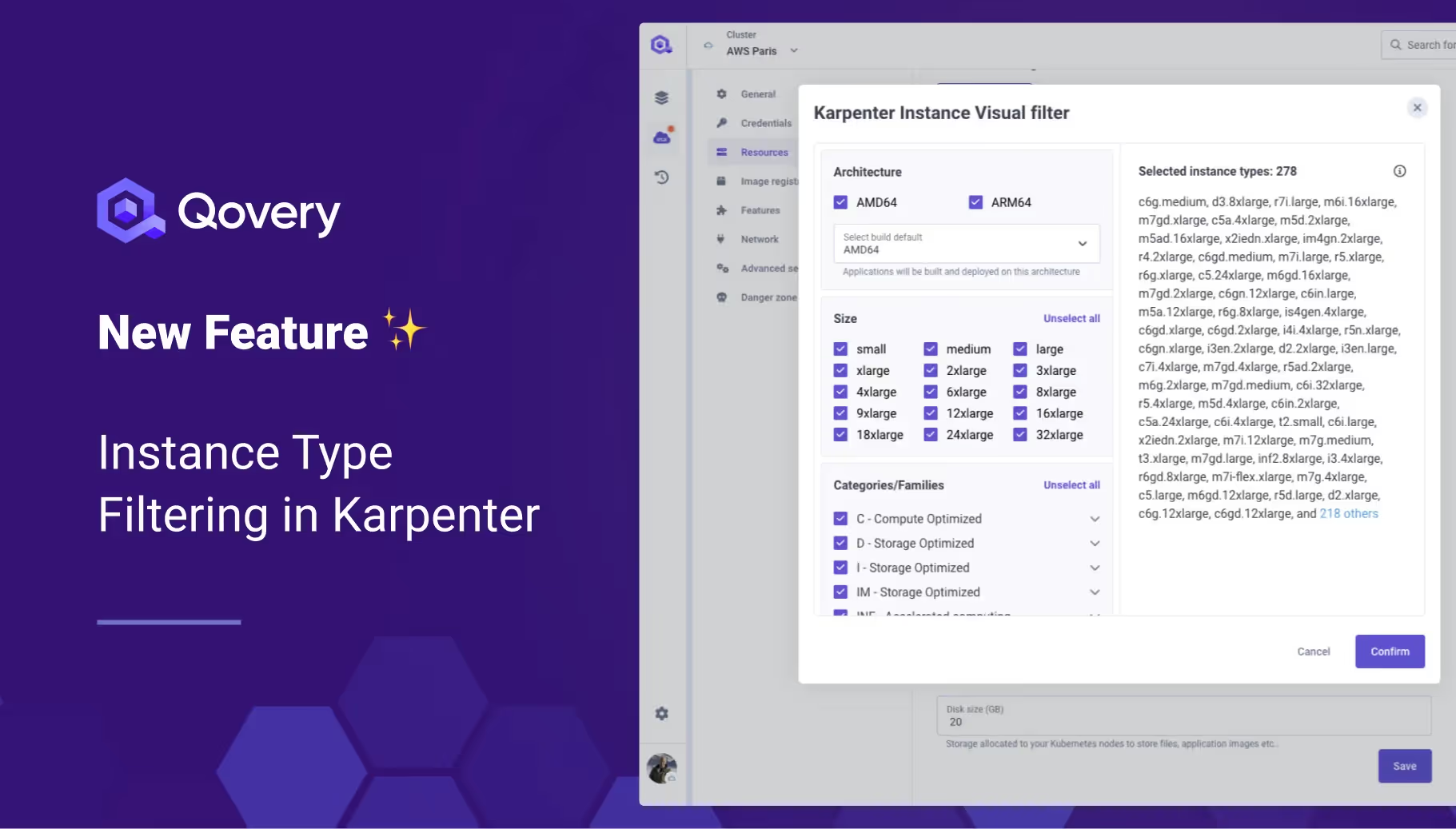
New Feature: Instance Type Filtering in Karpenter
We're excited to announce a significant enhancement to Karpenter, an intelligent Kubernetes autoscaling solution that automatically optimizes your infrastructure costs and performance. Since integrating Karpenter six months ago, it has helped our users automatically provision the right AWS instances for their workloads. Today, we're taking this automation to the next level by introducing Instance Type Filtering, giving you precise control over which AWS instances Karpenter can use when scaling your applications.
How AI Helped To Migrate 37 Apps From Heroku To AWS Under 2 Hours
Startups relying on Heroku often hit roadblocks as they scale. Rising costs, technical limitations, and lack of control over infrastructure force many to explore alternatives. One such startup recently migrated 37 applications from Heroku to AWS using Qovery’s DevOps AI Migration Agent. Here’s how they accomplished this migration in less than two hours, saving days of manual work.
From AWS EKS to AWS EKS with Qovery - 6 Reasons Why This Startup Migrated
Sometimes, even when you’re running on a solid infrastructure like AWS EKS, a growing company needs to rethink how they manage it. One startup, fresh off a successful Series A raise, found themselves in just that situation. They had been running two EKS clusters - Production and Staging - managed entirely by their CTO, who is an experienced AWS power user. But with the company scaling and a larger software engineering team on the horizon, they faced a crucial decision: hire their first DevOps Engineer or delay that hire by using Qovery. Here’s why they chose the latter.
3 Reasons Why This Startup Migrated From Clever Cloud to Scaleway Kapsule
Making infrastructure decisions can feel like a high-stakes puzzle: finding the right balance between technical capabilities, cost efficiency, and ease of management is no small feat. Recently, a company switched from Clever Cloud to Scaleway Kapsule (Kubernetes), with Qovery orchestrating its transition. Here’s what drove this change and how it’s paid off.
Qovery Joins the AWS ISV Accelerate Program
We are proud to announce that Qovery's DevOps automation software has been officially accepted into the AWS ISV Accelerate Program as of October 21, 2024. This strategic achievement is a game changer for both Qovery and our customers, offering new avenues for collaboration and growth through an integrated go-to-market approach with AWS.
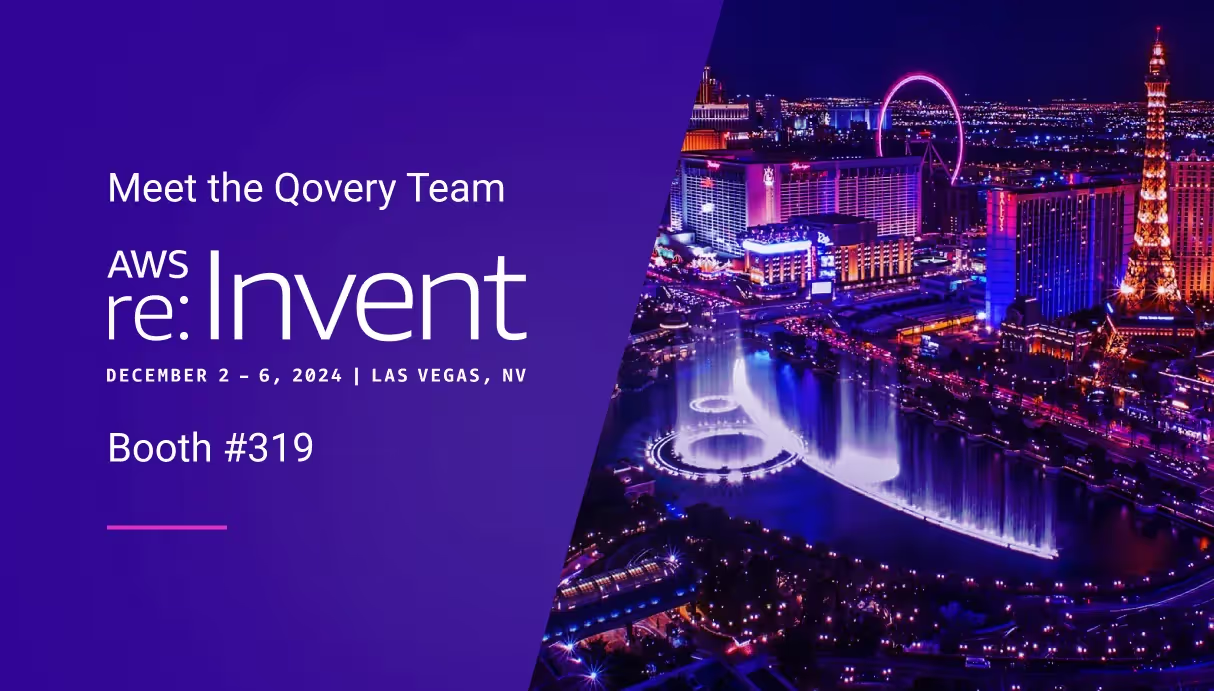
AWS re:invent 2024: Meet the Qovery Team
We're excited to announce that the Qovery team will be at AWS re:invent 2024 in Las Vegas from December 2 to 6. This is an excellent opportunity to meet us in person, see live demos, and learn how Qovery can save you thousands of hours in DevOps engineering on AWS.
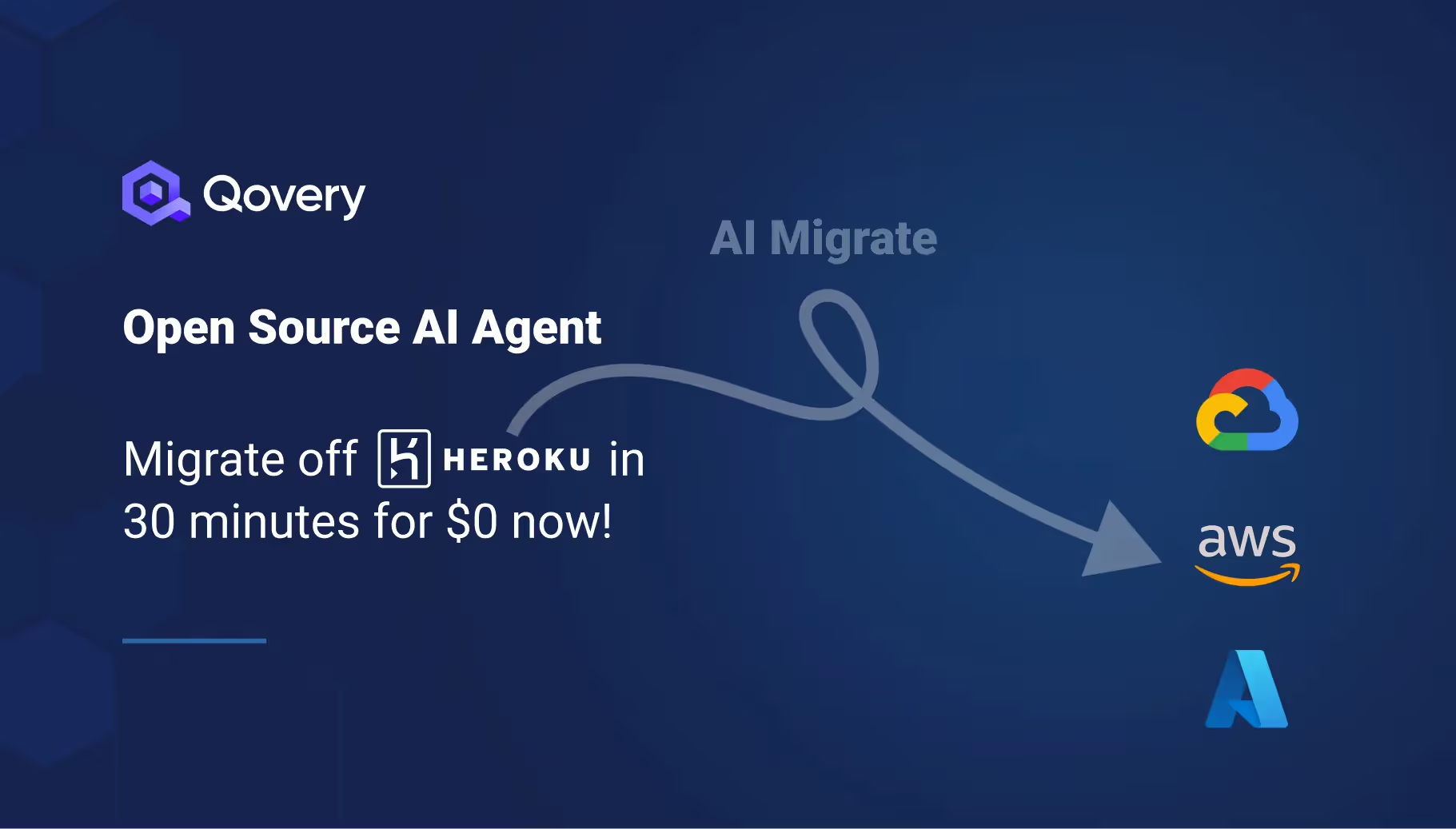
Ditch PaaS Lock-in: Automated Migration to Your Own Cloud with Qovery
Stop delaying. Our open-source tool automates complex PaaS (Heroku, etc.) to AWS, GCP, or Azure migration via Qovery. Zero cost, minimal effort.
Do You Still Need a DevOps Team?
In the early days of DevOps, building and maintaining infrastructure required a specialized team. DevOps engineers were essential for ensuring smooth development operations and bridging the gap between development and IT operations. Today, however, with mature markets and advanced tools becoming standard, the necessity of a dedicated DevOps team is being re-evaluated.
Complete Guide: GitOps with Qovery
I am super excited to announce the release of our complete guide on how to run GitOps with Qovery! GitOps revolutionizes infrastructure management by using Git repositories as the source of truth, offering a more streamlined, reliable, and automated workflow.
Why Our Users Love Our Product
At Qovery, our mission is to create a product that users truly love. Through years of collaboration with various companies and dedicated user feedback, we've identified key practices that help us achieve this goal. This article shares six actionable tips on building a product that delights our users and fosters solid and lasting relationships.
How Qovery Uses AI To Empower Developers
We're in 2024, and one thing has become clear: the future belongs to those who can harness the power of artificial intelligence (AI). At Qovery, we are at the forefront of this transformation, integrating AI into our internal developer platform to revolutionize how developers manage their application lifecycles. Our mission is to empower developers with autonomy, efficiency, and deep insights, ensuring they can focus on what they do best - building great software. In this article, you'll learn how we empower AI and integrate it into our platform. Let's go.
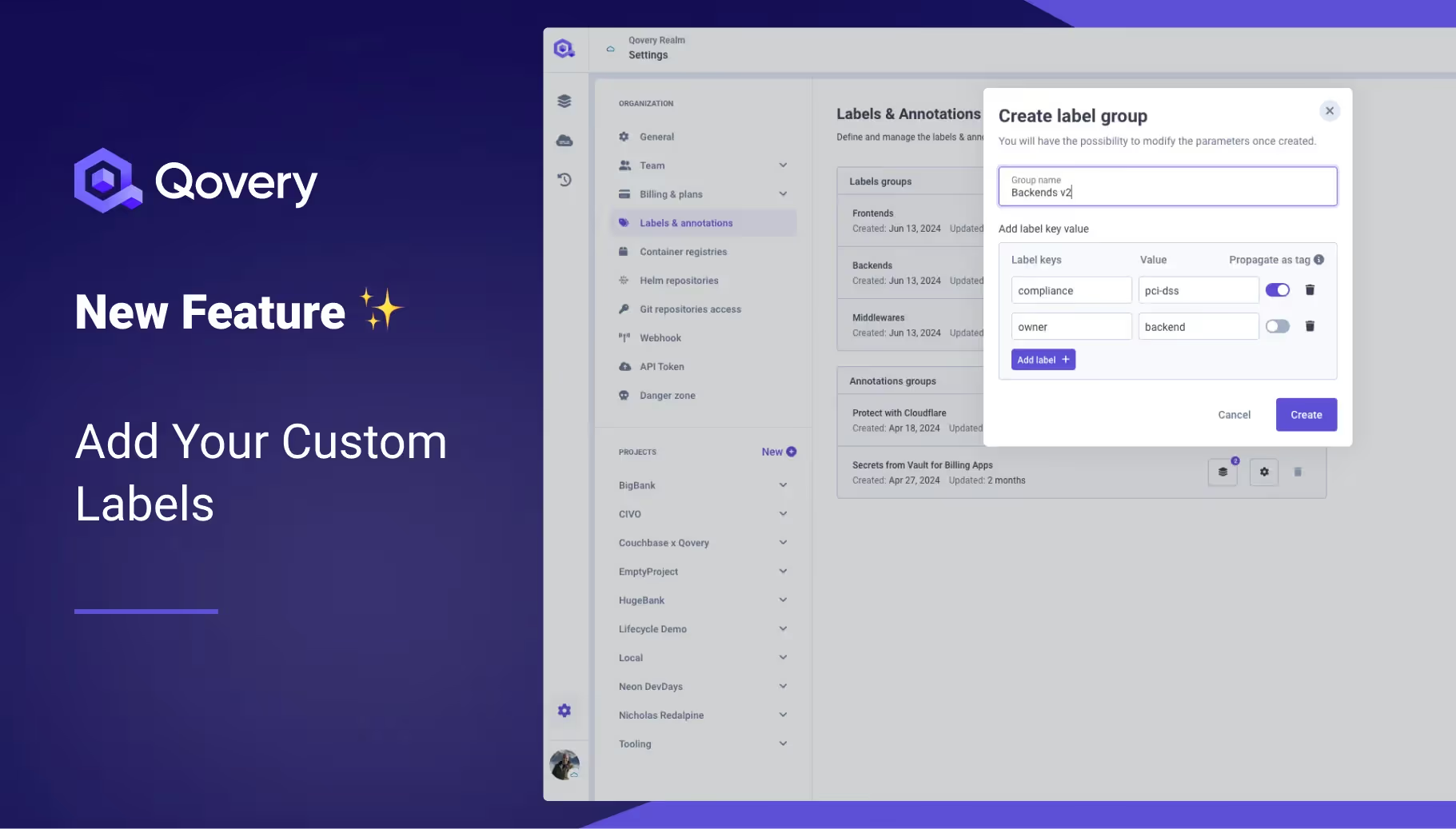
New Feature: Custom Labels
We are excited to announce a powerful new feature in Qovery: the ability to add resource labels on Kubernetes and cloud resources. This enhancement comes right after our support for Kubernetes annotations, further extending your capacity to manage and organize your resources efficiently.
Discover 8 New Major Features on Qovery - May 2024 Edition
At Qovery, our team has been working hard to introduce new features to enhance your development experience. Here are the eight major features we've rolled out in the last four months. 🔥
How Internal Developer Platforms Improve Developer Experience
Enhancing the Developer Experience (DevEx) boosts productivity, innovation, and developer satisfaction. Internal Developer Platforms (IDPs) play a considerable role by streamlining Day 1 and Day 2 operations.

Successful Business: Lessons from a Tech-Savvy CEO
I’m Romaric, the CEO and co-founder of Qovery. With 15 years of experience managing large-scale infrastructure and a passion for computer science, I’ve embarked on a journey to build an ambitious tech product designed to revolutionize the developer experience. At Qovery, we aim to simplify the path to production for developers, ensuring they can focus on writing code without worrying about the underlying infrastructure. Today, I want to share some key insights and lessons learned from this journey to help other tech founders navigate the challenges of building a successful business.
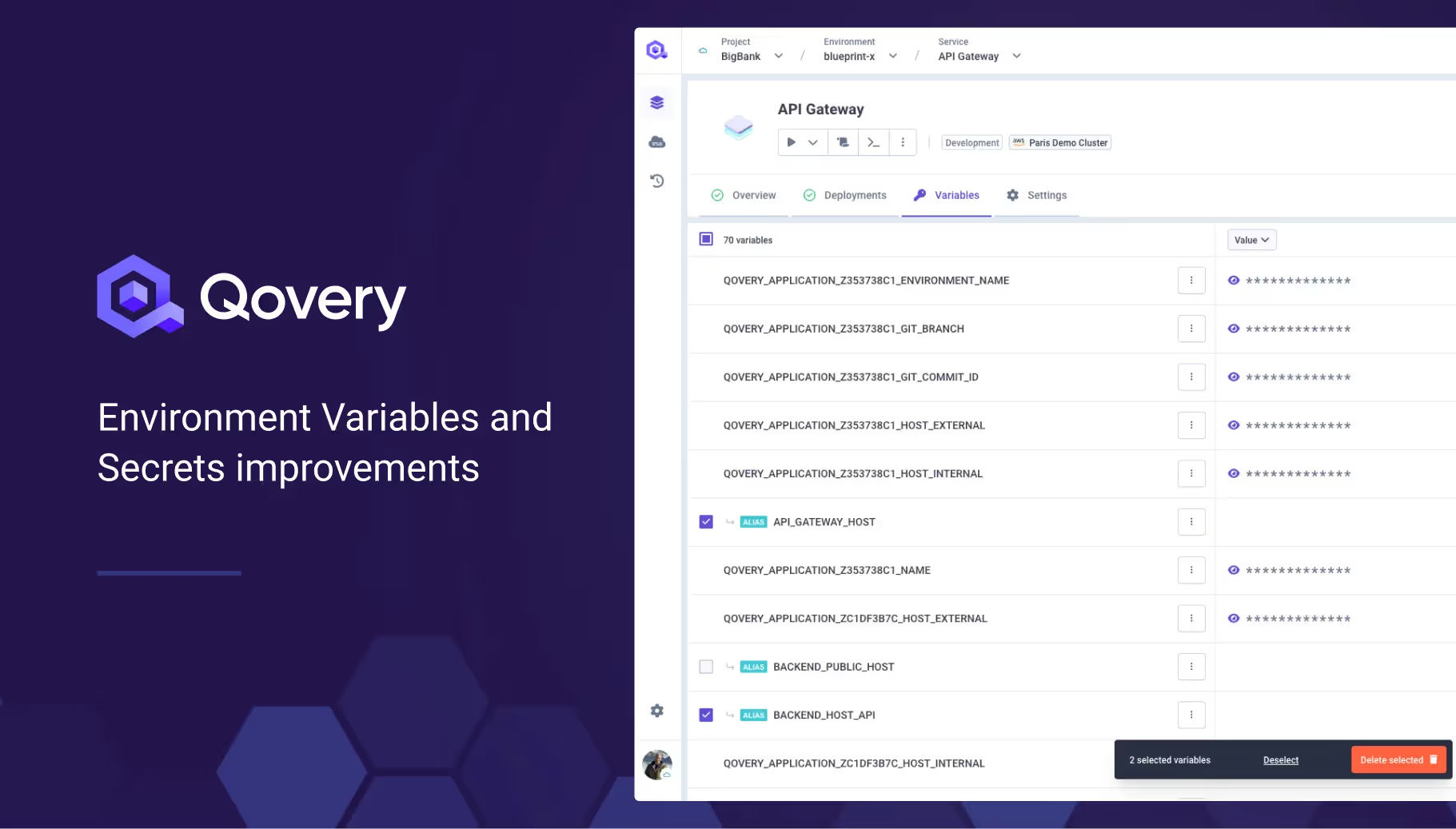
Improvement: Environment Variables and Secrets Management
If you use Qovery, you probably must manage your Environment Variables. It's one of the most used features! We've recently introduced several improvements to make this process more efficient and user-friendly. Here’s what you can expect from it ✨
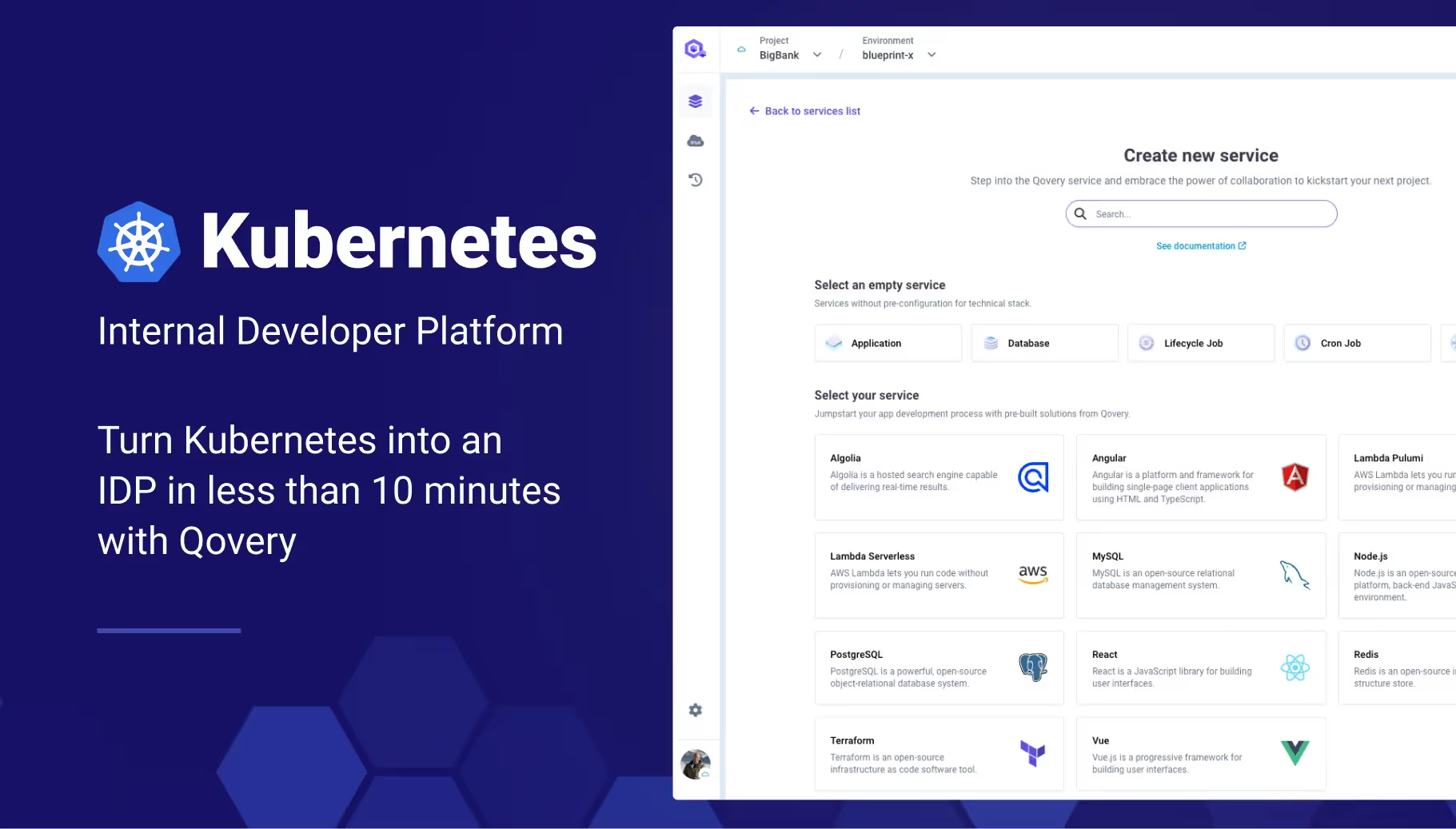
Transforming Kubernetes into an Internal Developer Platform in 10 Minutes
An Internal Developer Platform (IDP) is a powerful tool for providing self-service infrastructure for developers. It allows developers to manage application lifecycles without the constant need for IT team involvement, streamlining the process from development to production. With its widespread adoption, Kubernetes has become the standard for running application workloads across various organizations. However, its complexity often makes it less approachable for developers who need to focus on coding rather than managing infrastructure. That's where transforming Kubernetes into an IDP comes in, providing a developer-friendly layer that simplifies interactions with underlying resources. In this article, I will explain how to turn your Kubernetes cluster into an Internal Developer Platform with Qovery in just 10 minutes. Let's get started.
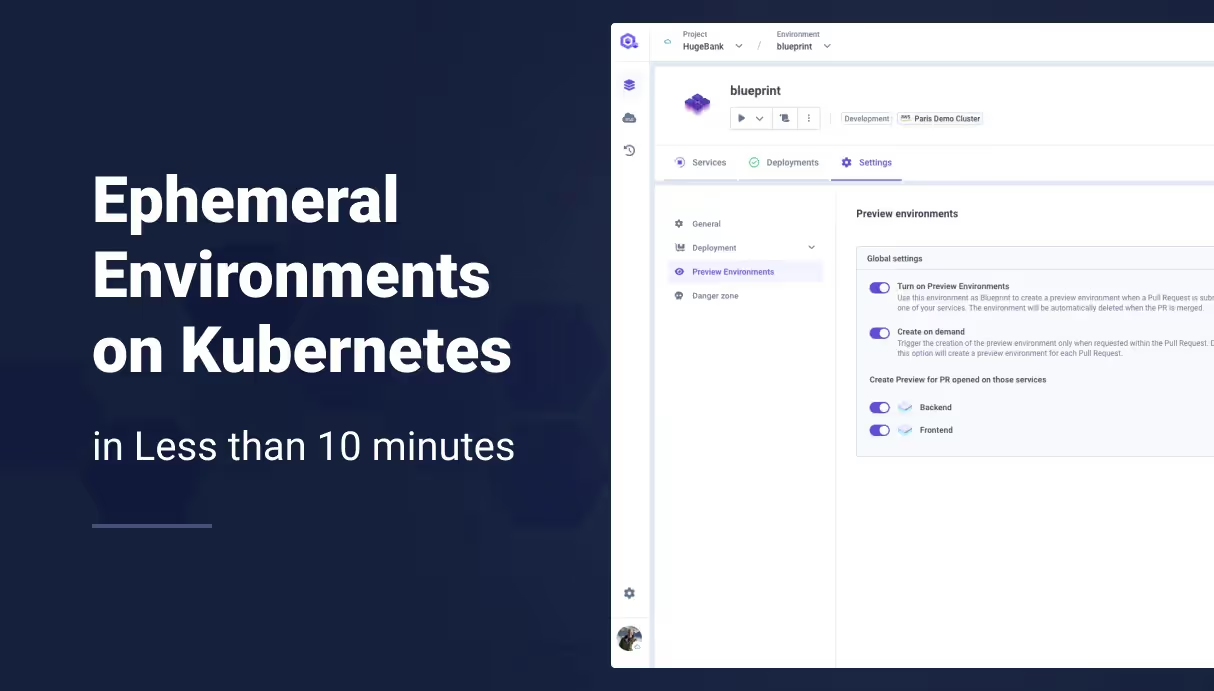
Get Ephemeral Environments on Kubernetes in Less than 10 Minutes
Qovery is a DevOps automation tool designed to make Kubernetes developer-friendly. It offers self-service capabilities, allowing developers to efficiently manage and scale their applications. One of the standout features of Qovery is the ability to create Ephemeral Environments, which we will focus on in this guide. So keep reading to see how you can get a fully operational Ephemeral Environments system on your Kubernetes Cluster in less than 10 minutes.
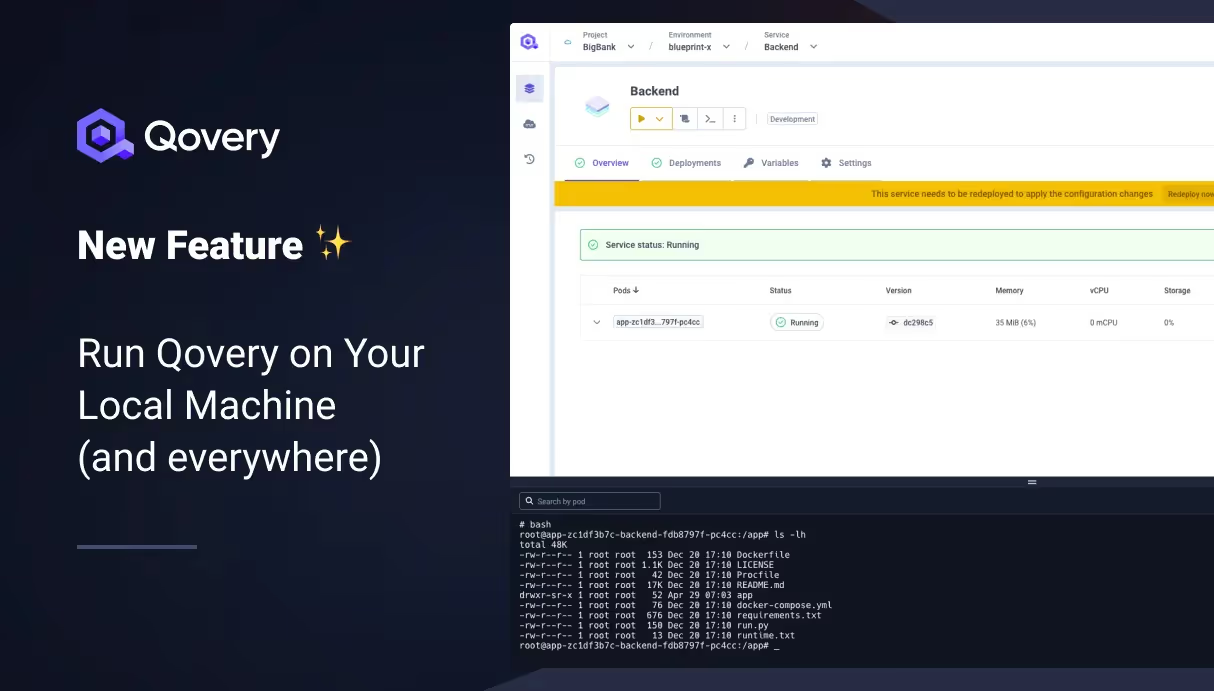
Experience Qovery on Your Local Machine
Qovery offers a streamlined, powerful platform for developers. Its goal is to simplify DevOps processes and enhance the overall developer experience. For those new to Qovery or considering adopting it, there's a simple way to test its capabilities on your local machine. Using the "qovery demo up" command, you can create a non-production environment to explore Qovery's features without any complicated setups. Here is a step-by-step guide to help you get started.
Deploying AI Apps with GPUs on AWS EKS and Karpenter
As AI and machine learning workloads continue to grow in complexity and size, the need for efficient and scalable infrastructure becomes more important than ever. In this tutorial, I will show you how to deploy AI applications on AWS Elastic Kubernetes Service (EKS) with Karpenter from scratch, leveraging GPU resources for high-performance computing. We'll use Qovery, an Internal Developer Platform that simplifies the deployment and management of applications, ensuring developers can focus on building their applications rather than managing infrastructure.
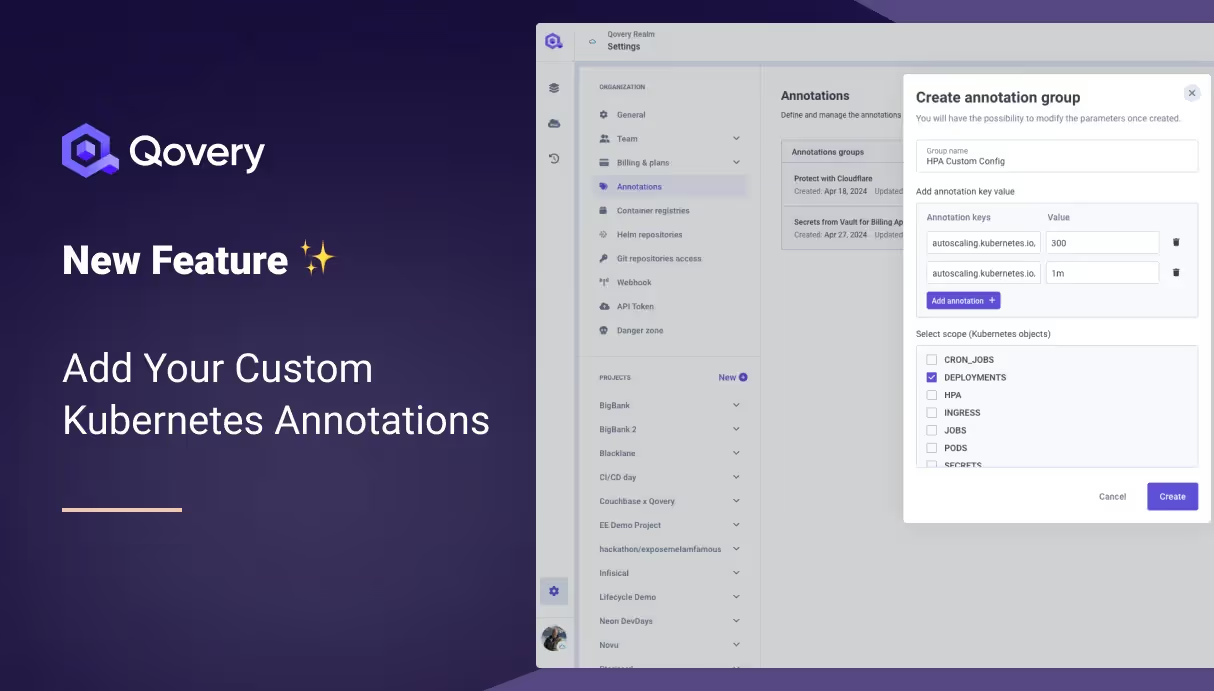
New Feature: Custom Kubernetes Annotations
Kubernetes annotations are key-value pairs attached to Kubernetes objects, providing a flexible way to extend the functionality of your Kubernetes resources without altering their internal specifications. These annotations serve as a tool to store additional metadata to tailor behavior, orchestrate tools, and interact seamlessly with third-party utilities that complement your Kubernetes environment. Today, we're excited to announce that Qovery supports the declaration of Custom Annotations for your Kubernetes clusters 🥳.
Announcement: New Qovery Support Plans
Providing the best support for our customers has always been at the core of our company since day one, and it is something that will never change. In the infrastructure space, one downtime can be critical and have a huge business impact. Having the best support is key to running a business with confidence. Today, we are glad to introduce our new support plans, allowing us to provide best-in-class support and scale with the increasing number of clients using our product.
Your Survival Guide in Paris for Kubecon EU 2024
One day before Kubecon! 🔥 Welcome to the survival guide for all you intrepid souls venturing into the heart of Paris for KubeCon. Buckle up, for you're about to navigate the charming yet occasionally perplexing labyrinth of the City of Light. Here’s how to thrive, or at least survive, Parisian style 🥖🇫🇷.
Save up to 60% on AWS costs with EKS and Karpenter
At Qovery, we're thrilled to introduce a groundbreaking way for AWS users to drastically reduce their costs - by up to 60% on EC2 instances. This significant reduction is made possible through the synergy of AWS Elastic Kubernetes Service (EKS) with Karpenter, AWS's powerful autoscaler.
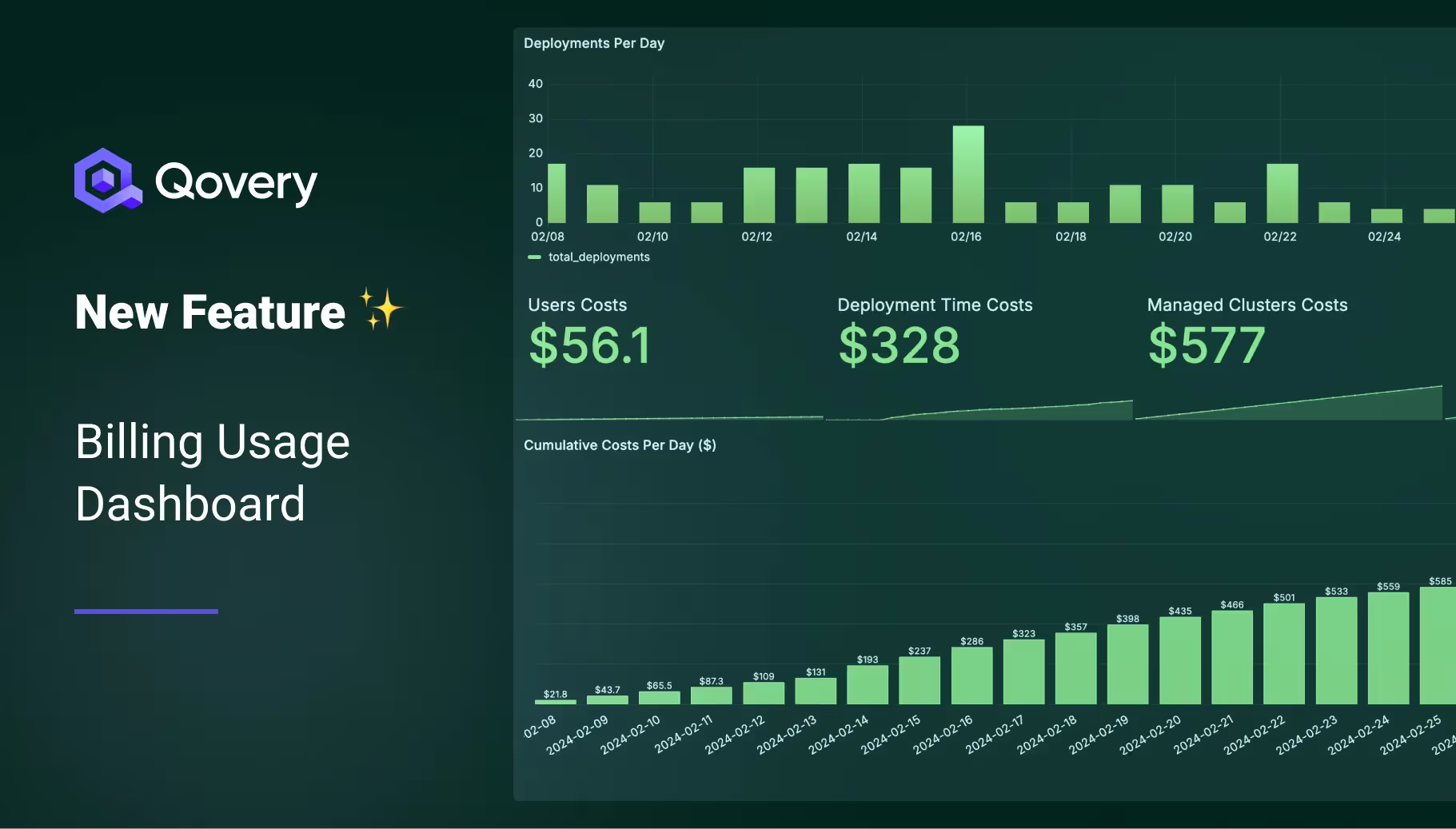
New Feature: Billing Usage Analytics Dashboard
I am thrilled to introduce to you our new billing analytics feature, now generally available to all our users. This feature is designed to empower you with insights into your Qovery usage, enabling you to monitor, control, and optimize your cloud expenses effectively.
Qovery is Now Available on the AWS Marketplace
I'm thrilled to announce the availability of Qovery on the AWS Marketplace. You can now buy and benefit from Qovery right from the AWS Marketplace. Before delving into the specific advantages of purchasing Qovery through the AWS Marketplace, let's first understand what the AWS Marketplace is and why this is something you should consider when purchasing Qovery's DevOps automation software.
Discover 7 New Major Features on Qovery
I'm thrilled to unveil a suite of groundbreaking features that we've introduced over the past four months at Qovery. Our commitment to enhancing your development and deployment experience continues to be our driving force. Recently, we shared these updates during our exhilarating public demo day, which you can watch here. Let's dive into the features that are set to redefine your interaction with Qovery.
Crossplane loves Kubernetes as much as we do... But, differently!
Kubernetes has emerged as the de facto orchestrator for deploying and managing containerized applications. Its versatility and robust ecosystem have paved the way for innovative tools that leverage its capabilities, extending its utility beyond mere container orchestration. Among these tools, Crossplane and Qovery stand out for their unique approaches to simplifying cloud resource management. While they serve different purposes, both share a common foundation in utilizing Kubernetes as an orchestration layer, underscoring a shared belief in Kubernetes' ability to manage all types of workloads, including external ones.
Why Kubernetes For Developers is the Next Big Thing
Let's face it! Kubernetes is the standard for container orchestration, reshaping how we deploy and manage applications for the last 8 years - do you even remember when you run "docker run <your-image>" on an application server? 😁. However, it's crucial to recognize that Kubernetes was never initially designed with the everyday developer in mind. This article aims to explore this dichotomy and ultimately explain why Internal Developer Platforms, have become increasingly relevant in bridging this gap.
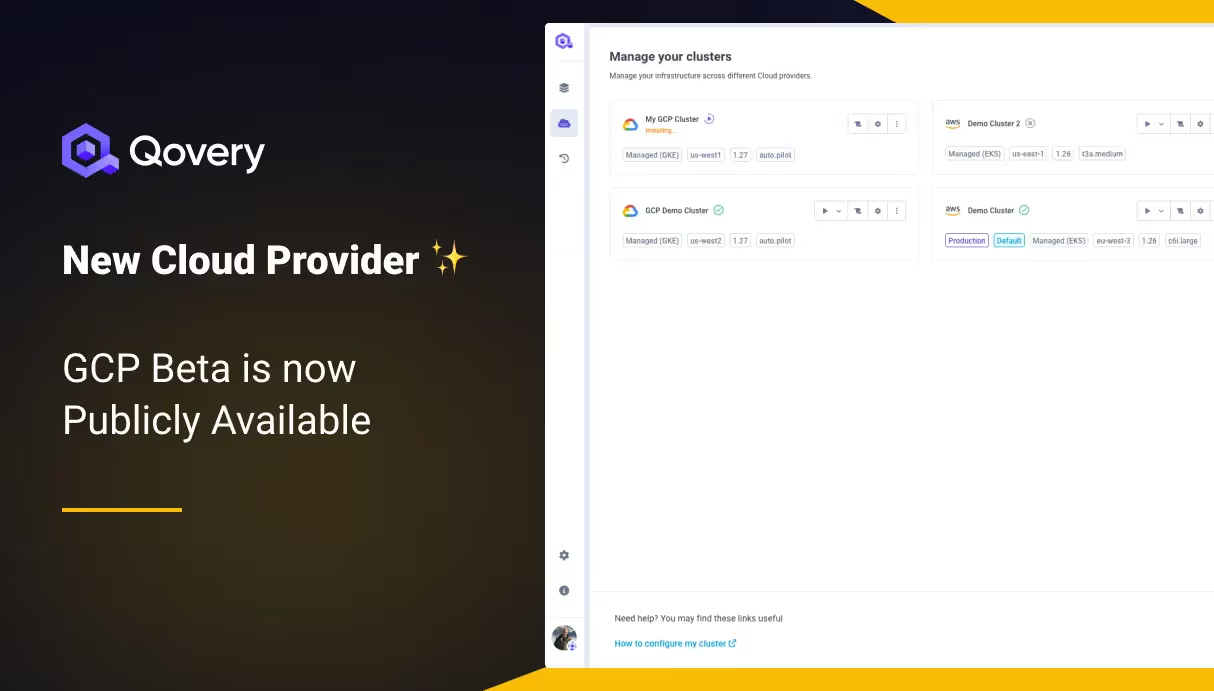
Managed GCP GKE Autopilot Released in Public Beta
I am thrilled to announce a significant milestone for Qovery: the public beta release of our Google Cloud Platform (GCP) GKE Autopilot support. This marks a new chapter in our journey, following the successful integration with AWS EKS, Scaleway Kapsule, and Kubernetes. In this announcement article I'll explain what you can get out of GCP GKE Autopilot and what is coming next 👇
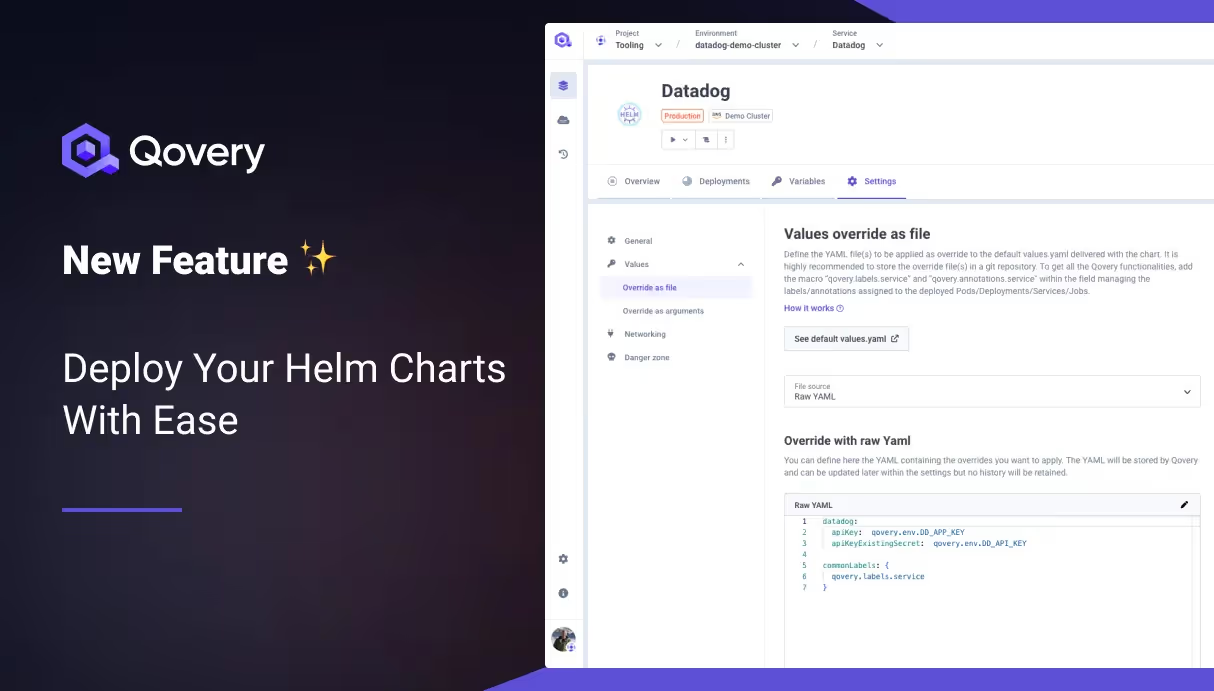
New Feature: Deploy Your Helm Charts With Ease
Today, I'm thrilled to announce a game-changing feature that's set to revolutionize how Platform Engineers and Developers interact with Kubernetes: the introduction of first-class support for Helm Charts within Qovery 🥳. This latest update, now generally available, empowers our users to deploy any Helm Chart with unparalleled ease, marking a significant leap forward in our mission to streamline application deployment for everyone.
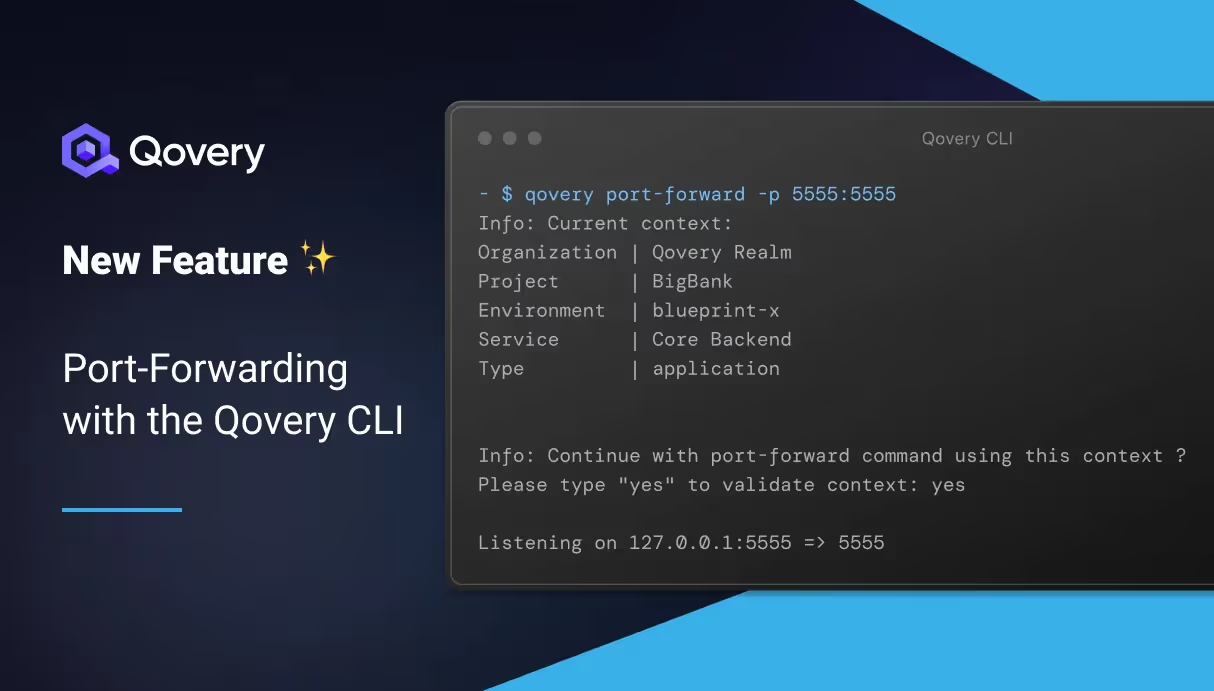
New Feature: Port-Forwarding with Qovery CLI
I'm thrilled to announce the global availability of the port-forwarding feature via the Qovery CLI (v0.77.0). This feature marks a significant stride in application access and security, allowing users to securely access not only their applications but also containers and managed databases without exposing them to the public internet. This advancement aligns with our commitment to providing developers an unparalleled experience, focusing on autonomy, security, and ease of use. In this article, I'll show and explain how this feature works... let's go 👇
Platform Engineering Predictions for 2024
I've been closely observing the trends and technological advancements in this field, and I'm excited to share my predictions for what's ahead. Here's a glimpse into the future of Platform Engineering in 2024.
3 Myths About Backstage
Backstage, an open platform for building developer portals, has been increasingly embraced by the tech community for its promise to streamline development workflows. However, there are several misconceptions surrounding its capabilities and applications. In this article, I'll debunk three common myths about Backstage to clarify its true nature.
Looking Back on 2023 and Our Plans for 2024
At Qovery, we're constantly striving to revolutionize the way platform engineers and developers experience cloud infrastructure. In 2023, we embarked on an incredible journey of growth, innovation, and customer satisfaction. Today, as we stand at the threshold of 2024, we're thrilled to share some of our most significant achievements and reveal our ambitious roadmap for the year ahead.
3 Reasons Not to Use Backstage
After countless conversations with platform engineering teams, I've gathered a wealth of insights into the practicalities and pitfalls of adopting various Internal Developer Portals. One such portal, Backstage, developed by Spotify, has gained significant attention for its centralized approach to tooling and resources. However, based on my experiences and discussions, there are three key reasons why Backstage might not be the best fit for every organization, particularly smaller teams or those with certain technical constraints.
Kubernetes: Managed by Qovery vs. Self-Managed with Qovery (BYOK)
Qovery offers two distinct approaches to Kubernetes management: Kubernetes managed by Qovery and self-managed Kubernetes (Bring Your Own Kubernetes - BYOK). This article explores these two models, highlighting their similarities, differences, and when to use each.
Beta Announcement: Bring Your Own Kubernetes with Qovery
Today marks a significant milestone for Qovery and a highly anticipated evolution of our product, especially among Platform Engineers and DevOps professionals. We're thrilled to announce the "Bring Your Own Kubernetes" (BYOK) offer in beta access, a transformative step in our journey towards more flexible and adaptive infrastructure management. Please keep reading to understand why we extend our offer.
Creating Ephemeral Environments for CI/CD Pipelines with Kubernetes
In the swiftly evolving tech world, the need for agile and efficient development processes is paramount. This was the essence of our enlightening event, "Creating Ephemeral Environments for CI/CD Pipelines with Kubernetes," which garnered an impressive turnout of over 650 attendees. The event, now available on Youtube, focused on the transformative potential of ephemeral environments in modern CI/CD pipelines.
Fullstack Preview Environments with Neon and Qovery
I recently had the pleasure of speaking at Neon DevDays, where I delved into the seamless integration between Neon and our Qovery Preview Environments (also called Ephemeral Environments). Here is an article sharing some compelling reasons why this partnership is a groundbreaking step forward for our users who rely on Postgres and the record of my presentation.
What is a Pragmatic DevOps Engineer?
The tech landscape is a whirlwind of continuous evolution, making the role of a DevOps engineer more crucial than ever. A "pragmatic" DevOps engineer stands out as a beacon of efficiency and practicality in this dynamic environment.
How We Speed Up Deployments By 30%
At Qovery, we're consistently pushing boundaries to enhance developer experiences. One of our standout achievements has been accelerating deployment times, a feat we're incredibly proud of. Today, we'd like to pull back the curtain and share how we've sped up deployments by a staggering 30% through our innovative Container Image Mirroring.
Join Qovery at AWS re:Invent 2023
We are thrilled to announce that the Qovery team will be attending AWS re:Invent 2023 in Las Vegas from November 24th to December 1st. As one of the top AWS ISV Partners, this event holds a special place in our hearts, and we can't wait to connect with all of you.
Qovery's Vision: Shaping the Future of Internal Developer Platforms
In a landscape inundated with tools and technologies, the real challenge for companies is not just about having an array of options but about ensuring these options harmoniously fit into their unique technical environments. Qovery understands this, and it’s evident in the modularity of its ecosystem. But the journey doesn’t end here. Looking ahead, Qovery envisions a paradigm shift in the way Internal Developer Platforms (IDP) are perceived and utilized.
Why It's So Complex To Build an Internal Developer Platform on Kubernetes?
The modern software landscape thrives on the efficiency and automation that Kubernetes brings to the table. Its orchestration prowess forms the bedrock of an Internal Developer Platform (IDP). However, converting this technical marvel into a developer-friendly haven is a pursuit that demands meticulous attention and a vast amount of unseen effort. This narrative unfolds the journey from a functional Kubernetes-based IDP to an exemplary one, spotlighting the effort aimed at elevating the Developer Experience (DX).
Free Preview Environments For Open-Source Projects
We at Qovery are excited to offer our Preview Environments for free to all open-source projects. A Preview Environment is like a sandbox where developers can see how changes to the code will work before these changes are final. This is great for projects where many parts, like the backend, frontend, and databases, must talk to each other.
Early Access For Google Cloud Platform
We're excited to share that Qovery is extending its platform to include support for Google Cloud Platform (GCP). We are now inviting companies interested in streamlining their GCP deployment experience to apply for our Early Access program.
10 Tips To Reduce Your Deployment Time with Qovery
One of the most critical aspects of a developer's workflow is reducing deployment time. While Qovery does a lot of heavy lifting to make your deployments faster and more efficient, there are still ways to fine-tune the process on your end. This guide will help you optimize deployment time across three essential phases: Build, Deployment, and Runtime.
Leveraging Neon's Serverless Postgres with Qovery Preview Environments
At Qovery, we are committed to ensuring our users have access to the best development tools in the industry. That’s why we’re excited about Neon - a state-of-the-art serverless Postgres solution. When used in conjunction with Qovery's Preview environments, Neon supercharges your development pipeline.
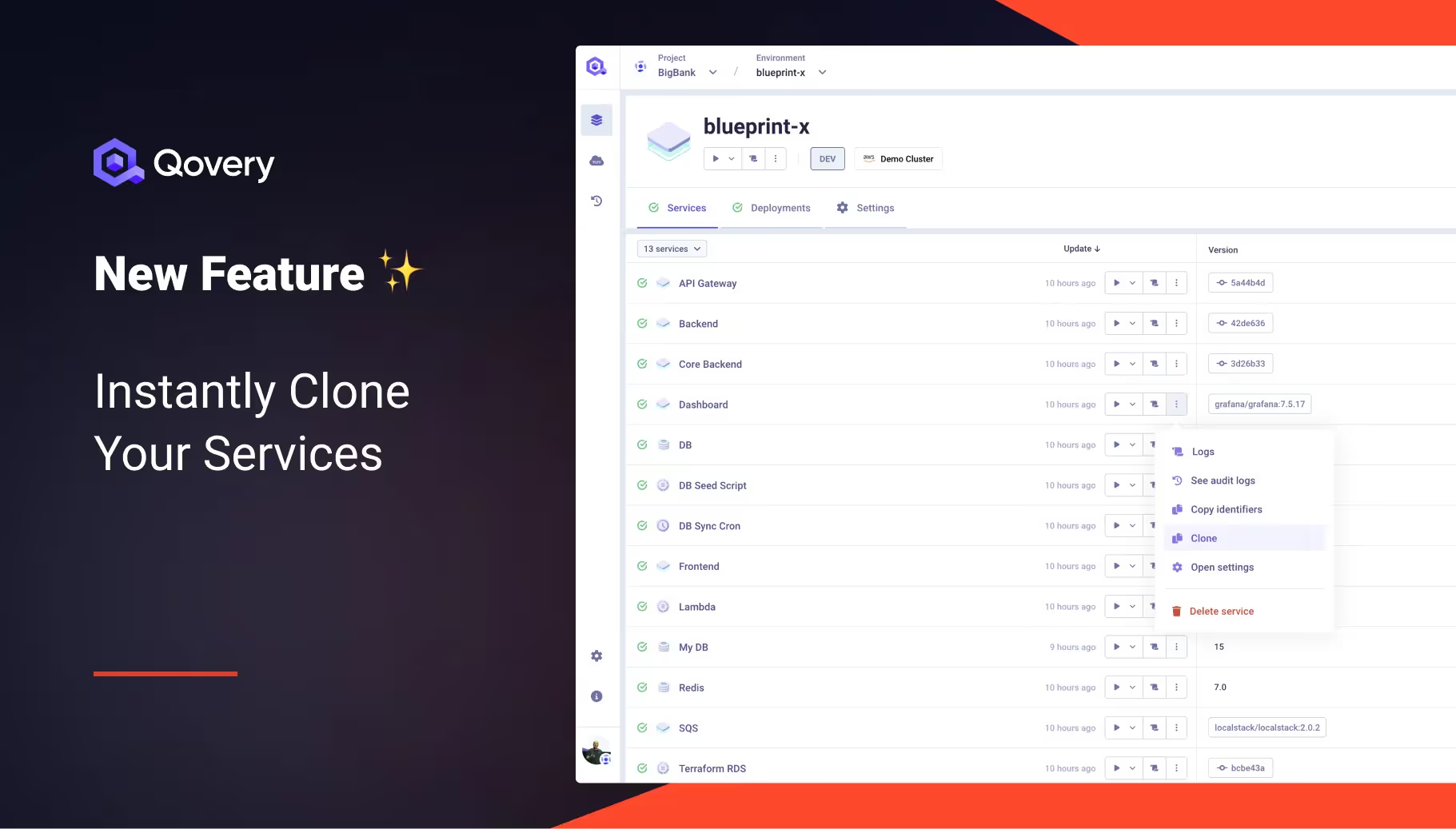
New Feature: Instantly Clone Your Service
We're excited to announce the general availability of the new "Clone Service" feature on Qovery, which is built to augment the capabilities of our platform and to cater to our user needs more effectively. Qovery has always prided itself on being a user-centric platform, and this new feature continues to uphold that tradition.
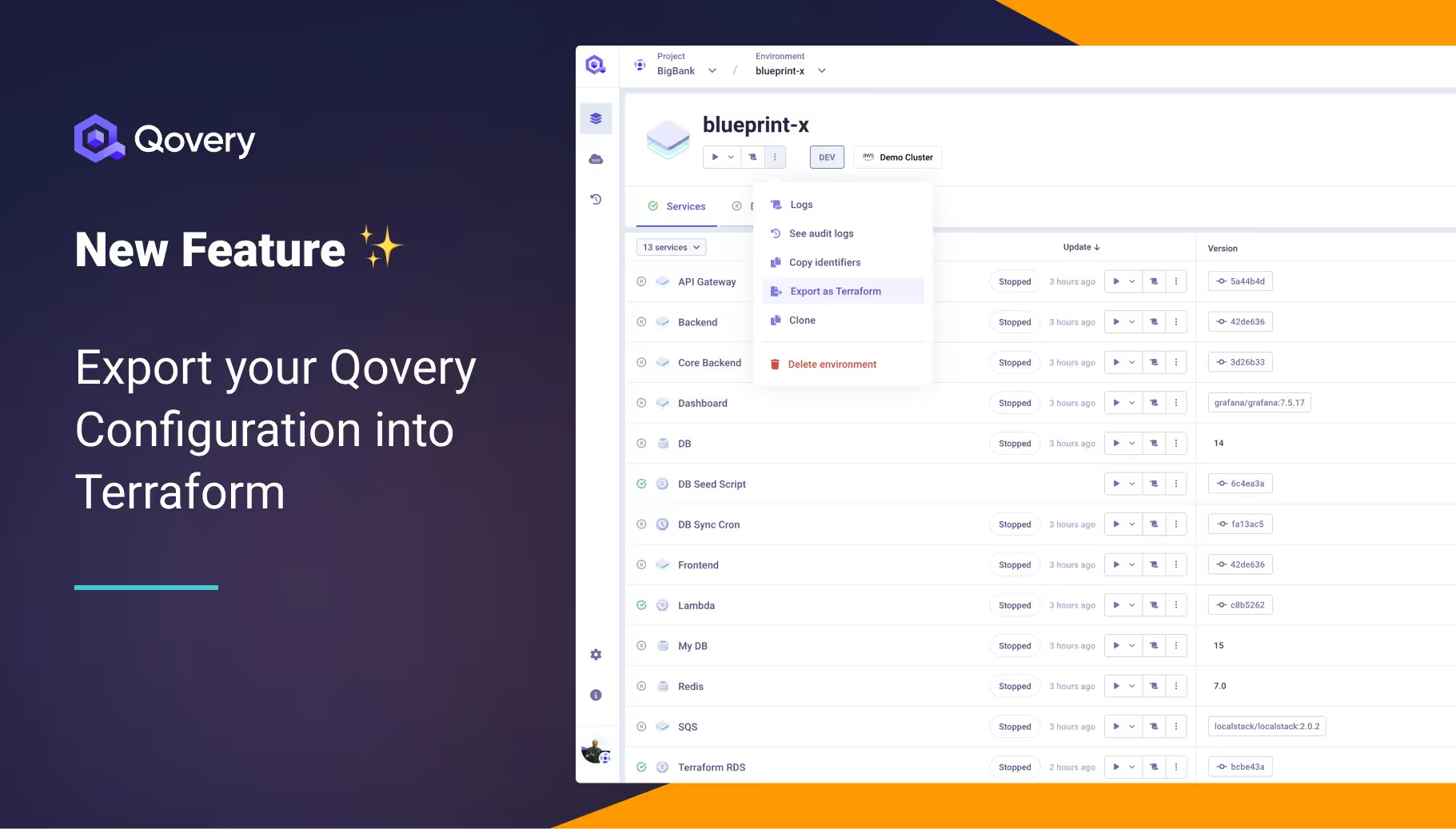
Export Your Qovery Configuration into Terraform Manifest in One Click
At Qovery, we've always prided ourselves on the usability and convenience of our web interface. It's where most of our users begin their journey, configuring and deploying applications with ease and speed. Many users start configuring their applications on our intuitive web interface, validate the successful deployment, and then transition to writing their configurations with the powerful infrastructure-as-code tool, Terraform, utilizing the Qovery Terraform Provider.

Bridging ClickOps and GitOps
The contemporary software development landscape is being continuously reshaped by various paradigms, two of which are ClickOps and GitOps. While they may seem polar opposites, a well-calibrated blend of the two can yield fruitful results, as has been demonstrated in various organizations.
Discover, Learn, and Experience: The Qovery Playground is Now Open!
In the dynamic world of development and operations (DevOps), one thing is clear: there's always room for new, innovative platforms that make life easier for developers and platform engineers. And today, we're thrilled to introduce our latest contribution to this dynamic sphere – the Qovery Playground.
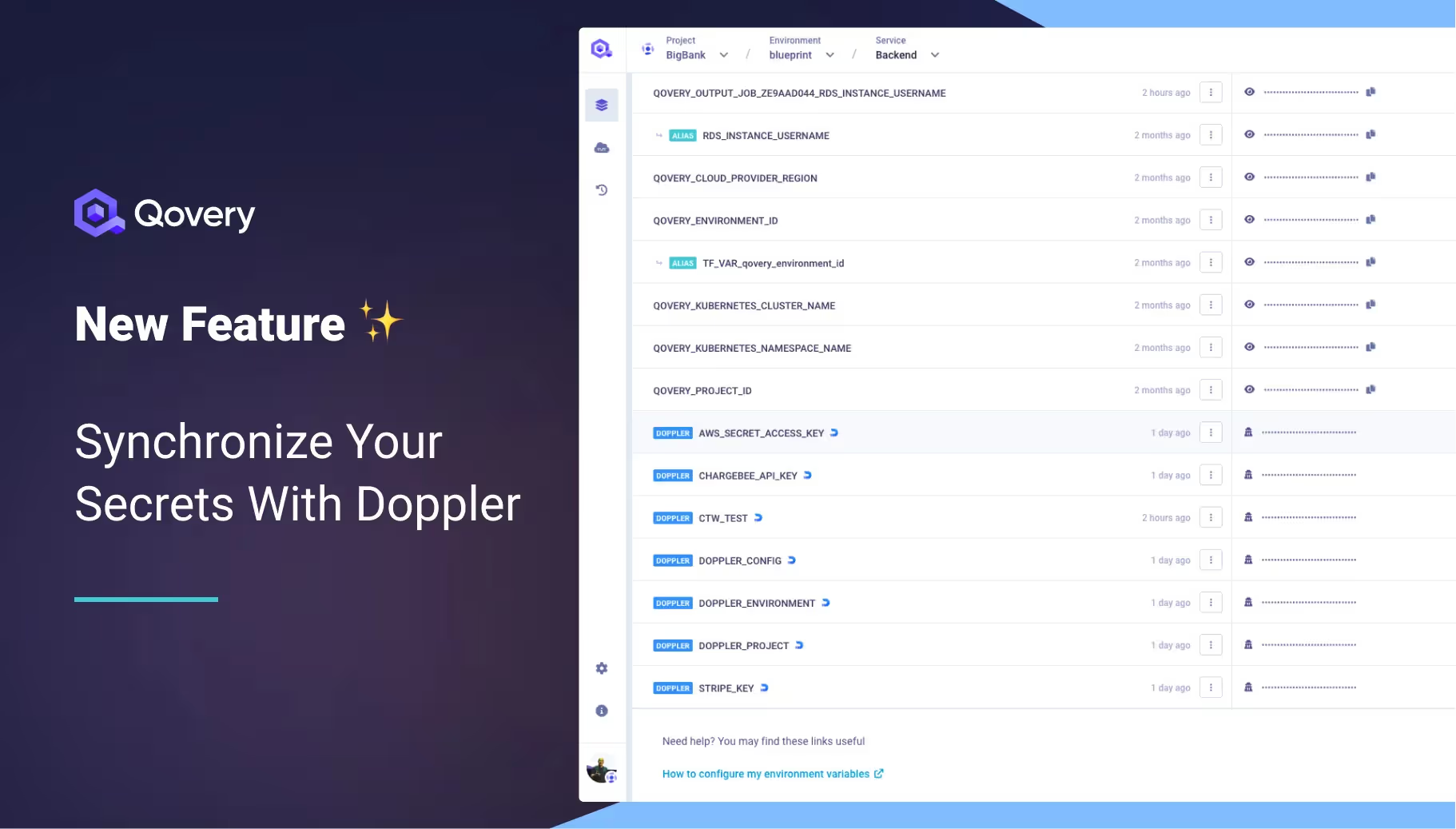
The Doppler Integration is Finally Here: Sync your Secrets With Qovery Seamlessly
I couldn't be more excited to share a groundbreaking update with all of you today. We've been burning the midnight oil, tinkering with codes and algorithms, and today we're unveiling the result of our hard work - the integration of Qovery with Doppler is officially here! If you're unfamiliar, Doppler is more than just a secret management system. It's an innovative tool that enables developers to synchronize their secrets and credentials across a multitude of platforms. And now, thanks to our newly forged partnership, Qovery users can harness the power of Doppler right within their favorite deployment platform. So, what does this fantastic news mean for you, our esteemed users?
Ephemeral Environments vs Ephemeral Services: Weighing the Pros and Cons
In today's fast-paced software development world, Ephemeral Environments have emerged as a game-changer. These temporary, mirror-like copies of production environments are invaluable tools for testing code changes, debugging, and various development tasks. They offer developers a safe haven to experiment and test without impacting the stability of the production environment. One of the primary benefits of Ephemeral Environments is their fidelity to the production environment. By accurately reproducing the environment where the software will eventually operate, they allow developers to identify and resolve issues before they impact the end-users. This kind of preventive troubleshooting can save a significant amount of time and resources. However, Ephemeral Environments also come with challenges. For instance, spinning up an Ephemeral Environment can be resource-intensive, especially for complex environments involving multiple services. Each time a feature change requires testing, all these services need to be recreated in the Ephemeral Environment. This process can be time-consuming and demanding in terms of resources, leading to increased costs and potential delays in the development cycle.
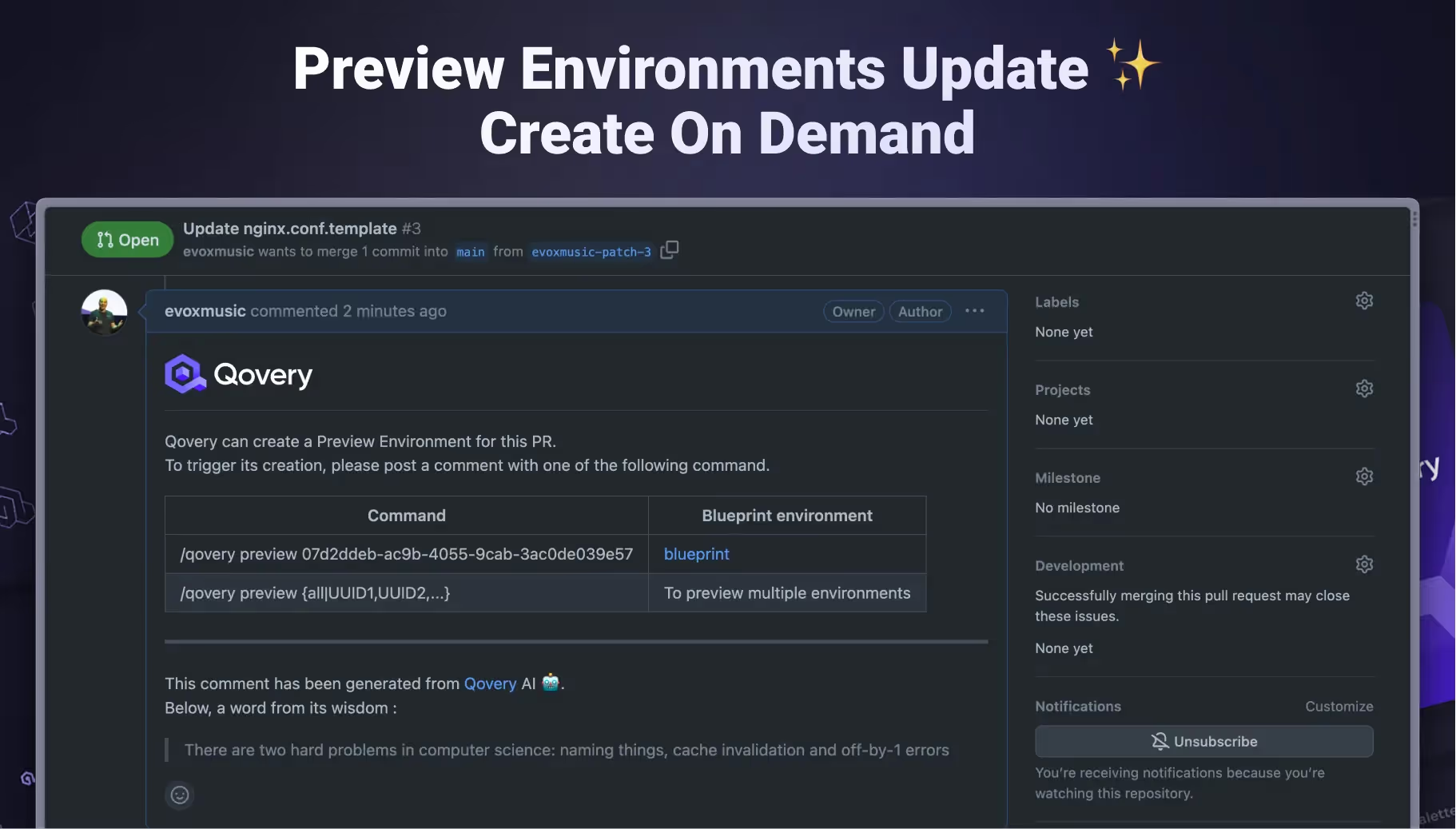
Manually Trigger Preview Environments with Create On Demand Feature
At Qovery, we strive to continuously improve our product to meet the ever-evolving needs of our users, making it more convenient and functional. We're proud to announce a groundbreaking update to our Preview Environment feature that we believe will transform the way engineering teams test their features. Buckle up for a journey into a world where creating production-like environments becomes a breeze!
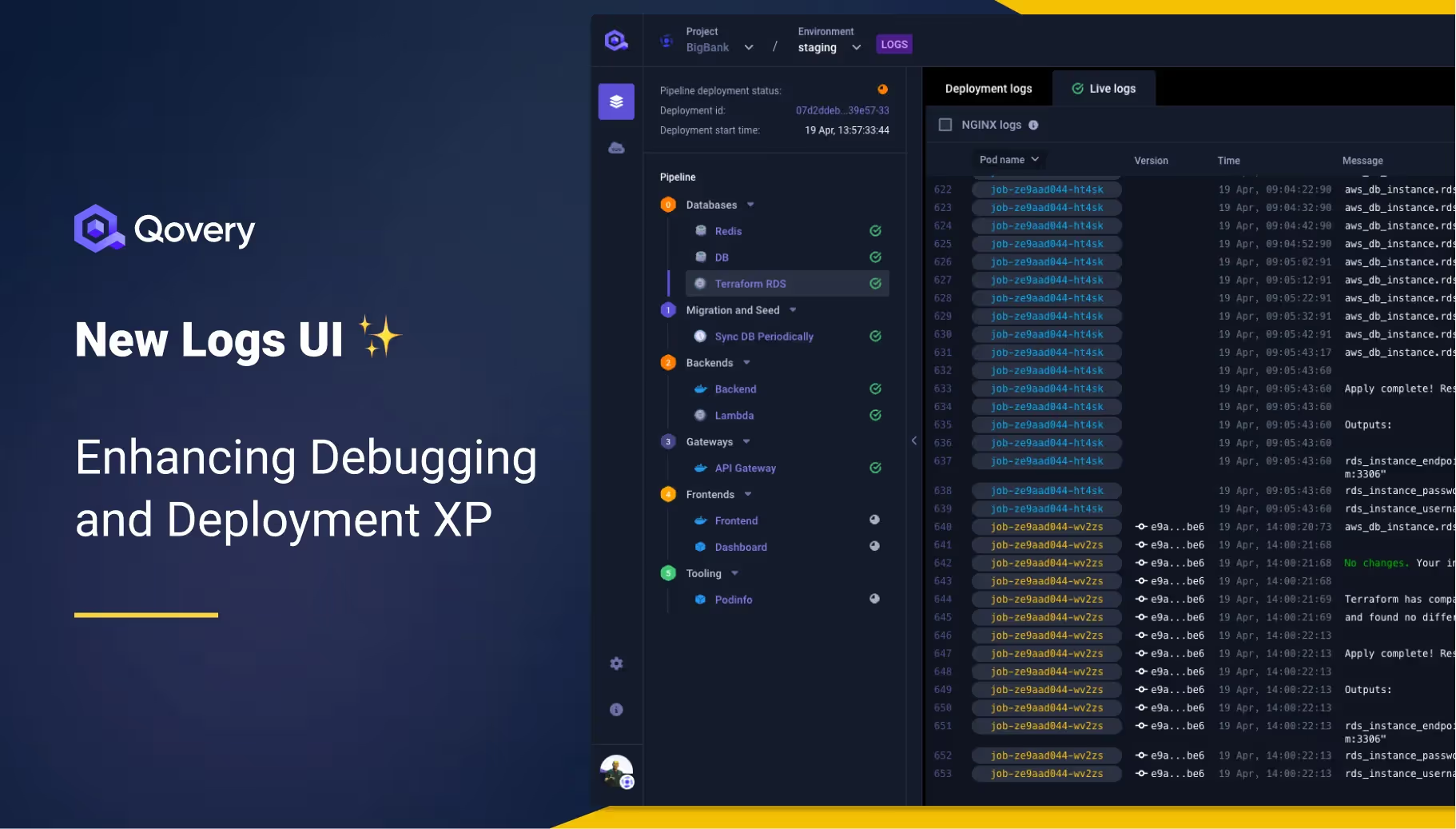
New Logs Interface: Enhancing Debugging and Deployment Experience
I am excited to announce the release of our new logs interface inside Qovery. This feature is a crucial milestone in our journey to improve the debugging experience and provide better insights into deployment failures. As we are just about releasing parallel deployment, we revamped the interface to accommodate the concept of Deployment Pipeline, ensuring a seamless experience when deploying your applications.
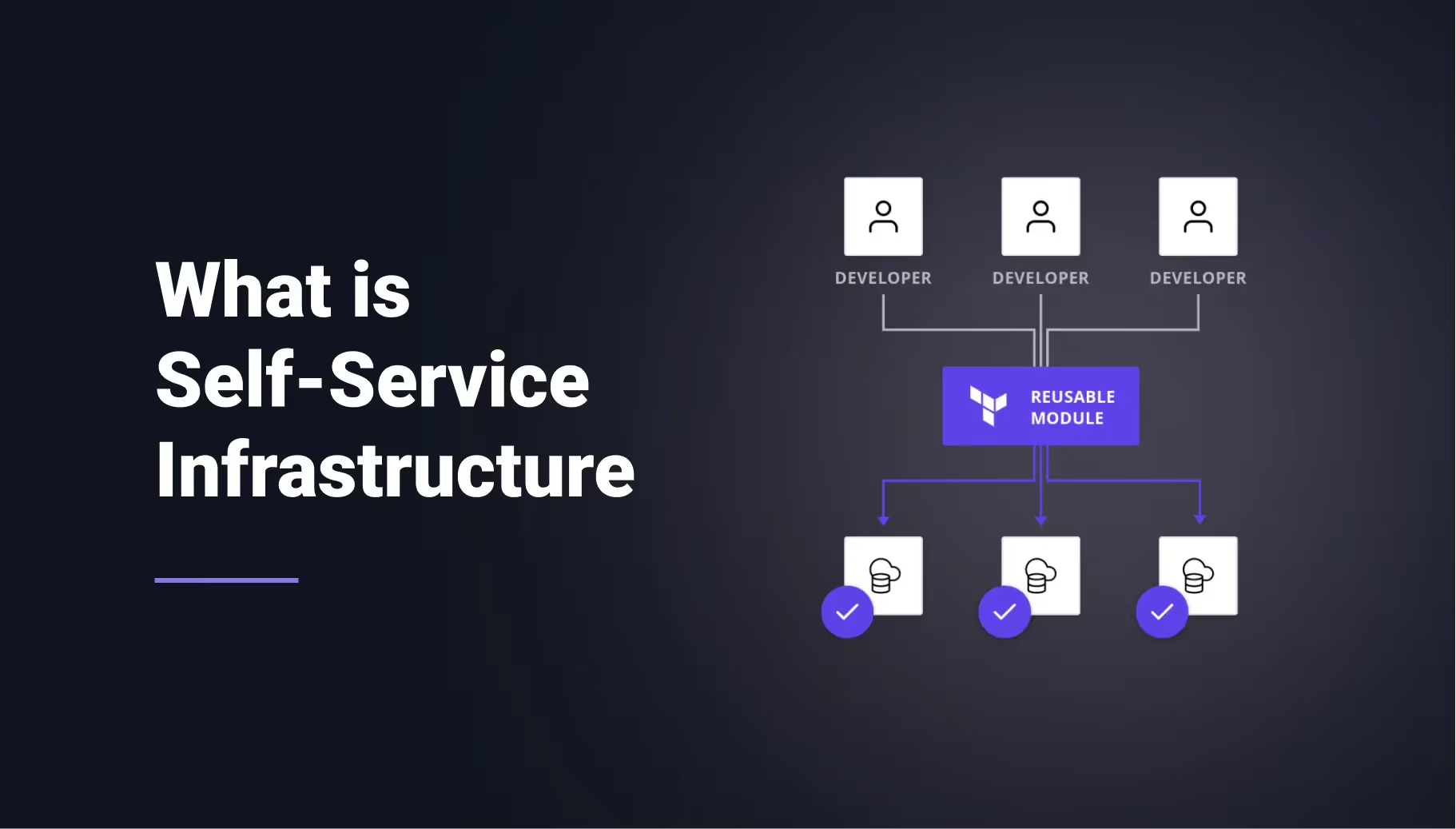
What is a Self-Service Infrastructure Platform?
In today's fast-paced technology landscape, companies are in a constant race to innovate and deploy applications quickly. Ensuring that development and operations teams can collaborate efficiently is critical to achieving this goal. Self-service Kubernetes management platforms have emerged as a vital solution to this challenge. In this article, we will explore the concept of self-service infrastructure platforms, the problems they address, and their benefits for engineering and DevOps teams.

Understanding Qovery Pricing: Transparent and Flexible Billing
At Qovery, we understand the importance of transparency when it comes to pricing, especially for our customers who rely on our services to power their applications. One of the most frequently asked questions we receive is about our billing system, the meaning of "Active Developers," and how we adjust pricing based on usage. In this article, we will break down the basics of our pricing structure, provide examples to illustrate how Qovery's pricing works in real-world scenarios, and explain our proactive approach to supporting organizations experiencing growth.
Embrace the Power of ARM and AWS Graviton with Qovery – It's Now GA!
Qovery now fully supports ARM and AWS Graviton instances! This exciting update means you can now enjoy a whole new level of efficiency and cost-effectiveness when running your cloud workloads on Qovery. In this article, we'll dive into the many benefits of using AWS Graviton instances and discuss some potential downsides to ensure you make an informed decision. And, of course, we'll guide you through the simple process of migrating from AMD64 to ARM with Qovery's help.
Turning Kubernetes into a Developer-Friendly Product
Today, I'm excited to share with you how we've turned Kubernetes into a product that developers can easily use without any headaches. We'll explore why Kubernetes can be difficult for developers and how Qovery's Kubernetes management tool simplifies the process by acting as an intermediate layer and integrating with the developer ecosystem.
Organization Without Management: Armin Jazi's Approach to Guiding Teams
Today we are talking to Armin Jazi, an experienced engineering manager currently working at Open Reply. Armin shares his journey in the tech industry, how he got started, and his experiences as a manager. He discusses his passion for coding, interest in organizations, and experiences working in startups and as a Lead Developer. As a manager, he's faced challenges head-on, made mistakes, and learned invaluable lessons along the way.
Qovery Pledges To Help Businesses Impacted by SVB Crash
Dear customers, users, partners, and investors, As you may have heard, the Silicon Valley Bank (SVB) recently experienced a crash, which understandably raised concerns about the stability of other banks. However, I want to reassure our customers, users, and partners that this sad event does not impact Qovery. We continue to operate normally, and our platform remains fully functional.
Heroku vs Elastic Beanstalk: What to choose?
When it comes to deploying web applications, two popular options are Heroku and Elastic Beanstalk. While both services aim to simplify the deployment process, they differ in several key areas. In this article, we'll compare Heroku and Elastic Beanstalk and discuss the pros and cons of each service.
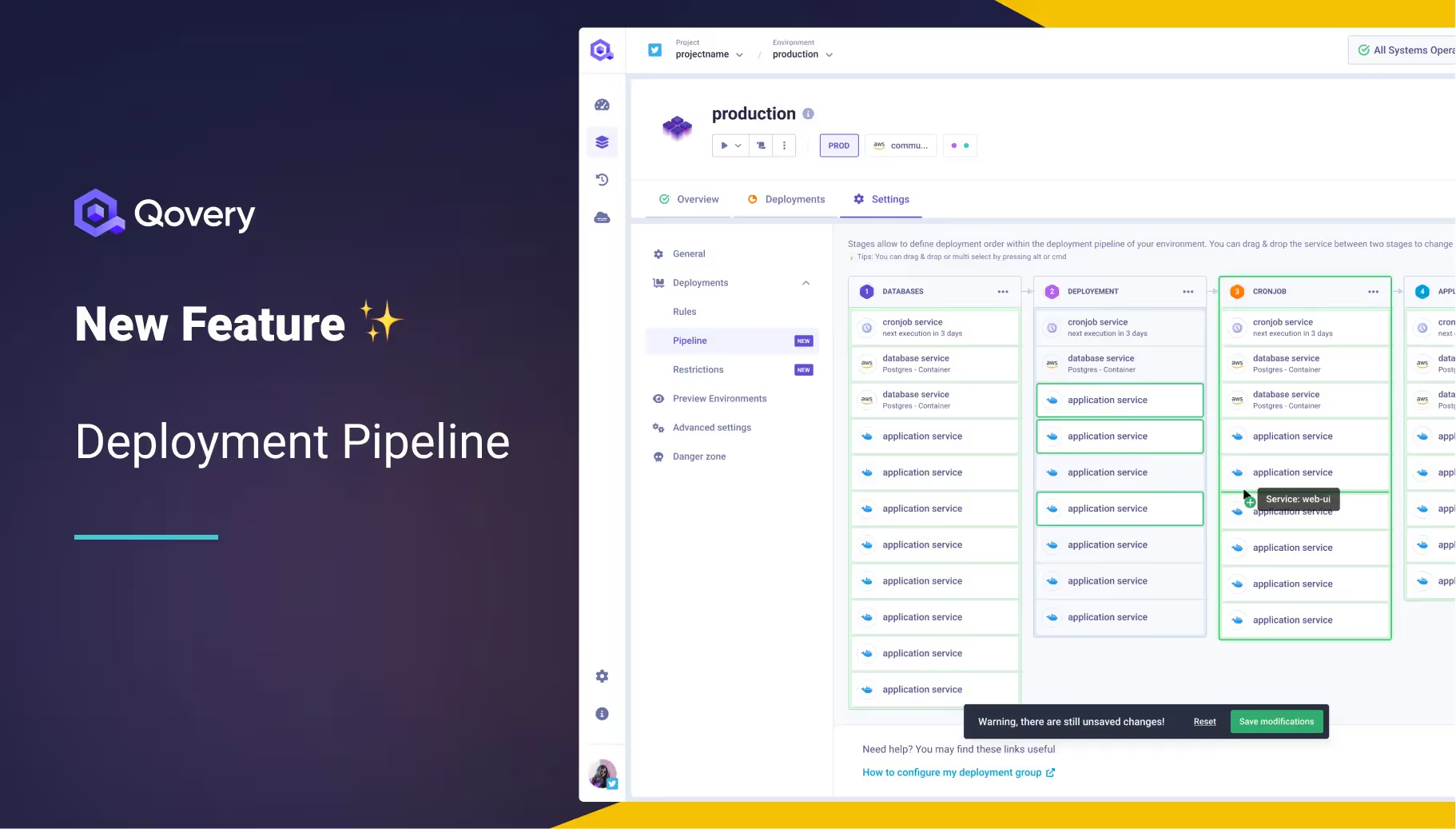
New Feature: Deployment Pipeline
At Qovery, we're always looking for ways to make the deployment process more efficient and reliable for our users. We're excited to announce the release of our Deployment Pipeline feature, a big milestone that opens up tons of opportunities for managing service deployment order, deploying services in parallel, and much more. Let's dig deeper..

From Engineer to Manager: Utkarsh Sanghi's Journey of Leadership and Growth
Get ready for an exciting deep dive into the career of Utkarsh Sanghi, the Head of Engineering at Earnup, a Fintech company. With a degree in Computer Engineering, Utkarsh started his career at Google before seeking a role that would allow him to be more closely connected to end users. He joined Affirm as a backend software engineer and then spent five years at Coinbase working on the payments team, gradually rising to the position of staff engineer and manager. He then moved to the Coinbase Cloud Org, managing a mature team focused on providing crypto infrastructure as a service. Throughout his journey, Utkarsh has acquired various skills and experiences, which he reflects on in this article. So come along and learn from the insights of a successful engineering leader.
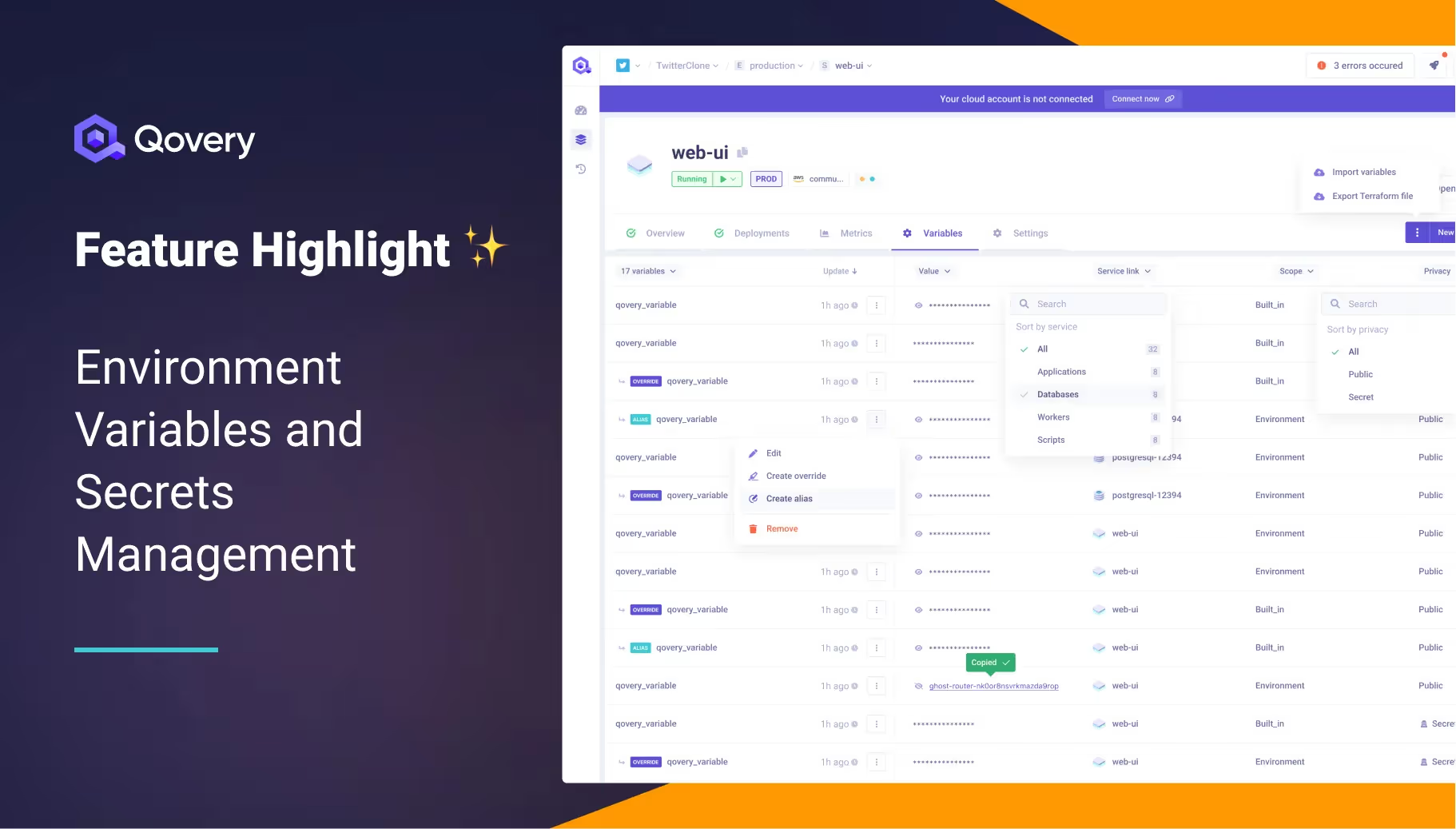
Deep Dive into Qovery's Environment Variables and Secrets Management
Deploying an application is an intricate process that requires managing environment variables and secrets. These variables and secrets help applications access essential resources such as API keys, database credentials, and more. However, manually managing these variables and secrets can be challenging and time-consuming, especially for engineering teams that manage multiple applications. Fortunately, Qovery has a solution for this. A powerful environment variables and secrets management system makes managing variables and secrets simple and secure. In this article, we'll explore Qovery's environment variable and secret management system and how it can revolutionize the way your engineering team manages your applications.
Say Goodbye to Digital Ocean: Major Change in Supported Cloud Providers
Hey there, Qovery users! We hope you're doing well. We've got some big news to share with you today about the cloud service providers available on our DevOps automation tool.
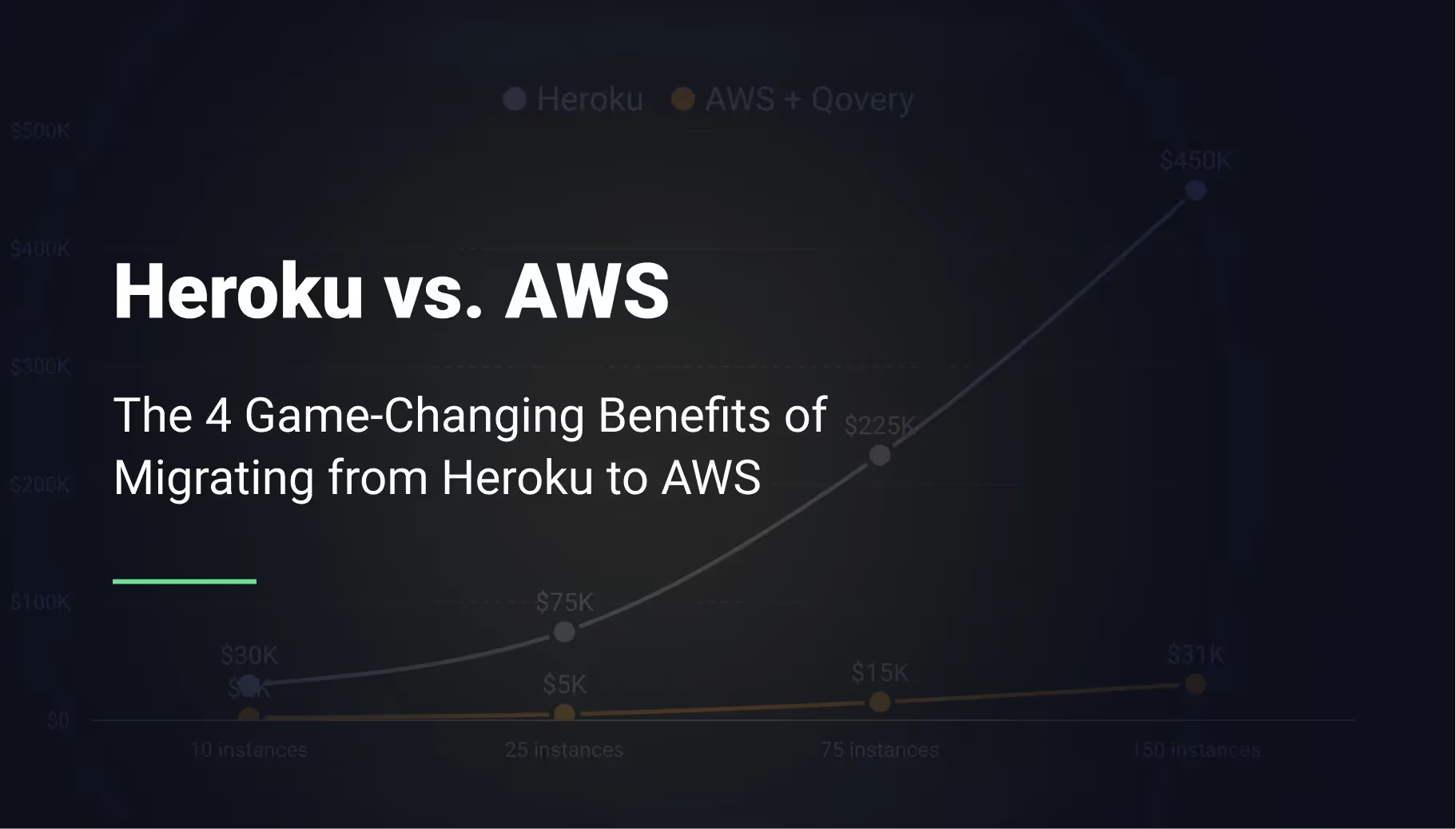
The 4 Game-Changing Benefits of Migrating from Heroku to AWS
Hi there! If you're in the tech world, you've probably heard about the trend of companies moving from Heroku to AWS. At Qovery, we've seen an increasing demand from companies looking to make this move. And for good reasons! Here are the top 4 reasons why companies are choosing AWS over Heroku:
Real World Experience: Transitioning to the Cloud and Navigating the DevOps Landscape
Join us on an inspiring journey as we explore the career of Ryan Kelley, Lead Platform Engineer at a large US defense contractor. From starting as a help desk in a small town to leading a team at the Department of Energy that became the first LEED Platinum building with an operating data center, Ryan's story is a testament to the power of hard work and determination. He shares his experience transitioning to the cloud, the tools he uses on a daily basis, and how he collaborates and stays organized as a distributed team with autonomy. Dive into the ever-evolving world of DevOps and gain valuable insights from a seasoned expert in the field.
Heroku Enterprise vs. AWS: What to choose as a business in 2023?
When it comes to cloud infrastructure, there are countless options available. From the easy-to-use and scalable Heroku Enterprise to the powerful and versatile AWS, it can be difficult to know which platform is the best fit for your business. However, more and more companies are finding that Heroku Enterprise is not the best choice for their needs and are switching to AWS. This migration not only results in cost savings but also improved infrastructure, more features, and better predictability for the future. In this article, we'll explore the reasons why companies are choosing to migrate from Heroku Enterprise to AWS and how it can benefit your business.
Efficiently Managing Multiple Environments Using GitLab CI
GitLab CI is a powerful tool for managing the software development and deployment process. It allows you to define and automate build, test, and deployment pipelines and provides features such as version control, collaboration, and continuous integration. However, while GitLab CI is an excellent tool for managing a single environment, it can have some limitations when it comes to managing multiple environments, especially dynamic environments. In this article, we will explore some of these limitations and discuss how you can better use alternative tools and solutions to support managing multiple environments with GitLab CI.
How To Manage Multiple Environments With Terraform in 2023
Managing multiple environments with Terraform can be a complex and time-consuming task. An environment refers to a specific configuration or set of resources within a system, such as development, staging, or production environment. These environments often have different requirements and configurations, and managing them separately can be challenging.
2022 Retrospective - Looking ahead to 2023
2022 was a year of tremendous growth for us here at Qovery. We released Qovery V3, grew our customer base, saw our platform use grow exponentially, met our target revenue, and more! Thanks to the Qovery team for their hard work, we achieved an impressive amount in 2022. It’s truly a joy to work with brilliant people who live out our daily values - humility, hard work, and customer obsession! Thanks to our customers’ faith in us, we can do what we love and continue to grow. So, thank you! Without you, none of this would be possible. Join us on a trip down memory lane to rediscover what we accomplished in 2022.
How To Become A Proficient DevOps Engineer in 2023
Becoming a proficient DevOps professional involves mastering a wide range of technical and non-technical skills, as well as gaining a deep understanding of the principles and practices of DevOps. Here are some key steps that can help you to become a proficient DevOps professional.
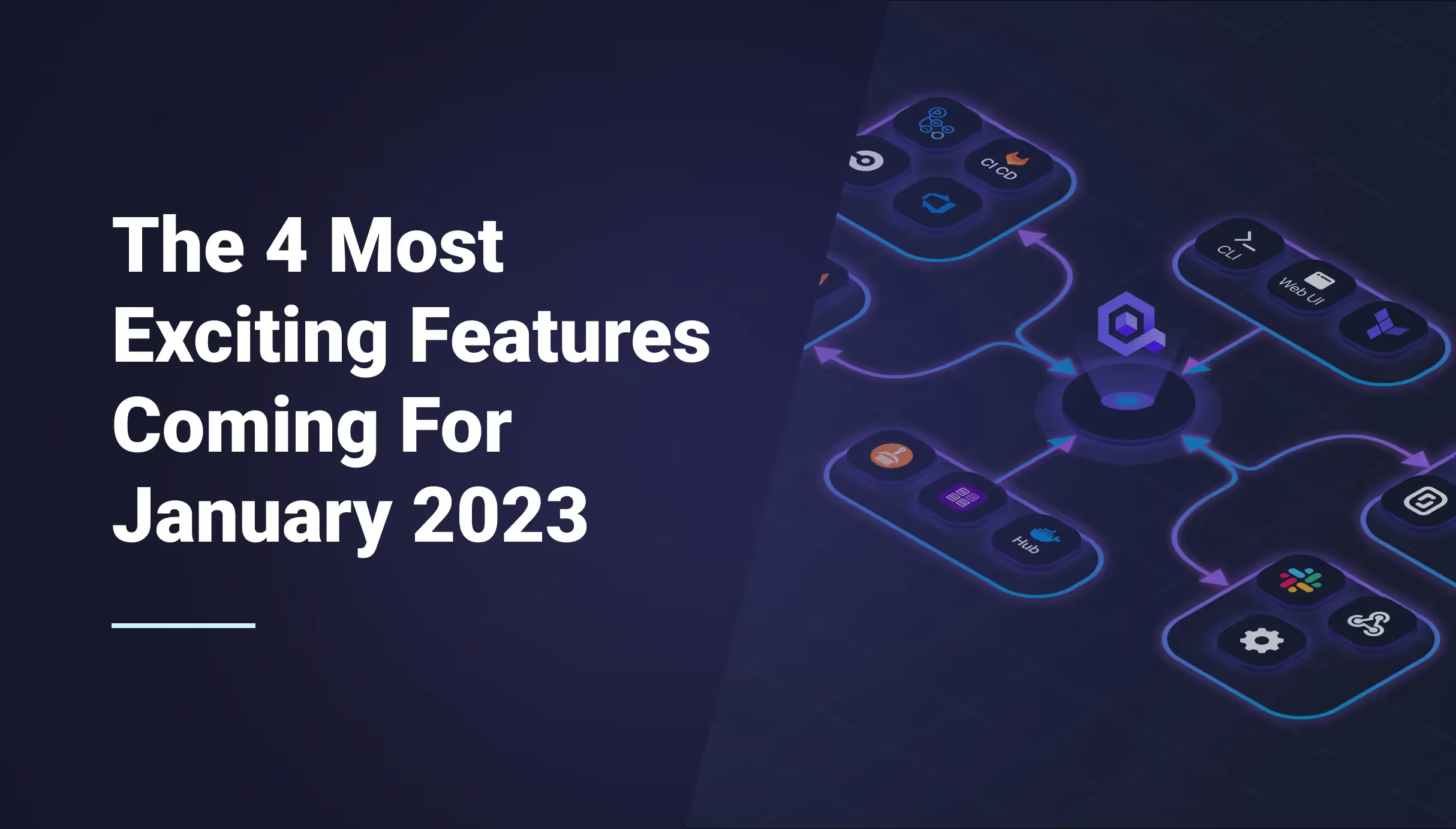
The 4 Most Exciting Features Coming For January 2023
What a year. 2022 was crazy for our product team. So many features have been released, like our new open-source web console, our Terraform Provider, RBAC, and Container Deployment... I can't even list all the things we have delivered. You should check out our changelogs, updated every 2 weeks, to see how crazy the pace was. Now, it's the perfect time to announce the most expected and exciting features coming for January 2023. Let's go!
The Top 10 Open-Source Products From KubeCon North America 2022
KubeCon is the major cloud-native gathering of thousands of people from around the globe. The event is attended by many emerging startups and companies working on revolutionary products around Kubernetes, security, containers, and DevOps. It is a great opportunity to share insights and collaborate on various community projects.
The Top 10 Products From KubeCon North America 2022
The KubeCon event is a major cloud-native gathering thousands of people and hundreds of vendors for 3 days. Technology enthusiasts and adopters from leading cloud-native and open-source communities gather and discuss innovative ideas at KubeCon. It provides a forum where you can exchange relevant information and insights on the latest trends in Kubernetes and the container world.
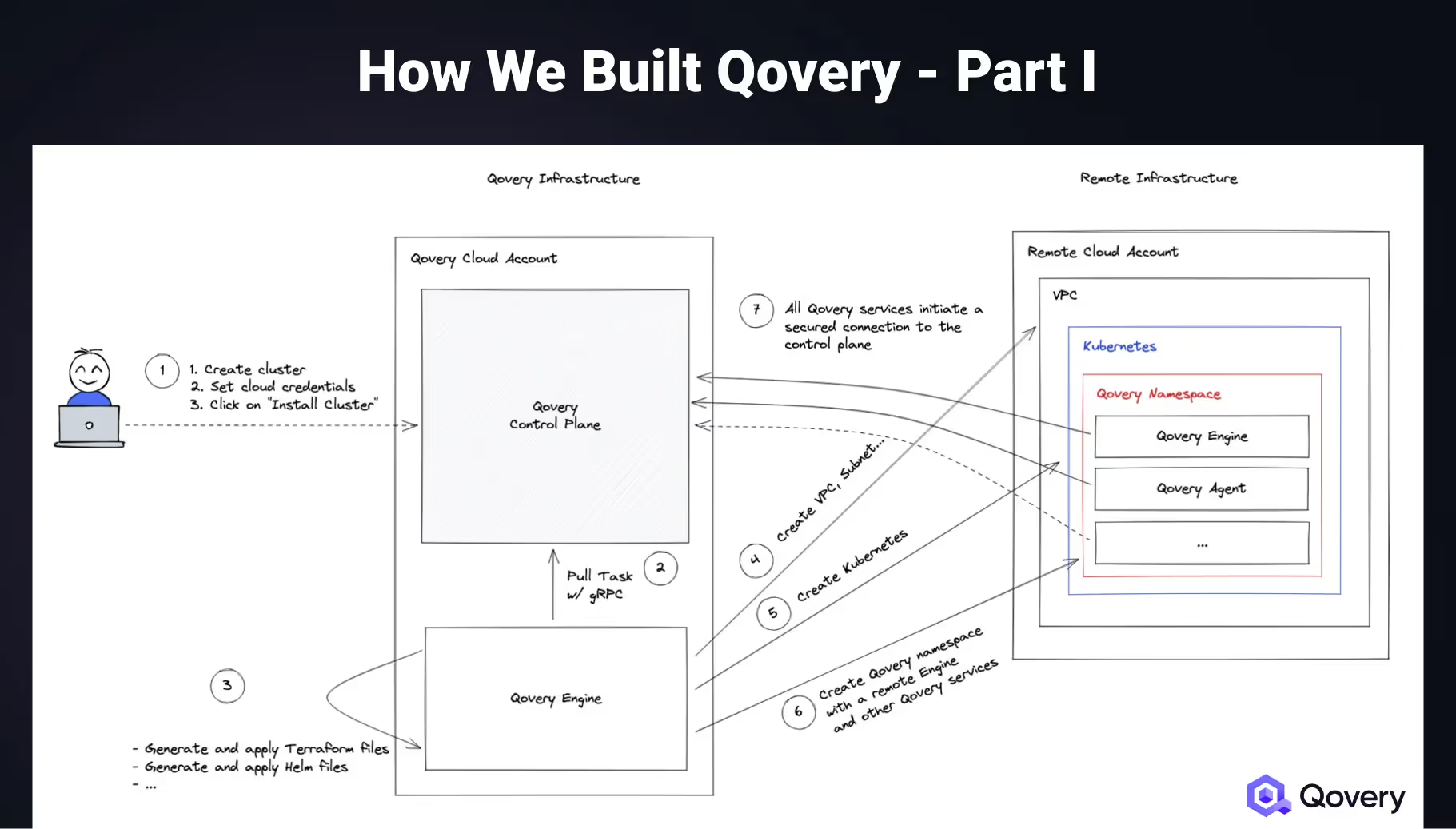
How We Built Qovery - Part 1
I am excited to launch a new series of engineering articles to dig into all the details of How we Built Qovery. A platform built for DevOps, SRE, Platform Engineers, and Developers since January 2020. Since day 1, the Qovery team has strived to make Qovery as open as possible and fight against the black box effect! In this series of 5 articles, I will explain as much as possible how things work behind the scene. I will start with a high-level view of the services and the architectural design we have chosen to put in place. Let's go!
Your CI GitFlow is Broken
One of the great things about GitFlow is that it makes parallel development very easy by isolating new development from finished work. New development, such as features, is done in feature branches and is only merged back into the main body of code when developers have validated the feature and the code is ready for release. For most development teams, feature validation happens in a staging branch coupled with a single testing environment. When this single environment is broken, releases are delayed, developers are stressed, and your team loses the benefits of GitFlow - promoting parallel development. In this article, I will explain why using a single testing environment breaks the GitFlow benefits and introduce a solution to get dynamic testing environments per branch - Preview Environments.
Qovery is a G2 High Performer for Summer 2022
We at Qovery are excited to announce that G2 has named Qovery as a Summer 2022 High Performer in the following categories: Continuous Deployment / Environment as a Service. G2 is the world’s largest tech marketplace. The High Performer Award recognizes companies with high customer satisfaction ratings relative to their market presence.
My Feedback about Nixpacks - an alternative to Buildpacks
2 months ago, I discovered Nixpacks - an alternative to Buildpacks to build a final container image that simply works. I’ve tried it with multiple projects, and the promise is very good. I feel it is less black magic than Buildpacks and easily extensible. In this article, I will share my feedback on the pros and the cons of this emerging project. Let's go!
Why DevOps Engineers Love and Recommend Qovery
My team and I built Qovery to empower DevOps engineers and Developers to better work together - without compromises. In 2022, DevOps engineers need to build reliable infrastructure on top of the best cloud service providers (e.g. AWS, Azure, GCP), dealing with security concerns, productivity, reliability, and many services. DevOps engineers are responsible for a lot of things in an organization. From CI/CD, to the run of the apps in production and the backup of databases. Needless to say, they need to help Developers ship features, improvements and fix bugs as fast as possible. DevOps in 2022 is not an easy job. They need to master so many things in a short period that any product that can help them in their day-to-day work is appreciated. That's why Qovery exists! In this article, I will share feedback from DevOps engineers using Qovery's DevOps Automation Tool and why they love and recommend using it! Let's go 👇
Create Outstanding AWS Infrastructure with Terraform and Qovery
Terraform combined with Qovery is like giving superpower to DevOps and developers. I am super excited to launch a brand new GitHub repository with "ready-to-use" examples to deploy crazy AWS cloud architecture with Terraform and Qovery. Feel free to use them, modify them and share them with us and our community.
New integration: Receive deployment notifications into Slack
I am super excited to announce that we have released our Slack integration. Then, you no longer need to watch your emails or keep watching the Qovery console to know if a deployment has occurred with success (or not 😁).
The Top 10 AWS Architectures Built with Qovery in 2023
We are in 2023, and hundreds of startups have built their infrastructure on AWS using Qovery's DevOps automation tool. This article will share the 10 best (and fancy) AWS architectures our customers have made. From the most classic architecture to the craziest 🤪 It can give you some ideas. Let's go 🚀
We built the "Netlify for backend" that runs on your AWS account!
In 2020, my co-founders and I had this crazy idea of bringing a better Developer Experience on top of AWS. As developers often start on a path with a simple React app or a JS tool, they need a platform that would support them throughout the process of building robust applications. You know, the one that any developer can build and deploy their next successful product in seconds using their preferred tools. Somehow, AWS lacked this offering 😅. This is where Netlify, especially Netlify functions, came in as an inspiration, especially with its ease of settings configuration. The Developer Experience on Netlify, where deploying an application is as easy as pushing code to Git, attracted many. But while many use Netlify for frontend, it doesn’t run on your AWS account :(. In 2 years, 20,000+ developers and hundreds of companies have transitioned from Netlify to AWS with Qovery, leveraging the unique settings and Developer Experience.
Announcement: RepliByte - an open-source tool to seed your development database with real data ⚡️
After weeks of hard work, we are super excited to announce RepliByte - an open-source tool to seed your development database with real data ⚡️
We Build The Future Of The Cloud ⚡️
At Qovery - Our Team Build The Future Of The Cloud 🔥 Proud of our team and what we have done in 2 years! Thanks to our 20k developers using Qovery, our customers, our partners, our investors. We Are Building The Future Of The Cloud Together 😊
Kubernetes vs Nomad: What to Choose in 2022?
Kubernetes has become an enormously popular choice for containerized applications since its 2014 launch. Many software developers rely on the tool, which is now in v1.23.1. However, there are other choices on the market for container orchestration. One such tool is Nomad, originally launched in 2015. Generally pitched as an alternative to Kubernetes, Nomad, which most recently released v1.2, promotes itself as a simple, flexible option for software teams. This article will offer a comparison of the two container orchestration tools, so you can decide which will work best for your applications in 2022.
37 minutes to deploy a fullstack app on my new AWS account
Today, I was working on our Terraform Provider, and I noticed that I never tried to deploy an application from scratch on a new and clean AWS account. Meaning, an empty AWS account - with 0 resources created. No VPC, no EC2, no Load Balancer, nothing... just an IAM user to get access to my AWS account programmatically. This post explains what I did and how it took 37 minutes and 33 seconds to literally: create a VPC (10 min) create an EKS cluster and a load balancer (5 min) create an ECR repository (10 sec) deploy an RDS database (15 min) build and deploy my Django app from GitHub (2 min) add a custom domain to my app (2 min) create a TLS for my custom domain (15 sec) And tada! 🎉 😅 Let's explain all of that!
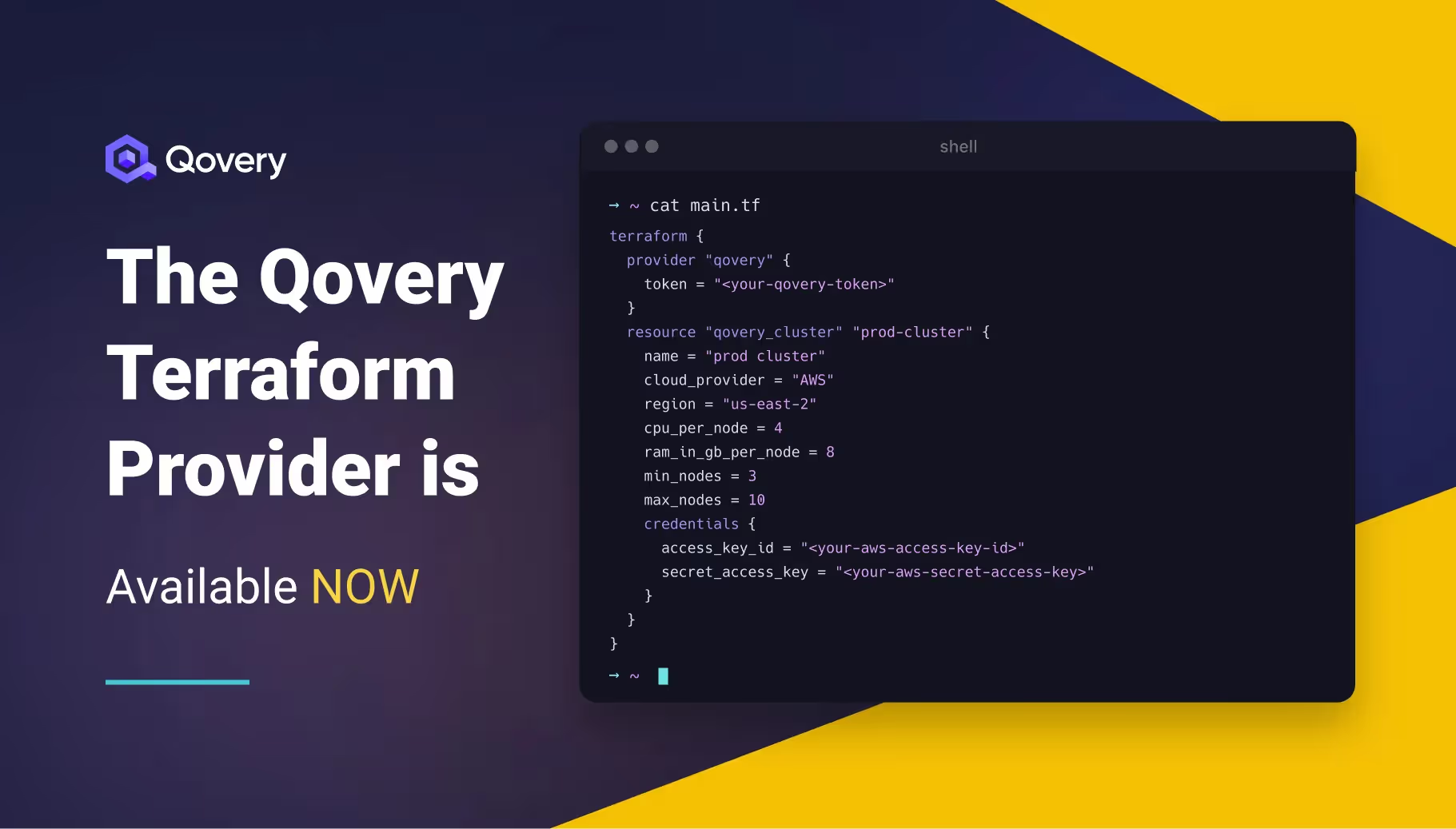
The Qovery Terraform Provider is Available Now
Big news! The Qovery Terraform Provider is now publicly available for everyone! This article will show you what you can do and why you should consider using Terraform with Qovery.
How a team of 15 developers deploys 4200 times per Month using the Preview Environments
When the CTO of this growing company (freshly acquired by a billion-dollar company) contacted me, he was concerned by the ability of his team to deliver what they committed to for the current year. His main issue was 15 engineers working in the same development environment. Can you imagine developing on the same workstation? Things will get worst as they plan to quadruple their engineering team size in the next 18 months. They tried to set up ephemeral environments with Terraform, Kubernetes, and other great tools but they literally failed by the complexity of building such kind of system with a tech stack of 8 applications and databases.
Kubernetes Tips: How to find the Port of a Service with a DNS request
Last week I created a guide for our users to set up an NGINX service as an API Gateway with Qovery. The API gateway must redirect the incoming traffic to the appropriate service with the correct port. My problem is that the API Gateway does not know the ports exposed for every service. In this post, I will show you a quick tip on finding the port of a Kubernetes service with a single DNS request. Let's go!
Managed Kubernetes Comparison: EKS vs DigitalOcean Kubernetes
The container orchestration service Kubernetes has taken cloud-native application hosting by storm. By automating infrastructure tasks, Kubernetes-an open-source system designed by Google-simplifies the technical work of application deployment, scaling, and management. Managed Kubernetes services take this process a step further, handling more of the management tasks so that engineers can focus more time and resources on developing apps. Every cloud services provider offers its own managed Kubernetes service. Two appealing options are Elastic Kubernetes Service (EKS), Amazon’s Kubernetes distribution, and DigitalOcean Kubernetes (DOKS).
How To Use Buildpacks To Run Containers
The high demand to deliver software that is both highly available and able to meet customer requests has, in part, led to the adoption of microservice architecture, a software architecture pattern that makes it easier to deploy applications as self-contained entities called containers. These containers are nothing but processes that run as long as the application in them is running. This has made containerization the de facto standard for deploying applications and has brought about the development of several new tools and technologies like Kubernetes and Service Mesh.
Are you ready for 2022?
2021 has been a crazy year for the Qovery team. When I look back, 1 year ago we were 4 in the team, now we are 15! We expect to double the size of the team for 2022 while keeping our developer DNA. 2022 looks bright, and we strive to make the cloud simple for everyone.
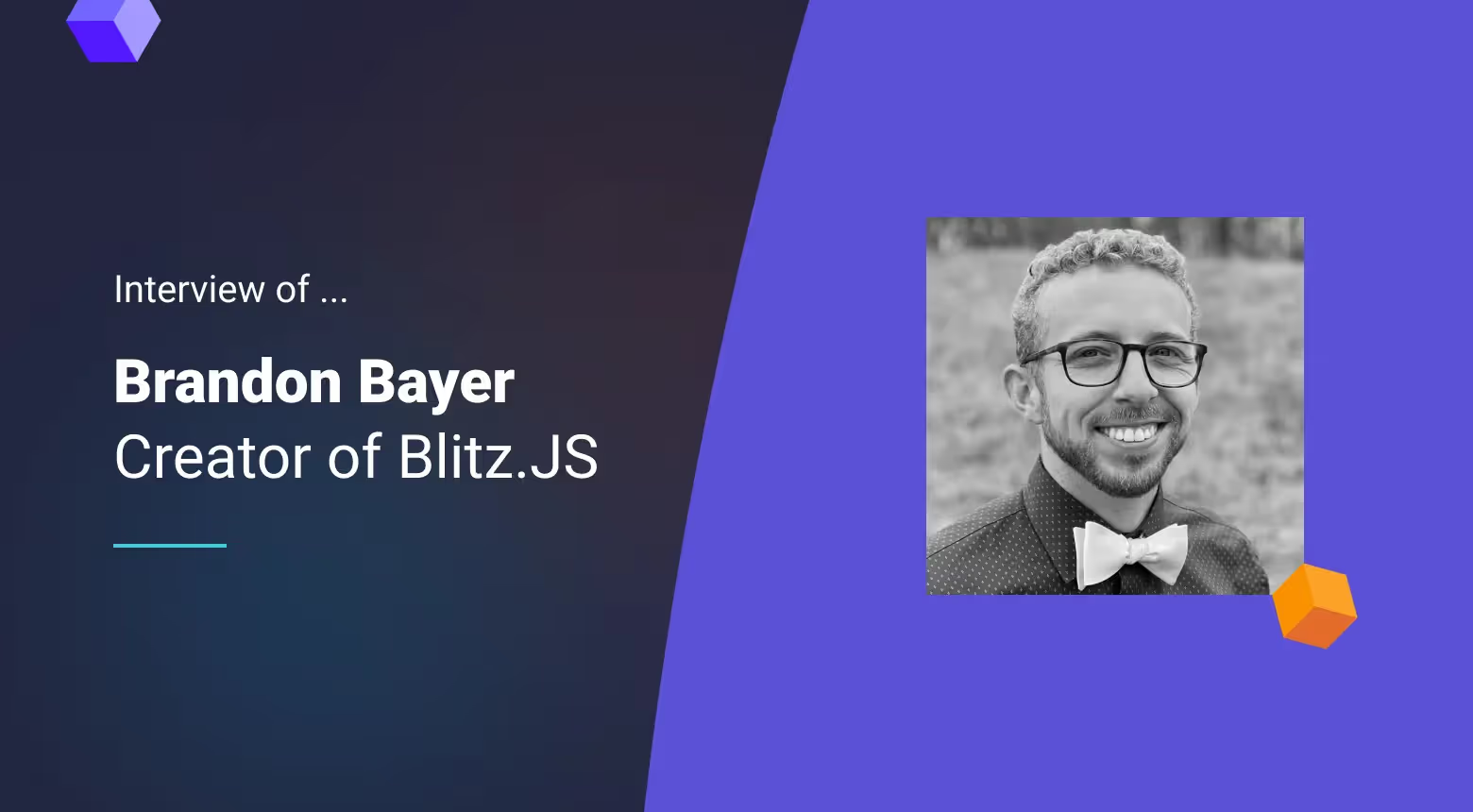
Interview of Brandon Bayer - Creator of Blitz.JS
I am pleased to interview Brandon Bayer, creator of Blitz.JS - a popular open-source React framework.
Pulumi vs Terraform: What are the Differences
Traditionally, provisioning an infrastructure meant a team of field engineers, system admins, storage admins, backup admins, and an application team would all provision and maintain an on-premises data center. Although this system works, it has a few flaws-slow deployment, high cost of setup and maintenance, limited automation, human error, inconsistency, and the underutilization of resources during off-peak periods.
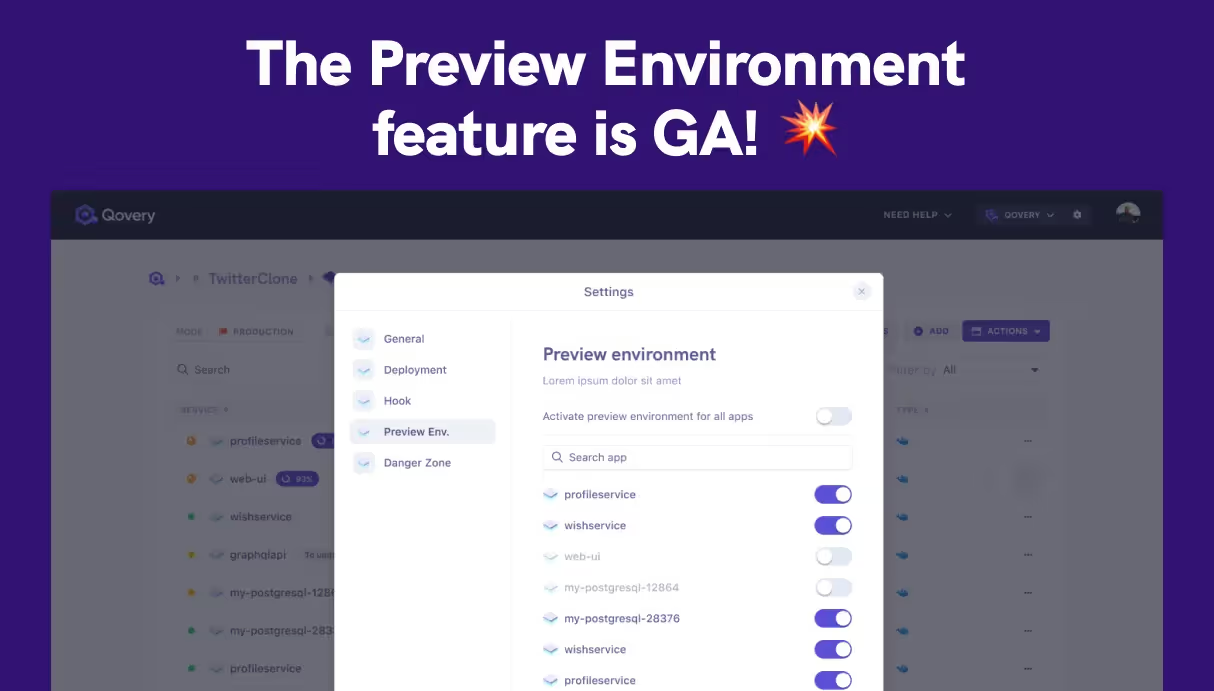
The Preview Environment feature is GA!
I am super excited to announce that our Preview Environment feature is GA (Globally Available) for everyone 🥳.
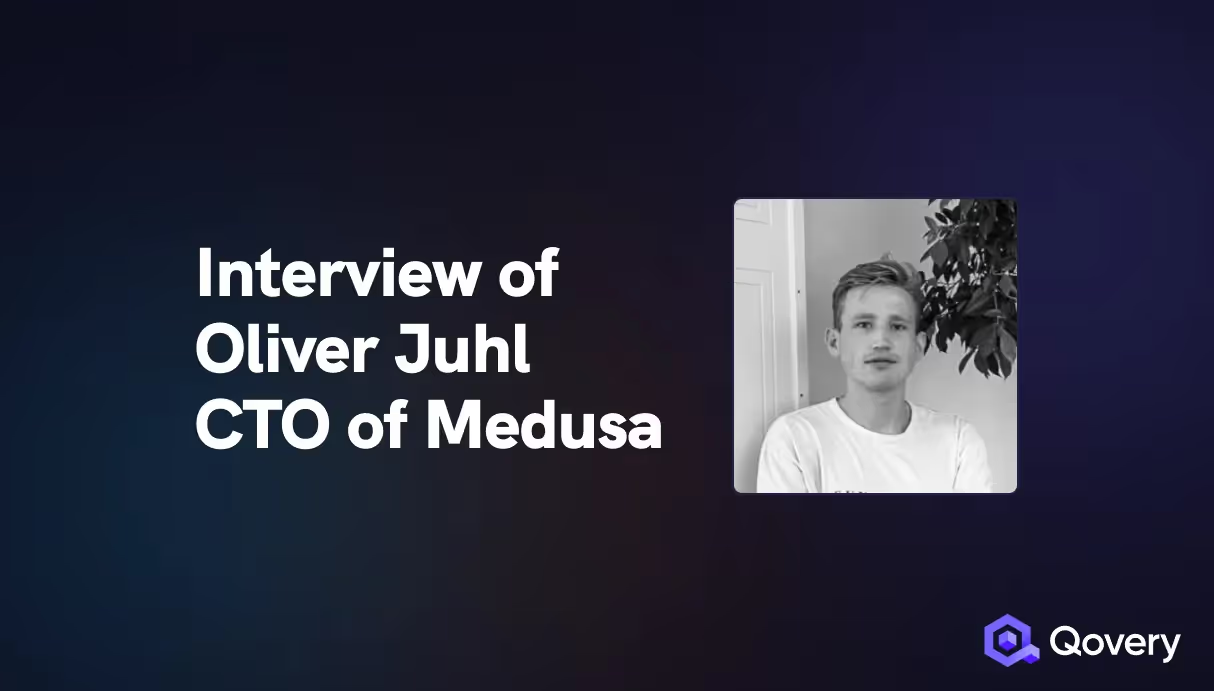
Interview of Oliver Juhl - CTO of Medusa
I am pleased to interview Oliver Juhl, CTO and co-founder of Medusa - an open-source headless commerce platform.
We lost 3800 stars on Github in 1 click 😭
Yesterday was my worst day for a very long time. We spent so much time promoting our Qovery Engine to the open-source community and getting those ~3800 stars. I woke up and discovered that we had lost all the stars and forks from our repository. But what happened?
Interview of Quentin de Quelen - CEO of MeiliSearch
We are pleased to interview Quentin De Quelen, CEO and co-founder at MeiliSearch - an open-source search engine written in Rust.
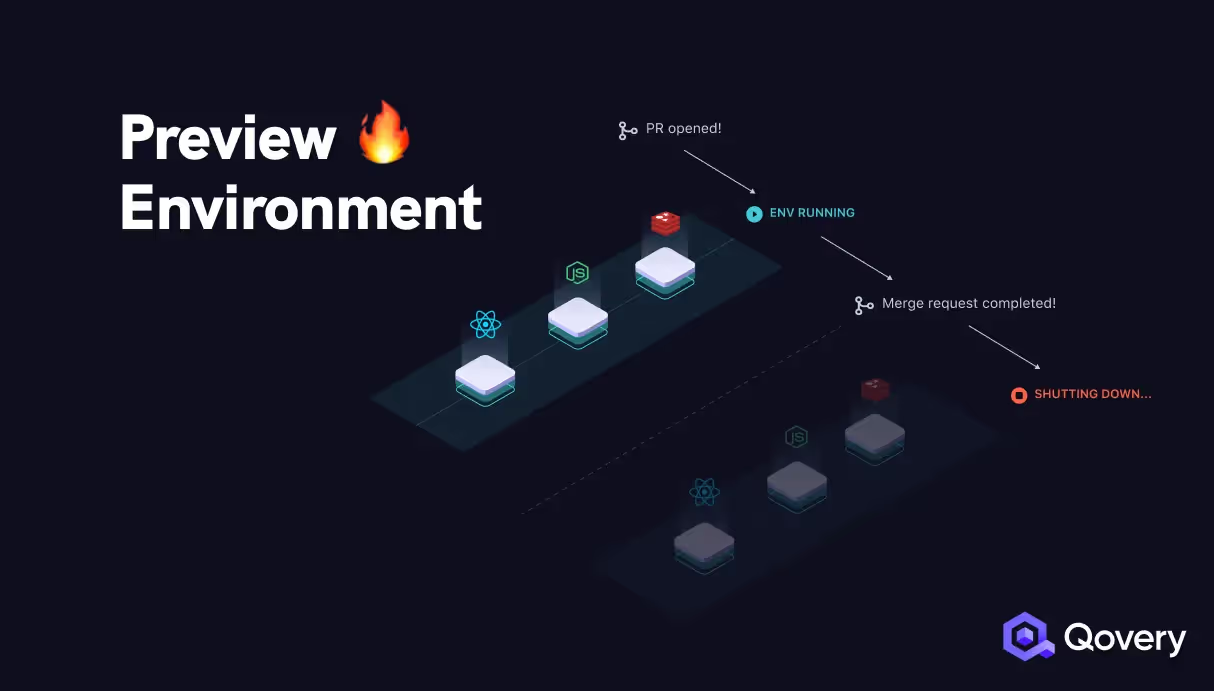
Preview Environment in Early Access
This is the most exciting feature we launched since Qovery v2 has been released - the Preview Environment feature!
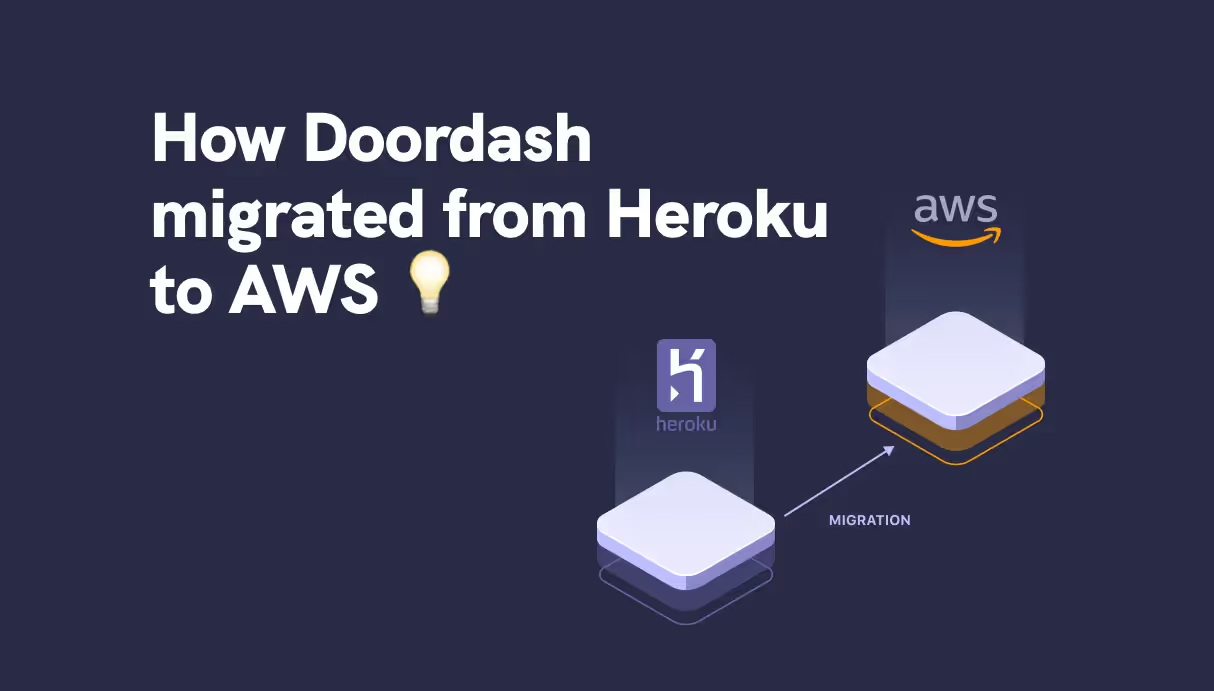
How DoorDash migrated from Heroku to AWS
We are launching a new series of articles, called Tech Stories, dedicated to the stories behind today's most inspiring companies (and people) about their technology choices, decisions, or new implementations. For the first article in this series, I will relate the DoorDash migration story and give you a closer look at when the engineering team realized they needed to switch, how they operated the switch, and their recommendations for others doing the same. Let’s go!
Best Practices and Tips for Writing a Dockerfile
Docker is a high-level virtualization platform that lets you package software as isolated units called containers. Containers are created from images that include everything needed to run the packaged workload, such as executable binaries and dependency libraries. Images are defined in Dockerfiles. These resemble sequential scripts that are executed to assemble an image. Dockerfiles can include several kinds of instructions, such as RUN, to execute a command in the container’s file system, and COPY to add files from your host. In this article, you’ll learn about the key characteristics of Dockerfiles and some best practices to be aware of when you’re writing your own Dockerfiles. Adhering to these guidelines helps you reap the benefits of the containerization movement while minimizing risks in terms of security and performance issues.
Guide To AWS Load Balancers
The four AWS load balancer types explained: Application, Network, Gateway and Classic, when to use each, and how to configure an ALB.
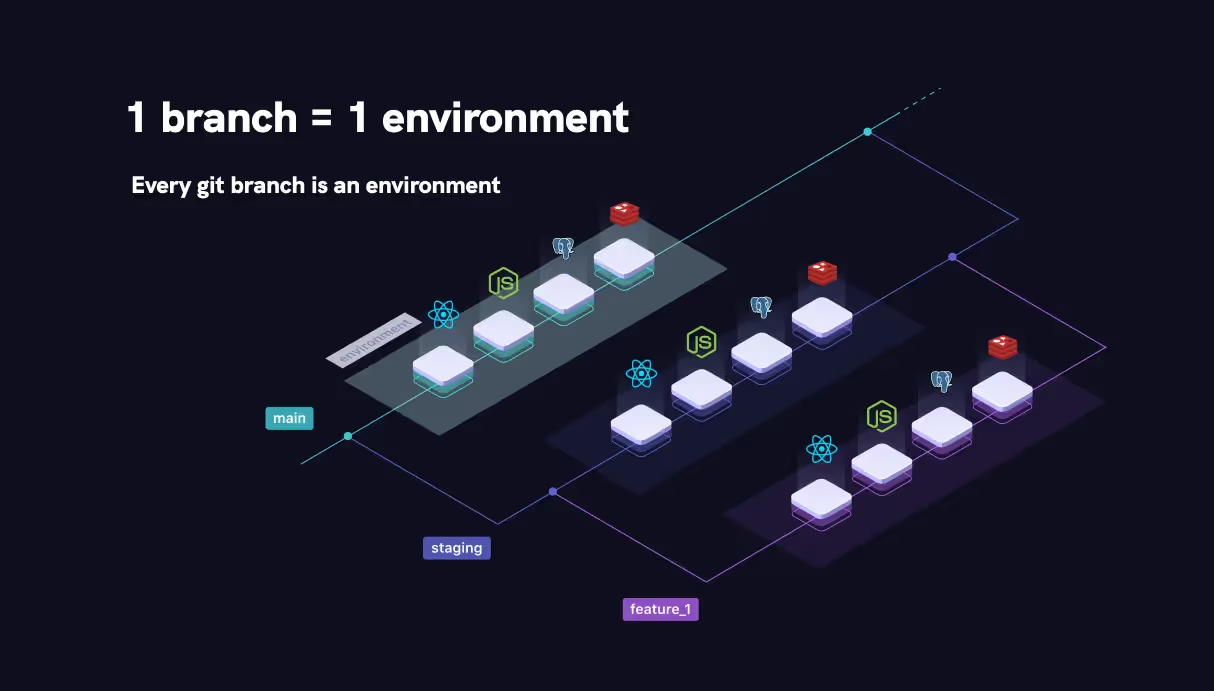
3 ways of cloning an application and a database per git branch
Back in the early days of software development, having multiple developers working on the same application was a tough challenge. That’s why VCS (Version Control System) like Git was created and methodology like Feature Branching was introduced.
Feedback: 6 benefits of Kotlin for building server-side applications
Kotlin is a programming language over the JVM (like Java). It is well known for being the official programming language for Android. But Kotlin is a reliable and powerful programming language that can also be used for server-side applications.

Hashicorp Waypoint vs Heroku: What is the best PaaS for your team?
This week, Hashicorp announced the launch of their new product - Waypoint - aiming to simplify the way developers build and run apps in the Cloud and on any platform (like Kubernetes). The project is open source and is well adapted by the dev community. As CEO and co-founder of Qovery, I am enthusiastic to see this product live. At Qovery, we believe in making the developer’s life more accessible, and seeing big Open Source companies moving in this direction is a good thing for all of us. In this article, I will compare and contrast Hashicorp Waypoint to Heroku. Why? Because Hashicorp created Waypoint to provide an alternative to PaaS (Platform as a Service) like Heroku. Which is, in my opinion targeting two different types of developers. Let’s go TLDR; For devs, Waypoint is a higher-level of abstraction than Terraform, but it's not as simple as Heroku.
I interviewed 200 CTOs from growing startups - here's what came up
Between late 2019 and early 2020, I interviewed more than 200 CTOs of growing US and EU startups on the topics of the Cloud and their working methodologies. I discovered that 86% of these SMB startups use the Cloud and that 48% started their business on Heroku and then migrated to a Cloud provider - especially AWS (Amazon Web Services).
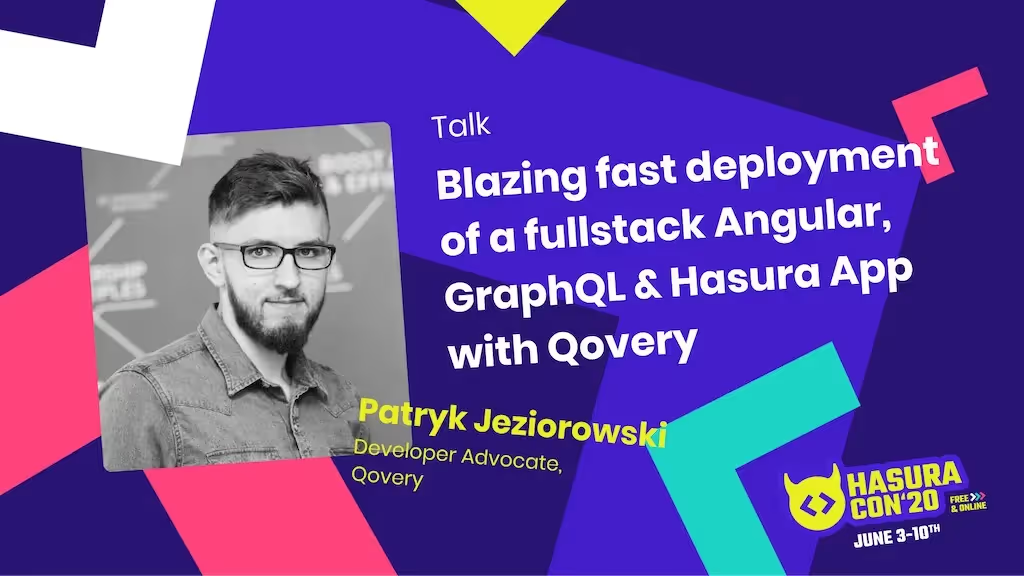
Join us at the Hasura con 2020
Hasura is a turnkey engine that connects your micro-services and database to generate a real-time GraphQL API. That is super cool. Hasura and Qovery is a perfect match to deploy production-ready GraphQL service in just a few seconds. That's why the Hasura team invited us to show the world what we do.

July 2020, What's new? Qovery Business, Web Interface, Faster deployments
Hello and welcome to another issue of This Month in Qovery! Qovery helps developers to deploy their applications in the Cloud in just a few seconds. This is a monthly summary of its progress and community. Do you build something with Qovery? Do you want to be mentioned? Tweet us at @Qovery or reply to this email. Want to get involved? Join the community. WE ARE HIRING👨💻 Needless to say - we are hiring passionate engineers.
June 2020, What's new? Gitlab support, persistent storage, faster deployments...
Hello and welcome to another issue of This Month in Qovery! Qovery helps developers to deploy their applications in the Cloud in just a few seconds. This is a monthly summary of its progress and community. Do you build something with Qovery? Do you want to be mentioned? Tweet us at @Qovery. Want to get involved? Join the community. WE ARE HIRING👨💻 Needless to say - we are hiring passionate engineers.

May 2020, What's new? Custom domain, dotenv file, CLI improvements, Hasura Con 2020
In this Newsletter, we're happy to introduce some updates: Custom domain, dotenv file, CLI improvements, and new resources.
News: A brand new documentation website is out!
The Qovery team is happy to announce that the new documentation website is out!
Qovery and the Twelve-Factor App methodology
The Twelve-Factor App methodology is a methodology for building platform-agnostic and resilient applications. It was introduced by Adam Wiggins while working at Heroku in 2011. Nearly 10 years later, this methodology is still considered by the developer community as an excellent practice to follow when building an application. In this article, we will see step by step how Qovery's DevOps automation software respects and improves the 12-factor methodology. Here we go.
Qovery is now part of the CNCF
Qovery is excited to announce that we are now a silver member of the Cloud Native Computing Foundation (CNCF) and Linux Foundation (LF). As a CNCF silver member, we are looking forward to contributing to CNCF projects and playing an active role in developing the cloud-native ecosystem. Qovery also recently made its deployment engine open-source, an abstraction layer library that turns easy apps deployment on AWS, GCP, Azure, and other Cloud providers.

Qovery: superpowers for developer - multiple environments
All developers are not equal, some know-how to deploy their applications, others don’t. But now it’s over! With Qovery, all developers can deploy their application in the Cloud in just a few seconds. Qovery integrates seamlessly with Github and requires no effort from the developer. We know how it can be painful for developers to deploy applications, manage staging/development/features environments, synchronize databases and all system stuff - even in the Cloud. Developers should spend time doing what they love - developing applications, instead of wasting time on configuring databases, CDN, cache, network... That's why we decided to create Qovery. The first Container as a Service platform that allows any developer (junior, senior, backend, frontend...) to deploy applications in just a few minutes.
Startup: get the Heroku experience on your AWS account
Heroku meets the needs of individual developers who want to deploy their applications seamlessly. The only requirement is to use a git repository and link your git repository to your Heroku account.
We have open-sourced our deployment engine 🔥
After months of hard work with our team of 6. We're glad to announce that our deployment engine is now open-source. Now it's time and possible to contribute.
We raised $1M pre-seed round to simplify application deployment in the Cloud
I am thrilled to announce that we have raised a $1M pre-seed round with top notch investors. Among them are top entrepreneurs and Cloud experts like Alexis Lê-Quôc, co-founder and CTO at Datadog, and Sebastien Pahl, Co-founder of Docker. Qovery will use the funds to strengthen its research and development team and extend their offer to technology companies in Europe and in the US.
Why we moved from Slack to Discord?
Today, at Qovery we have moved from Slack to Discord. We are a software company solving developer problems - application deployment. Solving developer problems require to have a close contact with the developers community. For team communication, we used a dedicated Slack workspace, for community communication - another one. Discord has been a real lifesaver for us. Let's start to tell you why..
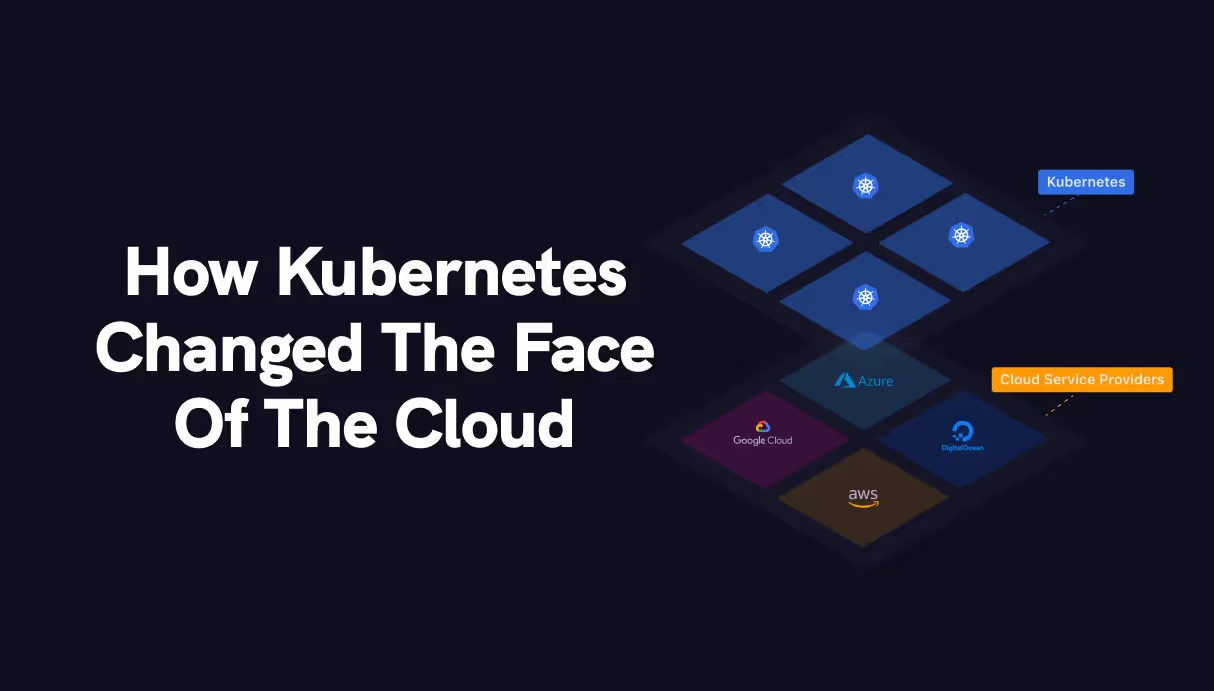
How Kubernetes Drastically Changed The Face Of The Cloud
Kubernetes is an open-source platform that is used for automating computer application configuration, scaling, and deployment. In order to understand the importance of Kubernetes, let us take a step back and understand why this platform was introduced in the first place.
Why Rust Has a Bright Future in the Cloud
Rust is a programming language? Have you heard the question from your developer friends? Well, Rust has broken into TIOBE Top 20 Most Popular Programming Languages. Briefly stated Rust is a direct competitor to C and C++ and at a lesser level competes with Java and C#. There has been rapid adoption by open source projects by Mozilla, Polkadot, and Deno besides exciting system programming enterprise action from the likes of Google, AWS, Microsoft, Cloudflare, Dropbox, and many others. Let us explore more on this fascinating programming language, its advantages, and its growing popularity in today's emerging technology world.
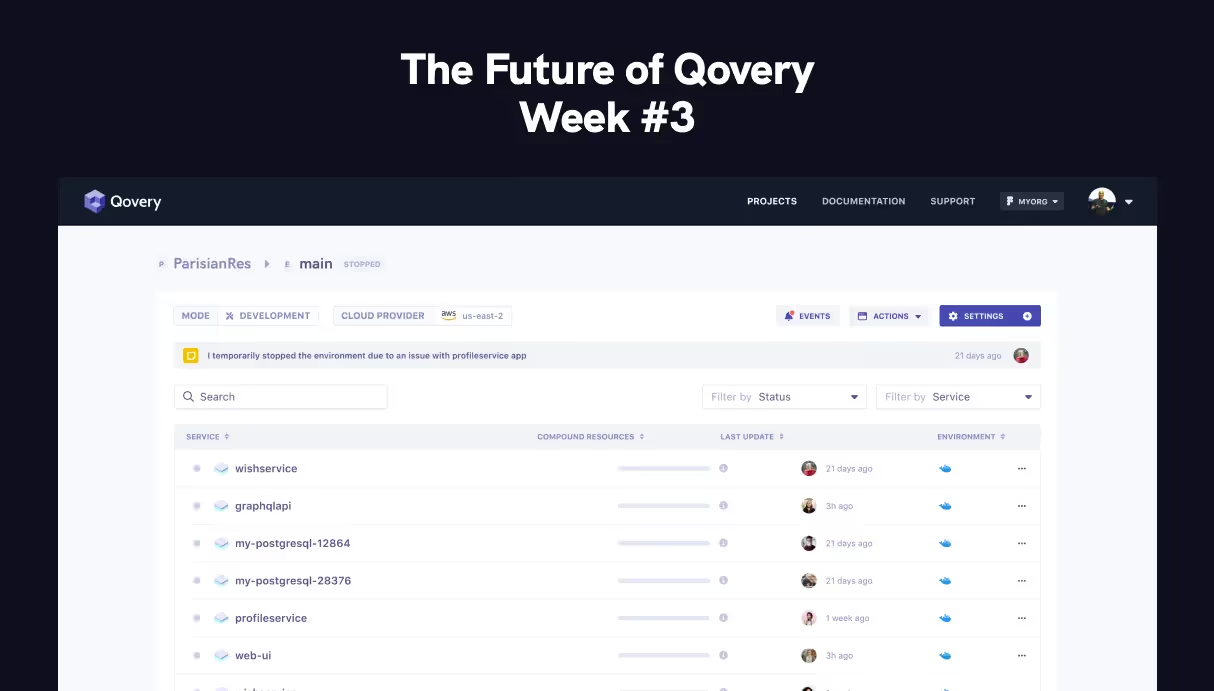
The Future of Qovery - Week #3
During the next eight weeks, our team will work to improve the overall experience of Qovery. We gathered all your feedback (thank you to our wonderful community 🙏), and we decided to make significant changes to make Qovery a better place to deploy and manage your apps.
I used Rust in production for 6 months! Here's my feedback
Are you in two minds when it comes to learning new programming languages? Probably you may feel the same when you first heard about the Rust programming language. Good things require some effort and here's what I have to say after using Rust programming language in production for a 6-month duration – It is great and Simply superb! Let's get the clear practical experience picture with Rust at Qovery.
Online CNCF event: Why you should use NATS for your next Cloud native application
When building Cloud applications, we often put significant effort into breaking down our monoliths into small code pieces. They are easier to maintain but hard to make them communicate together. This is where NATS comes in. NATS is a simple and highly performant messaging system for Cloud-native apps. In this talk, I will share my experience using NATS at Qovery, why you should or should not use it, and the difference between the well-known RabbitMQ and Kafka.
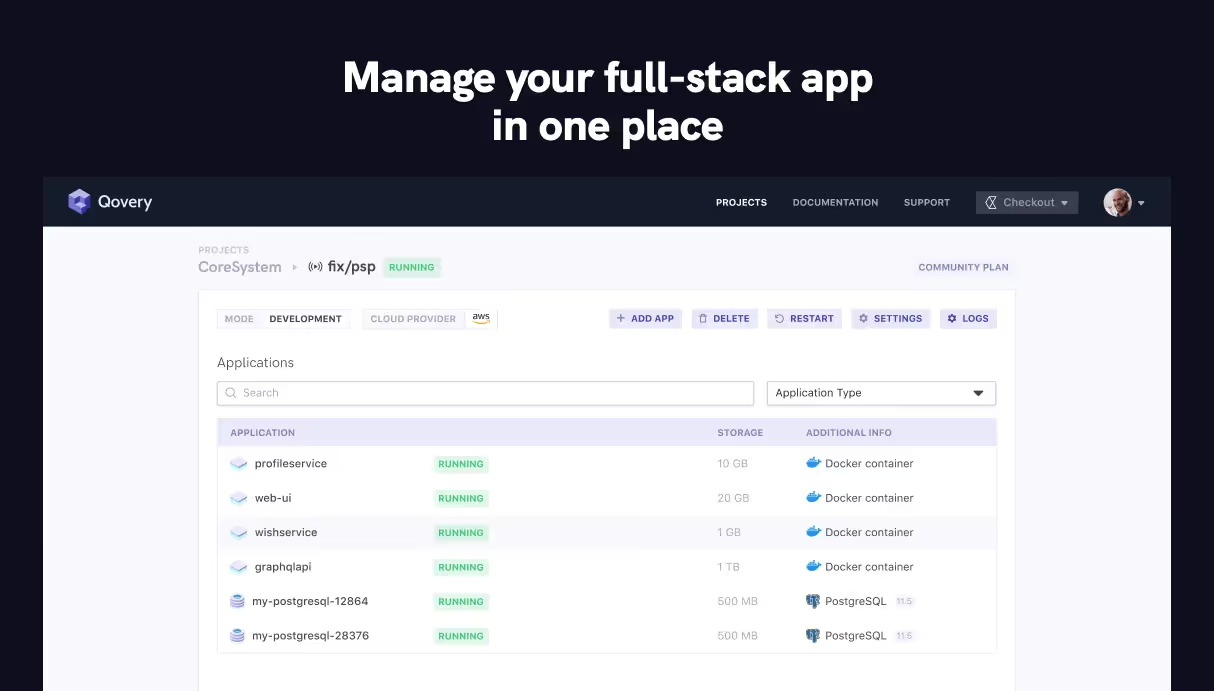
Product Update #36 - New app deployment flow 🔥
During the last 4 weeks, our team focused on improving the Developer Experience of Qovery. And here we are... We finally released our new app deployment flow. No more painful copy/paste .qovery.yml into your Git repository. In just a few clicks, you can deploy your apps with all the required services.
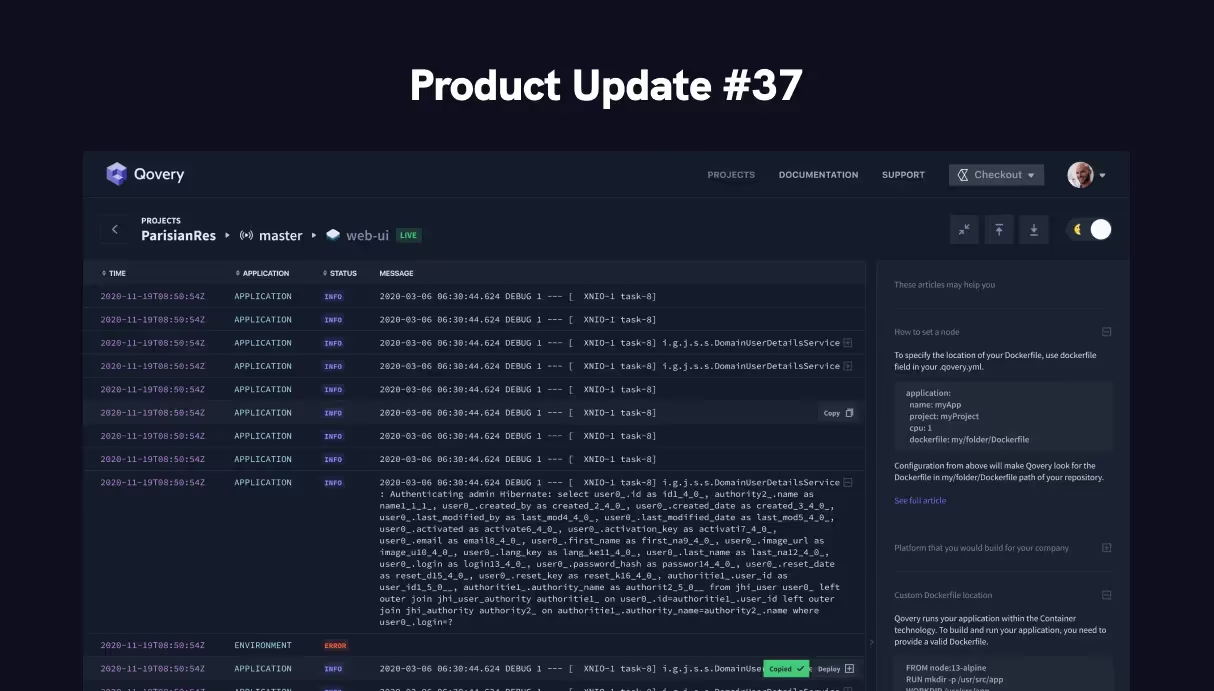
Product Update #37 - Deploy your apps on your AWS account ☁️
During the last 3 weeks, our team keep working to improve the Developer Experience of Qovery. Here are the latest product update👇
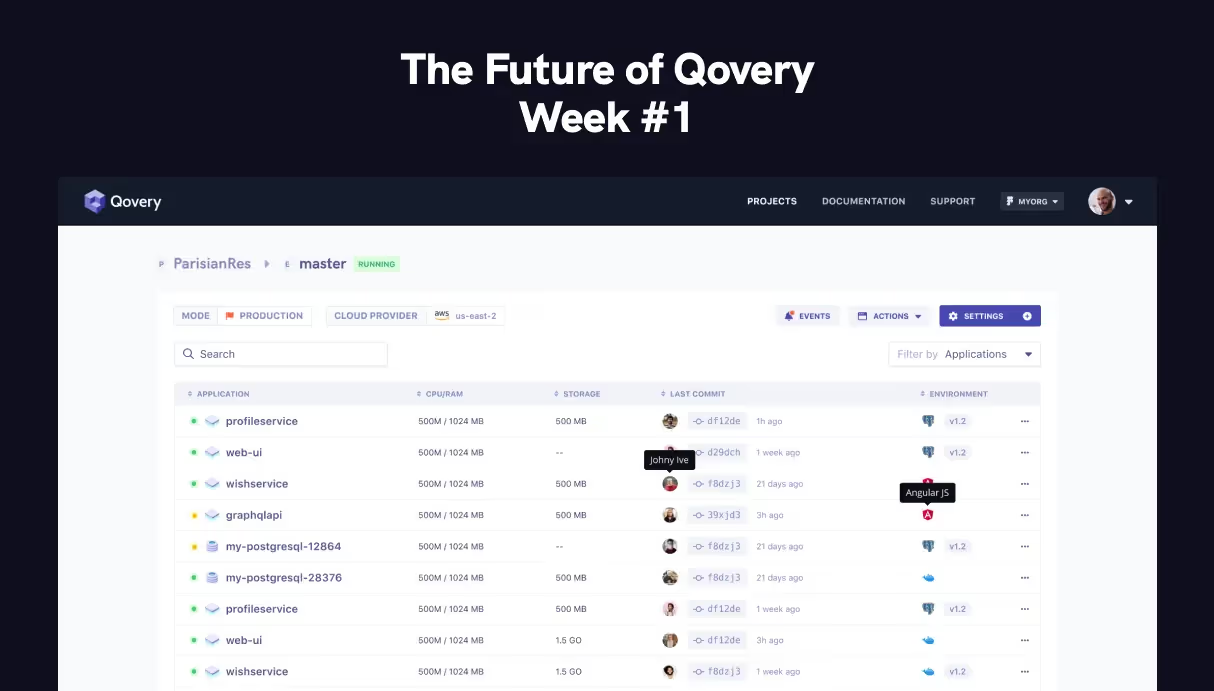
The Future of Qovery - Week #1
During the next ten weeks, our team will work to improve the overall experience of Qovery. We gathered all your feedback (thank you to our wonderful community 🙏), and we decided to make significant changes to make Qovery a better place to deploy and manage your apps.
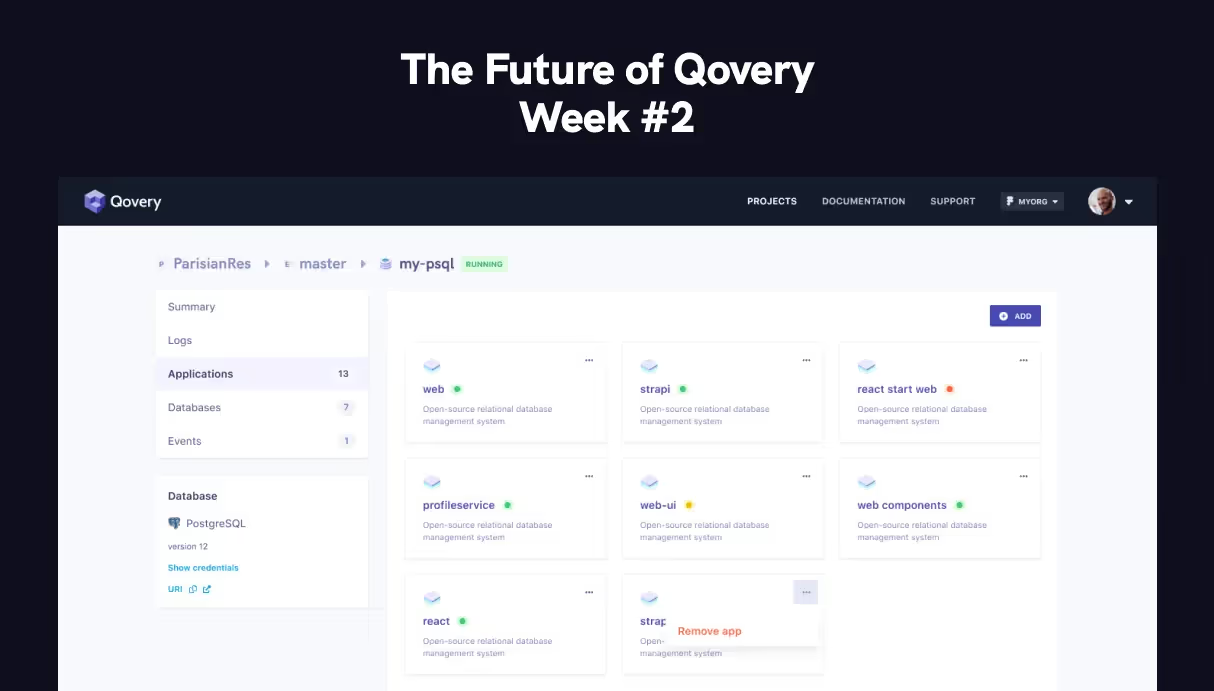
The Future of Qovery - Week #2
During the next nine weeks, our team will work to improve the overall experience of Qovery. We gathered all your feedback (thank you to our wonderful community 🙏), and we decided to make significant changes to make Qovery a better place to deploy and manage your apps.
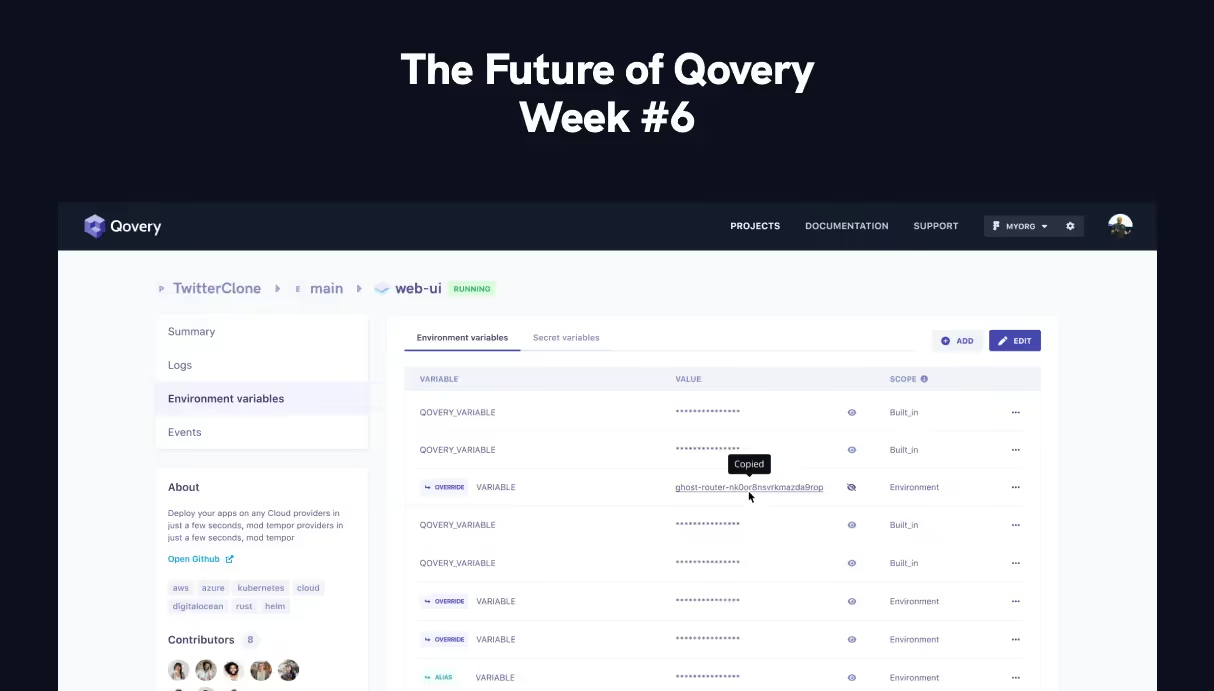
Environment variables and Secrets - The Future of Qovery - Week #6
During the next five weeks, our team will work to improve the overall experience of Qovery. We gathered all your feedback (thank you to our wonderful community 🙏), and we decided to make significant changes to make Qovery a better place to deploy and manage your apps.
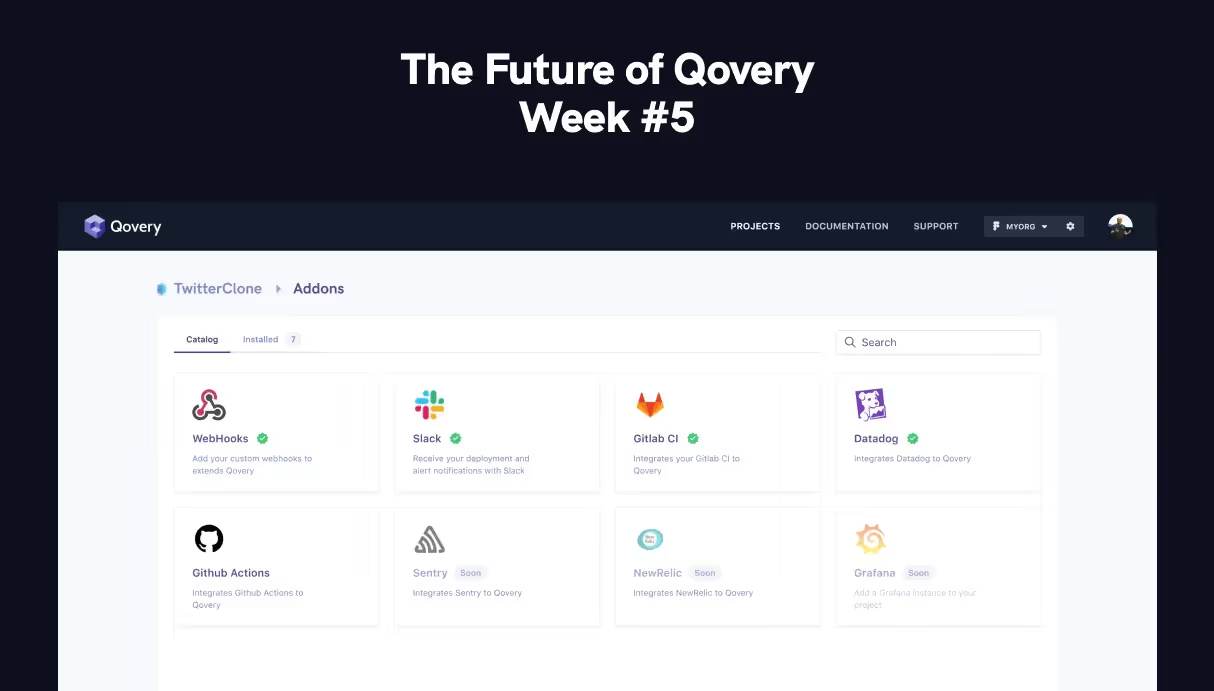
Qovery goes beyond app deployment - The Future of Qovery - Week #5
During the next six weeks, our team will work to improve the overall experience of Qovery's DevOps automation software. We gathered all your feedback (thank you to our wonderful community 🙏), and we decided to make significant changes to make Qovery a better place to deploy and manage your apps.
Register to the Qovery v2 beta now!
When we launched Qovery's DevOps automation tool in January 2020, our product was still a prototype, and we onboarded 53 developers to help them deploy their apps in the cloud. At the time, we were only 2 on the team, and our first employee (Patryk Jeziorowski) decided to join us after being one of our first users.
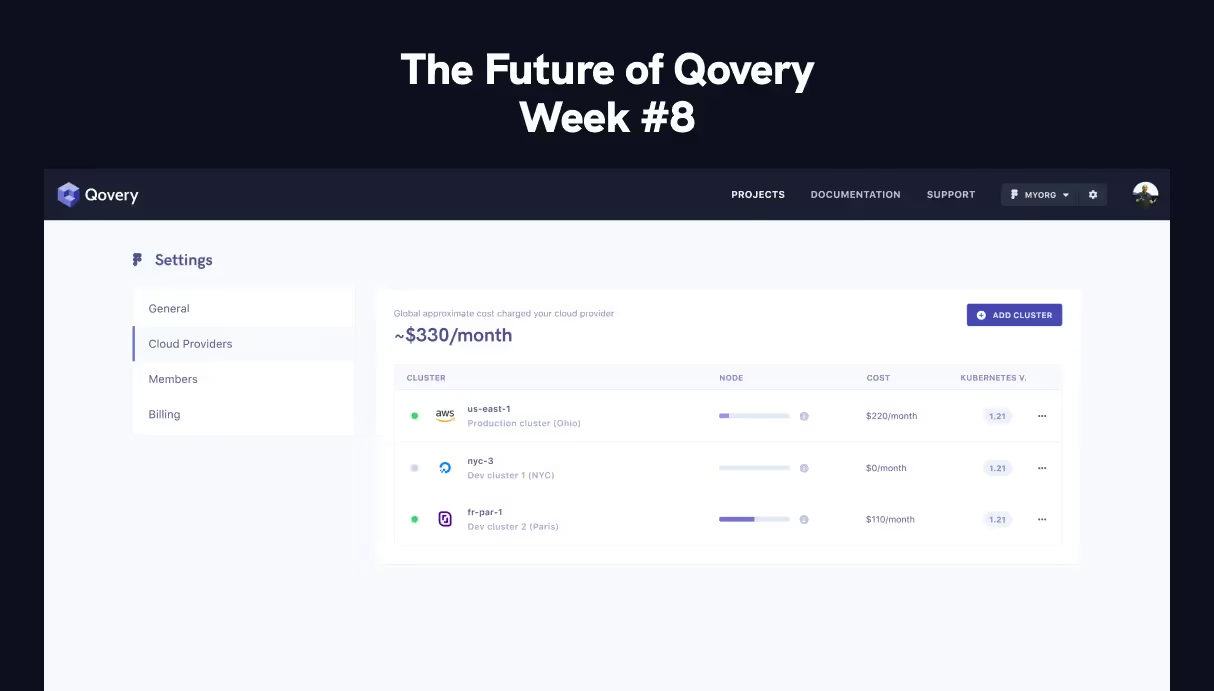
Seamless Cloud account management 🍃 - The Future of Qovery - Week #8
During the next two weeks, our team will work to improve the overall experience of Qovery. We gathered all your feedback (thank you to our wonderful community 🙏), and we decided to make significant changes to make Qovery's DevOps automation tool a better place to deploy and manage your apps.
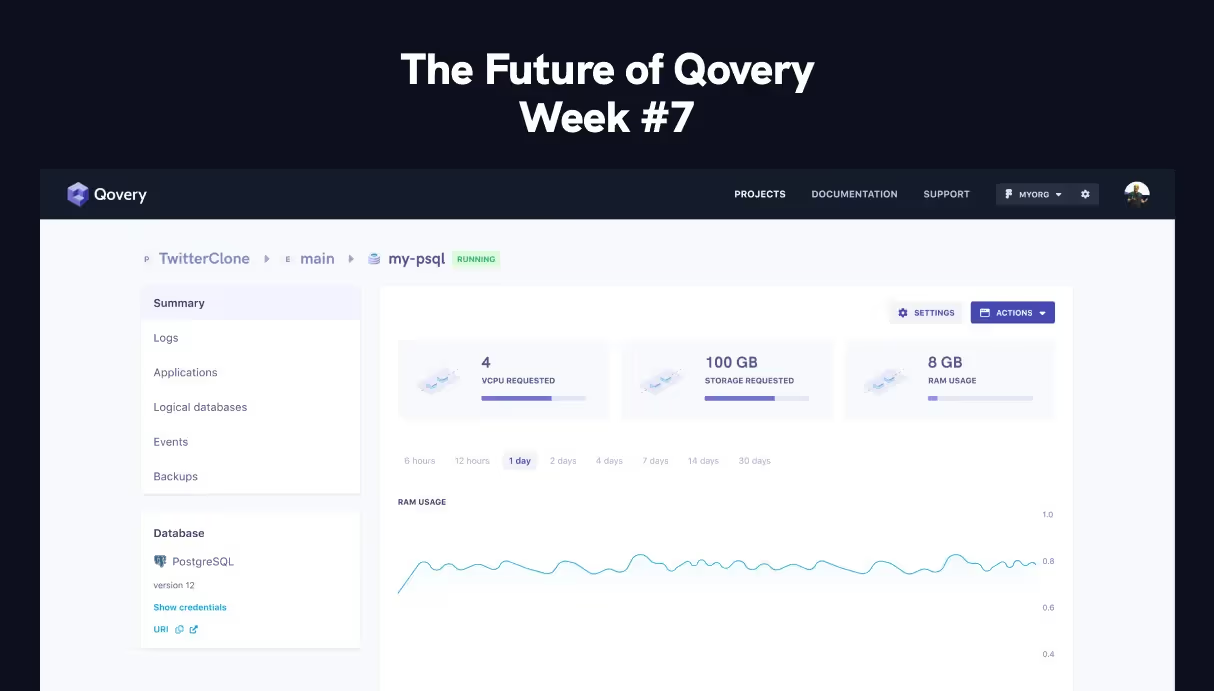
The easiest way to deploy your database - The Future of Qovery - Week #7
During the next three weeks, our team will work to improve the overall experience of Qovery. We gathered all your feedback (thank you to our wonderful community 🙏), and we decided to make significant changes to make Qovery a better place to deploy and manage your apps.
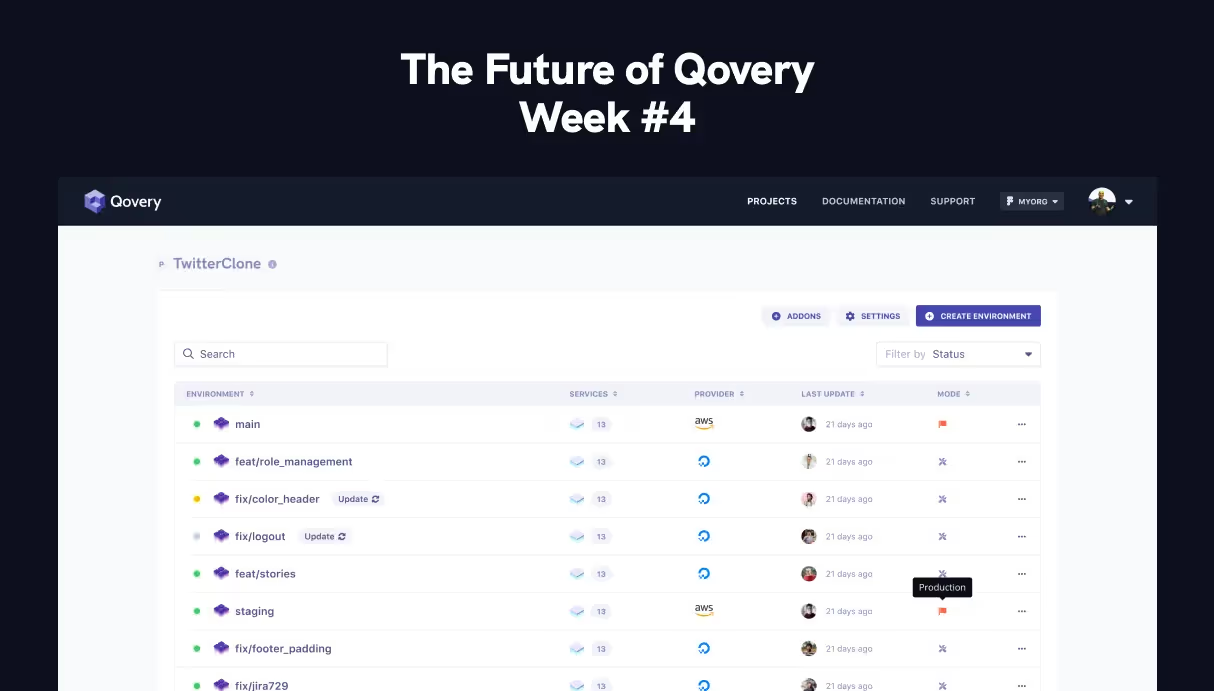
The Future of Qovery - Week #4
During the next seven weeks, our team will work to improve the overall experience of Qovery. We gathered all your feedback (thank you to our wonderful community 🙏), and we decided to make significant changes to make Qovery a better place to deploy and manage your apps.
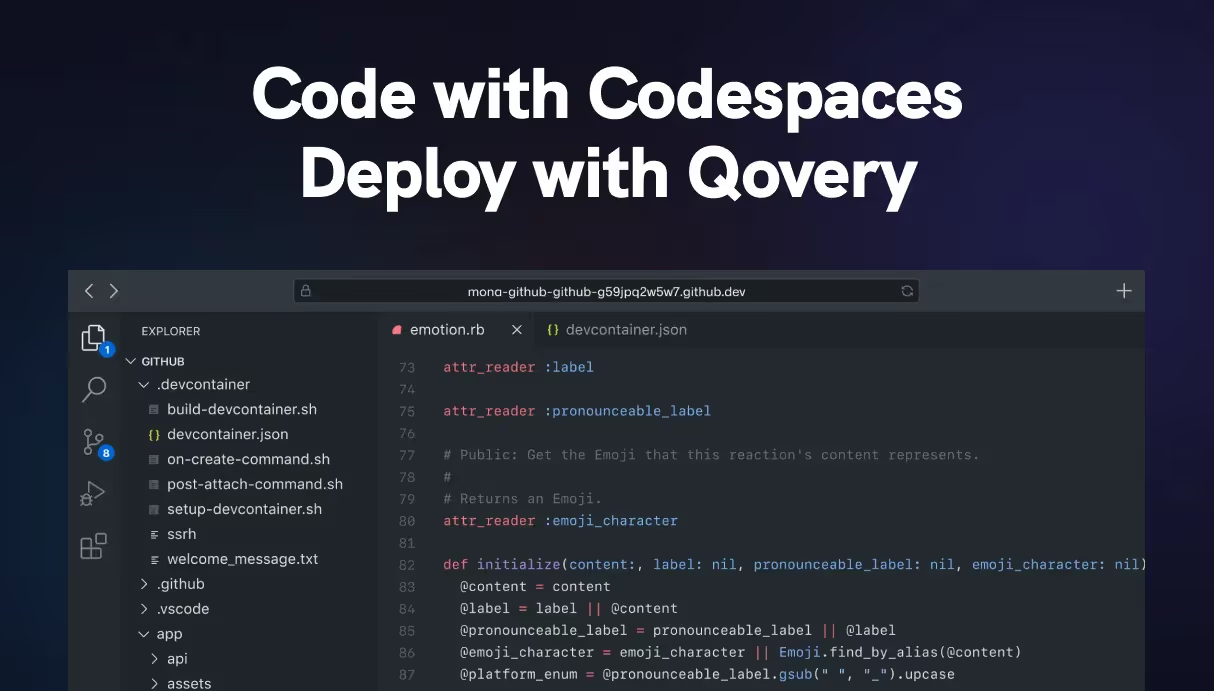
Code with Codespaces and deploy with Qovery
12 years ago, when I started to work as a Developer, I would not have bet that I will write software and manage infrastructure right from my browser one day. At the time, web IDE did not exist. And managing infrastructure from the browser was super early. Today, it is all possible, and the future looks bright!
Deploy your apps on Scaleway with Qovery! Get early access now
TLDR; Deploy your apps on Scaleway - Qovery supports Scaleway cloud service provider!
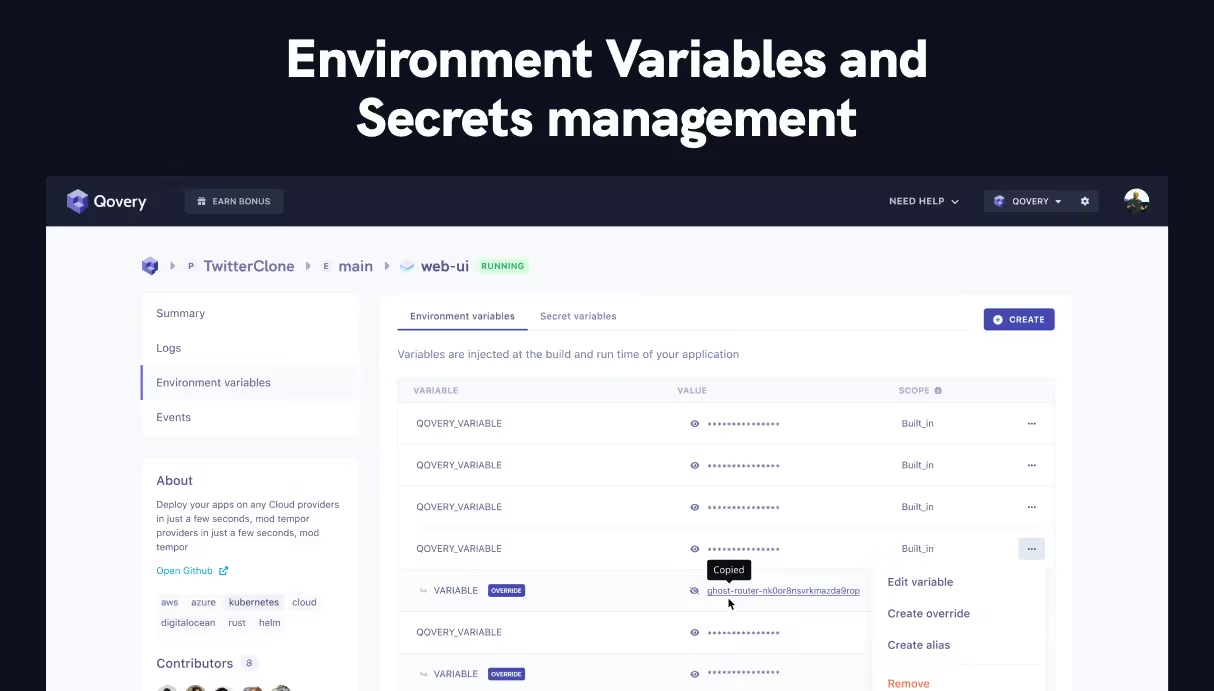
Environment variables and Secrets for Qovery v2 released
I am super excited to announce that we released the support of Environment Variables and Secrets. Watch the video to see those features in action.
Feedback - From Slack to Discord - 13 months later
This post is our third one sharing our real-world experience using Discord for more than one year. I think it is pretty interesting for any company interested to get the pros and cons of using Discord over Slack.
How to migrate your PostHog self-hosted to PostHog Cloud
PostHog is an open-source product analytics tool that we use at Qovery to improve the developer experience. PostHog is similar to famous proprietary product analytics tools like Mixpanel, Heap, Amplitude.
How we help Techstars startups to succeed
TLDR; As a startup founder, you must focus on your business to increase your chance of success. Qovery provides a seamless experience to deploy your applications on your AWS or Digital Ocean account in 15 minutes and save 18 months on your product roadmap. Qovery is perfect for SaaS companies from 2 to 100+ engineers.
One week before the launch of Qovery v2 beta - What's new?
It has been 6 months since our engineering team started to work on what we decided to call Qovery v2. But what makes this next release so cool? Here are the top 4 features that make this release so appealing.
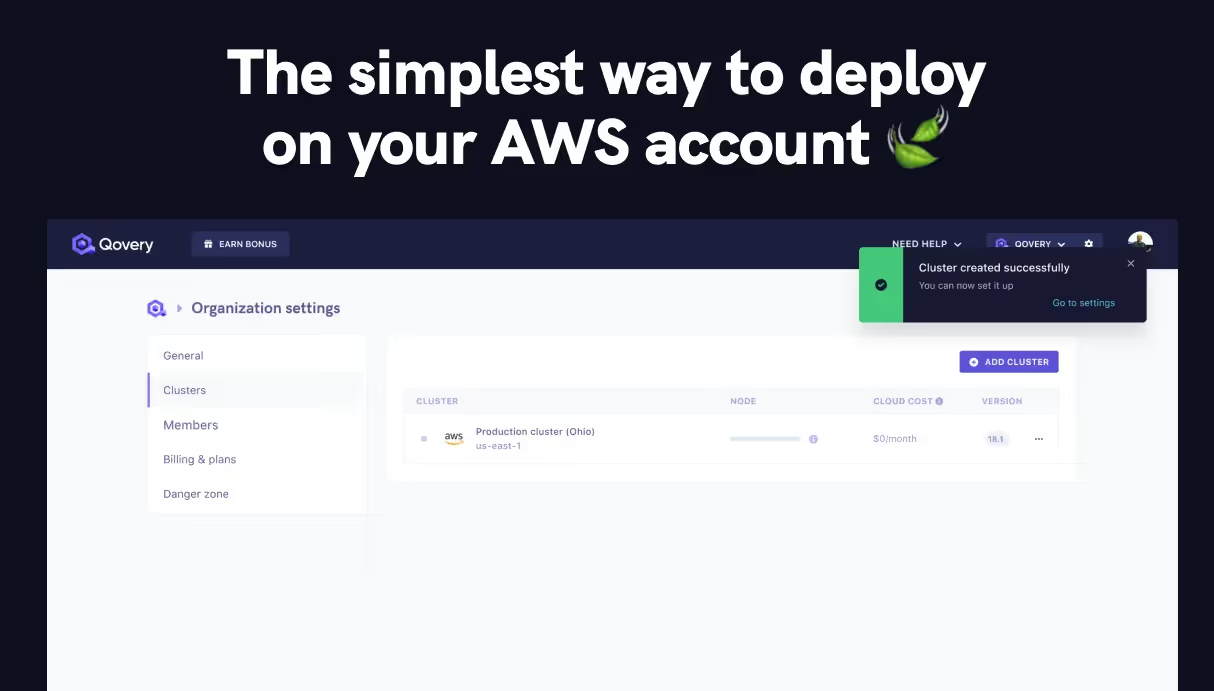
Product Update: What's New For September 2021
Last June, we released Qovery v2 - a brand new version of Qovery. Since then, we have worked on delivering the features you were waiting for AND made dozens of improvements based on your feedback. Thanks to our lovely dev community and customers.
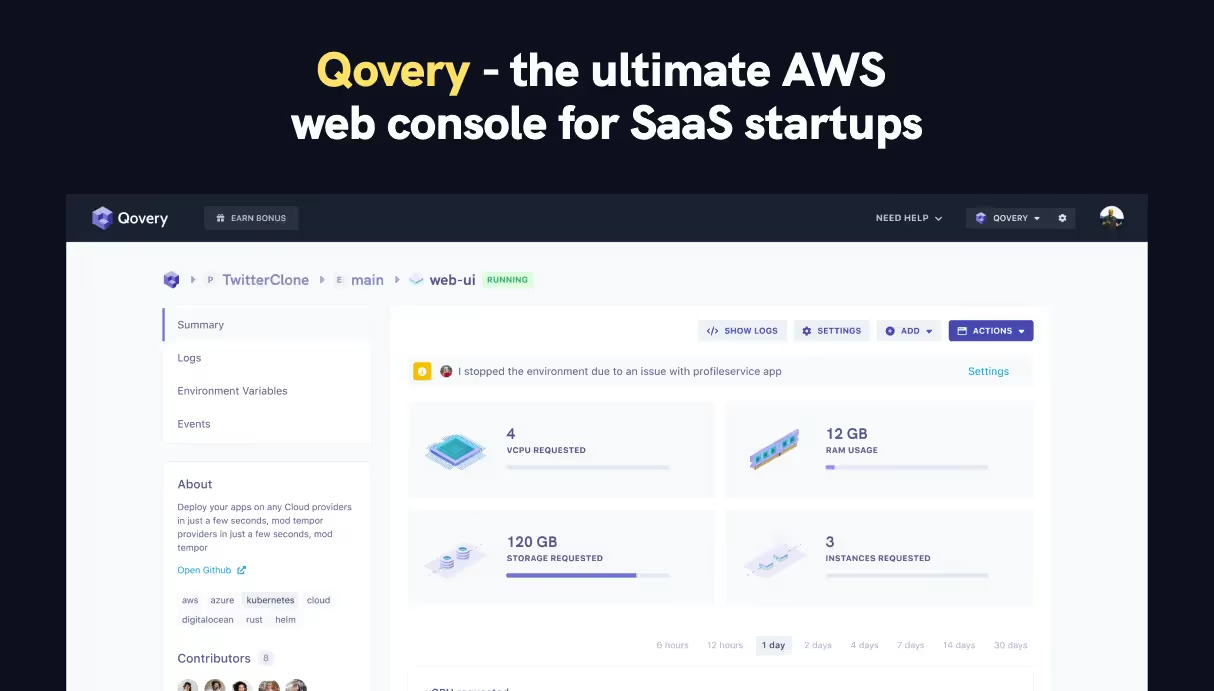
Qovery - the ultimate AWS web console for SaaS startups
AWS is undoubtedly one of the best Cloud service providers to run serious business out there. Reliable and cost-effective. No doubt here. But something utterly wrong with AWS is the experience on their web management console. It is so bad that thousands of developers come using Qovery's DevOps automation tool every month with the only promise of - a better developer experience on top of AWS. Here are the 7 reasons why Qovery is an excellent choice for SaaS startups.
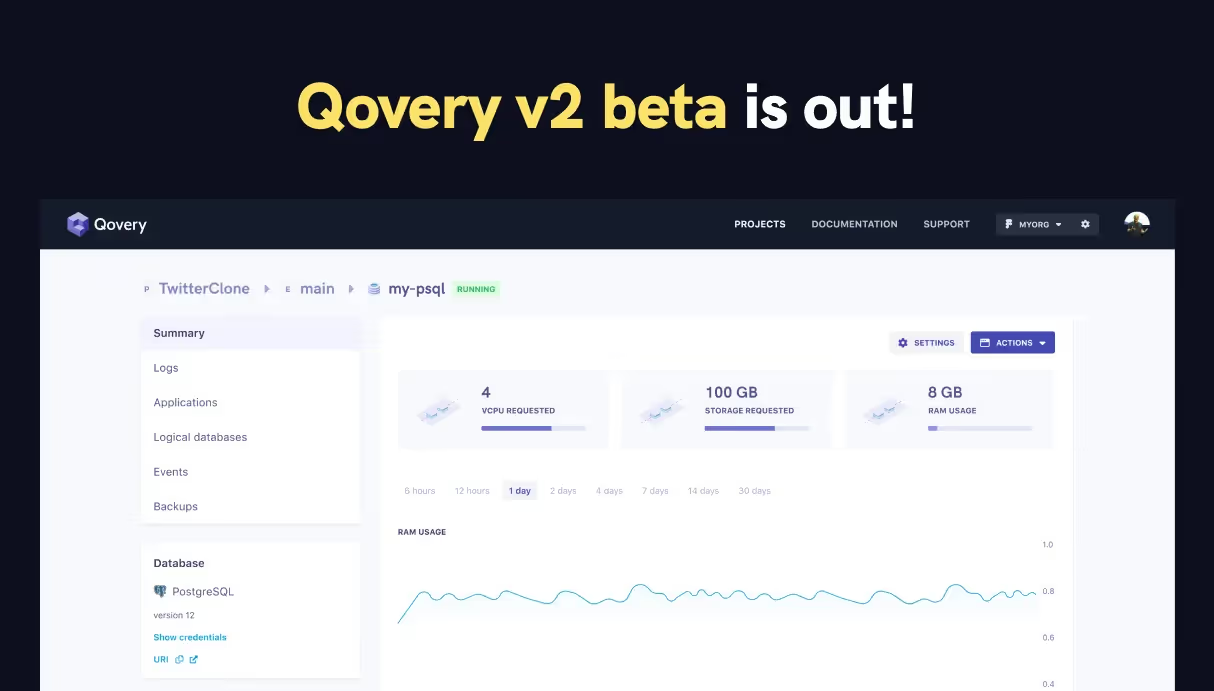
Qovery v2 beta is out
Finally, after 7 months of hard work - the Qovery team is proud to announce that the Qovery v2 beta is out and available for everyone. Take a look at our Community Call to get a complete overview of this new release.
Unexpected: How we ended up product of the day on Producthunt with zero preparation
How we end up product of the day with literally 0 preparation and no expectation. This is our story of a crazy day!
We are hiring talented developers
Qovery is a DevOps Automation tool that provides superpowers to any developer to deploy their applications in the Cloud in just a few seconds. Today, 7800+ developers in more than 120 countries use Qovery. 🔥🔥🔥
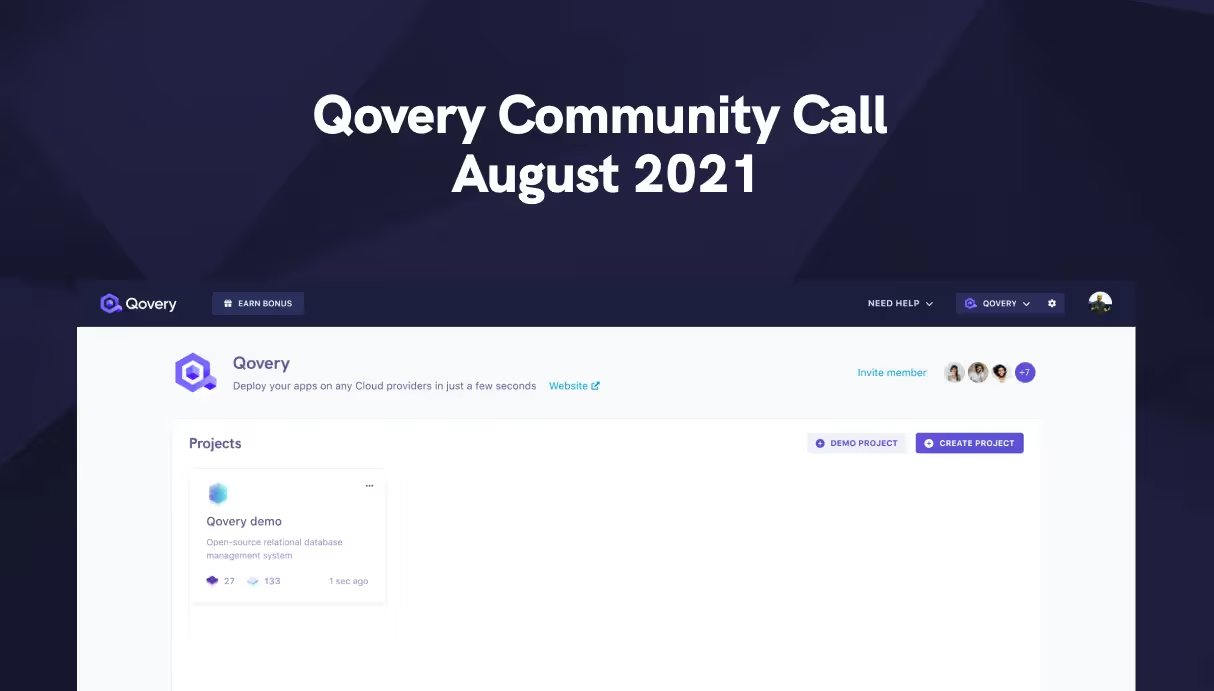
What's new in Qovery for August 2021?
This month, we have many exciting announcements to make and features to demo like Codespaces with Qovery, deploy on AWS, organization settings, billing, member management, etc. You do not want to miss it!
Clone your production environment instantly
I am super excited to announce that we have released our "clone environment" feature. It is a massive update!! With one click, you can duplicate an existing environment. The cloning environment has been a significant feature expected by our customers and users for a long time. Thanks to our beta testers and our team for making it live for everyone.
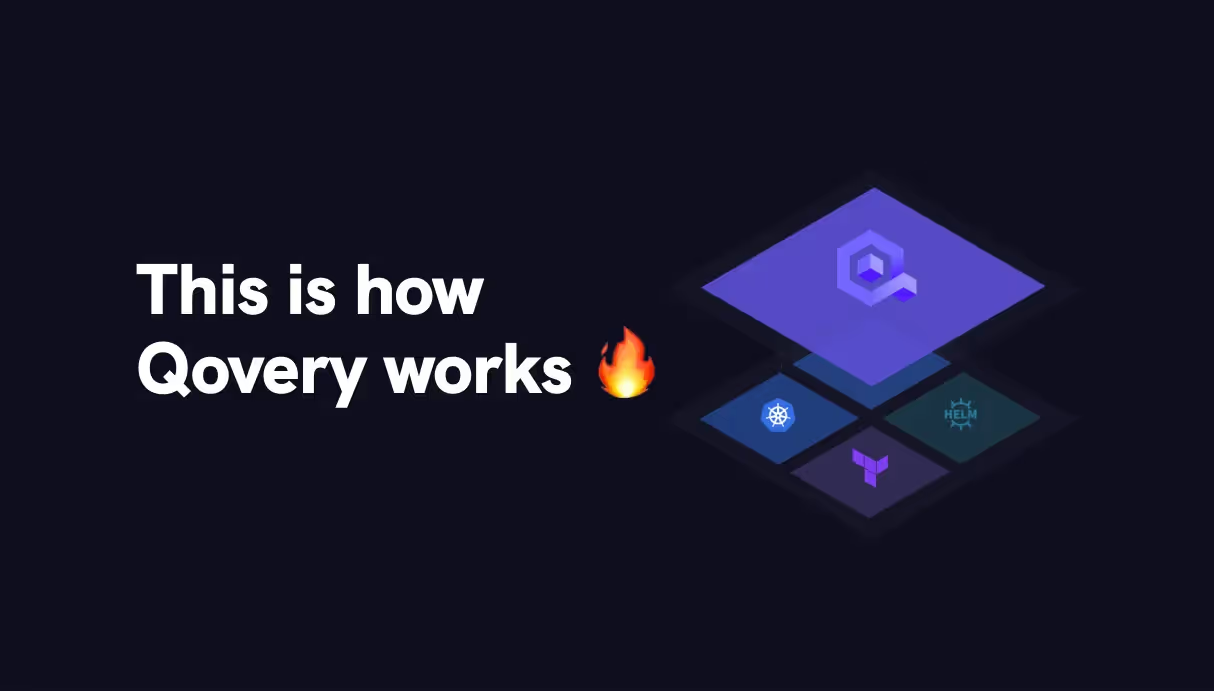
I reveal how Qovery works under the hood
Transparency is essential when running production infrastructure. As we are onboarding more and more customers, we strive to make Qovery as open as possible and fully transparent on how it manages your applications.
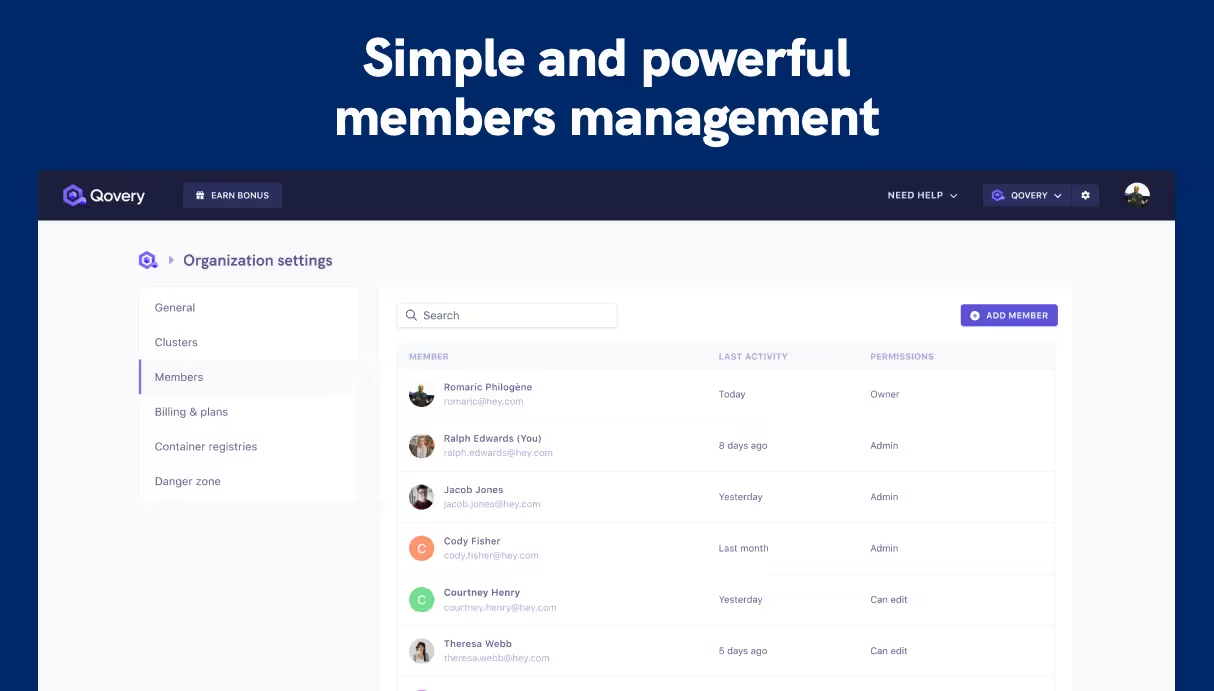
Simple and powerful user management feature
It is a super exciting day! Finally, you can invite your friends/team/colleagues (pick one) via the web console.
How to reduce your AWS bill up to 60%
Let’s face it. Once you have consumed your free credit, AWS costs an arm and a leg. This is the price to pay for high-quality services. But how can you reduce your costs without sacrificing quality? This post will show you how to reduce your bill by up to 60% by combining four built-in features in Qovery.
Qovery raises $4m to build the future of the Cloud
I am thrilled to announce that we have raised a $4M seed round with top-notch investors. Join us in building the future of the Cloud - we are hiring!