Beta Announcement: Bring Your Own Kubernetes with Qovery
Today marks a significant milestone for Qovery and a highly anticipated evolution of our product, especially among Platform Engineers and DevOps professionals. We're thrilled to announce the "Bring Your Own Kubernetes" (BYOK) offer in beta access, a transformative step in our journey towards more flexible and adaptive infrastructure management. Please keep reading to understand why we extend our offer.
Network and security configurations are critical aspects of infrastructure management. With our previous offerings, certain limitations existed - for instance, integrating tools like Istio or using custom ConfigMaps for security enhancements wasn't feasible. The BYOK model changes this landscape. Now, Qovery adapts to your infrastructure requirements, not vice versa. This flexibility ensures that your unique network and security needs are met seamlessly.
2. Providing Outstanding Developer Experience to Everyone
The heart of Qovery’s philosophy is the commitment to delivering an outstanding Developer Experience. We understand that many companies have already invested in Kubernetes and should not be excluded from the Qovery experience. BYOK is our response to this need. It allows companies with existing Kubernetes infrastructure to leverage the full power of Qovery's features and capabilities, enhancing productivity and efficiency without compromising on the familiar Kubernetes environment they have cultivated.
3. Uniform Experience Across Environments
Many of our customers who enjoyed Qovery on their cloud infrastructure expressed a desire to have the same experience on their on-premise setups. BYOK addresses this by offering a uniform Qovery experience across various environments.
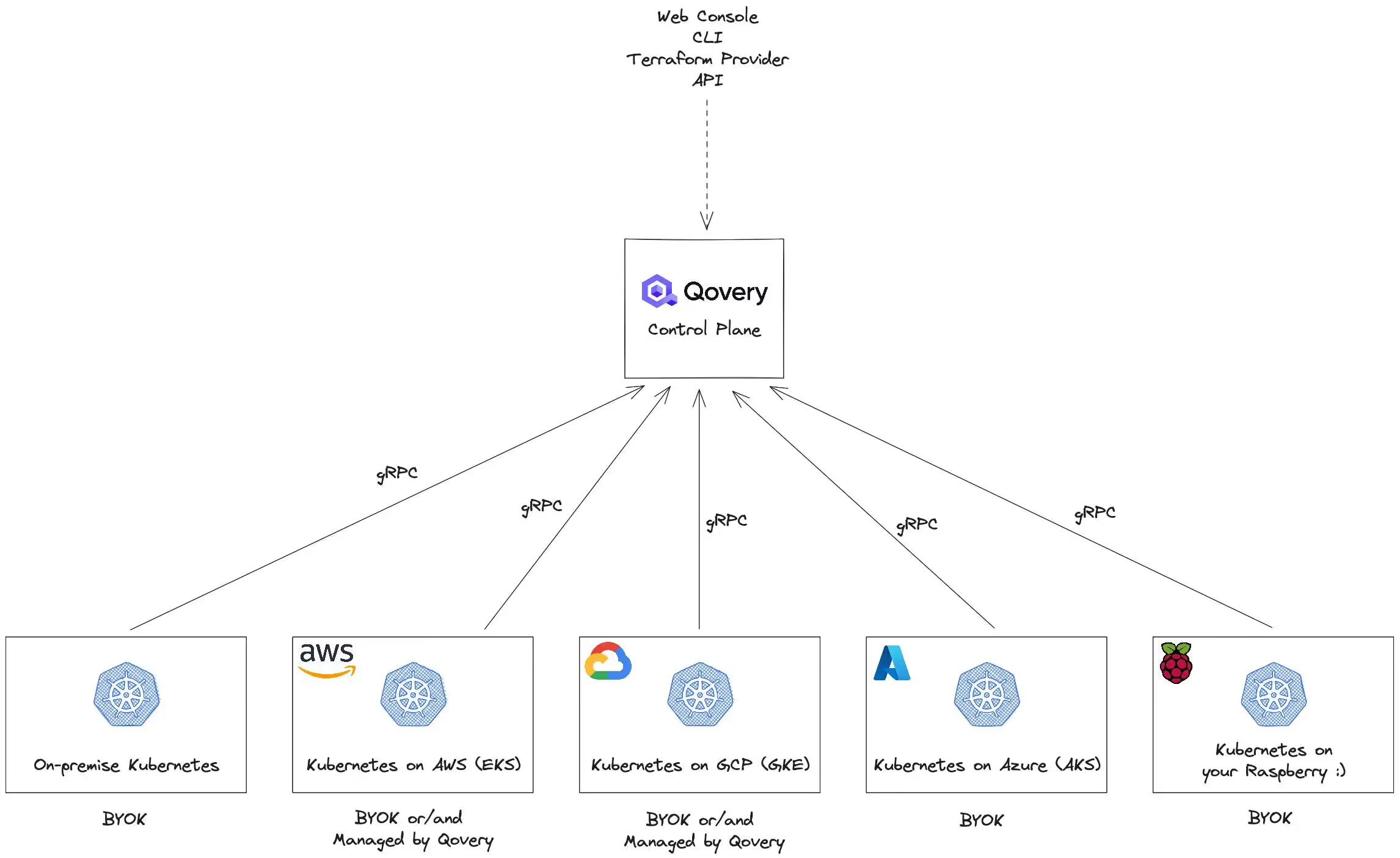
Use Qovery with any Kubernetes regardless where your Kubernetes runs
Whether it's cloud, on-premise, or even a local setup on your laptop, BYOK ensures Qovery runs smoothly, aligning with our vision of streamlined infrastructure management.
4. Aligning with Our Vision of Streamlined Infrastructure
Our BYOK offering is a testament to our vision of simplifying and streamlining infrastructure management, regardless of the environment. It represents a significant stride in making advanced DevOps capabilities accessible to a wider range of organizations and setups, reinforcing our dedication to innovation and user empowerment.
Technical Deep-Dive
Our BYOK feature is designed with installation simplicity and technical robustness at its core. Here's a closer look at how it works and what it entails:
Easy Installation
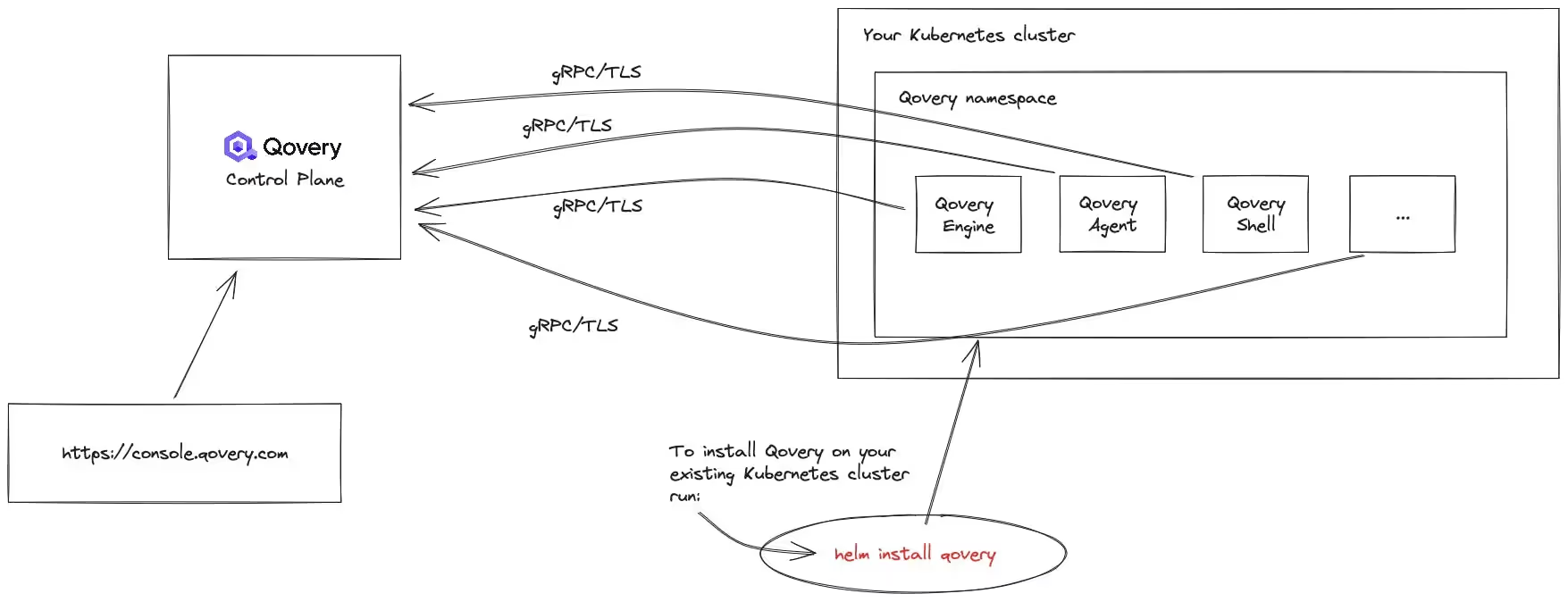
Installing Qovery on your Kubernetes cluster is straightforward. With just a single command helm install qovery, you can run Qovery on your cluster.
This simplicity is a game changer for DevOps teams, significantly reducing the complexity and time usually associated with setting up such powerful tools.
How it Works
Once installed, Qovery integrates seamlessly into your existing Kubernetes infrastructure. It acts as an operator, providing an intuitive interface and a set of tools that enhance your Kubernetes experience.
Qovery binaries (written in Rust) run on your Kubernetes cluster and connect to the Qovery control plane
This integration allows for advanced management capabilities without altering the fundamental aspects of your Kubernetes setup, ensuring that your existing configurations and customizations remain intact. If you want to learn more about how it works - I recommend this article.
Kubernetes Compatibility
To ensure a smooth and reliable experience, BYOK has specific version requirements, but basically, it will always work with the 3 latest versions of Kubernetes. At the time when this article was written, Kubernetes versions 1.26, 1.27, and 1.28. This compatibility ensures that you can leverage the latest advancements in Kubernetes while maintaining a stable and efficient environment.
Agents ship fast. Guardrails keep them safe.
Qovery ensures every agent action is scoped, audited, and policy-checked. Start deploying in under 10 minutes.
While BYOK introduces a new dimension to our offerings, it's important to highlight that our managed Kubernetes service remains a vital component of Qovery's ecosystem.
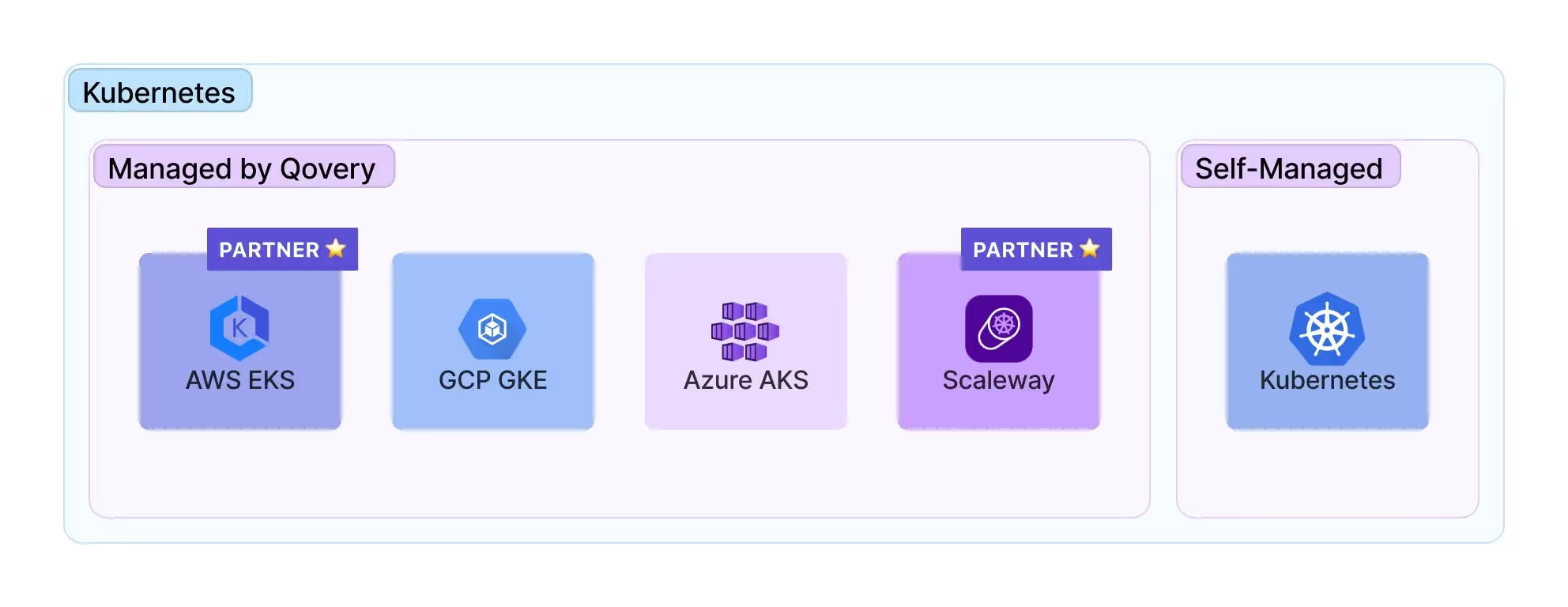
Qovery proposes 2 offers! The Managed Kubernetes offer, where Qovery manages the setup and the maintenance of Kubernetes, and the BYOK (Self-Managed)
This service is designed for those who prefer a hands-off approach, where we handle the intricacies of Kubernetes management. It's about offering choices - while BYOK serves those seeking control and customization, our managed service caters to those who value convenience and simplicity. This dual approach ensures that Qovery meets the diverse needs of our clientele today and in the future.
Comparison Table
To help you better understand the differences between BYOK and our managed Kubernetes service, we've prepared a detailed comparison table, outlining key features and use cases for each.
Q-MARKDOWN
| Feature/Aspect                  | Qovery Managed Kubernetes | Qovery BYOK (Bring Your Own Kubernetes) |
|---------------------------------|---------------------------|----------------------------------------|
| **Installation**                | Fully managed by Qovery   | User-installed with `helm install qovery` |
| **Kubernetes Version Support**  | Managed and updated by Qovery | Compatible with the 3 latest Kubernetes versions |
| **Infrastructure Management**   | Handled entirely by Qovery | User-managed infrastructure |
| **Customization and Control**   | Standardized setup        | High customization and control over cluster configuration |
| **Security and Compliance**     | Qovery’s security standards | User-defined security and compliance settings |
| **Network Configuration**       | Managed by Qovery         | Fully customizable by the user |
| **Ease of Use**                 | Simplified, minimal user intervention | Requires Kubernetes knowledge for setup and management |
| **Target Audience**             | Companies preferring hands-off approach | Organizations seeking control and customization |
| **Integration with Tools**      | Pre-integrated tools by Qovery | User-defined tool integrations |
| **Cost and Resource Management**| Managed by Qovery         | Managed by the user, allowing for tailored cost optimization |
| **Support and Maintenance** | Provided by Qovery | Self-managed, with community and Qovery support available |
Romaric founded Qovery to make Kubernetes accessible to every engineering team. He writes about platform strategy, developer experience, and the future of cloud infrastructure.
Next step
Agents ship fast. Guardrails keep them safe.
Qovery ensures every agent action is scoped, audited, and policy-checked. Start deploying in under 10 minutes.