
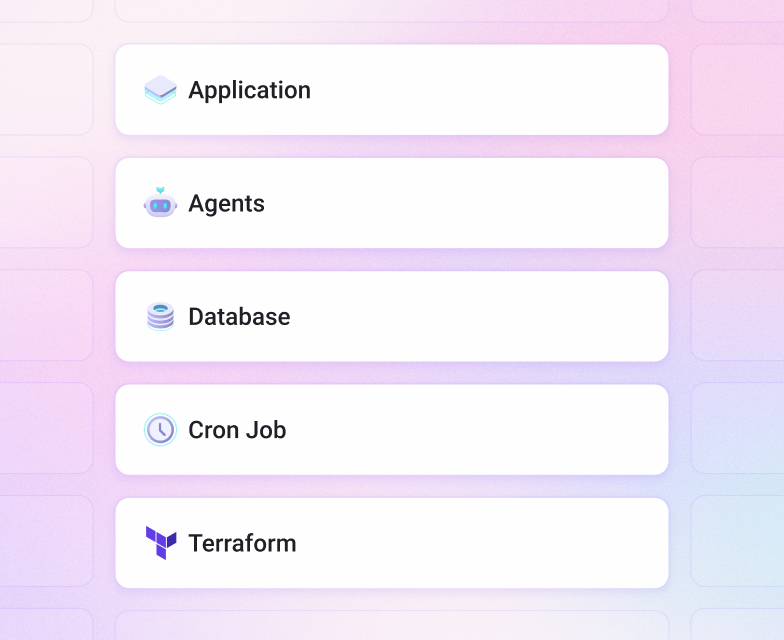
Deploy all types of workloads
Apps, databases, Helm charts, jobs or Terraform, you can deploy anything in Qovery
Connect a repo and Qovery handles the rest: build, deploy, environments, rollbacks. Your team ships instead of maintaining the machinery that ships.
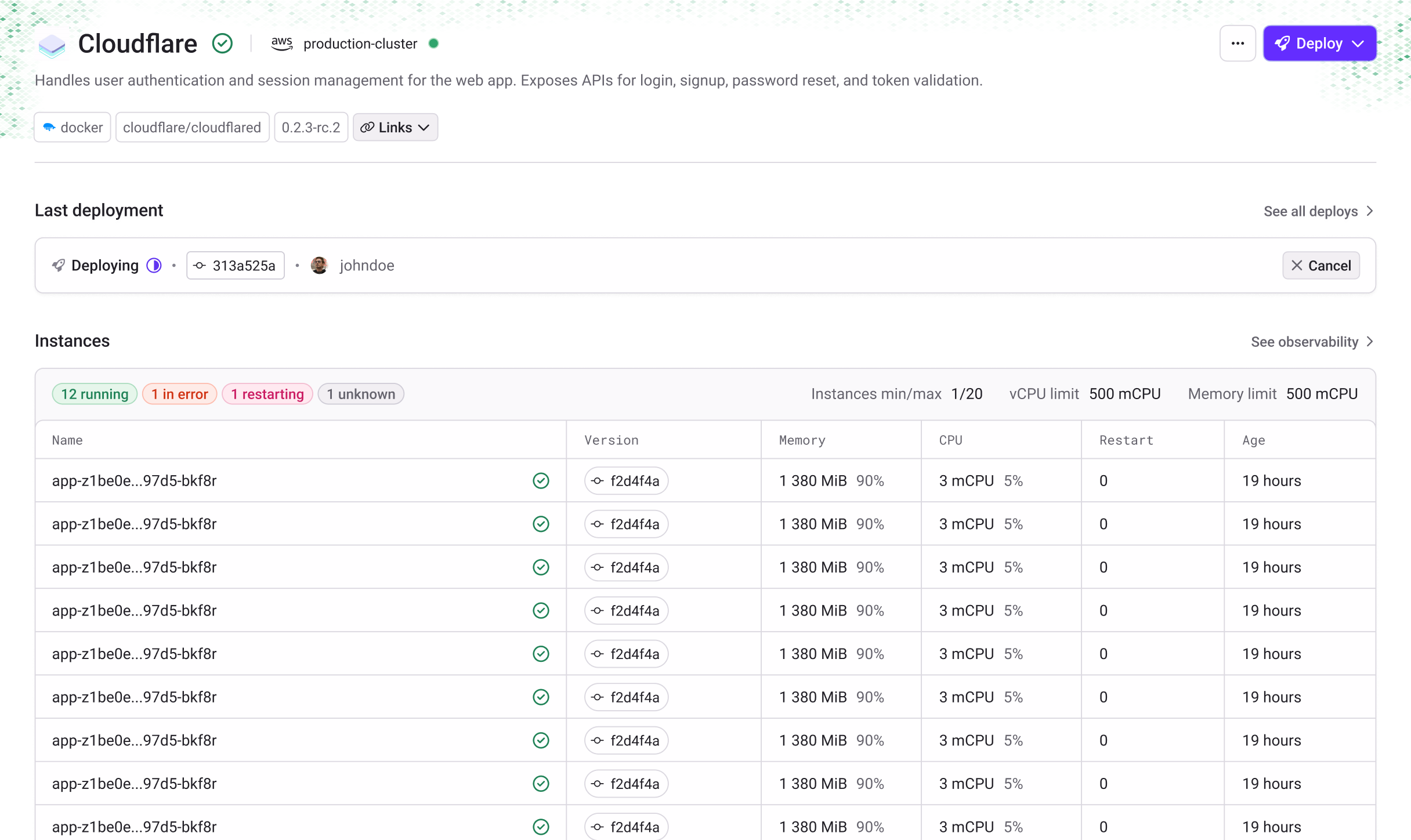
Trusted by +200 companies to simplify their infrastructure burden










Your platform team sets up what's allowed, then developers ship on their own
Apps, databases, Helm charts, jobs or Terraform, you can deploy anything in Qovery
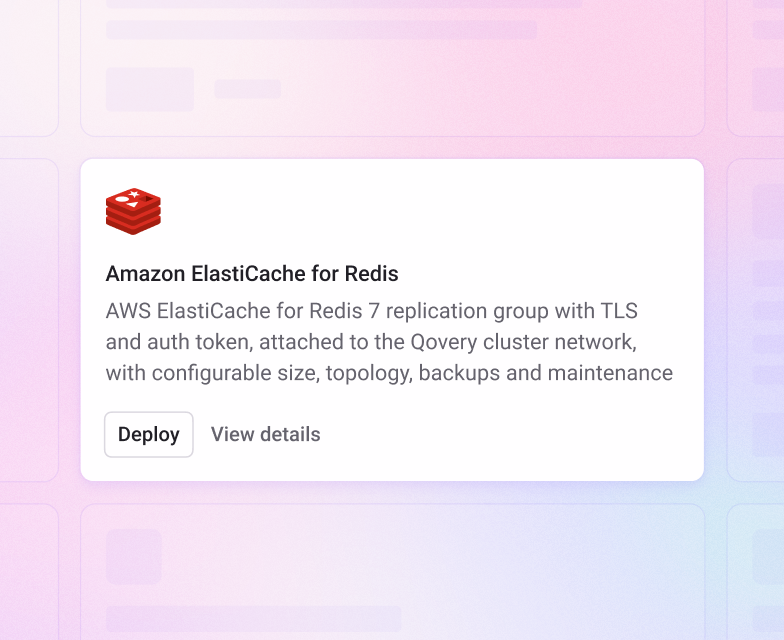
Deploy Qovery-maintained blueprints like S3, ElastiCache or RDS, or the ones your team approves
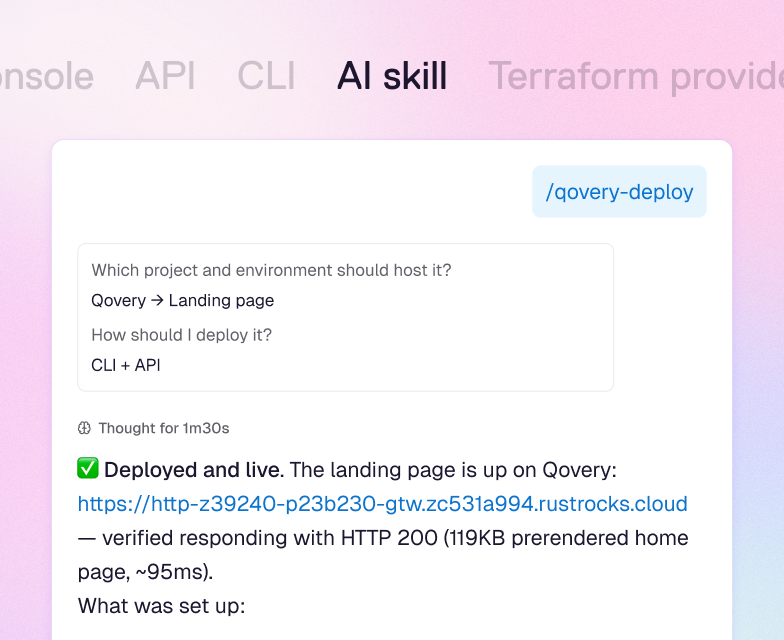
Whether it’s the console, CLI, API, Terraform provider or our AI skill, deploy from where it suits you best
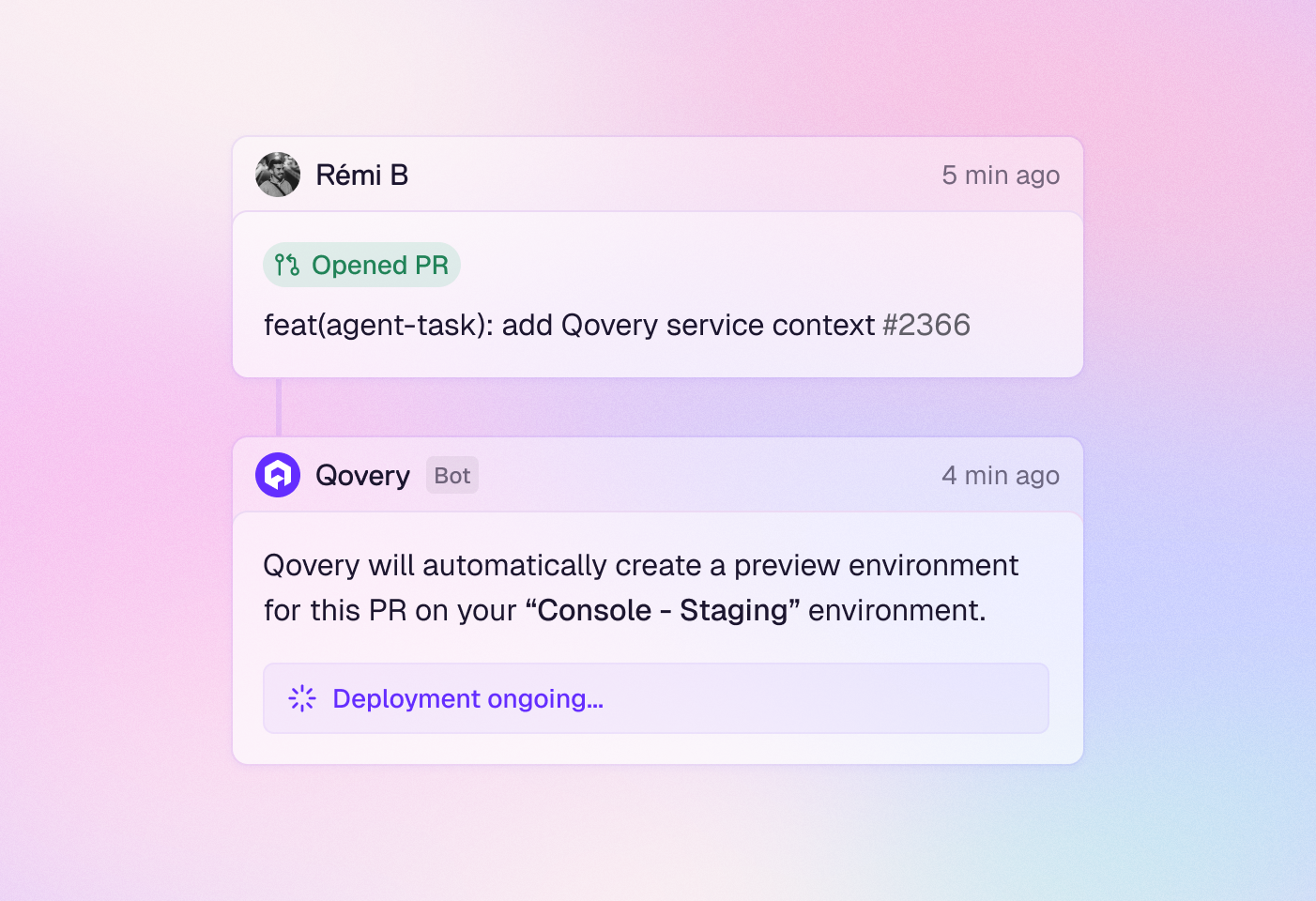
No more queuing for staging or testing on someone else's changes. Every branch gets validated on its own, before it reaches production.
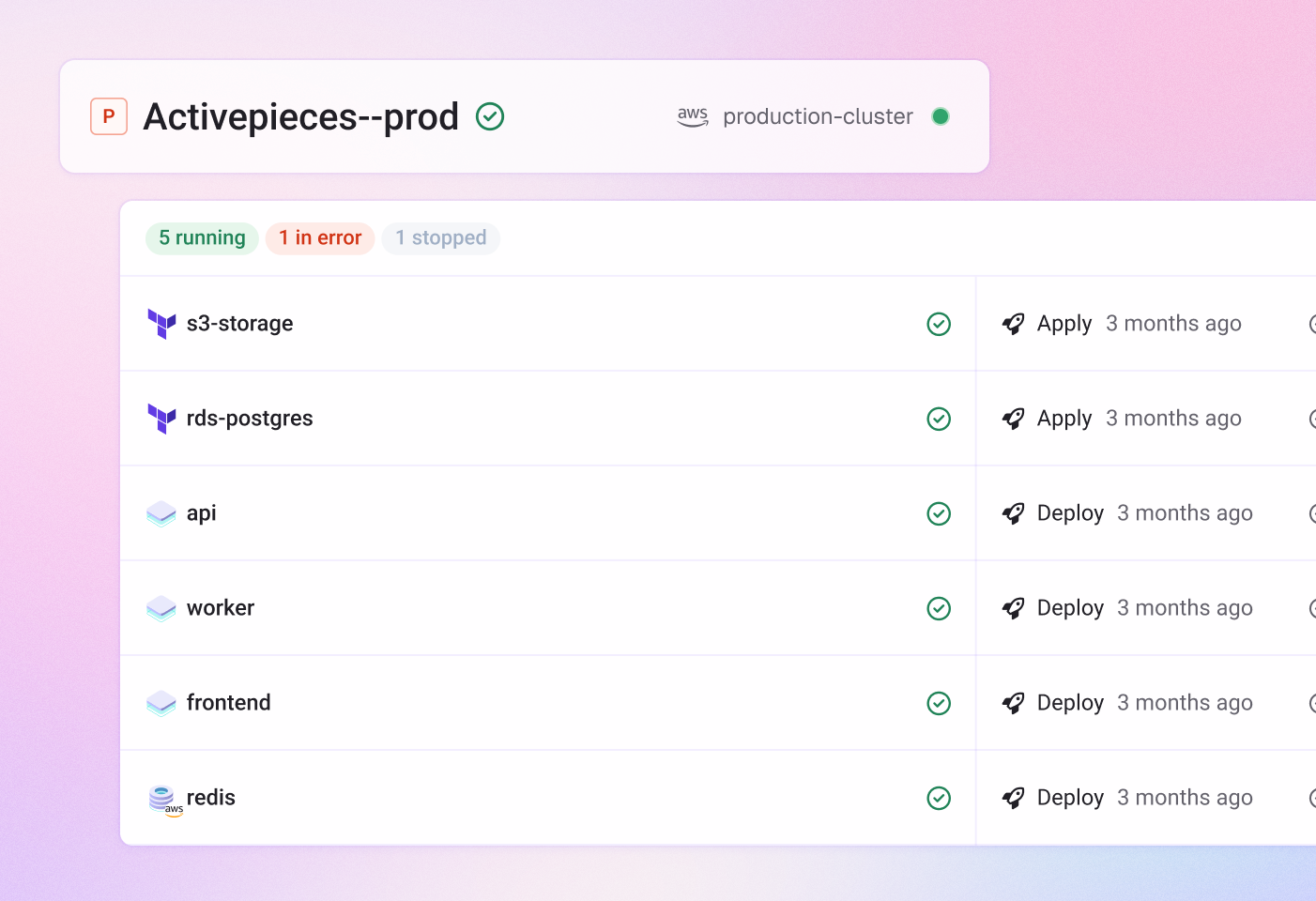
Your S3 buckets, queues and managed databases live alongside the services that use them, in one environment. No separate Terraform repo to keep in sync, no glue between your apps and your cloud resources
Our deployment times went from 55 minutes to 8 minutes. It’s a night-and-day difference.

Jean-Baptiste Barth
Infrastructure Lead at Alan
All the best deployment practices, included from the start
Keep your existing pipeline and let Qovery handle the deploy, or let it handle both
Ship an image your CI already built, from ECR, GHCR, Docker Hub or a private registry
Rolling updates with health checks, so a release never interrupts your users
A failed deployment reverts on its own, without anyone stepping in
Every commit on the branches you choose ships automatically
Order services and dependencies so they deploy in the right sequence
Follow build and deploy steps live, and see exactly where one stops
Every deployment recorded per environment, with who triggered it and what changed
Duplicate a full environment in one click, services, databases and configuration included