The Qovery Playground is our gift to every DevOps professional, developer, and platform engineer who's ever wanted to try Qovery with AWS – absolutely FREE of cost. We're tearing down the barriers to entry. No AWS account? No credit card? No problem ☺️.
Discover, Learn, and Experience: The Qovery Playground is Now Open!
In the dynamic world of development and operations (DevOps), one thing is clear: there's always room for new, innovative platforms that make life easier for developers and platform engineers. And today, we're thrilled to introduce our latest contribution to this dynamic sphere – the Qovery Playground.

CEO & Co-founder
JUL 14, 2023 · 3 MIN
Qovery · Agentic Infrastructure Platform
Build with Claude Code, Deploy with Qovery
Learn more
All you need is a bit of curiosity and a few spare minutes to experience the full range of Qovery's capabilities.
Our Goal
The objective behind launching the Qovery Playground is straightforward. We want you to be able to evaluate our platform without having to go through the rigmarole of setting up a cloud account or fretting over costs. We believe in the potential of our product and its ability to revolutionize the way you work. We're offering you an opportunity to validate that belief – on us!
How The Qovery Playground Works
Getting started with the Qovery Playground is a breeze. Register here, and you'll get access to the Qovery platform by inviting you to an existing organization. You'll have three hours to explore, experiment, and evaluate everything Qovery has to offer.
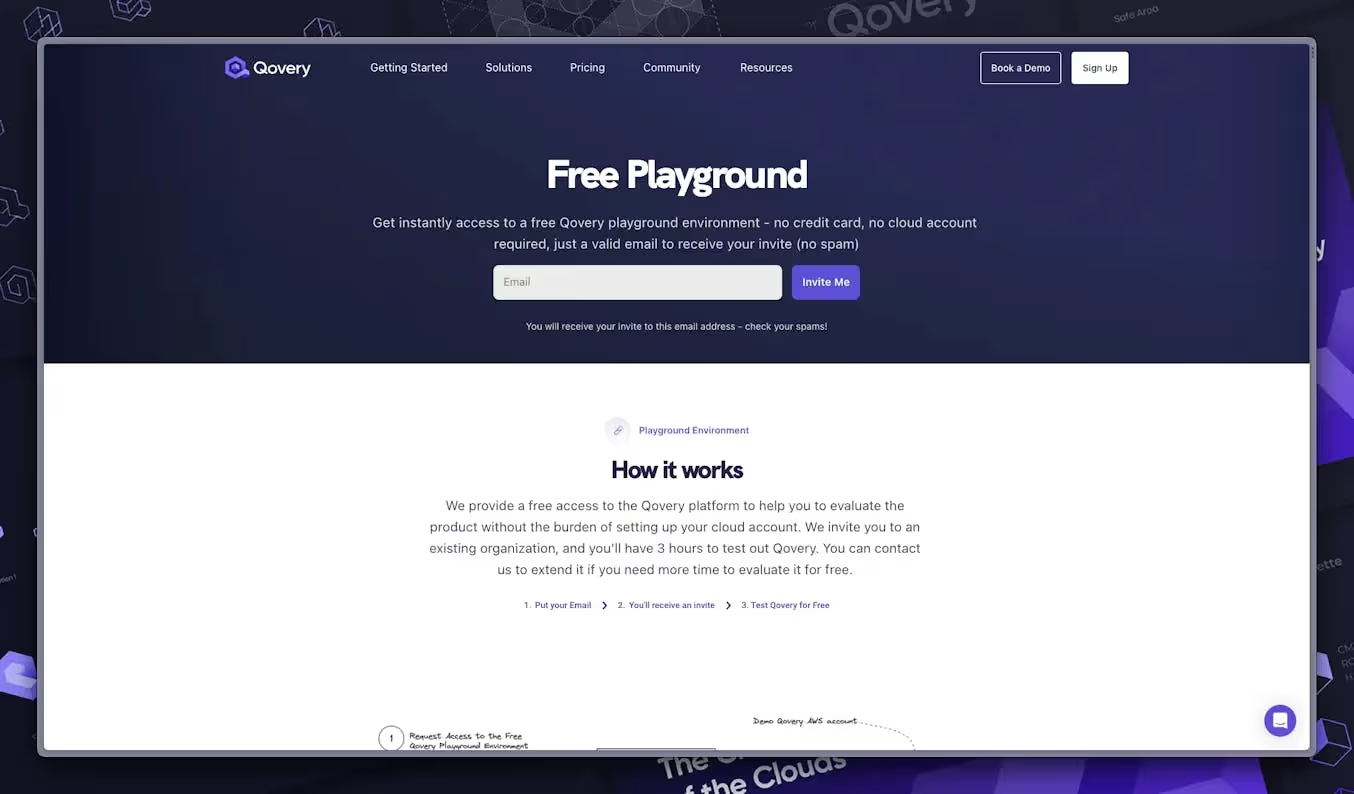
We understand that three hours might not be enough to fully grasp the depth and breadth of the Qovery platform. If that's the case, don't hesitate to contact us. We're more than happy to extend your free evaluation period to ensure you have all the time you need to appreciate the platform's potential.
Agents ship fast. Guardrails keep them safe.
Qovery ensures every agent action is scoped, audited, and policy-checked. Start deploying in under 10 minutes.
Why the Qovery Playground?
The motivation for the Qovery Playground lies in our desire to make the evaluation process as simple and hassle-free as possible. It's a direct response to the constraints and impediments that often deter individuals and organizations from trying out new platforms. We aim to circumvent these limitations by eliminating the requirement of an AWS account or a credit card and replacing it with an easily accessible and user-friendly environment.
Limitations of the Qovery Playground
While we're excited about the Qovery Playground and its potential, we also recognize that it isn't a fully-fledged version of Qovery. The playground environment gives you a sneak peek into what's possible with Qovery, but some advanced features might not be accessible in the free version.
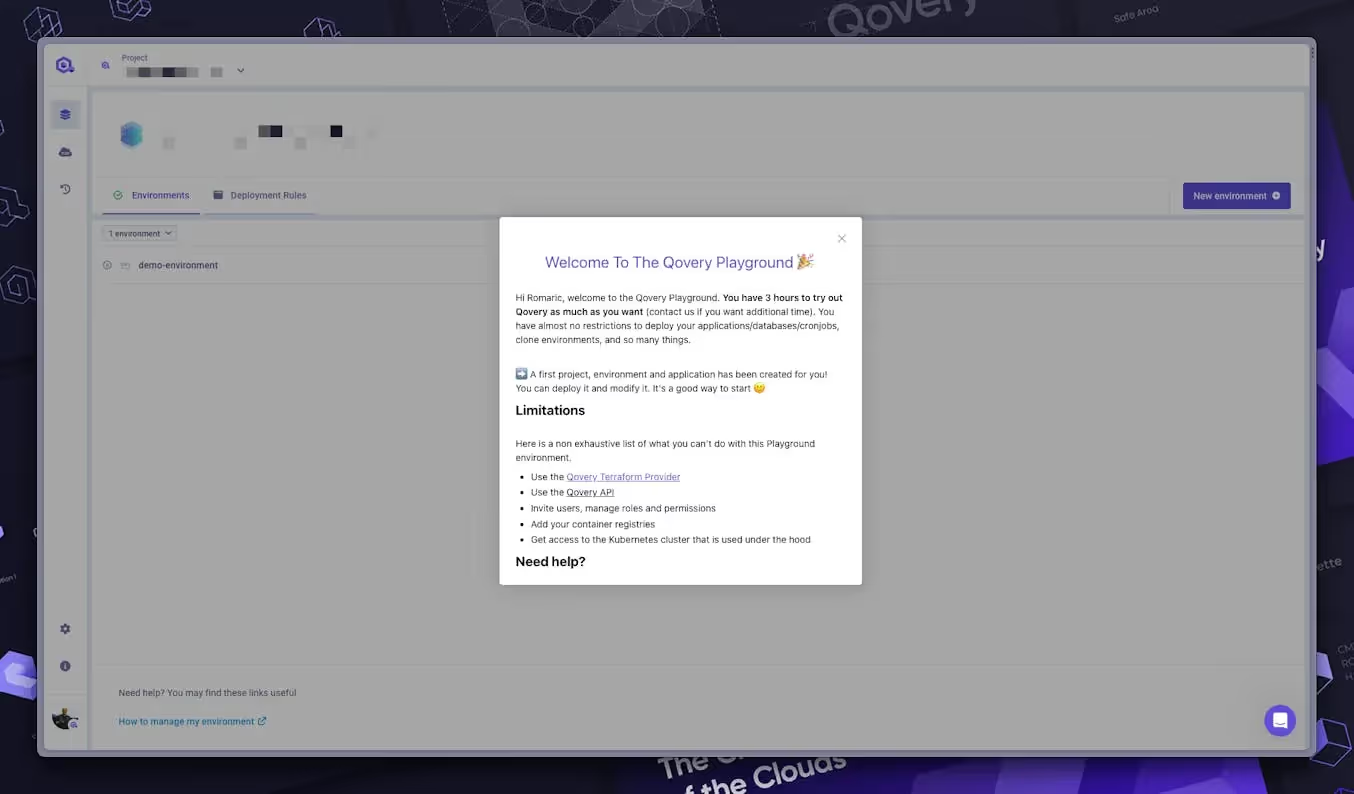
However, these limitations do not detract from the immense value you can derive from this playground environment. It still offers a near-complete Qovery experience, providing you with a firsthand perspective of our platform's capabilities and its seamless integration with AWS.
Let's go
In conclusion, the Qovery Playground is designed to break down barriers, foster learning, and enable you to explore the vast world of Qovery. With the playground, we're confident that you'll gain a clearer understanding of the value and advantages of Qovery. So why wait? All you need is a valid email address, and the Qovery Playground is yours to explore. Get started on your Qovery journey today!
About the author
Romaric PhilogeneRomaric founded Qovery to make Kubernetes accessible to every engineering team. He writes about platform strategy, developer experience, and the future of cloud infrastructure.
Next step
Agents ship fast. Guardrails keep them safe.
Qovery ensures every agent action is scoped, audited, and policy-checked. Start deploying in under 10 minutes.
Continue reading
More articles
817 · Security3 min
Strengthening the Security of Qovery's Access to Your AWS Account
Romain GerardOct 23, 2026
794 · Product6 min
Introducing Qovery Training: Learn the Console by Doing, Before You Touch Production
Romaric PhilogeneOct 19, 2026
790 · Product3 min
Try the Qovery Console Without Signing Up
Romaric PhilogeneOct 19, 2026