Product updates
Qovery for business
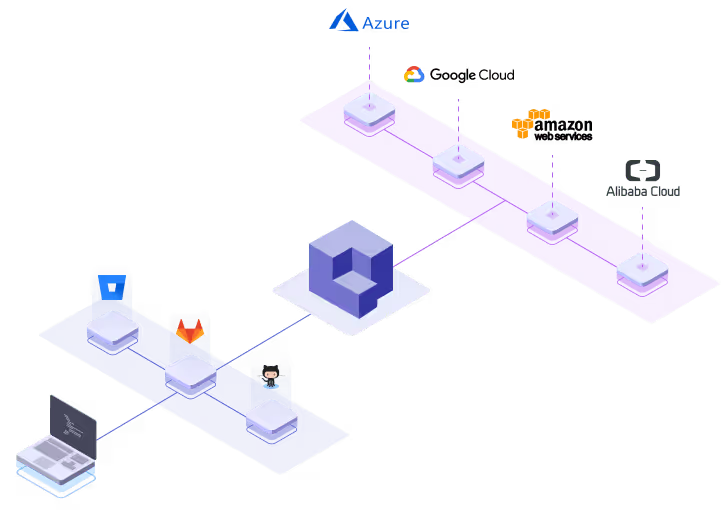
Qovery for business is under heavy development to be ready early September 2020. Compared to our community package, Qovery business helps companies deploy their applications on their Cloud account. Read more...
Hello and welcome to another issue of This Month in Qovery! Qovery helps developers to deploy their applications in the Cloud in just a few seconds. This is a monthly summary of its progress and community. Do you build something with Qovery? Do you want to be mentioned? Tweet us at @Qovery or reply to this email. Want to get involved? Join the community. WE ARE HIRING👨💻 Needless to say - we are hiring passionate engineers.


Qovery for business is under heavy development to be ready early September 2020. Compared to our community package, Qovery business helps companies deploy their applications on their Cloud account. Read more...
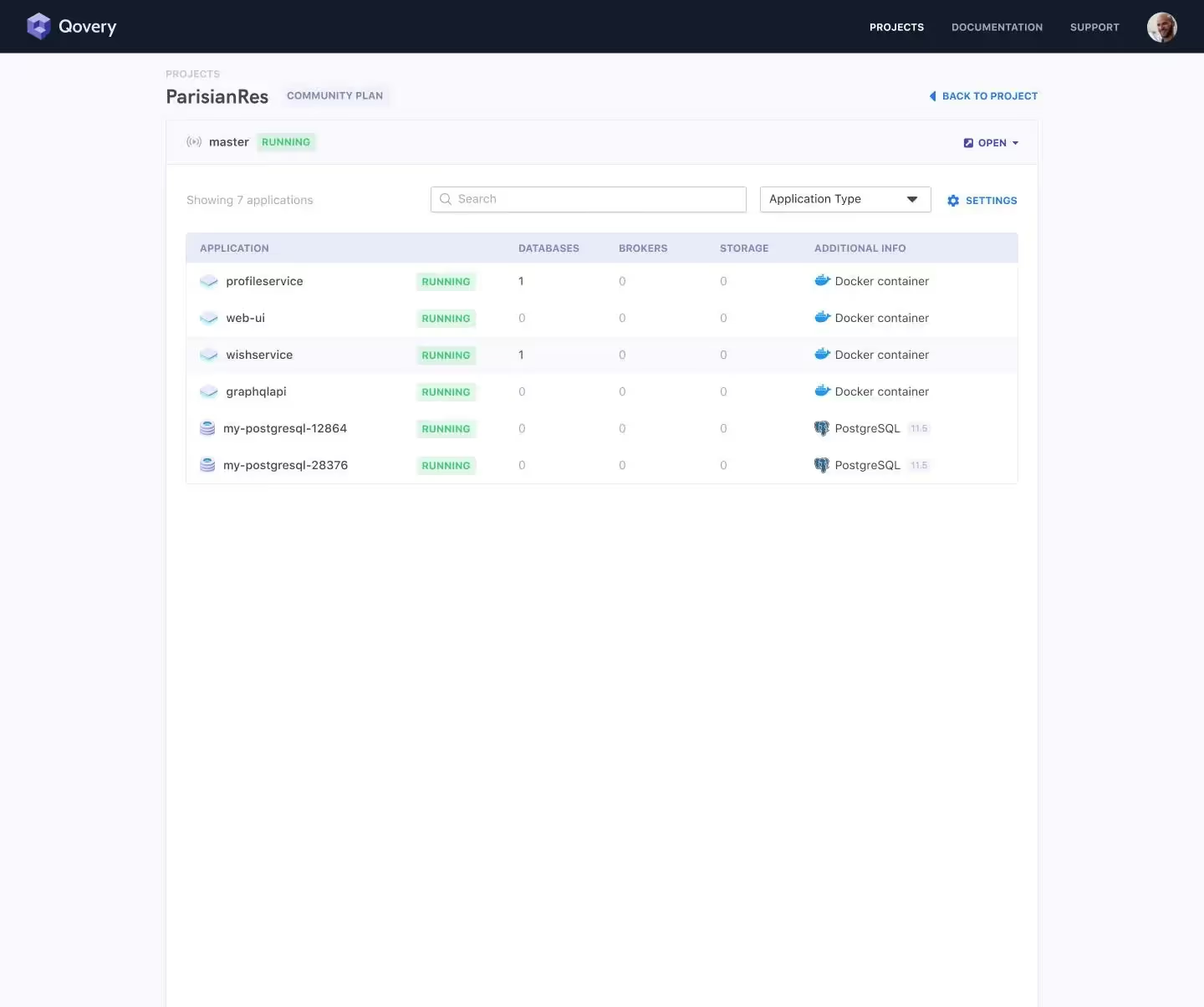
The team is working hard to make the web interface live as soon as possible. We are looking for an experienced frontend developer to join us and help us make it live faster. We expect to release a beta version this month.
Before June: deploying an application with a database could lead to waiting 20 minutes.
J̶u̶n̶e̶:̶ ̶d̶e̶p̶l̶o̶y̶i̶n̶g̶ ̶a̶n̶ ̶a̶p̶p̶l̶i̶c̶a̶t̶i̶o̶n̶ ̶w̶i̶t̶h̶ ̶a̶ ̶d̶a̶t̶a̶b̶a̶s̶e̶ ̶t̶a̶k̶e̶ ̶l̶e̶s̶s̶ ̶t̶h̶a̶n̶ ̶3̶ ̶m̶i̶n̶u̶t̶e̶s̶.̶
July: deploying an application with a database take less than 2:30 minutes.
Thirty seconds less is a substantial gain per deployment, which is counted when you run hundreds in a day. In the coming weeks, we expect to go below 1 minute.
Your feedback is welcome, they help to improve our product, and we'll do our best to do them. Also, do not hesitate to vote for wanted features or submit your ideas.
Hasura is a turnkey engine that connects your micro-services and database to generate a real-time GraphQL API. That is super cool. Hasura and Qovery is a perfect match to deploy production-ready GraphQL service in just a few seconds. That's why the Hasura team invited us to show the world what we do.
Do you like to share your knowledge and your passion for the code? We are looking for two technical writers for an ambitious new project. Interested? Reply to this email to find out more.
- Article: Our CEO interviewed 200 CTOs from growing startups - here's what came up
\- **Article**: [Qovery and the Twelve-Factor App methodology](https://www.qovery.com/blog/qovery-and-the-twelve-factor-app-methodology)
\- **Tutorial**: [How to deploy a full-stack application (Hasura, PostgreSQL, Angular)](https://docs.qovery.com/guides/tutorial/deploy-fullstack-application-composed-of-hasura-postgresql-angular/)
\- **Article**: [A month after switching from Slack to Discord in a tech startup](https://www.qovery.com/blog/a-month-after-switching-from-slack-to-discord-in-a-tech-startup)
\- **Article**: [Network isolation in Kubernetes](https://docs.qovery.com/guides/engineering/basic-network-isolation-in-kubernetes/)
\- **Article**: [Differences between Heroku and Qovery](https://www.qovery.com/blog/heroku-discontinue-their-free-tier---what-are-the-top-3-best-alternatives/)
\- **Tutorial**: [Creating a blazing fast REST API in Rust](https://docs.qovery.com/guides/tutorial/create-a-blazingly-fast-api-in-rust-part-1/) (Part 1/2)
\- **Tutorial**: [How to deploy a Docker container](https://docs.qovery.com/guides/tutorial/how-to-deploy-a-docker-container/)
- Tutorial: How to deploy Django with PostgreSQL (Python framework)
\- **Web interface**: The first release of the Qovery web interface is expected for next month (July).
\- **Qovery Business**: We plan to launch a beta version of Qovery Business - To deploy Qovery on your own Cloud account.
\- **Feature**: Redis Support
\- **Feature**: Memcached Support
- Feature: Support Monorepository
The Qovery Team
Romaric founded Qovery to make Kubernetes accessible to every engineering team. He writes about platform strategy, developer experience, and the future of cloud infrastructure.
Qovery ensures every agent action is scoped, audited, and policy-checked. Start deploying in under 10 minutes.