Blog
Product
GCP
Kubernetes
5
minutes

Managed GCP GKE Autopilot Released in Public Beta

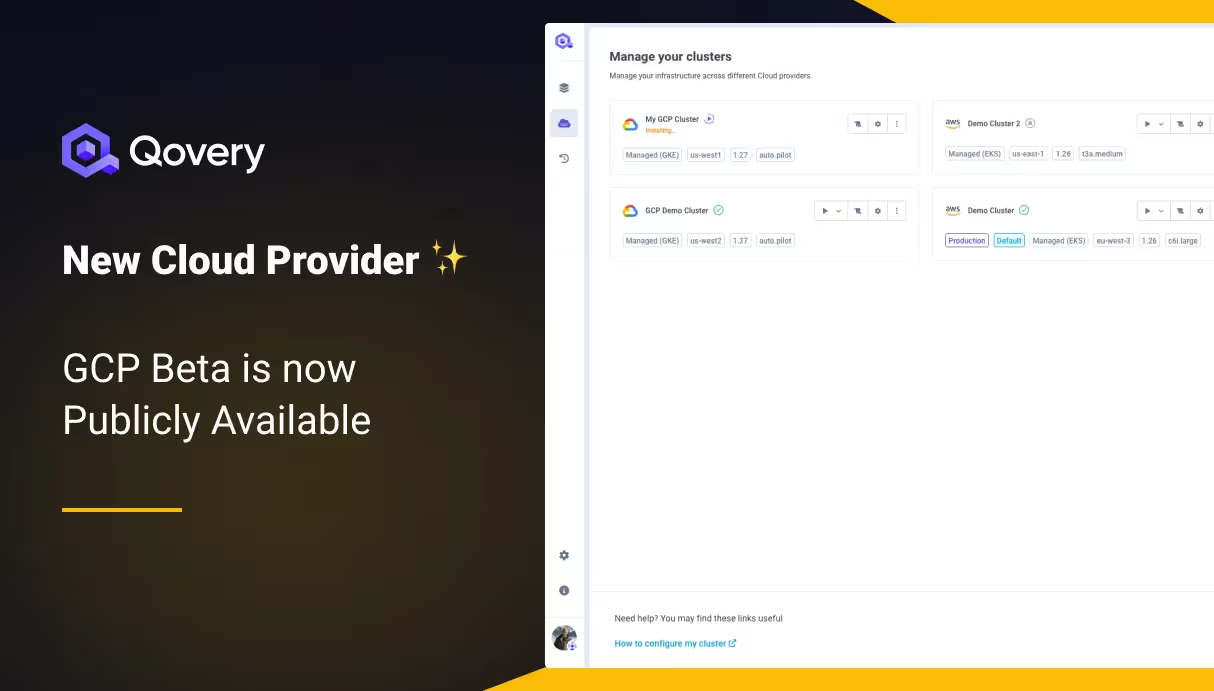
I am thrilled to announce a significant milestone for Qovery: the public beta release of our Google Cloud Platform (GCP) GKE Autopilot support. This marks a new chapter in our journey, following the successful integration with AWS EKS, Scaleway Kapsule, and Kubernetes. In this announcement article I'll explain what you can get out of GCP GKE Autopilot and what is coming next 👇

Romaric PhilogĂšne
CEO & Co-founder
Summary
Twitter icon
linkedin icon
Getting Started with Qovery GCP GKE Autopilot

Seamless Experience Across Cloud Providers

Our philosophy at Qovery has always been to simplify the complexities of cloud infrastructure for developers, enabling them to focus on what they do best – coding.

With the introduction of GCP support, we are bringing the same level of simplicity and efficiency that our users have enjoyed on our Managed offer of AWS EKS and Scaleway Kapsule.

GKE Autopilot: Revolutionizing Cluster Management

A key feature of our GCP integration is the use of GKE Autopilot. This managed service from Google automates the sizing and management of your Kubernetes clusters. It eliminates the need for manual intervention in managing the size of cluster nodes. You only pay for the actual CPU and memory resources your applications use, not for the entire capacity of the cluster nodes. This is not just cost-effective but also simplifies operations significantly.
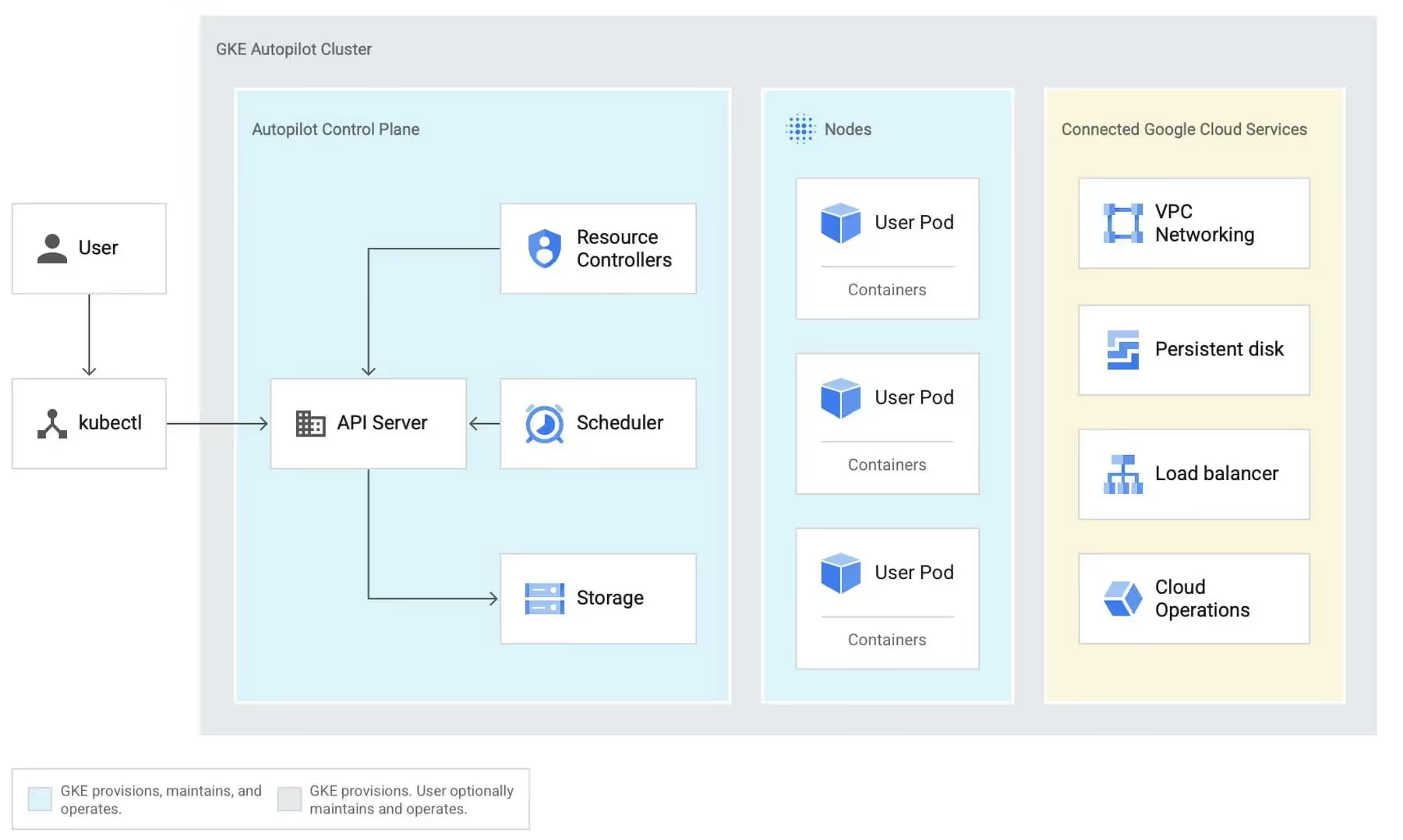
GCP GKE Autopilot diagram - Credits Google Cloud Platform
GKE Autopilot is a mode of operation in GKE in which Google manages your cluster configuration, including your nodes, scaling, security, and other preconfigured settings.

For those leveraging Qovery for Ephemeral Environments, this feature is a game changer. It means faster, more efficient testing and deployment processes without worrying about over-provisioning resources.

What's the added value of Qovery?

Qovery provides much more than just a Managed GCP GKE Autopilot cluster. Here's what sets Qovery apart:

  • Rapid State-of-the-Art Production Setup: With Qovery, you can launch a production-ready setup on Kubernetes in GCP in as little as 30 minutes. Qovery takes care of everything for you - from VPC to cluster configuration. This rapid deployment capability allows you to streamline your development process right from the start. If you need to spin up multiple clusters, no problem. It comes for free.
  • Zero Day-2 Maintenance: Our platform manages the maintenance for you. From rolling updates for GKE to handling underlying dependencies, Qovery ensures your systems are always up-to-date, secure, and running smoothly, freeing you from the complexities of ongoing maintenance.
  • Ready-to-Use Internal Developer Platform: Qovery acts as your ready-to-deploy Internal Developer Platform, offering a comprehensive set of tools and services designed to enhance productivity and efficiency.
  • Outstanding Developer Experience: We focus heavily on the developer experience. Qovery enables a self-service environment for engineers, fostering autonomy and speeding up the development cycle, all without compromising on security and governance.
  • Ephemeral Environments: Our integration with GCP includes support for Ephemeral Environments, allowing developers to test and validate their applications in isolated, temporary setups that mirror production environments closely.
  • Effective Cost Management: With Qovery on GCP, you gain detailed insights and control over your cloud expenditures. Our tools help you optimize resource usage and reduce costs without sacrificing performance.
  • Robust Access Control: Implementing Role-Based Access Control (RBAC), Qovery ensures secured access to resources. Developers can safely access what they need, maintaining security and compliance standards.

Open Source Transparency

In line with our commitment to transparency and community collaboration, the code for our GCP GKE Autopilot integration is available on GitHub (GCP Cloud Provider and GCP Library). We encourage our community to explore, contribute, and provide feedback to help us refine and enhance this integration.

A Perfect Fit for Testing

The public beta release of our GCP GKE Autopilot support is primarily geared towards testing environments. It provides a robust platform for developers to test their applications in a cloud environment that closely mirrors production settings. However, I must emphasize that while this release is fully functional for testing purposes, those looking to run production workloads should approach with caution.

Production Workloads: A Word of Caution

We are confident in the stability and capabilities of our GCP GKE Autopilot integration. However, as with any public beta, there may be undiscovered issues or limitations that could affect its use in production environments. We recommend that users interested in deploying production workloads on GCP through Qovery get in touch with our team (contact us via the chat on the bottom right :)). This ensures that we can guide you through any potential hurdles and confirm that our platform meets your specific production needs.

What's next?

As we continue to enhance our Managed GCP offering, the next steps involve working closely with the GCP architect team to validate all the infrastructure elements set up by Qovery. This collaboration aims to ensure optimal performance, security, and reliability of the services we provide on the GCP platform.

Also, we're excited to announce upcoming features such as Static IPs, VPC Peering, and other enhancements that will further streamline the cloud experience for our users. These additions are part of our continuous effort to provide a comprehensive and user-friendly cloud environment.

For those eager to get started with our Managed GCP integration, detailed installation documentation is available at Qovery GCP Quickstart Guide.

Want to know more about the current limitations? Read this forum thread.

Share on :
Twitter icon
linkedin icon
Ready to rethink the way you do DevOps?
Qovery is a DevOps automation platform that enables organizations to deliver faster and focus on creating great products.
Book a demo

Suggested articles

Cloud
Heroku
Internal Developer Platform
Platform Engineering
9
 minutes
The Top 8 Platform as a Service (Paas) Tools in 2026

Build Your Own PaaS: Stop depending on fixed cloud offerings. Discover the top 8 tools, including Qovery, Dokku, and Cloud Foundry, that let you build a customizable, low-maintenance PaaS on your cloud infrastructure.

Morgan Perry
Co-founder
Kubernetes
 minutes
How to Deploy a Docker Container on Kubernetes: Step-by-Step Guide

Simplify Kubernetes Deployment. Learn the difficult 6-step manual process for deploying Docker containers to Kubernetes, the friction of YAML and kubectl, and how platform tools like Qovery automate the entire workflow.

Mélanie Dallé
Senior Marketing Manager
Observability
DevOps
 minutes
Observability in DevOps: What is it, Observe vs. Monitoring, Benefits

Observability in DevOps: Diagnose system failures faster. Learn how true observability differs from traditional monitoring. End context-switching, reduce MTTR, and resolve unforeseen issues quickly.

Mélanie Dallé
Senior Marketing Manager
DevOps
Cloud
8
 minutes
6 Best Practices to Automate DevSecOps in Days, Not Months

Integrate security seamlessly into your CI/CD pipeline. Learn the 6 best DevSecOps practices—from Policy as Code to continuous monitoring—and see how Qovery automates compliance and protection without slowing development.

Morgan Perry
Co-founder
Heroku
15
 minutes
Heroku Alternatives: The 10 Best Competitor Platforms

Fed up of rising Heroku costs and frequent outages? This guide compares the top 10 Heroku alternatives and competitors based on features, pricing, pros, and cons—helping developers and tech leaders choose the right PaaS.

Mélanie Dallé
Senior Marketing Manager
Product
Infrastructure Management
Deployment
 minutes
Stop tool sprawl - Welcome to Terraform/OpenTofu support

Provisioning cloud resources shouldn’t require a second stack of tools. With Qovery’s new Terraform and OpenTofu support, you can now define and deploy your infrastructure right alongside your applications. Declaratively, securely, and in one place. No external runners. No glue code. No tool sprawl.

Alessandro Carrano
Head of Product
AI
DevOps
 minutes
Integrating Agentic AI into Your DevOps Workflow

Eliminate non-coding toil with Qovery’s AI DevOps Agent. Discover how shifting from static automation to specialized DevOps AI agents optimizes FinOps, security, and infrastructure management.

Mélanie Dallé
Senior Marketing Manager
DevOps
 minutes
Top 10 Flux CD Alternatives: Finding a Better Way to Deploy Your Code

Looking for a Flux CD alternative? Discover why Qovery stands out as the #1 choice. Compare features, pros, and cons of the top 10 platforms to simplify your deployment strategy and empower your team.

Mélanie Dallé
Senior Marketing Manager

It’s time to rethink‹the way you do DevOps

Say goodbye to DevOps overhead. Qovery makes infrastructure effortless, giving you full control without the trouble.