Now, having established the importance of E2E testing, let's explore ten of the leading end-to-end testing products tailored for web applications:
10 Best End-to-End Testing Products to Consider in 2026
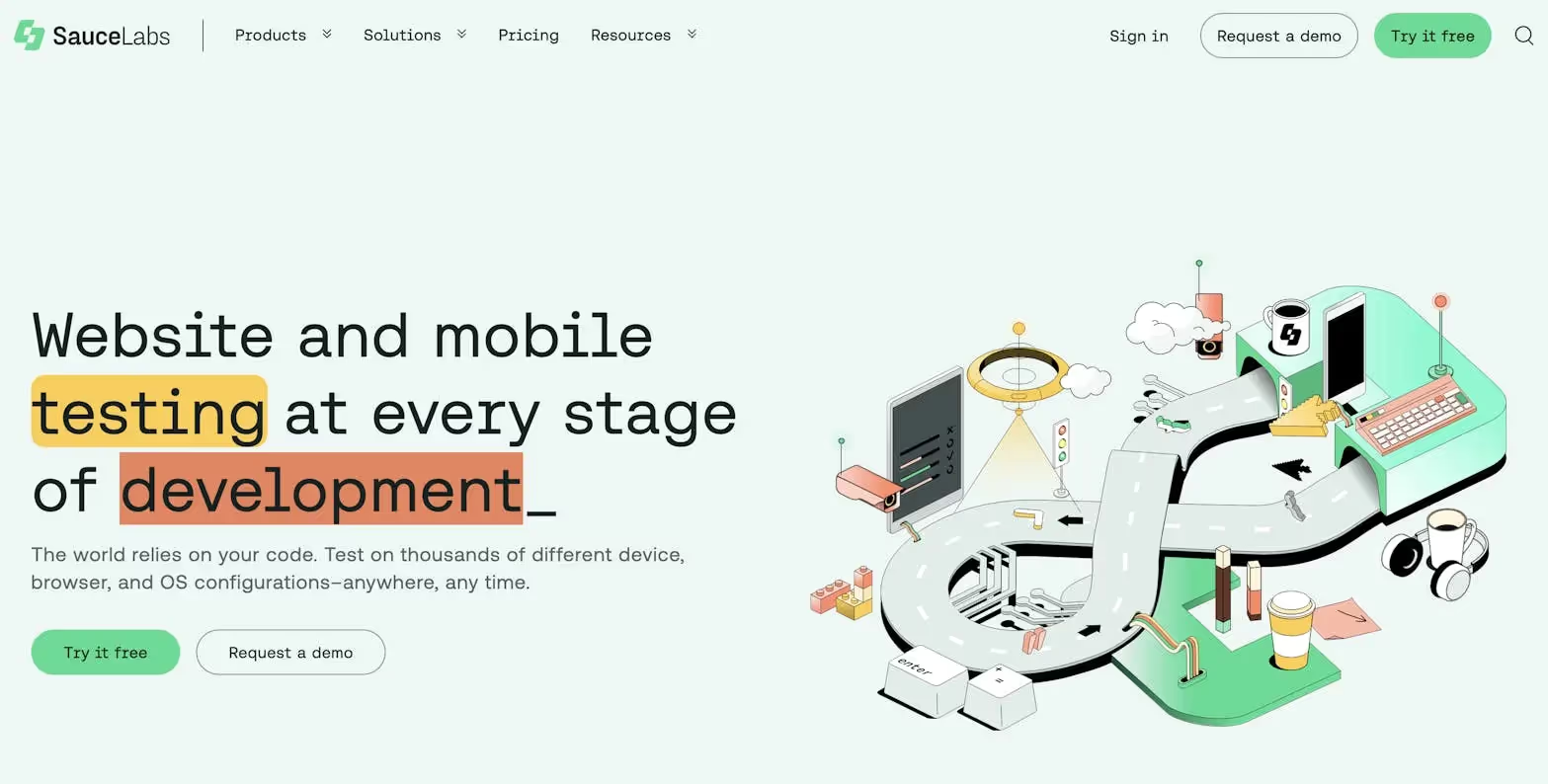
Sauce Labs
In the realm of software development and testing, end-to-end (E2E) testing plays a pivotal role in ensuring the robustness and reliability of web applications. Unlike unit or integration testing, which focuses on specific components or integrations between them, end-to-end testing evaluates the entire system as a whole. This includes testing the flow from the user's perspective, from start to finish, and often involves multiple systems and components working in unison. An end-to-end testing product aims to simplify this comprehensive process, providing tools and environments to simulate real-world user scenarios, ensuring that the application performs seamlessly in actual production environments.


Now, having established the importance of E2E testing, let's explore ten of the leading end-to-end testing products tailored for web applications:
Sauce Labs stands out with its cloud-native approach to testing. Catering to the needs of modern teams, it offers vast browser and OS combinations, making it easier for teams to ensure consistency across varying user environments. Its robust infrastructure ensures scalability, meeting the demands of both small and large-scale applications.
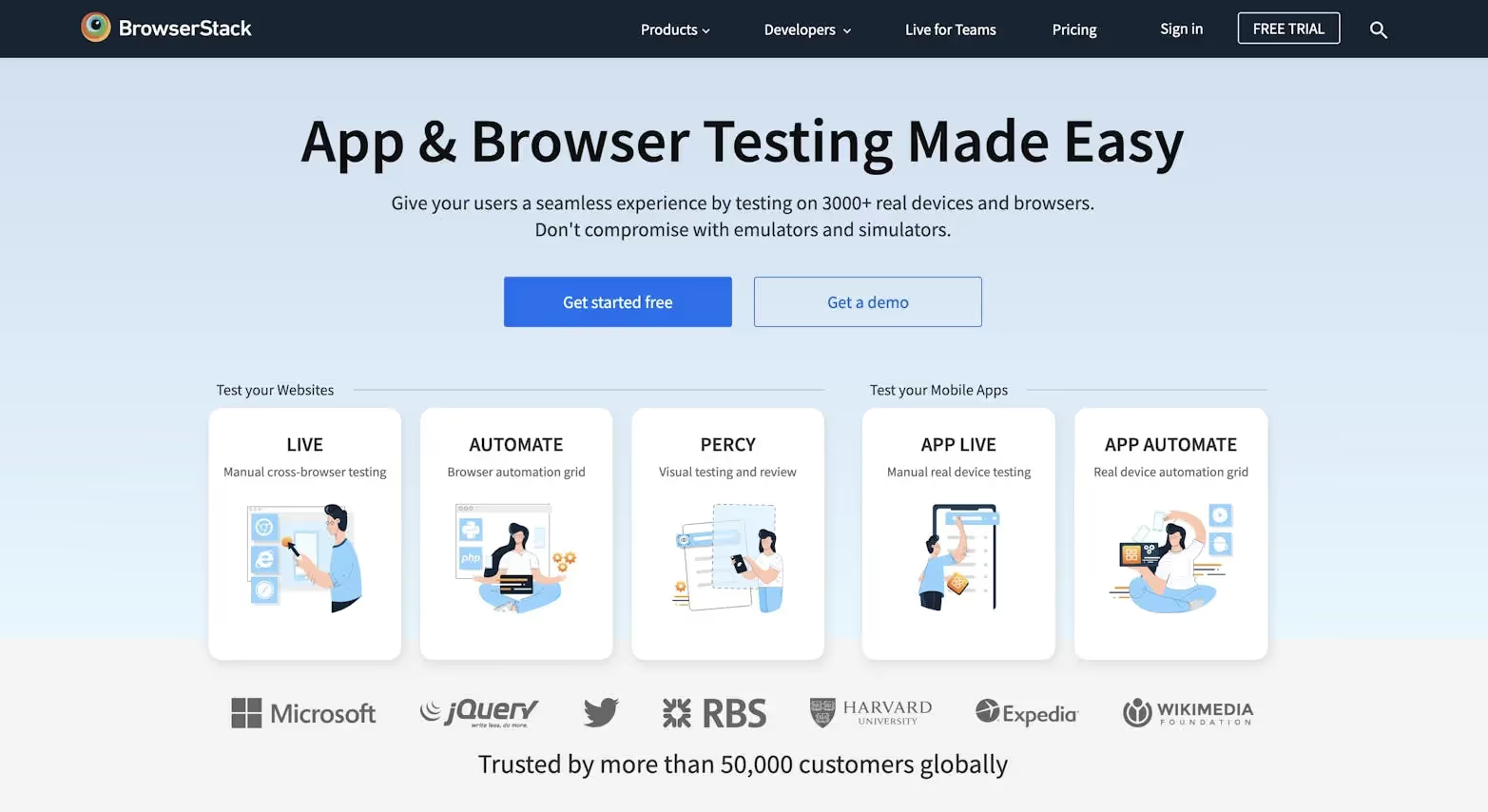
BrowserStack provides a real-world testing experience by offering a platform that simulates a multitude of devices and operating systems. This capability ensures that web applications deliver consistent functionality, irrespective of the device or OS a user might be on. The real-device cloud testing feature helps developers iron out device-specific quirks that might otherwise go unnoticed.
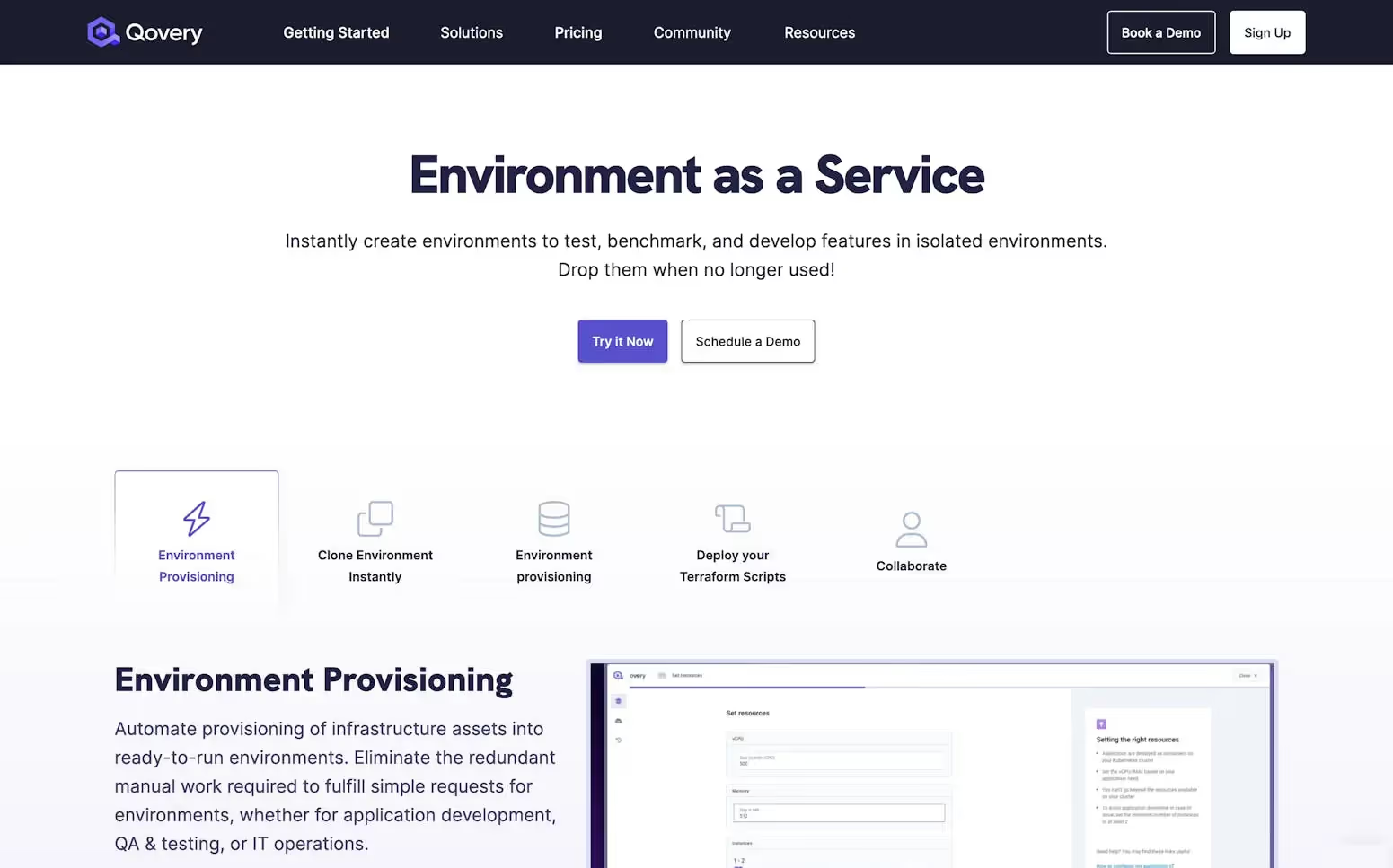
Qovery's Kubernetes management tool excels in setting up environments that closely mirror live production settings. By doing so, it allows teams to test applications under conditions that closely resemble real-world scenarios, making sure that no surprises arise once the application goes live.
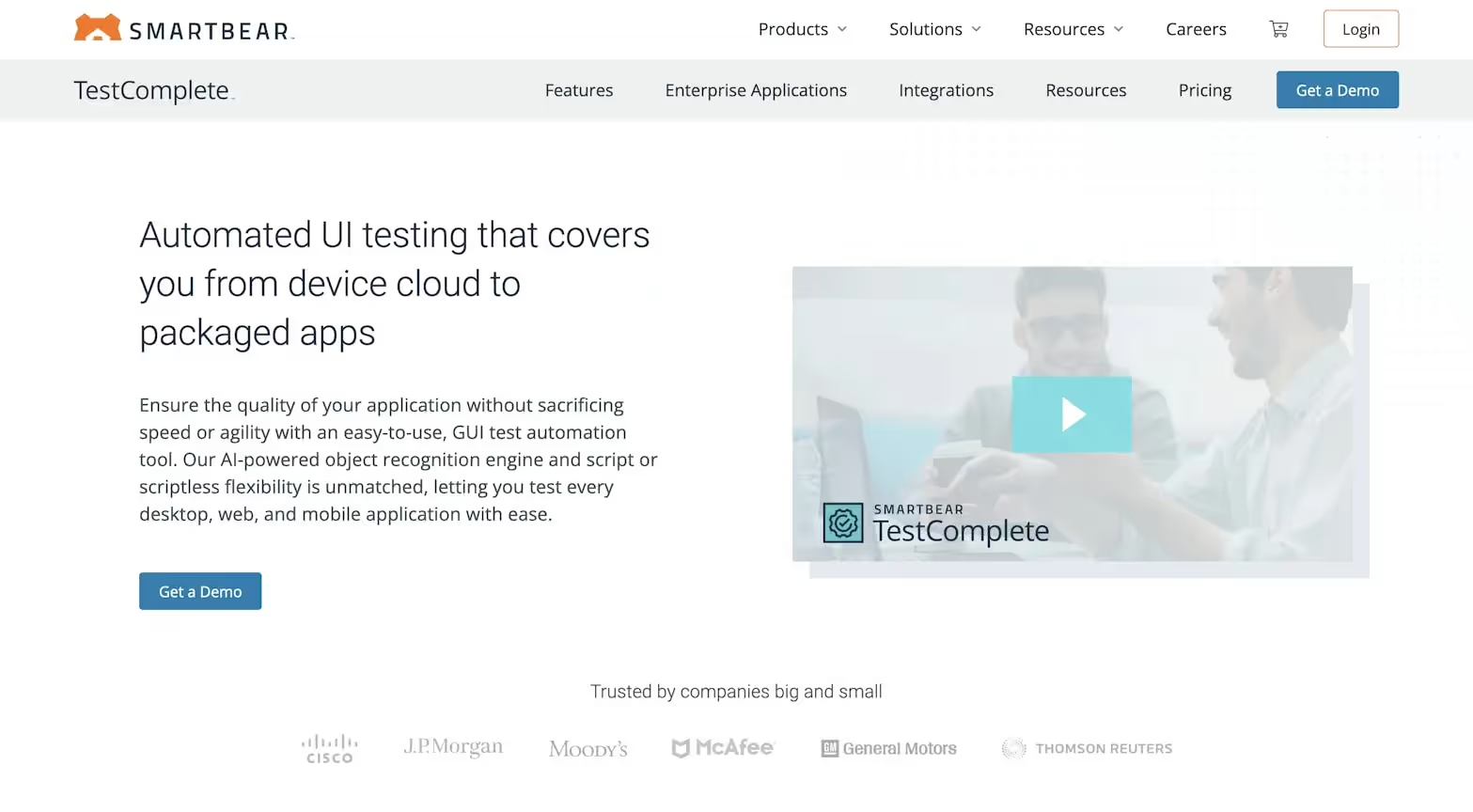
SmartBear's TestComplete is designed to cater to a wide audience. Whether you're a novice who prefers a codeless approach or an expert who leans towards scripted test creation, TestComplete has something for everyone. Its intuitive interface combined with powerful testing capabilities makes it a favorite among many developers.
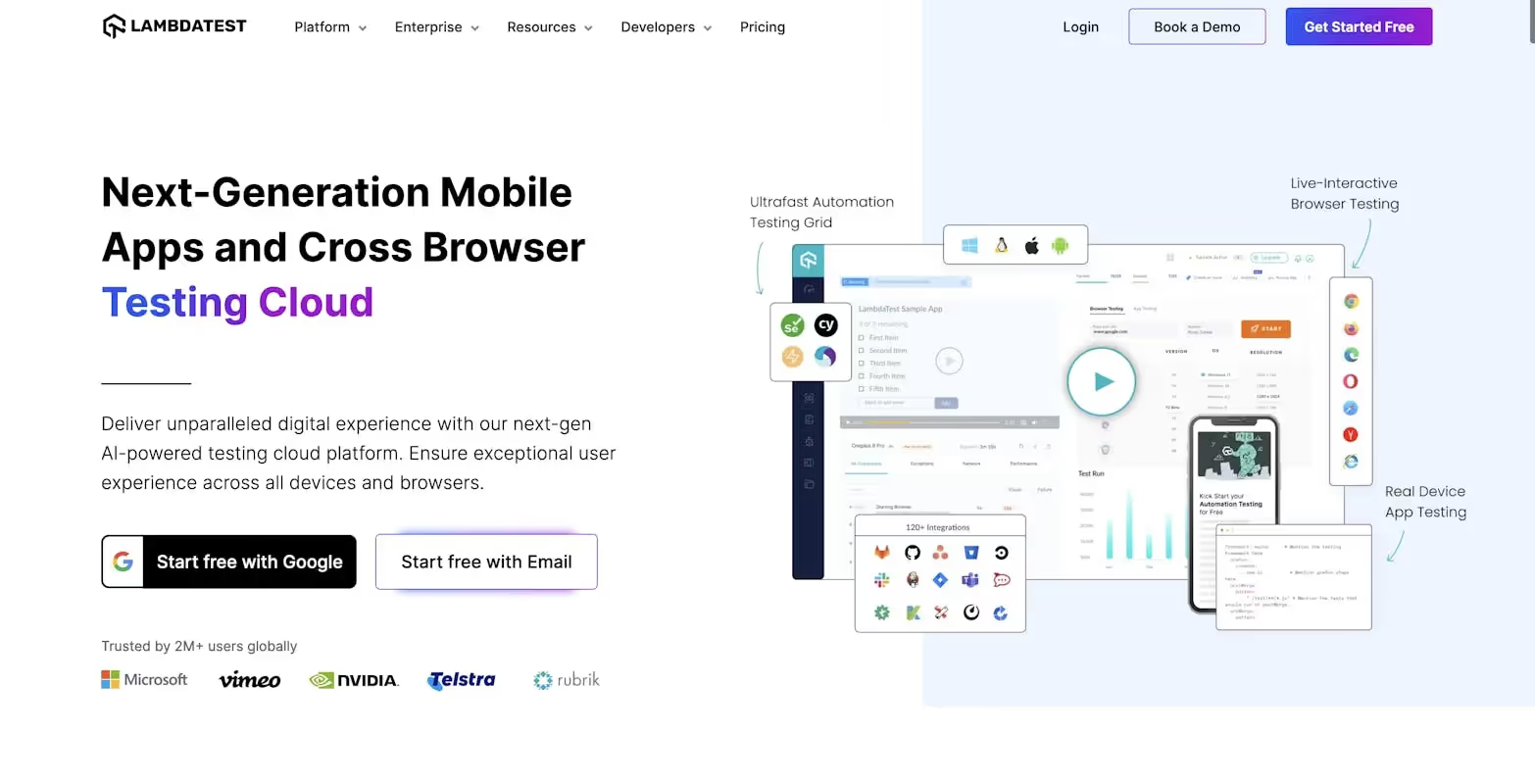
LambdaTest offers a holistic approach to web testing. Located in the cloud, it provides both automated and live testing options across numerous browsers and operating systems. Its features like parallel testing and screenshot testing ensure that web applications meet the highest standards of quality and consistency.
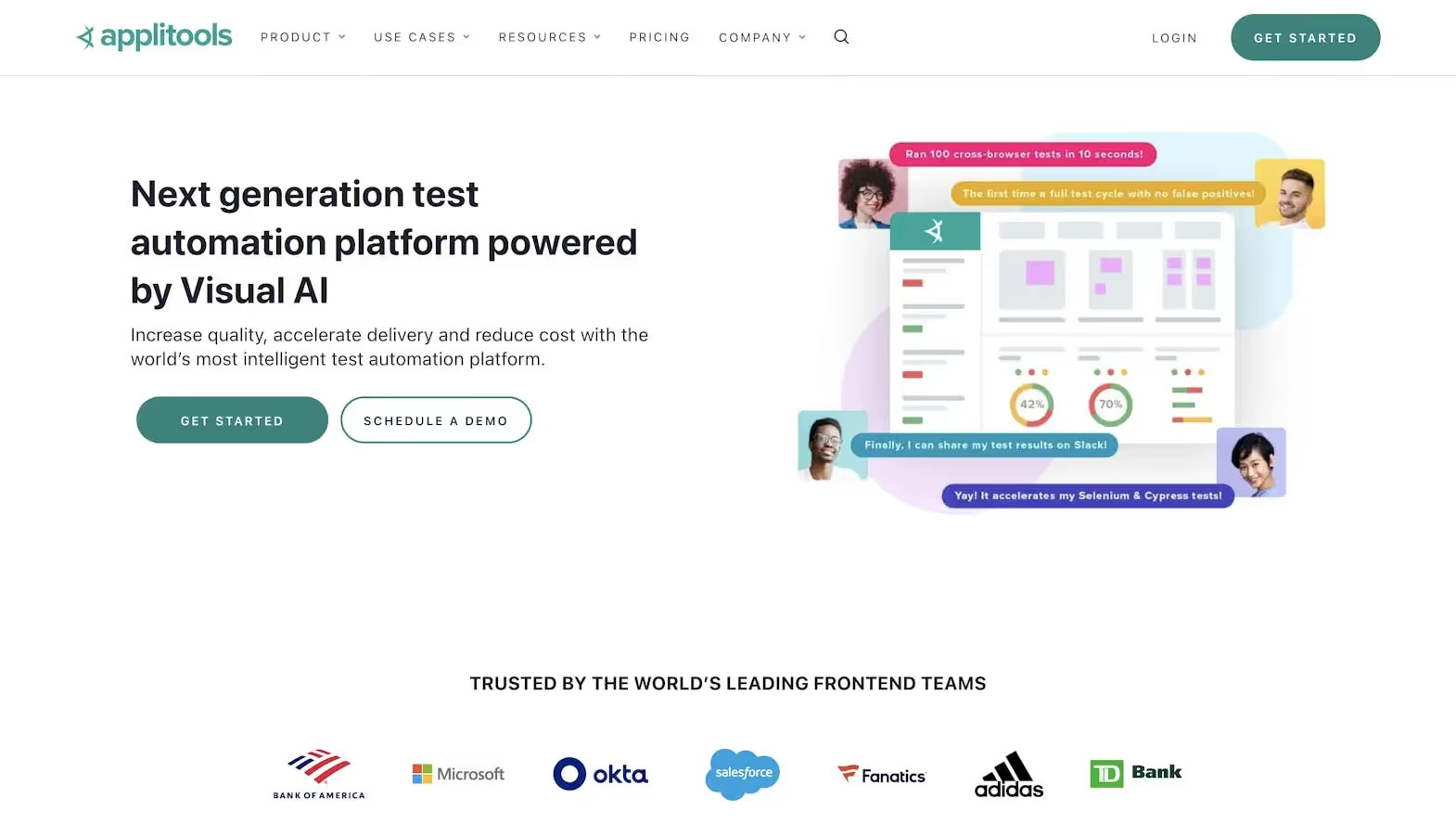
Visual consistency is a cornerstone of user experience, and Applitools ensures just that. By harnessing Visual AI, it can detect even the slightest visual discrepancies that might go unnoticed during regular testing. Integrated into the web application testing process, it ensures pixel-perfect consistency across the board.
Ranorex provides an arsenal of tools that make web application testing a breeze. With features like codeless test creation and parallel test execution, it ensures that applications are rigorously tested and ready for deployment. The user-friendly interface further enhances the testing experience.
Telerik Test Studio is designed with flexibility in mind. Supporting various web technologies, it ensures that applications, irrespective of the underlying technology, deliver consistent performance. The blend of codeless and scripted test creation provides teams with the flexibility they need to address diverse testing scenarios.
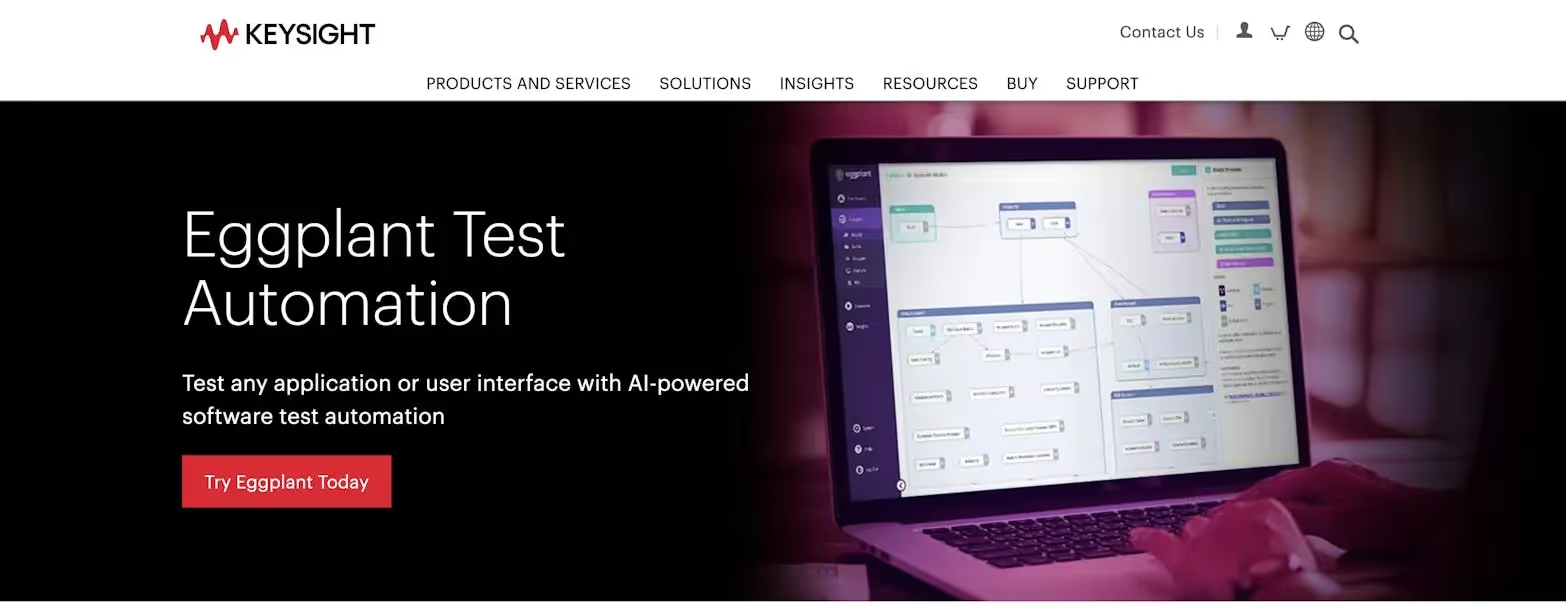
Eggplant offers a unique approach to web testing by leveraging image and text recognition. This approach ensures that not only does the web application function as intended, but it also looks as it should, providing a seamless experience for users.
CrossBrowserTesting offers the benefits of an extensive device lab without the associated overhead. Teams can test their applications across a multitude of browsers and devices, ensuring complete coverage. The platform offers both automated tests and visual regression testing, ensuring that web applications are ready for the diverse digital landscape.
Selecting the ideal end-to-end testing product for your web application can seem daunting given the multitude of options available. Here are a few guiding principles to streamline your decision:
Depending on whether your application is a simple website, a single-page application, or a complex web-based platform, different E2E testing products might be more suited. For instance, applications with complex workflows might benefit from products like Qovery that emphasize realistic production-like environments.
If your team consists of seasoned testers familiar with scripting, a product like TestComplete that offers scripted test creation might be ideal. On the other hand, for teams that prefer a codeless approach, products with user-friendly interfaces and codeless test creation capabilities are more appropriate.
Not all E2E testing tools come with the same price tag. While some offer comprehensive features at a premium price, others might be more budget-friendly but still offer essential testing capabilities. Assess the cost-to-feature ratio and decide accordingly.
Does your development process rely heavily on CI/CD pipelines? If so, tools like Sauce Labs and BrowserStack, which seamlessly integrate with popular CI tools, might be more fitting.
If your web application prioritizes visual appeal and user experience, tools like Applitools that specialize in visual testing become indispensable.
For large web applications, the ability to run parallel tests can save significant time. Tools like LambdaTest that offer parallel testing capabilities can be crucial for such requirements.
The feedback loop's efficiency can impact the speed of development. Tools with advanced reporting features can pinpoint issues more accurately, allowing developers to address them swiftly.
Finally, consider the community and support surrounding a product. A strong community can offer invaluable insights, plugins, and solutions to common problems, while robust official support ensures any issues are promptly addressed.
selecting the right end-to-end testing product is a combination of understanding project requirements, budget, and desired outcomes. The above list serves as a guide, highlighting products that have carved a niche for themselves in the web application testing realm. By evaluating features and integration capabilities, teams can find a product that aligns perfectly with their needs, ensuring top-tier web application quality.
Testing a complete user journey through the running application rather than individual units in isolation. It exercises the real stack, including the interface, the services behind it and the data layer, which makes it the slowest and most realistic layer of a test suite.
Sauce Labs and BrowserStack lead on cross-browser and real-device coverage in the cloud. TestComplete and Ranorex target teams that want a broader automation suite including desktop. LambdaTest covers wide browser matrices. Applitools specializes in visual regression, which conventional assertions miss entirely.
End-to-end testing asks whether the journey works. Cross-browser testing asks whether it works everywhere. They overlap because most cross-browser platforms run end-to-end suites, but a passing test in Chrome tells you nothing about a Safari-specific layout or an older Android WebView.
Because they mutate state. Running a full journey creates users, orders and side effects, and doing that against a shared environment makes tests flaky and pollutes data for everyone else. An isolated environment per test run is what makes the results trustworthy.
Fewer than you are tempted to write. They are slow, expensive to run and the most brittle layer of the pyramid. Cover the handful of journeys where failure would be unacceptable, and push everything else down into integration and unit tests where feedback is faster and failures point at a cause.
Romaric founded Qovery to make Kubernetes accessible to every engineering team. He writes about platform strategy, developer experience, and the future of cloud infrastructure.
Qovery ensures every agent action is scoped, audited, and policy-checked. Start deploying in under 10 minutes.