Blog
Product
Partnership
3
minutes

The Doppler Integration is Finally Here: Sync your Secrets With Qovery Seamlessly

I couldn't be more excited to share a groundbreaking update with all of you today. We've been burning the midnight oil, tinkering with codes and algorithms, and today we're unveiling the result of our hard work - the integration of Qovery with Doppler is officially here! If you're unfamiliar, Doppler is more than just a secret management system. It's an innovative tool that enables developers to synchronize their secrets and credentials across a multitude of platforms. And now, thanks to our newly forged partnership, Qovery users can harness the power of Doppler right within their favorite deployment platform. So, what does this fantastic news mean for you, our esteemed users?
January 27, 2026
Romaric Philogène
CEO & Co-founder
Summary
Twitter icon
linkedin icon

Well, first off, it takes a significant burden off your shoulders. No longer will you need to manually manage your secrets, juggling between various platforms, ensuring each application stays up to date. With Doppler integration, you can effortlessly keep your secrets in sync across all the different tools you're using.

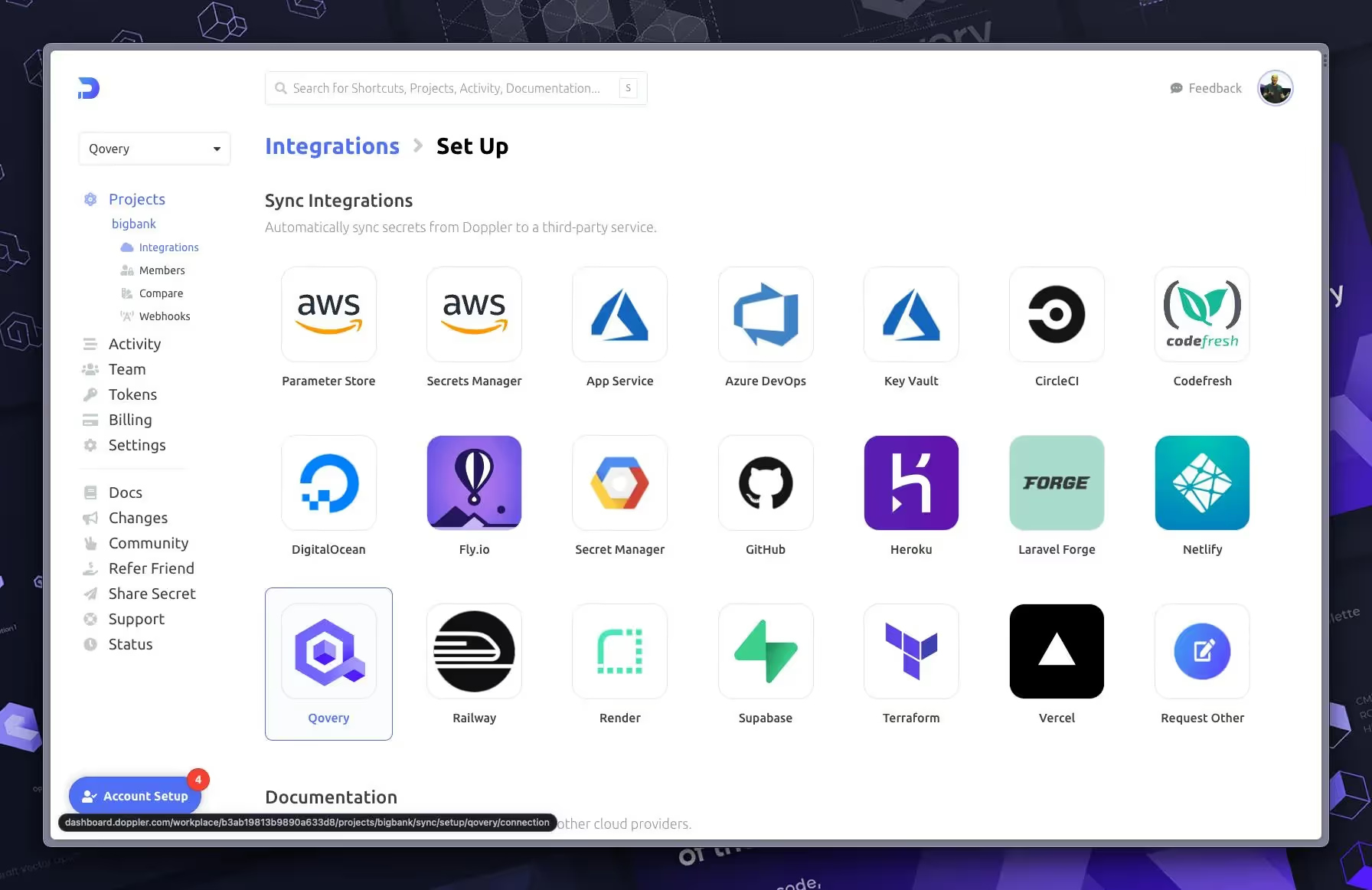
Doppler integrates with Qovery and 30+ other platforms to keep your secrets sync

For example, if you're using AWS's secret management, and you want to get those credentials into Qovery, Doppler can seamlessly synchronize it for you. It's as simple as that.

But, let's dive a bit deeper into how it looks and works on Qovery.

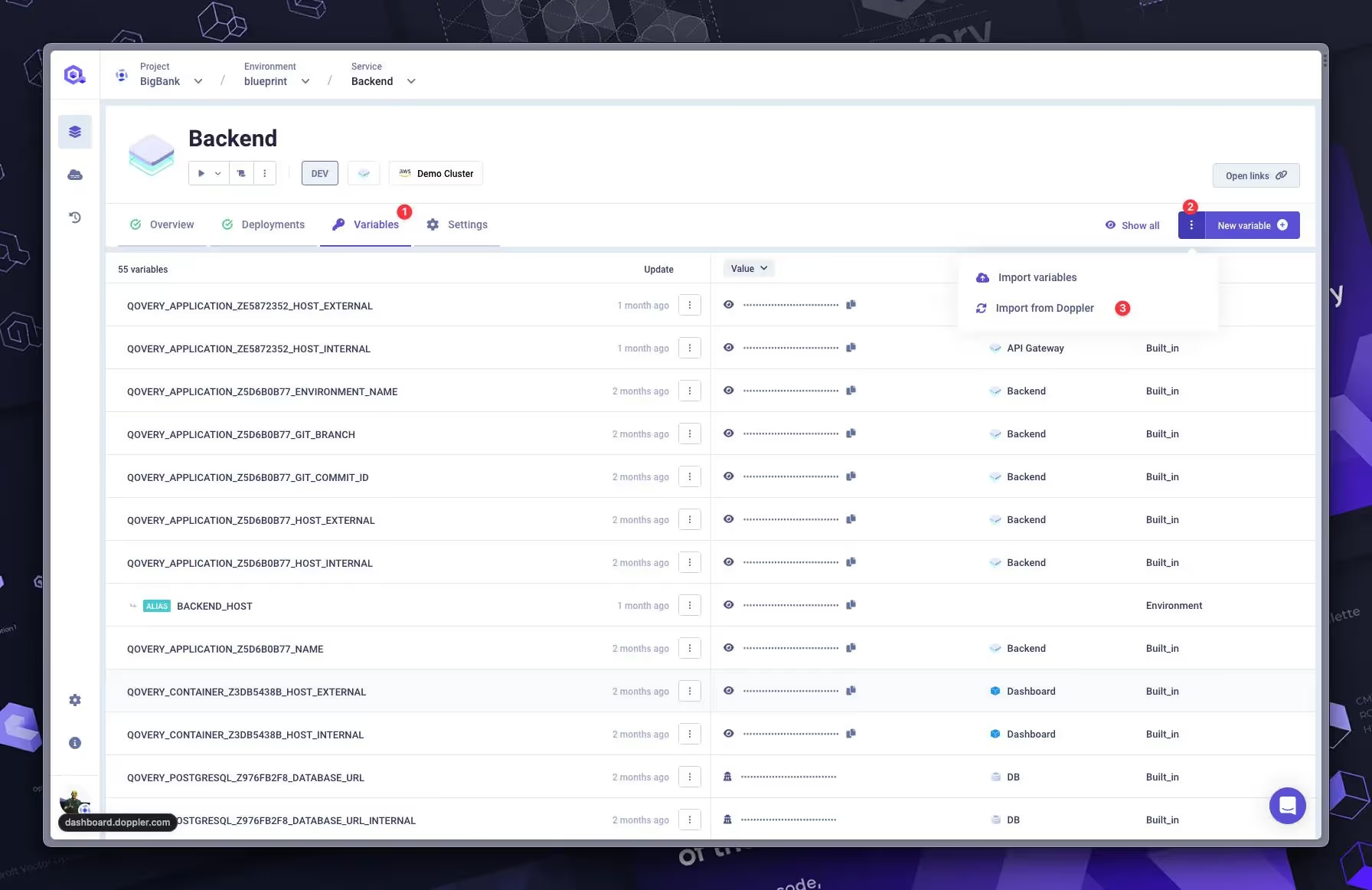
Once you're in your Qovery service, you'll see the familiar 'Environment Variables' tab. This is where you typically add your secrets and environment variables manually. Here, you set the key, the value, the scope, and define if it's a variable or a secret. You can even import a .env file.

Import your Doppler secrets in one click from the Variables tab

But, with Doppler integration, you can now manage the variables and secrets across all your different applications and services, not just on Qovery. With every change you make, Doppler keeps your secrets synced.

To get started, click on 'View Variables' and import them to Doppler. This will take you to the Doppler interface. Here, you'll be able to manage your different secrets within your projects and environments.

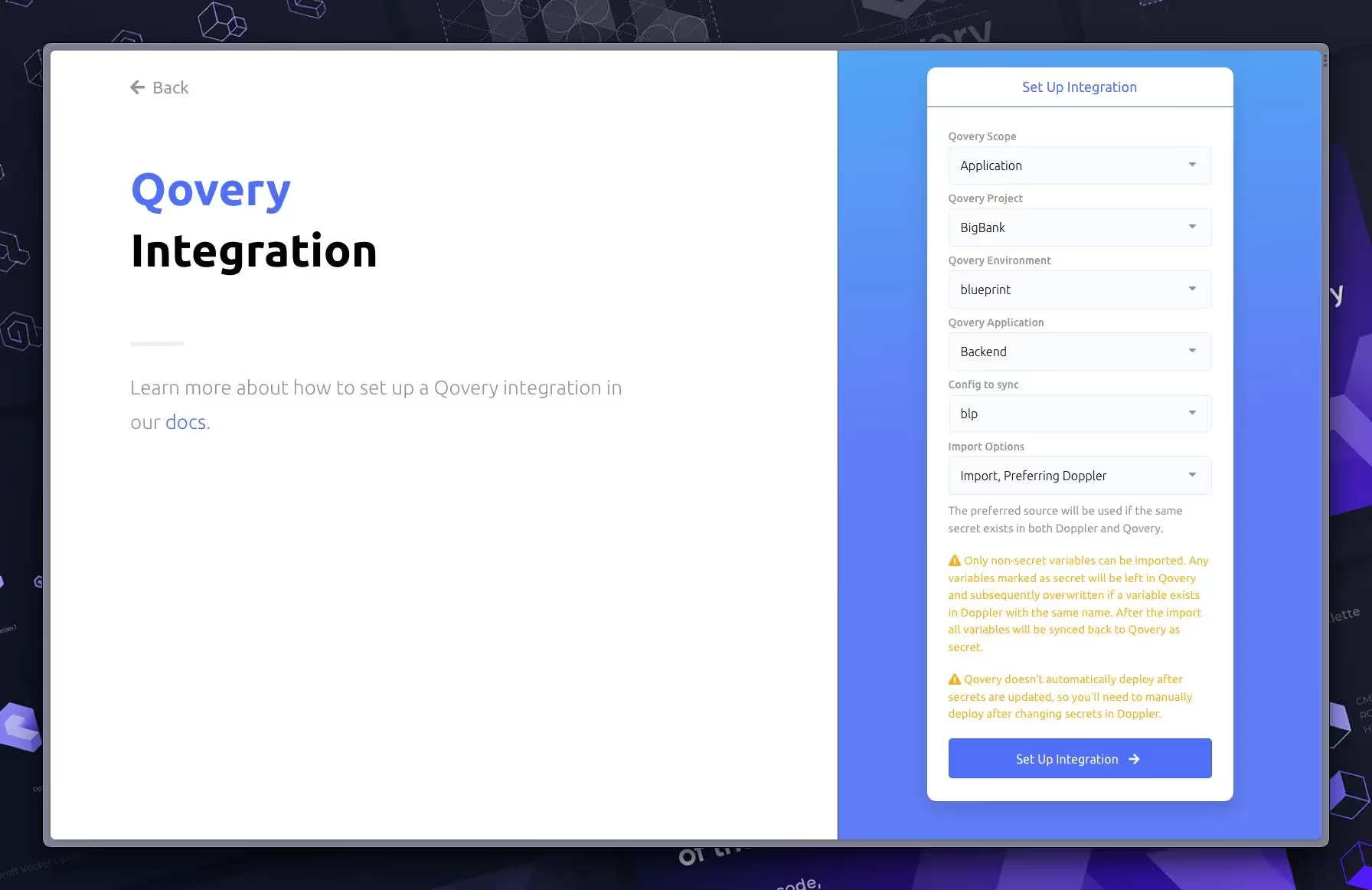
I configure Doppler to synchronize my secrets with my Backend app on Qovery

In your Doppler interface, you can add the API key you've created from the Qovery web interface. Once that's done, you can start selecting different options and syncing your applications from Qovery.

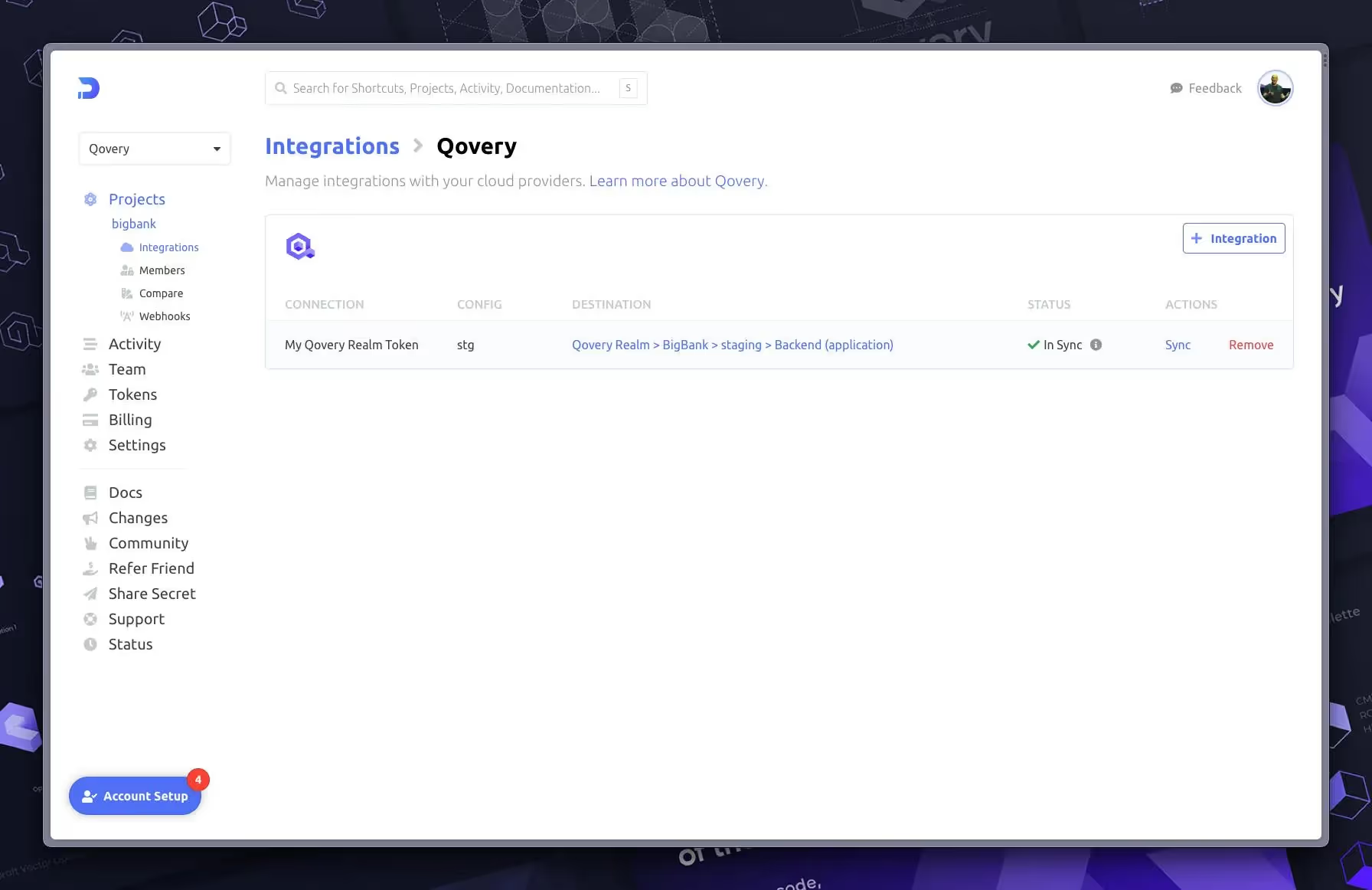
My secrets are sync with my backend app

You can also set the integration to sync secrets from Doppler to Qovery only, ensuring that even if something changes on Qovery, your secrets will always stay in sync with Doppler. Once your integrations are set up, you'll see that your Doppler secrets have been synced with Qovery.

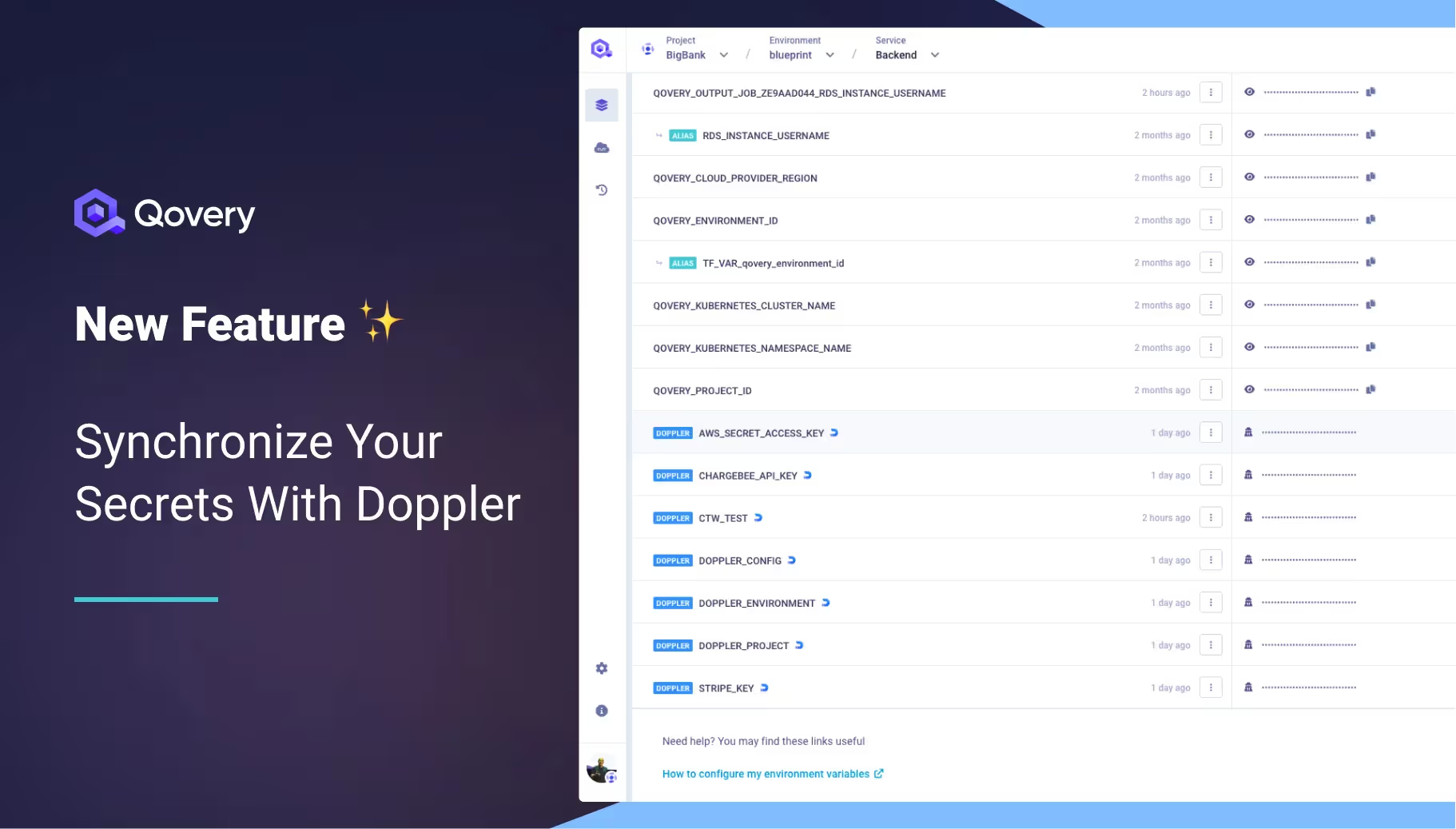
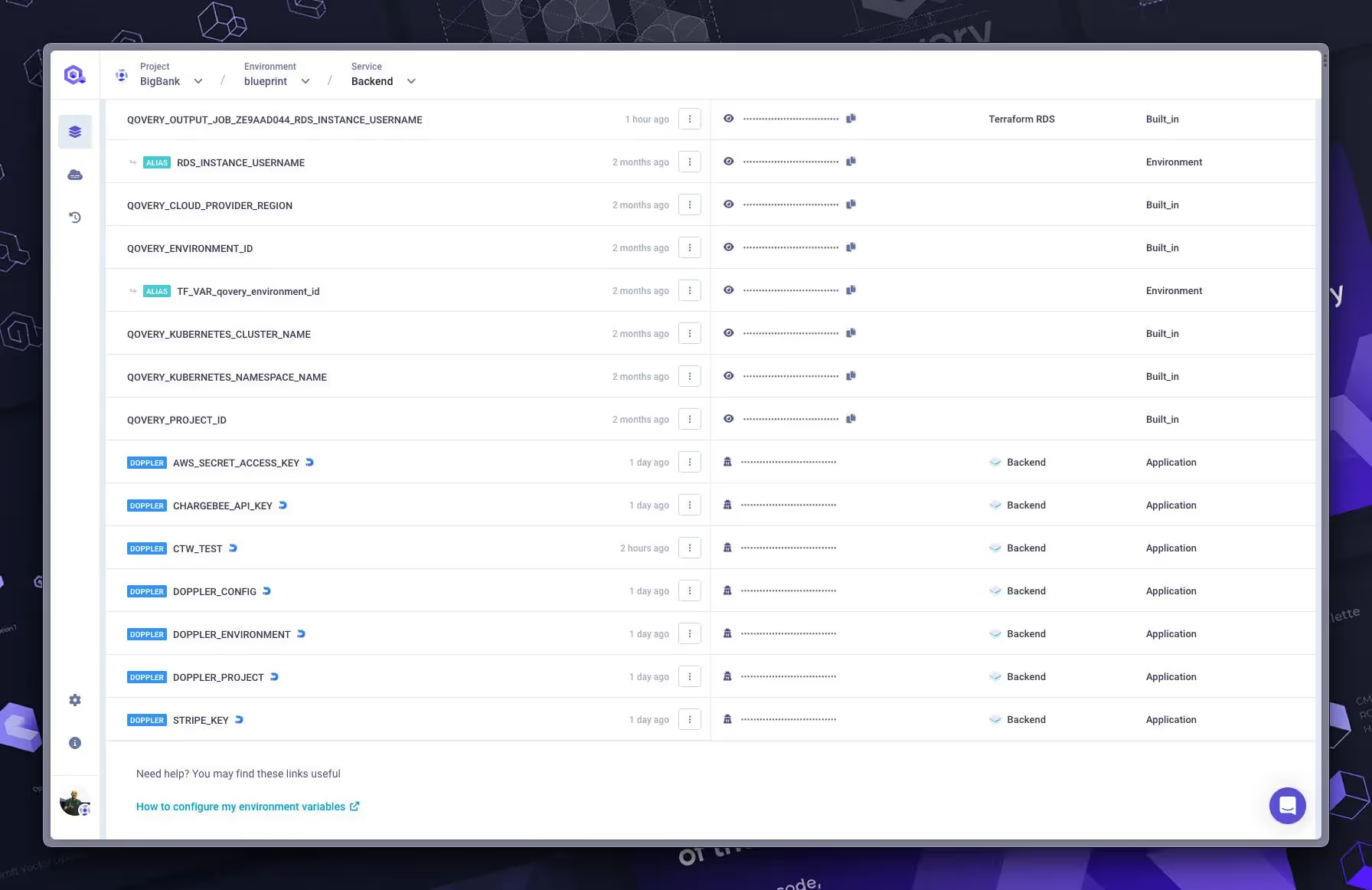
Synchronized secrets from Doppler have a label "Doppler" next to them

Adding a new secret is just as straightforward. You can save it in Doppler, and it will automatically be synced with Qovery. You can even add multiple integrations for different applications within the same environment.

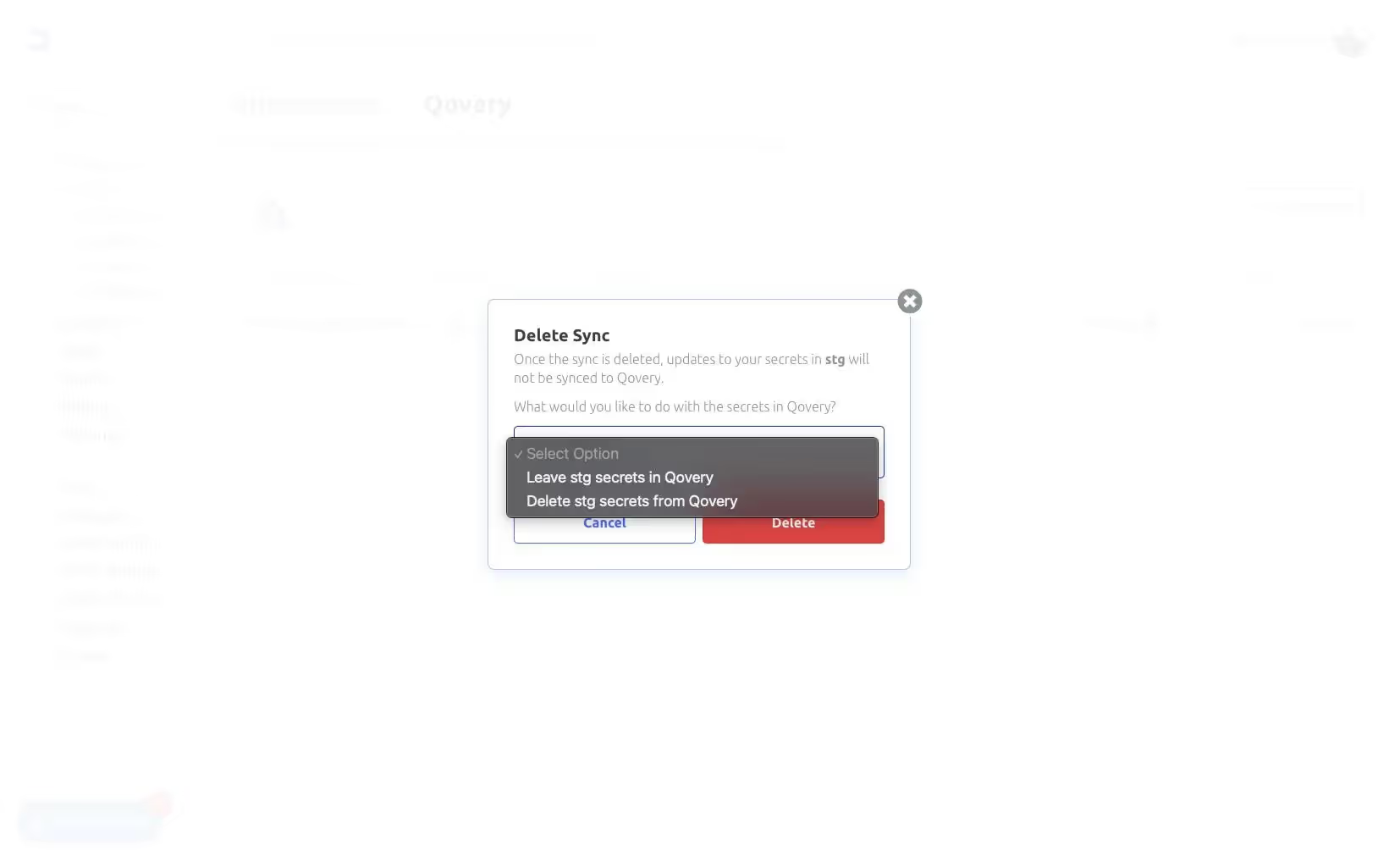
When deleting the Doppler sync with Qovery - you can choose to leave or delete the secrets from Qovery

But, what if you want to remove the integration for some reason? Well, Doppler's got you covered. You can easily remove the integration from Doppler's end and select if you want to delete the secrets from Qovery.

Watch my live demo here.

In conclusion, this new Doppler integration with Qovery's Kubernetes management platform is a game-changer, simplifying your secret management and making it more efficient. We highly recommend all our users to consider using Doppler, especially if you want to keep syncing your secrets with other platforms like AWS secrets manager.

As always, if you have any questions, feel free to ask. We're excited for you to experience this new integration and eager to hear your feedback. Enjoy this new feature, and see you next time!

Share on :
Twitter icon
linkedin icon
Tired of fighting your Kubernetes platform?
Qovery provides a unified Kubernetes control plane for cluster provisioning, security, and deployments - giving you an enterprise-grade platform without the DIY overhead.
See it in action

Suggested articles

Kubernetes
 minutes
Stopping Kubernetes cloud waste: agentic automation for enterprise fleets

Agentic Kubernetes resource reclamation is the practice of using an autonomous control plane to continuously identify, suspend, and delete idle infrastructure across a multi-cloud Kubernetes fleet. It replaces manual cleanup and reactive autoscaling with intent-based policies that act on business state, eliminating the configuration drift and cloud waste typical of unmanaged fleets.

Mélanie Dallé
Senior Marketing Manager
Platform Engineering
Kubernetes
DevOps
10
 minutes
What is Kubernetes? The reality of Day-2 enterprise fleet orchestration

Kubernetes focuses on container orchestration, but the reality on the ground is far less forgiving. Provisioning a single cluster is a trivial Day-1 exercise. The true operational nightmare begins on Day 2. Teams that treat multi-cloud fleets like isolated pets inevitably face crushing YAML configuration drift, runaway AWS bills, and severe scaling bottlenecks.

Morgan Perry
Co-founder
AI
Compliance
Healthtech
 minutes
Agentic AI infrastructure: moving beyond Copilots to autonomous operations

The shift from AI copilots to autonomous agents is redefining infrastructure requirements. Discover how to build secure, stateful, and compliant Agentic AI systems using Kubernetes, sandboxing, and observability while meeting EU AI Act standards

Mélanie Dallé
Senior Marketing Manager
Kubernetes
8
 minutes
The 2026 guide to Kubernetes management: master day-2 ops with agentic control

Effective Kubernetes management in 2026 demands a shift from manual cluster building to intent-based fleet orchestration. By implementing agentic automation on standard EKS, GKE, or AKS clusters, enterprises eliminate operational weight, prevent configuration drift, and proactively control cloud spend without vendor lock-in, enabling effective scaling across massive fleets.

Mélanie Dallé
Senior Marketing Manager
Kubernetes
 minutes
Building a single pane of glass for enterprise Kubernetes fleets

A Kubernetes single pane of glass is a centralized management layer that unifies visibility, access control, cost allocation, and policy enforcement across § cluster in an enterprise fleet for all cloud providers. It replaces the fragmented practice of switching between AWS, GCP, and Azure consoles to govern infrastructure, giving platform teams a single source of truth for multi-cloud Kubernetes operations.

Mélanie Dallé
Senior Marketing Manager
Kubernetes
 minutes
How to deploy a Docker container on Kubernetes (and why manual YAML fails at scale)

Deploying a Docker container on Kubernetes requires building an image, authenticating with a registry, writing YAML deployment manifests, configuring services, and executing kubectl commands. While necessary to understand, executing this manual workflow across thousands of clusters causes severe configuration drift. Enterprise platform teams use agentic platforms to automate the entire deployment lifecycle.

Mélanie Dallé
Senior Marketing Manager
Qovery
Cloud
AWS
Kubernetes
8
 minutes
10 best practices for optimizing Kubernetes on AWS

Optimizing Kubernetes on AWS is less about raw compute and more about surviving Day-2 operations. A standard failure mode occurs when teams scale the control plane while ignoring Amazon VPC IP exhaustion. When the cluster autoscaler triggers, nodes provision but pods fail to schedule due to IP depletion. Effective scaling requires network foresight before compute allocation.

Morgan Perry
Co-founder
Kubernetes
Terraform
 minutes
Managing Kubernetes deployment YAML across multi-cloud enterprise fleets

At enterprise scale, managing provider-specific Kubernetes YAML across multiple clouds creates crippling configuration drift and operational toil. By adopting an agentic Kubernetes management platform, infrastructure teams abstract cloud-specific configurations (like ingress controllers and storage classes) into a single, declarative intent that automatically reconciles across 1,000+ clusters.

Mélanie Dallé
Senior Marketing Manager

It’s time to change
the way you manage K8s

Turn Kubernetes into your strategic advantage with Qovery, automating the heavy lifting while you stay in control.