Qovery's Vision: Shaping the Future of Internal Developer Platforms
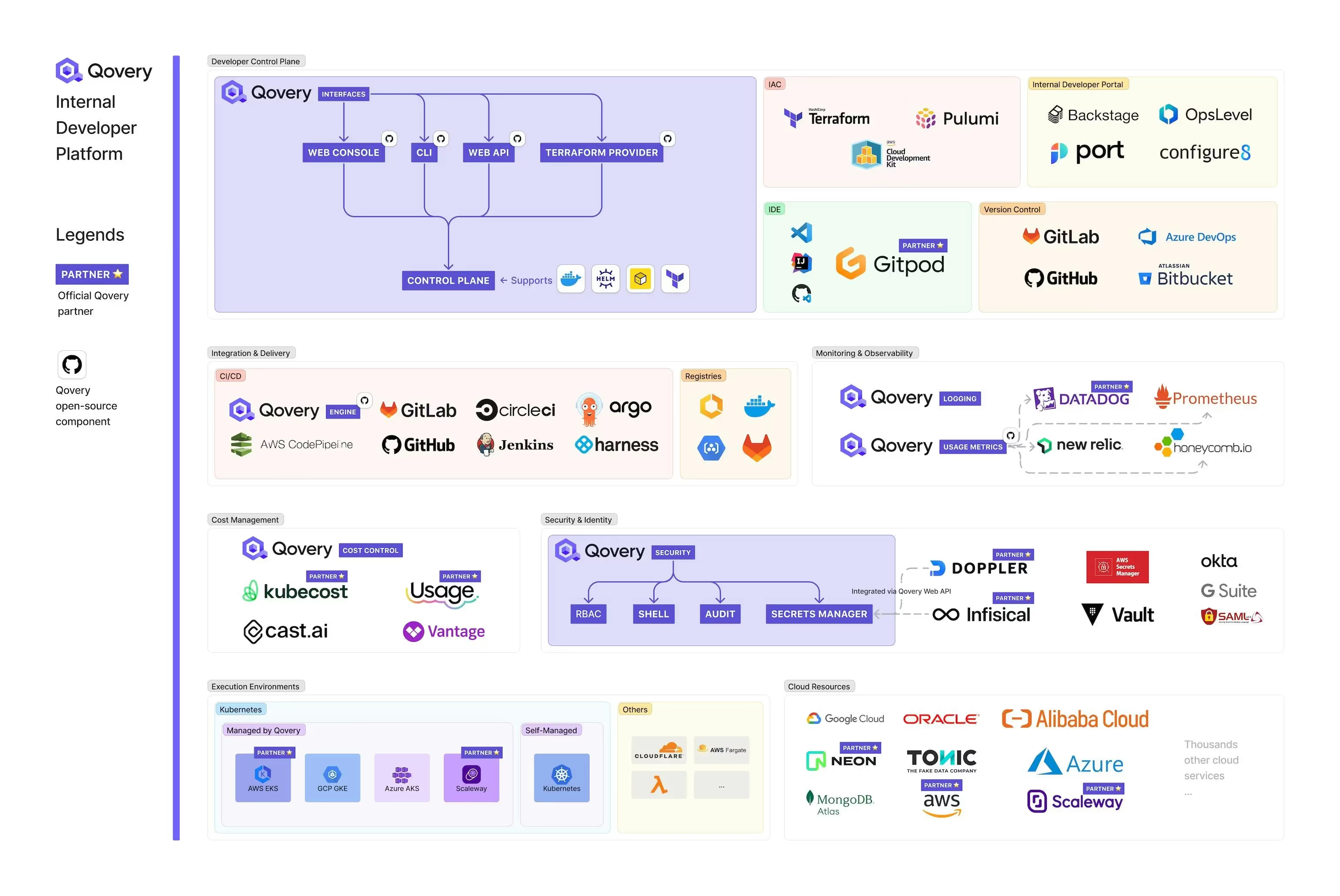
In a landscape inundated with tools and technologies, the real challenge for companies is not just about having an array of options but about ensuring these options harmoniously fit into their unique technical environments. Qovery understands this, and it’s evident in the modularity of its ecosystem. But the journey doesn’t end here. Looking ahead, Qovery envisions a paradigm shift in the way Internal Developer Platforms (IDP) are perceived and utilized.
In the pipeline for Qovery is a vision of an IDP that is both ready-to-go and composable. What does this mean? Imagine a platform that you can integrate into your organization almost instantaneously, without the usual teething problems.
Qovery was designed with composability in mind, ensuring seamless integration into existing ecosystems while delivering the optimal Developer Experience.
But, at the same time, this platform isn’t rigid. It’s malleable, adaptable, and can be composed to fit the exact needs of your organization, irrespective of your technical constraints.
Outstanding Developer Experience: A Non-negotiable
The true measure of any tool or platform is its usability. An outstanding developer experience isn’t just a nice-to-have; it's a non-negotiable for Qovery. Developers are the lifeblood of any tech organization, and if a tool impedes their workflow instead of facilitating it, it defeats its purpose.
Qovery’s commitment to Developer Experience (DX) is unequivocal. A platform can have all the bells and whistles, but if it's not developer-friendly, its adoption will inevitably be stifled. Qovery’s mission is to ensure that its IDP doesn’t just exist as a tool, but becomes an integral part of a developer’s daily routine.
Agents ship fast. Guardrails keep them safe.
Qovery ensures every agent action is scoped, audited, and policy-checked. Start deploying in under 10 minutes.
Ultimately, the relevance of an IDP is gauged by its adoption across the organization. A tool can be technologically advanced, but if it's gathering virtual dust and not being utilized, its pertinence is questionable. Every organization, from startups to tech behemoths, has its own set of technical constraints. Qovery aims to transcend these constraints by offering a platform that’s universally adoptable, irrespective of an organization's unique challenges.
In Conclusion
The future of Qovery is not just about adding more features or integrations. It's about reimagining the very fabric of what an IDP can offer. With a vision set on providing a ready-to-go, composable platform with an unparalleled developer experience, Qovery is poised to not just shape the future of IDPs, but to lead it. As organizations grapple with their unique technical challenges, Qovery stands ready to be the bridge, ensuring that developers don’t just use the platform, but genuinely enjoy the experience.
Romaric founded Qovery to make Kubernetes accessible to every engineering team. He writes about platform strategy, developer experience, and the future of cloud infrastructure.
Next step
Agents ship fast. Guardrails keep them safe.
Qovery ensures every agent action is scoped, audited, and policy-checked. Start deploying in under 10 minutes.