Save up to 60% on AWS costs with EKS and Karpenter
At Qovery, we're thrilled to introduce a groundbreaking way for AWS users to drastically reduce their costs - by up to 60% on EC2 instances. This significant reduction is made possible through the synergy of AWS Elastic Kubernetes Service (EKS) with Karpenter, AWS's powerful autoscaler.
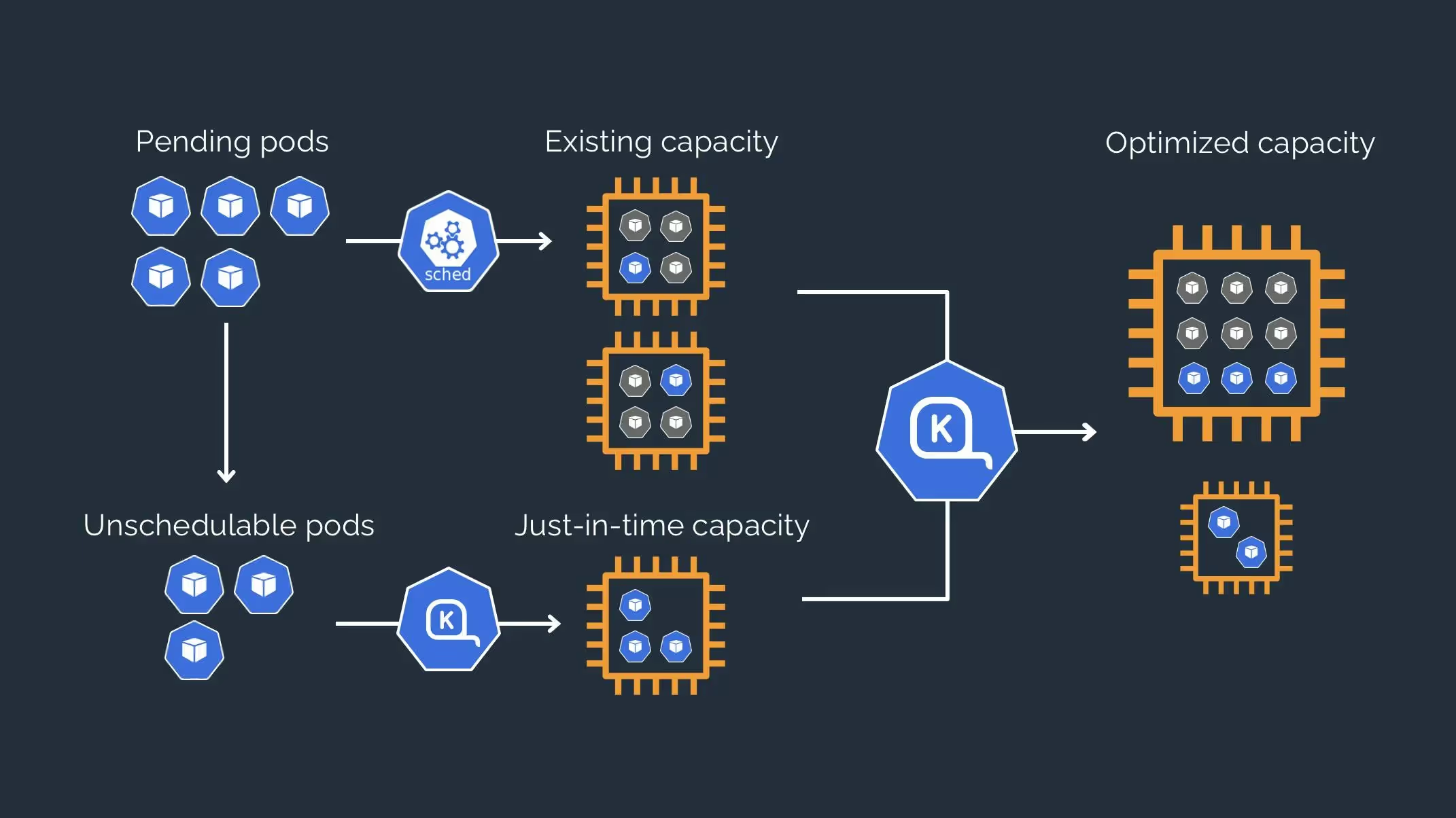
AWS Karpenter is an open-source, flexible, high-performance Kubernetes cluster autoscaler. It was developed by AWS to address some of the inherent limitations of the default Kubernetes autoscaler, particularly around efficient resource allocation and cost optimization. Karpenter dynamically adjusts the volume and type of compute resources to meet application demands, which significantly reduces costs and improves application performance. Discover more about Karpenter on its official page.
The Imperative of Cost Optimization
The majority of costs on AWS stem from the compute layer, primarily EC2 instances. Traditionally, organizations might allocate one EC2 instance per application, leading to underutilization and inflated costs. Kubernetes, and by extension AWS EKS, offers a more efficient model by allowing multiple applications to share the same EC2 instance (or Kubernetes node), thus mutualizing resources.
However, the default Kubernetes autoscaler falls short in two critical aspects:
Load Balancing: It struggles to distribute workloads efficiently across instances.
Node Flexibility: It cannot dynamically adjust the types of nodes in use based on current workloads, leading to non-optimized resource utilization and higher costs.
Enter Karpenter, AWS's answer to these challenges. Karpenter excels where the default autoscaler does not, offering dynamic and intelligent scaling that perfectly aligns resource allocation with application needs.
How Karpenter Works - Overview - Source Karpenter.sh
For a deeper dive into the advantages of Karpenter over the default Kubernetes autoscaler, our comparative analysis offers comprehensive insights.
Agents ship fast. Guardrails keep them safe.
Qovery ensures every agent action is scoped, audited, and policy-checked. Start deploying in under 10 minutes.
We're excited to announce that this revolutionary feature is now available in Beta for all our users at Qovery. Check out my short demo video 👇
By integrating Karpenter, we're enabling you to dramatically reduce your AWS costs, optimize resource usage, and enhance your applications' performance without the headache of manual scaling. Interested in being part of this Beta phase?
Qovery: Your Partner in Cloud Optimization
At Qovery, our mission is to provide you with an optimized infrastructure that embodies our philosophy: pay only for what you use, with zero wasted resources. In this challenging macroeconomic environment, optimizing cloud costs is not just a preference - it's a necessity. We're committed to helping you achieve this with solutions like AWS EKS and Karpenter that are designed to significantly lower your AWS bill while maintaining high performance and reliability.
By leveraging the power of Kubernetes with the intelligence of Karpenter, we're proud to offer you the tools to make your cloud infrastructure as efficient and cost-effective as possible. Dive into the future of cloud computing with Qovery's kubernetes management platform, and let's build a more sustainable, cost-efficient cloud together.
Romaric founded Qovery to make Kubernetes accessible to every engineering team. He writes about platform strategy, developer experience, and the future of cloud infrastructure.
Next step
Agents ship fast. Guardrails keep them safe.
Qovery ensures every agent action is scoped, audited, and policy-checked. Start deploying in under 10 minutes.