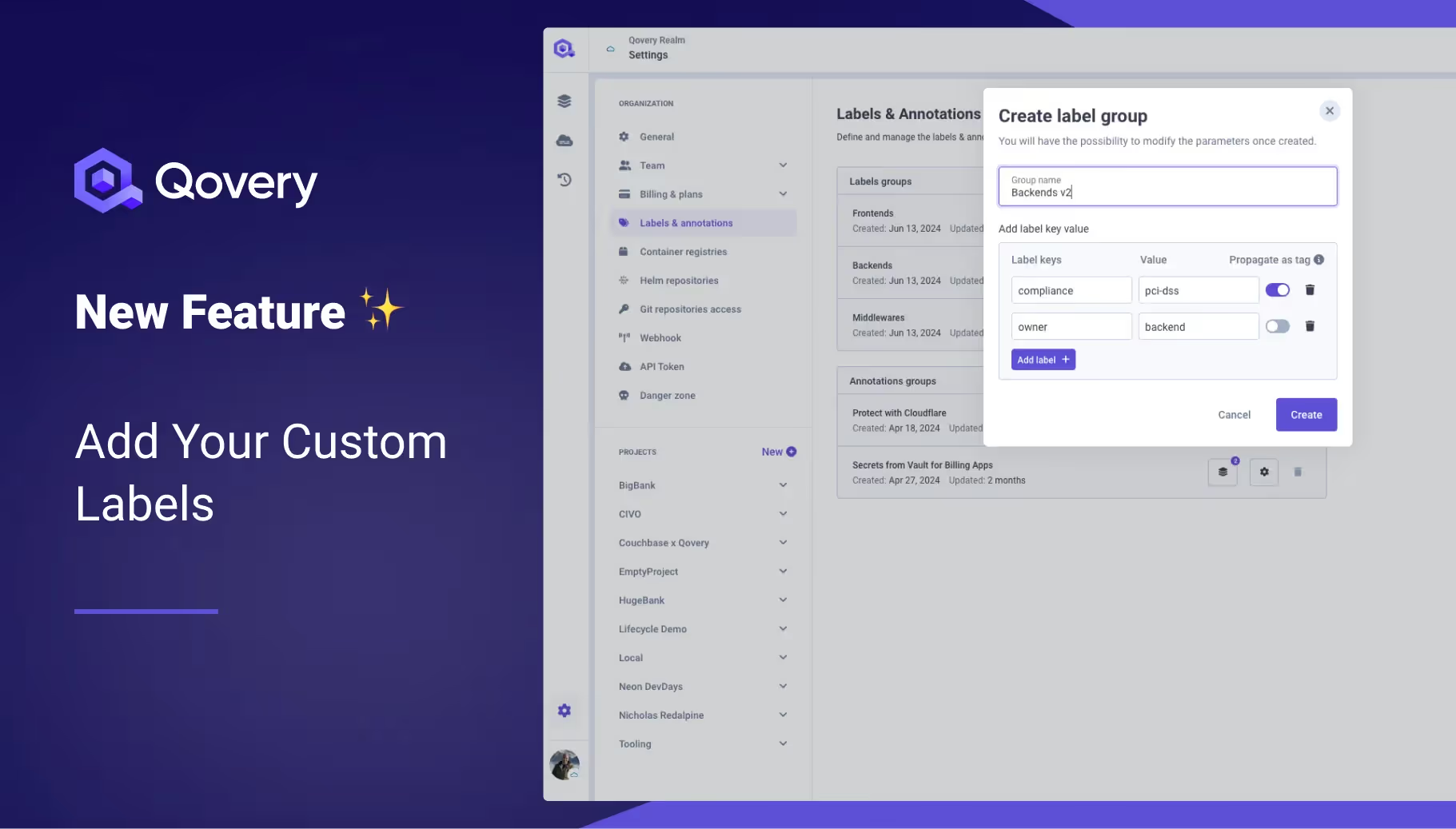
We are excited to announce a powerful new feature in Qovery: the ability to add resource labels on Kubernetes and cloud resources. This enhancement comes right after our support for Kubernetes annotations, further extending your capacity to manage and organize your resources efficiently.
Labels are key-value pairs that provide metadata to resources without affecting the behavior of applications or services. Unlike environment variables and custom annotations, which can influence how applications run, labels are used purely for informational purposes. Labels help organize, identify, and manage resources across your infrastructure, streamlining operations, improving searchability, and enabling better tracking and cost management.
Why Qovery Labels Stand Out
What makes Qovery's labeling feature unique is the ability to configure labels via a group of labels. When you change a label group, it is reflected across all attached services. This provides a unified place to manage all your labels, significantly simplifying and enhancing the process.
Centralized Management: Manage all your labels from a single location, ensuring consistency and ease of maintenance.
Comprehensive Labeling: Qovery Custom Labels add labels to Qovery, Kubernetes resources, and cloud resources from one place. This is highly convenient for maintaining uniform labeling across your entire infrastructure.
Scalability: Apply changes across multiple services effortlessly, saving time and reducing errors.
Flexibility: Create and modify label groups to adapt to evolving project needs and organizational structures
Demo
We have prepared a demo video to demonstrate how easy it is to use resource labels in Qovery. This tutorial will walk you through the process of adding labels to your Kubernetes and cloud resources, showcasing the simplicity and effectiveness of this feature.
API and Terraform
Label configuration is available through our public API and Terraform provider, in addition to the Qovery web interface. This allows you to automate and integrate label management into your existing workflows seamlessly.
Public API: You can configure labels via our public API.
Terraform Provider: Use the Qovery Terraform provider to integrate label management into your infrastructure as code practices.
These options provide flexibility and ensure that you can manage labels in a way that best fits your operational needs.
Agents ship fast. Guardrails keep them safe.
Qovery ensures every agent action is scoped, audited, and policy-checked. Start deploying in under 10 minutes.
Here are some examples where labels prove invaluable:
Monitoring
By labeling resources, you can create more granular monitoring dashboards and alerts. For example, tagging resources with "environment:production" and "team:backend" allows you to filter and visualize metrics specific to production environments managed by the backend team.
Cost Management
Labeling cloud resources allows you to track and allocate costs to specific projects and teams, ensuring better financial oversight and budget management.
Resource Management in Kubernetes
Labels enable you to search and organize Kubernetes resources easily. For instance, labeling your pods with "app:frontend" and "version:v1" allows you to quickly identify and manage all instances of your frontend application version 1 across the cluster.
Security and Compliance
Labels help in enforcing security policies and compliance standards. For example, labeling resources with "compliance:PCI-DSS" and "data:sensitive" enables you to easily identify resources that must adhere to PCI-DSS standards and contain sensitive data. This facilitates audits and ensures that security measures are correctly applied.
What's Next?
We invite you to try out this new feature and see how it can enhance your resource management. As always, your feedback is invaluable to us. Let us know how this feature impacts your workflow and if you have any suggestions.
This feature is now generally available to everyone.
Romaric founded Qovery to make Kubernetes accessible to every engineering team. He writes about platform strategy, developer experience, and the future of cloud infrastructure.
Next step
Agents ship fast. Guardrails keep them safe.
Qovery ensures every agent action is scoped, audited, and policy-checked. Start deploying in under 10 minutes.