How Internal Developer Platforms Improve Developer Experience
Enhancing the Developer Experience (DevEx) boosts productivity, innovation, and developer satisfaction. Internal Developer Platforms (IDPs) play a considerable role by streamlining Day 1 and Day 2 operations.
According to Thoughtworks, bad developer experiences often stem from the disconnect between development and operations. IDPs address this gap by:
Providing Automation: IDPs automate repetitive tasks, freeing developers from manual operations and allowing them to focus on writing code.
Enhancing Collaboration: IDPs foster better collaboration between development and operations teams by offering a unified platform.
Improving Tooling and Infrastructure Access: Developers gain easy access to the necessary tools and infrastructure, reducing wait times and boosting productivity.
These improvements lead to faster time-to-market, higher software quality, and a more motivated and effective development team (Thoughtworks).
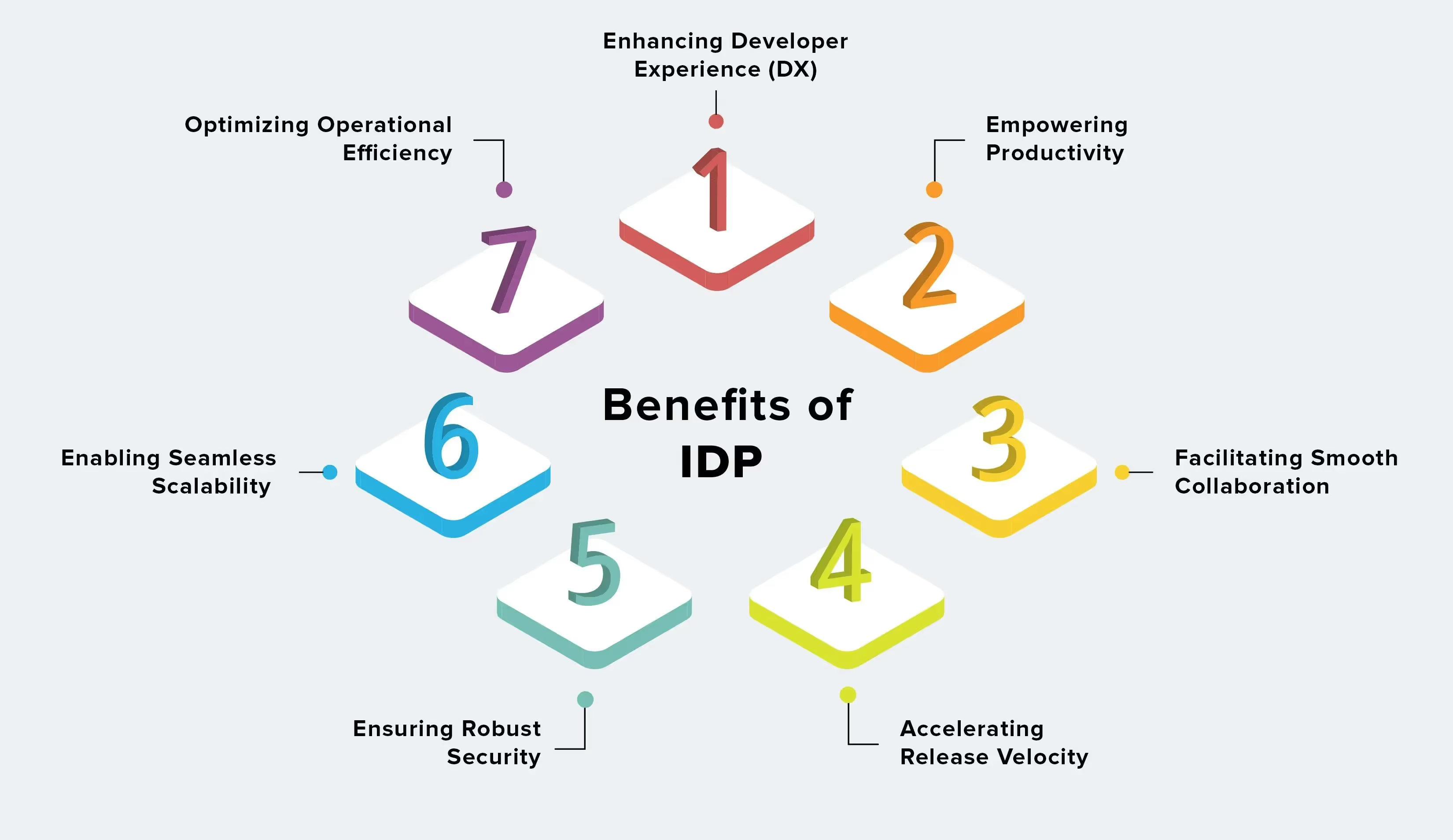
Benefits of IDP | Developer Experience is a key aspect of an Internal Developer Platform | Source: htpps://insights.daffodilsw.com/blog/platform-engineering
Here’s a look at how IDPs enhance DevEx on those elements across Day 1 and Day 2 stages.
Looking for an Internal Developer Platform that truly fits your needs? This 10 Key Features Checklist from Qovery helps you make the right choice.
Day 1 Operations: Simplifying Initial Setup and One-time Tasks
Day 1 operations encompass all the initial setup tasks developers need to start a project. Here are a few examples of tasks developers need to do and where IDPs help:
Q-MARKDOWN
| Task                     | Description                                                                 |
|--------------------------|-----------------------------------------------------------------------------|
| Bootstrapping Projects   | Quickly set up new projects using predefined templates and configurations.  |
| Temporary Environments   | Spin up temporary environments for testing and experimentation.             |
| Service Creation         | Simplify the creation and integration of new services.                      |
| Infrastructure Provisioning | Automate the setup of infrastructure to ensure consistent environments.    |
| Dependency Management    | Automatically manage and install project dependencies.                     |
| Code Repository Setup    | Create and configure repositories with appropriate settings.                |
| Environment Configuration| Set up environment variables and configuration files.                       |
| Access Control           | Automatically configure access permissions for team members.               |
| ... | ... |
The number of examples is infinite - essentially, everything a developer needs to do and can automate can be integrated into an Internal Developer Platform to provide the autonomy they need. By providing a self-serve portal for these Day 1 tasks, IDPs empower developers to take control of their workflows, reducing dependencies on operations teams and accelerating the initial development phase.
Agents ship fast. Guardrails keep them safe.
Qovery ensures every agent action is scoped, audited, and policy-checked. Start deploying in under 10 minutes.
Day 2 Operations: Enhancing Ongoing Development and Maintenance
Day 2 operations involve running applications smoothly, deploying updates, and managing ongoing maintenance tasks. This stage is all about improving the Software Development Lifecycle (SDLC), enabling faster releases, and ensuring reliable operations. IDPs significantly enhance Day 2 operations in the following ways:
Q-MARKDOWN
| Task                          | Description                                                                 |
|-------------------------------|-----------------------------------------------------------------------------|
| Continuous Integration (CI)   | Automate the build and test processes to ensure code quality.               |
| Continuous Deployment (CD)    | Streamline the deployment process to release updates faster.                |
| Monitoring and Observability  | Provide tools for tracking application performance and health.              |
| Automated Rollbacks           | Quickly revert changes in case of issues in production.                     |
| Scaling Applications          | Automatically scale applications based on demand to ensure performance.     |
| Security Patching             | Automate the application of security patches and updates.                   |
| Performance Tuning            | Provide tools to monitor and optimize application performance.              |
| Compliance Enforcement        | Ensure applications adhere to compliance standards through automation.      |
Internal Developer Platforms enhance the developer experience by streamlining Day 1 and Day 2 operations. IDPs empower developers to work more efficiently, innovate faster, and confidently maintain high-quality applications by providing self-service capabilities for initial setup tasks and automating ongoing development and maintenance processes. As the software development landscape evolves, IDPs will remain crucial for improving the developer experience and driving productivity.
Interested in trying an Internal Developer Platform? Check out Qovery!
Romaric founded Qovery to make Kubernetes accessible to every engineering team. He writes about platform strategy, developer experience, and the future of cloud infrastructure.
Next step
Agents ship fast. Guardrails keep them safe.
Qovery ensures every agent action is scoped, audited, and policy-checked. Start deploying in under 10 minutes.