3 Reasons Why Finding a Qovery Alternative is So Hard
Since 2020, Qovery has taken a contrarian approach in a market dominated by short-term compromises. In the crowded landscape of platform solutions, many offer a similar "yet-another-PaaS" experience. But we took a different approach, making three deliberate bets that set Qovery apart and make it much harder for alternatives to replicate.
While many other platforms often focus on ease of use at the cost of control, or advanced features that complicate deployment, Qovery was engineered from the ground up with specific core principles.
These foundational choices, centered around true cloud ownership, robust security, and developer-centric Kubernetes integration, have created a unique offering that continues to stay ahead of the curve.
Here are 3 reasons why finding a Qovery alternative is so hard:
1. True BYOC: Your Infrastructure, Your Data, Day One
From the start, Qovery was built to run on your infrastructure, not ours. In 2020, we were among the first to fully commit to the Bring Your Own Cloud (BYOC) model, while others were still pushing hosted-only setups.
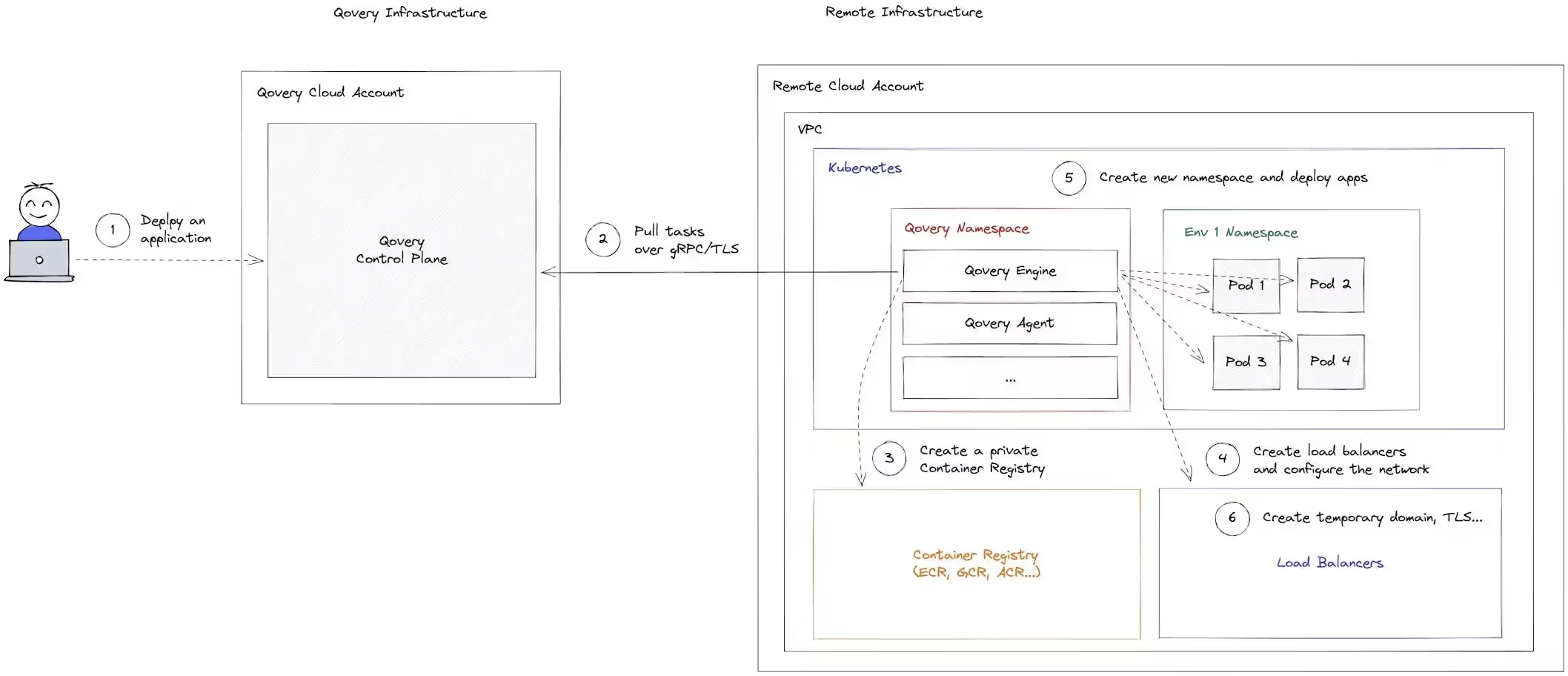
Simplified App Deployment Flow | Qovery is BYOC native
No vendor lock-in. Your infrastructure stays under your control - always. We even generate configuration files (Terraform, Kubernetes manifests, etc.) on the fly, ensuring full reversibility.
No shared runtimes. Everything runs inside your own VPC - isolated, secure, and compliant.
Cloud-native by design. Qovery leverages your AWS, GCP, Azure (or any compatible provider) accounts. No black-box environments. No shared control planes.
What truly sets us apart: Qovery runs the full data plane on your infrastructure - builds, deployments, workloads, and data all stay inside your environment. We don’t host your services. We orchestrate them, securely and remotely, without ever owning your runtime.
This architecture is at the core of Qovery. You stay in control, and your infrastructure remains yours. Always.
2. Security-First at the Core
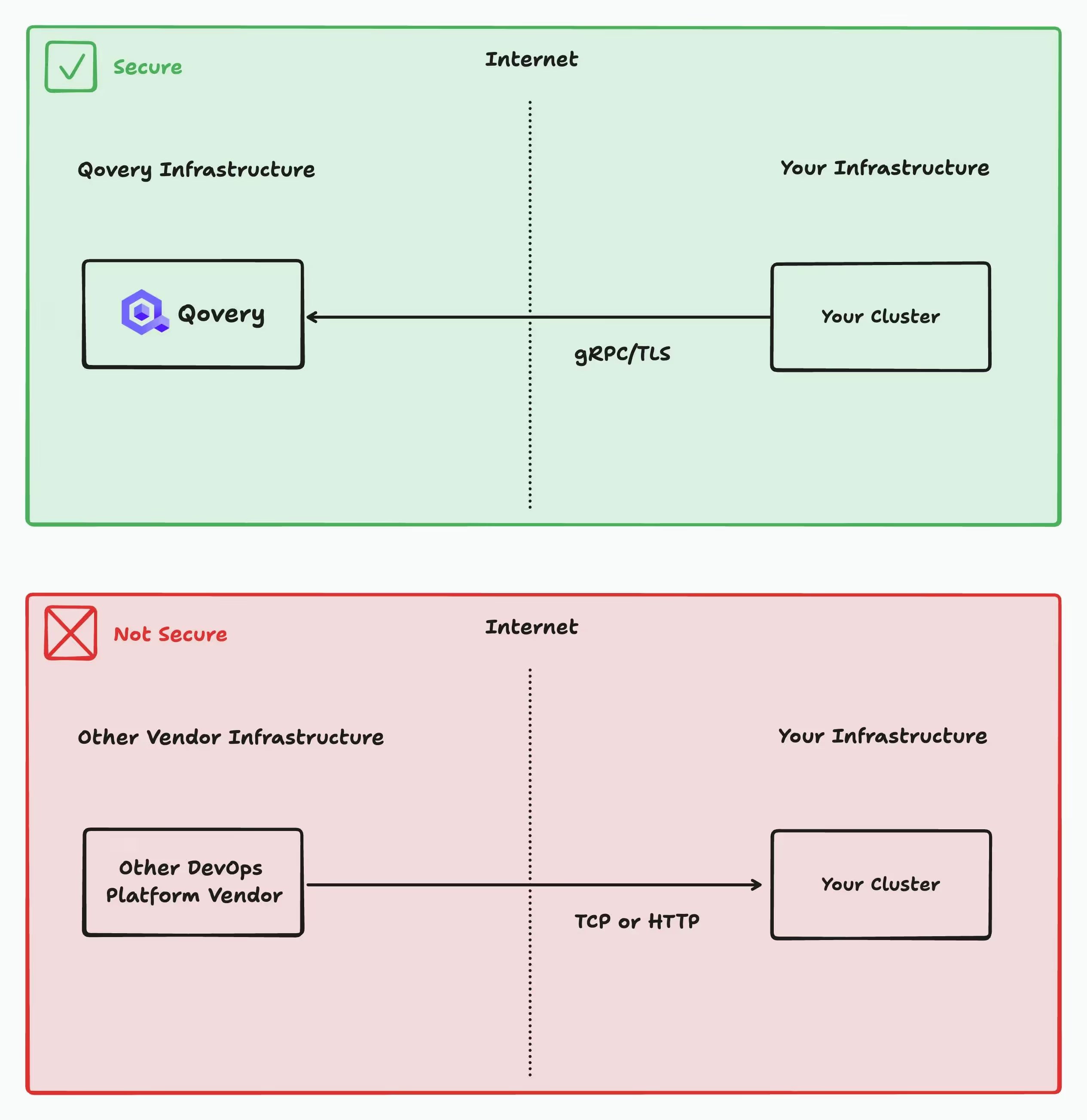
Most DevOps platforms require inbound access to your infrastructure - a risk surface most enterprises can't accept.
Unlike other vendors, Qovery makes sure your infrastructure is not publicly exposed
Qovery does the opposite:
Your infrastructure initiates the connection to Qovery’s control plane - not the other way around.
Compliant with SOC 2, HIPAA, and GDPR.
Regularly penetration-tested by one of the most serious security firms in the industry.
Security isn’t a feature bolted on. It’s baked into our architecture.
3. Kubernetes Native, Developer First
We didn’t reinvent the wheel - we extended the best one.
Qovery is built on top of Kubernetes. We don’t abstract it away - we enhance it:
Turns Kubernetes into a Production stack in seconds
Deployment pipelines without writing YAML
Rollback, auto-scaling, and secrets management out of the box
Environment cloning, Preview Environments, Observability, Terraform/GitOps integrations when needed
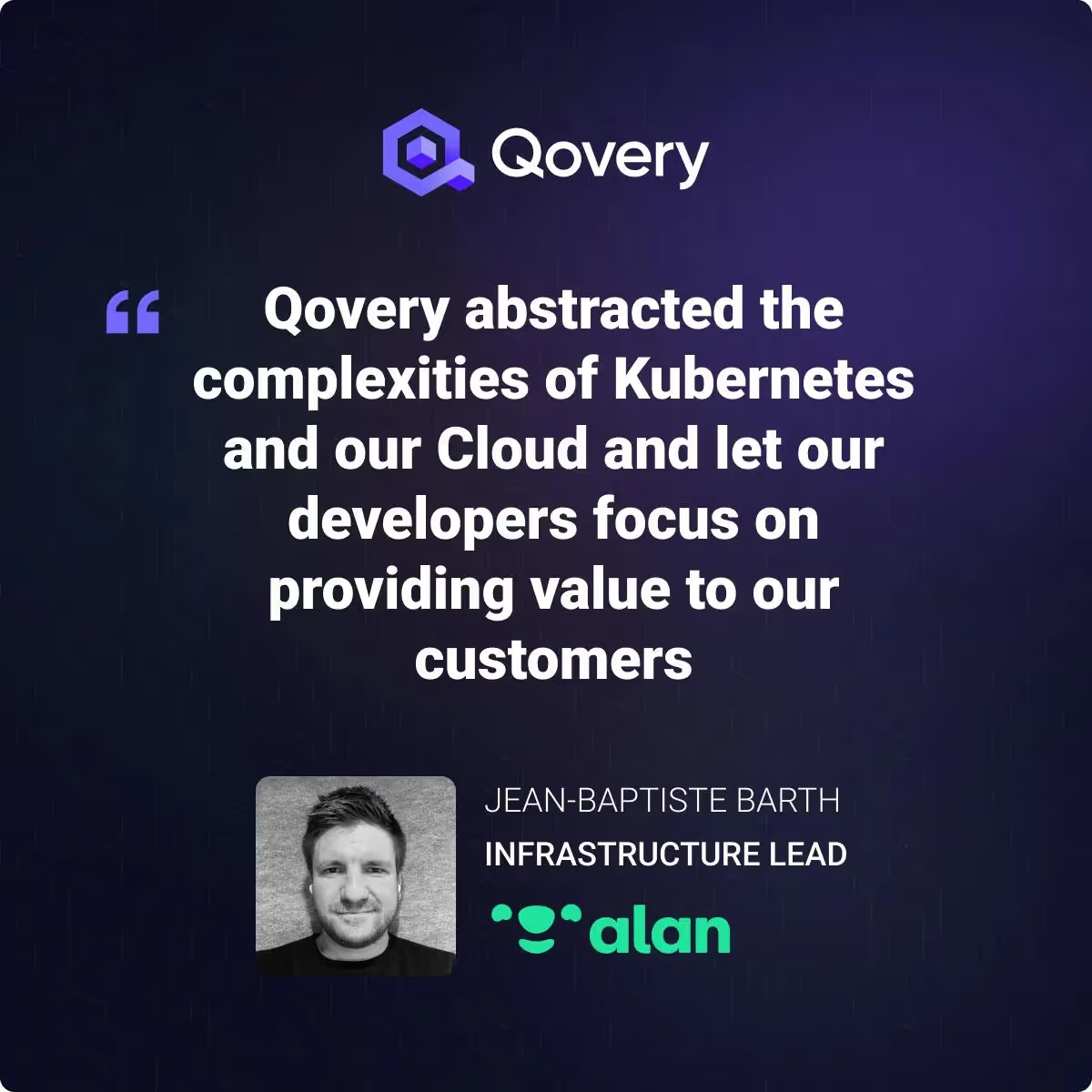
Alan gives the right developer autonomy with Qovery
This is why teams at Alan, RxVantage, Talkspace, GetSafe, and hundreds of other companies choose Qovery to manage their production workloads. We give developers the experience they want. (Read more about the story of Alan x Qovery here)
Agents ship fast. Guardrails keep them safe.
Qovery ensures every agent action is scoped, audited, and policy-checked. Start deploying in under 10 minutes.
A deep understanding of Kubernetes, infrastructure security, and cloud architecture.
Years of R&D went into getting the control plane, edge connectors, and deployment engine right.
A conviction in decentralization that most vendors don't have, because it’s harder.
While others offer simplified PaaS platforms or centralized control planes, Qovery is the only solution that combines real cloud-native principles with a genuine developer experience.
In Short
Qovery is not just a platform. It’s a system of trust, security, and autonomy - built on top of Kubernetes, deployed in your cloud, and ready for scale.
And that's why we’re still ahead - five years later.
Romaric founded Qovery to make Kubernetes accessible to every engineering team. He writes about platform strategy, developer experience, and the future of cloud infrastructure.
Next step
Agents ship fast. Guardrails keep them safe.
Qovery ensures every agent action is scoped, audited, and policy-checked. Start deploying in under 10 minutes.