Deep Dive into Qovery's Environment Variables and Secrets Management
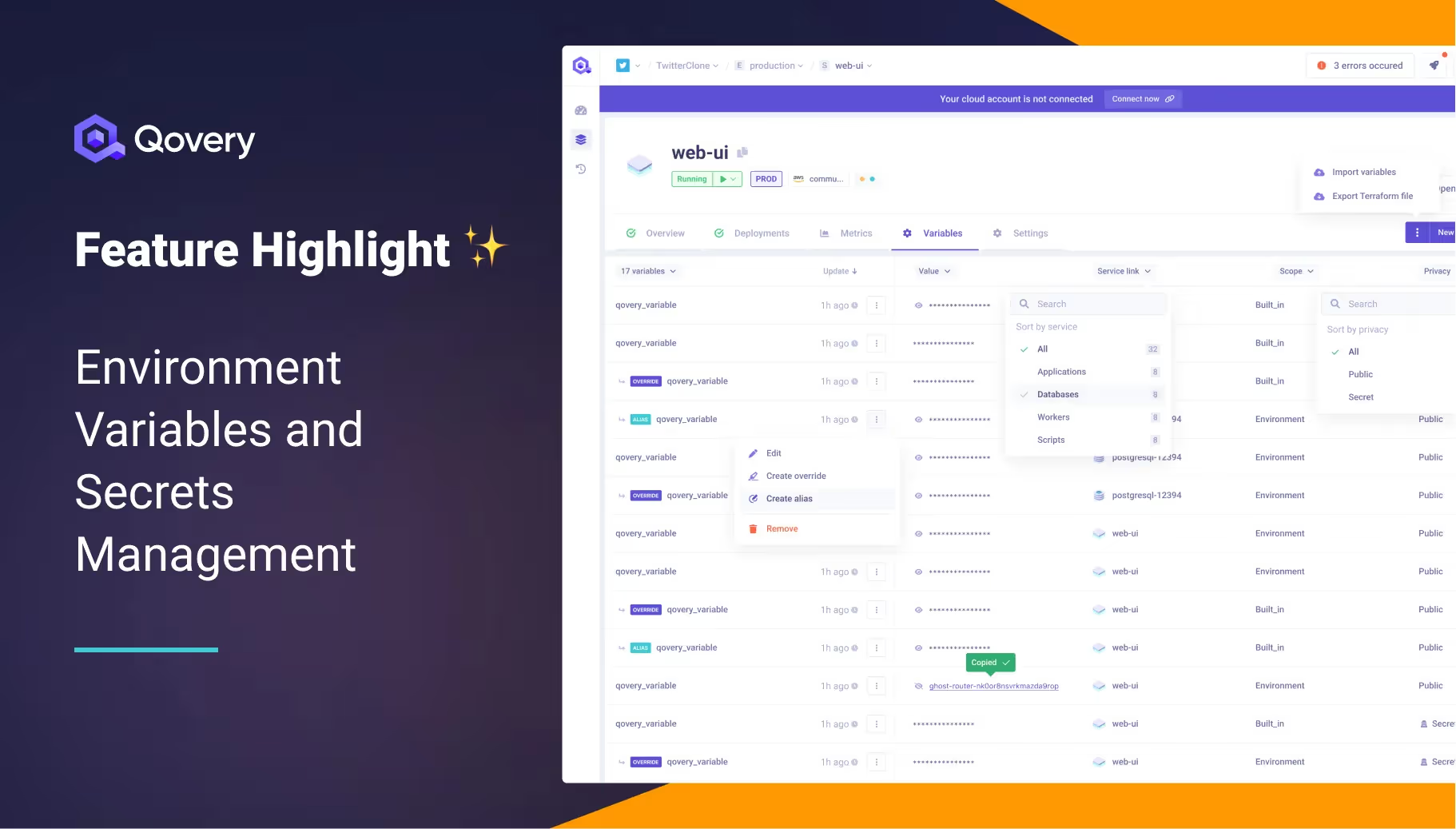
Deploying an application is an intricate process that requires managing environment variables and secrets. These variables and secrets help applications access essential resources such as API keys, database credentials, and more. However, manually managing these variables and secrets can be challenging and time-consuming, especially for engineering teams that manage multiple applications. Fortunately, Qovery has a solution for this. A powerful environment variables and secrets management system makes managing variables and secrets simple and secure. In this article, we'll explore Qovery's environment variable and secret management system and how it can revolutionize the way your engineering team manages your applications.
Here are some key features of Qovery's environment variable and secret management system:
Creating Environment Variables and Secrets
Qovery provides a unified interface for creating both environment variables and secrets. The difference between the two is that environment variables have values that can be revealed, while secrets have hidden values. However, both environment variables and secrets are encrypted and stored on the target infrastructure, ensuring security.
Qovery makes it easy to import .env files containing all your secrets and edit them before importing them. This is especially useful when dealing with multiple applications with numerous variables.
Inheriting System
Qovery's powerful inheritance system allows you to override environment variables and secrets for different environments. For instance, you can set the debug value to false in production and true in staging without changing your original environment variable or code.
Built-in Environment Variables
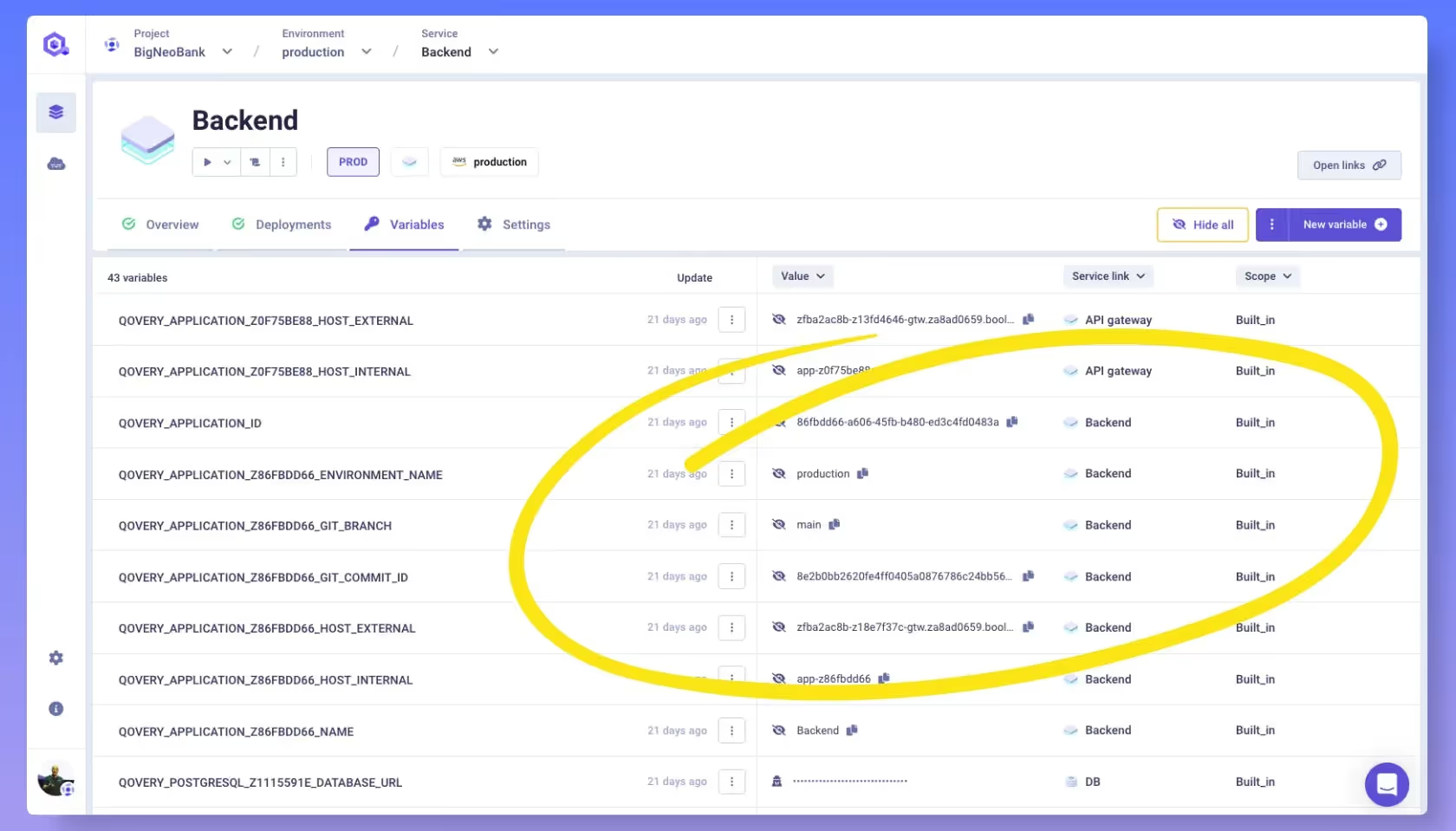
Qovery automatically injects some built-in environment variables like the Git Commit ID of your app, the project ID, and domains, which you can use to customize your application's behavior.
Built-in Environment Variables from the Qovery interface
Aliases and Interpolation
Qovery's environment variable and secret management system allow you to create aliases and use interpolation, enabling you to create variable names based on other variable values.
Agents ship fast. Guardrails keep them safe.
Qovery ensures every agent action is scoped, audited, and policy-checked. Start deploying in under 10 minutes.
Qovery makes it easy to import an environment variable as a file that can be mounted into your application. This allows you to replace entire configuration files in your application rather than variabilizing each option.
How secure is it?
At Qovery, we understand how important security is when it comes to managing environment variables and secrets. That's why we've designed our environment variables and secrets management system to be secure and protect your sensitive data at all times.
All environment variables and secrets that you create using Qovery are encrypted and stored securely on the Kubernetes secret manager of your cloud account. This ensures that your secrets remain safe from prying eyes, even if someone gains unauthorized access to your Qovery account.
We're always looking for ways to improve our security features, and that's why we're thrilled to announce that we're working with the team at Doppler to integrate their product into Qovery. Doppler is a cloud-native secrets manager that provides secure, scalable storage for secrets and environment variables.
By integrating Doppler into Qovery, we'll be able to offer even greater security and ease of use for our users. This means that you'll have even more peace of mind knowing that your sensitive data is protected.
We'll be sharing more information about the integration with Doppler in a dedicated post, so be sure to keep an eye out for that.
Conclusion
Qovery's environment variable and secret management system is a game-changer for engineering teams that want to streamline their application deployment process. With Qovery, you can easily manage your environment variables and secrets without compromising security. Try it out and see for yourself how much easier your deployment process can be!
Romaric founded Qovery to make Kubernetes accessible to every engineering team. He writes about platform strategy, developer experience, and the future of cloud infrastructure.
Next step
Agents ship fast. Guardrails keep them safe.
Qovery ensures every agent action is scoped, audited, and policy-checked. Start deploying in under 10 minutes.