Blog
Product
3
minutes

Qovery goes beyond app deployment - The Future of Qovery - Week #5

During the next six weeks, our team will work to improve the overall experience of Qovery's DevOps automation software. We gathered all your feedback (thank you to our wonderful community 🙏), and we decided to make significant changes to make Qovery a better place to deploy and manage your apps.

September 26, 2025
Romaric Philogène
CEO & Co-founder
Summary
Twitter icon
linkedin icon

This series will reveal all the changes and features you will get in the next major release of Qovery. Let's go!

Read the previous article: The Future of Qovery - Week #4.

Build > Test > Deploy > Run: Qovery goes beyond app deployment.

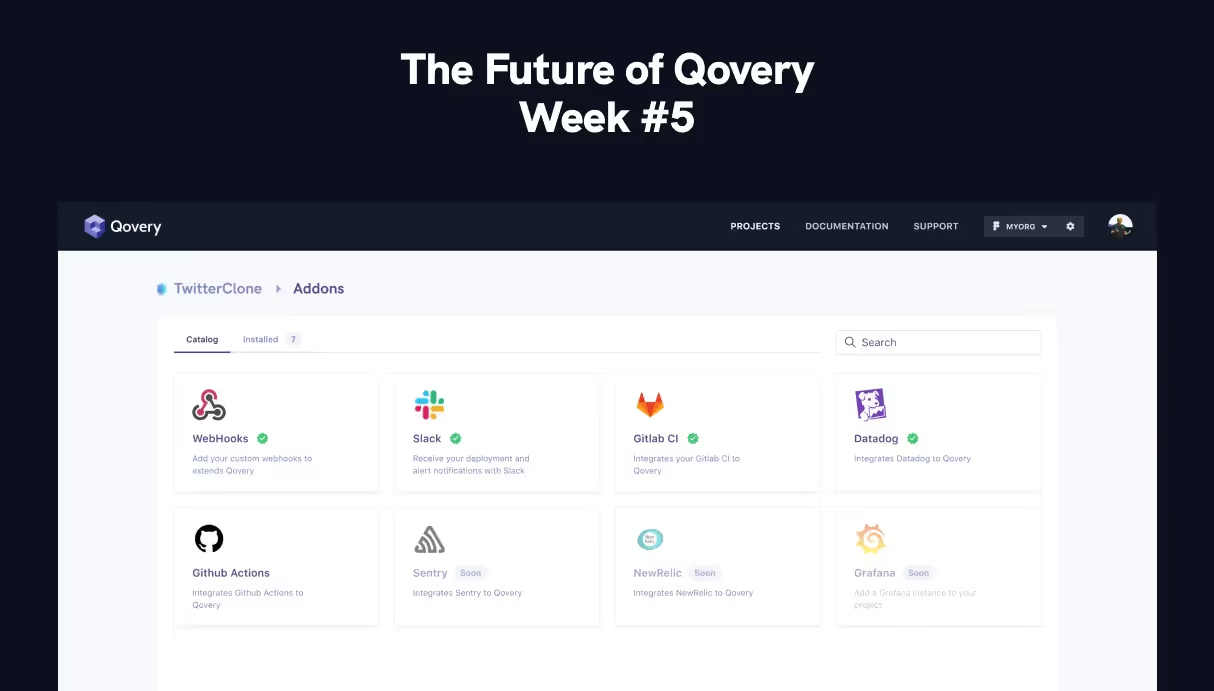
Qovery does not reinvent the wheel. Tons of great products like Gitlab CI, Datadog, Grafana, or Sentry exist in the market. The goal of Qovery is to provide anyone with a deployment platform working out of the box. By plugging third-party products, you extend the capabilities of Qovery and go beyond app deployment. This is with this philosophy that we announce the development of our addons system 🥳.
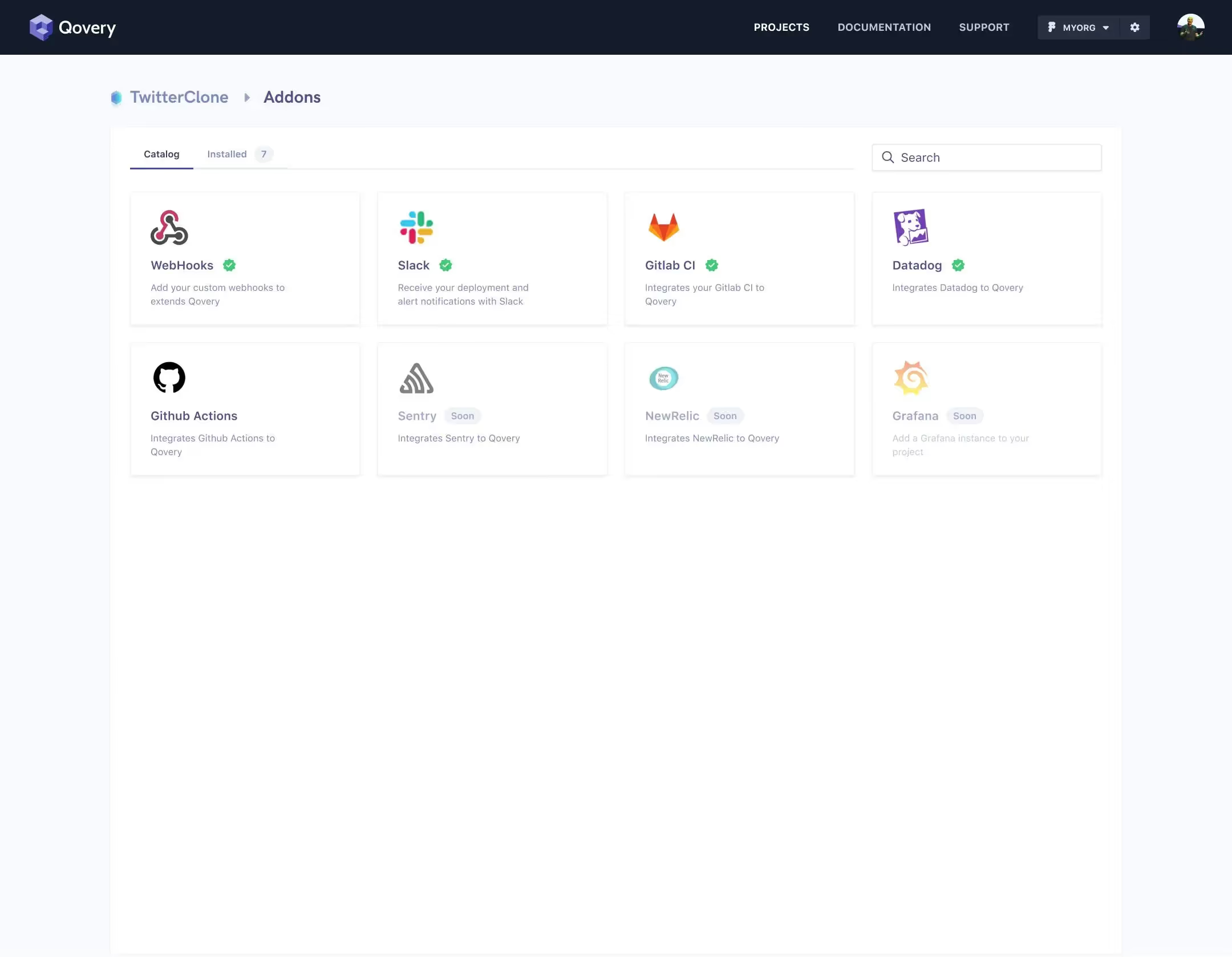
Extends Qovery Capabilities by using addons

App build and test

CI/CD (Continuous Integration / Continuous Deployment) is a common term to describe a product in charge of building and running your applications' tests. Qovery is a state-of-the-art CD with some CI features. Products like Gitlab CI, Circle CI, or Github Actions are mostly CI with some CD features. Our next release of Qovery will let you plug your CI to take advantage of your existing CI stack. However, no worries if you don't have a CI; Qovery has an integrated one.

App deployment

Once your app is built and tested, it's time to be deployed. Based on "deployment rules", Qovery will deploy your app on your Cloud account.
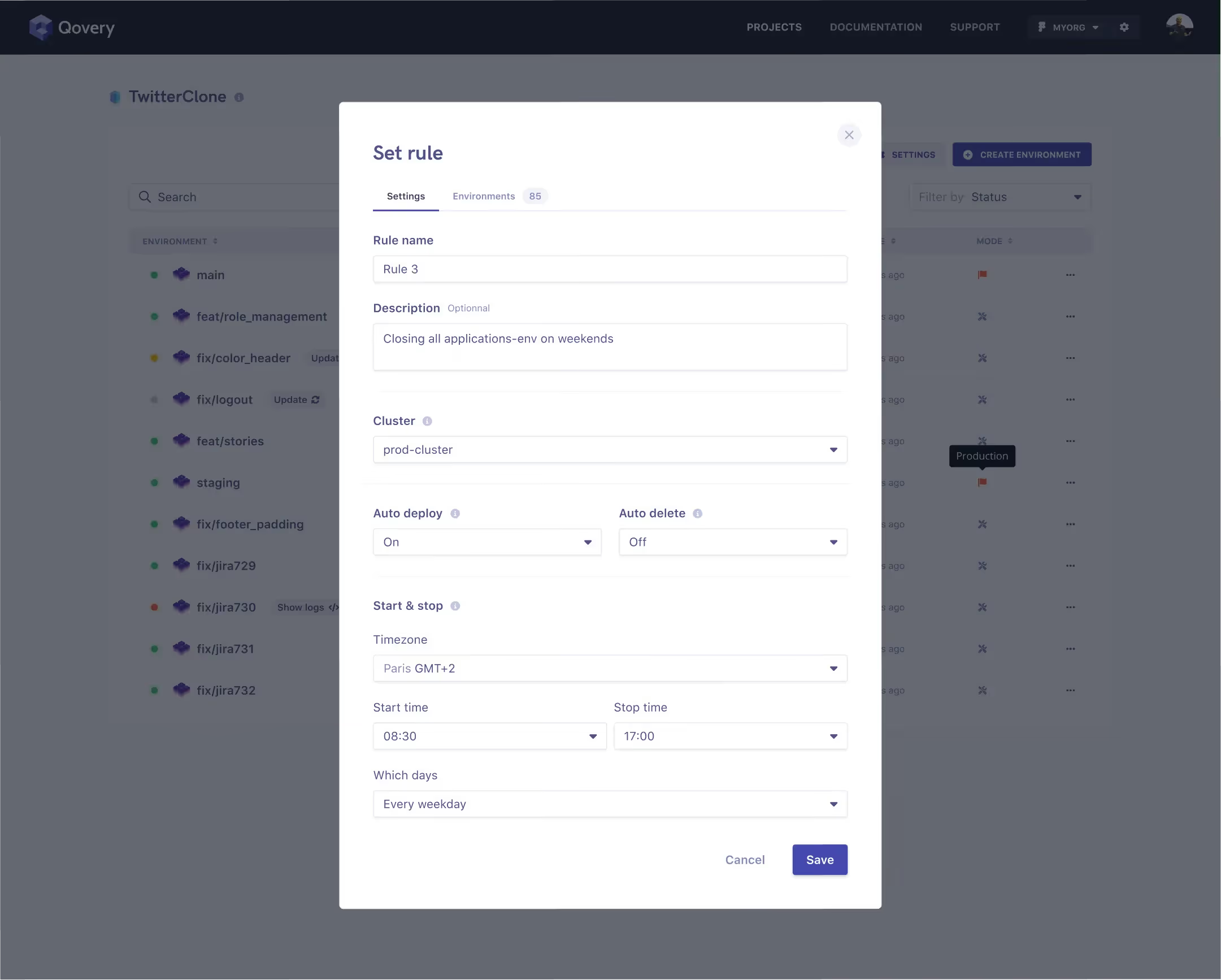
Qovery - manage deployment rules

Deployment rules let you configure:

  • "Auto deploy" when a git push is received.
  • "Auto delete" when a git branch is deleted.
  • On which cluster, cloud provider, and region your environment* must be deployed.
  • When your environments need to start and stop (to reduce your Cloud cost).

All those options make Qovery the perfect choice to get started using the Cloud 👌.

*An environment is a bunch of applications running altogether.

App run

Your app has been deployed, and now it runs. Qovery ensures that your app runs and will continue to run even if something goes wrong. In the next Qovery release, we will provide you with all the required information to make sure your app is running perfectly.
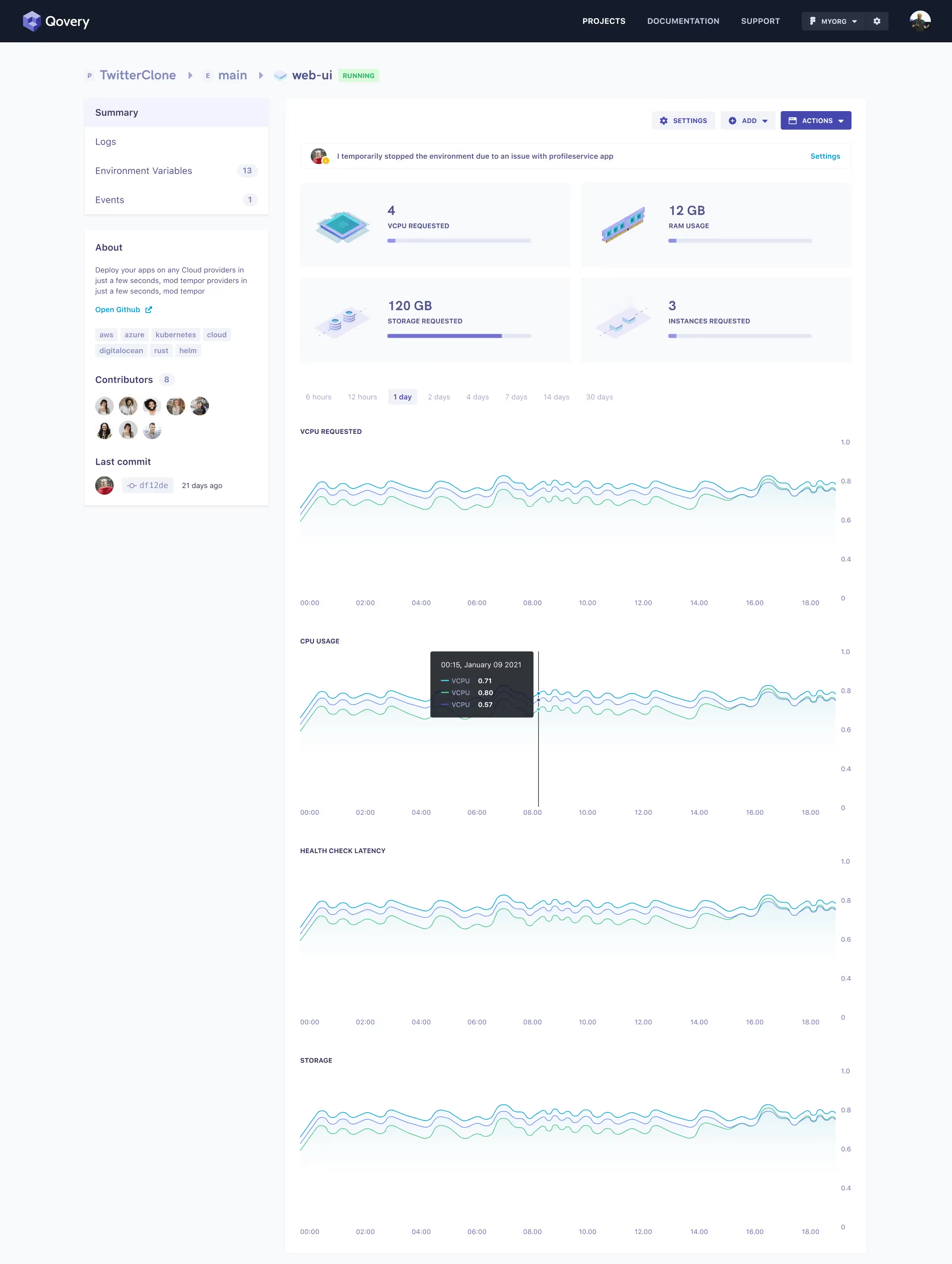
Qovery - app monitoring

This lightweight monitoring is perfect for having a big picture of what's going on in your application. If you need to go further, you will be able to plug Datadog or NewRelic in a single click 💪.

Conclusion

Qovery's DevOps automation software manages your entire deployment pipeline and beyond. From building your application to deploying it and managing it during the run. This is what we call a state-of-the-art Continuous Deployment platform. Even if all those concepts are abstracted, it's essential to know where Qovery acts and how you can combine it with your existing tech stack. My team and I are excited to release our next major version of Qovery. If you are interested in joining the beta in early June, let me know by contacting us on Discord.

--

See you next week -- same hour, same place 👋

Romaric from Qovery -- We are hiring.

Share on :
Twitter icon
linkedin icon
Tired of fighting your Kubernetes platform?
Qovery provides a unified Kubernetes control plane for cluster provisioning, security, and deployments - giving you an enterprise-grade platform without the DIY overhead.
See it in action

Suggested articles

Kubernetes
Terraform
 minutes
Managing Kubernetes deployment YAML across multi-cloud enterprise fleets

At enterprise scale, managing provider-specific Kubernetes YAML across multiple clouds creates crippling configuration drift and operational toil. By adopting an agentic Kubernetes management platform, infrastructure teams abstract cloud-specific configurations (like ingress controllers and storage classes) into a single, declarative intent that automatically reconciles across 1,000+ clusters.

Mélanie Dallé
Senior Marketing Manager
Kubernetes
Cloud
AI
FinOps
 minutes
GPU orchestration guide: How to auto-scale Kubernetes clusters and slash AI infrastructure costs

To stop GPU costs from destroying SaaS margins, teams must transition from static to consumption-based infrastructure by utilizing Karpenter for dynamic provisioning, maximizing hardware density with NVIDIA MIG, and leveraging Qovery to tie scaling directly to business metrics.

Mélanie Dallé
Senior Marketing Manager
Product
AI
Deployment
 minutes
Stop Guessing, Start Shipping. AI-Powered Deployment Troubleshooting

AI is helping developers write more code, faster than ever. But writing code is only half the story. What happens after? Building, deploying, debugging, scaling. That's where teams still lose hours.We're building Qovery for this era. Not just to deploy your code, but to make everything that comes after writing it just as fast.

Alessandro Carrano
Head of Product
AI
Developer Experience
Kubernetes
 minutes
MCP Server is the future of your team's incident’s response

Learn how to use the Model Context Protocol (MCP) to transform static runbooks into intelligent, real-time investigation tools for Kubernetes and cert-manager.

Romain Gérard
Staff Software Engineer
Compliance
Developer Experience
 minutes
Beyond the spreadsheet: Using GitOps to generate DORA-compliant audit trails.

By adopting GitOps and utilizing management platforms like Qovery, fintech teams can automatically generate DORA-compliant audit trails, transforming regulatory compliance from a manual, time-consuming chore into an automated, native byproduct of their infrastructure.

Mélanie Dallé
Senior Marketing Manager
Kubernetes
7
 minutes
Day 2 operations: an executive guide to Kubernetes operations and scale

Kubernetes success is determined by Day 2 execution, not Day 1 deployment. While migration is a bounded project, maintenance is an infinite loop that often consumes 40% of senior engineering capacity. To protect margins and velocity, enterprises must transition from manual toil to agentic automation that handles scaling, security, and cost.

Mélanie Dallé
Senior Marketing Manager
Kubernetes
8
 minutes
The 2026 guide to Kubernetes management: master day-2 ops with agentic control

Master Kubernetes management in 2026. Discover how Agentic Automation resolves Day-2 Ops, eliminates configuration drift, and cuts cloud spend on vanilla EKS/GKE/AKS.

Mélanie Dallé
Senior Marketing Manager
DevOps
Kubernetes
6
 minutes
Day-0, day-1, and day-2 Kubernetes: defining the phases of fleet management

Day-0 is planning, Day-1 is deployment, and Day-2 is the infinite lifecycle of maintenance. While Day-0/1 are foundational, Day-2 is where enterprise operational debt accumulates. At fleet scale (1,000+ clusters), managing these differences manually is impossible, requiring agentic automation to maintain stability and eliminate toil.

Morgan Perry
Co-founder

It’s time to change
the way you manage K8s

Turn Kubernetes into your strategic advantage with Qovery, automating the heavy lifting while you stay in control.