Blog
Product
3
minutes

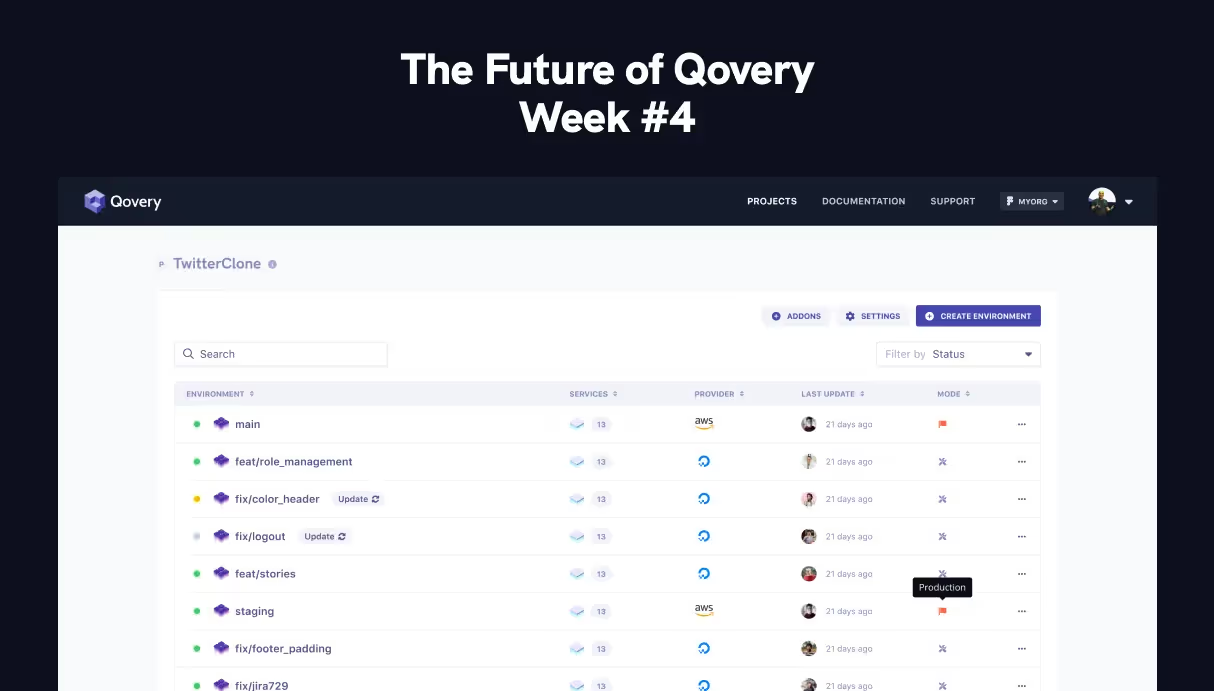
The Future of Qovery - Week #4

During the next seven weeks, our team will work to improve the overall experience of Qovery. We gathered all your feedback (thank you to our wonderful community 🙏), and we decided to make significant changes to make Qovery a better place to deploy and manage your apps.

Romaric PhilogĂšne
CEO & Co-founder
Summary
Twitter icon
linkedin icon

This series will reveal all the changes and features you will get in the next major release of Qovery. Let's go!

Read the previous article: The Future of Qovery - Week #3.

Deploy your apps on multiple cloud providers with Qovery

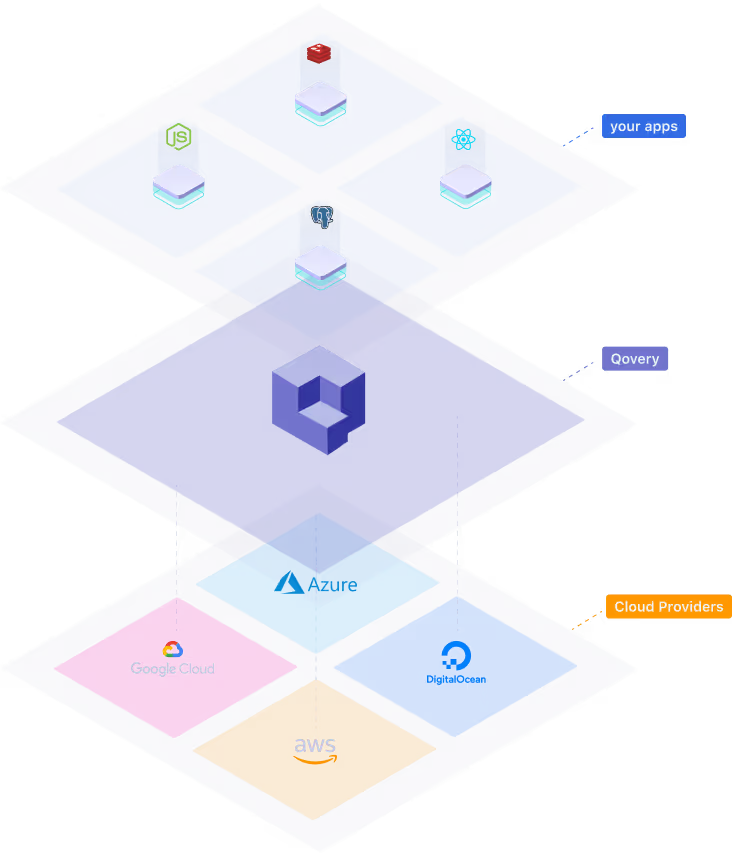
Deploying multiple Cloud service providers (CSP) helps not be vendor-locked, providing more reliable service to your users and reducing your Cloud cost. In this post, I explain how Qovery pragmatically* provides multi-cloud for your apps.
How does Qovery manage multi-cloud?

Deploy your apps on any Cloud service provider with Qovery

For years you had to choose the Cloud service provider you wanted to use. Once you made your choice, it was almost impossible to change for another one. Moving an app from a Cloud provider to another one is very hard if your app has not been designed with this aspect in mind. Building abstraction at the application level is complex and requires a lot of engineering effort, which leads to more extended product development. This is why Qovery is built on top of CSPs to provide the abstraction layer below your apps to simplify your app's deployment on any CSP and extend your Cloud capabilities.
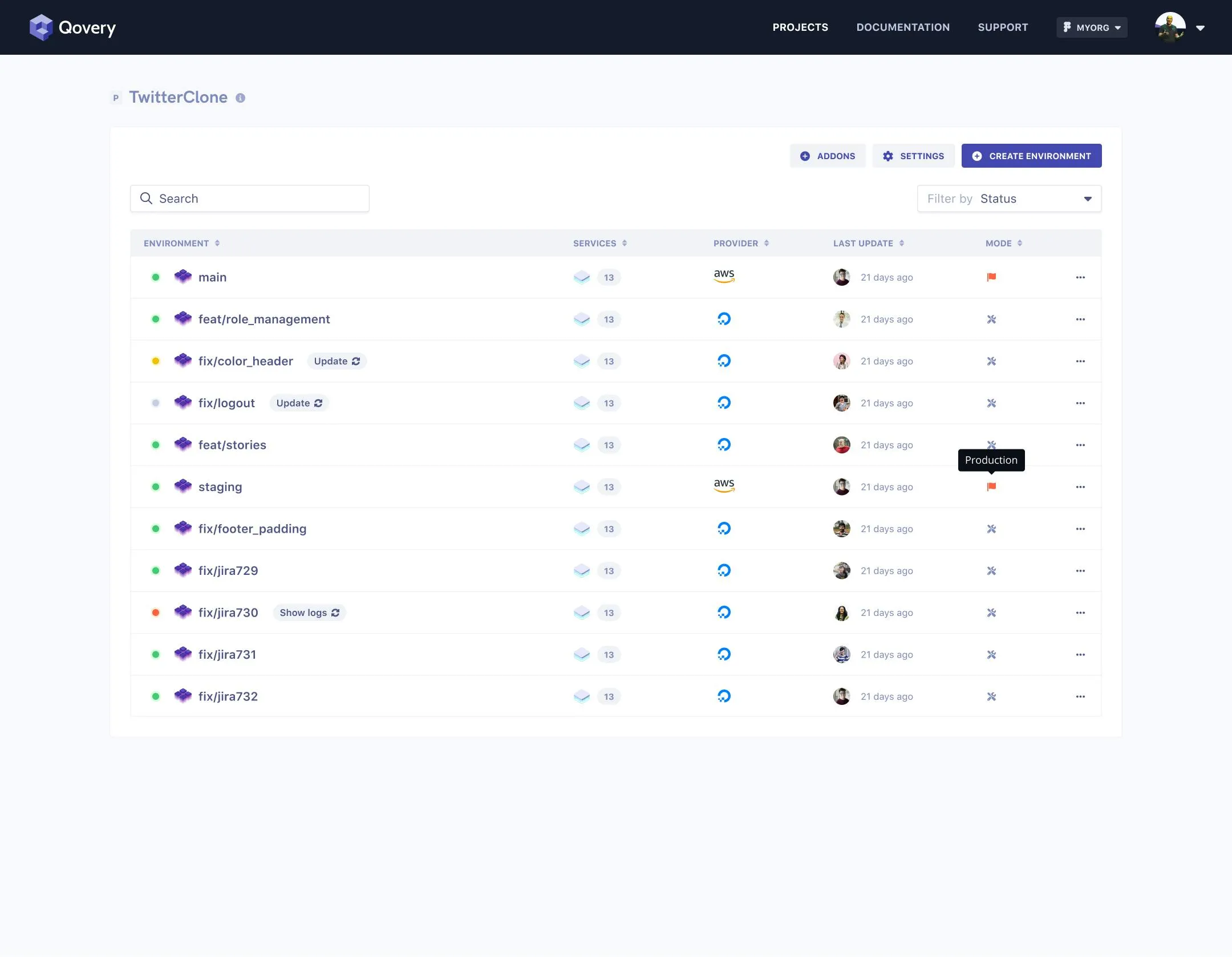
Keep your production on AWS, put your dev environments on Digital Ocean.

Production and dev environments management with Qovery

With Qovery's DevOps automation tool, you choose where your environments run. For instance, you can keep your production on AWS and put your development environments on Digital Ocean. This is what I call "pragmatic multi-cloud". Multi-cloud for each environment brings tons of advantages with almost no downside like:

  • Huge Cloud cost reduction: keeping your production on the most reliable CSP and moving out your dev environments on a cheaper one is the pragmatic way to reduce your cost up to 10 times.
  • Predictable performances: all your apps will use the same network and resources within the same environment, which means very low latency with the same hardware specs.
  • No vendor-locked: you can move an environment from one CSP to another.
  • No outbound/inbound network cost between CSPs.

We are building the future of the Cloud.

This is the first step of what we want to build at Qovery. Creating this abstraction layer on top of the best CSPs in the world allows us to provide a new set of features. (đŸ€« I will reveal more in the following weeks)

> Possibilities are endless, and I am eager to hear what you have in mind and what you would love to see coming next. Would you?

--

See you next week -- same hour, same place 👋

Romaric from Qovery -- We are hiring.

Share on :
Twitter icon
linkedin icon
Tired of fighting your Kubernetes platform?
Qovery provides a unified Kubernetes control plane for cluster provisioning, security, and deployments - giving you an enterprise-grade platform without the DIY overhead.
See it in action

Suggested articles

Kubernetes
DevOps
6
 minutes
Top Nutanix Alternatives for Kubernetes Management

Looking for alternatives to Nutanix Kubernetes Platform (NKP)? Compare the top 10 solutions. Review pros and cons to find tools that offer greater flexibility and lower costs.

Mélanie Dallé
Senior Marketing Manager
Kubernetes
DevOps
6
 minutes
Top Mirantis Alternatives That Developers Actually Love

Explore the top 10 alternatives to Mirantis. Compare pros and cons of modern Kubernetes platforms like Qovery, Rancher, and OpenShift to find your best fit.

Mélanie Dallé
Senior Marketing Manager
Kubernetes
DevOps
6
 minutes
Top 10 enterprise Kubernetes cluster management tools in 2026

Compare the best enterprise Kubernetes management tools for 2026. From Qovery and OpenShift to Rafay and Mirantis, discover which platform best suits your multi-cluster strategy.

Mélanie Dallé
Senior Marketing Manager
Kubernetes
DevOps
 minutes
Atmosly Alternatives: The Best Tools for Scaling Teams

Hit the ceiling with Atmosly? Discover the top 10 Kubernetes management alternatives for 2026. From Qovery’s developer-centric platform to Rancher’s operations control, find the right tool to scale your infrastructure.

Mélanie Dallé
Senior Marketing Manager
DevOps
 minutes
10 Best Octopus Deploy Alternatives: Trade Manual Deployment for Full Pipeline Automation

Modernize your pipeline. Explore the top Octopus Deploy alternatives for cloud-native Kubernetes delivery and full GitOps integration.

Mélanie Dallé
Senior Marketing Manager
DevOps
Platform Engineering
Kubernetes
5
 minutes
10 Best Container Management Tools for the Kubernetes Era

Move beyond basic Docker commands. We review the top container management platforms, including Qovery, Rancher, and OpenShift, that tame Kubernetes complexity and streamline your deployment workflows.

Morgan Perry
Co-founder
DevOps
16
 minutes
Enterprise DevOps Automation: Moving from Scripts to Platform Engineering

Stop writing fragile scripts. Discover how top enterprises use Kubernetes Management Platforms to automate governance (Policy-as-Code), scale ephemeral environments, and enforce FinOps with Spot Instances.

Mélanie Dallé
Senior Marketing Manager
DevOps
Kubernetes
 minutes
Top 10 Platform9 Alternatives: Best managed Kubernetes solutions for scale

Need a better way to manage on-prem Kubernetes? Review 10 alternatives to Platform9, categorized by "Infrastructure Ops" (Rancher) vs. "Developer Experience" (Qovery).

Mélanie Dallé
Senior Marketing Manager

It’s time to change‹the way you manage K8s

Turn Kubernetes into your strategic advantage with Qovery, automating the heavy lifting while you stay in control.