Blog
Product
3
minutes

New Feature: Billing Usage Analytics Dashboard

I am thrilled to introduce to you our new billing analytics feature, now generally available to all our users. This feature is designed to empower you with insights into your Qovery usage, enabling you to monitor, control, and optimize your cloud expenses effectively.
September 26, 2025
Romaric Philogène
CEO & Co-founder
Summary
Twitter icon
linkedin icon

Our billing system is designed with simplicity and predictability in mind, incorporating the following elements to ensure you have complete control over your expenses:

  • Users: At the rate of $0.96 per user per day ($29 per user/month), this element helps you track the cost associated with each team member's access to Qovery.
  • Deployment Time: Priced at $0.016 per deployment minute, including 1000 minutes of free credits each month, allowing you to monitor and manage the cost efficiency of your deployment processes.
  • Managed Clusters: Charged at $6.63 per managed cluster per day ($199 per managed cluster/month), this aspect offers insights into the costs tied to using Qovery's managed Kubernetes clusters.
  • Self-managed Clusters: Providing $0 per month for up to 5 clusters, this allows you to leverage your own Kubernetes clusters without additional cost, promoting greater flexibility and cost savings.

Billing Analytics Dashboard

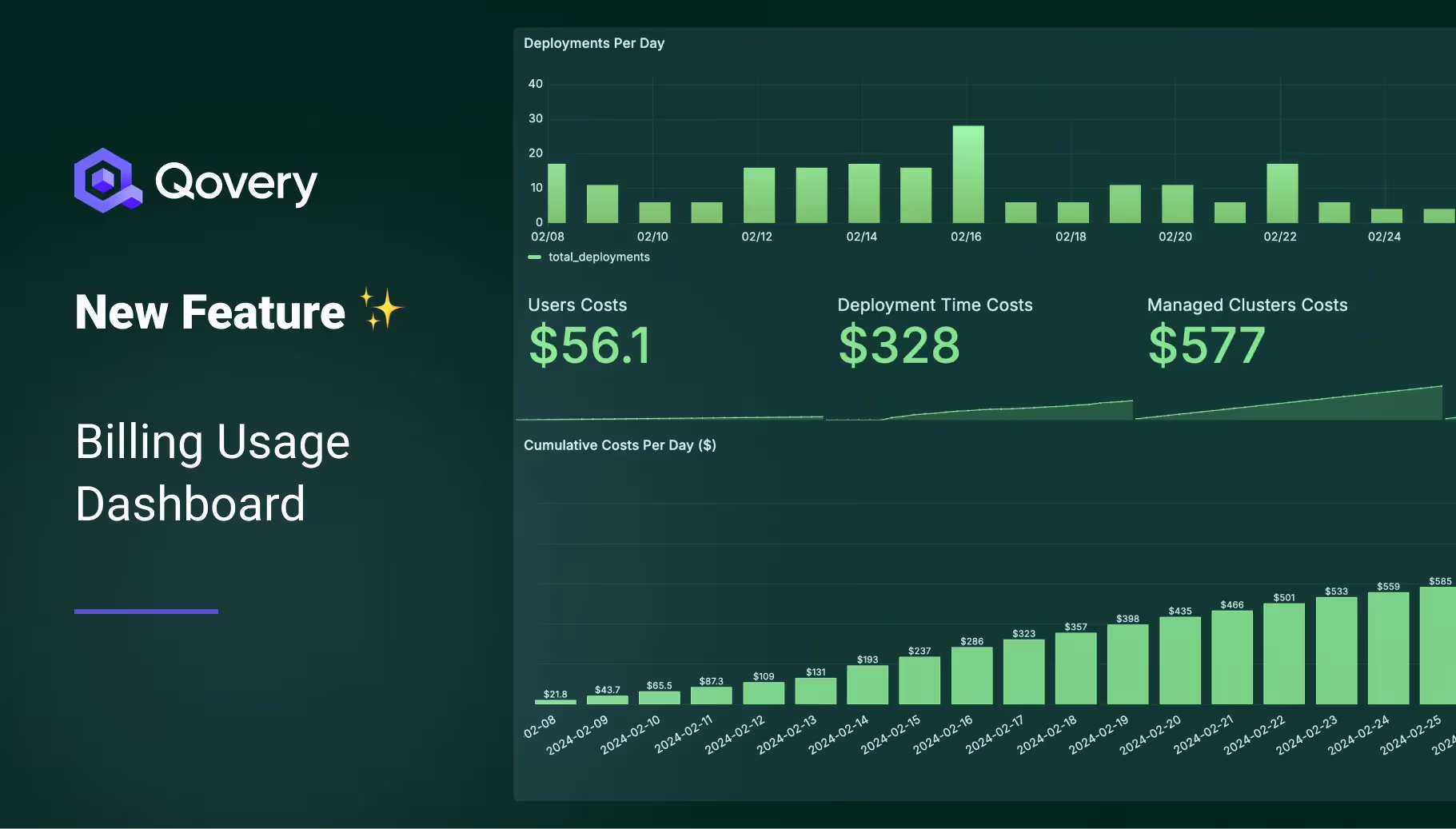
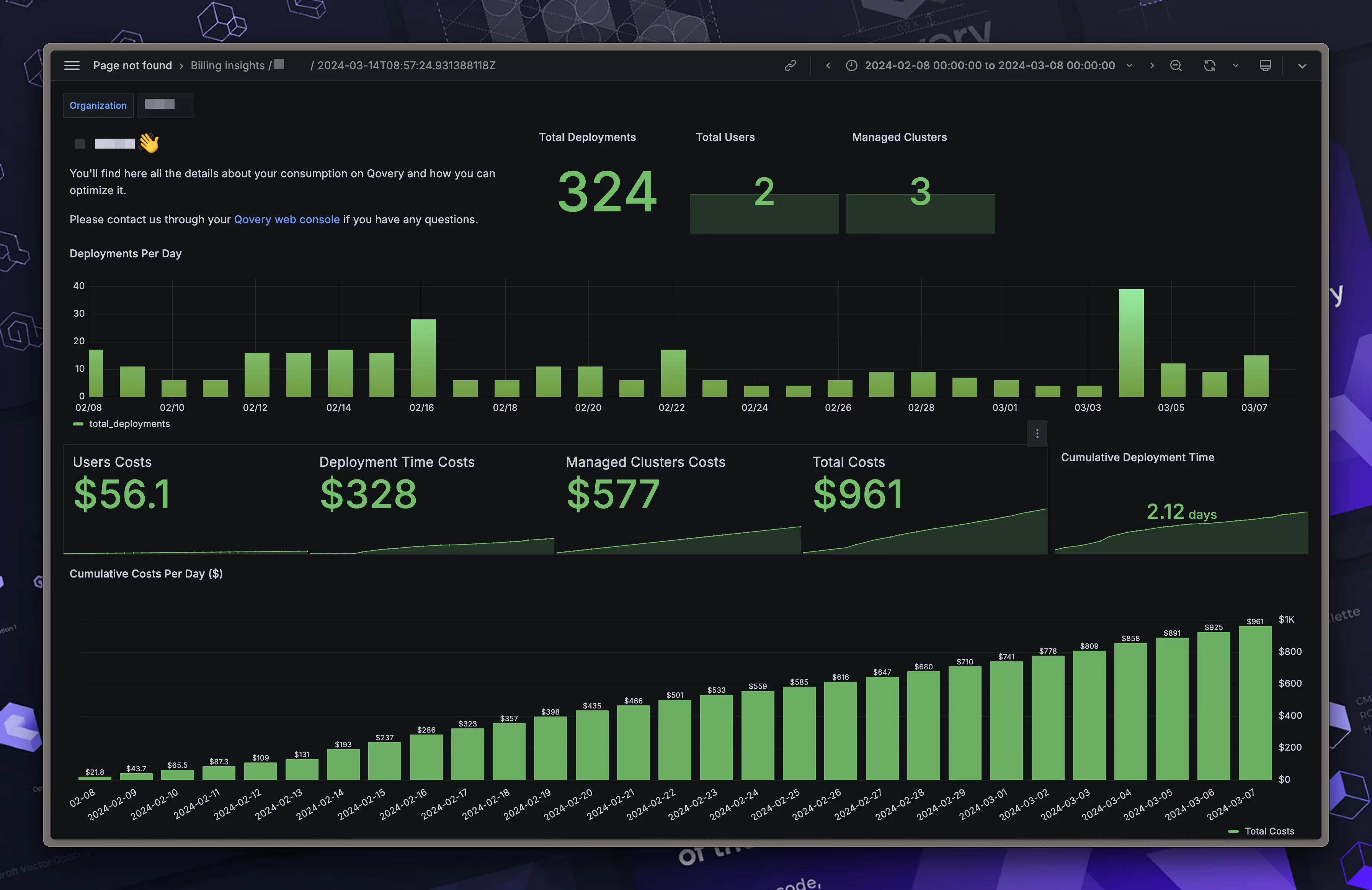
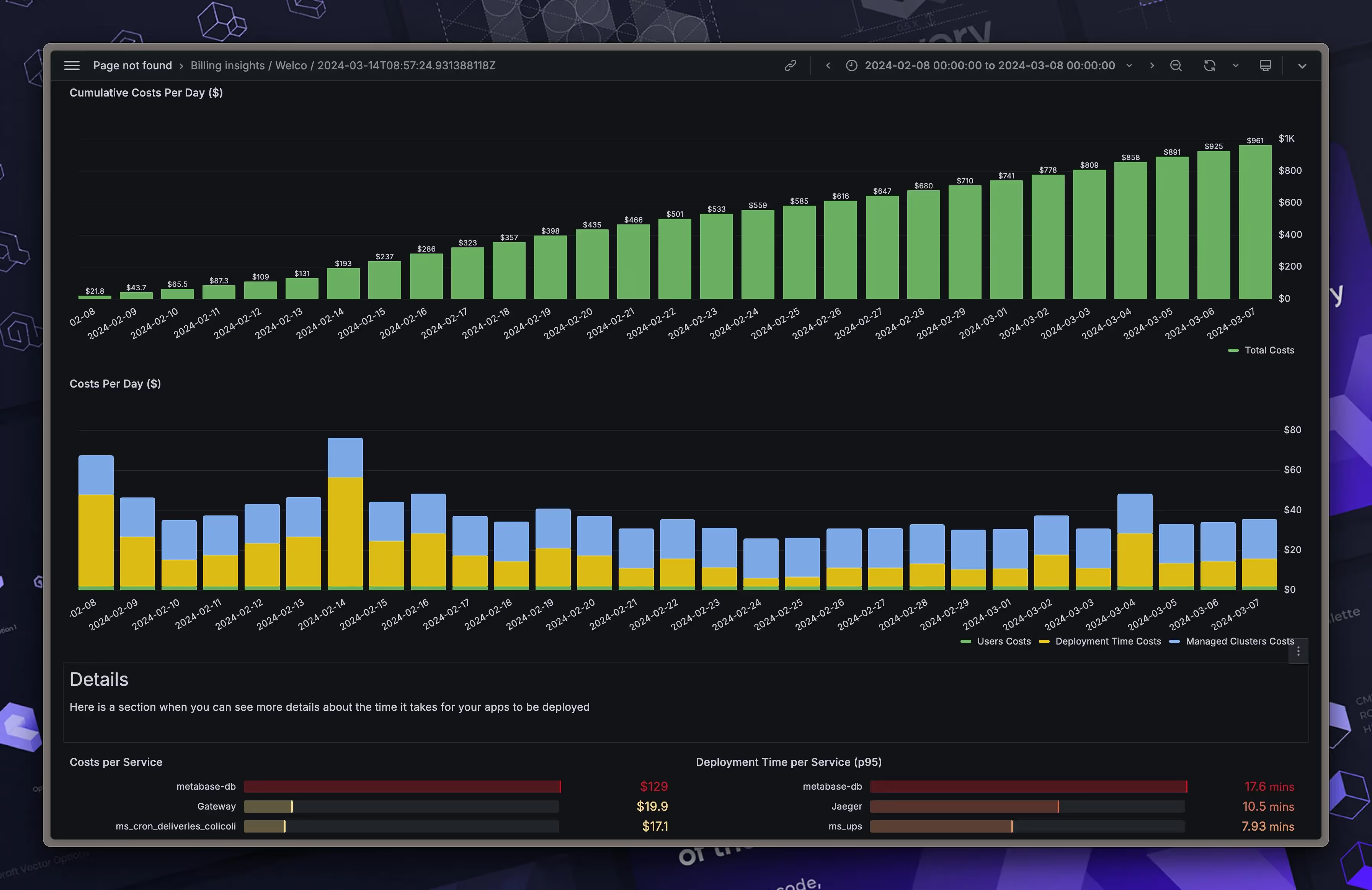
The billing analytics dashboard has been meticulously designed to offer you a clear and concise view of your spending across these four elements. Each section of the dashboard is dedicated to a specific cost component, displaying daily expenses and cumulative costs over your billing period. This granularity enables you to:

  • Identify Trends: By observing your daily and monthly spending patterns, you can pinpoint areas where your usage aligns or deviates from your expectations.
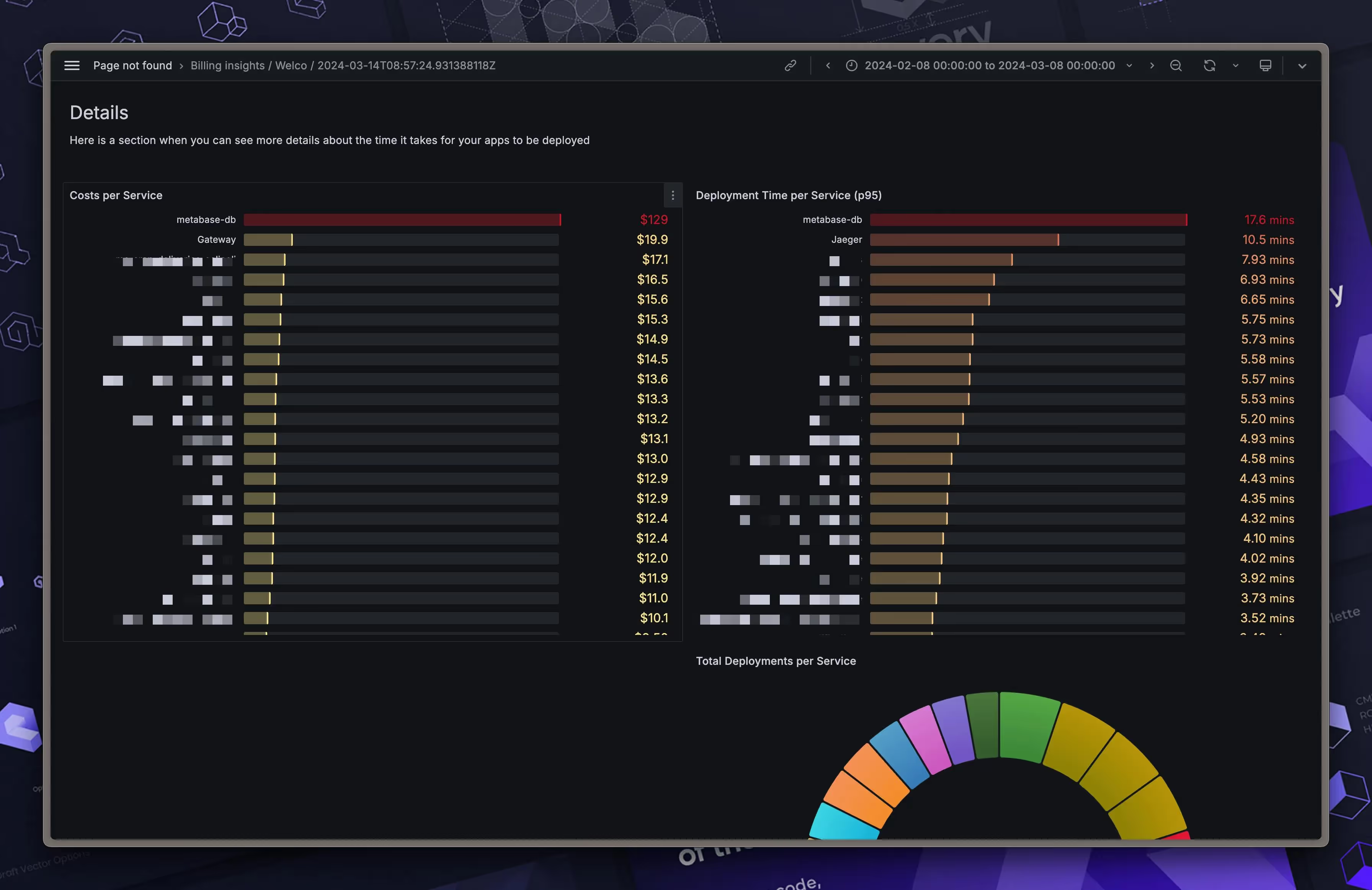
  • Optimize Resources: Understanding the specifics of your spending allows for strategic decision-making. For instance, if your deployment time costs are higher than anticipated, you might consider optimizing your CI/CD pipelines or leveraging your free deployment minutes more effectively.
  • Maximize Value: With visibility into the costs of managed versus self-managed clusters, you can make informed decisions on the most cost-effective infrastructure setup for your projects.

Dashboard Access

Getting access to the Qovery usage billing dashboard from Qovery web console

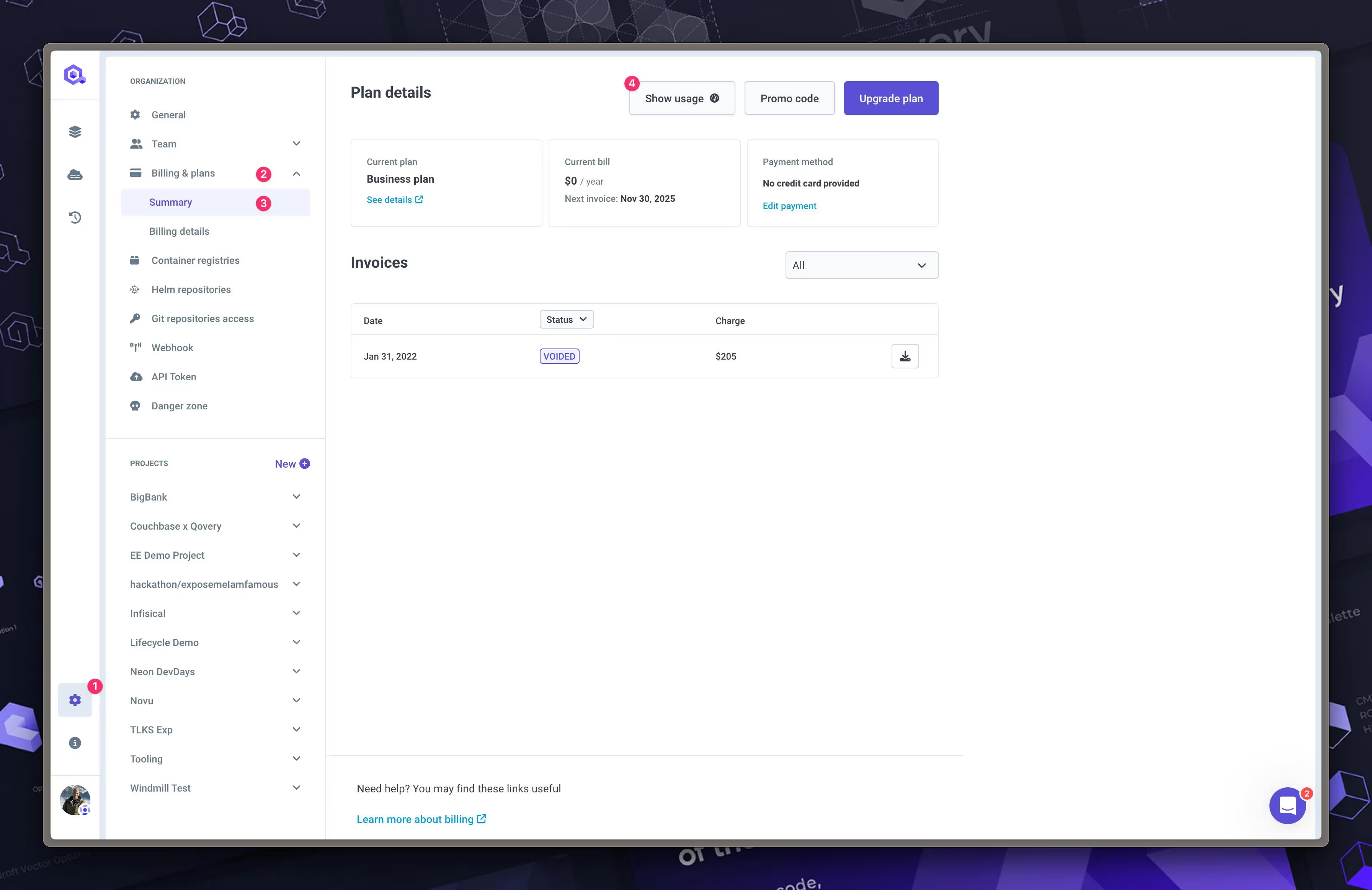
To get access to your usage dashboard:

  1. Go to your Organization settings
  2. Click on "Billing & plans" > "Summary" tab
  3. Click on "Show usage" button

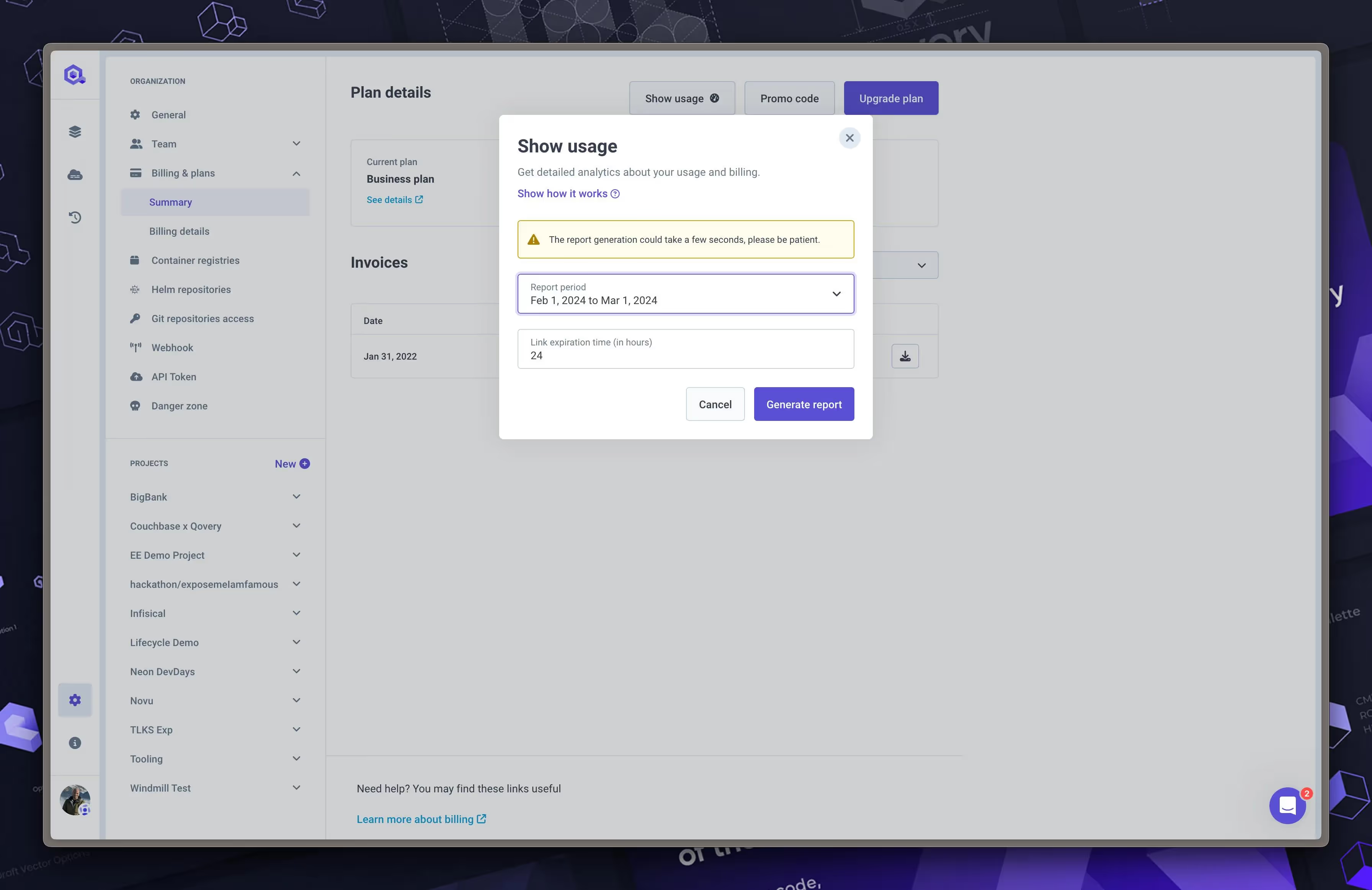
Then you can generate your report and set an expiration time (it can take up to 1 minute).

Generate your billing usage

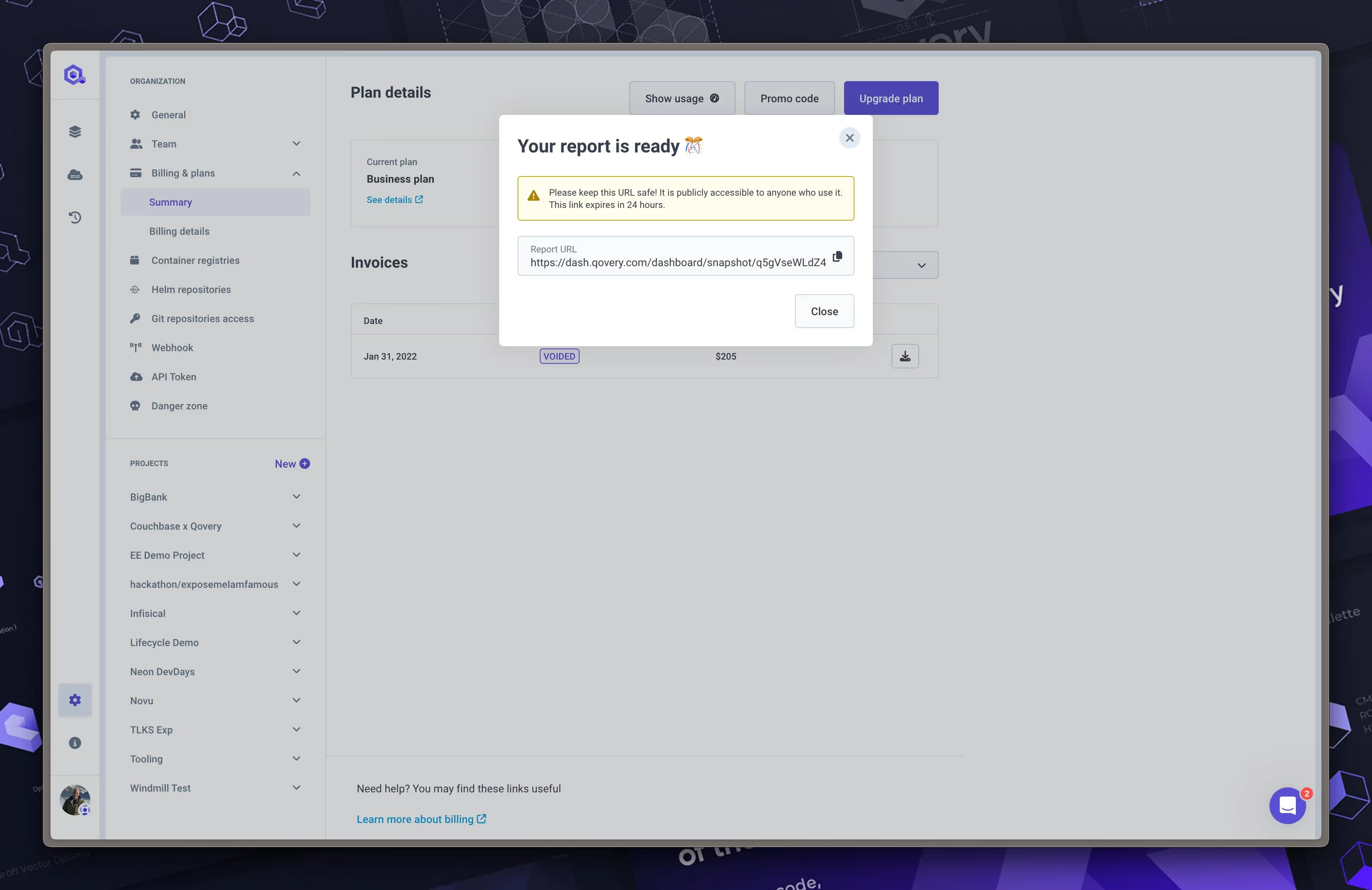
Once generated, you can copy the link and open it. ⚠️ Don't share it publicly.

Copy your dashboard URL

And tada, your dashboard is accessible 🥳

Qovery billing usage dashboard

Cost Optimization

This feature not only provides you insights into your current spending but also empowers you to take proactive steps towards optimizing your costs.

Get a clear view on how much you spend per day and on which element

Whether through more efficient use of deployment minutes, adjusting team sizes based on project needs, or choosing the right cluster management option, the potential for savings is significant.

Get a detailed of which apps you should optimize to optimize your deployment costs

A Dashboard That Evolves With You

We understand that your needs and our platform are constantly evolving. As such, the billing analytics dashboard is subject to ongoing enhancements and improvements. Your feedback will be crucial in shaping its development, ensuring it remains as useful and user-friendly as possible.

Conclusion

Our new billing analytics feature represents a significant step forward in providing you with the transparency and control needed to manage your cloud expenses effectively. We are committed to supporting your journey towards more efficient and cost-effective cloud computing.

Stay tuned for further updates, tutorials, and guides on making the most of this feature. Your success is our priority, and we're here to support you every step of the way.

Share on :
Twitter icon
linkedin icon
Tired of fighting your Kubernetes platform?
Qovery provides a unified Kubernetes control plane for cluster provisioning, security, and deployments - giving you an enterprise-grade platform without the DIY overhead.
See it in action

Suggested articles

Kubernetes
8
 minutes
Kubernetes management in 2026: mastering Day-2 ops with agentic control

The cluster coming up is the easy part. What catches teams off guard is what happens six months later: certificates expire without a single alert, node pools run at 40% over-provisioned because nobody revisited the initial resource requests, and a manual kubectl patch applied during a 2am incident is now permanent state. Agentic control planes enforce declared state continuously. Monitoring tools just report the problem.

Mélanie Dallé
Senior Marketing Manager
Kubernetes
6
 minutes
Kubernetes observability at scale: how to cut APM costs without losing visibility

The instinct when setting up Kubernetes observability is to instrument everything and send it all to your APM vendor. That works fine at ten nodes. At a hundred, the bill becomes a board-level conversation. The less obvious problem is the fix most teams reach for: aggressive sampling. That is how intermittent failures affecting 1% of requests disappear from your monitoring entirely.

Mélanie Dallé
Senior Marketing Manager
Kubernetes
 minutes
How to automate environment sleeping and stop paying for idle Kubernetes resources

Scaling your deployments to zero is only half the battle. If your cluster autoscaler does not aggressively bin-pack and terminate the underlying worker nodes, you are still paying for idle metal. True environment sleeping requires tight integration between your ingress layer and your node provisioner to actually realize FinOps savings.

Mélanie Dallé
Senior Marketing Manager
Kubernetes
DevOps
6
 minutes
10 best Kubernetes management tools for enterprise fleets in 2026

The structure, table, tool list, and code blocks are all worth keeping. The main work is fixing AI-isms in the prose, updating the case study to real metrics, correcting the FAQ format, and replacing the CTAs with the proper HTML blocks. The tool descriptions need the "Core strengths / Potential weaknesses" headers made less template-y, and the intro needs a sharper human voice.

Mélanie Dallé
Senior Marketing Manager
DevOps
Kubernetes
Platform Engineering
6
 minutes
10 best Red Hat OpenShift alternatives to reduce licensing costs

For years, Red Hat OpenShift has been the safe choice for heavily regulated, on-premise environments. It operates as a secure fortress. But in the public cloud, that fortress acts as an expensive prison. Paying proprietary per-core licensing fees on top of your standard AWS or GCP compute bill is a redundant "middleware tax." Escaping OpenShift requires decoupling your infrastructure from your developer experience by running standard, vanilla Kubernetes paired with an agentic control plane.

Morgan Perry
Co-founder
AI
Product
3
 minutes
Qovery Skill for AI Agents: Deploy Apps in One Prompt

Use Qovery from Claude Code, OpenCode, Codex, and 20+ AI Coding agents

Romaric Philogène
CEO & Co-founder
Kubernetes
 minutes
Stopping Kubernetes cloud waste: agentic automation for enterprise fleets

Agentic Kubernetes resource reclamation is the practice of using an autonomous control plane to continuously identify, suspend, and delete idle infrastructure across a multi-cloud Kubernetes fleet. It replaces manual cleanup and reactive autoscaling with intent-based policies that act on business state, eliminating the configuration drift and cloud waste typical of unmanaged fleets.

Mélanie Dallé
Senior Marketing Manager
Platform Engineering
Kubernetes
DevOps
10
 minutes
What is Kubernetes? The reality of Day-2 enterprise fleet orchestration

Kubernetes focuses on container orchestration, but the reality on the ground is far less forgiving. Provisioning a single cluster is a trivial Day-1 exercise. The true operational nightmare begins on Day 2. Teams that treat multi-cloud fleets like isolated pets inevitably face crushing YAML configuration drift, runaway AWS bills, and severe scaling bottlenecks.

Morgan Perry
Co-founder

It’s time to change
the way you manage K8s

Turn Kubernetes into your strategic advantage with Qovery, automating the heavy lifting while you stay in control.