Leveraging Neon's Serverless Postgres with Qovery Preview Environments
At Qovery, we are committed to ensuring our users have access to the best development tools in the industry. That’s why we’re excited about Neon - a state-of-the-art serverless Postgres solution. When used in conjunction with Qovery's Preview environments, Neon supercharges your development pipeline.
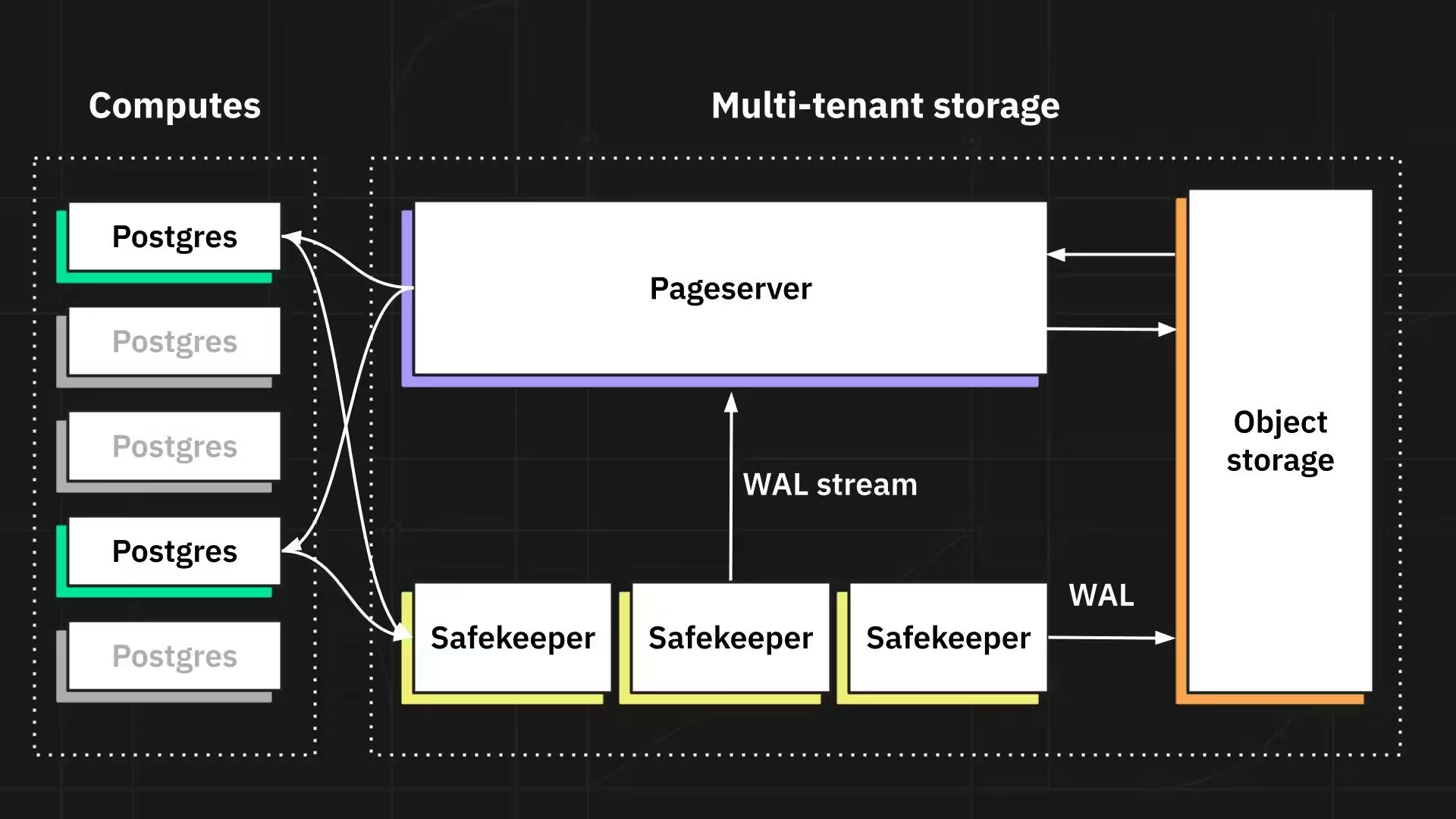
Neon is revolutionizing the database landscape with its serverless Postgres service. In contrast to traditional databases where provisioning, scaling, and maintenance are at the forefront, Neon’s approach places user experience at the center. Databases are dynamically instantiated based on demand, eliminating the need for resource pre-allocation and allowing for swifter deployment. One of the remarkable features of Neon’s Postgres service is its ability to scale in real-time, adapting to workloads, be it during a sudden surge in activity or during quieter periods. This ensures optimal resource allocation without the risk of overpaying. Add to that Neon's automatic handling of backups and software updates, users can rest assured of data safety and the use of the latest, secure Postgres versions. Moreover, the serverless model streamlines costs, charging only for actual query executions and storage.
When contrasting Neon with other big players like AWS Aurora and AWS RDS, several nuances emerge. AWS Aurora provides both serverless and provisioned database models, offering flexibility based on user requirements. Its integration within the AWS ecosystem allows it to benefit from tight-knit functionalities with other AWS services, not to mention its continuous backup feature to Amazon S3. Meanwhile, AWS RDS simplifies the relational database experience in the cloud, offering several database engines. With RDS, users have the flexibility to choose among various instance types to best fit their workload, but it's crucial to evaluate and occasionally revisit those choices as workloads evolve to ensure optimal performance and cost-efficiency.
Neon stands out with its open-source foundation, promoting transparency and community-driven innovation. Its flexibility in cost and dynamic scalability makes it particularly alluring for projects that demand agility and on-the-go adjustments.
For developers leveraging Qovery's Preview environments, Neon's agility translates into unparalleled advantages, aligning seamlessly with Qovery's ethos and promising an enhanced developer experience.
Here’s Why Neon and Qovery are a Perfect Match:
Zero Infrastructure Hassles: Neon’s serverless nature means developers can focus on coding without getting bogged down in infrastructure management. With Qovery's Preview environments, deploying these serverless instances becomes even more seamless.
Dynamic Scaling: Neon's Postgres service scales automatically based on your workload. Whether you’re running a small test or a large-scale preview, Neon ensures optimal performance without manual intervention.
Economical: Serverless solutions like Neon only charge for the resources you use. This model, combined with Qovery's efficient deployment mechanism, ensures cost savings for developers.
Rapid Provisioning: Neon can provision a Postgres database in mere moments. This speed, when paired with Qovery's Preview environments, ensures developers can immediately see and test their changes.
Safety and Isolation: Using Neon with Qovery ensures your main application and its data remain untouched. Preview changes and test new features without any risks. Thanks to the concept of Branches.
Consistency Across the Board: With Neon’s serverless Postgres, developers are assured of consistent database performance, mirroring real-world production scenarios. Qovery’s Preview environments further enhance this consistency, making sure what you see in preview matches production.
Agents ship fast. Guardrails keep them safe.
Qovery ensures every agent action is scoped, audited, and policy-checked. Start deploying in under 10 minutes.
Here is a short demo you can watch to see Neon and Qovery in action
or a longer one from the Neon Dev Days 2023
Getting Started
For existing Qovery users, integrating Neon’s serverless Postgres is a breeze. Dive into this article for a comprehensive, step-by-step guide on combining the power of Neon with Qovery's Preview environments.
Final Thoughts
Neon's serverless Postgres offering, combined with Qovery's Preview environments, is set to revolutionize the way developers test and deploy applications. Especially for those using Postgres, the synergy between Neon and Qovery provides an unparalleled development experience. Dive in and witness the future of development firsthand.
Romaric founded Qovery to make Kubernetes accessible to every engineering team. He writes about platform strategy, developer experience, and the future of cloud infrastructure.
Next step
Agents ship fast. Guardrails keep them safe.
Qovery ensures every agent action is scoped, audited, and policy-checked. Start deploying in under 10 minutes.