Blog
Product
2
minutes

New Logs Interface: Enhancing Debugging and Deployment Experience

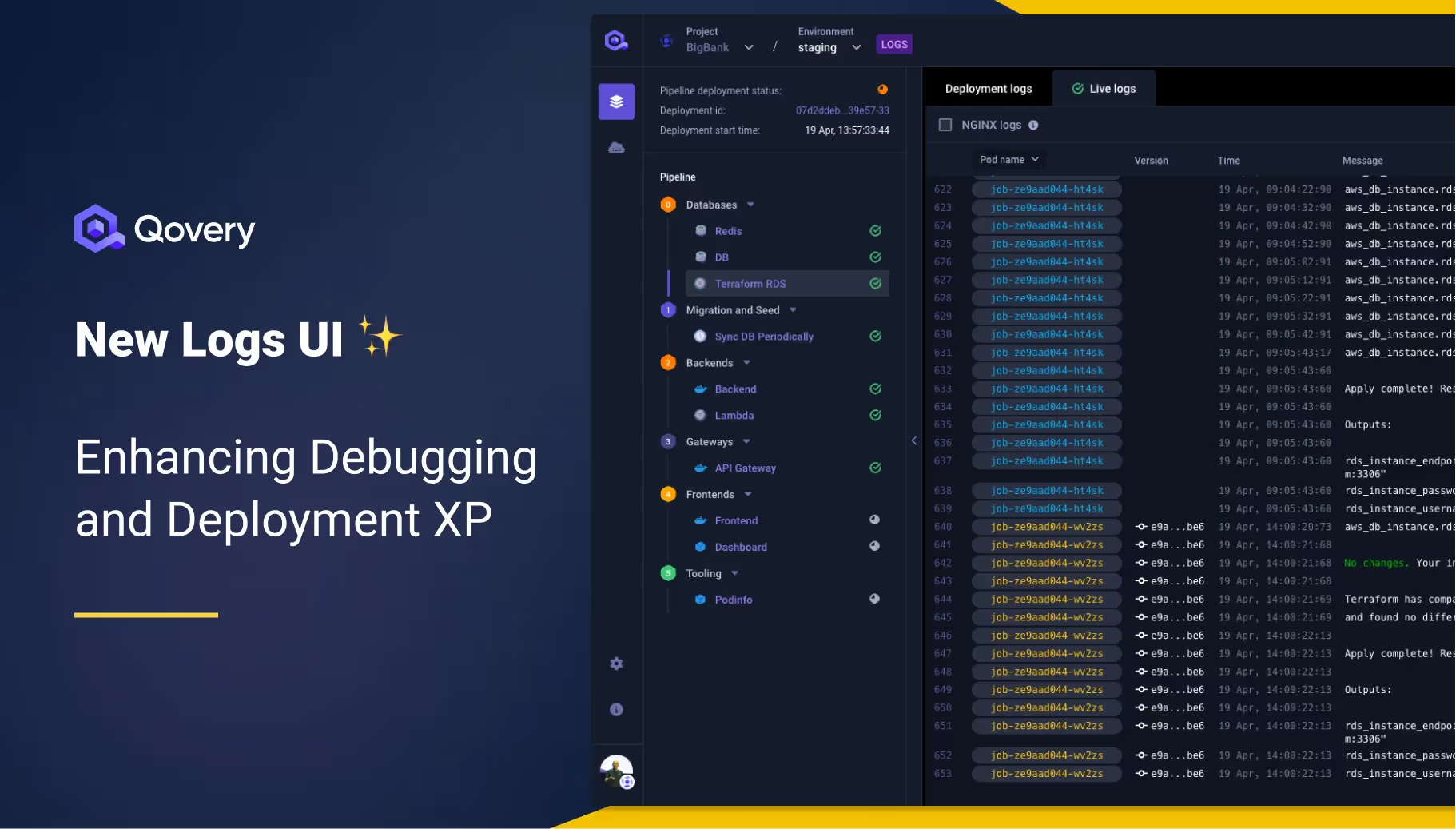
I am excited to announce the release of our new logs interface inside Qovery. This feature is a crucial milestone in our journey to improve the debugging experience and provide better insights into deployment failures. As we are just about releasing parallel deployment, we revamped the interface to accommodate the concept of Deployment Pipeline, ensuring a seamless experience when deploying your applications.

Romaric Philogène
CEO & Co-founder
Summary
Twitter icon
linkedin icon
The new logs interface is live for everyone!

Why the Revamp?

We understand the importance of having a user-friendly and efficient logs interface, especially when handling complex deployment processes.

The new logs interface is designed to offer:

  • A clear and organized view of deployment processes
  • Easy navigation between deployment logs and live logs
  • Better insights into deployment failures and debugging

You can share your feedback on the new interface on this thread: https://discuss.qovery.com/t/new-logs-view-feedback-are-welcome/1781

New Logs Interface Features - First Iteration

The new design is focused on providing quick and easy access to essential information:
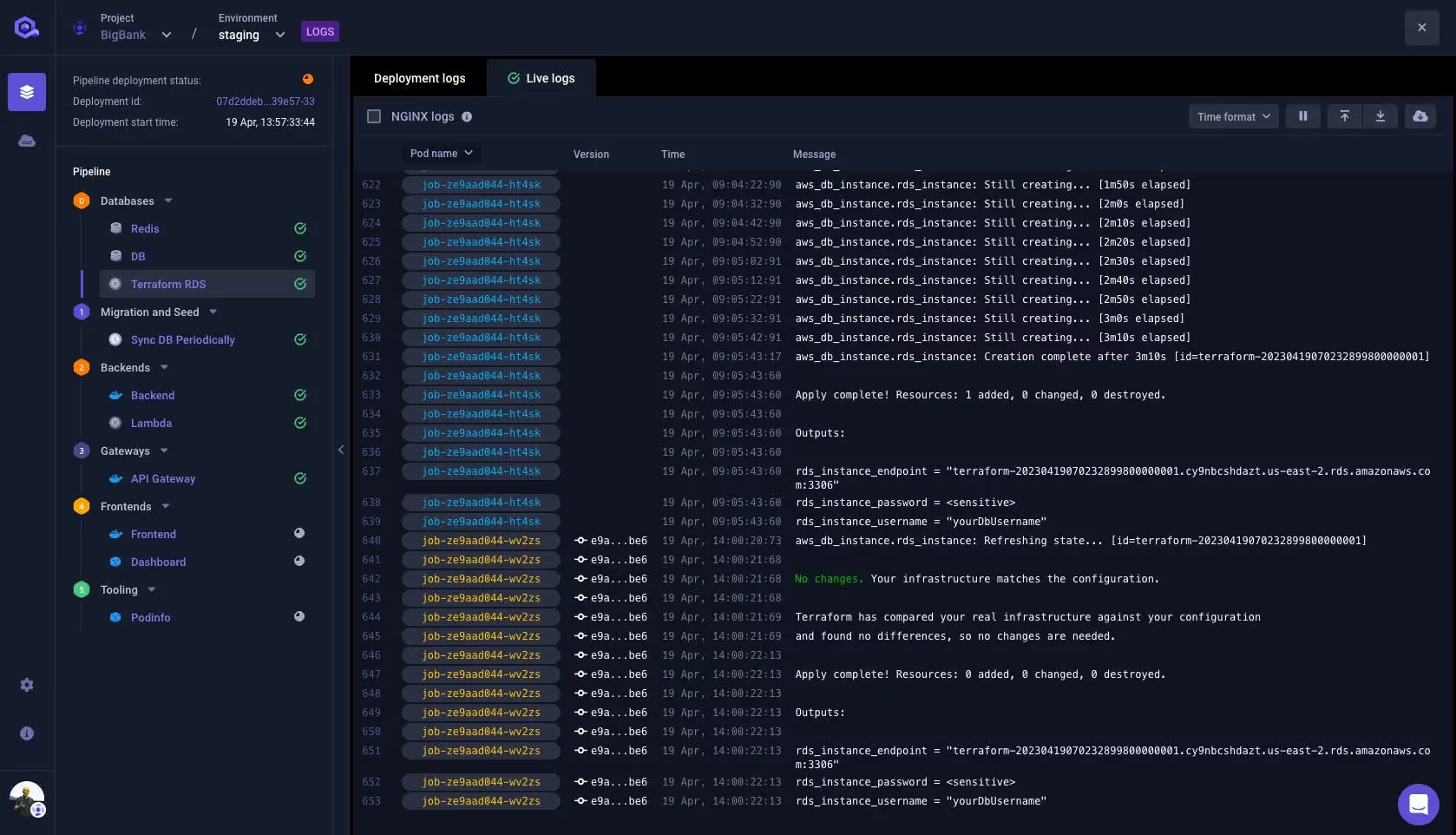
Screenshot from the new logs interface
  1. A left bar displays:
    undefinedundefinedundefined
  2. A log view split into two sections:
    undefinedundefined

The purpose of the Live Logs interface is not to replace your favorite log management tool like Datadog, NewRelic, Papertrail, or even Grafana with Loki (which is included out of the box by Qovery). Instead, it aims to provide a quick way to access live logs from your apps within your environment - a unified experience and a fast method to glance at the latest logs of your apps.

The new interface eliminates the need for multiple tabs and allows you to switch between logs of different applications by simply clicking on the service in the left pane.

What to Expect in the Second Iteration

We are continuously working to improve the logs interface based on your feedback. In the upcoming second iteration, you can expect the following enhancements:
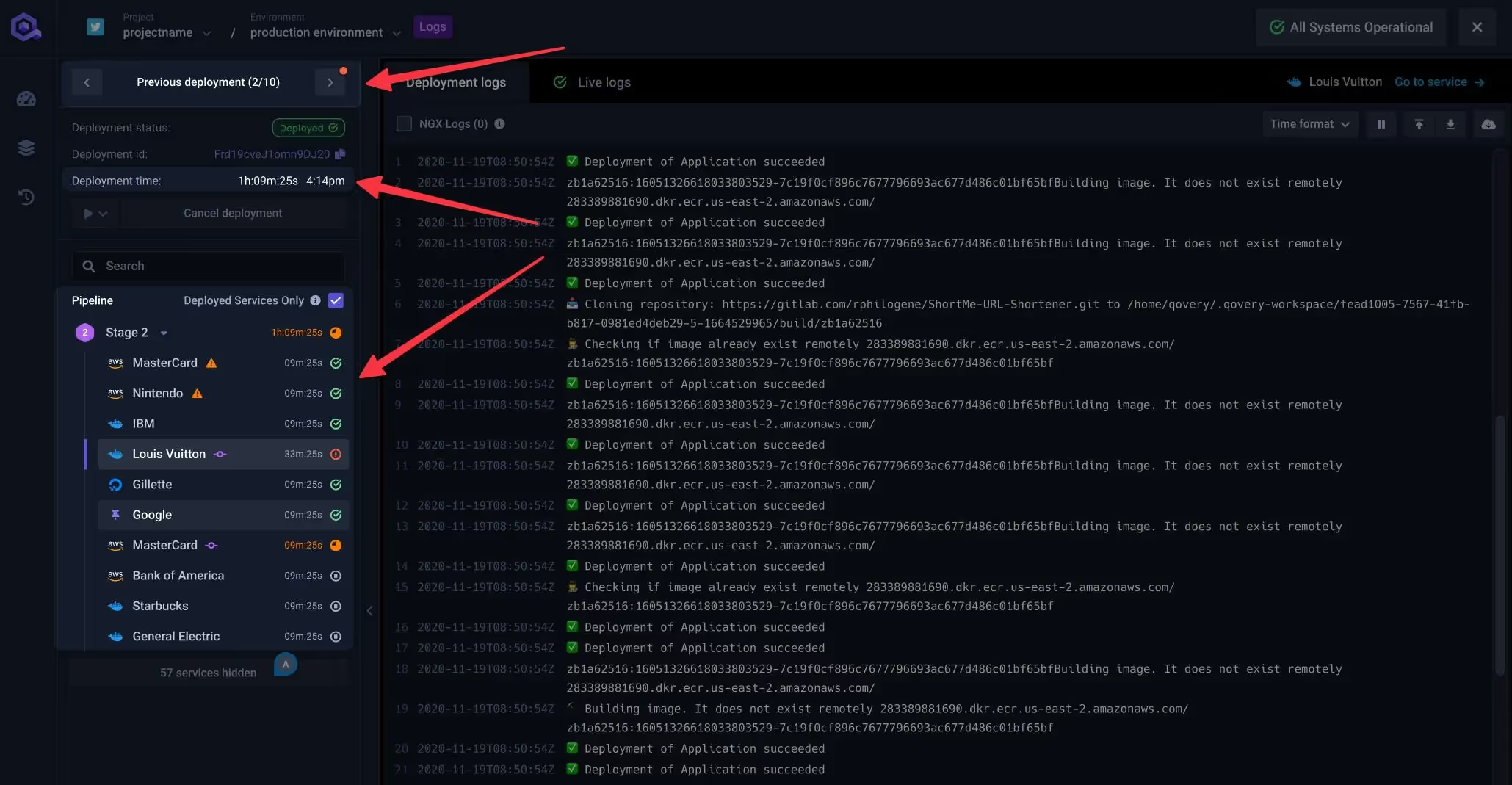
The 2nd iteration of the new logs interface will include much more
  • Deployment time for each pipeline stage and step
  • The deployment logs history
  • Assistance in troubleshooting, with relevant documentation elements included directly in the logs console when an error occurs

Join the Conversation

We value your feedback and look forward to hearing your thoughts on the new logs interface. Feel free to comment on the forum thread about any features or improvements you would like to see implemented. Together, let's make Qovery an even better platform for your deployment needs.

Happy deploying!

Share on :
Twitter icon
linkedin icon
Ready to rethink the way you do DevOps?
Qovery is a DevOps automation platform that enables organizations to deliver faster and focus on creating great products.
Book a demo

Suggested articles

DevOps
 minutes
TPUs vs. GPUs: The DevOps Guide to AI Hardware Selection

Stop guessing on AI hardware. This DevOps guide details when to use TPUs vs. GPUs for optimal performance, cost, and framework compatibility in MLOps.

Mélanie Dallé
Senior Marketing Manager
Cloud
Business
10
 minutes
The DevOps Guide to Docker Monitoring: Tools, Best Practices, and Unified Observability

Stop tool sprawl. Compare top Docker monitoring tools (Prometheus, Datadog, Qovery) and learn how unified observability simplifies K8s debugging and speeds up feature delivery.

Romaric Philogène
CEO & Co-founder
Cloud
Heroku
Internal Developer Platform
Platform Engineering
9
 minutes
The Top 8 Tools to Build a Zero-Toil PaaS on Your Cloud

Stop managing K8s complexity. Discover the top 8 platform tools (Qovery, Rancher, Dokku) that let you build a customizable, zero-maintenance PaaS on your cloud.

Morgan Perry
Co-founder
Kubernetes
 minutes
How to Deploy a Docker Container on Kubernetes: Step-by-Step Guide

Simplify Kubernetes Deployment. Learn the difficult 6-step manual process for deploying Docker containers to Kubernetes, the friction of YAML and kubectl, and how platform tools like Qovery automate the entire workflow.

Mélanie Dallé
Senior Marketing Manager
Observability
DevOps
 minutes
Observability in DevOps: What is it, Observe vs. Monitoring, Benefits

Observability in DevOps: Diagnose system failures faster. Learn how true observability differs from traditional monitoring. End context-switching, reduce MTTR, and resolve unforeseen issues quickly.

Mélanie Dallé
Senior Marketing Manager
DevOps
Cloud
8
 minutes
6 Best Practices to Automate DevSecOps in Days, Not Months

Integrate security seamlessly into your CI/CD pipeline. Learn the 6 best DevSecOps practices—from Policy as Code to continuous monitoring—and see how Qovery automates compliance and protection without slowing development.

Morgan Perry
Co-founder
Heroku
15
 minutes
Top 10 Heroku Alternatives: When Simplicity Hits the Scaling Wall

Escape rising Heroku costs & outages. Compare top alternatives that deliver PaaS simplicity on your own cloud and scale without limits.

Mélanie Dallé
Senior Marketing Manager
Product
Infrastructure Management
Deployment
 minutes
Stop tool sprawl - Welcome to Terraform/OpenTofu support

Provisioning cloud resources shouldn’t require a second stack of tools. With Qovery’s new Terraform and OpenTofu support, you can now define and deploy your infrastructure right alongside your applications. Declaratively, securely, and in one place. No external runners. No glue code. No tool sprawl.

Alessandro Carrano
Head of Product

It’s time to rethink
the way you do DevOps

Say goodbye to DevOps overhead. Qovery makes infrastructure effortless, giving you full control without the trouble.