What’s New in Qovery Q1 2025: Faster Deployments, Smarter Scaling, and More Control
Over the last three months, we’ve focused on solving three core challenges our users face: delivering faster, improving resiliency, and gaining tighter control over cloud infrastructure. Today, we’re excited to share the new features we rolled out in Q1 2025 - all built to help teams ship faster, with more confidence, and lower operational overhead.
Let’s dive into what’s new and what’s next for Qovery.
What's New ⚡
Karpenter for Production
Karpenter is now fully integrated and production-ready in Qovery. You can automatically scale your workloads based on real-time demand while drastically reducing compute waste 🔥.
Faster pod scheduling and optimized node utilization.
Zero manual tweaking - it just works.
It is ideal for teams with fluctuating workloads who want to align Kubernetes computing with real usage and avoid wasting money.
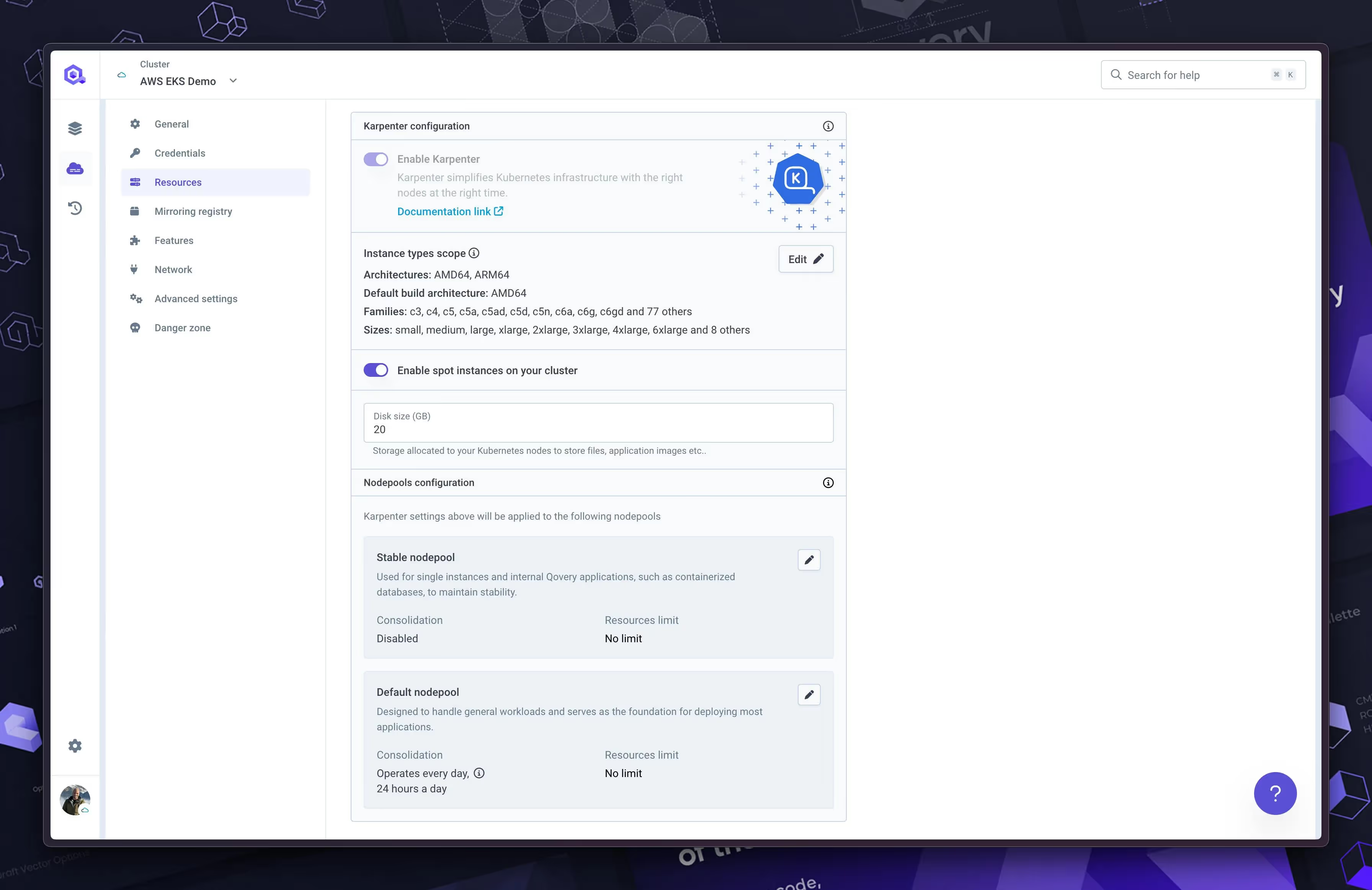
Karpenter configuration via Qovery web interface
Simplicity does not mean limited. So, you can also possibly configure additional Karpenter settings, such as the type of nodes, spot instances, consolidation, limits, and, soon, even custom node pools.
Deployment Pipeline v5
We’ve re-engineered our Deployment Pipeline from the ground up. Version 5 brings better visibility into each deployment stage.
Your developers focus on delivering features instead of wasting time debugging deployments.
Deployment History View
Quickly inspect what was deployed, when, by whom - and with which commit an image tag. The new Deployment History View makes this fully traceable.
Deployment Queuing
It’s finally here… you can now queue deployment requests within the same environment! 🎉
Remember the toaster message saying an action couldn’t be performed because a deployment was ongoing? That’s a thing of the past!
You can trigger a new deployment within the same environment, even if another one is in progress. Every new request will be added to a queue and processed as soon as the ongoing deployment is completed.
Bonus: To speed up overall deployment time, queued requests are automatically merged into a single deployment whenever possible (if triggered by the same user and with the same action).
We’ve introduced a new CLI command that simplifies connecting to your Kubernetes cluster without requiring credentials. This feature is restricted to admins; all connections are logged in the audit logs for security and transparency.
Technically, this feature deploys a dedicated debug pod on your cluster, preloaded with valuable tools like kubectl and k9s. It’s an invaluable resource for debugging or investigating issues directly from your local machine.
Agents ship fast. Guardrails keep them safe.
Qovery ensures every agent action is scoped, audited, and policy-checked. Start deploying in under 10 minutes.
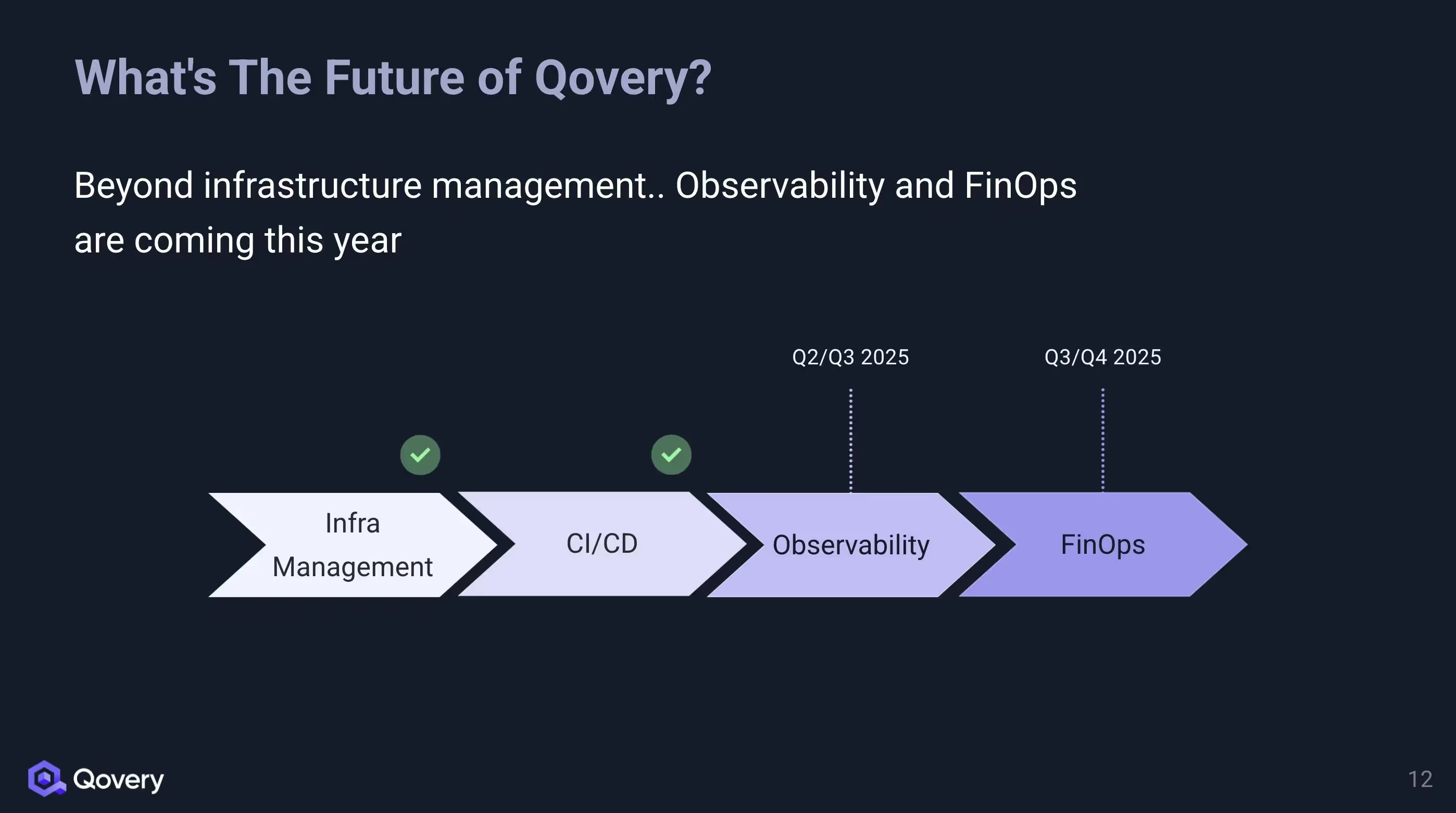
By Q3/Q4 2025, our mission is to deliver a self-service platform that gives dev teams the speed of Heroku, the power of Kubernetes, and the financial transparency of a FinOps-native platform - all in one.
It's a Wrap
Whether you’re scaling your platform, controlling cloud costs, or accelerating releases, our latest features are designed to give you the leverage you need. As always, you can follow our full changelog at qovery.com/changelog, and if you want a live demo or to explore any of these features, just reach out.
Stay tuned for the next wave of releases - and thank you for building with Qovery.
Romaric founded Qovery to make Kubernetes accessible to every engineering team. He writes about platform strategy, developer experience, and the future of cloud infrastructure.
Next step
Agents ship fast. Guardrails keep them safe.
Qovery ensures every agent action is scoped, audited, and policy-checked. Start deploying in under 10 minutes.