
Mélanie Dallé
Senior Marketing Manager
Melanie leads content at Qovery. She covers platform engineering trends, Kubernetes operations, FinOps, and the tools that help engineering teams ship faster.
The 8 Tools I'd Actually Use to Manage AWS Bedrock Model Deployments in 2026
A practical, layer-by-layer comparison of the tools teams use to deploy, govern, and operate Amazon Bedrock models in 2026 - Boto3, the Bedrock console and Agents, Terraform, LangChain, LlamaIndex, Dify, Continue.dev, and internal developer platforms like Qovery.
AWS Automated the Migration. Nobody Automated the Day After.
AWS Transform compresses assessment, wave planning, and containerization from months to hours, then stops at cutover. Here is what nobody automated: deploying, isolating, and paying for hundreds of applications on day two, and who ends up owning it.
9 Coolify Alternatives Worth Considering in 2026 (and When Each One Makes Sense)
An honest, side-by-side comparison of the best Coolify alternatives in 2026 - Dokploy, CapRover, Dokku, Easypanel, Railway, Render, Fly.io, Northflank, Porter and Qovery - with real prices, orchestration limits, and clear guidance on which fits your team size, budget and compliance needs.
Cloud Migration Consultants Who Actually Understand Multi-Cloud and Microservices: A 2026 Buyer's Guide
A practical 2026 buyer's guide to cloud migration consultancies that genuinely handle multi-cloud and microservices work: who fits which workload, the five questions that expose a single-cloud shop, and what to keep in-house so the migration outlives the engagement.
How to Cut Manual Deploy Steps on AWS: 8 DevOps Automation Platforms Compared
A platform engineer's comparison of the tools that automate build, test, and release to production on AWS - CodePipeline, GitHub Actions, GitLab CI/CD, Jenkins, Argo CD, Octopus Deploy, Northflank, and Qovery - with a clear verdict on which layer of manual work each one actually removes.
The Best DevOps Platforms for Small Engineering Teams in 2026 (and How to Pick One)
An opinionated 2026 comparison of DevOps platforms for teams of 2-15 engineers - CI/CD, managed PaaS, internal developer platforms and DIY Kubernetes - with two comparison tables, real pricing and salary numbers, and a three-question framework for picking one.
European GPU Clouds: 8 Alternatives to AWS and Azure for AI Workloads
A price-checked comparison of eight European GPU clouds - Scaleway, OVHcloud, Nscale, Verda, Hetzner, IONOS, Exoscale and the Vast.ai/RunPod marketplace tier - on H100/H200 availability, per-GPU-hour cost, egress and EU sovereignty versus AWS and Azure.
The 9 Best Multi-Cloud Deployment Automation Tools in 2026 (and How to Pick One)
An opinionated 2026 comparison of the nine best multi-cloud deployment automation tools - Argo CD, Spinnaker, Terraform/OpenTofu, Crossplane, GitHub Actions, GitLab CI/CD, OpenShift, Azure DevOps/Google Cloud Deploy, and Qovery - with six comparison tables, real cost models, and a five-line decision framework.
Which EU Cloud Providers Support Kubernetes? The 2026 List, Prices and Sovereignty Checklist
Eight European cloud providers ship a managed Kubernetes control plane in 2026 - OVHcloud MKS, Scaleway Kapsule and Kosmos, Exoscale SKS, Infomaniak, StackIt SKE, Open Telekom Cloud CCE, UpCloud and IONOS - while Hetzner is self-managed only. Here is what each actually gives you, what it costs, what sovereignty really means, and how to keep the same developer workflow on any of them.
The Best AI Governance Tools for Enterprise Deployments in 2026 (and the Layer Most Teams Forget)
A practical, layer-by-layer comparison of the best AI governance tools for enterprise deployments in 2026 - Credo AI, Holistic AI, Arize AI, Lakera, EVE AI Core, and the cloud-native services from AWS, Microsoft, and Google - including which vendors publish real pricing, and the infrastructure control layer most governance stacks miss.
The GCP Infrastructure Tools I Actually Recommend (and What Each One Is For)
A practical, category-by-category guide to the tools teams use to manage GCP infrastructure in 2026 - IaC, Google-native services, security posture, cost management, and developer self-service - with comparison tables, pricing notes, and honest trade-offs.
Platform Engineering With 10 Engineers and No Platform Team: What Actually Works
If you have ten engineers, no dedicated platform team, and you want to leave your PaaS for your own cloud account, you need an orchestration layer first and a developer portal second. Here is how the real options compare.
Self-Service Kubernetes Platforms: 9 Options Compared (And How to Pick One)
A practical 2026 comparison of the top self-service infrastructure platforms for Kubernetes - Qovery, Northflank, Red Hat OpenShift, Rancher, Platform9, Portainer, Codefresh, Lens and Backstage - with the five criteria that actually decide which one fits your team.
Which Platforms Make a HIPAA-Compliant Migration From a Managed PaaS to Your Own Cloud Easier?
The platforms and partners healthcare startups actually use to move off a managed PaaS onto AWS, GCP, Azure, Scaleway, or their own Kubernetes cluster without breaking HIPAA - compared on BAA coverage, where PHI lives, who operates day-2, and developer self-service.
Top EU Sovereign Cloud Platforms in 2026: The Honest Map (And How to Actually Move Workloads There)
A fair, sourced map of the top EU digital sovereignty cloud platforms in 2026 - Scaleway, OVHcloud, Hetzner, IONOS Cloud, Exoscale, Cloud Temple, StackIT, Open Telekom Cloud, Elastx - plus what GDPR, Schrems II and the EU Data Act actually require, and the migration patterns that get your first EU workload in production in weeks.
Moving Off a Managed PaaS to AWS: What to Check First, and the 8 Tools That Make the Move Painless
A practical migration playbook for leaving Heroku, Render, Vercel, or Fly.io for AWS: the criteria to check before you commit, the real TCO math, and the eight tools - from Infracost and Kubecost to internal developer platforms - that keep the developer experience you are about to give up.
Cloud Migration Cost Analysis: A 7-Step Framework for the Real Cost of Leaving a Managed Platform (and 12 Tools That Help)
A 7-step framework for calculating the true total cost of moving from a managed platform (Heroku, Render, Vercel, Fly.io, Platform.sh) to AWS, GCP, Azure, Scaleway, or your own Kubernetes cluster - plus a fair, side-by-side comparison of the 12 tools that model, allocate, and control those costs.
Migrating off Heroku to AWS with near-zero downtime: the 5 real options
A practical comparison of the services and tools that handle Heroku-to-AWS migrations for you - consultancies, IaC tooling, and managed platforms - plus the cutover playbook that keeps downtime under a minute.
Cloud Migration Providers: Comparing Systems Integrators, Dev Shops, and Self-Service Platforms
Three ways to run a cloud migration compared: systems integrators, dev-shop staff augmentation, and self-service PaaS platforms like Qovery. How to choose.
Infrastructure Automation Tools Comparison: Provisioning vs. Orchestration Layer
Infrastructure automation tools by layer: provisioning (Terraform, OpenTofu, Pulumi, CDK, Crossplane) vs. orchestration (Spacelift, env0, Scalr, Qovery).
6 Best Cloud Cost Optimization & FinOps Tools in 2026
Compare the top cloud cost optimization and FinOps tools - Vantage, nOps, CloudZero, CloudAware, PointFive, and Qovery - across spend visibility, Kubernetes rightsizing, and migration cost control.
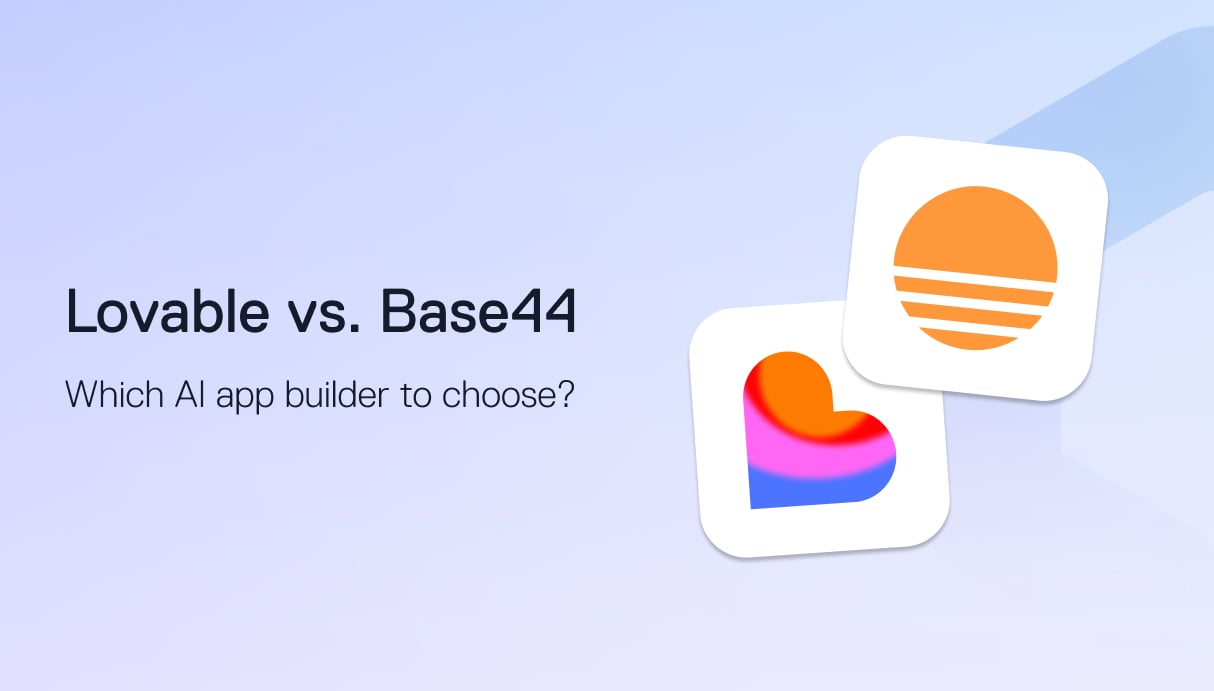
Base44 vs Lovable: Which AI App Builder Should You Use in 2026?
Base44 vs Lovable compared: features, backend, pricing, popularity, and which AI app builder fits your use case - plus how to take either prototype to production on infrastructure you control.
The Best Tools for Integrating AI Agents with Kubernetes in 2026
A practical guide to the best tools for both using AI agents to manage Kubernetes (AIOps) and running AI agent workloads on Kubernetes infrastructure in 2026.
How Kubernetes AI Agents Improve Cluster Management
AI agents compress Kubernetes incident diagnosis from 45 minutes to seconds, eliminate YAML authoring toil, and shift resource tuning from static to continuous. Here is what changes concretely when they enter your workflow.
Kubernetes management in 2026: mastering Day-2 ops with agentic control
What Kubernetes management involves after the cluster is running: certificate expiry, node pool waste, upgrades and multi-cluster drift.
Kubernetes observability at scale: how to cut APM costs without losing visibility
The instinct when setting up Kubernetes observability is to instrument everything and send it all to your APM vendor. That works fine at ten nodes. At a hundred, the bill becomes a board-level conversation. The less obvious problem is the fix most teams reach for: aggressive sampling. That is how intermittent failures affecting 1% of requests disappear from your monitoring entirely.
How to automate environment sleeping and stop paying for idle Kubernetes resources
Scaling your deployments to zero is only half the battle. If your cluster autoscaler does not aggressively bin-pack and terminate the underlying worker nodes, you are still paying for idle metal. True environment sleeping requires tight integration between your ingress layer and your node provisioner to actually realize FinOps savings.
10 best Kubernetes management tools for enterprise fleets in 2026
Ten Kubernetes management tools compared for enterprise fleets, covering multi-cluster operations, upgrades, cost control and governance.
Stopping Kubernetes cloud waste: agentic automation for enterprise fleets
Agentic Kubernetes resource reclamation is the practice of using an autonomous control plane to continuously identify, suspend, and delete idle infrastructure across a multi-cloud Kubernetes fleet. It replaces manual cleanup and reactive autoscaling with intent-based policies that act on business state, eliminating the configuration drift and cloud waste typical of unmanaged fleets.
Agentic AI infrastructure: moving beyond Copilots to autonomous operations
The shift from AI copilots to autonomous agents is redefining infrastructure requirements. Discover how to build secure, stateful, and compliant Agentic AI systems using Kubernetes, sandboxing, and observability while meeting EU AI Act standards
Building a single pane of glass for enterprise Kubernetes fleets
A Kubernetes single pane of glass is a centralized management layer that unifies visibility, access control, cost allocation, and policy enforcement across § cluster in an enterprise fleet for all cloud providers. It replaces the fragmented practice of switching between AWS, GCP, and Azure consoles to govern infrastructure, giving platform teams a single source of truth for multi-cloud Kubernetes operations.
How to deploy a Docker container on Kubernetes (and why manual YAML fails at scale)
How to deploy a Docker container to Kubernetes in six steps, what Pods, Deployments and Services each do, and why manual YAML fails at scale.
Managing Kubernetes deployment YAML across multi-cloud enterprise fleets
At enterprise scale, managing provider-specific Kubernetes YAML across multiple clouds creates crippling configuration drift and operational toil. By adopting an agentic Kubernetes management platform, infrastructure teams abstract cloud-specific configurations (like ingress controllers and storage classes) into a single, declarative intent that automatically reconciles across 1,000+ clusters.
GPU orchestration guide: How to auto-scale Kubernetes clusters and slash AI infrastructure costs
To stop GPU costs from destroying SaaS margins, teams must transition from static to consumption-based infrastructure by utilizing Karpenter for dynamic provisioning, maximizing hardware density with NVIDIA MIG, and leveraging Qovery to tie scaling directly to business metrics.
Beyond the spreadsheet: Using GitOps to generate DORA-compliant audit trails.
By adopting GitOps and utilizing management platforms like Qovery, fintech teams can automatically generate DORA-compliant audit trails, transforming regulatory compliance from a manual, time-consuming chore into an automated, native byproduct of their infrastructure.
Day-2 operations: an executive guide to Kubernetes scale
For most enterprises, a Kubernetes migration is pitched as a finite project. In reality, Day-1 deployment is merely the start of an infinite marathon. As clusters scale, a quiet financial crisis emerges. When your highest-paid senior engineers spend 40% of their week on cluster upgrades, certificate rotations, and manual node scaling, you are paying a permanent tax on innovation.
Kubernetes multi-cluster architecture: solving day-2 fleet sprawl
Kubernetes multi-cluster management is the Day-2 operational practice of orchestrating applications, security, and configurations across geographically distributed clusters. Because native Kubernetes was designed for single-cluster orchestration, enterprise platform teams must implement a centralized control plane to prevent configuration drift and manage a global fleet without scaling manual toil.
Understanding CrashLoopBackOff: Fixing AI workloads on Kubernetes
Stop fighting CrashLoopBackOff on your AI deployments. Learn why traditional Kubernetes primitives fail large models and GPU workloads, and how to orchestrate AI infrastructure without shadow IT.
When Kubernetes becomes the bottleneck, and how to fix it
Struggling with Kubernetes configuration sprawl and long deployment queues? Discover how to identify technical vs. workflow bottlenecks and why shifting to a self-service Kubernetes management platform like Qovery is the key to scaling your engineering velocity.
The enterprise guide to DevOps automation: scaling kubernetes and delivery pipelines
What DevOps automation covers, which layers to automate first, and how to scale it across Kubernetes without configuration sprawl.
Architecting backend preview environments: A guide for DevOps engineers
Stop battling shared staging bottlenecks. Learn how DevOps engineers can architect isolated, ephemeral backend preview environments to accelerate development.
How to reduce AI infrastructure costs with Kubernetes GPU partitioning
Stop wasting expensive AI compute. Learn how to reduce infrastructure costs using Kubernetes GPU partitioning (NVIDIA MIG) and automated scheduling.
Top Mirantis alternatives that developers actually love
Explore the top 10 alternatives to Mirantis. Compare pros and cons of modern Kubernetes platforms like Qovery, Rancher, and OpenShift to find your best fit.
Top Nutanix alternatives for Kubernetes management
Looking for alternatives to Nutanix Kubernetes Platform (NKP)? Compare the top 10 solutions. Review pros and cons to find tools that offer greater flexibility and lower costs.
Atmosly alternatives: The best tools for scaling teams
Hit the ceiling with Atmosly? Discover the top 10 Kubernetes management alternatives for 2026. From Qovery’s developer-centric platform to Rancher’s operations control, find the right tool to scale your infrastructure.
10 Best Octopus Deploy Alternatives: Trade Manual Deployment for Full Pipeline Automation
Modernize your pipeline. Explore the top Octopus Deploy alternatives for cloud-native Kubernetes delivery and full GitOps integration.
Top 10 Platform9 alternatives: best managed Kubernetes solutions for scale
Need a better way to manage on-prem Kubernetes? Review 10 alternatives to Platform9, categorized by "Infrastructure Ops" (Rancher) vs. "Developer Experience" (Qovery).
Top 10 Rafay alternatives for enterprise Kubernetes operations
Is Rafay's complexity slowing you down? Compare the top 10 Rafay alternatives for 2026. From fleet managers like Rancher to developer platforms like Qovery, find the balance between control and velocity.
Top 10 Spectro Cloud alternatives for multi-cluster fleet management
Don't just manage clusters. Modernize your stack. Compare Spectro Cloud vs. Qovery vs. Rancher to decide between "Fleet Operations" and "Developer Self-Service.
10 top VMware alternatives: The push to modernize
Evaluating a VMware exit strategy? Read our objective 2026 guide comparing Nutanix, Proxmox, Hyper-V, and the push to modernize with cloud-native containers.
The top 3 OpenShift pains in 2026 (and how platform teams respond)
Is OpenShift becoming too expensive or complex for your team? Discover the top 3 OpenShift pain points; from the "pricing inversion" to vendor lock-in and see why agile platform teams are migrating to modular, developer-first alternatives like Qovery.
Top 10 Portainer alternatives: when management needs to scale
Portainer is an excellent visual training wheel for Docker, but it becomes a severe bottleneck for growing engineering teams. Once you transition to multi-node Kubernetes architectures, you require robust state reconciliation and GitOps integration; not just a simple visualizer. If you need true fleet automation and predictive FinOps without sacrificing developer autonomy, you must graduate from a basic GUI to an intent-based Kubernetes management platform.
Best cloud container orchestration tools: from K8s to nomad
Container orchestration tools compared, from Kubernetes and Nomad to ECS, and how to weigh ecosystem against Day-2 operational cost.
PaaS vs. DIY IDP: The Fastest Path to a Self-Service Cloud
Building an Internal Developer Platform (IDP) from scratch seems cheaper, but the maintenance costs add up. Discover why a modern PaaS on your own infrastructure is the faster, smarter path to a self-service cloud.
10 DevOps automation tools to tame Kubernetes in 2026
Compare the top 10 DevOps automation tools for 2026. Discover the architectural strengths and trade-offs of Terraform, ArgoCD, Qovery, and more.
Top 10 Heroku Alternatives in 2026: When Simplicity Hits the Scaling Wall
Escape rising Heroku costs & outages. Compare top alternatives that deliver PaaS simplicity on your own cloud and scale without limits.
Best CI/CD tools for Kubernetes: streamlining the cluster
Static delivery pipelines are becoming a bottleneck. The best CI/CD tools for Kubernetes are those that move beyond simple code builds to provide total environment orchestration and developer self-service.
Top 10 Heroku Postgres competitors for production databases
Escape rising Heroku costs and rigid limitations. Discover the best Heroku Postgres competitors that offer high availability, global scaling, and the flexibility to deploy on your own terms.
Top 10 vSphere alternatives for modern hybrid cloud orchestration
The Broadcom acquisition of VMware has sent shockwaves through the enterprise world, with many organizations facing license cost increases of 2x to 5x. If you are looking to escape rising TCO and rigid subscription bundles, these are the top vSphere alternatives for a modern hybrid cloud.
Top 10 GitLab alternatives for DevOps teams
Is GitLab bloat slowing down your engineering team? Compare the top 10 GitLab alternatives for, from GitHub to lightweight automation platforms like Qovery. Escape the monolith and reclaim your velocity.
The complete guide to migrating from EKS to ECS
Is the EKS operational burden outweighing its benefits? Learn how to migrate from EKS to ECS, the technical trade-offs of AWS-native orchestration, and how to get ECS-level simplicity without losing Kubernetes power.
Heroku vs. Kubernetes: A comprehensive comparison
Is the "Heroku Tax" draining your budget? Compare Heroku vs. Kubernetes in 2026. Learn how to solve complex orchestration challenges, like queue-based autoscaling and microservice sprawl, without the DevOps toil.
The fastest way to K8s: how Qovery builds self-service environments in minutes
Slash Kubernetes provisioning time from days to minutes. Discover how Qovery’s self-service ephemeral environments automate infrastructure, eliminate bottlenecks, and accelerate developer velocity.
Zero-friction DevSecOps: get instant compliance and security in your PaaS pipeline
Shifting security left shouldn't slow you down. Discover how to achieve "Zero-Friction DevSecOps" by automating secrets, compliance, and governance directly within your PaaS pipeline.
Cut tool sprawl: automate your tech stack with a unified platform
Stop letting tool sprawl drain your engineering resources. Discover how unified automation platforms eliminate configuration drift, close security gaps, and accelerate delivery by consolidating your fragmented DevOps stack.
Deploy to EKS, AKS, or GKE without writing a single line of YAML
Stop choosing between Heroku's simplicity and Kubernetes' power. Learn how to deploy to EKS, GKE, or AKS with a PaaS-like experience - zero YAML required, full control retained.
GitOps vs. DevOps: how can they work together?
Is it GitOps or DevOps? Stop choosing between them. Learn how DevOps culture and GitOps workflows work together to automate Kubernetes, eliminate drift, and accelerate software delivery.
Top 10 GitHub actions alternatives: stop optimizing for "price per minute"
Ten GitHub Actions alternatives compared. Why the cheapest runner is usually the wrong choice, and which tools fix deployment rather than CI.
Top 10 Terraform cloud alternatives: the DevOps guide to escaping "State File Nightmares"
Ten Terraform Cloud alternatives compared on state management, pricing and developer experience, for teams outgrowing their current setup.
10 DigitalOcean alternatives for scaling DevOps teams
Top DigitalOcean alternatives for scaling teams. Compare Qovery (Multi-cloud automation), AWS, GCP, and Vultr to find the best fit for performance and scale.
Top 10 Jenkins alternatives: the DevOps guide to escaping "Plugin Chaos"
Tired of Jenkins maintenance and broken pipelines? Discover the top 10 alternatives to modernize your CI/CD, automate environments, and reduce operational toil.
Top 8 OrbStack alternatives: choosing the right tool for DevOps & production parity
Eight OrbStack alternatives compared, including Rancher Desktop, Podman and Colima, plus how to get real production parity, not just local speed.
Top 5 Vercel alternatives: Escape Cost, Lock-in, and Frontend Constraints
Five Vercel alternatives compared on cost, lock-in and full-stack support, including Render, Netlify, Fly.io and running on your own cloud.
How to Migrate from Heroku to AWS: A Strategic Blueprint for Mid-Market Teams
Outgrowing Heroku? Stop the manual DevOps grind. Migrate to AWS in <7 days using AI to generate Terraform, EKS configs, and a seamless developer experience.
TPUs vs. GPUs: the DevOps guide to AI hardware selection
Stop guessing on AI hardware. This DevOps guide details when to use TPUs vs. GPUs for optimal performance, cost, and framework compatibility in MLOps.
Observability in DevOps: what is it, observe vs. monitoring, benefits
Observability in DevOps: Diagnose system failures faster. Learn how true observability differs from traditional monitoring. End context-switching, reduce MTTR, and resolve unforeseen issues quickly.
Top 10 FluxCD alternatives: when GitOps needs more automation
Flux CD hitting limitations? Compare top alternatives that improve deployment synchronization and deliver superior automation for GitOps workflows.
Integrating Agentic AI into your DevOps workflow
Eliminate non-coding toil with Qovery’s AI DevOps Agent. Discover how shifting from static automation to specialized DevOps AI agents optimizes FinOps, security, and infrastructure management.
Heroku vs AWS: Differences & What to Choose for Mid-Size & Startups?
Heroku vs AWS compared on pricing, dynos, security and control, with the three signals that mean it is time to move off Heroku.
DevOps Guide: Automating HIPAA Compliance on Azure and Qovery
HIPAA compliance on Azure: the BAA, the shared responsibility split, and how to configure identity, encryption and network controls.
How to Avoid Vendor Lock-In When Adopting Cloud PaaS
What cloud vendor lock-in really costs, from egress fees to contractual traps, and five strategies for keeping your architecture portable.
Top 10 Porter Alternatives: Escape the DIY Trap and Find a Flexible Deployment Platform
Escape the DIY trap. Compare top Porter alternatives that offer more flexible, automated DevOps deployment on your existing cloud.
Top 10 AWS App Runner Alternatives: For When 'Effortless' Means 'Too Limited'
AWS App Runner limits control. See alternatives that offer crucial customization, cost efficiency, and multi-cloud flexibility for containers.
Kubernetes Deployment Strategies: Pros, Cons & Use Cases
Master Kubernetes deployment strategies: Rolling Update, Recreate, Blue/Green, and Canary. Learn the pros, cons, and use cases to choose the right strategy based on your uptime, risk tolerance, and resources. Simplify complex rollouts with automation.
AWS ECS vs. EKS vs. Elastic Beanstalk: A Comprehensive Guide
Confused about which AWS container service to use? This comprehensive guide compares the trade-offs between simplicity, control, and complexity for ECS, EKS, and Elastic Beanstalk to help you choose the right platform for your application.
Fargate Simplicity vs. Kubernetes Power: Where Does Your Scaling Company Land?
Is Fargate too simple or Kubernetes too complex for your scale-up? Compare AWS Fargate vs. EKS on cost, control, and complexity. Then, see how Qovery automates Kubernetes, giving you its power without the operational headache or steep learning curve.
FluxCD vs. ArgoCD Comparison: Why Qovery is the Better Way to Do GitOps
Dive into the ultimate FluxCD vs. ArgoCD debate! Learn the differences between these top GitOps tools (CLI vs. UI, toolkit vs. platform) and discover a third path: Qovery, the Kubernetes management platform that abstracts away Kubernetes complexity, handles infrastructure, and lets you ship code faster.
Top 10 Fargate Alternatives: Escape Vendor Lock-In and Control Your Cloud Costs
Tired of complex cloud setups? Compare Fargate alternatives that simplify container deployment, eliminate lock-in, and save time and money.
AWS HIPAA Compliance: A Comprehensive Guide & Checklist
How to build a HIPAA-compliant architecture on AWS: the shared responsibility model, the BAA, required services and a controls checklist.
Top 10 DuploCloud Alternatives: Comparing Automation and Developer Experience
DuploCloud too complex? Explore alternatives that offer faster, developer-friendly automation and simplify your core DevOps workflow.
The Essential Guide to Azure Infrastructure, Monitoring, and Management Tools
Master Azure infrastructure management with this comprehensive guide. Learn the four critical pillars - governance, cost control, security, and operations - and discover the essential native and third-party tools needed to scale your cloud strategy effectively.
Cloud Sprawl Explained: Taming Uncontrolled Cloud Growth
Tame uncontrolled cloud growth and regain control of your infrastructure. Learn the causes of cloud sprawl, its impact on your budget and security, and strategies to build a more sustainable cloud environment.
Top 10 ArgoCD Alternatives: Beyond GitOps-Tools That Simplify Deployment and Sync
Looking for a better GitOps solution? Compare top ArgoCD alternatives that simplify deployment strategy and boost delivery automation.
Top 10 Northflank Alternatives: Compare Features, Scale Seamlessly, and Reduce Cost
Comparing Northflank alternatives? Find platforms that prioritize scalable, automated infrastructure and faster deployment velocity.
Master Kubernetes on Azure (AKS) with Qovery's Easy Migration
Discover how to cut the pain out of AKS migration. Qovery streamlines Kubernetes setup, scaling, and management on Azure.
Choosing the Right Cloud Model: IaaS, PaaS, or SaaS?
Explore IaaS, PaaS, and SaaS cloud models to accelerate your shipping. This guide defines each, compares their benefits and drawbacks, and introduces a modern approach to get IaaS power with PaaS simplicity.
Robust Production Infrastructure: Why It's Critical for Accelerating Business Growth
Discover how scaling businesses can avoid costly downtime, performance issues, and security risks by investing in robust production infrastructure. Learn the key components that enable sustainable growth.
How to break down silos with a Kubernetes management platform
Tired of silos slowing you down? See how developer-centric Kubernetes management platform can empower your teams, standardize workflows, and streamline software delivery. Start building better.
Self-Hosted vs. Fully Managed Hosting Platforms: What to Choose for Mid-Size Teams?
Self-hosted or fully managed? Learn how mid-size engineering teams can pick the right hosting strategy for control, cost, and scalability.
Heroku vs. Azure: Differences & What to Choose in 2026?
Heroku and Azure offer distinct benefits for startups and mid-size companies. This guide compares the differences between pricing, scalability, security, and developer experience to help you choose the right cloud platform based on your team’s needs and growth goals.
Heroku Outages: Developers Are Seeking Reliable Alternatives
Frequent Heroku outages, including a 15-hour disruption on June 10, 2025, are severely impacting businesses. Discover why developers are leaving Heroku for more reliable, cost-effective PaaS alternatives.
Deployment Frequency: Strategies to Increase It and How to Remove Bottlenecks
Is slow deployment frequency hindering your mid-size organization? This guide tackles common deployment bottlenecks like manual processes and inconsistent environments head-on. Discover actionable strategies for faster, safer releases, including CI/CD automation, Infrastructure-as-Code (IaC), GitOps, and cultivating a strong DevOps culture.
5 Ways to Accelerate Product Delivery Without Managing Infrastructure
Is slow product delivery holding you back? This article explores how traditional infrastructure management creates significant bottlenecks, from time-consuming provisioning to inconsistent environments. Discover 5 strategies to streamline your delivery without managing infrastructure, including fully managed services, on-demand ephemeral environments, GitOps, self-service deployment platforms, and intelligent container orchestration.
How Mid-Sized Teams Can Scale DevOps Without Hiring More
Mid-sized engineering teams can scale DevOps by embracing automation, optimizing workflows, and fostering a culture of self-service and shared ownership. Learn how process improvements, skill growth, and tools like Qovery enable faster, more efficient delivery at scale.
Cloud Cost Optimization Strategies: How to Reduce Cloud Infrastructure Costs
Learn how mid-size companies can dramatically cut cloud infrastructure costs using practical strategies like compute rightsizing, serverless, storage tiering, and automated scaling. This guide also explores how Qovery simplifies and automates cost optimization for growing teams - no full DevOps team required.
Ephemeral Environments Explained: Benefits, Tools, and How to Get Started?
Accelerate development & testing with ephemeral environments. Explore their benefits, key tools (Docker, Kubernetes, CI/CD), and how Qovery simplifies setup for on-demand, production-like dev environments.
Are DevOps Engineers Really Essential? A Look at Current Demand
Discover why hiring DevOps engineers may not be the only path for mid-size companies scaling their teams, especially given the high demand for DevOps professionals and the competitive landscape for these roles. Explore how Kubernetes management tools like Qovery can reduce costs, boost productivity, and streamline infrastructure and deployment, offering a powerful alternative to extensive DevOps hiring.
The Ultimate SOC 2 Compliance Checklist & How to Comply
A practical SOC 2 checklist: the five Trust Services Criteria, which controls to build first, and the difference between Type I and Type II.
Internal Developer Platform vs. Internal Developer Portal: Which to Choose?
Discover the key differences between Internal Developer Platforms (IDPs) and Internal Developer Portals and why modern engineering teams need both to streamline DevOps, boost developer productivity, and scale software delivery with confidence.

Top 10 Innovative Platforms at AWS Summit Paris 2025
Explore the top 10 innovative platforms showcased at AWS Summit Paris 2025. From DevOps automation to AI and cloud security, discover the latest tools transforming cloud computing and accelerating digital transformation.
Scaling Development Teams with Ephemeral Environments – A Strategic Guide for CTOs
Explore how ephemeral environments help development teams scale efficiently. This strategic guide for CTOs covers key benefits, technical insights, and practical steps to boost deployment speed, reduce costs, and streamline testing.
Ephemeral Environments for Full-Stack (Backend + Frontend)
Ephemeral environments are essential, but most teams overlook the backend. Here’s why buying, not building, is the smarter choice.
How We Create API Tokens Using Spring Boot
Have you ever wondered how much effort goes into providing a seamless authentication process on a platform such as the Qovery console? Needless to say, we do not take security or user experience lightly. That’s why we decided to combine SSO through our users’ Git provider accounts (GitHub, GitLab and Bitbucket) with an external authentication service called Auth0. In order to accommodate our users' need to access the Qovery console through their CI/CD pipelines, we also elected to provide API Token generation for each organization, and relied on Spring Boot security to implement this feature. Let me show you how we did it. But first things first, for improved security, we need to put JSON web token (JWT) authentication and authorization into place. Then, we can dive into the nitty gritty, and effectively create our API token using Spring Boot.
Perform Database Schema Migrations in Just 5 min Using Flyway and Spring Boot
At Qovery, we rely on Kotlin with Spring Boot to develop our API and Postgres as a database. When I joined the backend team a couple of months ago, we didn’t have a straightforward solution to handle database migrations. As production access is strictly limited, I had to depend on a teammate with admin rights every time I wanted to update the schema of the database. We needed to find a more appropriate long-term solution, as our team is fast-growing, and managing authorizations is bound to become even more painful. Eventually, we agreed to start using a database-migration tool and picked Flyway as the best tool for this job. The following article is about to show you how easily Flyway can integrate with an existing database using the Spring framework. It is not meant to provide a deep insight into Flyway, nor is it a step-by-step tutorial to set up the tool.