Beyond the spreadsheet: Using GitOps to generate DORA-compliant audit trails.
By adopting GitOps and utilizing management platforms like Qovery, fintech teams can automatically generate DORA-compliant audit trails, transforming regulatory compliance from a manual, time-consuming chore into an automated, native byproduct of their infrastructure.
Manual Compliance is Obsolete: Under 2026 DORA regulations, manual audits delay launches and create unacceptable operational risks, meaning compliance must become an automated, architectural feature.
GitOps Automates Audit Trails: By using Git as the definitive source for Infrastructure as Code (IaC), organizations naturally generate immutable, time-stamped audit logs, enforce segregation of duties, and automatically detect and revert unauthorized infrastructure drift.
Qovery Streamlines Implementation: Instead of building custom compliance engines, teams can use Qovery’s management layer to automatically log deployments, enforce centralized Role-Based Access Control (RBAC), and secure data within their own VPCs.
For fintech teams, audits are no longer just an operational burden; they directly delay product launches and expose firms to regulatory risk under DORA.
The cost is real; compliance‑focused teams can spend up to 60% of their time on evidence collection alone, according to compliance‑operations research. Manual processes are not just slow; they increase operational risk and leave organizations vulnerable to compliance gaps.
In the 2026 regulatory environment, compliance must be an automated architectural output, not a manual post-mortem process.
The Technical Requirement: Traceable Infrastructure
Standard CI/CD pipelines track application code deployments but frequently lack a recorded state of the underlying infrastructure. To meet DORA’s operational resilience standards, you need:
Immutable Traceability: A permanent, time-stamped record of every infrastructure modification.
Segregation of Duties: Technical enforcement ensuring that code authors cannot bypass deployment security gates.
State Reconciliation: Verification that the live cluster configuration matches the documented and approved state.
Generating Audit Trails via GitOps
By using Git as the authoritative source for both application and infrastructure configuration, audit evidence is generated as a native byproduct of the deployment lifecycle.
1. IaC as Automated Evidence
When Kubernetes manifests and environment configurations are stored in Git, the entire audit history is contained within the version control log.
Outcome: Teams can provide auditors with the exact diff of any infrastructure change, such as VPC or Load Balancer modifications, including the timestamp, the authorized committer, and the automated test results.
2. Technical Enforcement of Segregation
DORA require strict controls over production access. A GitOps-managed workflow allows for the technical enforcement of approval policies at the PR level.
Outcome: Deployments are restricted unless specific criteria are met within the Git provider. This creates a native trail of verification that satisfies requirements without manual documentation.
3. Drift Detection and Compliance Enforcement
"Manual drift", untracked changes made directly in manual overrides (Console/CLI), is a significant compliance risk. GitOps workflows continuously reconcile the live cluster state against the Git repository.
Outcome: Unauthorized changes are automatically identified and reverted, ensuring the production environment remains in a documented, compliant state at all times.
Agents ship fast. Guardrails keep them safe.
Qovery ensures every agent action is scoped, audited, and policy-checked. Start deploying in under 10 minutes.
Building a custom GitOps engine to satisfy financial auditors is a massive engineering sink. Qovery provides a unified management layer that enables automated, DORA-ready audit trails on your existing cloud infrastructure.
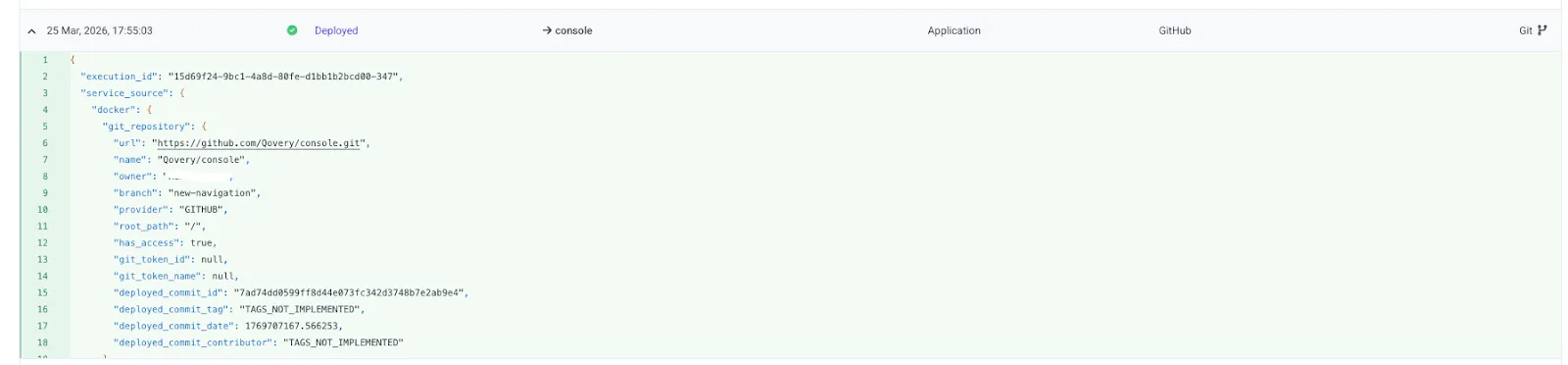
Unified Traceability: Every deployment across all environments is automatically logged and linked to Git metadata, providing a complete lifecycle history.
Access Governance: Centralized Role-Based Access Control (RBAC) defines who can modify infrastructure, with all actions captured for regulatory export.
Infrastructure Control: Qovery automates the orchestration while the data and Kubernetes clusters remain within your own VPC, supporting data residency and security mandates.
Conclusion: Supporting Regulatory Compliance
In a DORA-regulated environment, compliance is an architectural property, not a documentation exercise.
While GitOps provides the foundation, Qovery makes it operational at scale. By shifting from manual evidence collection to automated enforcement, fintech teams move beyond reactive audits to a system that is compliant by design.
Frequently Asked Questions (FAQs)
1. Why are manual audits a liability for fintech teams under DORA?
Manual audits are slow and resource-heavy, consuming up to 60% of a compliance team's time just for evidence collection. This delays product launches, increases operational risk, and leaves organizations vulnerable to regulatory gaps.
2. How does GitOps create an automated audit trail?
By storing Kubernetes manifests and environment configurations in Git, every change is recorded in the version control log. This provides auditors with an exact, immutable history of infrastructure modifications, including timestamps and authorized committers.
3. What is drift detection, and why is it vital for compliance?
Drift detection involves monitoring for "manual drift"-untracked changes made directly to live environments via manual overrides. GitOps continuously compares the live cluster state to the approved Git repository, automatically identifying and reverting unauthorized changes to maintain a compliant state.
4. How does Qovery help achieve DORA compliance?
Qovery provides a unified management layer that automatically logs every deployment across environments, enforces centralized Role-Based Access Control (RBAC), and orchestrates infrastructure while keeping data and clusters securely within your own VPC.
Melanie leads content at Qovery. She covers platform engineering trends, Kubernetes operations, FinOps, and the tools that help engineering teams ship faster.
Next step
Agents ship fast. Guardrails keep them safe.
Qovery ensures every agent action is scoped, audited, and policy-checked. Start deploying in under 10 minutes.