Looking to modernize your stack for AI agents? This comparison is part of our guide to Kubernetes for AI.
Key Points:
Prioritize Cloud Parity: Move beyond local speed by choosing a platform like Qovery that automates the link between local testing and production cloud Kubernetes, ensuring environment consistency across the entire team.
Ensure Cross-Platform Stability: Escape the macOS lock-in of OrbStack using open-source tools like Rancher Desktop and Podman Desktop to support all Windows, Mac, and Linux users.
Focus on Automation Over Manual Fixes: The most effective alternative is a platform (like Qovery) that automates infrastructure provisioning and environment lifecycle management, eliminating operational toil instead of just optimizing a single developer's laptop.
OrbStack has delivered a major upgrade for local container performance, especially for macOS developers. Its speed and low resource consumption are fantastic, but for DevOps and Platform Engineering teams, the criteria extend far beyond local developer happiness.
When evaluating a tool for your pipeline, the focus shifts to:
Environment Parity: Does the local setup mirror production infrastructure (usually Kubernetes)?
Cross-Platform Stability: Will the tool work reliably for the whole team (Windows, Mac, Linux)?
Security Model: Is the container runtime daemonless, rootless, and safe for CI/CD environments?
Kubernetes Management: How well does it simplify and manage the local Kubernetes cluster?
If your current container tooling is causing friction between development and operations, it's time to move past local speed and adopt a solution built for the entire DevOps lifecycle.
Why DevOps Teams Look Beyond OrbStack
OrbStack excels in its niche, but it presents several key friction points for a holistic DevOps workflow:
macOS-Only Constraint: This is the most significant hurdle. A DevOps toolchain requires stability across all environments, including Windows and Linux CI runners.
Commercial Licensing: For larger organizations, the paid commercial tier introduces budget complexities that open-source alternatives avoid.
Local-Only Focus: OrbStack is purely a local runtime and doesn't offer features to manage or abstract cloud infrastructure, requiring teams to manually bridge the gap to production Kubernetes.
The Best 8 OrbStack Alternatives for Production-Focused Teams
1. Qovery: The Best Alternative for Kubernetes Automation & Environment Parity
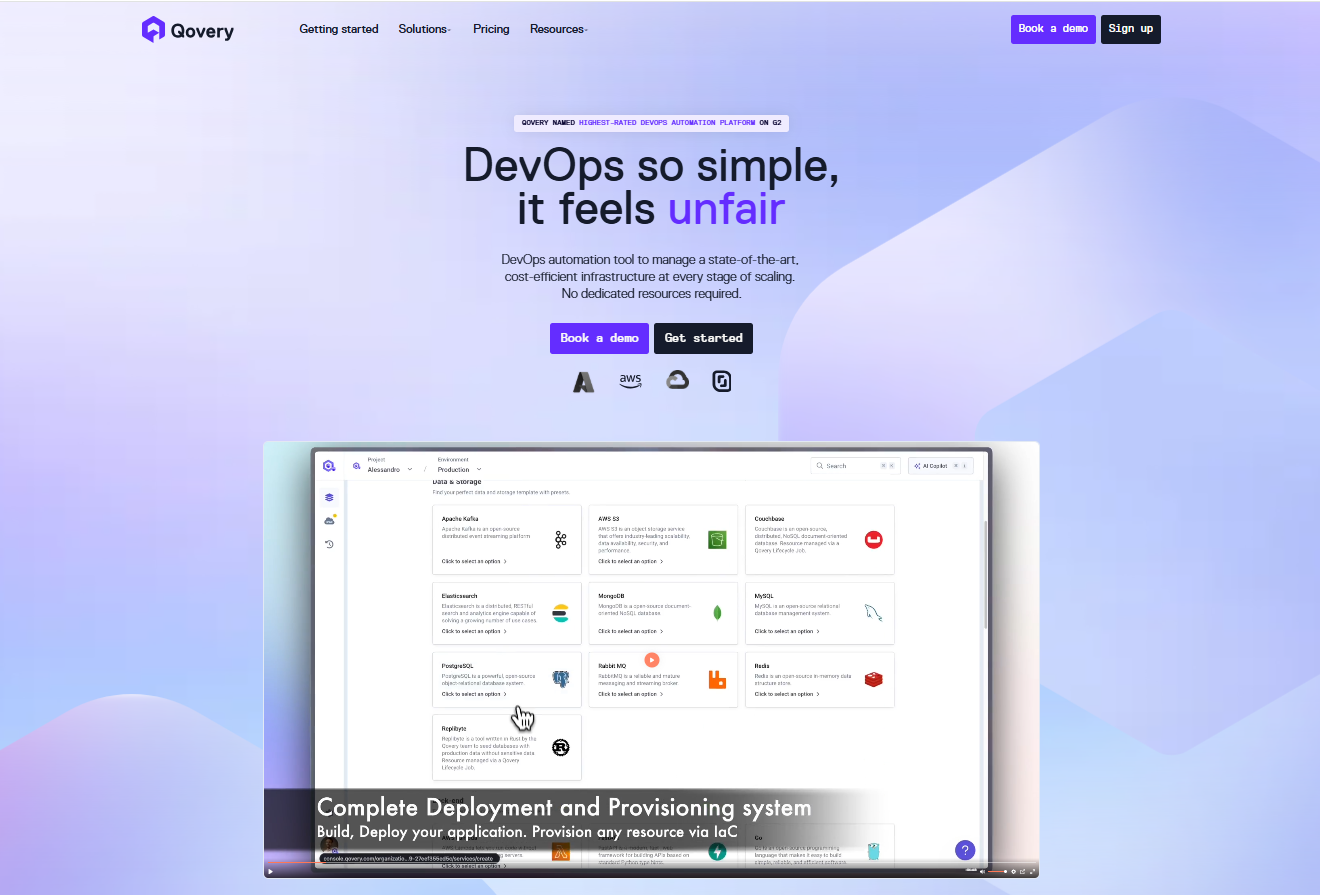
Qovery is not just a container tool; it is a DevOps Automation Platform that runs on your cloud (AWS, GCP, Azure). For DevOps teams, its primary value is eliminating the operational burden of managing Kubernetes and ensuring the local environment perfectly matches the cloud environment.
Feature
Qovery: DevOps Automation Platform
OrbStack: Local Container Runtime
Primary Goal
Automate application deployment and scaling on your cloud (AWS, GCP, Azure).
Maximize performance for running Docker and Linux VMs on macOS.
Core Technology
Abstraction layer (Platform) built on top of Kubernetes and Terraform/Cloud APIs.
Custom, highly optimized Virtualization stack for Apple Silicon.
Local Mode
Yes (Local Mode provides cloud parity).
Yes (Provides super-fast Docker/K8s execution).
Production Use
Yes (Manages your production infrastructure and deployments).
No (Purely a local development tool).
Cross-Platform
Yes (CLI/Web-based control plane supports all OS environments).
No (Strictly macOS only).
Qovery: Pros for DevOps & Platform Engineers
Qovery Pros
True Cloud/Local Parity: The Local Mode uses the same declarative configuration as your cloud environments, eliminating configuration drift and debugging issues across environments.
Kubernetes Abstraction: It abstracts away the complexity of managing vanilla Kubernetes (EKS/AKS/GKE), cluster upgrades, and networking, freeing up DevOps time from maintenance tasks.
Security and Control (BYOC): By running the infrastructure on your own cloud account, you retain full ownership of data, IAM, VPCs, and compliance standards (SOC 2, HIPAA, GDPR), avoiding vendor lock-in and shared-runtime risks.
Infrastructure as Code (Terraform): It provides a Terraform provider and API for everything manageable via the UI, allowing Platform Engineers to integrate Qovery into existing IaC workflows.
Ephemeral Environments: Automates the creation and destruction of full-stack environments per Git branch/Pull Request, dramatically accelerating the testing and review process.
Qovery Cons
Flexibility Limitations: While simple, the platform uses opinionated defaults. Highly custom infrastructure, advanced networking, or non-standard workloads may require workarounds outside of Qovery's standard support.
2. Rancher Desktop
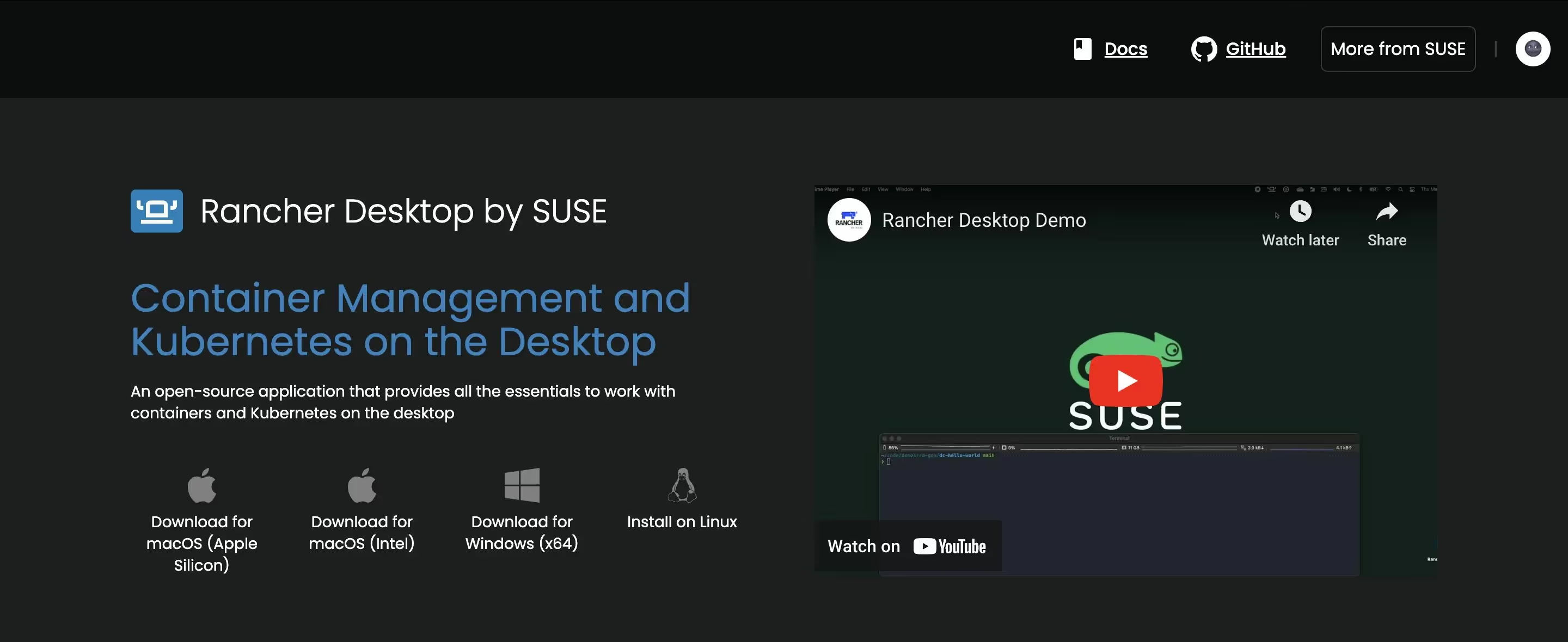
Rancher Desktop is a free, open-source project from SUSE that offers a simple way to run Kubernetes and containers across all major platforms. For DevOps, it provides the control and flexibility needed to run local Kubernetes clusters reliably.
Pros
Runtime Flexibility: Allows switching between Moby (Docker) and containerd, the industry-standard runtime used in production Kubernetes.
Fully Open Source: Eliminates proprietary licensing costs and provides full transparency into the source code, which is critical for enterprise security audits.
Cross-Platform Consistency: Available on Windows, macOS, and Linux, making it easy to standardize the local environment across a mixed-OS team.
Cons
Networking Complexity: Networking can be more complex to set up than Docker Desktop's default, sometimes requiring manual configuration via the underlying Lima/QEMU setup.
Less Polished UI: The user interface, while functional for managing settings and versions, is less refined than OrbStack or Docker Desktop.
3. Podman Desktop
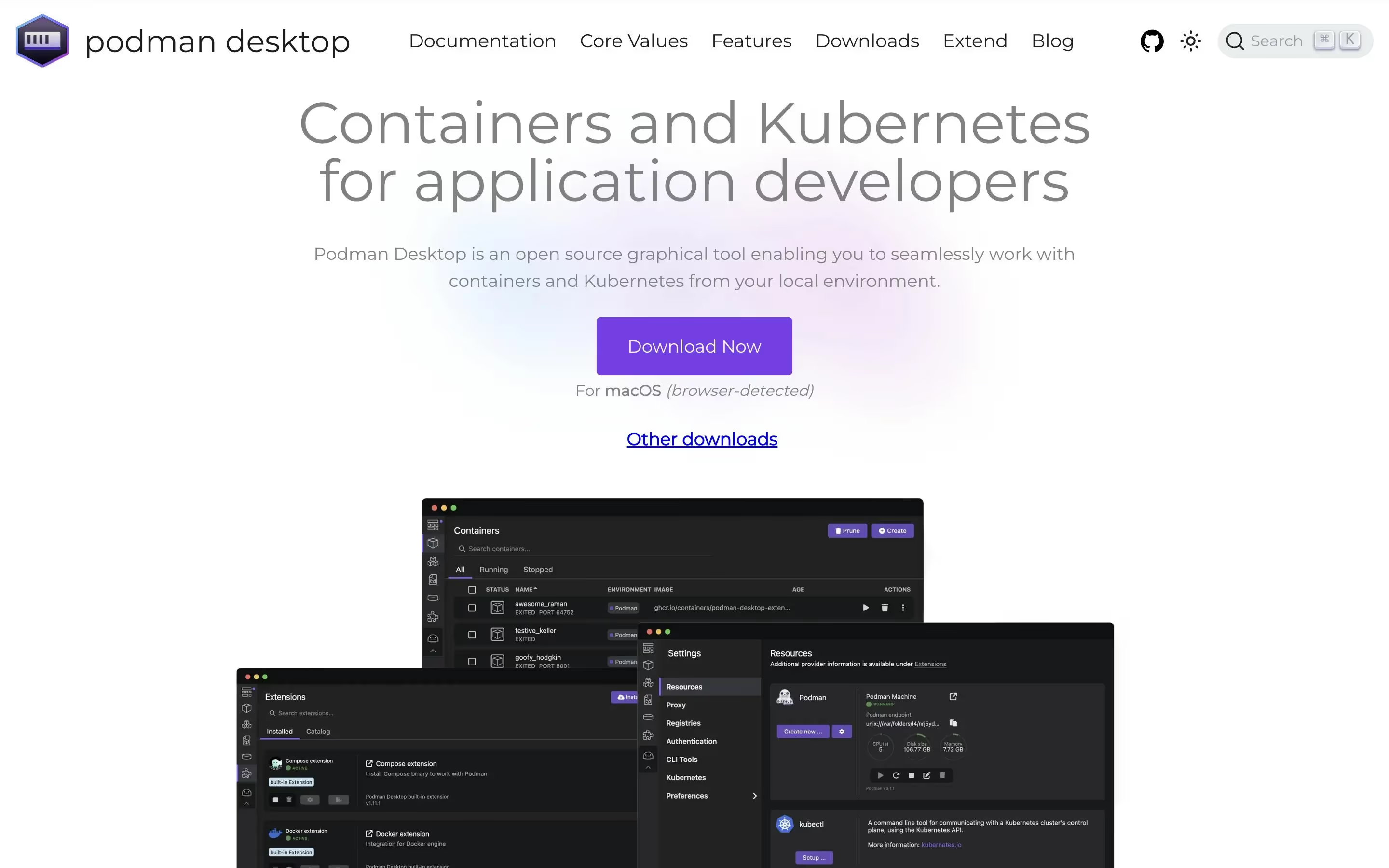
Built on the daemonless Podman engine, Podman Desktop is a direct answer to the security and resource concerns of traditional Docker daemon architectures. This makes it an attractive option for high-security environments and CI/CD pipelines.
Pros
Daemonless Architecture: Eliminates the central root daemon (a single point of failure), enhancing security and stability.
Rootless by Default: Containers run with user privileges, drastically reducing the risk of privilege escalation and improving security.
Kubernetes-Native: Uses the Pod concept natively and can generate Kubernetes YAML directly from running containers, simplifying the path to production Kubernetes.
Cons
Ecosystem Immaturity: The third-party ecosystem (plugins, tools) is smaller and less mature than Docker's, potentially requiring custom configuration for advanced integrations.
Migration Friction: While the CLI is compatible, edge cases like networking, registry authentication, and file permissions on bind mounts can require manual work during migration from Docker.
Orchestration: Lacks native support for legacy orchestration tools like Docker Swarm (though it handles Kubernetes via Pods).
4. Colima
Colima is the ultimate lightweight, terminal-focused solution. It leverages Lima to provide a Linux VM for containers on macOS and Linux. For DevOps, Colima's value lies in its minimal resource footprint and scripting capability for CI/CD.
Pros (Strengths for DevOps)
Minimalist and Fast: CLI-only approach eliminates GUI overhead, resulting in extremely fast startup and low resource consumption, perfect for automation and scripting.
Highly Configurable: Built on top of Lima, giving engineers precise control over the underlying Linux VM (CPU, memory, containerd/Docker runtime choice).
Open Source & Cross-Platform: Works well on both macOS and Linux.
Cons (Weaknesses for DevOps)
No Graphical Interface: Completely lacks a UI, which can be a barrier for new developers or users less comfortable living in the terminal.
Incomplete Solution: Requires separate installation of the Docker CLI/Nerdctl and manual configuration for advanced features like docker compose.
Windows Support: Requires setting up WSL2 manually, making the Windows installation path much more complex than with Rancher or Podman Desktop.
5. Minikube
Minikube is less of a general container tool and more of a dedicated local Kubernetes cluster manager. It is the standard choice for testing specific Kubernetes versions or features.
Pros (Strengths for DevOps)
Feature-Rich K8s Environment: Provides a full-featured, local Kubernetes cluster that supports addons, kubectl commands, and various drivers (Docker, VM, Podman).
Ideal for K8s Testing: Perfect for developers and Platform Engineers who need to test Helm charts, operators, or service mesh configurations in an isolated environment.
Extensive Add-ons: Features simple commands to enable add-ons like a dashboard, ingress, and monitoring tools.
Cons (Weaknesses for DevOps)
Heavier Footprint: Due to the overhead of running a full Kubernetes control plane, it is heavier and more resource-intensive than basic container runtimes.
Slower Startup Time: Bootstrapping the Kubernetes cluster can take longer than simply starting a container runtime.
Not for Simple Containers: It is overkill for developers who only need to run a single container or build an image.
6. Buildah
Buildah is a specialized tool dedicated only to OCI-compliant image building. It is a critical component for secure, daemonless CI/CD pipelines.
Pros (Strengths for DevOps)
Daemonless & Rootless Builds: Eliminates the security risk of running the build process with root privileges or reliance on a central daemon.
Fine-Grained Control: Allows direct, layer-by-layer manipulation of the image, enabling the creation of extremely minimal, highly optimized images.
Cons (Weaknesses for DevOps)
Single-Purpose Tool:Cannot run containers on its own. It must be paired with a separate container runtime (like Podman or Nerdctl) to form a complete workflow.
Steeper Learning Curve: Requires a slightly different mental model than the simple docker build command, offering flexibility but adding complexity.
7. Nerdctl
Nerdctl is a Docker-compatible CLI for containerd. Since containerd is the industry-standard runtime powering Kubernetes, Nerdctl is the most direct path to production parity without using a proprietary engine.
Pros (Strengths for DevOps)
Native containerd Interface: Gives developers a familiar CLI interface while leveraging the lightweight, high-performance runtime used by Kubernetes.
Full Compose Support: Supports nerdctl compose, making it easy to migrate complex multi-container application definitions from Docker.
Advanced Image Features: Supports modern features like lazy image pulling (eStargz), image encryption, and IPFS distribution.
Cons (Weaknesses for DevOps)
Requires Setup: As a CLI wrapper, it often requires manual setup of the underlying containerd runtime and related tools, making it less "out-of-the-box."
Fewer Enterprise Features: Lacks the higher-level monitoring, volume management, and GUI features found in solutions like Rancher Desktop or Qovery.
8. Multipass
Multipass is a simple VM manager that quickly spins up Ubuntu cloud instances. It replaces the virtualization layer of tools like Docker Desktop, giving the user full control over the host environment.
Pros (Strengths for DevOps)
Full VM Control: Provides complete control over the underlying Linux VM, which is necessary for testing complex networking, kernel modules, or low-level configurations.
Native Ubuntu: Ideal for teams that standardize their applications on Ubuntu and need their local dev environment to perfectly match the production OS.
Cross-Platform: Works on macOS, Windows, and Linux.
Cons (Weaknesses for DevOps)
Manual Container Setup: It is not a container tool. The user must manually install and configure the Docker Engine or other runtimes inside the launched Ubuntu VM.
Higher Management Overhead: Requires managing the VM itself (CPU/RAM allocation, updates, networking, SSH) rather than relying on an automated tool to handle these tasks.
Slower Workflow: The process of launching and configuring the VM is slower and more cumbersome than using a single, integrated container tool.
Agents ship fast. Guardrails keep them safe.
Qovery ensures every agent action is scoped, audited, and policy-checked. Start deploying in under 10 minutes.
While OrbStack rightfully earns praise for optimizing the macOS developer experience, the decision criteria for Platform and DevOps teams must extend far beyond a single developer's laptop speed. The search for alternatives is fundamentally a strategic pivot away from managing containers and toward automating the entire software delivery lifecycle.
The market offers excellent point solutions for specific problems:
For Security:Podman Desktop provides the most secure, daemonless alternative for CI/CD environments.
For Cross-Platform K8s:Rancher Desktop is the strongest open-source standard for multi-OS development teams focused on Kubernetes.
For Minimalists:Colima is the ideal choice for scripting and resource-constrained environments.
However, if your primary challenges are environment drift, cloud complexity, and operational toil, you require a solution that manages the entire scope from local development to production.
The true next step is adopting a DevOps Automation Platform like Qovery. By using the same declarative configuration for Local Mode and for deploying to your own cloud infrastructure (EKS, GKE, AKS), Qovery eliminates the operational friction that costs engineering teams countless hours. It allows you to leverage the power of Kubernetes and IaC without dealing with the underlying complexity.
The era of stitching together separate local tools and cloud APIs is ending. Choose an alternative that provides not just a faster runtime, but a unified, automated path to production.
Two reasons come up most. OrbStack is macOS-only, so it cannot standardize a team on mixed Linux and Windows machines. And it solves local container speed, not the gap between what runs on a laptop and what runs in production, which is where most environment bugs actually originate.
What is the best free alternative to OrbStack?
Rancher Desktop, an open-source project from SUSE that runs on macOS, Windows and Linux. It lets you switch between the Moby and containerd runtimes, which matters because containerd is what production Kubernetes actually uses. The trade-off is networking, which needs more manual setup than Docker Desktop's defaults.
Does OrbStack work on Windows or Linux?
No. OrbStack is macOS-only, which is its single biggest constraint for teams. If you need one local container tool across a mixed fleet, Rancher Desktop, Podman Desktop or Docker Desktop are the cross-platform options.
What is the difference between a local container tool and a cloud environment platform?
A local tool makes containers fast on your machine. It has no opinion about whether that configuration matches production. A cloud environment platform provisions real environments from the same declarative configuration your production uses, which removes the drift class of bug rather than making the local half faster.
Can you get production parity without running Kubernetes locally?
Yes, and it is usually the better path. Running a local Kubernetes cluster consumes a lot of laptop resources and still diverges from production networking, storage and IAM. Provisioning a real ephemeral environment in the cloud from the same config gives closer parity than any local simulation.
Melanie leads content at Qovery. She covers platform engineering trends, Kubernetes operations, FinOps, and the tools that help engineering teams ship faster.
Next step
Agents ship fast. Guardrails keep them safe.
Qovery ensures every agent action is scoped, audited, and policy-checked. Start deploying in under 10 minutes.