
Morgan Perry
Co-founder
Morgan co-founded Qovery and leads engineering. He writes about Kubernetes architecture, DevOps best practices, and building resilient infrastructure at scale.
8 Cloud Governance Automation Tools for Multi-Cloud Kubernetes in 2026
Compare cloud governance automation tools for multi-cloud Kubernetes across policy enforcement, SOC 2 and HIPAA automation, multi-cloud coverage, and CI/CD integration.
10 best Red Hat OpenShift alternatives to reduce licensing costs
For years, Red Hat OpenShift has been the safe choice for heavily regulated, on-premise environments. It operates as a secure fortress. But in the public cloud, that fortress acts as an expensive prison. Paying proprietary per-core licensing fees on top of your standard AWS or GCP compute bill is a redundant "middleware tax." Escaping OpenShift requires decoupling your infrastructure from your developer experience by running standard, vanilla Kubernetes paired with an agentic control plane.
Top 10 Rancher alternatives in 2026: beyond cluster management
Rancher solved the Day-1 problem of launching clusters across disparate bare-metal environments. But in 2026, launching clusters is no longer the bottleneck. The real failure point is Day-2: managing the operational chaos, security patching, and configuration drift on top of them. Rancher is a heavy, ops-focused fleet manager that completely ignores the application developer. If your goal is developer velocity and automated FinOps, you must graduate from basic fleet management to an intent-based Kubernetes Management Platform like Qovery.
What is Kubernetes? The reality of Day-2 enterprise fleet orchestration
What Kubernetes is and what it does, why provisioning one cluster is the easy part, and what running a fleet actually demands.
10 best practices for optimizing Kubernetes on AWS
Optimizing Kubernetes on AWS is less about raw compute and more about surviving Day-2 operations. A standard failure mode occurs when teams scale the control plane while ignoring Amazon VPC IP exhaustion. When the cluster autoscaler triggers, nodes provision but pods fail to schedule due to IP depletion. Effective scaling requires network foresight before compute allocation.
Day-0, Day-1, and Day-2 operations: the enterprise guide to Kubernetes lifecycles
Day-0, Day-1 and Day-2 operations explained, what each phase actually requires, and why Day-2 is where most Kubernetes cost hides.
Scaling Kubernetes on AWS: Day-2 operations and fleet management
Scaling Kubernetes on AWS requires balancing node-level elasticity with pod-level demands. A critical architectural oversight occurs when teams misconfigure the Horizontal Pod Autoscaler (HPA) and Vertical Pod Autoscaler (VPA) to compete over the same metrics, causing scaling thrash. Effective Day-2 operations demand standardizing these configurations across your fleet to prevent runaway cloud costs.
Kubernetes multi-cluster: the Day-2 enterprise strategy
When a multi-cluster Kubernetes architecture is worth it, what it costs operationally, and how to decide between one cluster and many.
3 ways to run Kubernetes on AWS: EKS, self-managed, and Fargate
Choosing how to run Kubernetes on AWS dictates your operational burden for years. A standard failure mode is defaulting to Fargate to avoid managing EC2 instances, only to discover it lacks DaemonSet support. If your observability stack relies on node-level agents, Fargate forces a massive architectural rewrite to inject sidecars into every pod.
Kubernetes architecture explained: enterprise fleet operations and core components
Kubernetes architecture explained: how the control plane, etcd, kube-apiserver and worker nodes fit together, and what breaks at fleet scale.
Kubernetes ephemeral environments: Day-2 automation for multi-cluster fleets
Ephemeral environments in Kubernetes are isolated, temporary deployment spaces used to validate features before production. While they accelerate development, manually provisioning and destroying them via CI/CD scripts creates severe Day-2 DevOps toil and orphaned cloud costs. Enterprise scale requires an agentic control plane to automate this lifecycle.
Kubernetes vs. Docker: escaping the complexity trap in 2026
Docker is a containerization engine used to package applications and dependencies into standardized images. Kubernetes is the orchestration platform that deploys, scales, and manages those Docker containers across enterprise fleets. While Docker solves Day-0 packaging, raw Kubernetes introduces severe Day-2 operational toil, requiring agentic abstraction to manage configurations and FinOps globally.
9 reasons to use or avoid Kubernetes for your dev environments
Using Kubernetes in development environments creates exact architectural parity with production, eliminating late-stage deployment bugs. However, maintaining discrete developer clusters manually causes massive cloud waste and configuration drift. Enterprise teams use agentic platforms to provision automated, ephemeral preview environments that right-size costs automatically.
Kubernetes vs. OpenShift (and how Qovery simplifies it all)
Stuck between Kubernetes and OpenShift? Discover their pros, cons, differences, and how Qovery delivers automated scaling, simplified deployments, and the best of both worlds.
Rancher vs. OpenShift (and why Qovery might be the accelerator)
Comparing Rancher vs. OpenShift for Kubernetes management? Discover their pros, cons, and why Qovery offers a simpler, cost-effective alternative for growing teams.
VMware Tanzu vs. Red Hat OpenShift (and why Qovery is the fast track)
Comparing VMware Tanzu vs. Red Hat OpenShift for enterprise Kubernetes? Explore their features, pros, cons, and discover why Qovery is the smarter alternative for rapid application delivery.
Kubernetes liveness probes: an enterprise guide to day-2 reliability
How Kubernetes liveness probes work, how they differ from readiness probes, and how to configure them without causing restart loops.
Top 8 Kubernetes aternatives: evaluating control planes, caas, and managed fleets
Eight Kubernetes alternatives compared across three categories: agentic control planes, managed Kubernetes and Container-as-a-Service.
10 best container management tools for the Kubernetes era
Ten container management tools compared for Day-2 operations, from Docker-focused UIs to full Kubernetes control planes.
Kubernetes deployment errors: how to fix the top 8 configuration challenges
Troubleshooting Kubernetes deployments usually devolves into a desperate hunt through terminal outputs. A standard failure occurs when teams copy and paste liveness probes exactly mirroring their readiness probes. If a backend struggles under heavy load, the liveness probe fails, the kubelet violently restarts the pod, and the cascading failure takes down the entire service.
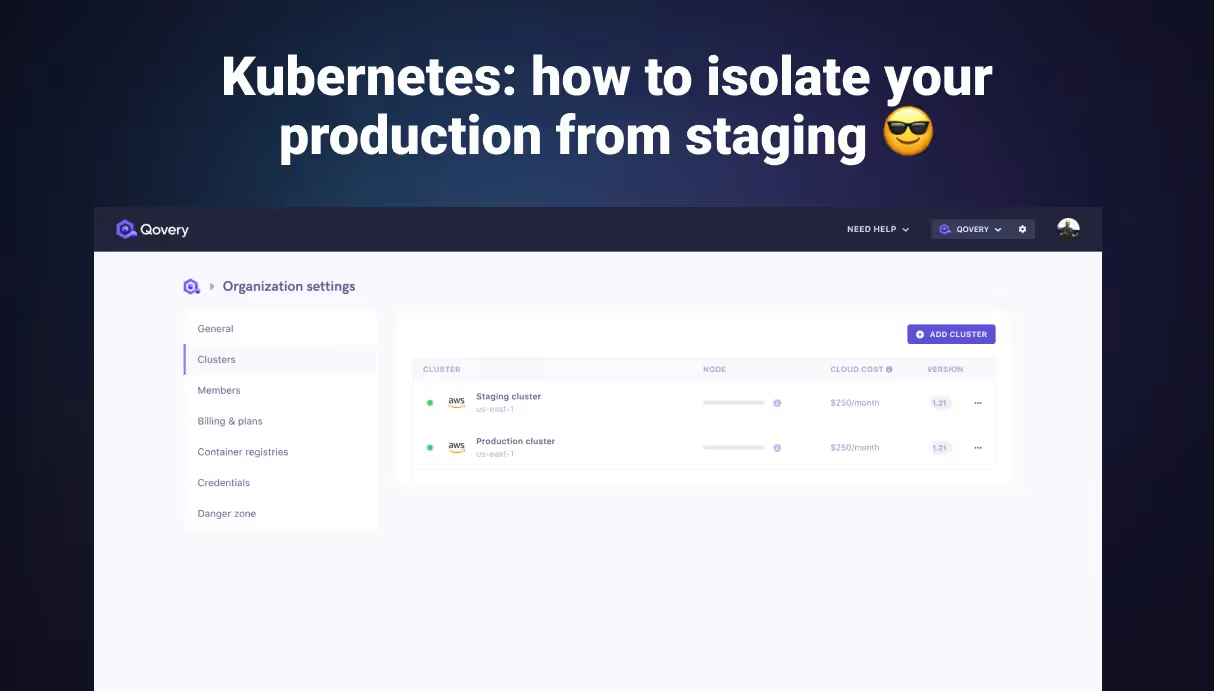
Kubernetes in production: why you must separate staging and prod
Organizations frequently attempt to save cloud infrastructure costs by packing staging and production workloads into the same cluster, relying purely on namespaces for separation. A developer inevitably deploys a faulty NetworkPolicy or an aggressive load test in the staging namespace. Because the cluster shares a single control plane, this exhausts the API limits and takes the production environment offline simultaneously. Physical cluster separation is the only functional boundary.
Kubernetes cost optimization: agentic FinOps for enterprise fleets
The three pillars of Kubernetes spend (Compute, Network, and Storage) compound rapidly at enterprise scale. While manual cost-cutting works for a single cluster, managing 1,000+ clusters requires an agentic FinOps approach. By automating resource right-sizing, Spot instance orchestration, and idle environment shutdowns, organizations can eliminate cloud waste without sacrificing production stability.
Kubernetes ConfigMaps: Day-2 configuration for multi-cluster fleets
Kubernetes ConfigMaps decouple non-sensitive configuration data from container images, allowing platform teams to inject environment-specific variables dynamically. At a fleet scale, manually updating ConfigMaps via kubectl creates severe configuration drift; enterprise architectures require an agentic control plane to automate and standardize these deployments across multiple clusters.
10 Best CI/CD Platforms for DevOps Teams: Automate Pipelines at Scale
Ten CI/CD platforms compared for DevOps teams, covering pipeline speed, Kubernetes deployment, total cost of ownership and lock-in.
The Top 8 Tools to Build a Zero-Toil PaaS on Your Cloud
Stop managing K8s complexity. Discover the top 8 platform tools (Qovery, Rancher, Dokku) that let you build a customizable, zero-maintenance PaaS on your cloud.
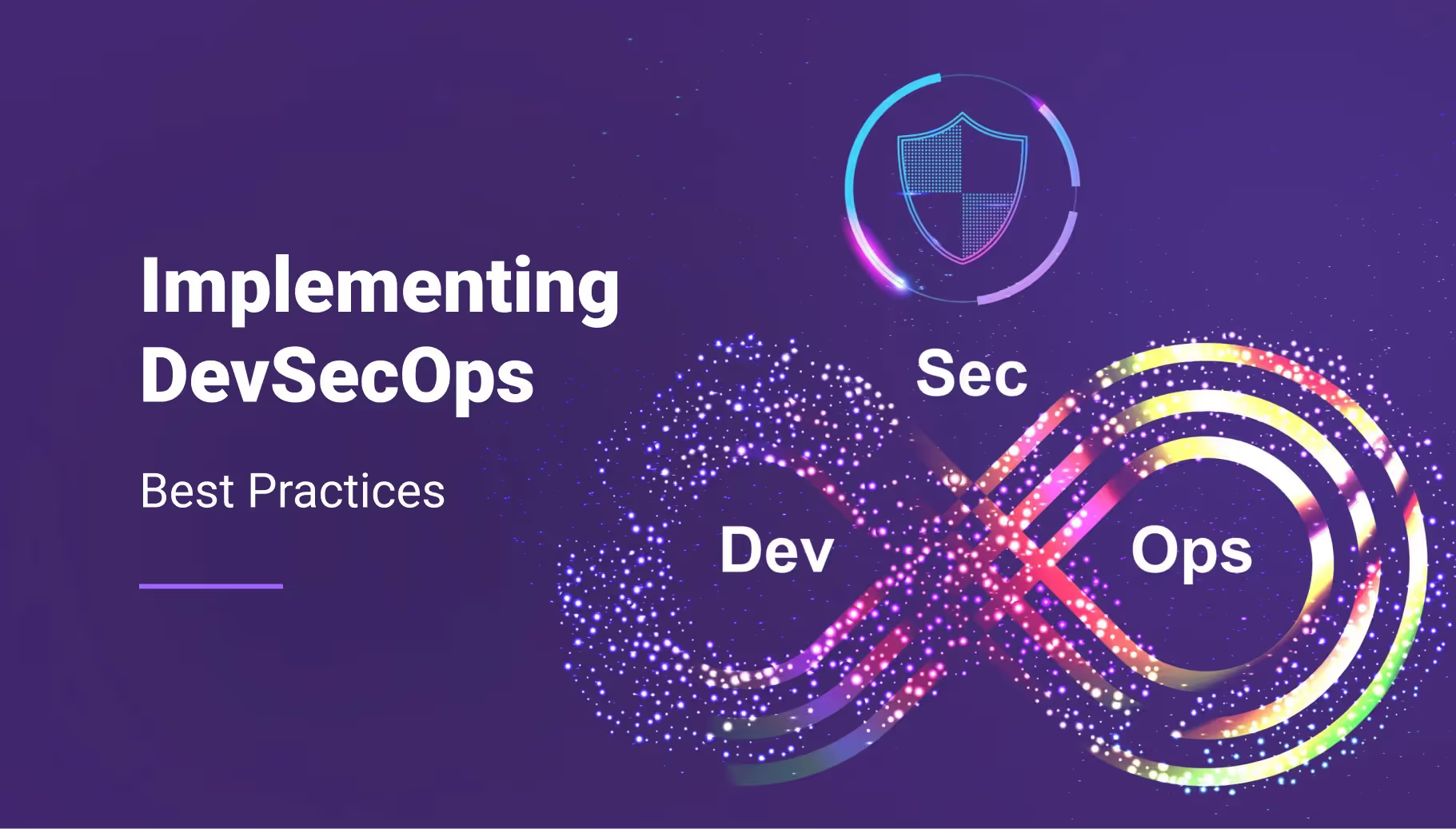
6 Best Practices to Automate DevSecOps in Days, Not Months
Six DevSecOps practices that work: shifting security left, SAST and DAST in the pipeline, securing CI/CD itself, and where scanning belongs.
The 6 Best GitOps Tools for Developers
Discover the top 6 GitOps tools to streamline your development workflow. Compare Qovery, ArgoCD, GitHub Actions, and more to find the perfect solution for automating your infrastructure and deployments.
AWS Production Deployment Checklist: The 4 Pillars for Stability and Scale
AWS Production Deployment Checklist: Ensure stable, scalable deployments. Follow this four-pillar guide covering CI standards, IaC for CD, integrated DevSecOps, and proactive application monitoring.
AWS Migration Checklist for Startups: 10 Actionable Best Practices
AWS Migration Success: Use this 10-point checklist to build a scalable and secure AWS foundation. Mandate IaC, implement Auto Scaling, enforce strict IAM security, and optimize costs from day one.
6 Best AWS Deployment Services to Consider
Six ways to deploy on AWS compared, from App Runner and Elastic Beanstalk to EKS, CloudFormation and Proton, and who each one suits.
Top 5 AWS Services Every Developer Should Know
The AWS services worth knowing across CI, CD, security and monitoring, and how they fit together into a production-ready workflow.
10 Best AWS Elastic Beanstalk Alternatives: Outgrow the Vendor Cage, Gain Modern DevOps Control
Elastic Beanstalk is too slow and rigid. Compare alternatives for superior flexibility, faster deployments, and robust cost control on your cloud.
Kubernetes cloud migration strategy & best practises
Master your Kubernetes migration strategy with this expert guide. Learn the critical planning phases, mitigate major risks (data, security, dependencies), and see how Qovery simplifies automation and compliance for a fast, successful, and reliable transition.

10 Best AWS ECS Alternatives: Trade Cloud Lock-In for True Multi-Cloud Flexibility
Ditch AWS lock-in. Compare the top ECS alternatives that simplify K8s deployment, automate DevOps, and enable true multi-cloud strategy.
10 Best EKS Alternatives: Ditch Cluster Complexity and Deploy K8s Simply
Stop drowning in EKS YAML. Compare the top EKS alternatives that simplify Kubernetes operations, reduce costs, and accelerate deployment.

Top 5 Crossplane Alternatives: Simplify Your Control Plane and Ditch the Boilerplate
Go beyond Crossplane's boilerplate. Discover IaC alternatives that simplify the control plane and fully automate multi-cloud infrastructure.
Migrating from ECS to EKS: A Complete Guide
Planning your ECS to EKS migration? Learn the strategic business case, navigate the step-by-step roadmap, and avoid common pitfalls. Discover how Qovery automates EKS complexity for a seamless transition.
Cloud Development Environments vs. Cloud Deployment Environments: Everything You Need to Know
Cloud development vs cloud deployment environments: what each one is for, how they differ, and why most teams end up needing both.
10 Docker Desktop Alternatives: Escape Licensing Fees & Boost Local Dev Performance
Stop paying licensing fees. Explore the best Docker Desktop alternatives that boost local dev speed and offer true Linux compatibility.
Traditional Managed Services vs. DevOps Automation Platforms: A Comprehensive Comparison
Infrastructure management is critical for companies building and scaling applications. Traditional managed services (MSPs) handle these tasks externally but often come with high costs, slow execution, and limited flexibility. For teams needing control, speed, and efficiency, DevOps automation platforms might offer a much better alternative. Let's compare these two approaches to identify the best option in terms of simplicity, developer experience (DX), time efficiency, operational and financial costs, and support.

Guide to Cloud Migration: From PaaS to IaaS
For scaling businesses, transitioning from PaaS (Platform as a Service) to IaaS (Infrastructure as a Service) is less about a choice and more about necessity. Staying on PaaS too long can result in skyrocketing costs, limited flexibility, and performance bottlenecks - challenges that only grow as your workloads and team scale. This guide breaks down the essential steps for a successful migration to cloud providers like AWS, GCP or Azure, highlighting common pitfalls, and offers best practices to help you navigate the transition effectively.

Invisible Automation: The Best Tools Are The Ones You Forget About
I recently had a conversation with one of our customers at AWS re:Invent that made me rethink the true value of automation. This customer told me, “You’ve automated so much for us that we almost forget about Qovery. Nobody even asks how to do things anymore.” That statement stuck with me. It highlighted the point that true automation isn’t about making developers think about the tools they’re using-it’s about seamlessly handling tasks so well that they become invisible. This got me thinking: This is exactly the kind of automation every team should strive for.
The 3 Best Alternatives to EKS Auto Mode
Managing Kubernetes clusters has always been a significant challenge. AWS’s recent announcement of EKS Auto Mode aims to simplify this by automating key operational tasks like compute scaling, networking, and storage management. While it’s a step forward for reducing complexity, it doesn’t address all the unique needs of growing startups and mid-sized companies. This guide evaluates the three best options, comparing their key features to help you decide which platform aligns with your technical and business priorities.

Need for Automation: How to Scale Infrastructure Effectively
As businesses scale, managing infrastructure becomes increasingly complex and distributed, leading to challenges in consistency, performance, and security. Manual configurations and outdated practices can no longer meet the demands of today’s highly competitive businesses. To tackle these issues, adopting a phased approach; Day 0, Day 1, and Day 2; provides a practical roadmap for scaling infrastructure automation effectively. Each phase addresses specific challenges and lays out actionable strategies to simplify operations, improve performance, and enhance security. Let's explore these phases in detail along with practical insights for teams to build, scale, and optimize infrastructure without requiring deep DevOps expertise.
Autoscaling Amazon EKS with Karpenter: A Step-by-Step Guide
Managing resource scaling in EKS clusters can quickly become complex, especially with fluctuating workloads. Traditional autoscaling solutions often require predefined configurations, which can lead to inefficiencies and unnecessary costs. This is where Karpenter comes in-a powerful, open-source project designed to dynamically manage and scale nodes in response to real-time application demands. By automatically provisioning resources exactly when they’re needed, Karpenter offers a more streamlined, efficient approach to scaling. Let's discuss Karpenter’s standout features and benefits, and we'll walk you through a step-by-step guide to deploying it on your EKS cluster.
AWS vs GCP vs Azure: Which Cloud Platform is Best for Mid-Size Businesses?
AWS vs GCP vs Azure compared on pricing, instance options, compliance and security, with guidance for mid-sized engineering teams.
IT Infrastructure Management: Best Practises For Startups
Effective IT infrastructure management is essential for startups aiming for operational excellence and sustainable growth. A well-structured infrastructure lays the groundwork for seamless operations, scalability, and competitive edge. Today, we’ll break down essential best practices for managing your IT infrastructure effectively-providing practical insights to help you create a resilient and scalable foundation for your startup. Let’s get started!
When to Hire Your First DevOps Engineer: A Startup Guide
As your startup grows, infrastructure and deployment get more complex, raising a key question: “Do we need a DevOps engineer?” While automation tools can handle many tasks early on, there comes a point when manual intervention becomes necessary to scale efficiently and securely. This guide will help you assess when it’s time to hire your first DevOps engineer, the key responsibilities they bring, and alternatives that can delay the need for a full-time hire.
DevOps Maturity Assessment: A CTO’s Guide
DevOps isn’t just a buzzword; it’s a crucial framework that can make or break your ability to deploy software effectively. As a CTO, it’s essential to gauge how well your team is performing in their DevOps practices. This isn’t about criticism-it’s about pinpointing where you are and plotting a course for where you need to be. This guide will help you assess your team’s DevOps maturity, understand its impact on your projects, and find practical ways to enhance your processes for better results.
DevOps Roadmap Strategy: Assessment and Implementation Plan - A CTO Guide
Build a high-impact DevOps Roadmap. Learn the 4 key steps: audit your tech stack for debt, define a skills matrix, implement scalable automation, and assess your maturity. Accelerate your strategy with Qovery.
The Essential Guide to Cloud Migration Planning
Cloud migration is the process of moving your infrastructure, applications, and data to the cloud. While the potential benefits-like cost savings, scalability, and modernization-are significant, the risks are just as high if you don’t have a solid plan in place. Without clear strategies, you could face unexpected costs, technical challenges, and security issues. As the cloud continues to evolve, having a well-thought-out migration plan isn’t just recommended-it’s essential. Let's break down the critical steps for successful cloud migration and how to avoid common pitfalls.
DevOps Checklist for Startups: Mastering Scale Without Dedicated Staff
DevOps Checklist for Startups: Evaluate your team's readiness across 7 key pillars: Culture, Automation, Measurement, and Process. Build scalable practices and accelerate growth even without dedicated DevOps staff.
DevOps for Startups: Best Practices for Success
Startups face unique challenges in their journey, including tight budgets, rapid development cycles, and limited resources. In this high-pressure environment, DevOps practice emerges as a crucial framework. Contrary to the misconception that DevOps is only suited for large enterprises, it offers significant advantages for startups by streamlining processes, enhancing product quality, and accelerating time-to-market. I’ll show you why DevOps is especially advantageous for startups, dispelling common myths and outlining best practices for implementing and managing DevOps in a startup environment.
Dos and Don’ts When Hiring Your First DevOps Engineer
DevOps is crucial for growing organizations, enhancing collaboration between development and operations teams to expedite deployment cycles and improve overall efficiency. Selecting the right DevOps engineer for your team, especially when new to DevOps, is vital. A poor hiring decision can significantly impact your organization, resulting in higher costs, inefficiencies, and missed opportunities. Let's address this challenging task by sharing essential aspects of hiring your first DevOps engineer, including key competencies, dos and don’ts, and timing considerations.

The Hidden Costs of PaaS: Everything You Should Know
In the past decade, Platform as a Service (PaaS) has revolutionized the way companies deploy and manage applications. With promises of scalability, operational ease, and cost efficiency, PaaS attracted myriad businesses looking to leverage cloud technologies and reduce time to market. However, as these platforms have matured, many organizations have realized that PaaS, while powerful, is not without its pitfalls. Let's dig into the hidden costs associated with PaaS solutions, offering insights into how companies can better manage and anticipate these expenses to optimize their cloud strategies.
Building a DevOps Culture: Tips for Small Engineering Teams
DevOps is essential for engineering teams looking to enhance collaboration, speed up development cycles, and maintain high-quality software delivery. Building on our previous discussion of common DevOps mistakes startups make, let's move on to ten practical strategies small engineering teams can adopt to foster a robust DevOps culture.
7 Common DevOps Mistakes to Avoid in 2026
Adopting DevOps practices can be a game changer for startups, offering a bridge between development speed and operational stability that can accelerate growth. Yet, many startups falter in their DevOps journey, making preventable errors that undermine their potential advantages. Let’s discuss seven common DevOps mistakes that startups make, providing practical insights on how to avoid these pitfalls and maximize the benefits of DevOps practices for startups.
3 Reasons to Migrate from Beanstalk to EKS
While AWS Elastic Beanstalk (EB) offers a convenient way to deploy applications, some limitations in customization and control can become a bottleneck for growing businesses. As the need for scalability, flexibility, and fine-grained management increases, Amazon Elastic Kubernetes Service (EKS) emerges as a compelling alternative. I’ll cover some of the key reasons for transitioning from Elastic Beanstalk to EKS, the key considerations during the migration process, and how to effectively manage the complexities of EKS.

11 Best Tools To Improve Your Developer Experience (DevEx)
Eleven tools that measurably improve developer experience, across project management, secrets, environments, APIs and observability.
What is Developer Experience (DevEx) and Why It Matters?
Developer Experience (DevEx) has rapidly gained attention and emerged as a pivotal factor influencing not only the efficacy of software creation but also the overall satisfaction and productivity of developers. But what exactly is DevEx, and why is it so crucial? In this article I will address the multifaceted nature of DevEx, exploring its significance, components, and practical strategies to enhance it.
Upgrading Hundreds of Kubernetes Clusters: Interview with Pierre Mavro, CTO of Qovery
n this interview, Pierre explains the process, tooling, and testing strategy in upgrading clusters at scale.
A Quick Technical Guide to Automating Kubernetes Deployments
Get a quick technical guide to automating Kubernetes deployments. Learn to use kubectl and YAML for consistent application setup, updates, and rollbacks in your cluster.
Build vs Buy: When to Build or Buy an Internal Developer Platform
An Internal Developer Platform (IDP) is an ecosystem that empowers developers to manage the entire application lifecycle from development to deployment autonomously. As a vital component for organizations, the implementation of an IDP often presents a ‘Build vs. Buy’ dilemma: should you construct your own IDP, tailored to your unique needs, or would it be more efficient to purchase a pre-built solution? This decision is not a trivial one, and making the right choice can significantly impact your team’s productivity and your organization’s bottom line. In this article, we will conduct a transparent analysis of both options, exploring the benefits and challenges associated with each. We aim to provide you with comprehensive insights that can guide you in making the best choice for your team.

Qovery Named G2 Momentum Leader Winter 2024
We are thrilled to share the exciting news that Qovery's DevOps automation software has once again been recognized as a Momentum Leader for DevOps in the Winter 2024 Grid Report. This marks the third consecutive time we've received this prestigious acknowledgment, and we couldn't be more grateful for the ongoing support of our incredible community of users 🙏

KubeCon Europe 2024 - Meet the Qovery Team
Bonjour! We're thrilled to announce that Qovery will be a part of the Kubecon Europe 2024, happening from March 19th to 22nd, 2024, in the vibrant city of Paris! 🚀🇫🇷🥖
Kubernetes Tutorial for Developers
Welcome to our hands-on tutorial on Kubernetes, the powerful open-source platform often abbreviated as k8s. In this tutorial, we are diving into the world of container orchestration, simplifying the complexities, and making Kubernetes accessible for developers. Whether you are just starting out or looking to enhance your existing skills in Kubernetes, this guide is designed to walk you through the process step-by-step. We will cover the basics of setting up Kubernetes, deploying a simple "hello world" app, and understanding how to manage and scale your containerized applications with ease. Let's start with some of the challenges of Kubernetes followed by the steps to setup and deploy a simple Kubernetes application.

What is an Internal Developer Portal?
Imagine a central hub where your tech team finds all the tools and resources they need, organized and ready for action. This is exactly what the Internal Developer Portal offers, becoming a key factor in revolutionizing the way we build software today. In this article, we will explore how Internal Developer Portals revolutionize the development process by streamlining tasks, boosting collaboration, and customizing workflows. Get ready to discover how this powerful tool can drive your team's efficiency to new heights.
6 Essential Components of an Internal Developer Platform
Imagine a scenario where your developers spend less time waiting for resources and approvals, and more time focusing on the core aspects of building exceptional software. This vision becomes reality with the implementation of an internal developer platform (IDP), a revolutionary tool that acts as a catalyst for innovation within your organization. IDPs centralize key resources and automate workflows, empowering developers with self-service capabilities and promoting a more collaborative and efficient development environment. This empowers them to move faster, innovate more, and ultimately deliver superior software solutions. Let's explore six core elements that support successful IDPs and allow you to unlock the full potential of your development teams and drive your organization to the forefront of innovation.
The Internal Developer Platform Revolution: A CTO's Guide to Transforming Software Development
As a CTO, you need to come up with new strategies and tools to ensure that your company manages the rapidly changing world of software development. Platform Engineering and Internal Developer Platforms (IDPs) have become essential elements of this journey that change how software is developed and released. This guide will give you an in-depth understanding of Internal Developer Platforms (IDPs), showing you how they can significantly increase developer productivity and how important Platform Engineering is for handling these platforms well, all from the perspective of a CTO.
DevOps vs. Platform Engineering: What's the Real Difference?
DevOps is a culture, while Platform Engineering is a practice. Discover how these two concepts differ, how they complement each other, and why a strong platform can make your DevOps teams more productive.

7 Most Common Pitfalls When Choosing the Right Internal Developer Platform
Selecting the right Internal Developer Platform (IDP) is a critical decision that shapes the effectiveness of your software development team. An IDP empowers developers with the tools and environments necessary for efficient coding, testing, and deployment, resulting in a streamlined development workflow. However, a poor choice can lead to substantial setbacks, reducing productivity and overall business efficiency. In this article, we will discuss the most common mistakes to avoid when selecting an IDP. We will go through a practical use case for each mistake, followed by best practices to avoid this mistake in the first place.
From Development to Deployment: Streamlining Workflows with Internal Developer Platforms
Ever wondered how software development teams can efficiently tackle the complexities of modern development challenges? The answer lies in the Internal Developer Platforms (IDPs), a powerhouse of tools and capabilities for development and deployment. These platforms provide a comprehensive ecosystem for development and deployment, integrating key functionalities such as version control, CI/CD pipelines, container orchestration, and automated testing. In this article, we will discuss the challenges faced by traditional software development workflow. We will then walk through how the IDPs revolutionize this workflow by using the above-mentioned techniques.

Challenges to Anticipate When Transitioning to an Internal Developer Platform
Internal Developer Platforms (IDPs) are gaining significance in contemporary software development because they can transform an organization's software delivery by facilitating automation and productivity across large teams or by permitting smaller teams without dedicated DevOps engineers the ability to deploy at scale. The migration of existing projects, protocols, and infrastructure to the new platform can make the transition to an IDP challenging for businesses. A learning curve is also associated with IDP tools, processes, and cultural shifts for development teams. For maximizing the benefits of an IDP, cross-functional collaboration between development and operations teams (DevOps) is essential. In this article, we will discuss not only these challenges but also how to combat these challenges with best practices.
Customization vs. Standardization: Striking the Right Balance in Developer Platforms
Internal developer platforms (IDPs) have become a necessity for software development in today's ever-changing technological landscape. These platforms not only support engineering team velocity and business product strategies but also enhance communication and information flow, impacting successful product launches. The pressing question is whether a company should fully customize to improve the customer experience and satisfy specific business requirements or lean towards standardization to reduce time and costs. This decision between standardization and customization is crucial and exactly the focus of this article today. We will delve deep into the realm of IDPs, discussing the merits and difficulties of both approaches and advising businesses on how to find the optimal balance between the two.

Internal Developer Platform: What's the ROI?
Internal Developer Platform (IDP) is a game-changing innovation that has transformed the technology landscape. In the previous article, we discussed in detail the effectiveness of these developer platforms in terms of developer efficiency, faster product releases, frequent collaboration, etc. However, one aspect that is of paramount importance, especially from the business perspective, is the ROI. The first question any manager will ask is, "What will be the ROI of investing in an IDP"? And your response should be in numbers, of course. This is exactly what we will discuss today. Not only we will explore the meaning of ROI in the context of IDPs, but we will also go through how to measure the ROI, what constitutes a good ROI, and how to improve it. Let's start with the basics of ROI and IDP.

Security Considerations for Your Internal Developer Platform
In today's world, where cloud resources and data management tools play an increasingly critical role, the concept of an Internal Developer Platform (IDP) is gaining momentum. Imagine a platform where developers seamlessly design, build, and deploy applications. That's precisely the promise of IDPs. But here's the highlight: with great power comes greater responsibility. Security within IDPs isn't just an optional add-on; it's the core essence. This article is a guide for teams eager to strengthen their developer platforms. It journeys through the various aspects of IDP security, delving deep into its diverse world. From the fundamental principles of access control and Kubernetes management to the elevated considerations of building a security-centric organization culture, we've got it covered. Whether you're new to the IDP environment or a seasoned developer, our objective remains unchanged: to arm you with the knowledge to transform your developer platform into an impenetrable fortress.
5 Tips For Managing Your Internal Developer Platform
Internal Developer Platforms (IDPs) have become the cornerstone of efficient development, serving as the central hub where development teams access the tools and resources necessary for coding, testing, deploying, and maintaining software applications. As software development continues to evolve rapidly, IDPs are crucial in maintaining a competitive edge. This introduction sets the stage for the technical insights that will follow, sharing 5 tips for effective Internal Developer Platform management.
Amplifying Developer Efficiency: Leveraging Internal Developer Platforms for Optimal Performance
Learn how developers can enhance their efficiency and streamline software development processes by integrating internal developer platforms into their daily workflow. This will set the stage for product successes that have never been seen before.

Ephemeral Environments for Blue-Green Deployments: A Step-by-Step Guide
Blue-green deployments have emerged as a beacon for seamless updates in software development. By juggling two environments, blue (old) and green (new), changes are tested and rolled out with minimal hiccups. Yet, traditional environments, with their database schemas and code differences, often throw a spanner in the works. Enter ephemeral environments. Imagine creating a production-like environment, using it just as long as needed, and then discarding it immediately after use. This nifty addition to the blue-green strategy simplifies deployments; you’ll see precisely how in this guide. Dive in for a mix of theory, real-world examples, and actionable steps, all geared to streamline your next deployment. Let's start with the blue-green deployment strategy.
How to Build an Internal Developer Platform: Everything You Need to Know
Enter into the Internal Developer Platform (IDP) world, a game-changing solution that empowers development teams to streamline workflows, optimize resource management, and enhance productivity. This article is your comprehensive guide to building an Internal Developer Platform, demystifying its components, benefits, and best practices.
Database Schema Migrations in Ephemeral Environments: Best Practices
Learn the best practices for executing seamless database schema migrations within ephemeral environments.
Using Ephemeral Environments for Chaos Engineering and Resilience Testing
Dive into the world of chaos engineering and resilience testing with ephemeral environments, ensuring your systems can withstand unexpected challenges.
Feature Flags Management with Ephemeral Environments
Discover how ephemeral environments can streamline the management of feature flags and enhance your development process.
Testing Microservices at Scale: Using Ephemeral Environments
Today's article discusses how ephemeral environments can help in microservices testing. We will start by understanding the microservices testing challenges and will move to the solution. You will learn how to effectively test microservices at scale using ephemeral environments, ensuring the reliability of your distributed systems.

Overcoming Shared Environment Bottlenecks
Shared development environments have long been the norm at a time when agility and collaboration reign supreme. But this once-effective approach now reveals its limitations, giving rise to productivity and collaboration bottlenecks, often leading to conflicts and resource contention that stall projects and hinder development teams. In this article, we will explore the key challenges posed by collaboration bottlenecks and introduce the ephemeral environments solution that redefines how teams operate. We'll navigate through the intricacies of ephemeral environments, uncovering their benefits, implementation strategies, and the transformative impact they can have on both startups and enterprises.
5 Best Environment as a Service (EaaS) Platforms
A paradigm-shifting concept has emerged in the dynamic and ever-evolving world of modern software development - Environment as a Service (EaaS). This innovative approach has swiftly become a cornerstone of streamlined development processes, offering developers the means to effortlessly provision, manage, and collaborate within diverse software environments. This article highlights the most distinguished EaaS platforms of 2023 and will guide you toward selecting the ideal EaaS solution that aligns seamlessly with your development aspirations.

Top 5 Preview Environments Products to Consider in 2026
In the ever-evolving landscape of modern software development, where speed, quality, and collaboration are paramount, the concept of preview environments has gained significant traction. These virtual sandboxes serve as vital tools that empower developers to thoroughly test their code changes in isolated environments before integrating them into the main codebase. The advantages are multifaceted, ranging from reduced bugs to enhanced collaboration and accelerated software delivery. In this article, we delve into the top 5 preview environment products that are making waves in 2026.
DevOps Stack: Our Guide To Choose the Best DevOps Stack
Startups operate in a fast-paced and highly competitive landscape, where delivering high-quality software quickly is crucial for success. This is where the right DevOps stack becomes a game-changer. DevOps practices and tools enable startups to streamline their development processes for various projects, improve collaboration, and accelerate software delivery. In this comprehensive guide, we aim to empower startups with the knowledge they need to choose the best DevOps stack for their unique needs and goals.
Top 10 Internal Developer Platforms That Streamline Software Delivery
Looking for an Internal Developer Platform? Explore the distinct features of top platforms to make an informed choice that best suits your needs.
Choosing the Best Options to Run Kubernetes on AWS in 2023
Kubernetes is the most widely used container orchestration platform, and you will see many tech giants using Kubernetes in their solutions. Its built-in scalability, flexibility, and container orchestration capabilities make it an ideal choice for enterprise applications requiring high availability and robustness. When deciding which Kubernetes solution to select, we come across many options, including Rancher, Amazon Elastic Kubernetes Service (EKS), self-hosted Kubernetes, Kops, Kubeadm, and Qovery. Each solution offers its own set of features and considerations, allowing users to select the option that best meets their Kubernetes deployment requirements on the AWS platform. Today we will discuss all these solutions in detail and help you decide on the right Kubernetes tool for your needs.
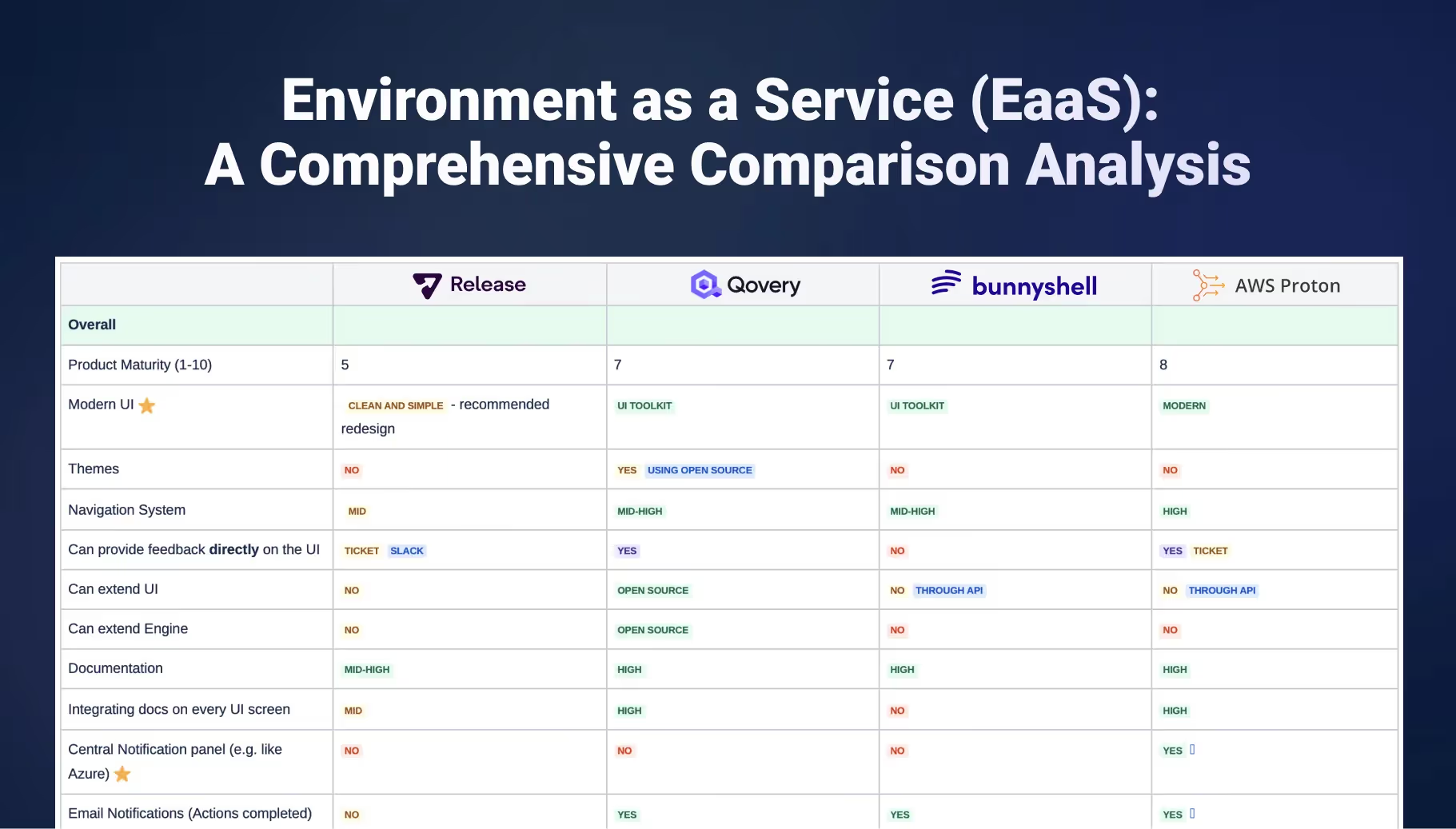
Environment as a Service (EaaS): A Comprehensive Comparison Analysis
Choosing the right solution to manage your application & environment infrastructure is crucial. As the demand for environments as a service (EaaS) continues to increase, more and more platforms are emerging, making it difficult to decide which one to choose. In a recent comparative analysis of environment-as-a-service (EaaS) solutions on the market, Qovery was one of four solutions evaluated, alongside Release, Bunnyshell, and AWS Proton. The study was conducted by Pablo E. (a Delivery Manager working for a large aeronautics company) and provided a comprehensive analysis comparing four leading EaaS solutions on the market. We were fortunate enough to gain access to his findings and are excited to share them with you.

State of Preview Environments Report 2023
The State of Preview Environments Report is a survey conducted by Qovery gathering feedback from 1,289 seasoned software engineers with diverse experiences, ranging from growing to enterprise-level organizations. This report aims to get a pulse on the perception and adoption of Preview Environments among the software engineering community. We are thrilled to share the survey results with you, which provide valuable insights into how Preview Environments are being used, their benefits, and the challenges teams face in adopting them.
How to Successfully Implement an Environment as a Service (EaaS) Solution in Your Software Development Workflow
In today's fast-paced and competitive software development landscape, the ability to quickly and efficiently manage development environments is critical to success. This is where Environment as a Service (EaaS) comes in. EaaS is a cloud-based solution that lets developers quickly establish and manage development environments. EaaS simplifies infrastructure management, helping developers work faster and create better apps. It also lets companies quickly scale their development efforts to meet changing market and customer needs.
Overcoming the Challenges of Managing Testing Environments on AWS
Software developers need controlled and isolated environments to try new features, bug fixes, and other changes before deploying them to production. This separation captures possible issues early, reducing the risk of live environment errors or performance issues. Teams can experiment with various configurations, tools, and technologies in test environments, fostering innovation and development. Test environments enhance software quality, user satisfaction, and development efficiency by promoting rigorous testing and validation. However, setting up test environments on AWS and managing them result in many challenges. Today we will go through these challenges and discuss how to resolve these challenges.

How to Manage the High Cost of Scaling on Heroku
The ability to scale your applications is crucial for businesses, enabling them to manage growing user traffic, maintain application performance, and expand the business efficiently. Heroku has become one of the most popular platforms for this purpose due to its user-friendliness, rapid deployment, and support for various programming languages. Despite its powerful infrastructure and beneficial features, scaling on Heroku presents certain challenges in terms of high cost and poor performance. Today, we will explore scaling challenges on Heroku and introduce an alternative solution, Qovery, that can help businesses manage the cost and complexity of scaling applications. We will also provide case studies of companies successfully using Qovery to overcome these challenges and scale their applications more efficiently.
Qovery Joins the Amazon Activate Program to Help Startups Scale Faster
We're thrilled to announce that Qovery's DevOps automation software has joined forces with the AWS Activate Program. This program offers startups free tools, resources, content, and expert support to help them build and scale their businesses using Amazon Web Services (AWS). By joining forces, Qovery and AWS Activate Program offer a powerful combination of resources and support that can help startups of all sizes overcome the technical and financial hurdles often associated with cloud infrastructure and accelerate their path to success. In this article, we'll explore what the AWS Activate Program is, the benefits it offers to startups and growing businesses, who is eligible, and how to apply for the program with Qovery.
Guide to Platform Engineering: Goals and Best Practices of Platform Engineering Team
Platform engineering is a specialized field that focuses on creating and maintaining the infrastructure and services that support the development and deployment of software applications. In today's fast-paced business environment, organizations need to be able to quickly and efficiently deliver new features and updates to their customers. Platform engineering teams play a crucial role in making this possible by providing a stable and reliable foundation for application development. In this article, we will explore the goals of a platform engineering team and the best practices they should follow to build a strong foundation that supports the success of your software development efforts.
Overcoming The DevOps Shortage: The Power of Tools and Technologies
The DevOps industry has been experiencing rapid growth over the past few years. However, with this growth comes a shortage of skilled DevOps engineers who can efficiently implement and maintain the practices. Organizations are facing the challenge of finding and retaining qualified professionals, but there is a solution. Utilizing the right tools and technologies can empower organizations to overcome the DevOps talent shortage. In this article, we will explore the current state of the DevOps job market, examine the reasons behind the shortage, and delve into the ways in which tools and technologies can be leveraged to automate and optimize DevOps practices and thus scale them. We will also showcase how a wide range of organizations from different industries and with different sizes have successfully implemented tools and technologies to scale their DevOps practices and overcome the shortage.
Terraform With Multiple Environments: Key Benefits & Use Cases
Terraform is one of the most popular infrastructures as code (IaC) tools that allow users to define, configure, and deploy infrastructure resources in a safe, predictable, and repeatable manner. Using declarative configuration files, users can deploy resources across a variety of infrastructure providers, including public cloud platforms like AWS, Azure, and Google Cloud, as well as on-premises environments and third-party services. With Terraform, you can even provision multiple deployment environments without duplicating each environment's configuration. Not only can you centralize the environment provisioning configuration, but you can also easily mirror different environments at scale. Today, we will go through the different benefits of managing multiple environments with Terraform. We will also discuss various use cases where you should use terraform.

Scaling Your CI/CD: What You Need To Know
CI/CD is the process that ensures that code updates are deployed efficiently and reliably. However, more than simply having CI/CD pipelines is required for modern business application development needs. The problems start as soon as your team grows, but your CI/CD process does not. Static CI/CD pipelines result in an operational bottleneck and slow down your application workflow. Today, we will discuss why scaling your CI/CD is an inevitable need for your organization. We will go through the goals of a scaled CI/CD and how to achieve those goals.

Why You Need Self-Service Infrastructure
Engineering teams’ autonomy and agility are vital in achieving efficient software development. However, manual infrastructure provisioning is a major source of inefficiency and bottleneck. As the developers wait for Ops teams to provision complex infrastructure, they cannot bring the creativity, speed, and agility expected of them. This is the reason successful companies are quickly adopting self-service infrastructure. Self-service of cloud infrastructure is the panacea to all the problems introduced by manual infrastructure provisioning. Today we will discuss why you need self-service, what benefits it provides, and how Qovery can help you with self-service of infrastructure.
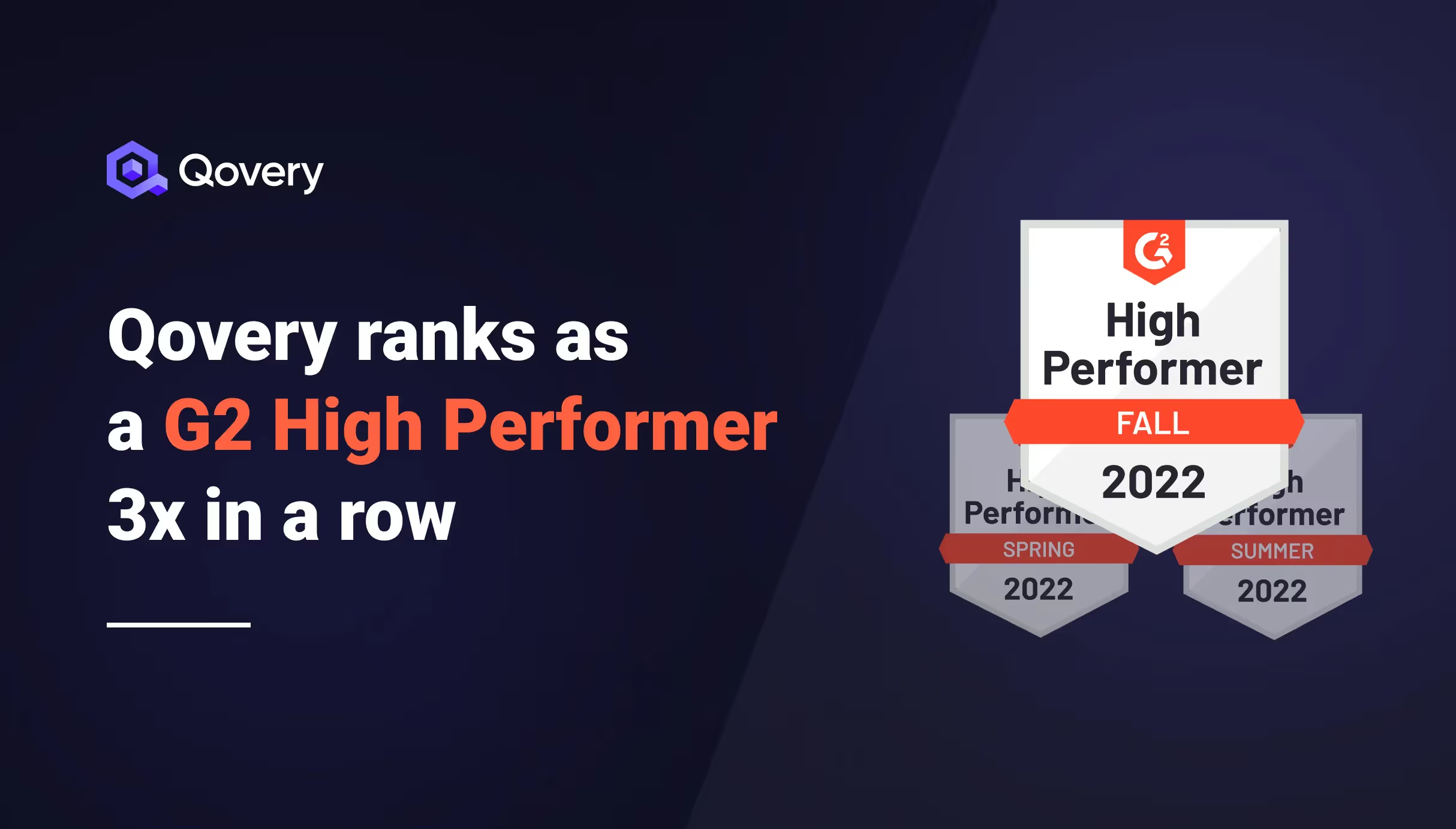
Qovery ranks as a G2 High Performer 3x in a row
Qovery's DevOps automation software has been named a High Performer in the Fall 2022 G2 Reports for the third consecutive time. Today, we’re excited to share that Qovery maintains its High Performer status in its category. We are also grateful for our users’ continued support, which has resulted in us receiving 4.8/5 stars and winning three G2 awards in a row.

7 Essential Factors When Choosing Platform Engineering Solution
The trend of Platform Engineering is now gaining momentum, which analysts and industry experts refer to as one of the most disruptive philosophies of the moment. But regardless of experts’ predictions and assumptions, what matters for organizations today is understanding what adopting an approach such as Platform Engineering actually entails, what a successful solution looks like, and how to adopt best practices for its implementation. That's what this article is about. A successful Platform Engineering tool will provide immense benefits to the organization. You will achieve rapid product releases, reduce operational complexity, scale applications through environment automation, and many more. However, an effective platform engineering tool must have certain traits to achieve the benefits mentioned above. Today, we will discuss the 7 key factors necessary for a great platform engineering tool. Incorporating these 7 components will ensure that your platform engineering tool will serve its purpose.
Introducing the Qovery Perks Program for Startups
We are thrilled to announce that startups from Crane and Speedinvest portfolios can now leverage Qovery as perks….and much more perks programs to come (stay tuned for new announcements 👀).
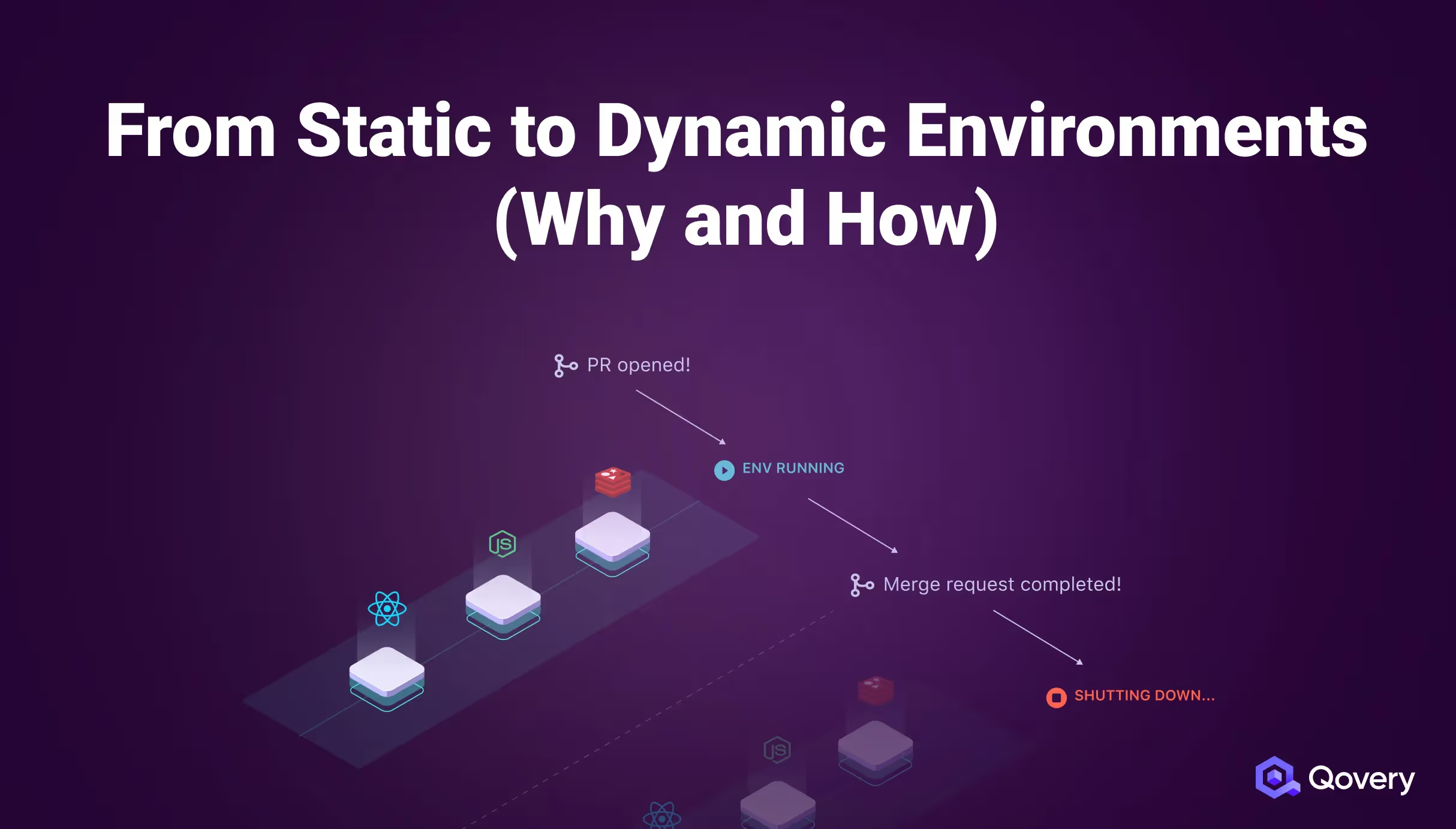
From Static to Dynamic Environments (Why and How)
We have seen a rapid increase in the development pace of product development in the last few years. As a company, you never stop improving your processes. Successful organizations find different ways to optimize the release process to accelerate their product development cycles. Growing companies, especially those with complex products with many integrations, often struggle to keep pace with the growing complexity of processes. One crucial factor in your release process is how your deployment environments work. The world is now shifting from static to dynamic environments.
Platform Engineering: Explained, Benefits, and How to Get Started?
Organizations are embracing Platform Engineers because it helps development teams deliver software releases much faster. Platform Engineers improve and automate the overall workflow starting from code to the final delivery. In this article, we will try to answer all your questions regarding Platform Engineering. We will discuss why you need Platform Engineering for your business, how it differs from DevOps and SRE, and which companies benefit most from it.
How to Manage Staging Environments to Speed Up Your Deployments By 5x
The staging environment plays a crucial role in product development. It's the last checkpoint before the product updates are live for customers. Every successful product has a robust and effective staging environment on the back. However, the traditional staging environments cannot keep pace with the modern CI/CD workflow. This article will go through how traditional shared and static staging environments hinder faster deployments and efficiency. We will conclude with how Qovery can help your development teams release faster and cut downtimes & bugs in production with on-demand environments.
The Secret Ingredient for Faster Deployment: Use On-demand Environments
If you are part of a DevOps or Cloud engineering team struggling to set up and maintain proper environments, then this article is for you. We will discuss “On-demand” environments in detail. We will go through its benefits, how development teams can take advantage of it, and how Qovery’s on-demand environments give you a competitive advantage in the business.
Why Preview Environments Are The New Thing in DevOps
Consider the scenario where a complex product is being developed by dozens of engineers working on different features of a product. Not only the development environment is the same, but the staging environment is also shared. As different features are merged into the shared environment, they break the code. So QA has to wait until this is fixed. A feature or bug fix may be working perfectly on the developer’s own machine, but there is no way for the QA team to test that one feature in isolation. This problem is intensified when the product has a lot of integrations and different data sources. The DevOps team simply cannot provision so many different environments on time; they will miss the bus. If developers keep using the same shared staging environment, it will take ages to deliver a mature product to the market. This is where the concept of preview environments comes into play. In this article, we will tell you what preview environments are and how they solve the above problems. We will also discuss why so many DevOps teams are adopting it to improve team productivity.
Everything You Need to Know About Deployment Environments in 2023
It's common practice that development environments for the same product are kept the same (or at least compatible) for smooth software development life cycle (SDLC) workflow. That brings the question, why do we need more than one environment for the same product. In today’s modern software development, it is crucial for product development teams to maintain an effective and rapid workflow if they want to gain a competitive edge in the product market. Having a well-tuned workflow not only results in high productivity but also helps them deliver reliable software that is delivered on time and meets customer expectations.

Heroku Dilemma: The Growing Startups' Journey
Two years ago today, we shared some insights of 200 CTOs from growing US and EU startups on the topics of the Cloud and their working methodologies (to find out here). Welcome to the second series: “Heroku Dilemma: The Growing Startups' Journey.”
How to Build a Production-Ready AWS Infrastructure in 4 Simple Steps with Qovery
A quick guide on the advantages of using Qovery as your preferred apps deployment platform-and how to build a faster AWS production-ready with it.
Getting The Most Out Of Docker
Docker is the industry leader in the world of containerization. While the concept of containers is not new, still, it was not easy to create new containers. The underlying operating system complexities of creating a container were very challenging. Docker changed that and made things easier by handling the complexities mentioned above to launch a container. It's now super easy for developers to build, manage, scale and deploy their applications securely using Docker. In this article, we will go through best practices when using Docker containers. Using these practices will ensure you will get the most out of Docker, including better security, faster application startup, faster deployments, fault tolerance, etc.
Top Benefits of Containerization For Your Startup
A container is an isolated unit of software running on top of an operating system. Containers are getting popular among startups because containerized applications are portable, have built-in scalability fault tolerance, and promote faster development cycles. That’s why startups prefer containers for new application development to gain a business advantage over competitors who are still using VMs for application deployment and packaging. In this article, we will discuss the major benefits of containerization for growing startups and how organizations can take advantage of these benefits to make their applications a success. Let’s go through the critical points below!
Implementing Microservices on AWS with the Twelve-factor App – Part 2
Welcome to the second post in a series of “Implementing Microservices on AWS with the Twelve-factor App”. In the first post, we covered the areas around the codebase, configuration, code packaging, code builds, and stateless processes. This article will go through the remaining areas for best practices in microservices. Let’s start the discussion with Port mapping!
Implementing Microservices on AWS with the Twelve-factor App – Part 1
The Twelve-Factor methodology is a set of best practices for developing microservices applications. These practices are segregated into twelve different areas of application development. Twelve-factor is the standard architectural pattern to develop SaaS-based modern and scalable cloud applications. It is highly recommended by AWS if you are building containerized microservices. In this article, we will guide you on how to develop applications that will use microservices deployed on containers in AWS. We will discuss the first six areas today. And in the next article (part 2), we will discuss best practices for the remaining six areas.
Best Tips to Get Most out of AWS Load Balancer
AWS ELB (Elastic load balancer) automatically distributes incoming application traffic across multiple targets and virtual appliances in one or more Availability Zones (AZs). That helps you achieve high availability and fault tolerance. In this article, we will share with you some tips that will help you best utilize AWS load balancer. We will also provide insights on the best use cases of ALB and NLB, which are the two most commonly used load balancers.
Using Containers for Microservices: Benefits and Challenges for your Organization
Using containers for microservices has gained a lot of popularity in the last decade or so. Developing the application through microservices across multiple containers results in the best of both worlds. It provides resilience as well as agility through scaling and improvements. Before we dwell on how containers and microservices form an ideal combination, let’s start with a basic understanding of microservices and containers.
How to Speed Up Amazon ECS Container Deployments
Amazon Elastic Container Service (Amazon ECS) is a fully managed container orchestration service that makes it easy for you to deploy, manage and scale containerized applications. Although ECS is a managed service and hides many complexities under the hood, there have been many cases where startups have not been able to take full advantage of ECS due to slow deployments. In this article, we will share some tips to improve deployment speed on ECS. We will try to cover both EC2 tasks and Fargate tasks.
Best Practices for Container Security on AWS
Containers are superior to Virtual Machines (VM) in many aspects, including the benefits of being lightweight, easily scalable, highly portable, etc. AWS provides two primary container services i.e., Amazon Elastic Container Service (Amazon ECS) and Amazon Elastic Kubernetes Service (EKS). Although both ECS and EKS are growing in popularity but achieving security while using these services is relatively a new topic.
The 10 Biggest Mistakes Startups Make on AWS in 2023
Adopting AWS as your cloud infrastructure seems to be a common choice for most growing companies, but it is not as easy as it looks. Choosing the right services, configuration, and management of these services needs skills and experience. At Qovery, we've heard hundreds of stories about the mistakes made by startups on AWS, and here are the biggest ones. Make sure you take care of these pitfalls when you start your journey on AWS, which will help you successfully migrate and set up on AWS.
What is Environment as a Service (EaaS) and How is it Impacting Productivity?
Over the last few years, business needs for new applications and services have increased tremendously, resulting in a need to accelerate the application development process. Moreover, the process of development has changed radically. Development is fast-paced and needs continuous application updates, patching, enhancements, etc. These changes require development environments, quality assurance, continuous deployment, infrastructure, etc. That’s where EaaS comes in. EaaS (Environment as Service) offers environments in the form of service so that you can easily manage all your environments efficiently and quickly. EaaS eliminates the application environment bottlenecks and enables faster innovation at scale. An environment consists of infrastructure, software, code, configuration, and all the runtime libraries required to run your application in an isolated environment.
Best Practices for Web Application Deployment: The Zero-Downtime Strategy
Web App Deployment Best Practices: Achieve frequent, safe releases with this guide. Learn about Rolling Updates for zero downtime, CI/CD automation, the essential deployment checklist, and creating a reliable rollback strategy.
How to Scale your AWS Infrastructure - Part 1
When designing a solution, you should keep future needs in mind. If the number of users increases dramatically in a short period of time, the solution should be scalable enough to handle the new growth. Making systems scalable on cloud is relatively easier as compared to scaling on-premises infrastructure. AWS has provided excellent tools/services to enable your applications for as much scalability as you want. Note that scaling down is as important as scaling up because cost is important when designing for scalability. In this two-part article, we will go through the tools and services provided by Amazon, which can help you scale your existing AWS infrastructure. Let’s go through these services and evaluate the benefits and business cases of each of these.
How to Scale your AWS Infrastructure - Part 2
Welcome to the second post in a series of “How to Scale your AWS Infrastructure”. In the first post, we talked about horizontal scaling, autoscaling, CI/CD, infrastructure automation, containerization, etc. In this post, we will continue the discussion around databases, loose coupling, caching, CDN, etc. Let’s start the discussion with database scaling.
Should Your Startup Use AWS Managed Services?
Let’s face it. Gaining a competitive advantage in the target market is expensive. Even if you have a good idea and its execution plan in mind, operations related to management, storage, networking, service provisioning, security, and application management will cost you a fortune. To say the least, a cutting-edge IT infrastructure, a reliable team, and a strategy for rapid product releases or expansion/scaling is a must for your product’s success. As a startup, going forward with rolling or building your own solution could prove to be tiring and much over the budget. It will eat up your team's time in the building, rebuilding, scaling, refactoring, following security measures, and whatnot. Assuming that you are developing a solution with the wish to succeed, your initial product or MVP needs to be altered frequently too. In such a scenario, AWS Managed Services can simplify your life. Read what it is, what are its pros and cons, and how to reach the final verdict between whether to release your own solution or go ahead with AWS Managed Services.

How We Defined The Pricing Model of Qovery
Our pricing model has evolved since we wrote this article - check out our new pricing model Pricing is a complex topic matter, and there’s no one-size-fits-all approach to pricing. Few things impact growth and revenue as much as your pricing. Finding the right balance between value and revenue will make or break your business. While most founders have a clear product vision and have thought through things like their go-to-market strategy or hiring plans, surprisingly, few have an idea about what their pricing should look like.

Should Your Startup Hire a DevOps?
Software development no more emphasizes “final delivery” or deployment of a project. It is more about “continuous delivery and integration” today. The market also demands rapid delivery and updates without missing out on elements like ‘quality’ and ‘innovation.’ So, instead of building a super-robust well-tested product at once, developers focus on faster and bug-free releases to create a reliable product over time. For startups, the environment is even more pressing because these businesses have to meet their users’ requirements using a limited budget and resource-set. Competition is a different deal altogether. DevOps, a set of practices promoting continuous delivery/integration, can help you here. Experts finding traditional operations 41% more time-consuming say it is why DevOps is a better choice. However, it doesn’t always mean that you need to hire DevOps engineers.
Should you use Kubernetes for your Startup?
Developers love containers for their portability and flexibility. Suitable for today’s cloud-native environment and agile development requirements, containers make it super-fast to develop, test, and run applications. Besides this, they are lightweight and can optimize the platform (and the host OS) they are deployed on. Now, for powerful applications with hundreds of containers, the platform should also be portable, flexible, extensible, and efficient. It should allow managing containerized workloads and services to support modern applications effortlessly. Kubernetes, the famous container orchestration platform, makes the best choice in this regard.
Why Heroku and AWS have failed to serve modern developers?
Heroku Vs. AWS remains a long and persistent debate among developers. Both platforms have strengths and weaknesses. Over the last 10 years, Heroku and AWS played a huge role in the cloud hosting and software development industry, by significantly unlocking productivity in a way that it has never been reached before. They are the platforms behind most of the successes from the last decade. However, we are in 2022 and it still looks like if we (developers) were in 2010 to deploy our apps in the cloud.

The secrets behind our growth - Customer Success
Companies that want to take care of their customers have to invest in a Customer Success team and define the right strategy (Thanks Rav Dhaliwal for your help here). Thinking about customer success is typically something that happens much later (too late?) after the Sales efforts. Growth pressure on startups puts effort in the sales machine to close as many customers as possible while forgetting that growth comes from the current customers. A happy customer is less likely to churn. A delighted customer is more likely to sales your product for you. Since we launched Qovery, we have learned a lot. In this post, I will share how we built our sustainable growth engine.

7 Things to Consider To Build Scalable Web Applications
Seven things to get right when building scalable web applications, from choosing metrics to picking an architecture that can scale out.

Qovery's top 10 blog posts of 2021 to read in 2022
To celebrate this new year, Qovery's blog highlights some of the top blog posts Qovery's engineers wrote during 2021 that you should read for 2022. Take a look at the top 10 posts published in 2021.

Inside Story: Our Techstars Experience with Qovery
Qovery’s founding team (Romaric, Pierre, and myself) recently participated in the Techstars 2019 accelerator program in Paris. It was an intense 3-month experience during which we had an incredible time, both professional and personal. In this post, I will share a bit more with you about what this adventure was all about, but the main takeaway here is that it was instrumental in helping us lay the foundations for Qovery and establish our new mission. After those three incredible months, we are ready to carry on but before we do that, let’s take a little time to unpack everything while it is still fresh.