Startups face unique challenges in their journey, including tight budgets, rapid development cycles, and limited resources. In this high-pressure environment, DevOps practice emerges as a crucial framework. Contrary to the misconception that DevOps is only suited for large enterprises, it offers significant advantages for startups by streamlining processes, enhancing product quality, and accelerating time-to-market. I’ll show you why DevOps is especially advantageous for startups, dispelling common myths and outlining best practices for implementing and managing DevOps in a startup environment.
Let’s start by debunking the myth that DevOps is exclusive to large organizations and explore its relevance and importance for startups.
Is DevOps suitable for startups?
Common myths:
"It's just for enterprises": DevOps is often seen as a practice for large enterprises. However, its principles of collaboration, process improvement, and workflow streamlining are equally vital for startups.
"It's about dedicated roles": DevOps isn't just about hiring a "DevOps Engineer." It’s a cultural shift that integrates practices into existing teams, where developers and operations work closely together.
Improved collaboration: DevOps promotes a collaborative environment, essential for startups where team members often have multiple roles.
Faster deployment: automating tasks and streamlining workflows allows startups to deploy updates quickly, reducing time-to-market.
Better quality and reliability: CI/CD pipelines ensure code changes are tested and deployed automatically leading to better software quality and reduced downtime.
Scalability: practices like Infrastructure as Code (IaC) enable startups to scale their infrastructure seamlessly as they grow.
Fundamental questions for startups adopting DevOps
If you are a startup and you want to adopt DevOps, you should go through some of the fundamental questions like the ones below:
Why DevOps: identify specific problems to solve, such as improving deployment speed or enhancing collaboration.
Key challenges: define challenges like long deployment times or frequent production issues to set clear goals.
Objectives: establish objectives like reducing deployment time or automating processes to guide the DevOps journey.
Measuring success: use metrics like DORA (Deployment Frequency, Lead Time for Changes, Time to Restore Service, Change Failure Rate) to measure the effectiveness of DevOps practices.
DevOps in a startup accelerates deployment cycles, enhances system reliability, and fosters seamless collaboration between development and operations, ensuring efficient delivery and scalable infrastructure.
Key responsibilities of a DevOps team
Some of the key responsibilities of a DevOps team include but not limited to:
Configuring and managing cloud resources: utilize cloud services for scalable infrastructure and optimal resource usage.
Implementing infrastructure as Code (IaC) and CI/CD systems: automate infrastructure deployment with tools like Terraform or CloudFormation. Set up CI/CD pipelines to automate testing and deployment.
Monitoring and Observability: use monitoring tools to track performance and establish observability for system insights.
Importance of encouraging a DevOps culture
Let’s see what you should be aiming to achieve if you adopt the DevOps culture.
Promotes collaboration: enhances teamwork between development and operations.
Accelerates learning: encourages continuous learning and innovation.
Improves problem-solving: cultivates a blameless culture focused on issue resolution and process improvement.
Standardizes processes: ensures consistent and reliable processes across the organization
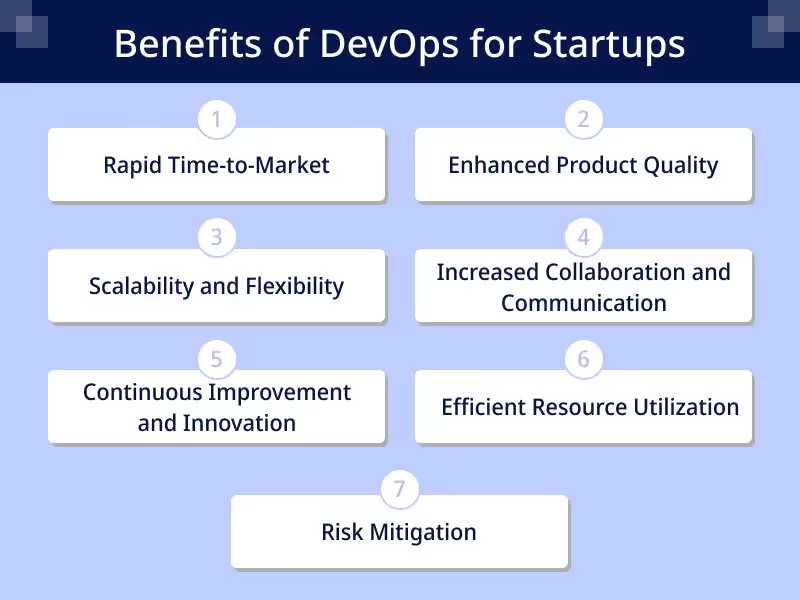
Key benefits of DevOps for Startups:
Enhanced team synergy: promotes better communication and cooperation, leading to cohesive teams.
Enhanced delivery speed and efficiency: automates deployment, reducing time-to-market and increasing speed.
Establishing and maintaining development standards: implements standardized processes to ensure high-quality code standards.
Streamlining Processes Through Automation: reduces human error and enhances consistency by automating repetitive tasks.
Key benefits of DevOps for startups | Source: https://www.valuecoders.com/blog/devops/devops-best-practices-and-examples-to-accelerate-growth/
Step-by-step DevOps implementation for startups
Here is a step-by-step guide on how to actually implement the DevOps culture in your organization.
Define workflows and processes
Establishing clear workflows and processes is crucial for the smooth functioning of DevOps in a startup. Common workflows adopted by startups include:
Continuous Integration/Continuous Deployment (CI/CD): automating the process of code integration and deployment to ensure quick and reliable software delivery.
Agile development: incorporating iterative development cycles to enhance flexibility and responsiveness to change.
Provide necessary knowledge and training to the team
Ensuring that the team has the right knowledge and training is vital for successful DevOps implementation. Startups often focus on:
DevOps fundamentals: training on basic DevOps concepts and tools like Jenkins, Docker, and Kubernetes.
Cloud services: familiarizing the team with cloud platforms such as AWS, Azure, or Google Cloud to leverage scalable infrastructure. Team should have strong knowledge on common cloud services including compute, storage, data, AI, IAM, etc.
Establishing feedback loops
Rapid iteration and continuous improvement are essential for startup success. Establishing strong feedback loops allows you to constantly refine your product based on real-world data. Here's how DevOps practices can contribute to powerful feedback loops:
Automated testing: by automating tests, you gain faster and more frequent feedback on the functionality of your code. Early detection of bugs prevents issues from reaching production and impacting users, contributing to a smoother overall feedback loop.
Monitoring and Observability: tools like Datadog and Grafana provide real-time insights into system performance, user behavior, and potential bottlenecks. Analyzing this data allows you to identify areas for improvement, user pain points, or potential issues before they escalate. This actionable feedback guides future development efforts and helps you prioritize critical fixes.
Setting up delivery processes, tools, configurations, and documentation
A robust setup for delivery processes, tools, configurations, and documentation is key to a successful DevOps environment. Here are some of the key points in this regard:
Infrastructure as Code (IaC): using tools like Terraform or Ansible to manage infrastructure through code.
Version Control Systems (VCS): establishing branching strategies and pull request workflows using platforms like GitHub or GitLab.
Comprehensive documentation: creating and maintaining documentation for processes, configurations, and best practices to ensure knowledge sharing and consistency.
Agents ship fast. Guardrails keep them safe.
Qovery ensures every agent action is scoped, audited, and policy-checked. Start deploying in under 10 minutes.
Encourage a blameless culture to foster innovation and experimentation.
Effective communication
Establish clear communication channels between development and operations teams.
Regularly hold meetings to discuss progress, challenges, and improvements.
Automate where possible
Use automation to reduce manual tasks, minimize errors, and increase efficiency.
Implement CI/CD pipelines to streamline deployments.
Continuous monitoring and feedback
Use monitoring tools to track performance and identify issues early.
Implement feedback loops to continuously improve processes and outcomes.
Measure and adapt processes
Use metrics like DORA to measure effectiveness and identify areas for improvement.
Regularly review and adjust processes to ensure they meet current needs.
Provide ongoing training and support
Ensure team members have access to training resources and support.
Encourage knowledge sharing through workshops, documentation, and peer learning.
Avoid cognitive overload
Design processes and tools that minimize the cognitive load on developers.
Ensure that developers have the necessary resources and support to manage their tasks effectively.
How Qovery can help with DevOps for startups
Early-stage startups often struggle with balancing rapid development and managing complex DevOps tasks. Qovery simplifies this process, offering an all-in-one solution that allows startups to:
Speed up development: automate infrastructure provisioning and deployments, allowing for faster releases and quicker iterations.
Optimize costs: automatically scale resources based on demand, ensuring you only pay for what you use, which is crucial for budget-conscious startups.
Focus on building: Qovery handles DevOps complexities, letting your team concentrate on developing the product and acquiring customers.
Integrate seamlessly: Connect easily with existing tools like GitHub, GitLab, and Bitbucket, minimizing disruption and making the transition smooth.
Enhance security and compliance: Benefit from built-in security features and compliance with standards like SOC 2, protecting your data and ensuring regulatory compliance.
Scale effortlessly: Qovery supports multi-cloud deployments, allowing your startup to scale globally without additional overhead.
Qovery empowers your team**.** By automating tasks and streamlining workflows, developers can focus on building a groundbreaking product and driving rapid growth.
Conclusion
DevOps is crucial for startups to streamline workflows, speed up deployments, and maintain high-quality standards. By focusing on culture, effective communication, automation, and continuous improvement, startups can optimize their operations. Kubernetes management platforms like Qovery make it easier to implement these practices, providing scalable, secure, and automated solutions tailored for growing businesses. Startups seeking rapid growth and operational efficiency should consider leveraging DevOps and exploring Qovery’s solutions. Start a 14-day free trial - no credit card required!
Morgan co-founded Qovery and leads engineering. He writes about Kubernetes architecture, DevOps best practices, and building resilient infrastructure at scale.
Next step
Agents ship fast. Guardrails keep them safe.
Qovery ensures every agent action is scoped, audited, and policy-checked. Start deploying in under 10 minutes.