The best AWS service depends on the user's expertise and application complexity. App Runner is a fully managed, simple PaaS for containerized apps and beginners, while EKS is for complex, large-scale Kubernetes deployments that require skilled engineers.
Services fall on a spectrum of control. AWS Proton is for managing large-scale, complex app architectures using pre-approved templates (high complexity, high agility). Elastic Beanstalk offers a PaaS with more customization and control than App Runner but still manages the underlying infrastructure.
CloudFormation provides a template-based IaC approach for quick, automated infrastructure provisioning. Qovery is a third-party platform that streamlines the deployment and Kubernetes management process across multiple clouds (AWS, Azure, GCP) for small to medium businesses.
Cloud technology is growing rapidly, but deploying your product releases rapidly and efficiently is often hampered by the sheer complexity and steep learning curves of managing cloud infrastructure. While AWS, the market leader, offers many powerful tools (like EKS and CloudFormation), mastering them can significantly slow down developer velocity.
This article presents a modern approach, starting with Qovery, a platform designed to automate and simplify deployment. We will then examine the established AWS services, highlighting their complexity and ideal use cases, thus helping you select the best path forward.
Full-Stack Automation
1. Qovery
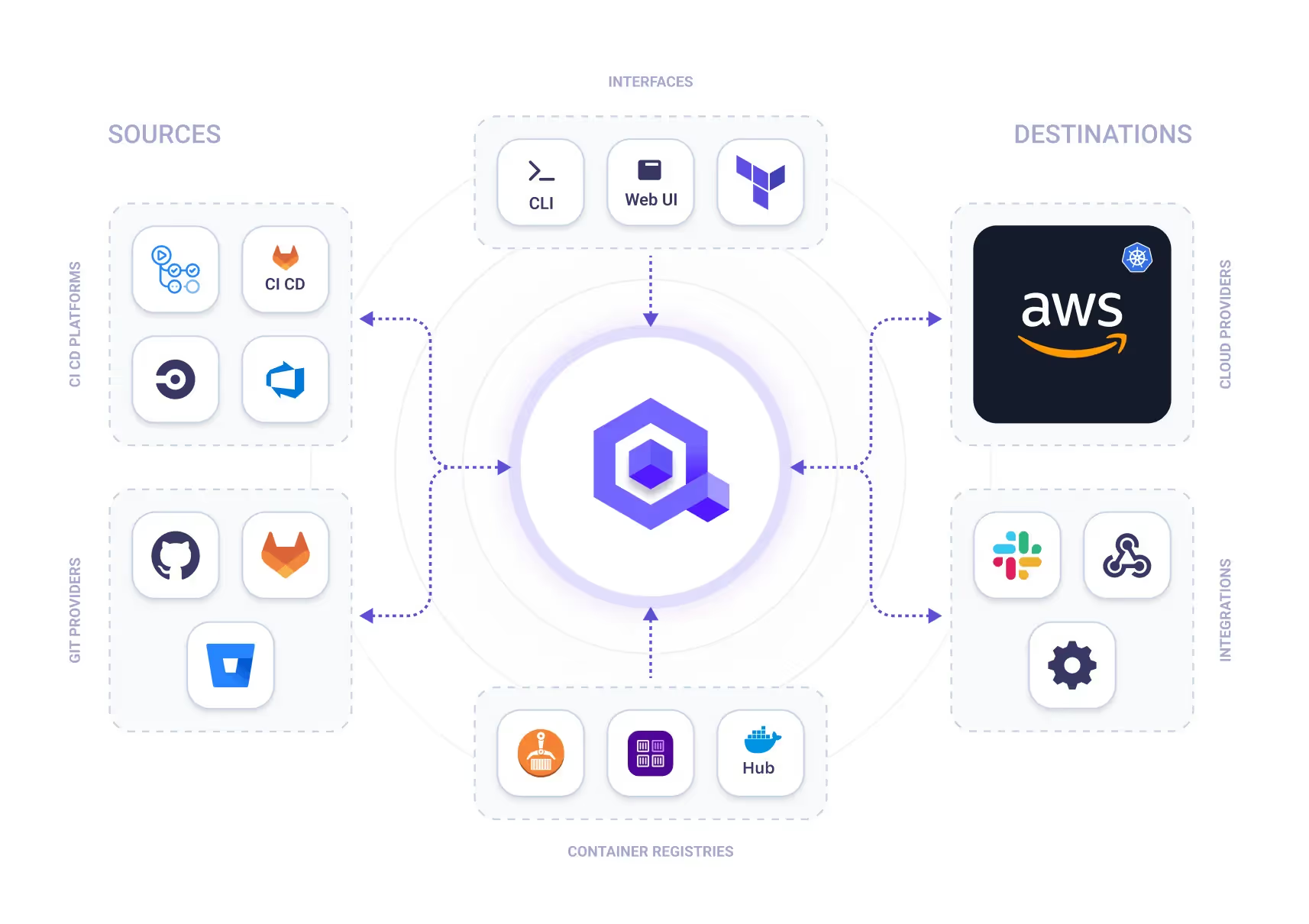
Qovery is the new wave of cloud deployment. It's a cloud-based platform that turns application deployment and environment provisioning on AWS (and other clouds) into a breeze. Qovery is designed to solve the complexity inherent in services like EKS and CloudFormation, offering a simple, unified interface for full-stack, automated DevOps.
Qovery - How it works
Its distinguishing features include easy deployment, automatic scaling, integration with popular tools, version control, built-in security, and seamless integration with Kubernetes.
The Bypass: Qovery manages the underlying Kubernetes complexity (the challenge of EKS) and automates your infrastructure provisioning (the challenge of CloudFormation) through a single, user-friendly platform.
Best Suited For: Small and medium-scale companies that want to automate their infrastructure provisioning and Kubernetes cluster deployments while focusing on code.
Foundational AWS Deployment Options
While Qovery offers a streamlined, automated path, it’s important to understand the foundational AWS services that give you granular control, albeit at the cost of increased complexity.
2. AWS EKS: Powerful, but Complex Kubernetes
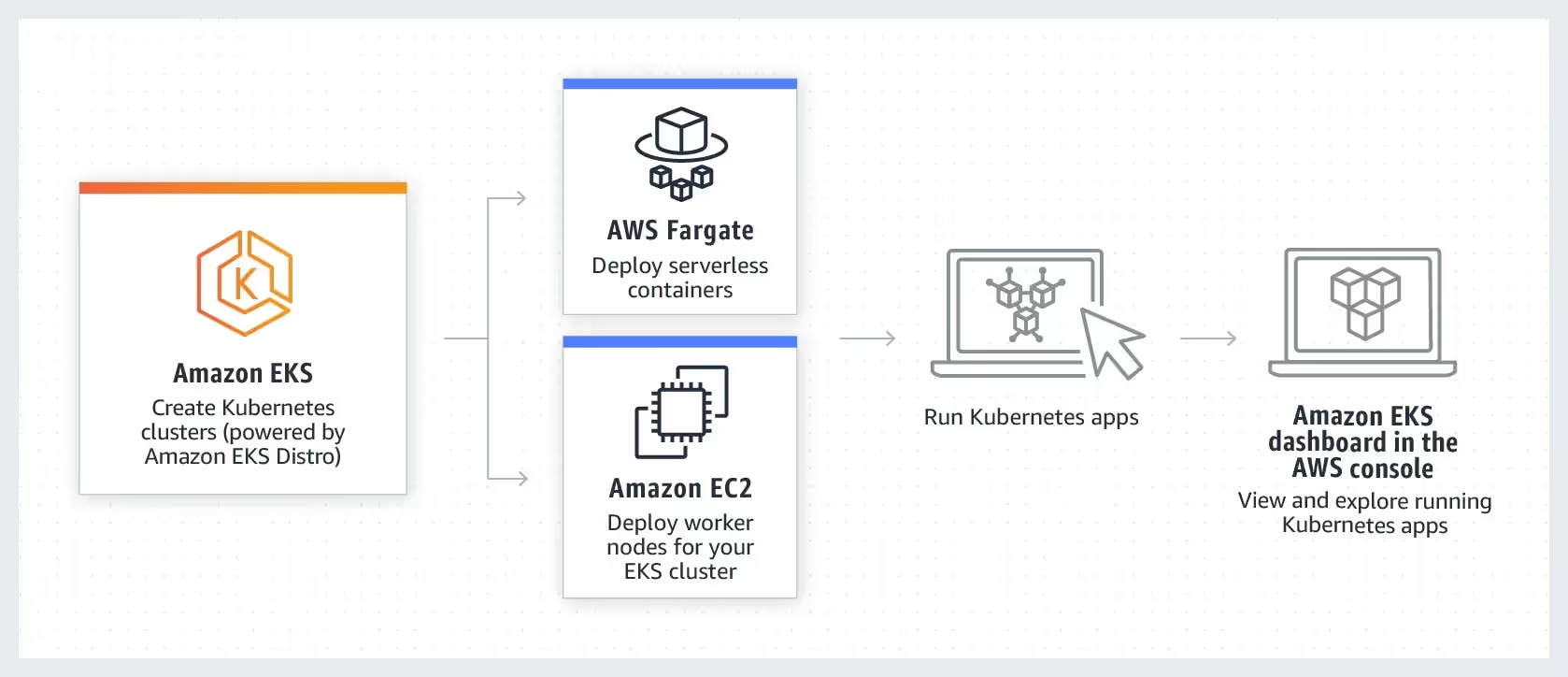
Amazon Elastic Kubernetes Service (EKS) is a fully managed service for deploying and managing Kubernetes applications. EKS provides a scalable, highly available platform and offers fine integration with other AWS services.
The Trade-Off: EKS is an excellent tool if you want to use a managed service for Kubernetes. However, it requires a steep learning curve and skilled engineers to properly set up and manage clusters, nodes, pods, and high availability. It is costly and better suited for large enterprises with complex applications.
3. AWS CloudFormation: Manual Infrastructure as Code (IaC)
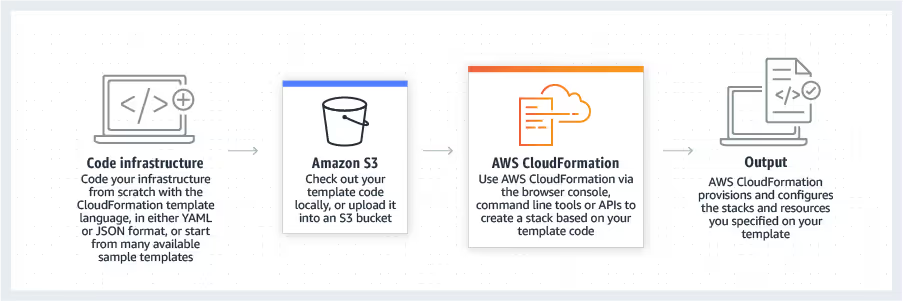
AWS CloudFormation automates infrastructure provisioning by defining all resources in template files (JSON or YAML). This allows for rapid replication, governance, and updates across environments.
The Trade-Off: CloudFormation is essential for codifying infrastructure. However, the technical complexity and difficulty in managing version control and ensuring consistency across large templates can be challenging. It requires significant developer time to write and maintain these configurations.
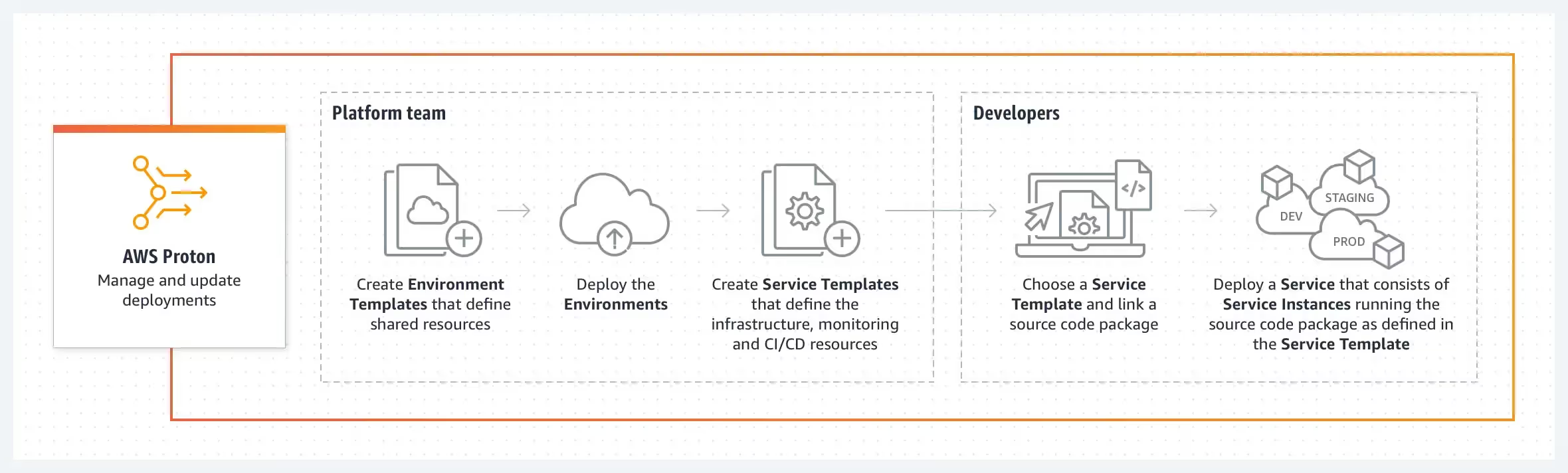
AWS Proton is a deployment workflow tool that helps platform and DevOps engineers manage templates for infrastructure provisioning, code deployments, monitoring, and updates.
The Trade-Off: Proton is ideal for large companies needing to standardize complex application architectures with detailed customization options. However, it still requires a steep learning curve and significant platform team effort to create and register blueprints.
5. AWS App Runner: Simple, but Limited PaaS
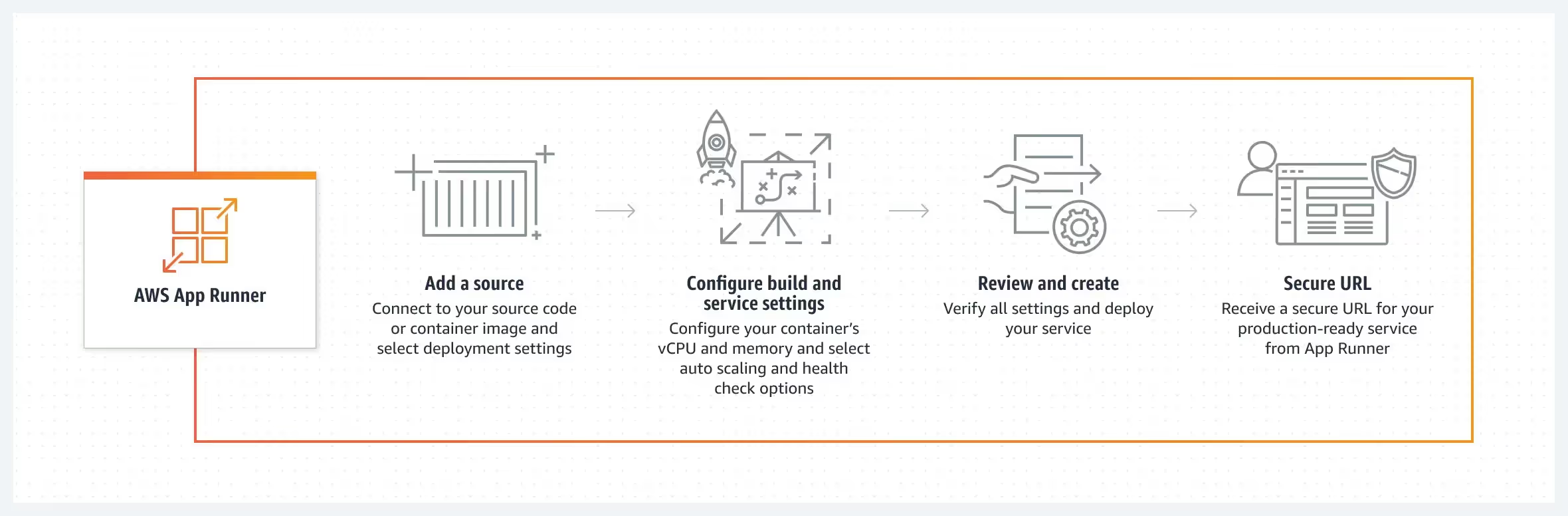
AWS App Runner is a fully managed service that simplifies the deployment of containerized web applications and APIs. It handles the underlying infrastructure, scaling, and management automatically.
The Trade-Off: App Runner is perfect for developers with little cloud knowledge who want quick deployment. However, its major drawback is the lack of deployment and customization options needed for growing or complex applications.
6. AWS Elastic Beanstalk: PaaS with More Control
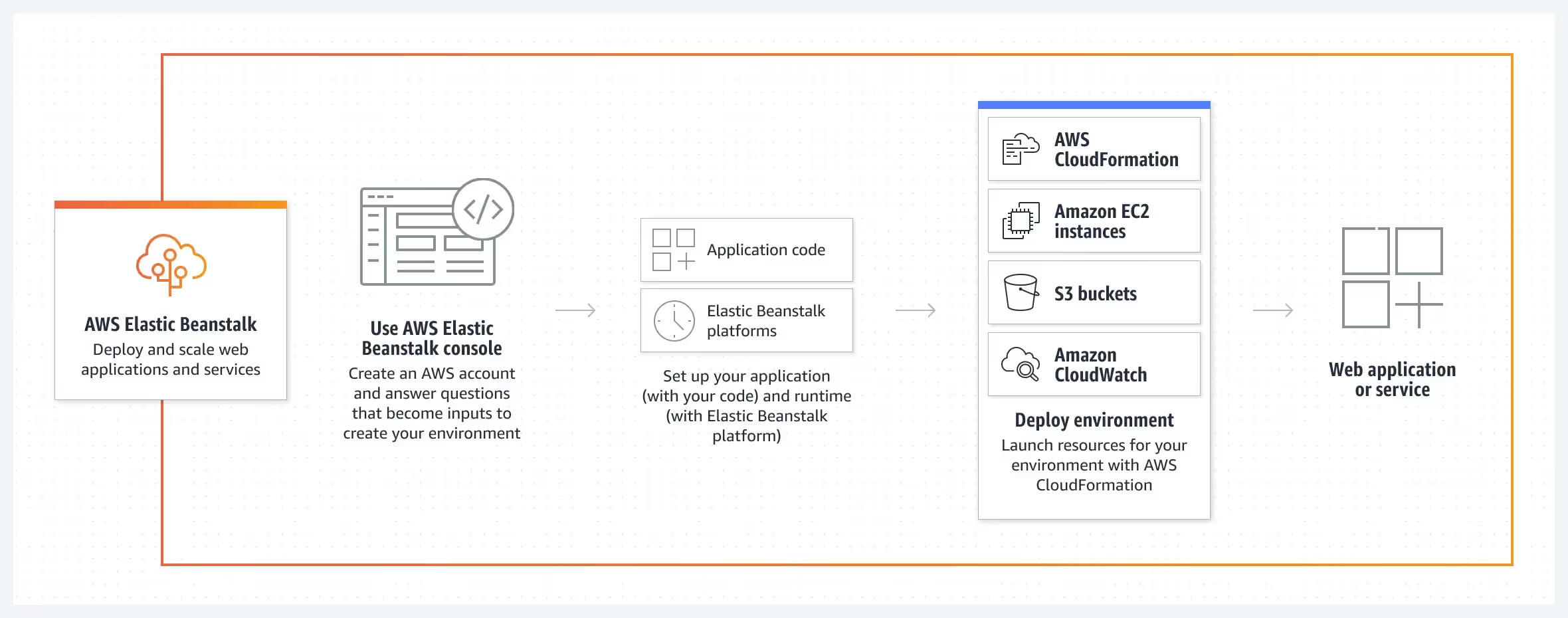
AWS Elastic Beanstalk is a Platform as a Service (PaaS) that automates infrastructure provisioning and management, offering more control over the deployment environment than App Runner.
The Trade-Off: Beanstalk provides a good balance of automation and control, suitable for organizations of all sizes. However, it requires some AWS services knowledge and can become expensive for large enterprise applications.
Agents ship fast. Guardrails keep them safe.
Qovery ensures every agent action is scoped, audited, and policy-checked. Start deploying in under 10 minutes.
The landscape of AWS deployment offers diverse tools; from the simplicity of App Runner and the control of Elastic Beanstalk to the complexity of EKS and the IaC approach of CloudFormation. Choosing the right service depends on your team's expertise, application scale, and desired level of control.
Qovery: The All-in-One Alternative
If your goal is to automate infrastructure and Kubernetes deployments without the steep learning curves of tools like EKS or the complexity of managing CloudFormation templates, Qovery stands out as a powerful alternative.
Qovery is the "best of both worlds," simplifying the deployment of cloud-native applications across AWS (and other clouds) while providing essential features like automatic scaling, built-in security, and seamless Kubernetes integration via a user-friendly interface. It is perfectly suited for small and medium-scale companies looking for full DevOps automation.
Frequently asked questions
What are the main ways to deploy applications on AWS?
Roughly in order of how much control you keep: EKS for full Kubernetes, CloudFormation for declarative infrastructure as code, Proton for standardized platform templates, Elastic Beanstalk as a PaaS with access to the underlying resources, and App Runner as a fully managed service for containerized web apps.
What is the difference between AWS App Runner and Elastic Beanstalk?
App Runner is the simpler of the two: point it at a container image or repository and it handles infrastructure, scaling and load balancing, with correspondingly little room to customize. Elastic Beanstalk provisions the underlying EC2 instances, load balancers and autoscaling groups in your account, so you can reach in and adjust them.
Which AWS deployment option should a small team use?
Match the tool to the expertise you have, not the flexibility you might want. App Runner or a managed platform gets containerized apps live without cluster knowledge. EKS assumes someone owns Kubernetes upgrades, networking and add-ons. Choosing EKS without that person is the most common and most expensive mistake.
Do you need Kubernetes to deploy on AWS?
No. App Runner, Elastic Beanstalk and ECS all run containers without Kubernetes. Kubernetes earns its complexity when you need portability across clouds, a rich ecosystem of operators, or fine-grained scheduling. For a handful of stateless services it is usually more machinery than the problem requires.
What is AWS Proton for?
Proton is aimed at platform teams rather than application developers. It lets you publish curated infrastructure and deployment templates that developers then consume, so provisioning stays standardized across many teams. It solves a governance problem, and it only pays off once you have enough teams for standardization to matter.
Morgan co-founded Qovery and leads engineering. He writes about Kubernetes architecture, DevOps best practices, and building resilient infrastructure at scale.
Next step
Agents ship fast. Guardrails keep them safe.
Qovery ensures every agent action is scoped, audited, and policy-checked. Start deploying in under 10 minutes.