Adopting DevOps practices can be a game changer for startups, offering a bridge between development speed and operational stability that can accelerate growth. Yet, many startups falter in their DevOps journey, making preventable errors that undermine their potential advantages. Let’s discuss seven common DevOps mistakes that startups make, providing practical insights on how to avoid these pitfalls and maximize the benefits of DevOps practices for startups.
Let’s start with the first mistake which is about the adoption of DevOps as a culture.
1. Mistake: trying to “do DevOps” instead of “being DevOps”
Many startups fall into the trap of treating DevOps as a set of tools or a checklist to follow, instead of adopting it as a fundamental cultural shift. This approach often leads to a fragmented workflow where teams might adopt certain DevOps tools without integrating the underlying principles of collaboration, continuous improvement, and shared responsibility. As a result, while teams may use DevOps tools, they miss out on the holistic benefits such as faster feedback loops and improved collaboration.
Treating DevOps merely as a checklist leads to a disjointed workflow and missed benefits like faster feedback loops and improved collaboration. Applications might still be slow to deploy and buggy.
How to avoid
Adopt DevOps as a cultural shift. Encourage collaboration between development, operations, and security teams. Encourage a culture of continuous learning and experimentation.
Promote collaboration: Establish regular meetings and collaborative sessions between developers, operations, and security personnel to ensure everyone is on the same page.
Continuous learning: Encourage team members to continuously learn about new tools, techniques, and methodologies related to DevOps.
Experimentation: Promote an environment where team members feel safe to experiment and try new approaches without fear of failure.
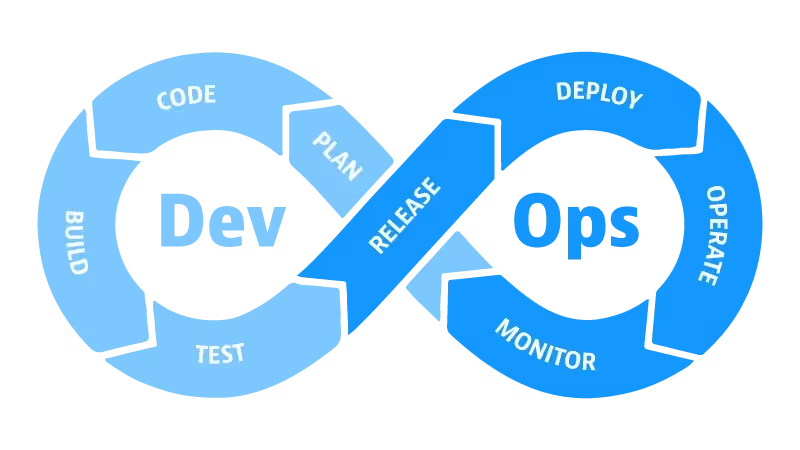
Adopting DevOps as culture | Source: https://www.dynatrace.com/news/blog/what-is-devops/
2. Mistake: limited communication and shared ownership
In many startups, teams often work in silos, focusing solely on their specific tasks without much interaction with other departments. This lack of communication can lead to misunderstandings, duplicated efforts, and a culture of finger-pointing when things go wrong. Without shared ownership of the application lifecycle, teams may prioritize their own goals over the success of the overall project. As a result, bugs might take longer to fix, and new features might not meet user needs.
How to avoid
Break down silos! Promote shared goals and ownership across the entire application lifecycle. Implement joint planning sessions and cross-training initiatives to build a unified DevOps culture.
Shared goals: Define and communicate shared goals that align with the overall mission of the startup. It will ensure that all teams work towards common objectives.
Joint planning: Conduct joint planning sessions to involve all relevant teams in the decision-making process so that everyone understands their roles and responsibilities.
Cross-training: Implement cross-training programs to help team members understand the functions and challenges of other roles.
3. Mistake: encouraging deployment speed over visibility
Startups often prioritize rapid deployments to quickly deliver features and updates to their users. However, this focus on speed can come at the cost of visibility and monitoring. Without proper monitoring and logging, teams lack the insight needed to identify and resolve performance issues that might lead too potential outages and a degraded user experience. As a result, performance issues might go unnoticed, impacting user experience and potentially leading to outages.
How to avoid
Integrate monitoring tools like Datadog into your DevOps pipeline. Utilize log aggregation and analysis with tools like ELK Stack to identify potential problems before they impact production. Create performance dashboards to visualize key metrics and facilitate communication between teams.
Monitoring tools: Set up robust monitoring tools to continuously track system performance and detect anomalies.
Log aggregation: Use log aggregation tools to collect and analyze logs from various sources, providing a comprehensive view of system health.
Performance dashboards: Create dashboards that display key performance indicators (KPIs) and metrics, making it easy for teams to monitor and respond to issues in real time.
4. Mistake: not automating everything you can
Slow deployments and high error rates can significantly impact your business. Manual deployments are time-consuming, delaying new features and bug fixes from reaching your customers. This can impact your ability to compete and adapt to market changes. Manual deployments are more prone to human error, leading to bugs and outages that can damage your brand reputation and customer trust.
How to avoid
Adopt automation! Here are some best practices:
CI/CD pipelines: Implement CI/CD (Continuous Integration/Continuous Delivery) pipelines to automate building, testing, and deploying your code. This ensures consistent and reliable deployments.
Infrastructure as Code (IaC): Manage your infrastructure with tools like Terraform or AWS CloudFormation. IaC allows you to define your infrastructure as code so that you can automate infrastructure provisioning and configuration.
Self-service Environments: Leverage platforms like Qovery, which offer self-service environments for developers. Qovery simplifies the deployment and management of applications by automating environment provisioning. This approach enables developers to focus on coding without worrying about the underlying infrastructure, reducing time to market and minimizing human errors.
Agents ship fast. Guardrails keep them safe.
Qovery ensures every agent action is scoped, audited, and policy-checked. Start deploying in under 10 minutes.
Rigid processes and resistance to innovation can be a blocker to your business growth. By being inflexible, you might miss out on new technologies and processes that can improve development efficiency and application performance. A rigid environment discourages creativity and experimentation, eventually leading to stagnant product development.
How to avoid
Bring in a culture of innovation:
Encourage experimentation: Empower your team to experiment with new tools and approaches. Celebrate successes and learn from failures.
Embrace feedback: Be open to customer feedback and use it to identify areas for improvement. Regularly review and evolve your processes based on feedback and experimentation results.
Leverage DevOps tools: DevOps tools like containerization (Docker, Kubernetes), infrastructure as code (IaC) and Kubernetes management tools can improve development agility and enable faster experimentation.
6. Mistake: hiring a full-fledged DevOps person too early
Building a DevOps team upfront might seem exciting, but can be a significant financial burden for a startup that will hinder investment in core development activities. Finding and onboarding experienced DevOps engineers can take time, delaying your DevOps implementation and slowing down innovation. A large team might struggle to find clear roles and responsibilities which may result in inefficiencies and a diluted focus on core DevOps goals.
How to avoid
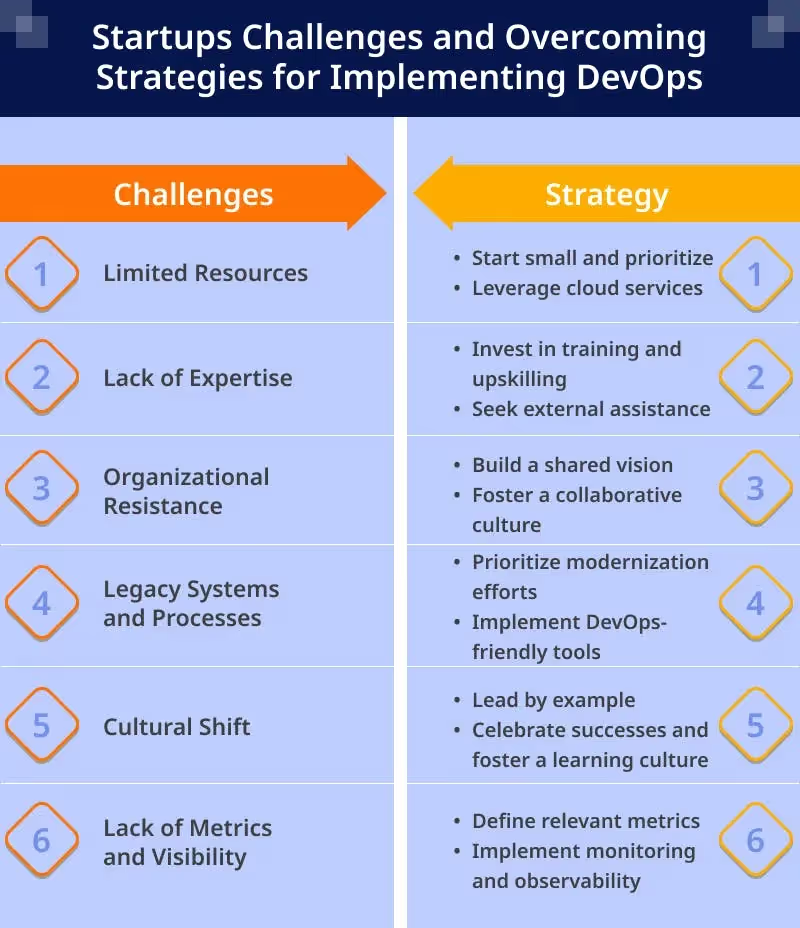
Start small & Scale gradually: Begin with cross-functional team members who can learn and adopt DevOps practices alongside their existing responsibilities. This allows for a gradual transition and avoids overwhelming resource allocation.
Embrace upskilling: Invest in training existing team members on DevOps principles and tools. This empowers your team to handle basic DevOps tasks while building a foundation for future growth.
Leverage managed DevOps solutions: Consider Kubernetes management tools like Qovery that offer built-in DevOps functionalities. Qovery helps with tasks like automated deployments, container management, and continuous integration/delivery (CI/CD), enabling your team to focus on core development while enjoying the benefits of DevOps.
7. Mistake: ignoring security practices
Overlooking security can lead to vulnerabilities that hackers can exploit, exposing sensitive user data and causing reputational damage. Failing to meet security regulations can result in hefty fines and operational disruptions. Security vulnerabilities might require additional time and resources to fix which might cause delays in deployments and hinder innovation.
How to avoid
DevSecOps: Integrate security practices into every stage of the development lifecycle (DevSecOps). This ensures security considerations are addressed from the beginning and minimizes vulnerabilities.
Automated security testing: Implement automated security testing tools to identify and address potential vulnerabilities early in the development cycle.
Continuous monitoring: Continuously monitor your infrastructure and applications for security threats to ensure a proactive approach to security.
Security best practices: Educate your team on security best practices and establish clear security policies for code development, deployment, and infrastructure management.
We've just discussed 7 DevOps mistakes that startups make. Avoiding these common DevOps mistakes can significantly enhance the efficiency and success of your startup's DevOps implementation. By adopting a DevOps culture, prioritizing automation, and promoting better communication, startups can reap the full benefits of DevOps. Through features of automated deployments and CI/CD pipelines, a tool like Qovery empowers startups to streamline their DevOps workflow. This frees up valuable time for development teams to focus on building innovative features, all while benefiting from a robust DevOps foundation.
To experience first-hand the power of a Kubernetes management tool with Qovery, start a 14-day free trial - no credit card required!
Morgan co-founded Qovery and leads engineering. He writes about Kubernetes architecture, DevOps best practices, and building resilient infrastructure at scale.
Next step
Agents ship fast. Guardrails keep them safe.
Qovery ensures every agent action is scoped, audited, and policy-checked. Start deploying in under 10 minutes.