Dos and Don’ts When Hiring Your First DevOps Engineer
DevOps is crucial for growing organizations, enhancing collaboration between development and operations teams to expedite deployment cycles and improve overall efficiency. Selecting the right DevOps engineer for your team, especially when new to DevOps, is vital. A poor hiring decision can significantly impact your organization, resulting in higher costs, inefficiencies, and missed opportunities. Let's address this challenging task by sharing essential aspects of hiring your first DevOps engineer, including key competencies, dos and don’ts, and timing considerations.
First, let’s dive into understanding the core competencies of a DevOps engineer.
DevOps Engineer Skill Set: What matters
Defining your "must-have"
When hiring your first DevOps engineer, it's crucial to identify the core competencies that are essential for your organization's success. Here's how to approach this:
Core skills: Focus on the technical skills and experience directly relevant to your DevOps needs. This might include expertise in specific tools (CI/CD pipelines, IaC tools, containerization), scripting languages (Python, Bash), and cloud platforms (AWS, Azure, GCP).
Automation expertise: A strong foundation in automation is key, as DevOps engineers streamline processes through automation.
Security awareness: DevOps engineers should have a security mindset to integrate security practices throughout the development lifecycle.
Prioritize vs. Wishlist
It's also important to differentiate between requirements and preferences.
Requirements: These are the essential skills and experience that a candidate absolutely needs to possess to be successful in the role. Focus on these in your job description and screening process.
Preferences: These are additional skills or experiences that are desirable but not mandatory. These can be used as tiebreakers when comparing strong candidates or areas for growth for the chosen candidate.
For example, having experience with a specific IaC tool (Terraform) might be a requirement, while experience with another tool (Ansible) could be a preference.
Now that we’ve covered the key skills and competencies required for a successful DevOps engineer, let’s explore the best practices and common pitfalls to consider during the hiring process.
✅ Dos When Hiring a DevOps Engineer
Here are the things that you should DO when hiring a DevOps engineer, especially the first DevOps engineer in your team.
1. Clearly define job responsibilities and qualifications
Specific tasks and expectations: Don't just list generic duties. Outline the day-to-day responsibilities, like:
Infrastructure management: Provisioning, configuration, and orchestration of servers and cloud resources using tools like Terraform or Ansible.
CI/CD pipeline maintenance: Building, testing, and deployment automation using tools like Jenkins, GitLab CI, or CircleCI.
Automation implementation: Scripting tasks for repetitive processes, enabling infrastructure provisioning, configuration management, and testing automation.
Security best practices: Implementing secure coding practices, vulnerability scanning (e.g., Nessus), and secure configuration management for infrastructure and applications.
Ongoing monitoring: Setting up performance monitoring tools (e.g., Datadog) and logs management solutions (e.g., ELK Stack) to identify and address potential issues.
2. Focus on relevant skills
Technical proficiency: Expertise in tools and technologies such as Terraform or Ansible for infrastructure management, Jenkins or GitLab CI for CI/CD pipelines, and Docker and Kubernetes for containerization.
Automation skills: Proficiency in scripting languages (e.g., Python, Bash) and configuration management tools (e.g., Ansible, Chef) for automating tasks.
Security awareness: Knowledge of implementing secure coding practices and integrating security measures throughout the development lifecycle.
Scalable architecture design: Understanding infrastructure requirements for your application stack and designing a scalable architecture that can grow with your company.
3. Consider both technical and soft skills
Effective communication: The ability to bridge the gap between developers and operations by clearly communicating technical concepts to both audiences.
Problem-solving and collaboration: Resourcefulness in troubleshooting issues, working effectively across teams, and finding creative solutions to challenges.
4. Evaluate experience and past work
Practical Experience Matters: Prioritize candidates who have hands-on experience implementing DevOps principles in real-world environments.
Review portfolios and projects: Encourage candidates to showcase their past projects, highlighting specific contributions they made to establish DevOps practices. Examples could include automating deployments, improving security posture, or optimizing infrastructure for better performance.
5. Use practical assignments in the hiring process
Utilize practical assignments during the interview process. This could involve scripting a basic automation task, troubleshooting a simulated infrastructure issue, or designing a simple CI/CD pipeline. This will help you assess their problem-solving skills and technical approach in a relevant scenario.
6. Leverage multiple hiring channels
Look beyond internal postings. Consider reaching out to:
Freelance platforms: Many skilled DevOps engineers work freelance and can be a great resource for short-term projects or specific expertise.
Recruitment agencies: Specialized recruitment agencies with a focus on DevOps talent can help identify qualified candidates.
IT companies with DevOps expertise: Partnering with IT companies specializing in DevOps solutions can help you find experienced engineers.
7. Focus on relevant skillsPrioritize cultural fit
The ideal candidate should integrate well with your team. Look for someone who shares your company values, likes a collaborative environment, and enjoys working in a fast-paced environment.
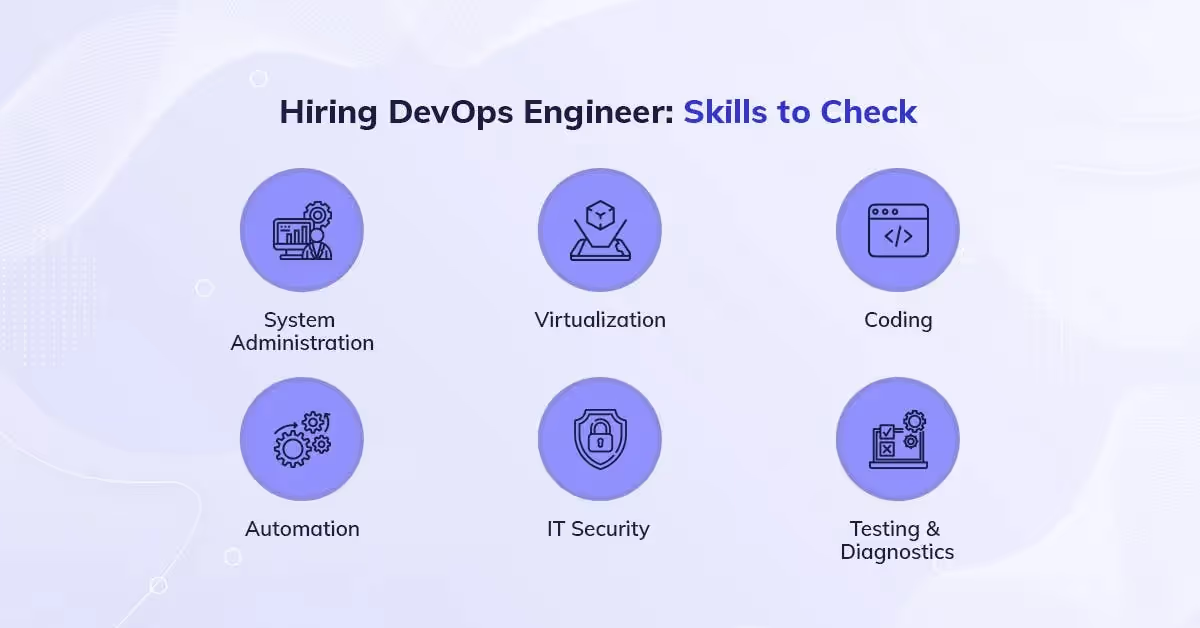
Hiring DevOps Engineer: Skills to check | Source: https://systango.com/blog/hiring-devops-engineer-here-is-all-you-need-to-know
Agents ship fast. Guardrails keep them safe.
Qovery ensures every agent action is scoped, audited, and policy-checked. Start deploying in under 10 minutes.
Below you can find some of the things that you should AVOID when hiring a DevOps engineer.
1. Don’t write job descriptions like unicorns
Avoiding unrealistic expectations is crucial. Writing job descriptions that ask for an unrealistic blend of skills and experiences, often referred to as seeking a "unicorn," can deter qualified candidates from applying. Instead of asking for a laundry list of skills, focus on the core competencies that are truly necessary for the role. If not, you'll end up with a narrow pool of applicants, potentially missing out on excellent candidates who might not meet every single requirement but possess the critical skills and potential to grow.
2. Don’t overlook the importance of experience
Hiring candidates without the necessary experience or proper guidance can be risky. DevOps engineers need hands-on experience with various tools, processes, and methodologies to be effective. While junior candidates can grow into the role, it's essential to provide them with mentorship and support. An inexperienced hire without proper support can lead to mistakes, inefficiencies, and a slower time to achieve DevOps maturity. This can ultimately result in project delays and increased operational costs.
3. Don’t ignore cultural fit
Cultural fit is paramount in building a cohesive team. A DevOps engineer should not only have the technical skills but also align with the company's values and work well with the existing team. Ignoring cultural fit can lead to discord and reduced productivity. Hiring someone who doesn't mesh well with the team can cause friction, lower morale, and potentially lead to higher turnover rates. This disrupts team dynamics and can adversely affect project outcomes.
4. Don’t rush the hiring process
Taking the time to find the right fit is critical. Rushing the hiring process can result in poor decisions and ultimately the wrong hire. Ensure you have a thorough and deliberate process in place to evaluate candidates. Hastily hiring can lead to bringing on board someone who doesn't meet the company's needs or expectations. This can lead to costly hiring mistakes, requiring additional resources to correct or replace the hire.
5. Don’t neglect onboarding and training
Proper onboarding and continuous training are essential to integrate and support new hires effectively. DevOps roles involve constantly evolving tools and practices, so it's crucial to provide ongoing learning opportunities. Neglecting onboarding and training can result in new hires feeling unsupported and overwhelmed, reducing their effectiveness and increasing the likelihood of mistakes. This can also lead to higher attrition rates as employees seek better support elsewhere.
6. Don’t rely solely on technical interviews
While technical skills are important, practical assessments and evaluating soft skills are equally crucial. Technical interviews should be complemented with real-world problem-solving tasks and assessments of communication, collaboration, and adaptability. Focusing solely on technical interviews might result in hiring someone who excels technically but lacks the soft skills necessary for teamwork and effective communication. This imbalance can inhibit collaboration and project success.
When to Hire Your First DevOps Engineer?
Now that you know the Dos and Dont’s of your first DevOps hiring, the next question is “When should I hire the first DevOps engineer?”. Below are some of the considerations.
Complexity & Scale
As your small company or startup grows, so does the complexity of your codebase and infrastructure. If you notice that your development team is struggling with frequent deployments, managing servers, or maintaining complex infrastructure, it may be time to hire a DevOps engineer. They can streamline processes, automate repetitive tasks, and ensure that your infrastructure scales efficiently with your growth. Ignoring the increasing complexity can lead to bottlenecks, decreased productivity, and a higher risk of system failures.
Speed & Efficiency
This is the era of startups, where competition is tough, and speed and efficiency are crucial. If your team is experiencing delays in deployments, or if optimizing development workflows has become a priority, a DevOps engineer can significantly contribute to achieving these goals. They bring expertise in continuous integration and continuous delivery (CI/CD) pipelines, automation, and monitoring, which can help your team deploy faster and with greater confidence. Without a DevOps engineer, you might face slower release cycles, increased downtime, and a less agile development process, all of which can hinder your startup's ability to compete and innovate.
Are There Any Alternatives?
While hiring a dedicated DevOps engineer offers many benefits, it's understandable if your resources are limited or you're new to the DevOps world. In these cases, consider exploring Kubernetes management platforms like Qovery as an alternative to immediately hiring an engineer.
Why Qovery?
Qovery acts as your virtual DevOps autopilot, automating key tasks (CI/CD pipelines, deployments) through a user-friendly interface. This streamlines your workflow, freeing up your team to focus on core development activities.
Some key benefits:
Reduced hiring needs: Get a jump start on your DevOps journey without the immediate need for a dedicated DevOps engineer.
Simplified workflow: Qovery's DevOps autopilot automates key tasks, reducing manual work and streamlining your development process.
Developer experience focused: The platform is easy to learn and use, even for teams new to DevOps.
Conclusion
Hiring your first DevOps engineer is a pivotal step that can greatly impact your organization’s growth and efficiency. By clearly defining job responsibilities, focusing on core competencies, and avoiding common pitfalls, you can attract the right talent. Take your time with the hiring process, ensure proper onboarding, and consider both technical and cultural fit. For startups and growing companies, the timing of this hire is critical, driven by the complexity and scale of your operations, as well as the need for speed and efficiency. If resources are limited, consider alternatives like Qovery to kickstart your DevOps journey. Following these guidelines will set your organization up for long-term success.
Morgan co-founded Qovery and leads engineering. He writes about Kubernetes architecture, DevOps best practices, and building resilient infrastructure at scale.
Next step
Agents ship fast. Guardrails keep them safe.
Qovery ensures every agent action is scoped, audited, and policy-checked. Start deploying in under 10 minutes.