DevOps vs. Platform Engineering: What's the Real Difference?
DevOps is a culture, while Platform Engineering is a practice. Discover how these two concepts differ, how they complement each other, and why a strong platform can make your DevOps teams more productive.
This article aims to explain these two essential concepts in contemporary software engineering. We will go through how DevOps has revolutionized the industry, explore the emerging role of Platform Engineering, and compare their distinct methodologies and impacts. Through real-world examples, we will illustrate how these approaches uniquely shape software development and delivery. Understanding their differences and synergies will help you optimize your team’s productivity and effectively manage the dynamic challenges of today's tech landscape. Let's start with the DevOps first.
How DevOps revolutionizes software development and delivery
A. Definition, History, and Core Principles of DevOps
DevOps, a blend of 'Development' and 'Operations,' is a progressive approach to software development that emphasizes teamwork, automation, and continuous improvement. It began in the late 2000s as a solution to the isolated working of traditional software development and IT operations. DevOps is built on five main principles, often referred to by the acronym CALMS: Culture, Automation, Lean, Measurement, and Sharing. These principles involve promoting teamwork and communication, using automation to make processes more efficient, applying lean methods to increase productivity, measuring results for ongoing enhancement, and sharing knowledge and skills across teams.
B. Overview of DevOps Practices, Tools, and Their Impact on Software Development and Operations
Continuous Integration and Continuous Delivery (CI/CD): Continuous integration (CI) and continuous delivery (CD) allow developers to merge their work frequently into a shared repository. Automated builds and tests lead to more dependable and quicker releases. This practice shortens development time, enhances product quality, and accelerates the release cycle.
Infrastructure as Code (IaC): Infrastructure as Code (IaC) revolutionizes infrastructure management by treating it like software code. This approach boosts consistency and scalability in managing computing resources. Tools like Jenkins, Docker, Kubernetes, and Ansible are essential in these processes, enabling smoother workflows and faster deployment times.
Infrastructure Monitoring and Management: Incorporating infrastructure monitoring tools is essential in a DevOps environment. These tools provide real-time insights into the performance and health of infrastructure, aiding in proactive issue resolution and ensuring high availability. Tools like Prometheus, Grafana, and Elastic Stack are commonly used for monitoring purposes. In this regard, platforms like Qovery can be instrumental. Qovery uniquely blends application deployment, cloud service simplicity, and infrastructure monitoring, making it an all-in-one solution for modern DevOps practices. Check it out!
Together, these DevOps practices have led to shorter development cycles, more frequent deployments, fewer deployment failures, and faster recovery from issues, thereby fundamentally changing the software development and deployment process.
Role of Platform Engineering in Software Engineering
A. Definition and emergence of Platform Engineering
Platform Engineering, an evolving field in software development, focuses on creating and managing a shared platform used by software engineers. This platform typically includes tools, services, and processes needed for software development and deployment. The concept emerged from the need to streamline and optimize the software development lifecycle, making it more efficient and less prone to errors. Unlike traditional approaches, which often operate in silos, Platform Engineering promotes a collaborative environment, integrating various aspects of software development and operations into a unified workflow. Platform engineers focus on building features that enhance the scalability and security of the software development environments, including QA, staging, and production.
B. Distinguishing roles and objectives of Platform Engineers
Platform engineers play a crucial role in shaping the efficiency and effectiveness of a software development team. Their primary objective is to build and maintain a robust, scalable, and secure platform that accelerates software development and deployment processes. This involves automating workflows, ensuring system reliability, and providing essential tools and environments for developers. Unlike DevOps, which focuses more on the intersection of development and operations, Platform Engineering is more about creating a foundational infrastructure that empowers developers to be more productive and focus on their core tasks without worrying about underlying systems. They also ensure compliance with privacy policies and data protection regulations.
C. Platform Engineering’s role in infrastructure management, developer support, and its contribution to the software lifecycle
In infrastructure management, Platform Engineers are responsible for the design, implementation, and maintenance of the underlying infrastructure that supports software development. This includes managing cloud resources, ensuring high availability, and implementing security best practices. In terms of developer support, they provide a seamless and integrated environment that simplifies development workflows, thereby reducing time-to-market and improving software quality. Moreover, Platform Engineering contributes significantly to the software lifecycle by introducing automation, standardization, and best practices. This approach not only streamlines the development process but also enhances the overall quality and reliability of the software products. Also, you should check this article if you want to read about the best DevOps tools for infrastructure automation.
Comparing Platform Engineering and DevOps
Let's dive into a comparison of approaches, focus areas, and methodologies
A. DevOps Vs. Platform Engineering Approaches
DevOps Approach:
Focuses on integrating development and operations through continuous automation of the software development lifecycle, including testing, deployment, and infrastructure changes.
Promotes a culture of collaboration, breaking down silos between developers and operations teams to promote better communication and problem-solving.
Implements agile processes to quickly respond to changes in the software environment, emphasizing continuous improvement and flexibility.
Platform Engineering approach:
Utilizes IaC for consistent and error-reduced provisioning and management of infrastructure, supporting scalable and repeatable development environments.
Develops self-service platforms and tools that empower developers to deploy necessary infrastructure and services autonomously, enhancing efficiency and innovation.
Focuses on creating standardized environments and governance models to ensure compliance, security, and operational efficiency across development projects.
B. DevOps Vs. Platform Engineering Focus
DevOps Focus:
Emphasizes continuous integration and continuous delivery (CI/CD) practices.
Aims to shorten the software development lifecycle.
Cultivates a culture of collaboration between development and operations.
Platform Engineering focus:
Develops and manages a shared platform or set of tools for software deployment.
Focuses on the infrastructure that supports software development and deployment.
C. DevOps Vs. Platform Engineering Methodologies
DevOps methodology:
Integrates tools, culture, and practices for enhanced team collaboration.
Utilizes CI/CD for efficient and continuous software updates.
Implements practices for rapid and reliable software delivery.
Platform Engineering methodologies:
Employs automation to streamline infrastructure management.
Emphasizes the creation of tools and services that empower developers.
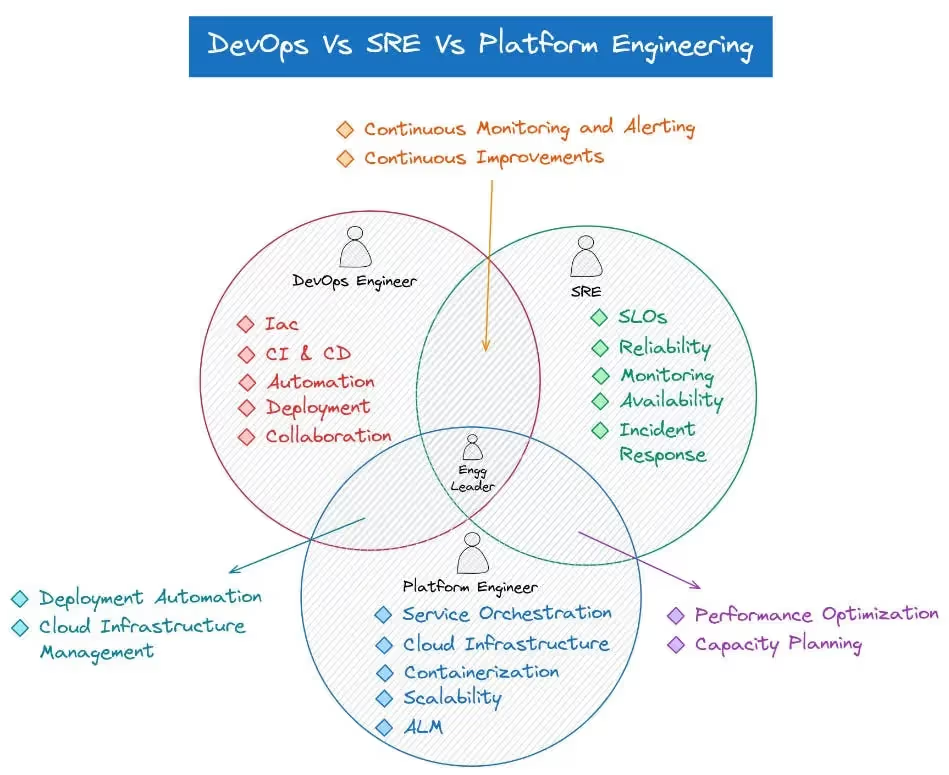
DevOps vs Platform Engineering. Source: https://www.devopsschool.com/blog/DevOps-Vs-SRE-Pla/
D. Checklist of Differences Between the Two Fields
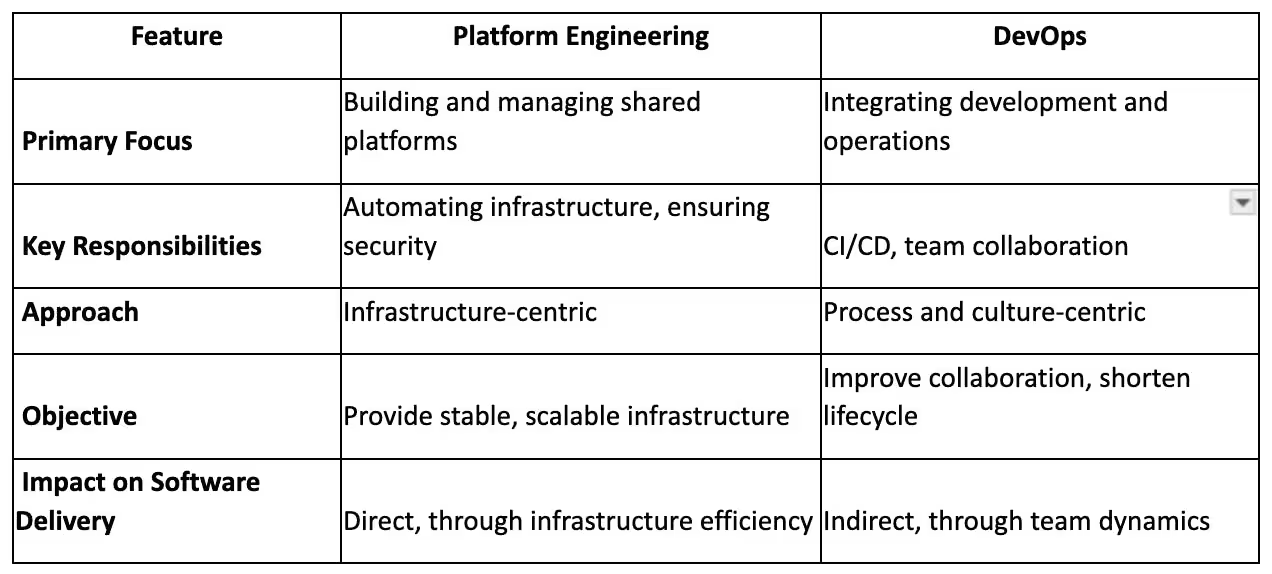
DevOps Vs. Platform Engineering: a Comparison
E. Concrete examples illustrating these differences
DevOps transformation at ABC Inc: At ABC Inc, the introduction of DevOps practices led to a cultural shift. By adopting tools like Jenkins for CI/CD and facilitating regular cross-departmental meetings, the teams were able to reduce software deployment time by 40%. This was not just a change in tools, but a change in how teams communicated and collaborated, leading to faster issue resolution and more frequent software releases.
Platform Engineering at XYZ Corp: XYZ Corp's platform engineering team developed a self-service portal that allowed developers to deploy applications into a pre-configured environment with minimal manual intervention. This initiative significantly reduced the time taken for deployment and ensured consistent security and compliance standards across all applications.
Agents ship fast. Guardrails keep them safe.
Qovery ensures every agent action is scoped, audited, and policy-checked. Start deploying in under 10 minutes.
Merging Platform Engineering with DevOps: Evolution and Impact
A. Analysis of how Platform Engineering and DevOps complement each other
Platform Engineering can be seen as the architectural backbone, focusing on creating and maintaining a robust platform that enables developers to build and deploy software efficiently. This discipline is about providing a consistent, reliable, and scalable infrastructure that includes everything from servers to databases and CI/CD pipelines. DevOps, on the other hand, is more about the processes and practices that enable continuous integration and deployment. It emphasizes collaboration between development and operations teams to automate and streamline the software delivery process.
When these two fields work in tandem, the result is a seamless software development lifecycle. Platform Engineering sets the stage with a solid foundation upon which DevOps practices can be effectively implemented. This synergy ensures that the infrastructure is not only stable and scalable but also flexible enough to adapt to the rapid changes characteristic of DevOps workflows.
B. Discussion on whether Platform Engineering is an evolution of DevOps
There is a growing perspective that Platform Engineering could be viewed as an evolution of DevOps. While DevOps broke down the barriers between development and operations, Platform Engineering takes this a step further by creating an environment where these streamlined processes can thrive. It is about building an ecosystem that supports the principles of DevOps – continuous integration, continuous delivery, and rapid deployment.
However, it is crucial to note that Platform Engineering does not replace DevOps. Instead, it complements and extends it. Platform Engineering provides the tools and infrastructure that enable DevOps practices to be more effective and efficient.
C. The combined impact of both disciplines on organizational structures, software development processes, and team productivity
The unification of Platform Engineering and DevOps has a transformative impact on organizational structures and software development processes. It leads to a more integrated approach, where teams are not working in silos but collaboratively towards common goals. This integration creates a culture of innovation and continuous improvement, which is crucial in today’s fast-paced tech environment.
In terms of team productivity, the blend of these disciplines offers a streamlined workflow with fewer bottlenecks. Thanks to the stable platforms provided by platform engineering, developers can focus more on writing code and less on the underlying infrastructure challenges. Simultaneously, the adoption of DevOps practices ensures rapid deployment and feedback, leading to quicker iterations and a more responsive development cycle.
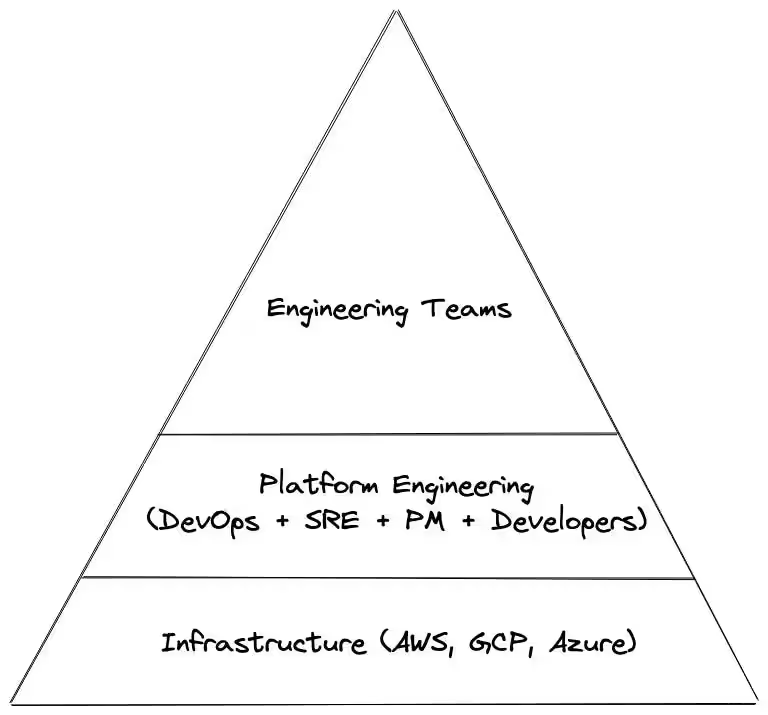
DevOps is part of Platform Engineering. Source: Qovery.com
Conclusion
This article has clearly explained Platform Engineering and DevOps's different but complementary roles in software development. Platform Engineering creates the essential infrastructure, making development processes efficient and secure. On the other hand, DevOps connects development and operations, promoting a culture of ongoing integration and delivery. Their combined use is crucial in today's fast-changing tech world, providing a strong approach for faster deployment, better teamwork, and higher-quality software. As technology keeps evolving, blending Platform Engineering with DevOps will become more important for driving innovation, efficiency, and flexibility in software development and delivery. This combination helps teams meet the constantly shifting challenges of software engineering, ensuring a sturdy and responsive strategy for the demands of the digital era.
If you're interested in learning more about Qovery, start your free trial or contact us for more information!
Morgan co-founded Qovery and leads engineering. He writes about Kubernetes architecture, DevOps best practices, and building resilient infrastructure at scale.
Next step
Agents ship fast. Guardrails keep them safe.
Qovery ensures every agent action is scoped, audited, and policy-checked. Start deploying in under 10 minutes.