Feature flags, powerful tools in the realm of software development, act as gatekeepers in both staging and live production environments. They determine which features get launched and which stay hidden. As company applications evolve, developers consistently release a plethora of features, and the ability to toggle these on or off through feature flag configuration without delving deep into the code has heightened the significance of feature flags. However, with the influx of new features, managing these toggles becomes a challenge, especially in a live production environment where changes can directly impact users.
Testing a feature flag in production isn’t solely about its activation or deactivation; it’s about ensuring the entire application remains robust and efficient post that decision. Enter ephemeral environments – temporary deployment environments that closely mirror production but are specifically designed for testing or developmental tasks. These environments have risen as a beacon of hope, allowing developers to test their code and feature flags in a space that’s almost an exact replica of the main application environment. They significantly cut down the time and effort required to manage and support feature flag modifications before a full-scale release. This flexibility ensures that developers can experiment without the persistent need to modify the main application. As the software development landscape of a company evolves, integrating ephemeral environments with feature flags streamline the process, benefiting both developers and product managers.
A decade ago, feature flags were an obscure development technique, a mere footnote in the grand script of software creation. But as agile development began its meteoric ascent, so did these humble toggles. With every revision, refactor, and release, they gained traction.
Why Feature Flags Matter
At its core, a feature flag is a decision. Should a feature be on or off? Visible or hidden?
With the rapid pace of application development today, the need for agility and adaptability has skyrocketed. Here's where feature flags swoop in. Below are some key use cases and benefits of using feature flags:
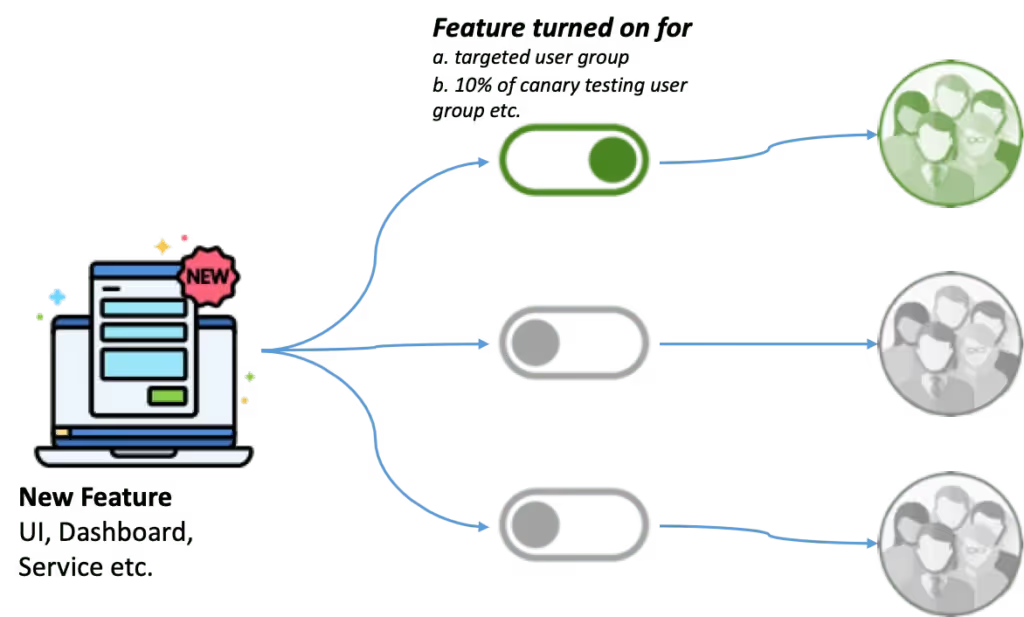
Gradual Rollouts: Want to unveil a new feature, but nervous about how it'll be received? Feature flags let you dip your toes, releasing to a fraction of users.
Experimentation: Need to A/B test a fresh interface against the old one? Use flags to alternate views.
Hotfixes: Bugs are every developer's nemesis. But with feature flags, you can toggle off the problematic part, buy some time, fix the code, and then bring the feature back.
How feature flags work | Source: https://peerislands.io/feature-flags-for-rapid-development-and-continuous-delivery
Harnessing Flags: Navigating the Complexity
Development can be chaotic. With myriad features, how do you manage? Feature flags, if not kept in check, can lead to an entangled web. Effective feature flag management becomes the lighthouse, guiding developers through turbulent waters. Here are some common challenges and solutions in feature flag management:
Development vs. Production: Ephemeral environments come into play. Test features in a fleeting environment, distinct from the main production setup.
Time-sensitive Features: Some features are tied to events or seasons. Feature flags help toggle them as the time demands.
Ease of Management: Too many flags? With the right tools, you can categorize, toggle, and remove flags seamlessly, ensuring your application doesn't become a convoluted mess.
The Power of Ephemeral Environments
What are Ephemeral Environments?
Ephemeral environments, temporary and short-lived, represent a critical facet of modern development practices.
An ephemeral environment is an on-demand setup used for development or testing. Think of it as a digital sandbox: created temporarily for a specific need and then deleted after its purpose is served.
How Do They Differ From Standard Environments?
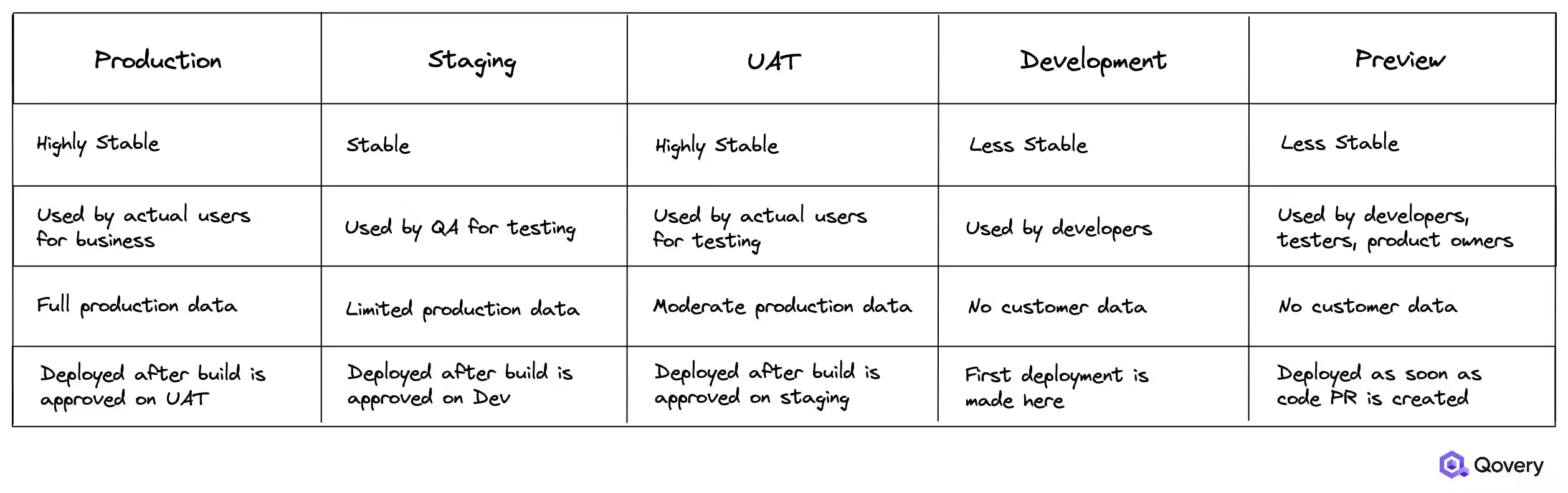
In contrast to production or stable development environments, which are long-standing and might accumulate changes and data over time, ephemeral ones are on-demand, clean, and serve one task or feature at a time.
How preview (ephemeral) environments compare with other environments | Source: https://qovery.com/blog/everything-you-need-to-know-about-deployments-environments
Ephemeral Environments & DevOps: A Symbiotic Relationship
DevOps streamlines both development (Dev) and operations (Ops) processes. In the realm of DevOps, the integration of ephemeral environments provides distinct advantages:
Rapid Feedback: Developers can create an environment, test a feature or piece of code, and get immediate feedback without waiting in queue.
Infrastructure as Code (IaC): Ephemeral environments complement beautifully with IaC. Want a new environment? Just whip up some code, and there you have it. No more fiddling around manually.
Isolation: No more, "But it works on my machine!" scenarios. Every developer works in an isolated environment, ensuring consistency.
Feature Flags and Ephemeral Environments: Enhancing Workflows
Harnessing the combined strengths of feature flags and ephemeral environments can significantly improve the efficiency and effectiveness of development workflows. Here are some of the primary ways they do so:
Toggling Features with Ease
Feature flags give developers the power to turn a feature on or off without altering the core code. When you introduce these flags into an ephemeral environment, the synergy is undeniable. The transient nature of ephemeral environments allows for safe testing of these toggles, ensuring that every activation or deactivation of a feature is seamless and risk-free. In essence, while feature flags offer control, ephemeral environments provide the perfect stage for that control to be exercised without repercussions. Test a feature toggle in a risk-free environment that mimics production. Turn it on, turn it off, and observe the results in real-time.
Risk Reduction
Ephemeral environments allow developers to test the effect of turning a feature flag on or off without potential repercussions in a live environment.
Imagine releasing a new product feature to a subset of users. In an ephemeral environment, you get to see the effects without the broader implications.
Managing Multiple Flags
Developers often juggle multiple feature flags. With each flag representing a set of changes or a new feature, the development process can become muddled. Enter ephemeral environments. Create one for each flag. Test one. Move to the next. It’s systematic and streamlined.
Challenges in Feature Flag Management
The Labyrinth of Feature Flag Challenges
So many features, so little time! As organizations use feature flags more, a cascade of issues arises, muddying development and release processes. Below are some of the challenges in the effective management of feature flags.
Flag Sprawl: Remember how opening your drawer for one pen can sometimes reveal a mountain of them? That's flag sprawl for developers. The code can be difficult to navigate, manage, and maintain as feature flags increase.
Version Control Issues: Night terror for all developers! Managing feature flags across application versions can be confusing. What if you need to erase changes? What happens when multiple feature flags interact unexpectedly in a version?
The irony of bottleneck testing. Features that streamline testing can be its bottleneck. Multiple flags indicate environments. This exponentially increases test scenarios. Keeping each environment as close to production is another issue.
Monitoring Complexities: Simply setting and releasing feature flags isn't enough. How can their performance be monitored? And how can you ensure they support user flows without causing application issues?
Ephemeral Environments: The Unsung Heroes of Feature Flag Management
Ephemeral environments are temporary environments created for a task and then discarded. They play a pivotal role in enhancing the management of feature flags in the following ways:
Flag Sprawl: Ephemeral environments isolate feature flag testing. This keeps the main code clean and manageable.
Streamlined Version Control: Test flags or changes in an ephemeral environment, then discard. This preserves version control and simplifies overlapping feature flags.
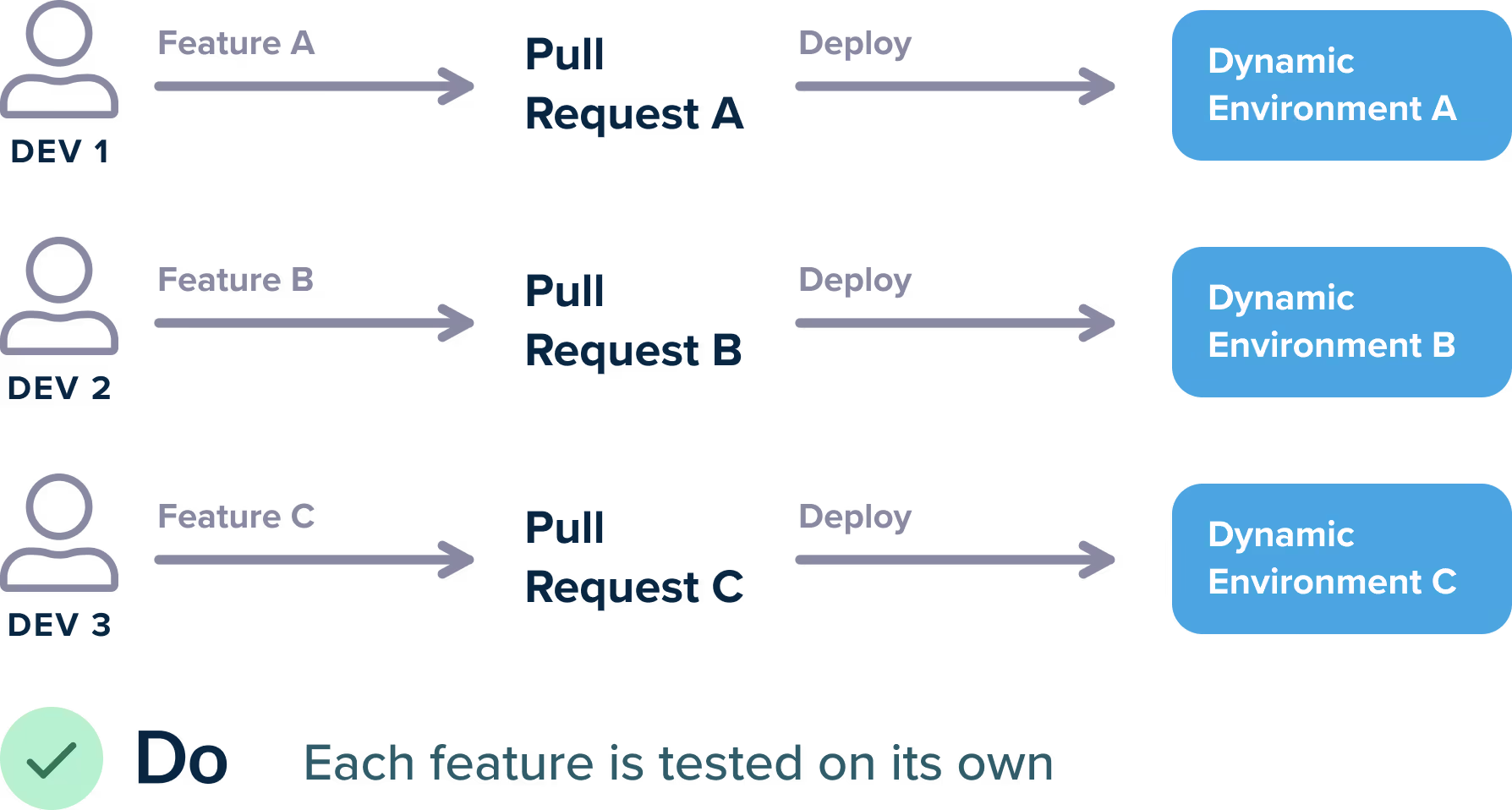
Avoiding Testing Bottlenecks: Ephemeral environments let you test each feature flag in its own bubble, mimicking production. The testing process is greatly accelerated and accurate.
Monitoring is easy with each feature flag tested in its own environment. Developers can track performance, identify issues, and make real-time adjustments without affecting the main application.
How ephemeral environments allow testing each feature in isolation | Source: https://codefresh.io/docs/docs/ci-cd-guides/preview-environments
Agents ship fast. Guardrails keep them safe.
Qovery ensures every agent action is scoped, audited, and policy-checked. Start deploying in under 10 minutes.
Benefits of Using Ephemeral Environments for Feature Flag Management
Advantages of Integration: Why Ephemeral Environments Shine
To understand the full scope of ephemeral environments in feature flag management, let's dive into some key advantages:
Maximized Testing Efficiency
The ephemeral environment comes as a savior when you need an environment that's temporary and isolated. You provision it, use it, and then discard it. With the ability to test each feature flag in these fleeting spaces, the test process becomes streamlined. The ephemeral nature ensures there's no trace left, making sure every test is fresh, untouched.
Cost and Time Efficiency
Time is money, they say. By cutting down on the time to create and manage permanent testing environments, developers can release features faster, benefiting both the development timeline and the product's budget.
Testing Variations in Consistent Environments
Consistency with Flexibility
Picture this: You're a developer needing to test five variations of a feature flag. Without ephemeral environments, you might end up juggling several versions of your application. Messy, right? But with ephemeral environments, you set up, test, and tear down, each time with a clean slate.
Multiple Scenarios, One Goal
Testing isn't about just "does it work?" but also "how does it work under various conditions?" Ephemeral environments allow developers to toggle flags, make code changes, and set different conditions, ensuring comprehensive testing.
Reducing Risks: Secure Implementations & Rollouts
In the realm of software development, securing implementations and managing rollouts can be challenging. But with the right tools and strategies, risks can be minimized:
A Safety Net for Developers
No longer do you have to live on the edge, releasing a feature flag and praying it won't break the production application. Test in the ephemeral, release in the production. The two environments might sound like different worlds, but they're connected in purpose: making sure the product shines without hitches.
Controlled Changes and Toggles
We've all been there: a change goes live, and suddenly support is swamped. But with ephemeral environments, feature flags can be tested extensively. Developers can manage, toggle, and set variations, ensuring that once it hits production, it's as smooth as silk.
Process Optimization
The whole process of feature flag management becomes optimized. The ephemeral environments support developers in ensuring that when they make changes or release features, they've been through the grind and come out polished.
A Testing Revolution
How ephemeral environments revolutionize the testing of feature flags at scale
Here's where it gets intriguing. In an ephemeral environment, you're basically working in a sandbox. It's isolated from your main house (the production environment). Imagine testing a new room design (a feature) in this sandbox. Wouldn't a switch (feature flag) to turn on the lights be useful?
It's not about just "turning on" and "turning off". Sometimes, you might want to adjust the brightness. Feature flags allow such flexibility.
Practical Scenarios:
Imagine you have a new feature in development. But, you're unsure if it's ready for the big league (production). What do you do? You test it in the bubble (ephemeral environment) with the switch (feature flag) at your fingertips.
Need to showcase two versions of the same feature to different stakeholders? No worries. Create two bubbles, adjust your switches differently, and voila!
For those exploring the integration of ephemeral environments and feature flags in their workflows, platforms like Qovery provide seamless tools and support, ensuring you get the most out of your development process.
Feature Flags Management: What, Why, and How?
Feature flags are like magic wands in a developer's toolkit. They allow developers to toggle features in an application and test them without affecting the entire production environment. But, with great power comes the need for great management.
Key Aspects of Feature Flags
Feature Flags in Ephemeral Environments
Seamless Integration: Integrate feature flags within ephemeral environments. With such a setup, developers can create, test, and discard environments with no long-term commitment.
Ephemeral: Present now, gone shortly: Time is of the essence. Unlike stable production environments that are set for a longer haul, ephemeral ones are like pop-up shops – serving a need, then folding up.
Automated Testing & CI/CD Pipelines
Test automatically, and release confidently. Automating the testing process ensures the changes made using feature flags are vetted before they're rolled out.
CI/CD pipelines come as a boon here. When the code is committed, pipelines help in validating the feature flags within these transient environments.
Parallel Testing - Two Birds, One Stone:
With ephemeral environments, testing multiple feature flags concurrently isn't just a wish-it's a reality. Now, developers don't have to wait in a queue. Multiple tests? Multiple environments. Simultaneously.
The Underlying Benefits
Speed: Need to test a new feature flag? Create an environment, test, and poof! It's gone once you're done.
Flexibility: Test a feature, toggle it, make changes, and do all this without affecting the main product.
Efficiency: With CI/CD support, the product release cycle becomes smoother, ensuring the features are well-prepared and robust.
Conclusion
A dynamic mechanism to release, manage, and test features in applications, feature flags have changed software development. Despite their importance, handling these flags in large-scale environments can be difficult. Ephemeral environments,like those offered by Qovery, make the management of feature flags easier. These on-demand, isolated environments are ideal for testing, toggling, and validating feature flags before production. By using ephemeral environments, development teams can mitigate challenges like flag sprawl, complex versioning, and testing bottlenecks. Using feature flags and ephemeral environments streamlines development and deployment and creates a safer, more regulated environment for product updates. Development teams must use feature flags and ephemeral environments as software development evolves. They optimize time and code quality, setting themselves up for success. Therefore, people who want to revolutionize feature flag management should explore ephemeral environments and their immense possibilities.
Morgan co-founded Qovery and leads engineering. He writes about Kubernetes architecture, DevOps best practices, and building resilient infrastructure at scale.
Next step
Agents ship fast. Guardrails keep them safe.
Qovery ensures every agent action is scoped, audited, and policy-checked. Start deploying in under 10 minutes.