What is Developer Experience (DevEx) and Why It Matters?
Developer Experience (DevEx) has rapidly gained attention and emerged as a pivotal factor influencing not only the efficacy of software creation but also the overall satisfaction and productivity of developers. But what exactly is DevEx, and why is it so crucial? In this article I will address the multifaceted nature of DevEx, exploring its significance, components, and practical strategies to enhance it.
Let’s start by understanding what exactly is a Developer Experience (DevEx).
What is Developer Experience (DevEx)?
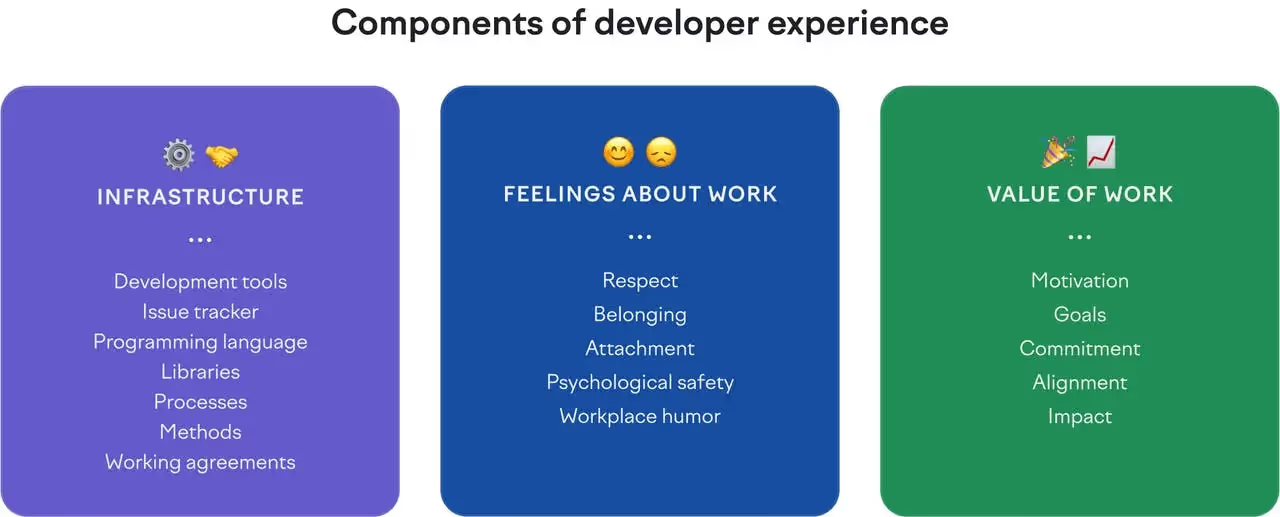
Developer Experience, often abbreviated as DevEx or DX, refers to the overall quality of a developer's interaction with their work environment, encompassing tools, processes, and organizational culture. It focuses on creating a seamless, efficient, and enjoyable environment for software development. The essence of DevEx lies in its holistic approach:
Tools and Technologies: The right set of development tools and integrations is essential. These should be intuitive, seamlessly integrated, and designed to simplify and speed up development tasks.
Work Environment: This involves creating a workspace-both physical and virtual-that facilitates concentration and minimizes distractions, allowing developers to maintain focus and productivity.
Processes: Effective DevEx requires streamlined development processes that support fast and reliable software creation. This includes practices like continuous integration and continuous delivery (CI/CD) that automate parts of the development lifecycle to reduce manual effort and error.
Cultural Dynamics: A supportive company culture that promotes collaboration, open communication, and ongoing learning is crucial. This aspect of DevEx focuses on making developers feel valued and engaged with their work.
Feedback Mechanisms: Regular and constructive feedback is vital to refine and improve the tools and processes that affect DevEx. This could involve user testing, surveys, and regular review sessions to gather developer input and act on it.
By optimizing these components, DevEx aims to enhance developer satisfaction and productivity, which directly impacts the quality of software and the success of development projects.
Components of Developer Experience (DevEx) | Source: https://www.swarmia.com/blog/developer-experience-what-why-how/
Why is Developer Experience (DevEx) important?
Impacts on the Software Development Life Cycle (SDLC)
A positive Developer Experience (DevEx) significantly enhances the software development life cycle (SDLC) by improving speed, quality, and efficiency. For instance, a study revealed that developers manage an average of 14 different tools, and a streamlined toolset can significantly enhance their productivity. High-quality tools reduce friction and toil, enabling developers to produce robust code swiftly and with fewer errors. Automated testing and streamlined deployment processes accelerate time to market and reduce maintenance challenges.
Broader Implications
A strong Developer Experience (DevEx) is essential not just for enhancing the technical aspects of software development but also for its significant impact on team dynamics and organizational outcomes. Enhanced DevEx boosts morale, as evident from the 52% of developers who cite burnout as a major reason for leaving their jobs, demonstrating the need for supportive work environments. On the retention front, Gartner predicts that companies with dedicated DevEx initiatives will double their retention rates by 2027, proving that a good DevEx is a key strategy in maintaining a skilled workforce. Also, prioritizing DevEx makes companies more attractive to top tech talent, who prefer companies that offer well-supported and efficient work environments.
This holistic approach not only retains current talent but also attracts new innovators, fostering a cycle of ongoing improvement and success.
What makes a good Developer Experience (DevEx)?
A good Developer Experience (DevEx) is a blend of several factors that collectively create an environment where developers can do their best work. Here are some key characteristics that contribute to a good DevEx:
User-friendly / Low levels of friction or toil: Tools and environments are intuitively designed, minimizing friction and streamlining developers' workflows for enhanced productivity.
Collaboration: Effective collaboration tools and practices empower developers to share ideas and solutions, fostering a team-oriented approach to problem-solving.
Speed: Development processes are optimized to accelerate workflows, enabling quick transitions from development to deployment.
Short feedback loops: Regular and rapid feedback mechanisms are integrated, allowing developers to quickly iterate on and improve their work.
Automation and integration: Key tasks are automated and systems are seamlessly integrated, reducing manual effort and enhancing efficiency.
Transparent, well-documented processes: Clear and accessible documentation supports all processes, making it easy for developers to understand and follow best practices.
What are key developer experience metrics?
To measure the effectiveness of Developer Experience (DevEx), 5 key metrics can be used. These metrics provide insights into the overall satisfaction of developers, the efficiency of development processes, and the retention of talent within the organization.
The number of deployments per day or week is another important metric that indicates the velocity of the development team. For instance, if a team deploys five times in the first week, seven times in the second, nine times in week three, and three times in the final week, the deployment frequency is six deployments per week.
4. Mean Time to Recovery (MTTR) from Incidents
Mean Time to Recovery (MTTR) measures how long it takes to recover from a partial service interruption or total failure. This is an important metric to track, regardless of whether the interruption is the result of a recent deployment or an isolated system failure.
5. Developer Retention and Attrition Rates
Developer retention and attrition rates provide insights into the ability of an organization to retain talent and the rate at which developers leave the organization. For example, In the tech sector, developer attrition remains a significant challenge, with 52% of developers citing burnout as a key reason for leaving their roles. Additionally, the onboarding process for new developers is notably prolonged, with 71% of executives stating that it takes at least two months to fully integrate new hires, which can influence their tenure and overall retention (Source: Harness).
Tips to improve Developer Experience (DevEx)
Improving Developer Experience (DevEx) is a continuous process that involves various strategies. Here are some practical ways to enhance DevEx:
Investing in Better Development Tools and Infrastructure
Investing in user-friendly, efficient, and reliable development tools and infrastructure is crucial for a positive DevEx. This includes development environments, version control systems, testing frameworks, and deployment platforms. Providing developers with these tools can greatly enhance their productivity and satisfaction.
Encouraging and Facilitating Continuous Learning and Professional Development
Ongoing learning and development are pivotal to a positive DevEx. Encouraging developers to stay current with new technologies and methodologies nurtures a culture of innovation and perpetual enhancement.
Promoting a Culture of Collaboration and Open Communication
Effective communication within the team is vital for a positive DevEx. Seamless collaboration tools and effective communication channels facilitate information sharing, problem-solving, and decision-making processes. Developers need to be able to easily communicate and share with each other to do their best work.
Implementing Efficient DevOps Practices and Automation
Implementing efficient DevOps practices and automation can streamline workflows, automate repetitive tasks, and establish continuous integration/continuous delivery (CI/CD) pipelines. These practices enhance the developer experience by reducing manual work, minimizing errors, and accelerating the software development lifecycle.
Regularly Collecting and Acting on Developer Feedback
Regularly collecting and acting on developer feedback is crucial for improving DevEx. Feedback provides insights into what developers like and dislike, helping to identify areas for improvement. By acting on this feedback, organizations can make targeted improvements that enhance the overall developer experience.
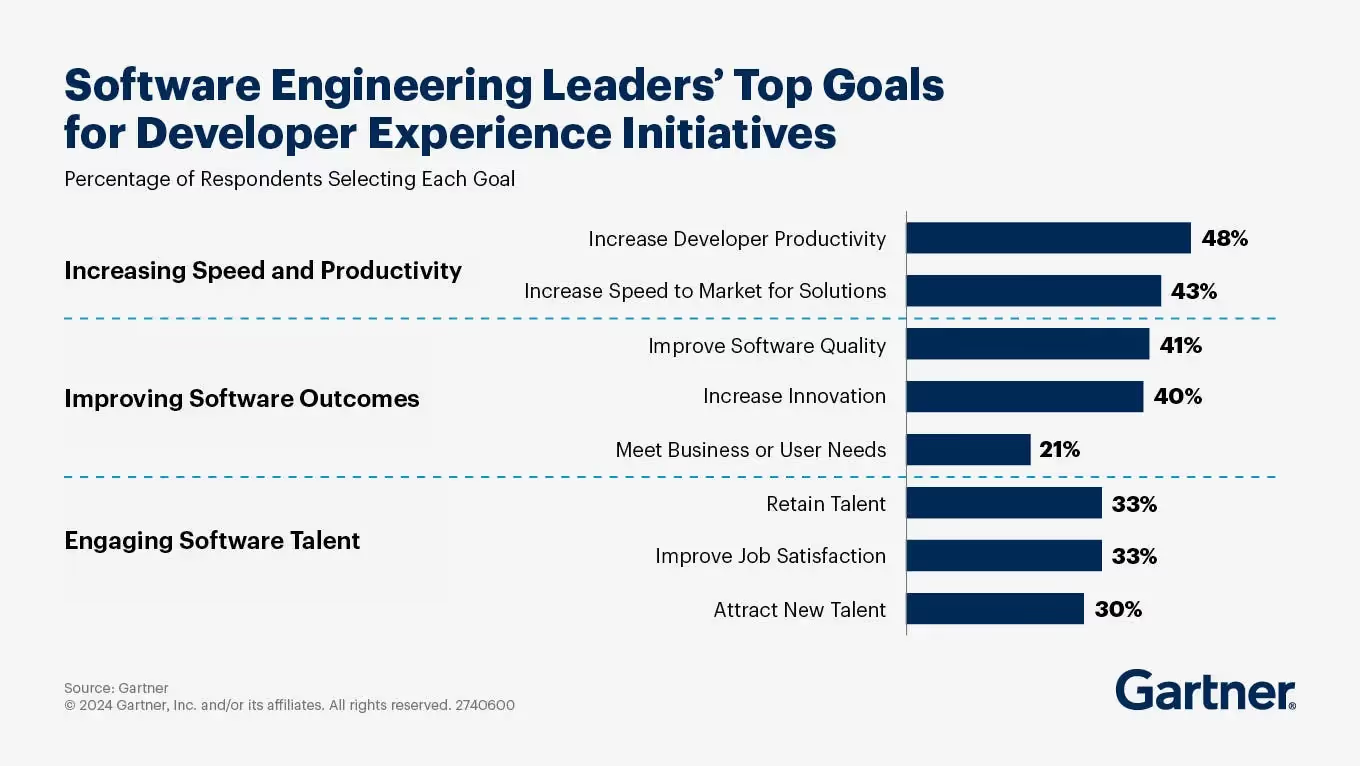
Top Goals for DevEx initiatives | Source: https://www.gartner.com/en/software-engineering/topics/developer-experience
Agents ship fast. Guardrails keep them safe.
Qovery ensures every agent action is scoped, audited, and policy-checked. Start deploying in under 10 minutes.
What role do Internal Developer Platforms (IDPs) play in the Developer Experience?
An internal developer platform (IDP) is a set of tools within a company that streamlines the software development process. It provides developers with resources to manage environments, deploy code, and leverage Kubernetes easily, all in one place. Check out our existing article if you want to understand IDP in detail. Below we have compiled different factors of an IDP that enhances DevEx.
Centralizing Management of Development Environments, Deployments, and Infrastructure
IDPs centralize the management of development environments, deployments, and infrastructure. They provide a project-based, curated set of reusable Infrastructure as Code (IaC) templates. This ensures that code and development environments always align and all contributors operate from a consistent configuration.
Moreover, IDPs standardize development processes across the organization, ensuring that all developers follow unified guidelines and best practices, which reduces variability and improves overall code quality.
Simplifying Kubernetes Deployments and Management
IDPs simplify Kubernetes deployments and management. They provide a way to package, deploy, and manage applications on Kubernetes. For instance, Helm, a package manager for Kubernetes, simplifies the process of installing, upgrading, and removing applications by using reusable chart templates.
Enabling Developers to Quickly and Easily Spin Up and Down Development Environments
IDPs enable developers to quickly and easily spin up and down development environments. Developers can deploy a preconfigured environment for any stage of the development cycle. This eliminates spending time setting up and maintaining local development environments, leading to increased productivity and faster time to market for projects.
How does Qovery as IDP improve DevEx?
Qovery stands out by enhancing the DevEx through its Internal Developer Platform. Which means providing:
Centralized Management
Qovery acts as a single hub for managing development environments, deployments, and infrastructure. This eliminates the need to juggle multiple tools and ensures consistency across projects.
Simplified Kubernetes
Kubernetes deployments become effortless with Qovery. It provides intuitive tools for packaging, deploying, and managing applications on Kubernetes, making it accessible even for developers without extensive expertise.
Ephemeral Environments on Demand
Quickly spin up and down pre-configured development environments for any stage of the development cycle. This eliminates the time spent setting up and maintaining local environments, boosting productivity and accelerating time-to-market.
Conclusion
Prioritizing Developer Experience (DevEx) is crucial for any organization aiming to enhance its software development lifecycle and overall project success. By focusing on improving DevEx, Kubernetes management platforms like Qovery are at the forefront of this initiative, providing a platform where DevEx is central to its functionality. As we continue to explore the dimensions of DevEx, consider how elevating DevEx could transform your projects and position your teams for greater success in your competitive landscape.
To experience first-hand the power of a great Developer Experience Infrastructure with Qovery, start a 14-day free trial - no credit card required!
Frequently asked questions
What is developer experience?
Developer experience, or DevEx, is the overall quality of a developer's interaction with the tools, systems and processes they use to do their work. It spans the whole loop: writing code, getting feedback, testing, deploying and operating what they shipped.
Why does developer experience matter to a business?
Because it multiplies. Friction in the daily loop taxes every change every engineer makes, so improvements compound with team size. Beyond throughput it affects retention and onboarding speed, both of which are expensive to get wrong and slow to recover from.
What makes a good developer experience?
Short feedback loops, so a developer learns whether a change works in minutes rather than hours. Environments that are reproducible rather than hand-configured. Self-service access to what they need without filing tickets. And documentation and tooling that make the correct path also the easiest one.
How do you measure developer experience?
Pair delivery metrics with developer sentiment. Time to deploy and cycle time show whether the system is genuinely faster. Satisfaction scores catch friction that never appears in pipeline data, such as a painful local setup or an approval step everyone works around.
Is developer experience the same as developer productivity?
Related but not identical. Productivity is output; experience is the conditions that produce it. Measuring output alone rewards activity over outcomes and misses the friction that makes good engineers leave, which is why most teams track both rather than choosing one.
Morgan co-founded Qovery and leads engineering. He writes about Kubernetes architecture, DevOps best practices, and building resilient infrastructure at scale.
Next step
Agents ship fast. Guardrails keep them safe.
Qovery ensures every agent action is scoped, audited, and policy-checked. Start deploying in under 10 minutes.