Challenges to Anticipate When Transitioning to an Internal Developer Platform
Internal Developer Platforms (IDPs) are gaining significance in contemporary software development because they can transform an organization's software delivery by facilitating automation and productivity across large teams or by permitting smaller teams without dedicated DevOps engineers the ability to deploy at scale. The migration of existing projects, protocols, and infrastructure to the new platform can make the transition to an IDP challenging for businesses. A learning curve is also associated with IDP tools, processes, and cultural shifts for development teams. For maximizing the benefits of an IDP, cross-functional collaboration between development and operations teams (DevOps) is essential. In this article, we will discuss not only these challenges but also how to combat these challenges with best practices.
Let's first understand the IDP and its benefits to businesses.
Overview of Internal Developer Platforms (IDPs)
What is an Internal Developer Platform?
An Internal Developer Platform (IDP) is a cloud-based tool tailored for developers. It facilitates the automation of DevOps duties that impede rapid provisioning, iteration, and deployment. IDPs provide abstraction for various facets of development, including infrastructure and networking, enabling developers to automate repetitive tasks and configurations. They also integrate with the dozens or potentially hundreds of tools and microservices that cloud-native application deployment teams require.
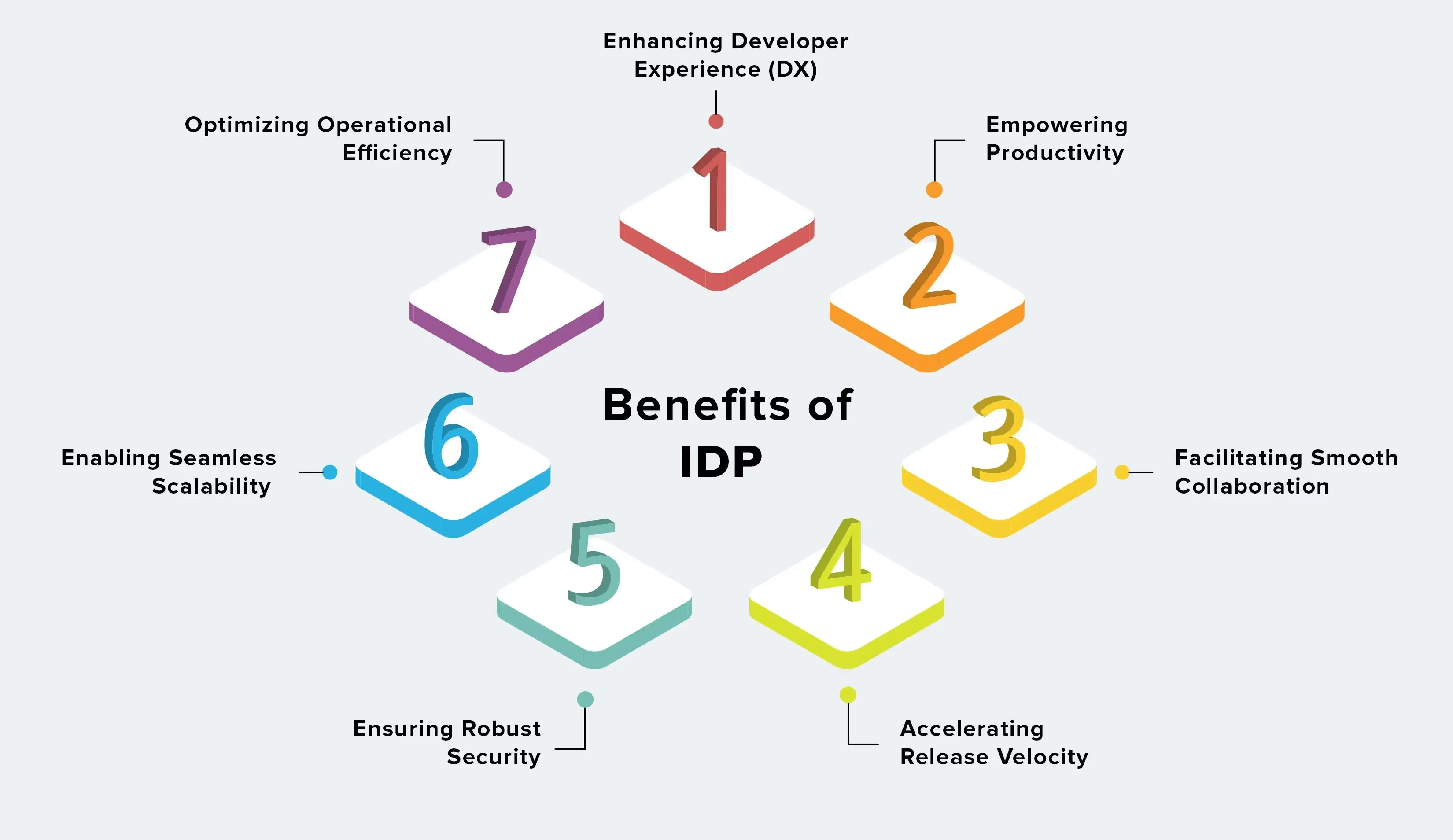
Efficiency in Development: During product development, developers often face resource constraints. An IDP streamlines the build cycle, speeding it up and saving crucial time. For instance, one-click provisioning can save hours usually spent on setups.
Integrating DevOps Seamlessly: An IDP seamlessly merges developer and operational tasks, bridging the potential gap between coding and deployment. By automating processes, IDPs ensure security while eliminating manual, error-prone tasks. This union aids in consistent and rapid software releases.
Mastering Resource Management: Harnessing the power of platform engineering, IDPs provide developers with tools and data-handling capabilities essential for streamlined software development. They allow real-time allocation of resources, optimizing performance without unnecessary wastage.
Agile Transformation in Action: With an IDP at the helm, the dynamics of software delivery undergo a transformative shift. Development becomes more agile, encouraging teams to collaborate better. This change ensures that product updates and releases are in sync with market needs.
Uninterrupted Developer Focus: Developers can concentrate on code, as the IDP manages the underlying infrastructure. This abstraction means developers spend less time on mundane tasks, such as server configurations, and more on innovating. Pre-configured services in the IDP further ensure a smoother development experience.
Benefits of IDP | Source: htpps://insights.daffodilsw.com/blog/platform-engineering
Key Challenges to Anticipate When Transitioning to an Internal Developer Platform
1. Business and Technical Challenges in Migrating Existing Projects
Transition Complexity: Transitioning to an internal developer platform (IDP) introduces intricate challenges, especially in the migration of existing projects and workflows. It's more than simply porting data and code; it’s a fundamental shift in software engineering practices.
Example: Consider a traditional monolithic application; its migration to an IDP might involve breaking it down into microservices, each requiring specific configurations and dependencies.
Integration Hurdles: While established code and data migrations are complex, integrating current resources with the IDP also requires a learning curve.
Example: Integrating traditional CI/CD pipelines with cloud-native IDP tools often demands rethinking deployment strategies and tool compatibility.
2. The Technical Challenge of Adaptation
Adaptation: IDPs offer a suite of tools aimed at enhancing development. However, for teams rooted in conventional development environments, adapting to these cloud-based, automated tools represents a significant shift.
Example: Using container orchestration tools like Kubernetes within an IDP might be a new experience for developers who previously relied on manual deployment and scaling.
Training and Upskilling: Ensuring teams can maximize platform engineering capabilities necessitates comprehensive training, given the range and depth of tools within IDPs.
Example: With the transition to IDPs, developers are now using self-service portals for deployments. Imagine a scenario where a developer, not adequately trained in using the IDP, makes an incorrect deployment to the live environment, highlighting the importance of proper training and skill development.
3. Cultural and Organizational Shifts: The Business Challenge of Cohesion
The Cultural Paradigm of IDPs: Embracing an IDP is as much a cultural shift as a technical one. Harmonizing DevOps, security, and developer teams becomes paramount to exploit the platform's full potential.
Example: Implementing pair programming sessions across teams to promote knowledge sharing and foster a collaborative environment, ensuring everyone is on the same page with IDP features and practices.
Collaboration and Evolution: As the speed and iterative nature of IDPs change how teams work, fostering enhanced collaboration between engineering units ensures both security and efficiency in the development cycle.
Example: Regular cross-team syncs or "guild meetings" to discuss best practices, challenges, and new IDP features to ensure all teams are aligned and informed.
4. Toolchain Integration
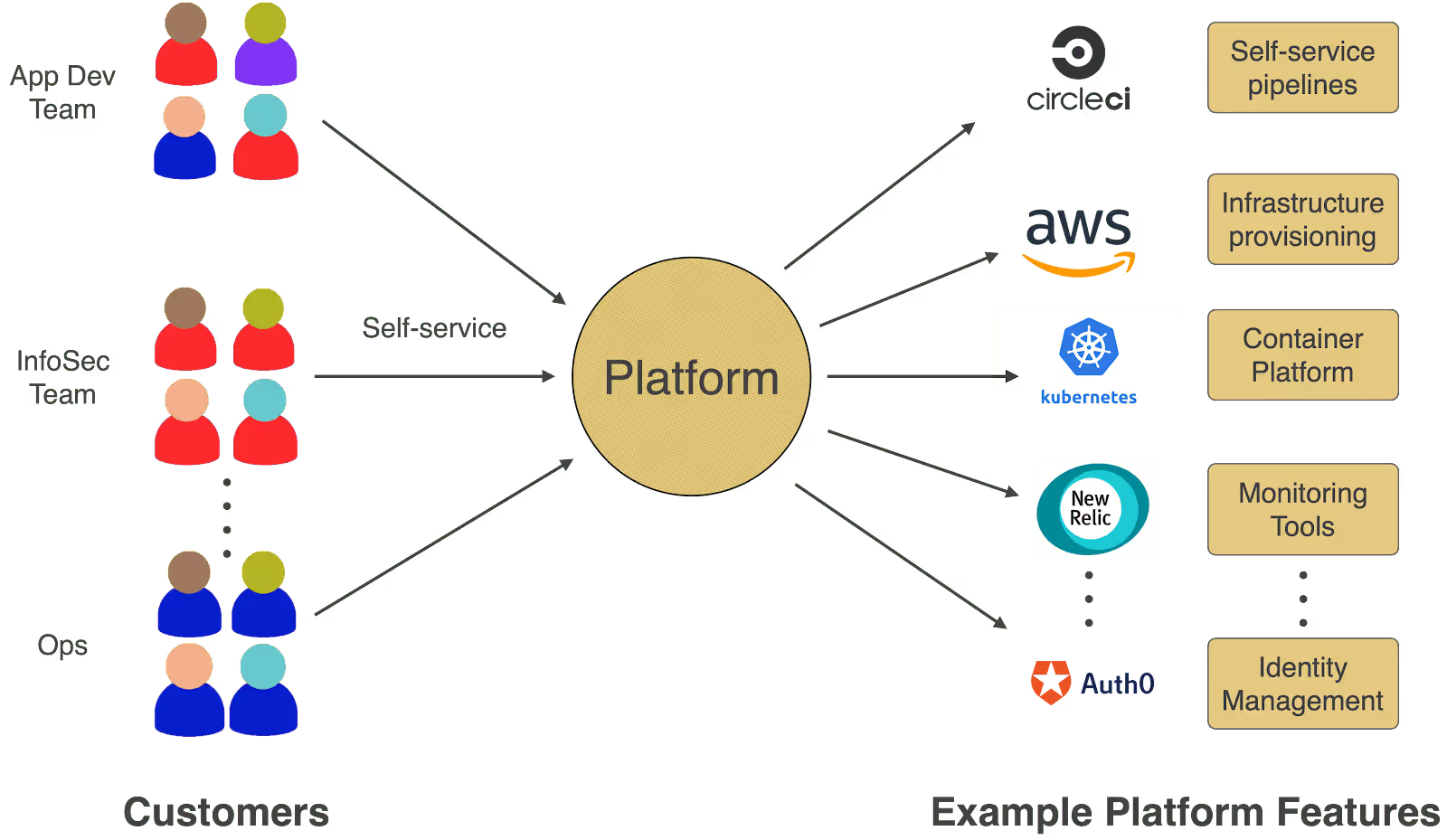
Integration Hurdles: Integrating existing tools into an Internal Developer Platform (IDP) isn't always seamless. Developers might encounter compatibility issues, especially when blending legacy software tools with new-age cloud-driven platform engineering. For instance, an older version control system might not directly interface with a modern CI/CD tool within the IDP.
Balancing Act: Striking the right balance is crucial. On one side, you have DevOps teams eager to adopt the latest in platform engineering. Conversely, there's the imperative to ensure ongoing projects aren't disrupted. A potential scenario is when a newly integrated testing tool within the IDP offers more advanced functionalities but requires reconfiguring existing test scripts.
IDP Integration with different tools and platforms | Source: https://www.cloudknit.io/blog/platform-engineering
5. Security Concerns
Threat Mitigation: As IDPs often integrate multiple services, they become potential points of vulnerability. Employing threat modeling can help identify potential weak points. Furthermore, ensure the integration of advanced security features, such as intrusion detection systems and secure communication protocols, into IDP solutions.
6. Compliance Management
Code Protection: Always encrypt code during transit and when stored. Using tools like AWS Key Management Service (KMS) or HashiCorp Vault can provide robust encryption methods.
Regular Audits: DevOps teams should not only assess the platform for vulnerabilities but also ensure compliance with industry standards. Tools like SonarQube or Fortify can help in continuous code scanning.
Access Control: Guaranteeing restricted, role-based access is vital. Implement identity and access management (IAM) solutions, ensuring only authorized personnel access sensitive data and critical infrastructure components.
7. Scalability Challenges
Transitioning to an internal developer platform (IDP) unleashes potential but brings scalability challenges. Developers expect a platform where code moves swiftly from development to production. Yet, scaling isn’t always smooth.
Resource Bottlenecks: IDPs are renowned for automating tasks, saving time. But, developers may hit roadblocks. Imagine a team, mid-project, encountering delayed deployments. The cloud infrastructure, once a symbol of speed, is now a hurdle.
Example: A developer’s code which is ready for deployment is waiting for load to reduce on the IDP. As the self-service portal for deployment is available to most of the teams, every team is deploying through IDP resulting in choked infrastructure of IDP.
8. Efficient Resource Management
Effective management of resources within an IDP isn’t a luxury-it’s a necessity. It's the fine line distinguishing productive developers from the dishearted ones.
Data and Infrastructure: IDPs are resource intensive, feeding on data and robust infrastructure. Balancing act again, ensures neither starves nor overflows.
Time and Product: Every second saved advances the product’s journey. IDPs, with optimal resource management, are not just about building swiftly but building smartly. Every code, every data byte, and every developer’s time is a balance-harmonious when aligned, disruptive when not.
Example: Consider a microservices-based application in an IDP, with each service containerized. As the application grows, the number of containers can increase. Without proper management, some containers may consume more resources than necessary, while others might remain underutilized, thereby misallocating resources. Efficient IDP tools like Kubernetes ensure that containers are optimally scaled with demand, balancing CPU and memory allocations across services, allowing developers to focus on their code.
Agents ship fast. Guardrails keep them safe.
Qovery ensures every agent action is scoped, audited, and policy-checked. Start deploying in under 10 minutes.
Embrace platform engineering. Combining software development and infrastructure mastery is vital. Don't just build; ensure what's built stands robustly in the cloud.
Training is key. As you transition, developers might struggle. Offer comprehensive training focused on the new tools and code practices inherent to your internal developer platform.
Adaptability! Development is ever-evolving. Whether it's a security challenge or a DevOps hiccup, a rigid approach won't work. Promote a culture that embraces change and adaptability.
Save time and resources. Using a platform efficiently may not be intuitive for everyone. Encourage teams to share strategies, ensuring everyone maximizes the platform's potential.
Support beyond software. Beyond just providing the right tools for product engineering, ensure ongoing support. A developer query might be about data access today and about optimizing infrastructure tomorrow. Be ready!
Transitioning might feel overwhelming initially. But with flexibility, adaptability, and the right resources, developers can utilize the full power of an internal developer platform. For example, teams can streamline their development cycle and reduce potential security risks by centralizing previously dispersed tools onto a single platform.
Conclusion
Transitioning to an Internal Developer Platform (IDP) comes with its fair share of challenges, from adapting to new tools and workflows to fostering a DevOps mindset. Yet, the benefits of IDPs, including streamlined software delivery and enhanced collaboration, make the journey worthwhile. As organizations consider making the shift, it's essential to view it not just as a change but as an opportunity to innovate and grow. With the right preparation, embracing an IDP can pave the way for a brighter, more efficient future in software development.
Morgan co-founded Qovery and leads engineering. He writes about Kubernetes architecture, DevOps best practices, and building resilient infrastructure at scale.
Next step
Agents ship fast. Guardrails keep them safe.
Qovery ensures every agent action is scoped, audited, and policy-checked. Start deploying in under 10 minutes.