The Top 8 Tools to Build a Zero-Toil PaaS on Your Cloud
Stop managing K8s complexity. Discover the top 8 platform tools (Qovery, Rancher, Dokku) that let you build a customizable, zero-maintenance PaaS on your cloud.
The DevOps Mandate is Platform Engineering (PaaS): Building a custom PaaS is essential for eliminating operational toil. These tools abstract away the complexities of infrastructure provisioning, load balancing, and auto-scaling, allowing DevOps teams to achieve a zero-maintenance control plane on their own cloud.
Tools Balance Open-Source Control vs. Managed Automation: The solutions range from low-friction, open-source orchestrators that require high maintenance to enterprise-grade platforms that provide managed stability and comprehensive feature sets.
Qovery is the Zero-Maintenance IDP Solution: Qovery stands out as a complete, managed PaaS solution that automates installation on your cloud account, guarantees zero maintenance (handling Kubernetes and security upgrades), and provides a robust, developer-centric interface for full control.
You're a Platform Engineer Now. Stop Managing Servers.
You know the pain: relying on commercial PaaS giants like Heroku is costly, and running raw Kubernetes is pure operational toil. The modern DevOps mandate is to build an Internal Developer Platform (IDP) - a customized, self-service layer that automates infrastructure and eliminates maintenance.
The key is abstraction. This guide dives into the top 8 tools revolutionizing application delivery. We'll show you how to leverage platforms, from lightweight open-source options to zero-maintenance automation tools like Qovery, to define your infrastructure, regain control, and eliminate DevOps overhead forever.
1. Qovery
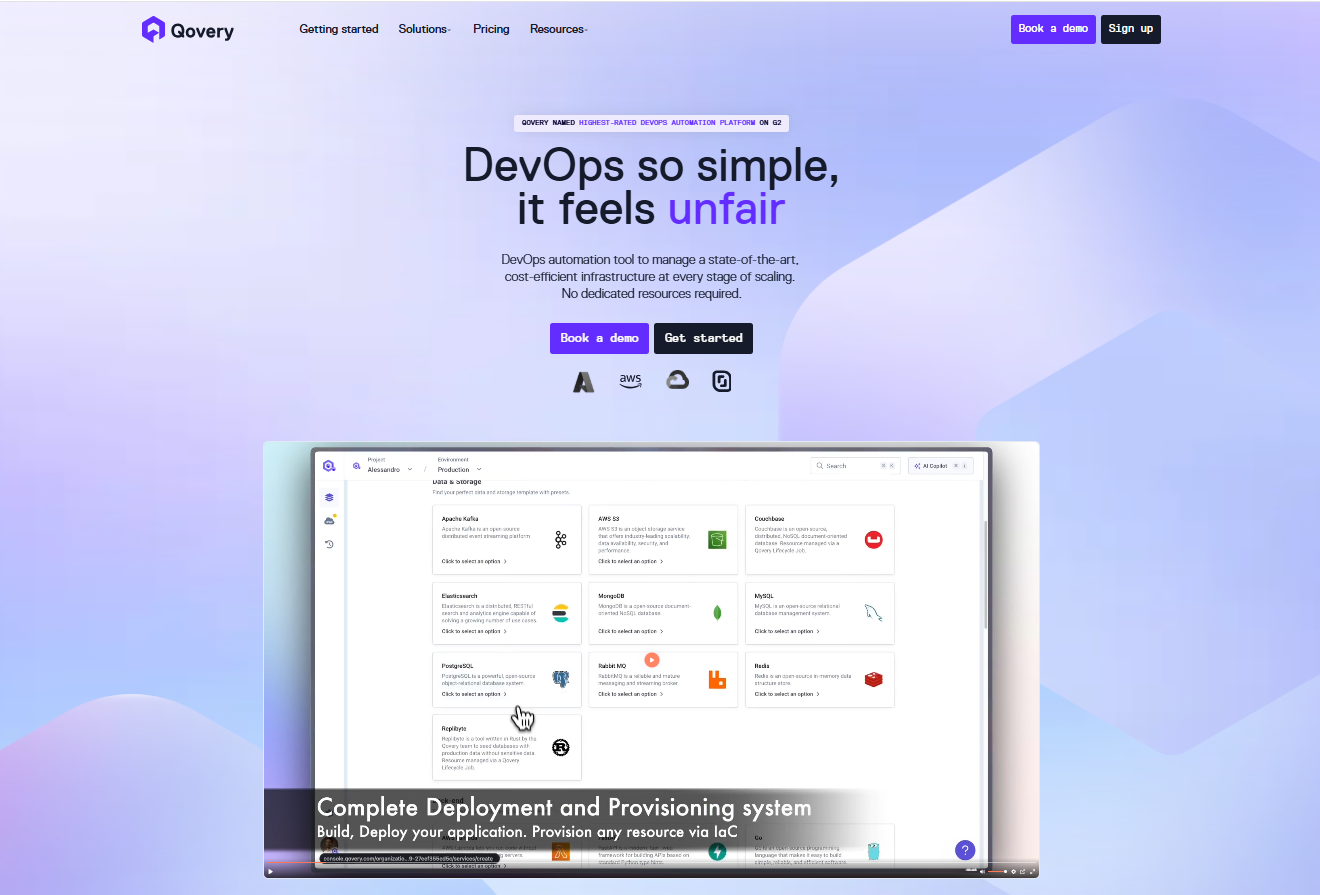
Qovery is a comprehensive PaaS tool that offers a range of features to simplify the deployment and management of applications. With Qovery, you can easily deploy your applications in various cloud environments, eliminating the complexities of infrastructure setup.
Its intuitive and developer-friendly interface, Git integration, and automatic scaling capabilities make it a powerful choice for building a custom PaaS. Qovery's seamless integration with popular frameworks and databases further enhances its appeal.
Qovery's Key Features
Automatically installed on your cloud account in 15 minutes!
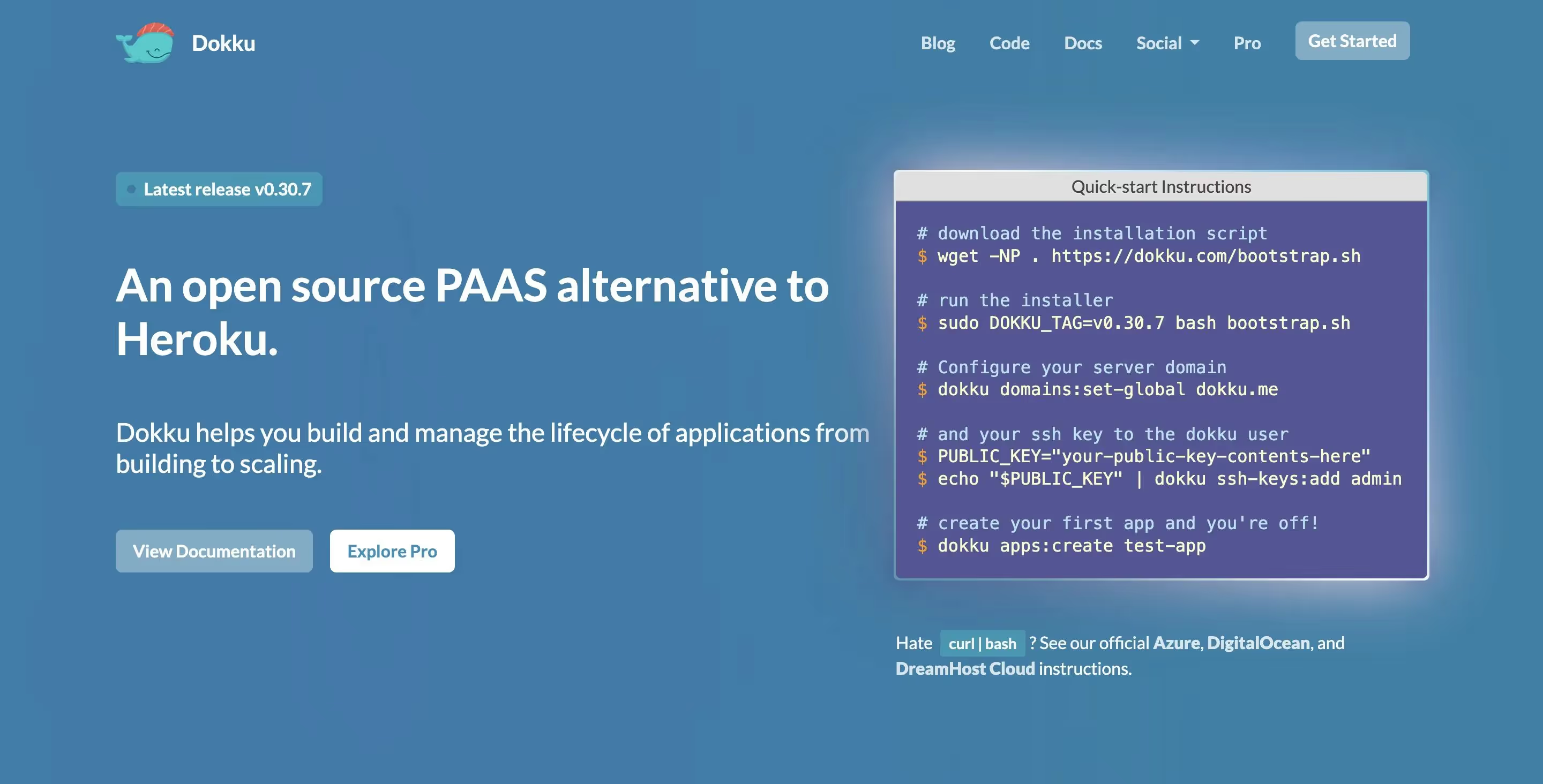
Dokku is a lightweight and open-source PaaS platform that simplifies application deployment by leveraging Docker. With Dokku, developers can easily push their applications using Git, allowing Dokku to build and run them in isolated containers. Its CLI-only approach and plugin architecture make it highly extensible. Dokku's modular plugins enable features like database integration, Let's Encrypt SSL certificates, and automated Slack notifications, giving developers flexibility and control over their PaaS environment.
Dokku
Dokku Key Features
Lightweight and Easy to Set Up
Language and Framework Agnostic
Heroku Compatibility
CLI client for integrating into existing build tools
Git-Based Deployment
Built-in Docker support for advanced usage
Plugin System and Extensibility
Dokku: When should you use it?
When you prefer a lightweight, open-source PaaS solution.
If you appreciate a CLI-only approach and require extensibility through plugins.
For teams comfortable with Git-based deployments and Docker.
Pricing
Dokku Pro is available for teams and organizations, and the current pricing reflects discounts for early purchases. All licenses for Dokku Pro are lifetime licenses.
Dokku is free to download, but there is a paid option available for $849.
The paid option includes 24/7 premium support, a high-performance build with SLAs, 99.99% uptime SLA, and more.
Dokku is a free PaaS offering, and users are only required to purchase a Digital Ocean plan if they wish. Dokku is known for its powerful free-to-use features for modern applications.
3. Cloud Foundry
Cloud Foundry is a mature and widely adopted PaaS solution that uses the scalability of Kubernetes to build a simple yet performant PaaS option. It offers robust features such as built-in scaling, logging, and automation capabilities. With Cloud Foundry, you can easily deploy applications across multiple clouds, enabling portability and flexibility. Its extensive ecosystem and support for various programming languages make it an attractive option for enterprises seeking a powerful PaaS solution.
Cloud Foundry
Cloud Foundry Key Features
Built-in Scaling and High Availability
Application lifecycle
Logging and Metrics
Automation and DevOps Enablement
Multiple Language and Framework Support
Built-in service marketplace for enhancing deployment functionality
Multi-Cloud Deployment
Flexible infrastructure support through BOSH stemcells
Community and Support
Cloud Foundry: When should you use it?
When you need a mature, widely-adopted PaaS solution that leverages Kubernetes' scalability.
If multi-cloud deployment and extensive programming language support are crucial.
For enterprises that require a built-in service marketplace for enhanced deployment functionality.
Pricing
CloudFoundry is a free, open-source cloud computing platform.
It is supported by the non-profit organization CloudFoundry.
CloudFoundry is not tied to any specific cloud service and can be self-hosted or run on any preferred cloud service.
There is no setup fee associated with CloudFoundry.
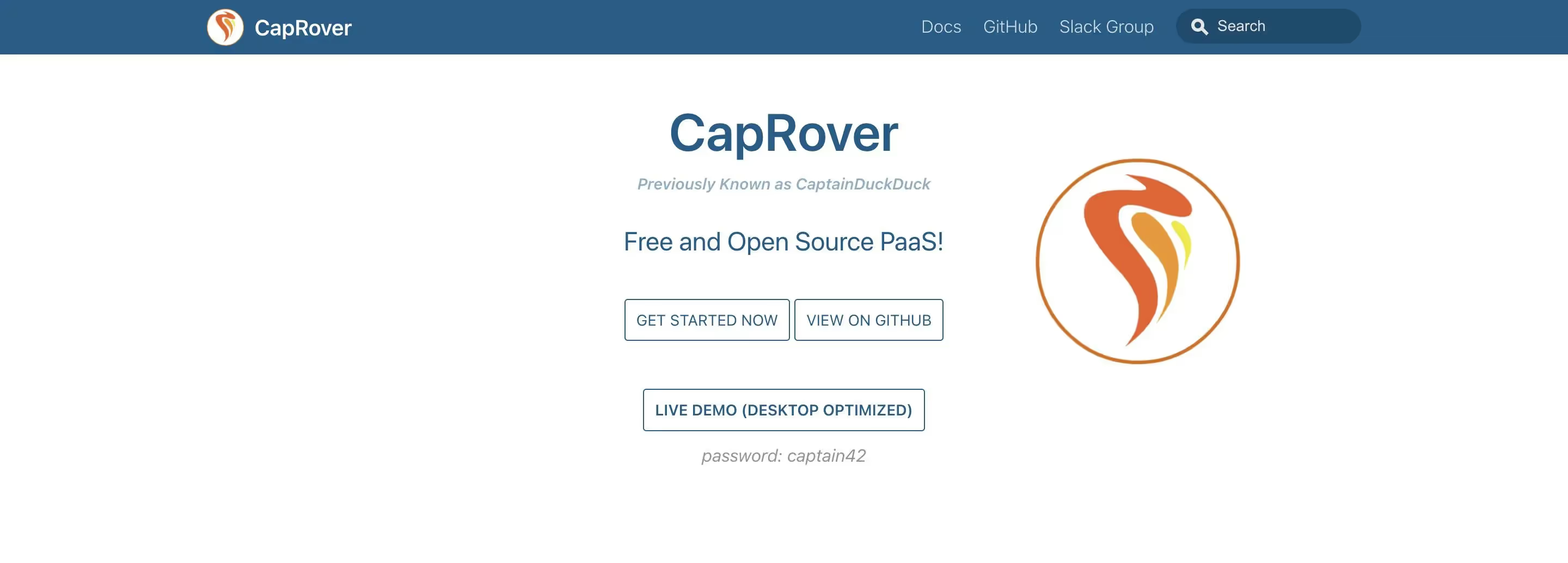
4. CapRover
CapRover, a popular open-source PaaS solution, emerged in 2017. Developed using TypeScript, CapRover boasts a user-friendly interface that demands just a few commands to kickstart your journey. Leveraging the power of Docker, CapRover supports the deployment of a wide range of applications with minimal overhead. While CapRover's ease of use sets it apart, its standout feature lies in the built-in marketplace offering one-click deployment of popular applications like WordPress and MySQL. This marketplace simplifies the deployment process, significantly reducing the complexity associated with launching applications on CapRover.
CapRover
CapRoverKey features
Web GUI for ease of use
CLI for scripting and automation
Load balancing with the help of Nginx
Free SSL certificates using Let’s Encrypt
Containerization and clustering using Docker Swarm
Automatic SSL certificate provisioning from Let's Encrypt
Supports all Docker-based applications
Built-in marketplace for one-click deploys of other popular open-source applications
CapRover: When should you use it?
If you're seeking a user-friendly PaaS solution that simplifies deployment through a built-in marketplace.
When containerization and clustering with Docker Swarm are essential.
For teams that value ease of use and one-click deployment of popular applications
Pricing
CapRover is a Free and Open Source Platform as a Service (PaaS).
There is no external fee associated with using CapRover.
It is available as a One-Click app in the DigitalOcean marketplace.
Agents ship fast. Guardrails keep them safe.
Qovery ensures every agent action is scoped, audited, and policy-checked. Start deploying in under 10 minutes.
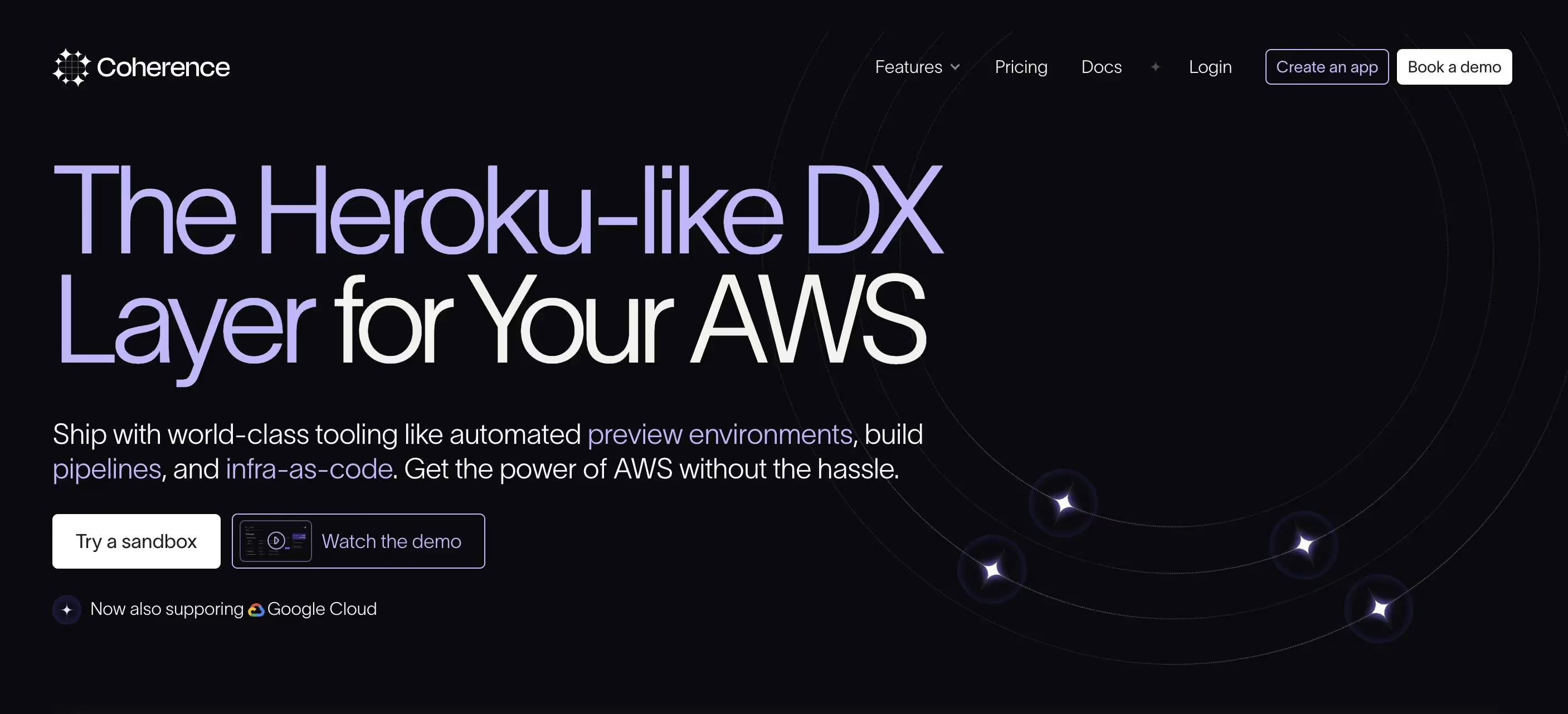
Emerged in 2021, Coherence is a cloud-native PaaS tool focused on providing seamless deployment experiences. It offers intelligent auto-scaling, logging, and monitoring capabilities, ensuring performance and reliability for your applications. Coherence's emphasis on automation and ease of use enables developers to quickly deploy and manage their applications without compromising on quality. Coherence is a relatively young platform that is still evolving, but the product looks promising.
Coherence
Coherence Key Features
User-friendly interface
Automated-infra-as-code
Managed CI/CD
Preview Environments
Auto-Scaling
Seamlessly integrates with popular DevOps tools and workflows
Built-in support for AWS
Coherence: When you should use it?
If you're exploring newer, cloud-native PaaS tools that emphasize automation and ease of use.
When intelligent auto-scaling and seamless DevOps tool integration are pivotal.
For developers looking for a platform with a focus on AWS support.
Pricing
Hobby: Free. Get free credits with AWS or GCP. 100 Builds per month. Limited collaborators.
Startup: $435 per month (First month free). 500 Builds per month. Limited collaborators.
Growth: $915 per month (First month free). 1500 Builds per month. Limited collaborators.
Scale: Custom pricing and builds per month. Unlimited collaborators.
6. Virtuozzo
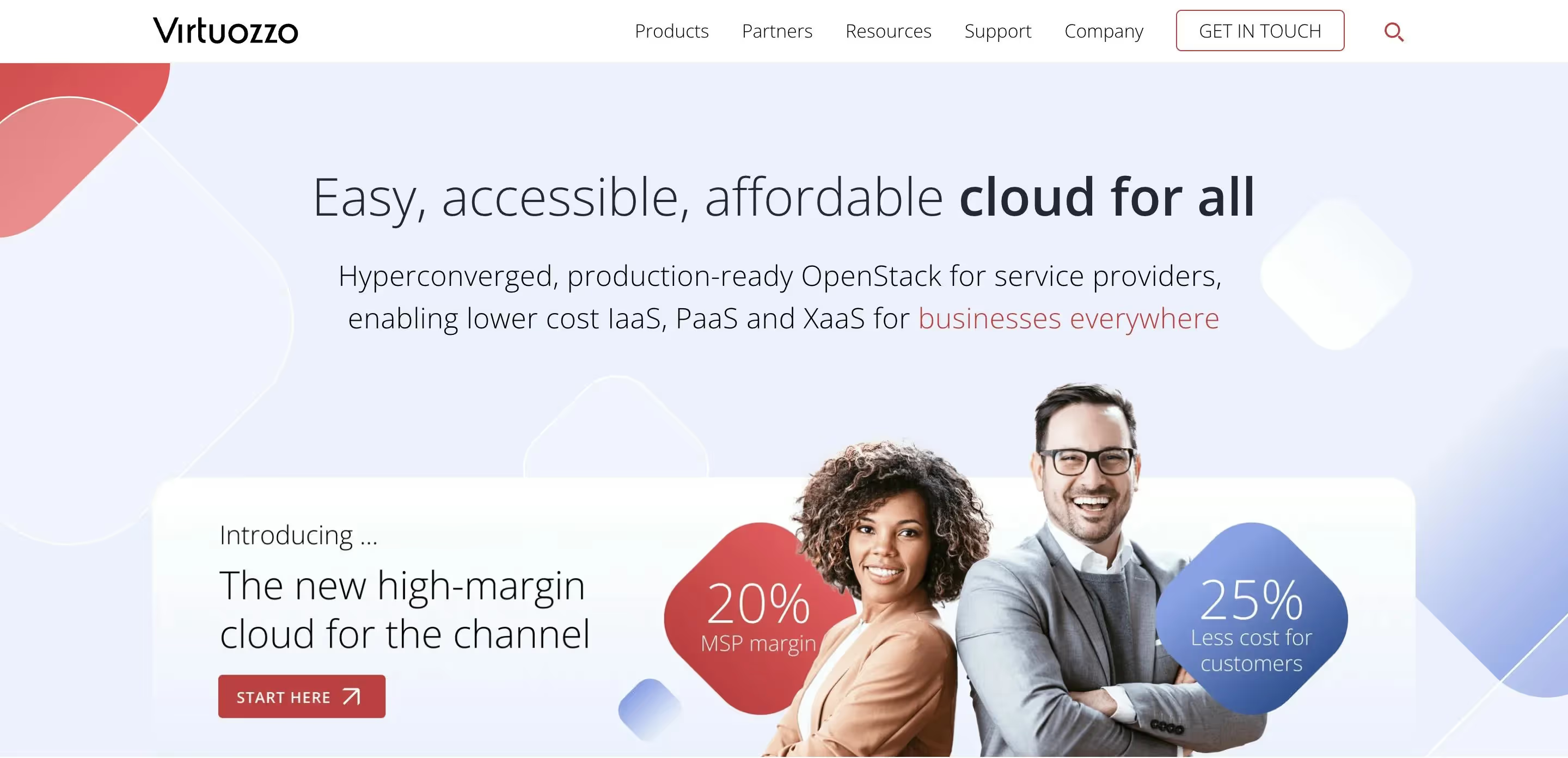
Virtuozzo is a powerful PaaS tool designed specifically for containers and virtualization. It provides container orchestration capabilities and supports high-density workloads, allowing you to build scalable and efficient PaaS environments. Virtuozzo offers a lite edition that shares most features with its Business and Enterprise counterparts, albeit with certain limitations. But it’s very effective for small applications and saves a lot of costs. Virtuozzo is best suited for e-commerce websites and applications.
Virtuozzo
Virtuozzo Key Features
High-Density Workloads
Automatic vertical and horizontal scaling
Built-in monitoring and troubleshooting tools
API, CLI, and SSH access for container management
Easy integration with popular container ecosystem tools and services
Container and Kubernetes support
Support and Expertise
Virtuozzo: When you should use it?
When your primary requirement is container orchestration for high-density workloads.
If you're developing for e-commerce websites and applications.
When you're seeking a cost-effective solution for smaller applications.
Pricing
Offers a versatile pricing model tailored to meet various customer requirements.
Provides a Hybrid Cloud Calculator for estimates based on specific needs.
Pricing may vary based on usage, features, and other factors.
7. Portainer
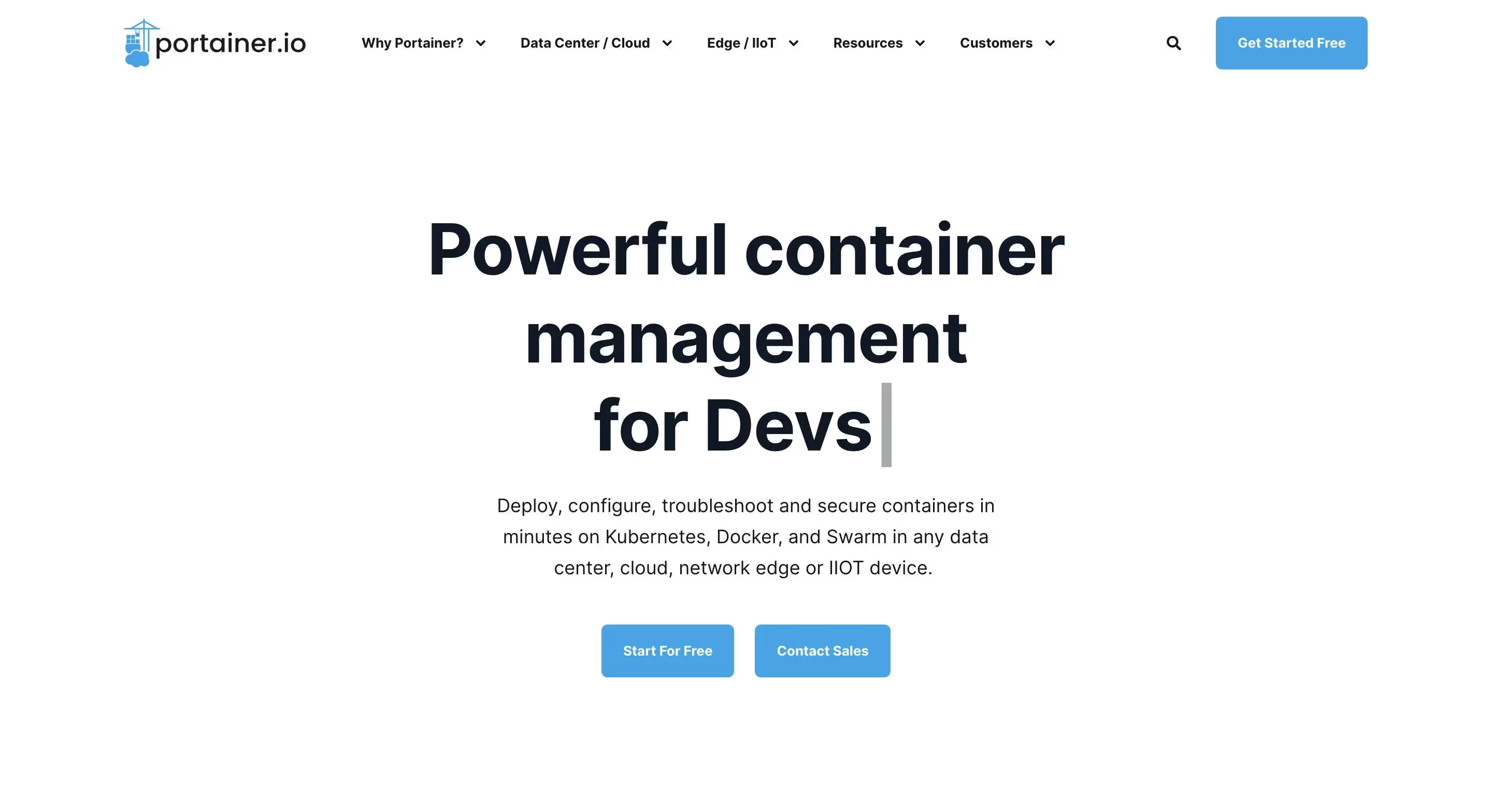
Portainer is a container management tool that can be leveraged to build a PaaS environment. Its intuitive interface, multi-cloud support, and container orchestration features simplify the management of containers and services. Portainer allows you to monitor resource usage, manage container networks, and deploy applications with ease.
Portainer
Portainer Key Features
Intuitive interface
Multi-cloud support
Powerful container orchestration tool (supports Kubernetes and Docker Swarm)
Application templates and stacks
Automatic stack updates
Monitoring and logging tools integration
Extensibility
Community support
Portainer: When should you use it?
When you require a tool with a primary focus on container management.
If multi-cloud support and powerful container orchestration are essential.
For teams that need an intuitive interface and value community support.
Pricing
Home & Student ($149/yr): 15 nodes, non-commercial use, community support.
Starter ($995/yr): 5 nodes, commercial use, prioritized community support.
Professional (From $2995/yr): Up to 50 nodes, onboarding assistance, 9x5 support.
Enterprise: Prioritized 9x5 support, assigned success engineer, contact for pricing.
8. Rancher
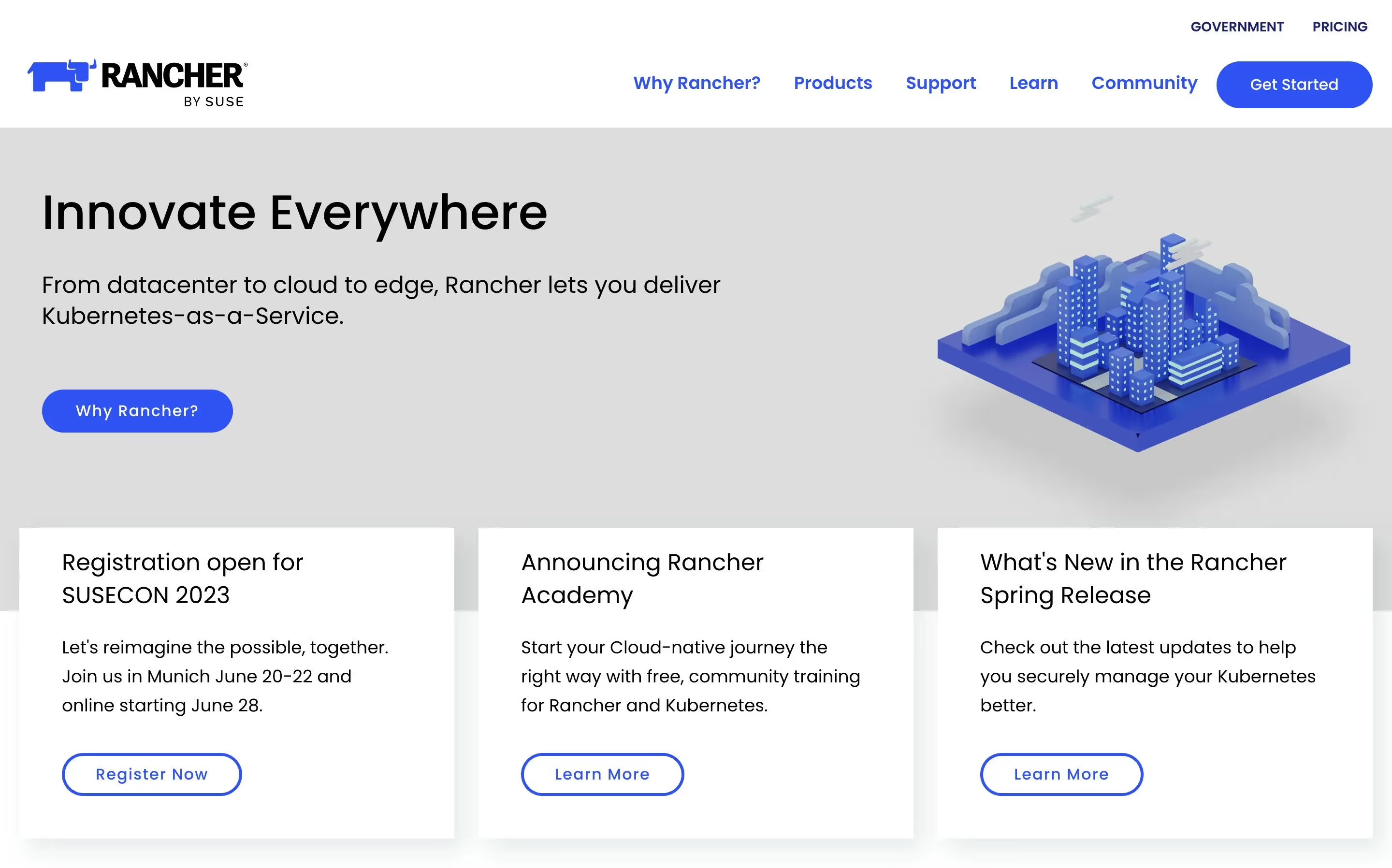
Rancher is a comprehensive container management platform that offers extensive capabilities for building a custom PaaS environment. It provides advanced container orchestration, networking, and infrastructure management features. With Rancher, you can easily deploy, scale, and manage containerized applications across diverse environments. Its flexibility and scalability make it an excellent choice for organizations looking to create their own PaaS platforms.
Extensibility and Ecosystem Integration (supports a wide range of third-party integrations)
Observability & Alerts
Community and Support
Rancher: When should you use it?
If you're looking for a comprehensive container management platform.
When advanced container orchestration and multi-cluster management are crucial.
For organizations that value flexibility and scalability in their PaaS solution.
Pricing
SUSE Rancher Pricing Overview:
Subscription license: $7,594.99 per year (up to 500 nodes).
Standard Subscription: $11,234.99 per year (10 nodes).
Priority Subscription: $30,514.99 per year (10 nodes).
Management Server Priority Subscription: $41,830.99 per year (1 instance).
Conclusion
Building your own PaaS using the right tools can revolutionize your application deployment and management processes. From comprehensive Kubernetes management platforms like Qovery and Cloud Foundry to lightweight options like Dokku and CapRover, these tools offer a range of features and functionalities to suit different needs.
Frequently asked questions
Why build your own PaaS instead of using Heroku?
Cost and control. Commercial PaaS pricing scales badly as you grow, and the black-box model limits what you can run and where. Building on your own cloud keeps workloads in your account, under your compliance boundary, with your networking, while still giving developers a push-to-deploy experience.
What are the best open-source tools to build a PaaS?
Dokku is the lightweight end: Docker-based, Git-push deployment, Heroku-compatible buildpacks, CLI-driven and easy to stand up on a single host. Cloud Foundry sits at the other end as a mature, Kubernetes-backed platform with a service marketplace, built-in scaling and a much larger operational footprint.
What does it actually take to run your own PaaS?
More than the deployment path. You own ingress and TLS, secrets management, database provisioning and backups, autoscaling, observability, upgrades and the on-call rotation for all of it. The build-your-own decision is really a decision to staff a platform team, and it should be made on that basis.
Is Dokku suitable for production?
For small deployments where a single host is acceptable and someone is comfortable operating it, yes. Its limits show up around multi-node scaling, high availability and team-scale access control. If you need clustering and RBAC from the start, a Kubernetes-based option is the more honest choice.
How long does it take to stand up an internal PaaS?
Standing something up is fast; making it production-grade is not. The deployment path is typically the easy week. Ingress, secrets, databases, autoscaling, observability, upgrade strategy and access control are the quarters that follow, which is why the buy option is usually evaluated against total time-to-parity rather than time-to-first-deploy.
Morgan co-founded Qovery and leads engineering. He writes about Kubernetes architecture, DevOps best practices, and building resilient infrastructure at scale.
Next step
Agents ship fast. Guardrails keep them safe.
Qovery ensures every agent action is scoped, audited, and policy-checked. Start deploying in under 10 minutes.