Build. Ship.
Learn.
Guides, deep dives, and opinionated takes on agentic infrastructure, AI agents, platform engineering, and developer experience - from the engineers building Qovery.
Published weekly. Each piece is written by an engineer, reviewed by the team, and ships only when it says something the docs don't. No fluff, no listicle padding.

Filed under
insight.
Deep technical writing on agentic infrastructure, AI agent workflows, platform engineering, compliance automation, and modern cloud operations.
Releasing IAM EKS User Mapper in open-source
I'm super excited to share something amazing our team at Qovery has been cooking up lately: the IAM EKS User Mapper. This isn't just any tool – it's our answer to a problem we know so many of you face: managing AWS IAM user access to Kubernetes clusters efficiently and securely. It's open-source and available to everyone now on GitHub.
Kubernetes: Managed by Qovery vs. Self-Managed with Qovery (BYOK)
Qovery offers two distinct approaches to Kubernetes management: Kubernetes managed by Qovery and self-managed Kubernetes (Bring Your Own Kubernetes - BYOK). This article explores these two models, highlighting their similarities, differences, and when to use each.
DevOps vs. Platform Engineering: What's the Real Difference?
DevOps is a culture, while Platform Engineering is a practice. Discover how these two concepts differ, how they complement each other, and why a strong platform can make your DevOps teams more productive.

Inside Story: How We've Automated the Onboarding Process Experience at Qovery
Last October, we organised a Hackathon at Qovery. My teammate and I decided to work on an internal project to improve the onboarding process experience…with a limited budget! Let me tell you more about what enabled us to win the 3rd prize! (I consider that, as I was in front of developers' teams working on Qovery’s product improvements, it is not that bad ;) )
Beta Announcement: Bring Your Own Kubernetes with Qovery
Today marks a significant milestone for Qovery and a highly anticipated evolution of our product, especially among Platform Engineers and DevOps professionals. We're thrilled to announce the "Bring Your Own Kubernetes" (BYOK) offer in beta access, a transformative step in our journey towards more flexible and adaptive infrastructure management. Please keep reading to understand why we extend our offer.
Why We Replaced Redux by React Query
In the journey of front-end development, choosing the right state management solution can significantly impact the efficiency and maintainability of your application. Two popular libraries, Redux and React Query, have emerged as key players in this domain. Redux has long been the default choice for managing application state in React applications, but React Query offers a fresh and potent alternative.

7 Most Common Pitfalls When Choosing the Right Internal Developer Platform
Selecting the right Internal Developer Platform (IDP) is a critical decision that shapes the effectiveness of your software development team. An IDP empowers developers with the tools and environments necessary for efficient coding, testing, and deployment, resulting in a streamlined development workflow. However, a poor choice can lead to substantial setbacks, reducing productivity and overall business efficiency. In this article, we will discuss the most common mistakes to avoid when selecting an IDP. We will go through a practical use case for each mistake, followed by best practices to avoid this mistake in the first place.
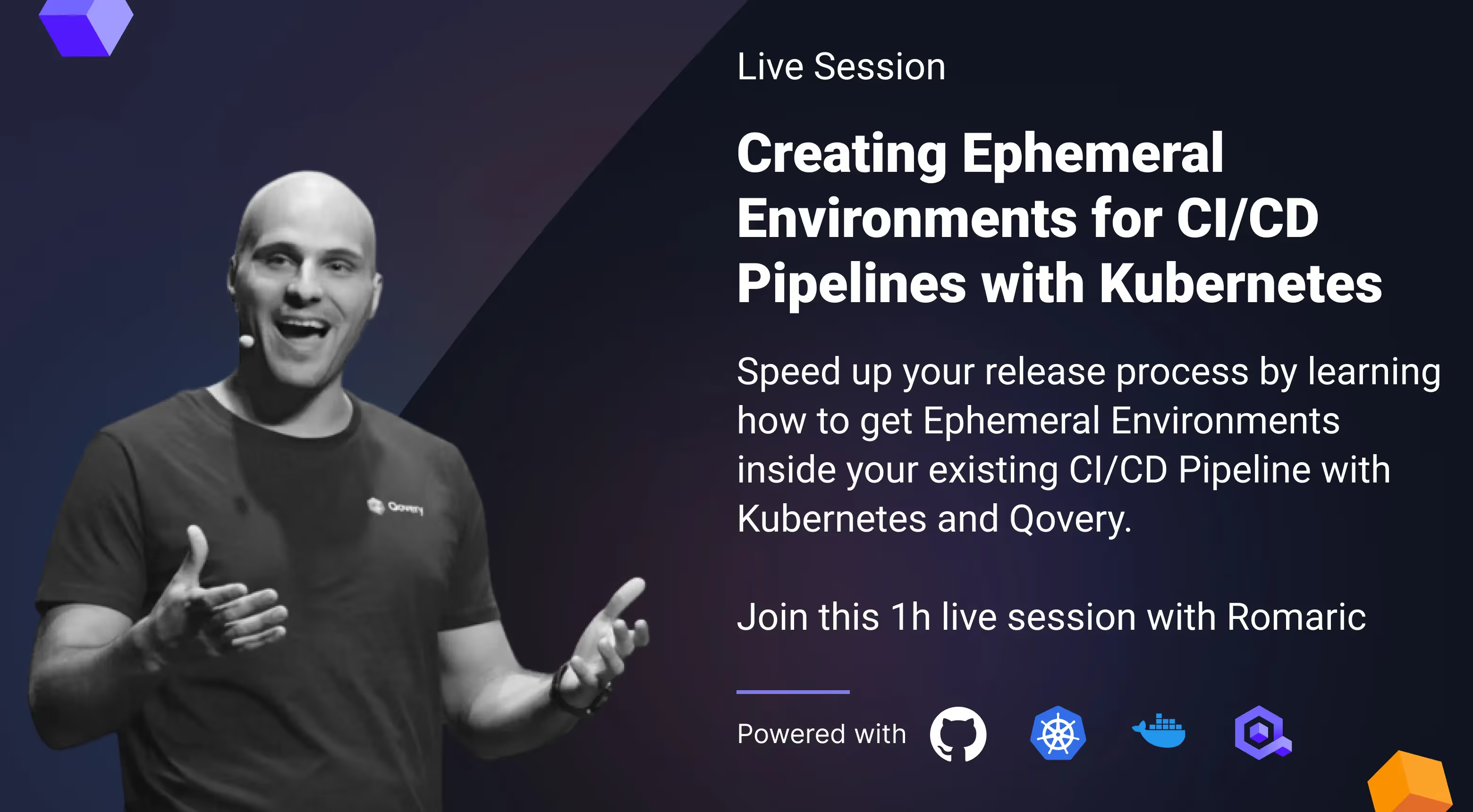
Creating Ephemeral Environments for CI/CD Pipelines with Kubernetes
In the swiftly evolving tech world, the need for agile and efficient development processes is paramount. This was the essence of our enlightening event, "Creating Ephemeral Environments for CI/CD Pipelines with Kubernetes," which garnered an impressive turnout of over 650 attendees. The event, now available on Youtube, focused on the transformative potential of ephemeral environments in modern CI/CD pipelines.

Fullstack Preview Environments with Neon and Qovery
I recently had the pleasure of speaking at Neon DevDays, where I delved into the seamless integration between Neon and our Qovery Preview Environments (also called Ephemeral Environments). Here is an article sharing some compelling reasons why this partnership is a groundbreaking step forward for our users who rely on Postgres and the record of my presentation.

What is a Pragmatic DevOps Engineer?
The tech landscape is a whirlwind of continuous evolution, making the role of a DevOps engineer more crucial than ever. A "pragmatic" DevOps engineer stands out as a beacon of efficiency and practicality in this dynamic environment.
How We Speed Up Deployments By 30%
At Qovery, we're consistently pushing boundaries to enhance developer experiences. One of our standout achievements has been accelerating deployment times, a feat we're incredibly proud of. Today, we'd like to pull back the curtain and share how we've sped up deployments by a staggering 30% through our innovative Container Image Mirroring.

Join Qovery at AWS re:Invent 2023
We are thrilled to announce that the Qovery team will be attending AWS re:Invent 2023 in Las Vegas from November 24th to December 1st. As one of the top AWS ISV Partners, this event holds a special place in our hearts, and we can't wait to connect with all of you.
Qovery's Vision: Shaping the Future of Internal Developer Platforms
In a landscape inundated with tools and technologies, the real challenge for companies is not just about having an array of options but about ensuring these options harmoniously fit into their unique technical environments. Qovery understands this, and it’s evident in the modularity of its ecosystem. But the journey doesn’t end here. Looking ahead, Qovery envisions a paradigm shift in the way Internal Developer Platforms (IDP) are perceived and utilized.

Why It's So Complex To Build an Internal Developer Platform on Kubernetes?
The modern software landscape thrives on the efficiency and automation that Kubernetes brings to the table. Its orchestration prowess forms the bedrock of an Internal Developer Platform (IDP). However, converting this technical marvel into a developer-friendly haven is a pursuit that demands meticulous attention and a vast amount of unseen effort. This narrative unfolds the journey from a functional Kubernetes-based IDP to an exemplary one, spotlighting the effort aimed at elevating the Developer Experience (DX).
From Development to Deployment: Streamlining Workflows with Internal Developer Platforms
Ever wondered how software development teams can efficiently tackle the complexities of modern development challenges? The answer lies in the Internal Developer Platforms (IDPs), a powerhouse of tools and capabilities for development and deployment. These platforms provide a comprehensive ecosystem for development and deployment, integrating key functionalities such as version control, CI/CD pipelines, container orchestration, and automated testing. In this article, we will discuss the challenges faced by traditional software development workflow. We will then walk through how the IDPs revolutionize this workflow by using the above-mentioned techniques.

Challenges to Anticipate When Transitioning to an Internal Developer Platform
Internal Developer Platforms (IDPs) are gaining significance in contemporary software development because they can transform an organization's software delivery by facilitating automation and productivity across large teams or by permitting smaller teams without dedicated DevOps engineers the ability to deploy at scale. The migration of existing projects, protocols, and infrastructure to the new platform can make the transition to an IDP challenging for businesses. A learning curve is also associated with IDP tools, processes, and cultural shifts for development teams. For maximizing the benefits of an IDP, cross-functional collaboration between development and operations teams (DevOps) is essential. In this article, we will discuss not only these challenges but also how to combat these challenges with best practices.
Customization vs. Standardization: Striking the Right Balance in Developer Platforms
Internal developer platforms (IDPs) have become a necessity for software development in today's ever-changing technological landscape. These platforms not only support engineering team velocity and business product strategies but also enhance communication and information flow, impacting successful product launches. The pressing question is whether a company should fully customize to improve the customer experience and satisfy specific business requirements or lean towards standardization to reduce time and costs. This decision between standardization and customization is crucial and exactly the focus of this article today. We will delve deep into the realm of IDPs, discussing the merits and difficulties of both approaches and advising businesses on how to find the optimal balance between the two.
Internal Developer Platform: What's the ROI?
Internal Developer Platform (IDP) is a game-changing innovation that has transformed the technology landscape. In the previous article, we discussed in detail the effectiveness of these developer platforms in terms of developer efficiency, faster product releases, frequent collaboration, etc. However, one aspect that is of paramount importance, especially from the business perspective, is the ROI. The first question any manager will ask is, "What will be the ROI of investing in an IDP"? And your response should be in numbers, of course. This is exactly what we will discuss today. Not only we will explore the meaning of ROI in the context of IDPs, but we will also go through how to measure the ROI, what constitutes a good ROI, and how to improve it. Let's start with the basics of ROI and IDP.

Security Considerations for Your Internal Developer Platform
In today's world, where cloud resources and data management tools play an increasingly critical role, the concept of an Internal Developer Platform (IDP) is gaining momentum. Imagine a platform where developers seamlessly design, build, and deploy applications. That's precisely the promise of IDPs. But here's the highlight: with great power comes greater responsibility. Security within IDPs isn't just an optional add-on; it's the core essence. This article is a guide for teams eager to strengthen their developer platforms. It journeys through the various aspects of IDP security, delving deep into its diverse world. From the fundamental principles of access control and Kubernetes management to the elevated considerations of building a security-centric organization culture, we've got it covered. Whether you're new to the IDP environment or a seasoned developer, our objective remains unchanged: to arm you with the knowledge to transform your developer platform into an impenetrable fortress.
5 Tips For Managing Your Internal Developer Platform
Internal Developer Platforms (IDPs) have become the cornerstone of efficient development, serving as the central hub where development teams access the tools and resources necessary for coding, testing, deploying, and maintaining software applications. As software development continues to evolve rapidly, IDPs are crucial in maintaining a competitive edge. This introduction sets the stage for the technical insights that will follow, sharing 5 tips for effective Internal Developer Platform management.
Never miss a
deploy story,
every Tuesday.
One email per week. Engineering-grade writing on agentic infrastructure, AI agents, platform engineering, and the tools that make shipping boring.
No spam. Unsubscribe anytime. We respect your inbox like we respect your uptime.