
Hey Team,
Before diving into product updates, we want to share a nice external highlight from last week.
Anton Babenko recently tried out our Terraform integration during one of the episodes of his Terraform Tools Review series. It is always great to see Qovery used and reviewed in real workflows by people who know the ecosystem inside out.
You can watch the episode on his YouTube channel below.
Now let’s move on to what shipped.
🧠 Qovery MCP Server is now live
The Qovery MCP Server is officially live. You can now plug Qovery into your favorite MCP client and interact with the platform using AI powered workflows.
Qovery is built as a Kubernetes management platform for the AI era. With MCP, you can access everything from cluster provisioning to application deployments through AI tools, opening up entirely new ways to operate and automate your infrastructure.
The server is already registered in the main MCP registries, making it easy to discover and connect
⚡ KEDA accessible by anyone and also on GCP
Event based autoscaling with KEDA is now available on GCP clusters. Anyone running AWS or GKE cluster can now use KEDA as the autoscaler for their applications.
This allows workloads to scale based on real signals like queue length or external events instead of CPU or memory, bringing the same advanced autoscaling capabilities to GCP environments.
📊 Observe now supports container databases and email alerting
Qovery Observe can now monitor container based databases. You get visibility into CPU, memory and disk metrics directly from the platform, making it easier to troubleshoot stateful workloads.
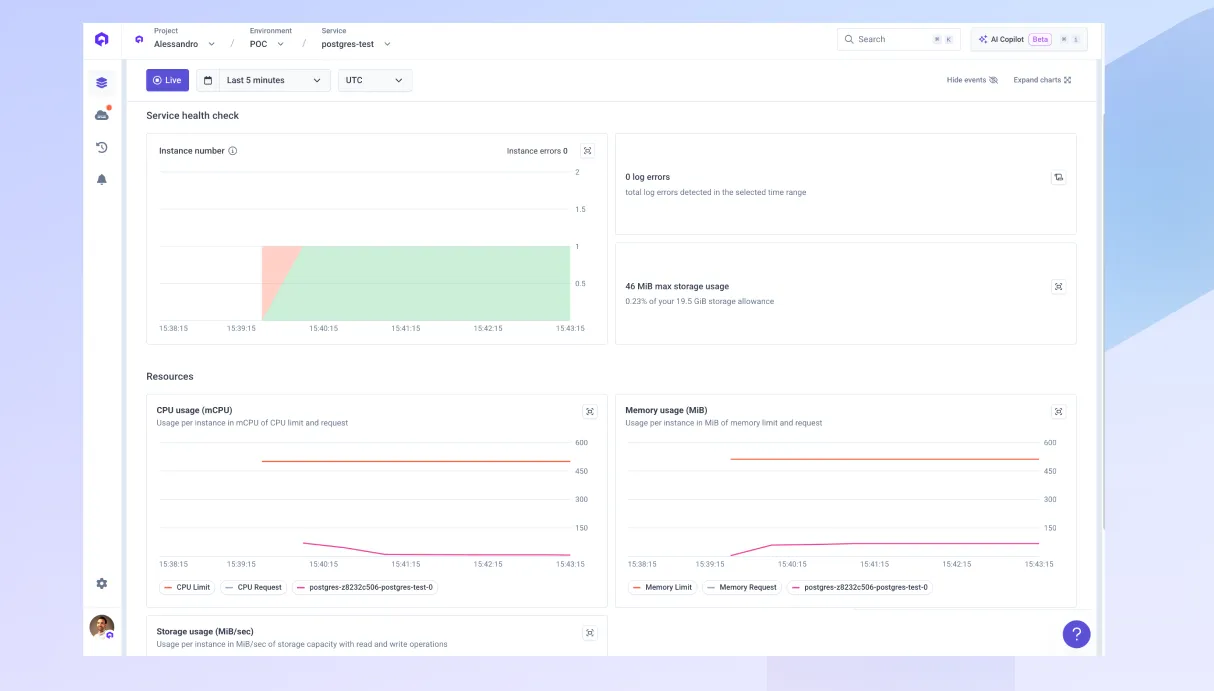
We also introduced email alerting. In addition to Slack, you can now configure an SMTP server to receive alert notifications by email when an alert is triggered. This gives teams more flexibility in how they get notified.
🔔 Webhook configuration verification
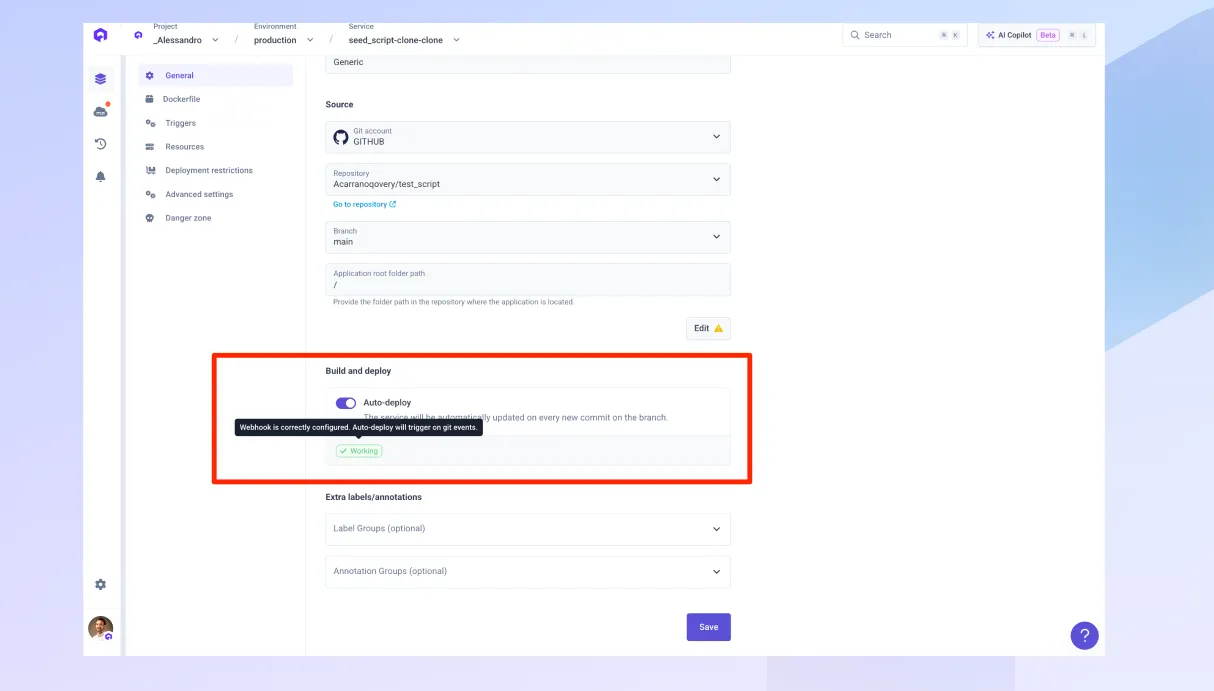
Webhook configuration on your Git provider is critical for features like auto deploy and preview environments. If the configuration is modified or removed, automatic deployments may silently stop working.
Qovery now automatically checks webhook configuration and clearly indicates in the UI whether it is valid. This helps you detect issues early and avoid broken automation.
🛠️ Minor updates
- Terraform and OpenTofu commands now support environment variable injection, allowing customization of init, apply, and other steps
- Kubernetes nodes now use gp3 disks by default, with support for configuring IOPS and throughput
That is it for this release. As always, thank you for the feedback and for building with Qovery.
Talk soon,
The Qovery Team 🚀