Q2 2023 Product Retrospective - Last Quarter's Top Features
Half of the year is now over and even though we have plenty of news in stock for the next one, it’s now time to go through our quarter retrospective, so in case you missed anything, here are the most important releases of Q2!
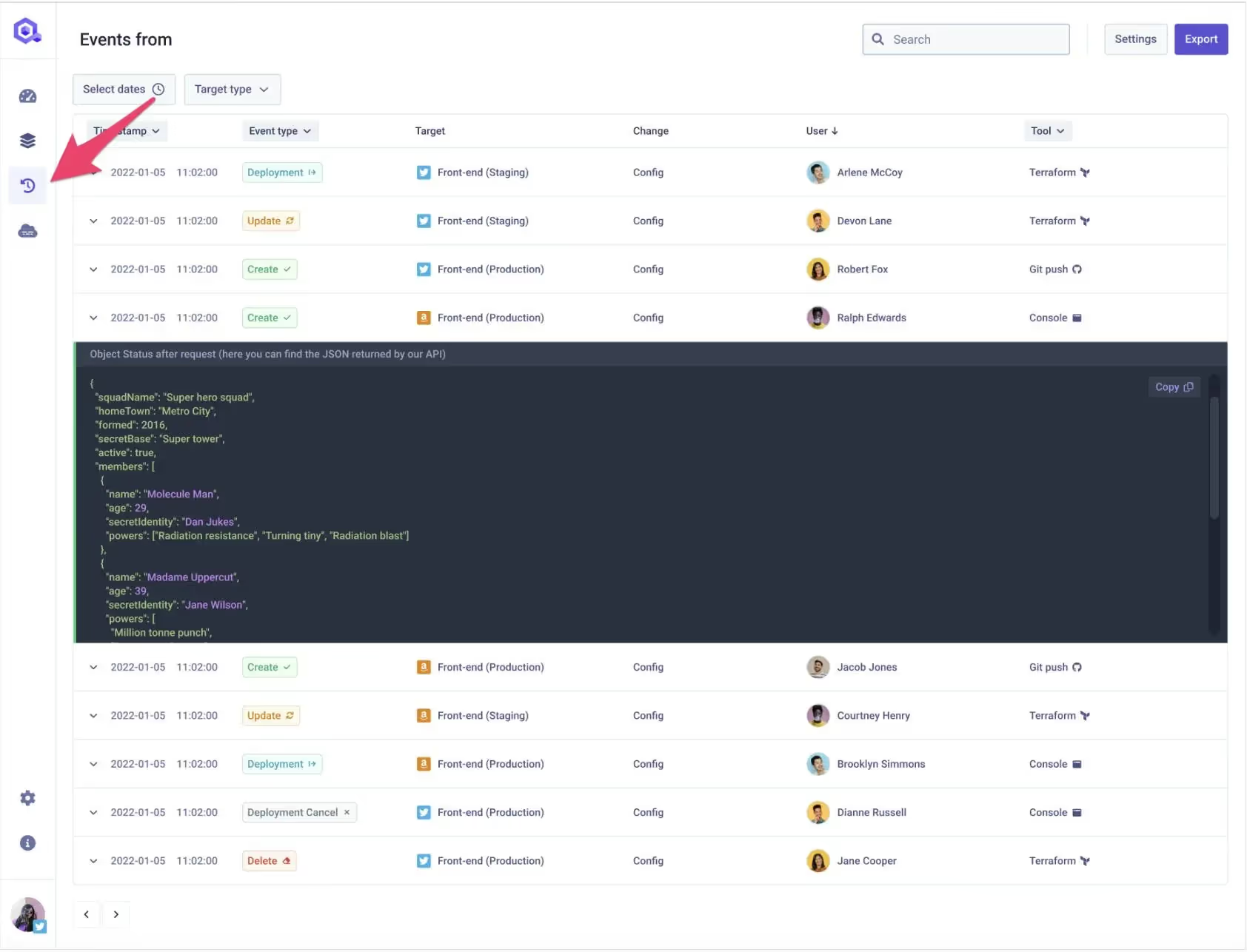
We are thrilled to announce that the audit logs feature is now available in a public beta. With audit logs, you can easily monitor all the actions taking place within your organization. This powerful tool provides a comprehensive view of any configuration changes, giving you the ability to answer questions like "Who did what, where, and when?". Whether you need to debug complex issues or track user activities, the audit logs section has got you covered. To learn more about this feature, please refer to our documentation here.
We're proud to announce a groundbreaking update to our Preview Environment feature that will transform the way engineering teams test their features.
Decide whether a preview environment should be triggered manually or automatically for every PR
Previously, a preview environment was created for every pull request, a process that was straightforward but could sometimes lead to unnecessary previews, such as when you simply updated a README file. But with our new update, we've introduced a significant change - choice.
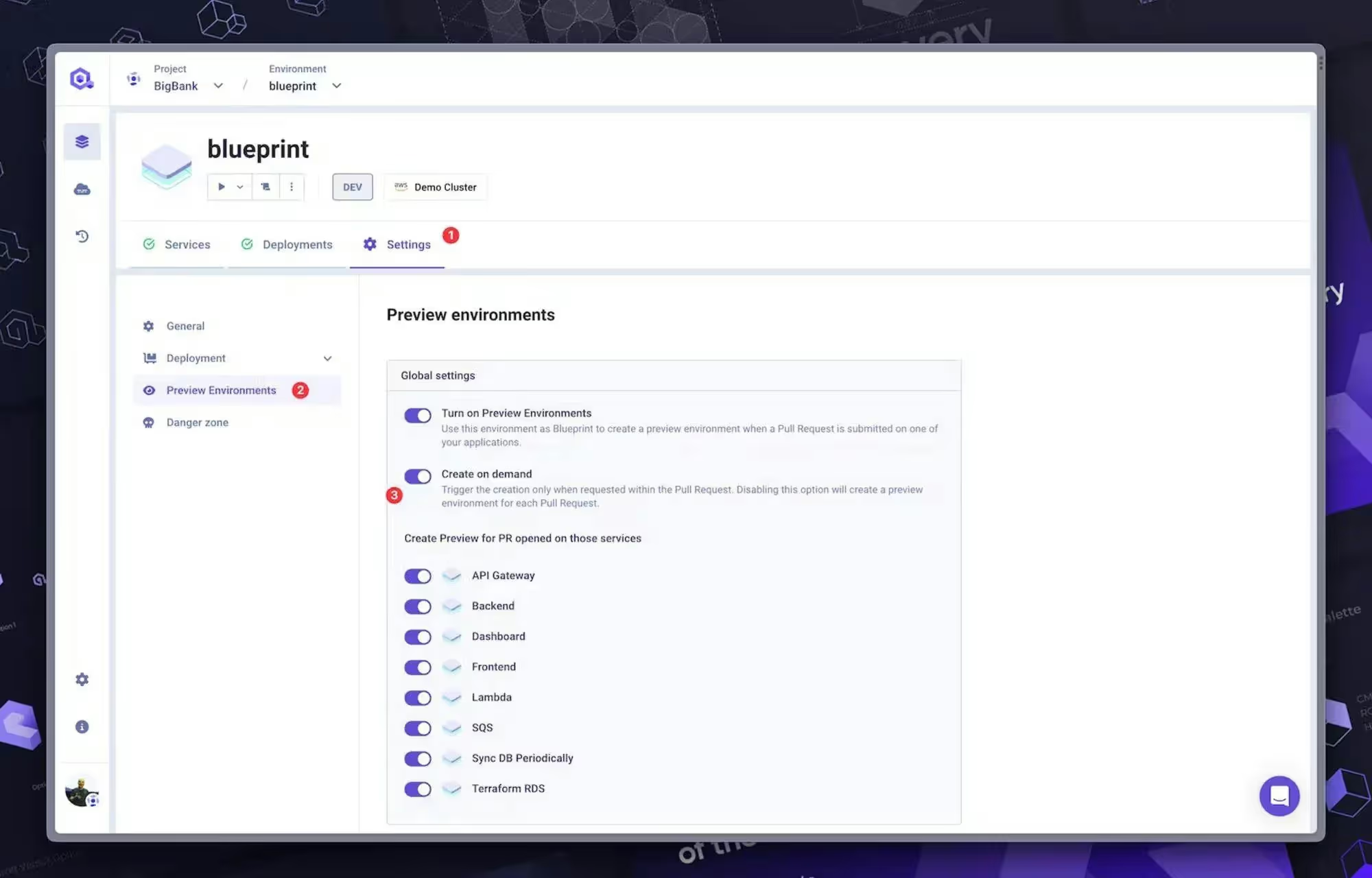
"Create on Demand" option is one click away
You now have the option to decide whether a preview environment should be triggered manually or automatically for every PR. This not only gives you greater control over your workflow but also helps to avoid unnecessary usage and streamline your processes.
Introducing: "Create on Demand"
Our update introduces a new flag within the preview environment settings: "Create on Demand." When the Preview Environment feature and this flag are activated, the preview environment won't be created automatically.
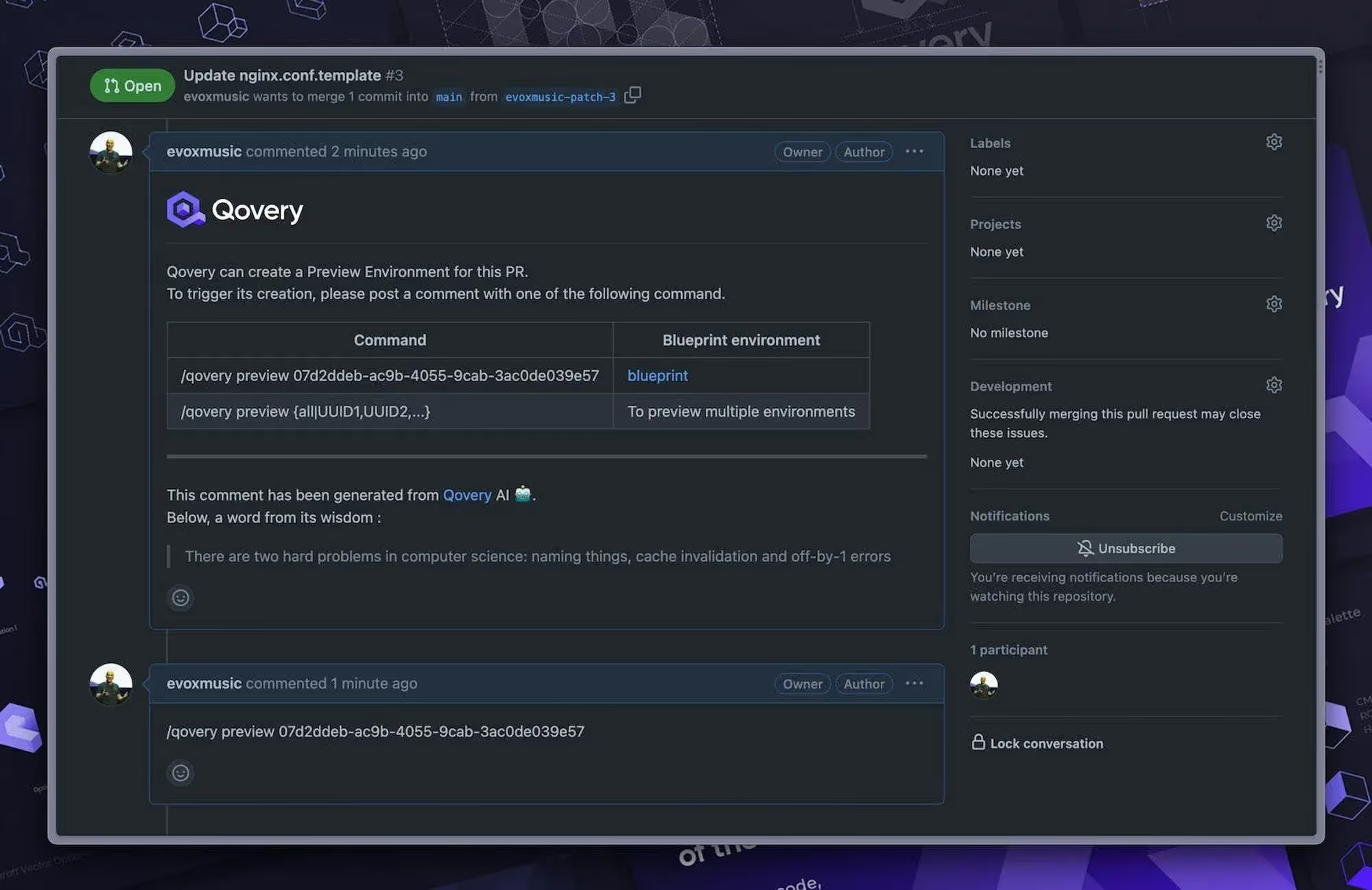
"Create on Demand" right from GitHub Pull Request - We can manually trigger the deployment with /qovery command
If you want more information or to see the full change in action, read this article with a great demo
Doppler Partnership Integration
A few months ago, we announced a partnership with Doppler, a fully managed SecretOps platform that enables engineering teams to manage their environment variables and secrets better. The partnership between Qovery and Doppler is a strategic move to provide a comprehensive solution to developers and engineering teams to automate their deployment and manage secrets and environment variables in a more streamlined way.
Many of you were very excited about it, so naturally, we decided to provide a proper integration straight from the console.
If you are interested, here is the full guide, or if you feel like watching a demo first, it’s right below!
SOC 2
Service Organization Control (SOC) 2 is an auditing procedure that validates a service organization's controls for maintaining user data's security, availability, processing integrity, confidentiality, and privacy. It is one of the most sought-after and rigorous compliance standards in the technology industry, providing an independent third-party assessment of an organization's internal controls and procedures.
By achieving SOC2 Type I compliance, Qovery has been independently verified to have the necessary controls and processes to protect our client's data. This milestone is a testament to the robustness of our security practices and our dedication to maintaining the trust of our clients.
For more information, check out our announcement about it.
Agents ship fast. Guardrails keep them safe.
Qovery ensures every agent action is scoped, audited, and policy-checked. Start deploying in under 10 minutes.
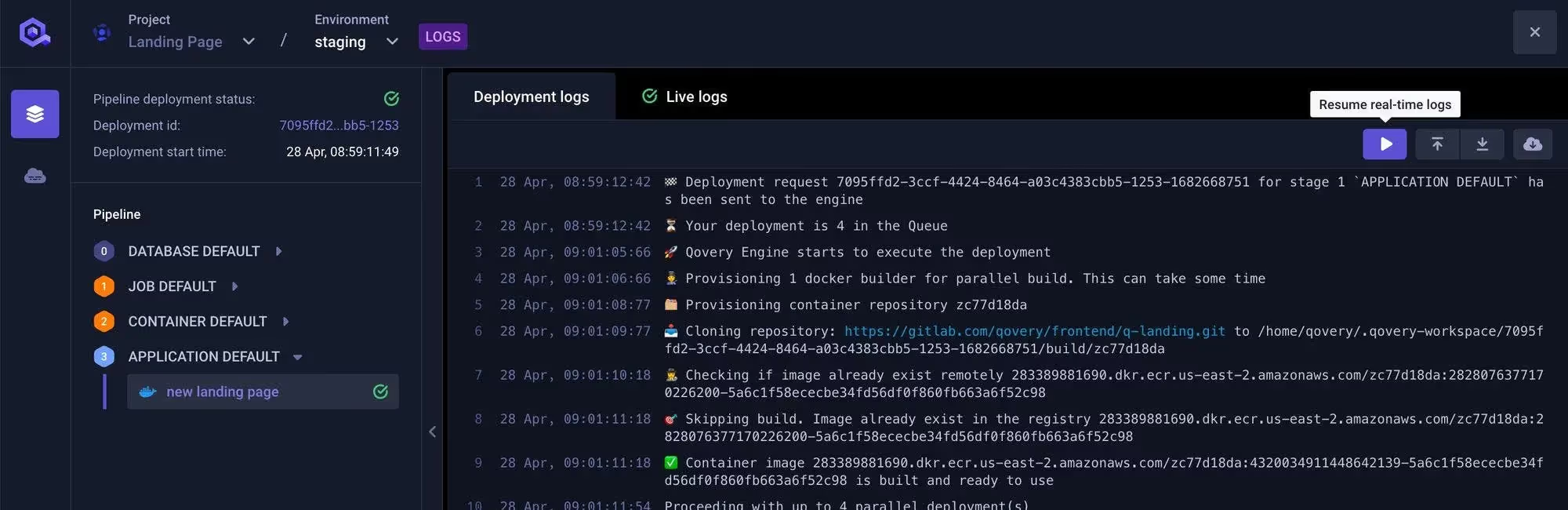
With the implementation of the parallelization for the build and deployment operations (i.e. we will parallelize and thus speed up your deployments), we had to work as well on a new Log interface capable of giving you a clean and nice view of what is happening during the deployment of your environments.
Every time a deployment is triggered, Qovery provides you with the log of its execution and as well with any error that might occur. Note: As of now, Qovery can provide you only the log of the latest deployment execution and more information on the documentation.
Deployment Logs
Parallelize Builds and Deployments
Thanks to the work we have done on the New Logs view and the Deployment Pipeline, we are now able to announce a new major feature: We have just rolled out the parallel service deployment, a fantastic new feature designed to make your deployments super fast! Before the release, every deployment operation was done sequentially; with this new feature, you can parallelize these operations and deploy up to 4 apps at once per stage. In short, this could make your deployment speed 2.5x faster on average. To read all the details, head to this forum thread; otherwise, you can find the feature in action below.
ARM Instances on AWS
We talked about it during our last Demo Day, and it’s finally here! By supporting ARM instance types, we aim to provide you with more cost-effective and environmentally friendly options for running your applications. ARM processors are designed to be more power-efficient, which can lead to reduced cloud computing costs, especially for applications that run continuously for long periods of time. Additionally, ARM processors have a smaller carbon footprint compared to x86 processors, making them a more environmentally conscious choice.
In this article, we explain to you how to set up those instances and also how to migrate your existing workload!
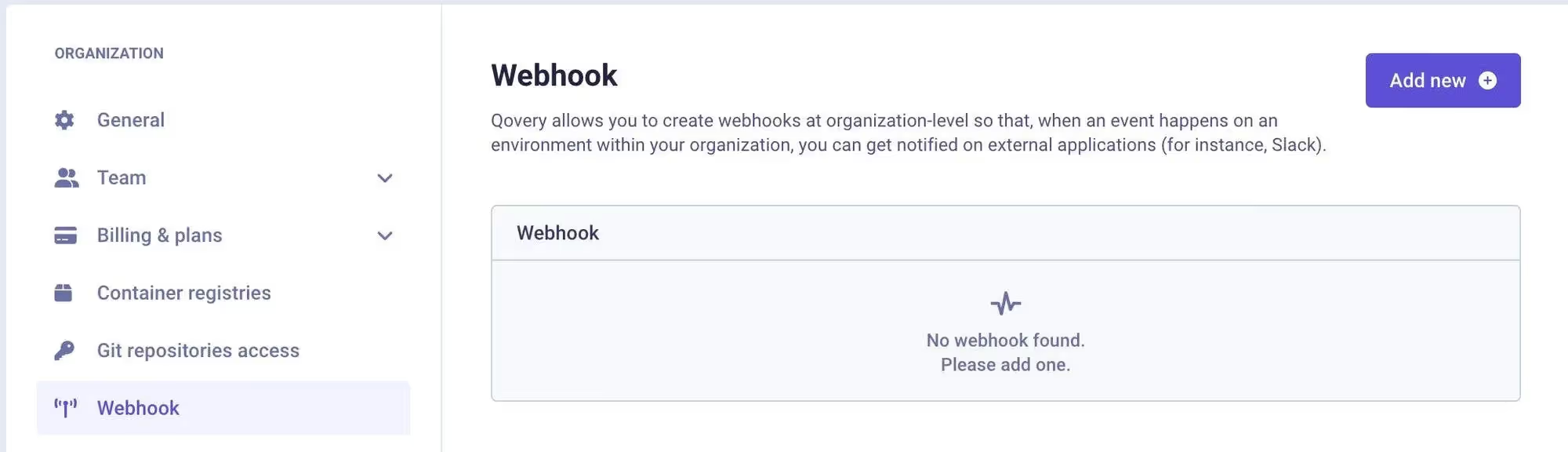
Webhook Page
Big news! Qovery's DevOps automation software allows you to create webhooks at the organizational level so that, when an event happens in an environment within your organization, you can get notified on external applications (for instance, Slack).
Do you want to know what’s next? You can find our progression in the Changelog section of our website where we post every two weeks or check out our public Roadmap to see everything that’s coming!