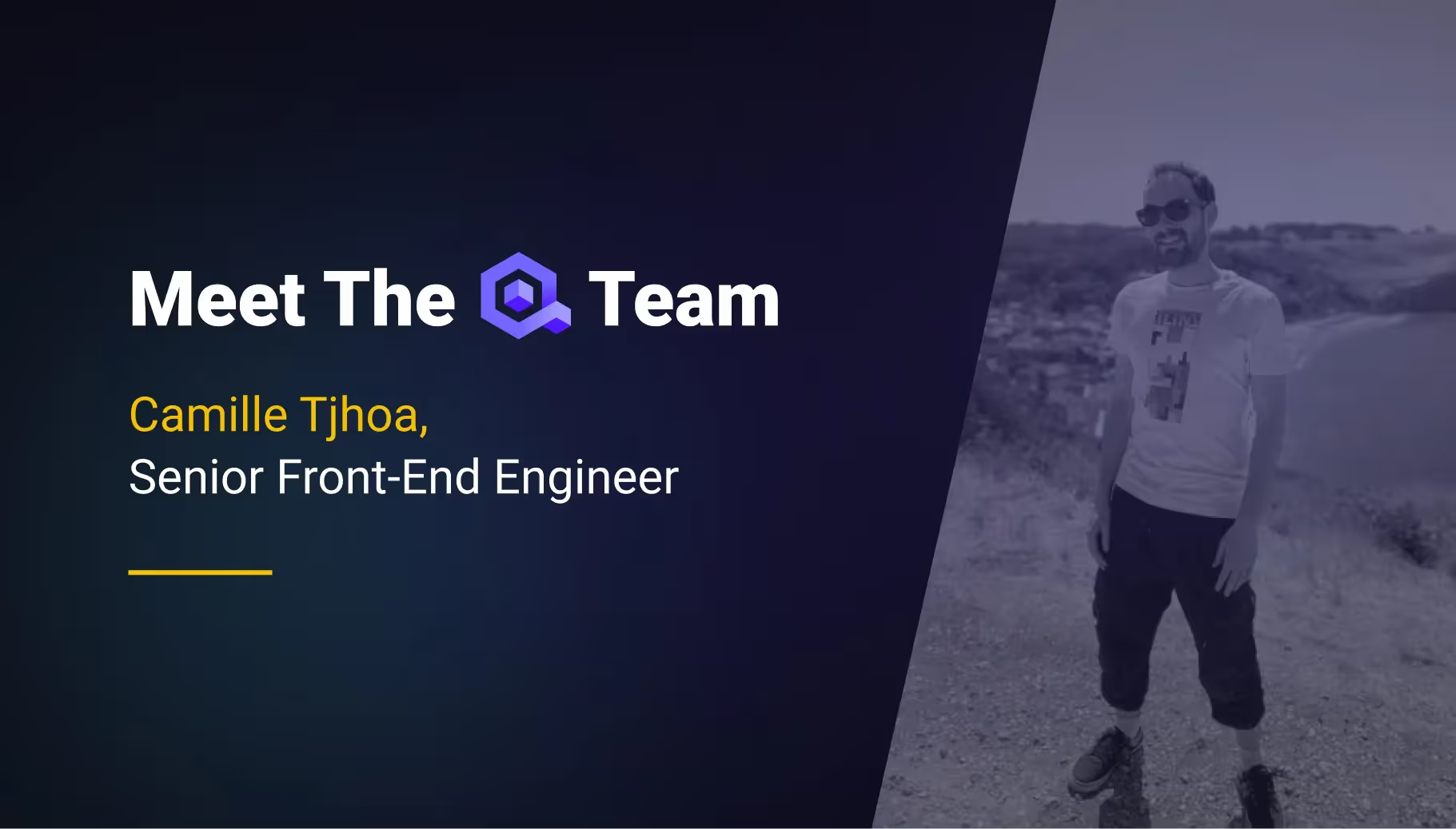
Meet the Qovery Team: Camille, Senior Front-End Engineer
We're beyond excited to reveal the portrait of Camille, Senior Frond-End Engineer at Qovery! Known for turning cups of tea into code and bugs into features, Camille has been a driving force behind our sleek, snazzy interfaces. Join us in celebrating Camille, and get ready for a splash of awesomeness!
Please introduce yourself and briefly describe your professional background.
Hi all 👋,
My name is Camille. I’m a Senior Front-End engineer at Qovery, based in Paris, France. I’ve always been fascinated by technology and its potential to solve complex problems.
I started my IT journey in France with a DUT in programming, followed by an engineering diploma specialising in computer science and networks in apprenticeship.
I first discovered the frontend ecosystem in 2013, starting with Angular.js (the first of his name).
Since then, I’ve researched several front-end trends in frameworks and libraries 🏄, which has enriched my approach to problem-solving and innovation.
Before joining Qovery, my most notable experience was spending seven years at Concord, where I started as a developer and evolved into a front-end architect.
Over the years, I’ve honed my skills in Frontend technologies, constantly seeking new challenges and opportunities to grow. I had the privilege of working with various startups and established companies, contributing to numerous innovative projects.
Camille, Senior Front-End Engineer
What is your role at Qovery, and what do you do?
At Qovery, I am a Senior Frontend Developer. My primary responsibility is to create and maintain seamless user experiences for our platform. I work closely with our talented team, especially Rémi, to ensure that our Frontend solutions are visually appealing, highly functional, and user-friendly. My role involves a mix of coding, software architecture, and collaborating with other departments to deliver features that meet our users' needs and exceed their expectations.
I’ve also recently opened up to Qovery’s backend codebase, starting small backend features.
Agents ship fast. Guardrails keep them safe.
Qovery ensures every agent action is scoped, audited, and policy-checked. Start deploying in under 10 minutes.
What do you like the most about working at Qovery?
What I love the most about working at Qovery is the culture of innovation and collaboration. The team’s passion for open-source and cutting-edge technologies aligns perfectly with my interests, making it an exciting and fulfilling workplace. Every day, I am inspired by my colleagues' dedication and creativity, which motivates me to continuously improve and push the boundaries of what’s possible.
Providing easy solutions to complex underlying problems is a daunting task but definitely inspiring 🧠.
What does your typical day look like?
A typical day for me starts with a strong cup of tea and a quick stand-up meeting with the team. From there, it’s a mix of coding, reviewing pull requests, and brainstorming sessions. I love diving into complex problems and finding elegant solutions. Pair programming with Rémi is always a highlight-two heads are better than one!
This is followed by a few hours of focused coding in the afternoon, during which I implement or improve new features.
I might join a design review meeting. I always set aside time to learn and experiment with new technologies, keeping myself updated with the latest trends in front-end development. Frontend trends move fast, and so do we.
How do you like to spend your free time when you are not working?
When I’m not immersed in code, you’ll probably find me strumming my guitar 🎸 or rocking out as the lead singer in a band 🧑🎤. Music has always been a huge part of my life, and it’s a great way to unwind and express creativity in a different form. Music keeps me energised and inspired, whether it’s a small gig at a local bar or just jamming with friends.
I’m also passionate about open-source projects and often contribute to various initiatives when I have time.
Do you have final advice for someone wanting to join Qovery?
If you’re considering joining Qovery, I would advise embracing the opportunity to work in a dynamic and innovative environment where your ideas are valued and your growth is encouraged. Be ready to challenge yourself, learn continuously, and collaborate with a talented and supportive team, pushing the possible boundaries.
At Qovery, you’ll have the chance to work on exciting projects while enjoying the flexibility of a remote work lifestyle. If you have a passion for technology and a desire to grow, Qovery is the perfect place.