How Qovery Could Have Saved Time and Effort in Compare the Market's EKS Migration
During the AWS summit in London, Renee Hunt, the CTO of Compare the Market, shared their journey of migrating from EC2 to EKS and the obstacles they faced along the way. As I listened to their story, I couldn't help but think about how Qovery could have greatly streamlined its migration process; here is my take on the subject.
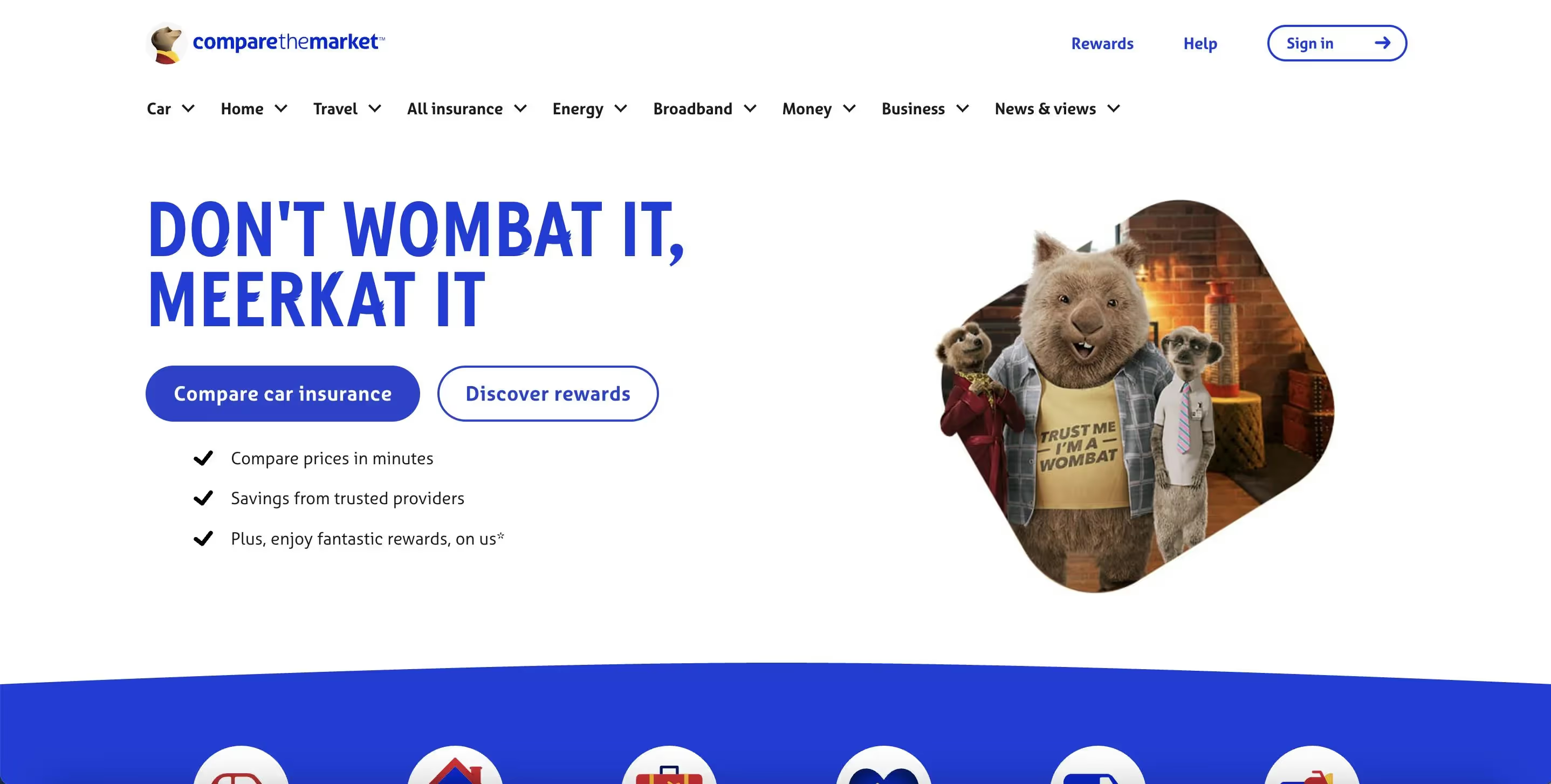
Compare the Market (yes, the one with the cute meerkats) is a leading price comparison fintech company that plays a crucial role in helping households save money, particularly in the midst of the cost of living crisis. Their platform simplifies price comparisons for customers, allowing them to find the cheapest prices for various products. Behind the scenes, Compare the Market's infrastructure must be high-speed, scalable, secure, and capable of handling large volumes of data for numerous partners and millions of customers across different product verticals.
Compare the Market's journey began in 2009 as a startup built within a traditional insurance company. Initially, they relied on a traditional stack with all services hosted on-premises, but as a fast-growing digital-only business, they soon realized the need for a more agile infrastructure. They became early adopters of microservices, and at the time, AWS emerged as the most credible choice for their cloud migration and microservices architecture. They initially utilized Amazon EC2, which proved successful in automation, scalability, and meeting their growing business needs.
High Costs with EC2
As Compare the Market continued to expand, so did their AWS estate and the associated load-balancing requirements. With over 5500 load balancers, much of their infrastructure was underutilized, resulting in high operational costs. Recognizing this challenge, they collaborated with the AWS team to find a solution, ultimately considering managed Kubernetes as a potential option.
Painful Migration to Amazon Elastic Kubernetes Services
In 2021, Compare the Market conducted a successful proof of concept using Amazon EKS, but the migration was temporarily put on hold due to competing priorities within the organization. It wasn't until October that the leadership team recommitted to making the migration to EKS their top priority, hoping for a swift completion, but things didn't move as fast as they were hoping, as the migration was finalized just a day before the AWS summit in June 2023.
Agents ship fast. Guardrails keep them safe.
Qovery ensures every agent action is scoped, audited, and policy-checked. Start deploying in under 10 minutes.
How Compare the Market Could Have Saved Precious Months of Migration with Qovery
The Power of EKS and its Challenges
Amazon EKS offers scalability, dependability, and security, making it an ideal choice for enterprise installations. It automates Kubernetes control plane availability and scalability, which is particularly suited for high-availability applications. However, leveraging EKS comes with certain challenges:
Complexity and Learning Curve: Scaling Kubernetes requires a deep understanding of its architecture, concepts, and various scaling mechanisms. Engineering teams must invest time and effort into mastering Kubernetes scaling best practices and tools to ensure a smooth and successful scaling experience.
Resource Allocation and Management: Efficiently allocating and managing resources during scaling operations can be complex. Teams need to monitor resource usage, consider cluster capacity, and implement appropriate scaling strategies to avoid overprovisioning or underutilization.
Application Compatibility and Dependencies: Scaling applications in Kubernetes involves managing dependencies, ensuring compatibility in scaled environments, and handling any issues that arise during the process. This requires thorough testing, compatibility checks, and effective coordination between development and operations teams.
Leveraging Qovery's Simplified Approach
All of those above can make the time to migrate from EC2 to EKS really long, which is not ideal for fast-growing teams.
Qovery could have played a crucial role in accelerating Compare the Market's migration from EC2 to EKS while saving precious time. Here's how Qovery simplifies the process:
1. **Integrating into the Developer Environment:** Qovery seamlessly integrates into the developer environment, facilitating a smooth and efficient workflow. By connecting with platforms like GitHub, Qovery simplifies the deployment pipeline, reducing complexity for developers.
Infrastructure Management: Qovery offers user-friendly resource allocation, enabling developers to configure CPU, RAM, instances, and storage easily. It translates these choices into appropriate Kubernetes resource configurations, ensuring the desired resources are deployed without requiring in-depth knowledge of Kubernetes management.
Domain Management: Qovery simplifies the process of configuring custom domains for applications. It handles the necessary Kubernetes instructions, such as creating Ingress resources or configuring load balancers, allowing developers to focus on their code instead of network details.
Balancing Abstraction and Control: Qovery strikes a balance between abstraction and control, empowering developers to make infrastructure-related decisions without becoming infrastructure experts. Developers can fine-tune their deployments through Qovery's "Advanced Settings," modifying parameters for underlying resources as needed.
Seamless Integration of Infrastructure and Engineering: Qovery unifies the infrastructure and engineering experience, providing a seamless interface that caters to both worlds. By acting as an intermediary layer, Qovery allows developers to concentrate on writing code while handling the complex infrastructure management behind the scenes.
Continuous Improvement and Adaptation: Qovery remains committed to continuously improving and adapting to developers' evolving needs and the changing technology landscape. By staying up-to-date with infrastructure management trends, Qovery ensures it remains a valuable tool for developers, empowering them with a powerful and user-friendly solution.
Conclusion
Compare the Market's migration journey from EC2 to EKS presented opportunities and challenges. While EKS offers powerful benefits for scalability and dependability, it also requires a significant investment in understanding Kubernetes and managing its complexities. Qovery could have greatly simplified this migration, providing a developer-friendly interface and streamlining infrastructure management. By leveraging Qovery, Compare the Market could have saved valuable time and accelerated their transition to EKS, ensuring a smoother and more efficient migration process; so if you're thinking about starting this kind of migration, sign up to Qovery and see how we can help!