
Hey Team,
Two platform-wide changes ship in this release: the new UI is now the default for all organizations, and Kubernetes 1.35 is available for self-service upgrade. We are also sharing an early look at Remote Dev Environments, something we have been co-building with a handful of customers.
🧪 Remote Dev Environments (Alpha)
AI coding tools like Lovable, Bolt, and similar platforms have made it easy for anyone in a company to spin up a working prototype. The problem is that these tools run entirely on third-party infrastructure: your code, your environment variables, and your data leave your perimeter. For teams with compliance requirements, GDPR obligations, or simply a policy that production data stays internal, this is a real blocker.
Remote Dev Environments brings that workflow back inside your infrastructure. Any engineer, designer, or PM in your organization can spin up a fully configured clone of your production stack in minutes, directly inside the environment your platform team already controls. No Docker Desktop, no WSL2 setup, no week-long onboarding for new hires. The environment runs on your cluster, your data stays where it belongs, and your platform team defines the guardrails once.
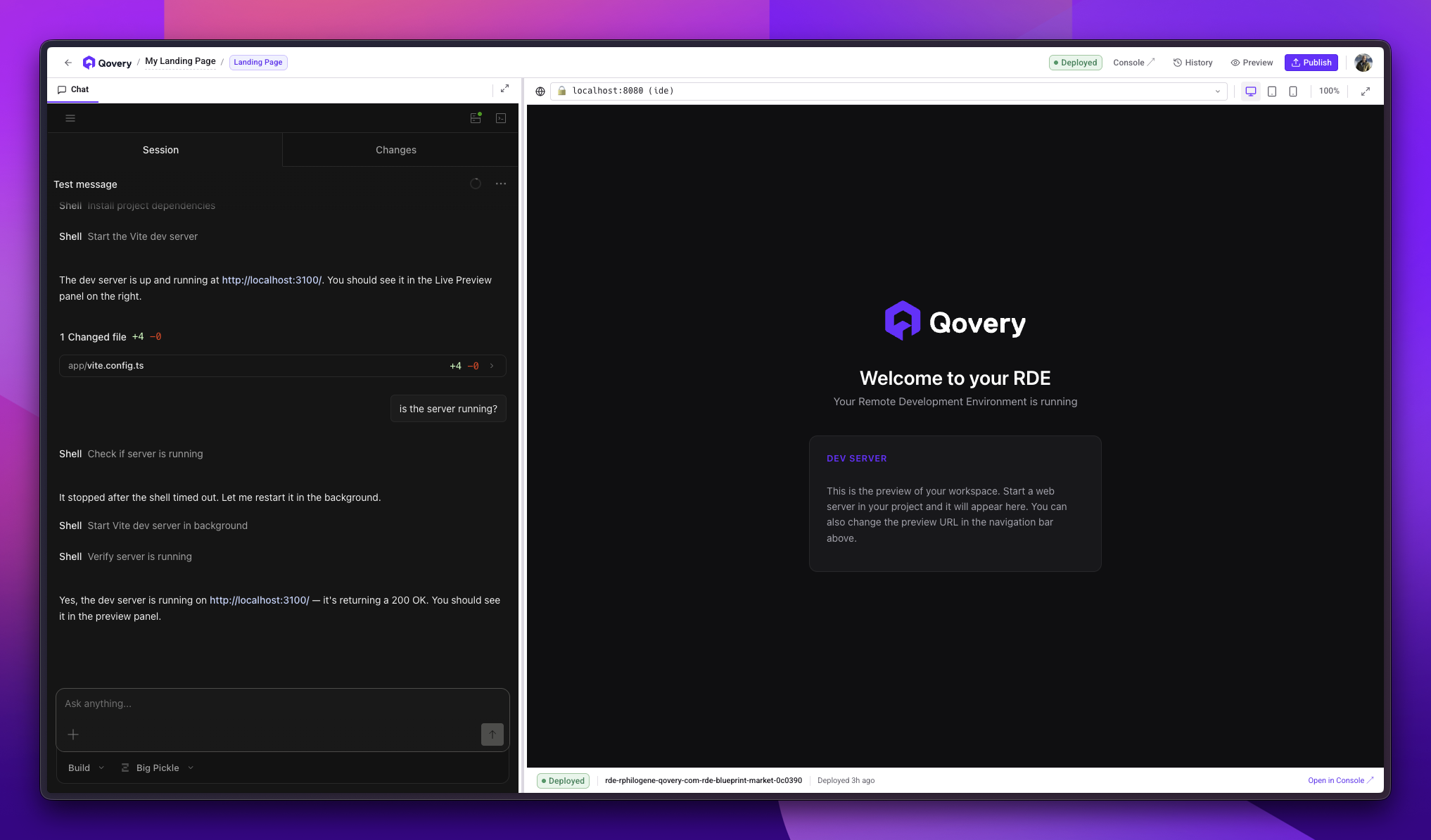
We are co-building this with a small group of customers to make sure it solves the right problems without introducing new ones. If you want to be involved in shaping the direction, reach out to your Customer Success Manager.
🖥️ New UI is now the official interface
The new UI has been in preview for several weeks and is now the default for all organizations. The old interface has been decommissioned.
This is not a cosmetic update. The entire navigation and information architecture has been rethought to reduce friction for teams managing multiple projects and environments. Key changes include:
- A new organization overview that gives you a single-pane view across all your projects
- Native dark mode
- A modernized interface that better reflects how teams actually work in the platform day to day
If you were still on the old UI, you are now on the new one. If you run into anything unexpected, reach out.
☸️ Kubernetes 1.35 available, 1.34 upgrade complete
Kubernetes upgrades are one of the most operationally painful tasks a platform team faces. Validating every Helm chart, testing integrations with managed services, coordinating phased rollouts across clusters: it is weeks of work that adds no direct product value. With Qovery, you offload that entirely.
The migration to Kubernetes 1.34 is now complete across all existing clusters. Qovery handled it in the right order: non-production clusters first, so your teams could validate workloads before we touched production. All new clusters are provisioned at 1.35, and you can upgrade your existing clusters at any time or wait for Qovery to handle it for you according to the shared upgrade plan.
Check the Qovery status page for real-time progress on the rollout.
🛠️ Minor updates
- Audit logs: maintenance entries now include more context. Entries generated by Qovery-triggered maintenance operations are now better labeled so you can distinguish them from user-initiated actions at a glance. Documentation updated.
- Envoy migration: dual-stack is now running on all clusters. Both nginx and Envoy are active, but a deprecation deadline for nginx is coming. If you have not started the migration yet, now is the time. The longer you wait, the less runway you will have to handle edge cases.
The most urgent item from this release is the Envoy migration: if you have not started it, the window is narrowing. For the Kubernetes upgrade, you can let Qovery handle it on your behalf or self-service it today.
Talk soon,
The Qovery Team 🚀