ECS was the right call in 2022. Since then Kubernetes has become the default the ecosystem builds for, and half the tooling you want to buy now assumes you run it.
Moving the containers is the easy part. What stalls these migrations is everything around them: the static egress IPs your partners have allowlisted, IAM, secrets, service discovery, and the Terraform modules nobody on the current team wrote.
That last one is where AI has changed the timeline. An agent can read forty Terraform modules in a minute and tell you what they do. It can also generate a cluster config that looks right and quietly drops your network policies. We'll show both, and what catches the second one before it reaches AWS.
Then we run the migration live: cluster provisioned, workload moved from ECS to EKS, static egress IP kept.
What you'll learn
- Why ECS teams stall: it is rarely the containers
- The real inventory: egress IPs, IAM, secrets, service discovery, observability, and Terraform nobody owns
- Three common approaches and where each one fails: a hand rewrite, a long parallel run, and a feature freeze
- Reading a legacy Terraform estate with an agent: what it gets right, what it makes up, and how to check it
- The migration, live: EKS cluster provisioned, workload moved, static egress IP kept
- The rollback plan: you will need one, so we'll show ours
Speakers
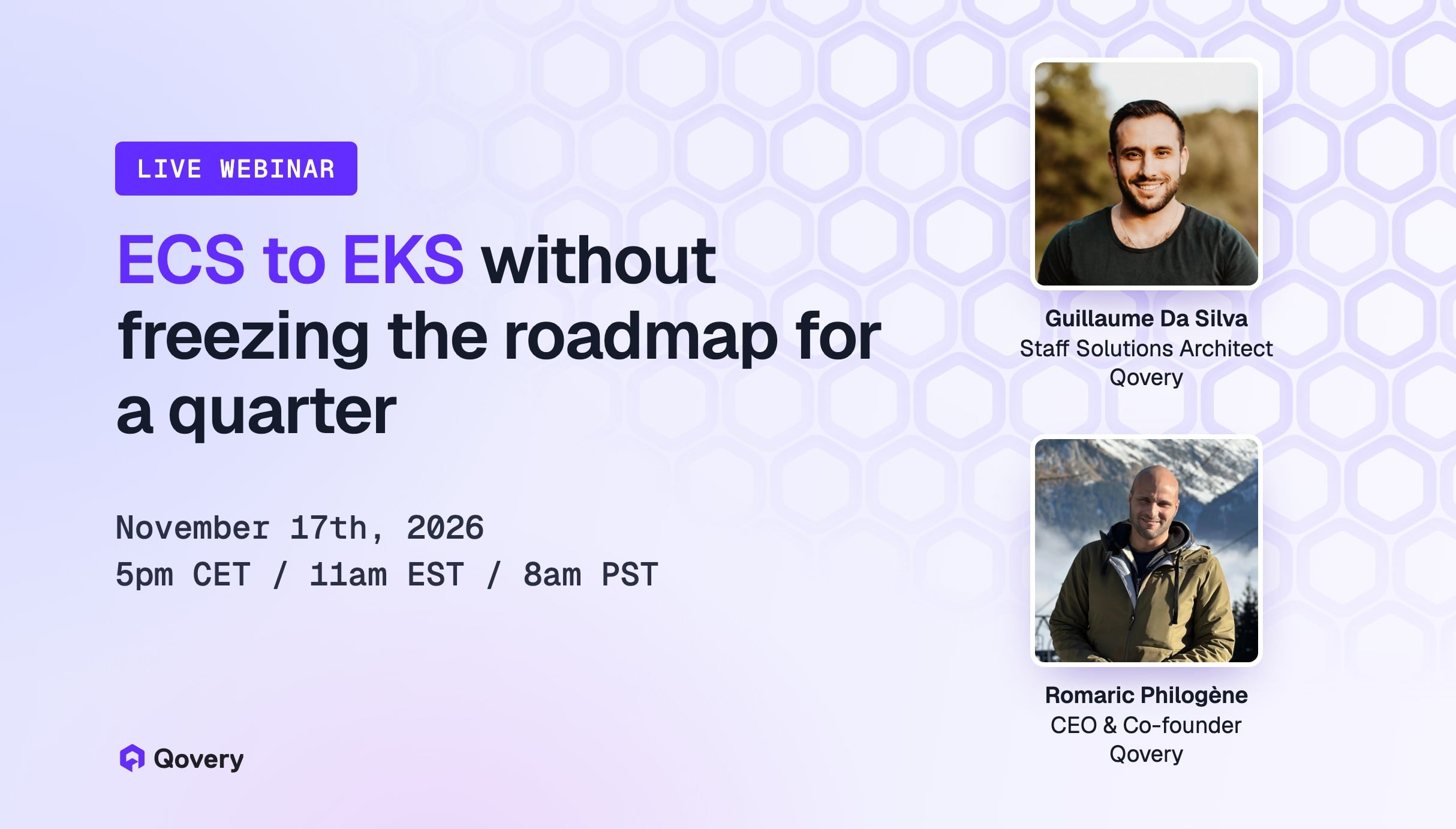
Guillaume Da Silva - Staff Solutions Architect at Qovery
Romaric Philogène - CEO & Co-founder at Qovery
Details
- Date: November 17, 2026 at 5pm CET / 11am EST / 8am PST
- Duration: 60 minutes including live Q&A
- Format: Talk plus live migration, with Q&A at the end
This session is for platform teams and engineering leads running production on ECS who keep pushing the move to EKS to next quarter.