
Hey Team,
This release brings three things worth your attention: ArgoCD is now a first-class integration in Qovery, the AI Copilot gets proper access controls, and Remote Dev Environments ship a round of improvements shaped directly by feedback from early customers.
🔗 ArgoCD Integration
For teams already running ArgoCD, adopting a new platform has always carried an implicit tax: you either migrate everything at once or you manage two systems in parallel until you do. Neither is great.
Qovery now lets you connect your ArgoCD server directly and manage your existing ArgoCD applications alongside your Terraform modules, lifecycle jobs, and Qovery-native services, all from a single control plane. You get Qovery's deployment pipeline, access controls, and environment management without touching your existing ArgoCD configuration.
Read the full announcement on our blog
🖥️ Remote Dev Environments: Built with Early Customers
We have been working closely with the first teams to adopt RDEs, and this update is a direct result of what they ran into in practice.
The workspace creation flow has been redesigned: a workspace is now created after the first chat interaction, which removes the friction new users hit on an empty starting state.
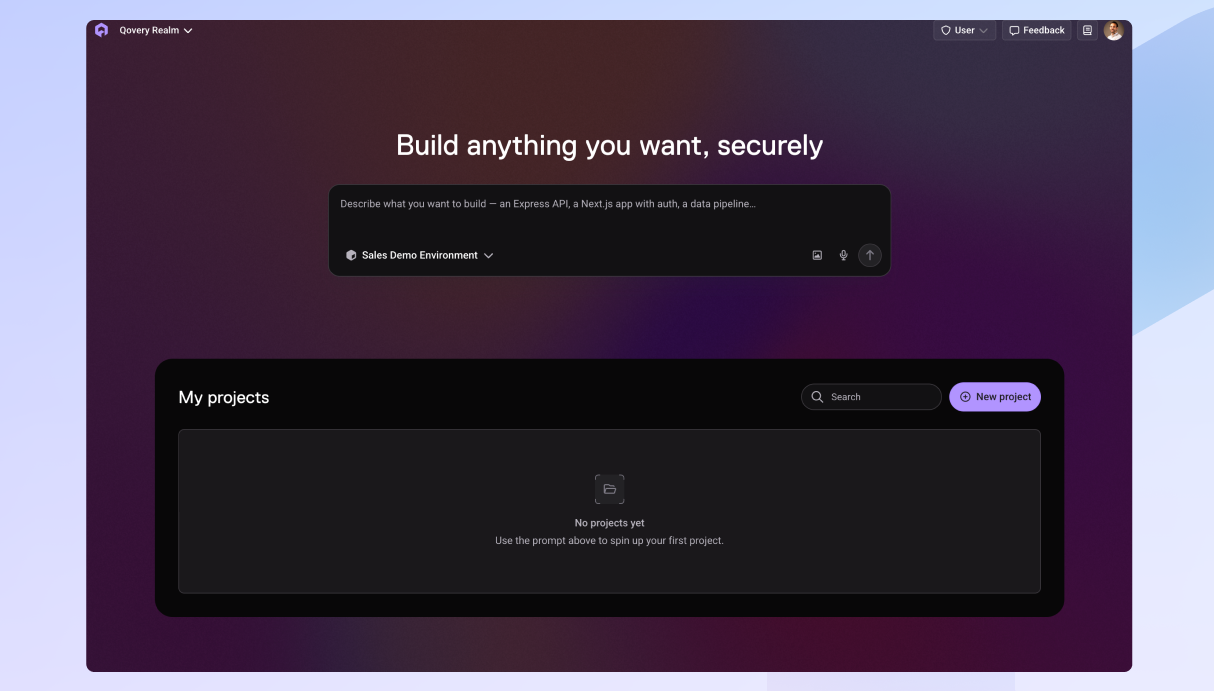
Admins can now define blueprint input variables, the fields a user must fill in before starting a workspace, so teams can standardize how environments are initialized without requiring each user to know the underlying configuration.
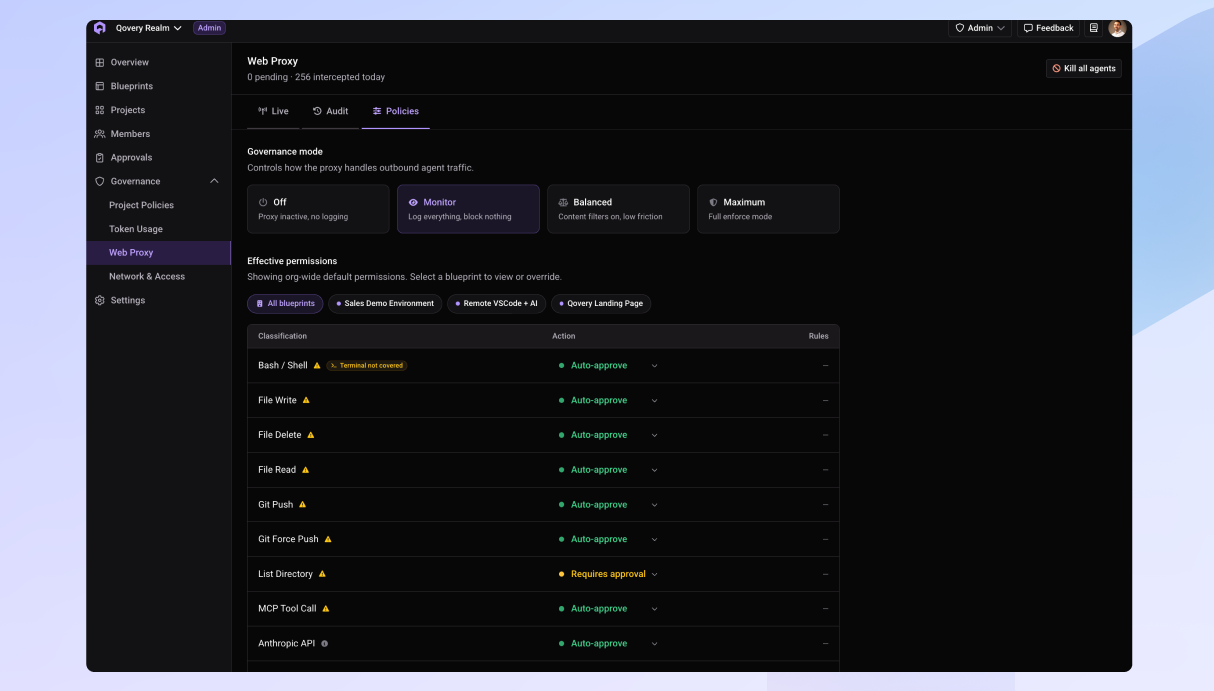
On the governance side, admins can now configure an approve/deny list for all HTTP/HTTPS requests originating from a workspace. Requests can be approved or denied automatically based on rules, or held for manual review. This matters for organizations that need to control what external services a dev environment can reach.
We also shipped improvements to workspace connectivity stability that address reliability issues reported by several teams during extended sessions.
RDEs are currently in early access. If you want to get started, reach out to your CSM.
🤖 Restrict Copilot Access by Role
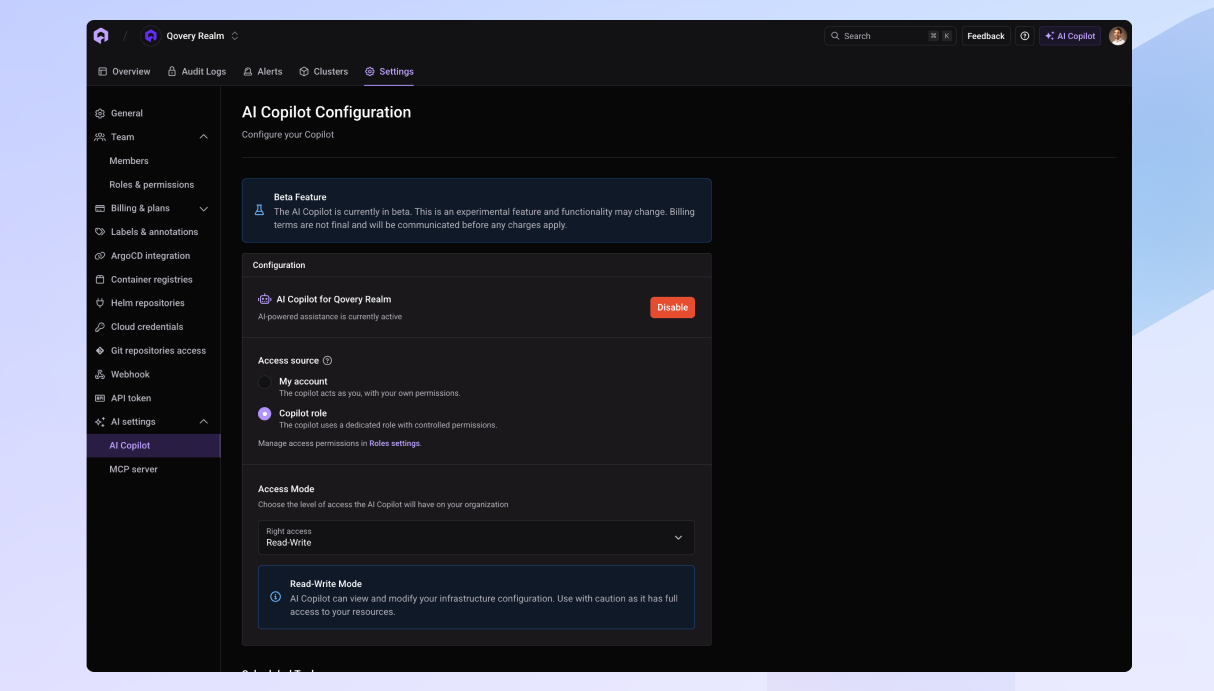
The AI Copilot has been running with the permissions of the logged-in user since launch. That works fine for individuals, but it creates a problem when you want to give developers broad Copilot access in non-production environments while keeping production locked down.
You can now assign a dedicated role to the Copilot instead of inheriting the current user's permissions. The configuration lives in Settings under AI Copilot, where you choose between "My account" (existing behavior) and "Copilot role" (a role you define in Roles & Permissions). This is still in beta.
🛠️ Minor updates
- Our staging cluster has been upgraded to Kubernetes 1.35. Production clusters will be automatically upgraded on June 15. You can follow the full schedule on the Qovery status page.
- GCP clusters now support stable egress IPs via a NAT gateway, giving your outbound traffic a predictable source IP for firewall allowlisting. See the GKE managed cluster docs for setup.
- You can now restrict which public CIDRs are allowed to reach your GCP cluster's Kubernetes API. This is configured via cluster advanced settings. See the cluster advanced settings docs for details.
🔭 What's coming next
We are adding native support for the most widely used secret managers. Once connected, the secret manager operator will fetch your secrets and make them available directly to your applications, no more copying values into the Qovery console or maintaining a parallel source of truth. As part of this work, we have also revisited the environment variable section to make it easier to manage all variable types in one place.
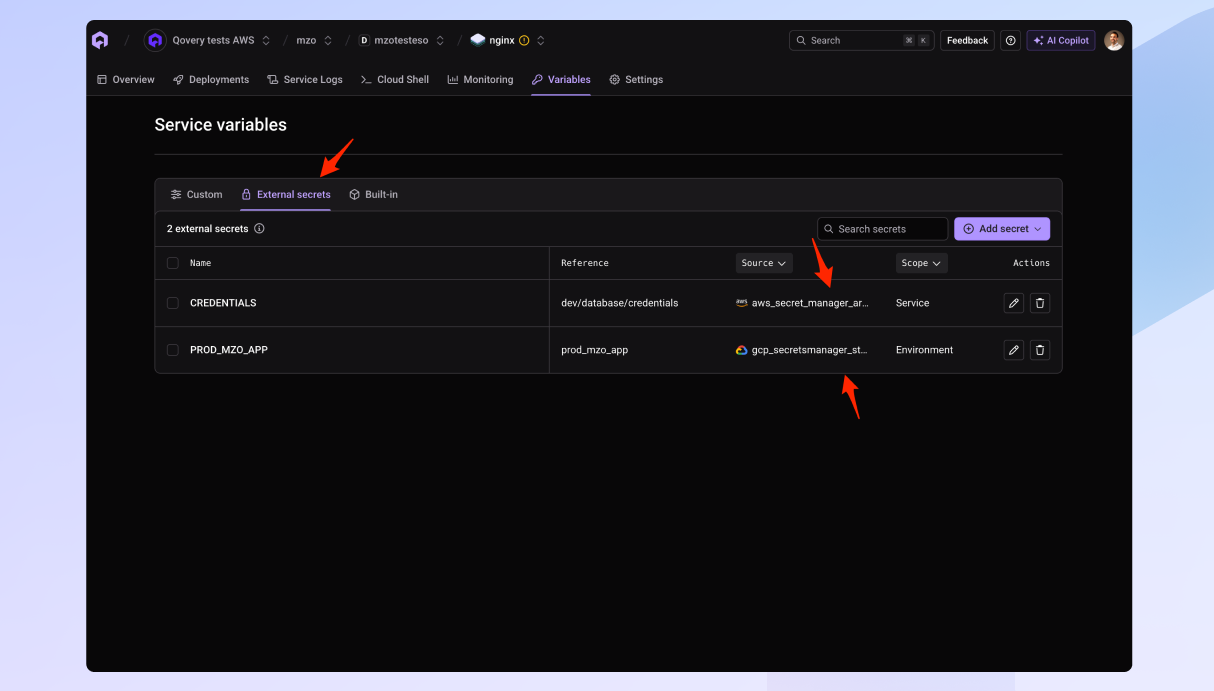
This is currently in active development and should be available within the next three weeks. If you want early access, reach out to your CSM or contact us through the support channel in the Qovery UI.
This release is a good one to share with your security and platform leads, particularly the Copilot role controls and the GCP egress IP work. If you are on a production cluster, note the June 15 Kubernetes upgrade and check the status page.
Talk soon,
The Qovery Team 🚀