Meet the Qovery Team: Romain, Staff Backend Engineer
Ladies and gentlemen, today we have the pleasure of sitting down with Romain, Staff Backend Engineer at Qovery, based in Paris. Romain is one of our “hero” engineers, able to tackle a wide range of technical topics. He also has a secret: a link to a treasure chest full of cute old-school videos.
Hey Romain, Could You Please Introduce Yourself and Describe Your Professional Background Briefly?
Bonjour world!
My parents named me Romain, and unsurprisingly, that’s how people call me when they want to I pay attention. Usually with a strong intonation in the voice, but I never really understood why; maybe I am starting to be deaf, assuredly because of all that psytrance I am listening to.
If we ever met, and you have trouble pronouncing the hein at the end of Romain, you can call me Roman, no worries, I will not burst in flame. A teacher at University called me Nicolas for a whole year, yes…, and still, I don’t have a split personality syndrome, so rest assured that Roman is fine.
I am still young, but I guess it depends on who you ask. A tax gatherer will tell you that I am still in the first quarter of my working life, If you look at my expected life span I am nearly at the middle of it, and if you ask my compagne she will tell you that I am already too old to not have a family.
Well, all that to say that my Peter Pan syndrome is having its age now, and that when I join a new team, I am not the youngest one anymore.
So I have some experiences to show off with, beside learning homonym technology like Spark , and Kafka (I read his book 🤫) to put them in my C.V.
I worked as a C++ middleware (is this still a term ?) developer, after as Java one for Big data analysis on Hadoop, after I switched to be an SRE on distributed systems, and now I am working in Kotlin and Rust in the cloud to make developer experience and productivity a breeze.
Romain Gerard
What is Your Role at Qovery, and What Do You Do?
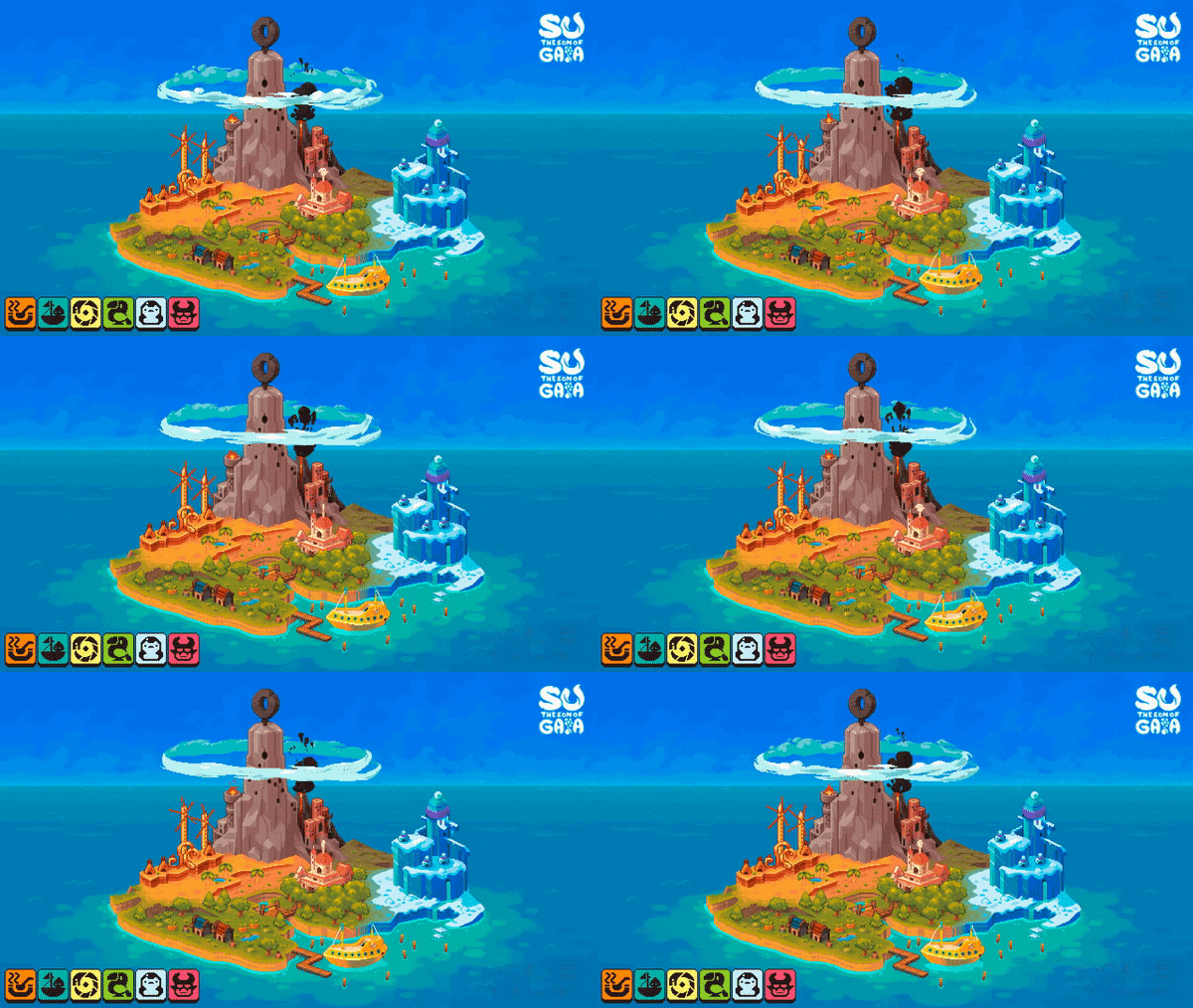
In essence, making the technical landscape of Qovery look like more
null
than
null
And allowing all our customers to join the fun park with us along the ride.
It means trying to turn business/product requirements into technical design, coding them, putting those features in production, monitoring and maintaining our infrastructure & apps, … all that while at the same time, helping in interviews to choose the right candidate and mentoring newcomers to help them be effective on Qovery stack.
Agents ship fast. Guardrails keep them safe.
Qovery ensures every agent action is scoped, audited, and policy-checked. Start deploying in under 10 minutes.
What Do You Like the Most About Working at Qovery?
The hot hurling fiery ball of complexity that the cloud is all about. I am not really sure what would be the elevator pitch of my career so far. But what I can tell you for certain is that the narrative frame would taste like a vampire wandering in the night of abstractions, smelling the hot blood of complex interactions running inside the inner fabric of this machinery and jumping on it to suck it dry.
If I is a void, I fill it with complexity, so I can play in my head all day long with problems until I caught dizziness at looking at the high of the pit. Is there no better hole than the one that has no bottom ? The cloud is that for me, a deep without end, something to dive into at the search of the ancient gods to answer this simple question “How the fuck does all this work ?”
null
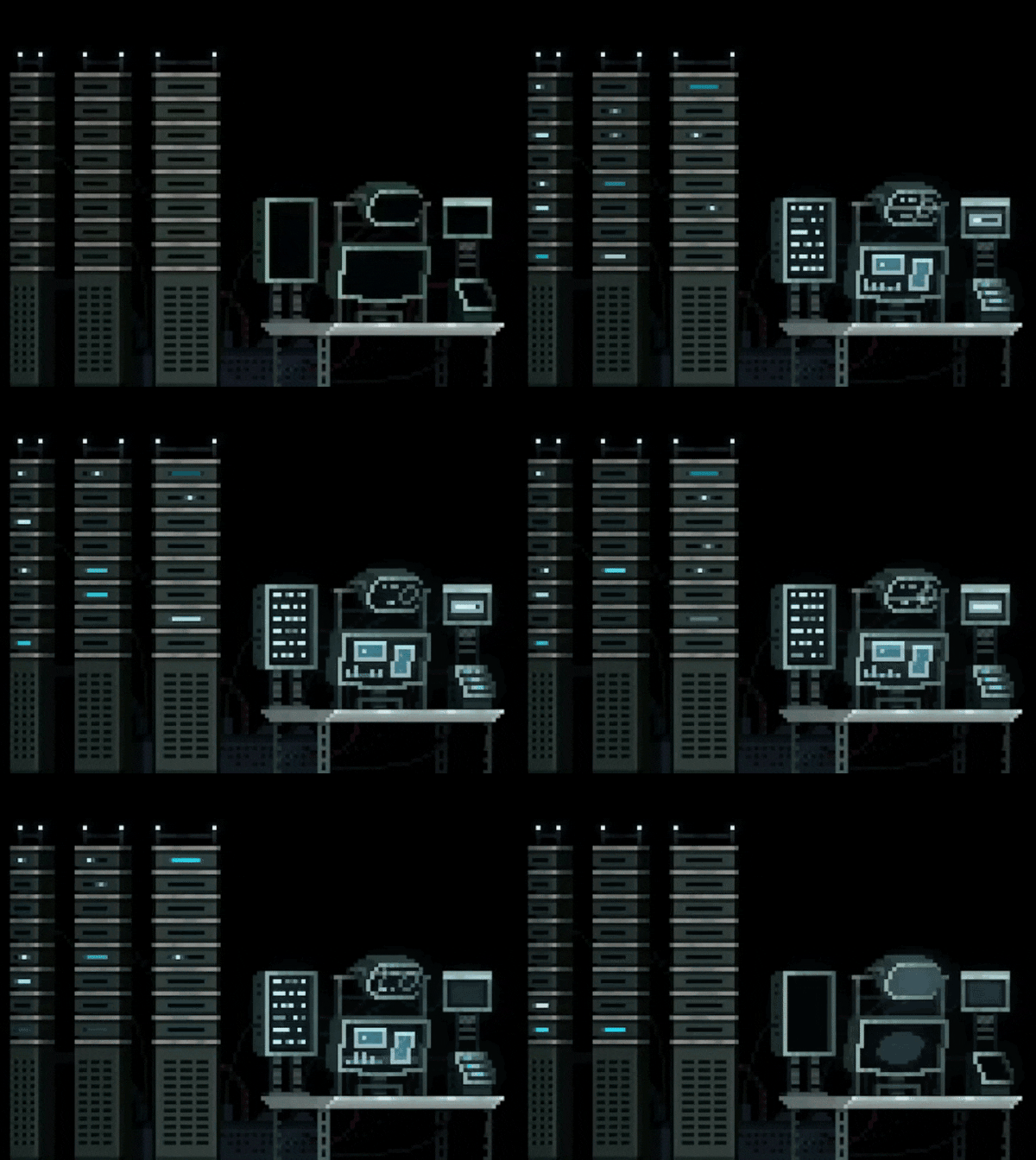
But I am civilized, so I trade building tower for my quest of worshiping knowledge. Towers to gaze upon the deep, but ones with an all-inclusive view.
You can expect to carve the building blocks with tool like Rust, Kotlin using Spring boot and Postgres, while at the same time learning about Kubernetes, Containers/Docker, AWS, GCP, … Yes, our scope is broad and wide, but I told you that the deep is without end !
What Does Your Typical Day Look Like?
Taking a coffee in the morning and after somehow working on a computer for the rest of the day. I sprinkle this morning routine, with various kinds of online activities like doing daily standup, sharing interesting content from Reddit/HackerNews, playing role play with Wheel of Misery to make everybody grow from interesting issues we had during the week.
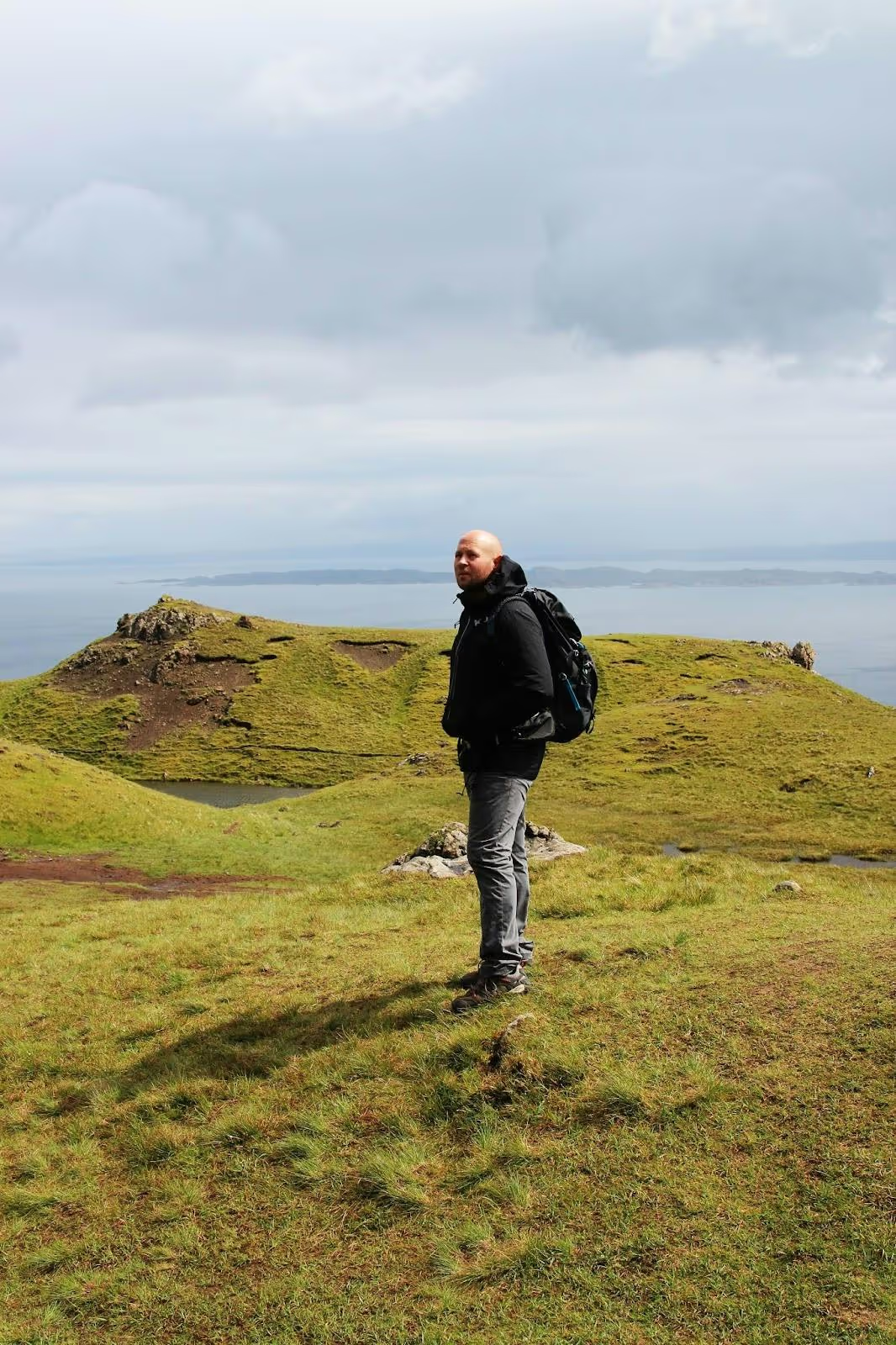
For the rest of the landscape, paint what you want in the background, I am working remotely, so you are the hero of your own adventure here!
null
How Do You Like to Spend Your Free Time When You Are Not Working?
You should have noticed by now, collecting videos that I put in a loop in the hope of jamming my brain to force a reset and make it stop spinning. A neuronal equivalent of a return in a recursive call. Or more boringly, when I have nothing to say, to still participate somehow in setting a cheerful collective mood.
null
Do You Have Final Advice to Give to Someone Who Wants to Join Qovery?
Buckle up, If you like code and infrastructure, it will be a fun ride into the mine!