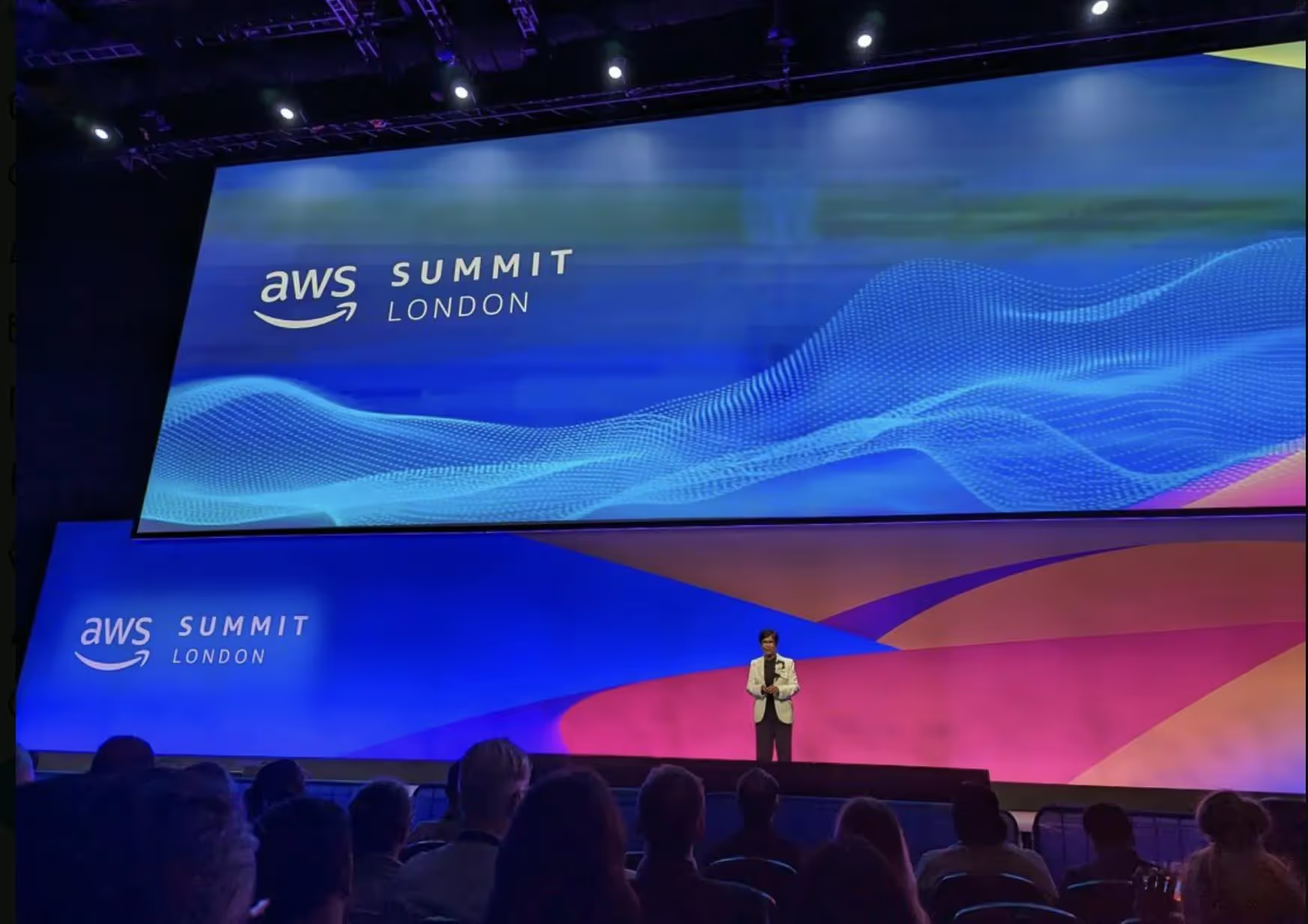
This week, I played at home as the rest of the DX team and I were at the AWS Summit London. 🇬🇧 The event was buzzing with excitement and overflowing with great talks and impressive exhibition stands. It didn't disappoint in terms of attendance either! Despite covering a wide range of subjects, I couldn't help but notice three super-hot tech trends that were everywhere throughout the day. So, without further ado, let's dive right in and explore these topics!
According to AWS themselves, AWS Global Summits are free events that bring the cloud computing community together to connect, collaborate, and learn about AWS. At the Summits, you can learn how to choose the proper database, modernize your data warehouse, and drive digital transformation using AI. Summits are held in major cities worldwide and attract technologists from all industries and skill levels who want to discover how AWS can help them innovate quickly and deliver flexible, reliable solutions at scale. On top of that, the AWS summit usually has main topics that represent trends in the tech industry.
In today's world, sustainability has become more crucial than ever before. It involves meeting the needs of the present without compromising the ability of future generations to meet their own needs. At the AWS Summit, there were numerous discussions and initiatives centered around sustainability. AWS provided insights on how organizations can embrace sustainability by leveraging their cloud services. One significant step is migrating to the cloud, as it offers various advantages in terms of energy efficiency and reducing carbon footprints.
In their talks, they also presented options like utilizing AWS Graviton, which provides energy-efficient ARM-based instances. Another strategy is to choose AWS regions situated near Amazon renewable energy projects or regions where the grid has a lower carbon intensity compared to other locations when possible. By making conscious decisions in selecting the appropriate AWS regions, organizations can actively contribute to sustainability efforts while benefiting from cloud services.
Trend 2: Artificial Intelligence (AI)
Artificial Intelligence (AI) has undoubtedly gained immense popularity in recent times with the rise of tools such as ChatGPT. The AWS Summit highlighted the widespread adoption of AI tools and software, as well as the integration of AI capabilities into existing software solutions. AWS entered the AI game with the announcement a few months ago of AWS Bedrock, a new service that offers access to foundation models developed by AI21 Labs, Anthropic, Stability AI, and Amazon, all through a user-friendly API. Bedrock also provides access to a range of models for text and images, including Amazon's Titan models and AWS Code Whisperer.
The talks on AI were a major attraction at the summit, with queues forming outside some sessions that filled the entire room. This fervor around AI showcased the growing interest and eagerness to leverage AI technologies in various applications and industries.
Agents ship fast. Guardrails keep them safe.
Qovery ensures every agent action is scoped, audited, and policy-checked. Start deploying in under 10 minutes.
In the face of a global cost of living crisis, organizations are recognizing the importance of cost optimization, and the trend will continue to live on after the crisis as cloud cost optimization should be a continuous effort rather than a reactionary measure. Talks like "Cost Optimization as a Culture" highlighted the benefits of integrating cost optimization practices into daily operations, including proactive monitoring, resource rightsizing, and efficient architectural designs.
Skyscanner, a leading travel company, shared their success story of leveraging EC2 Spot Instances and Elastic Kubernetes Service (EKS) to build a resilient infrastructure while achieving a remarkable 73% reduction in cloud expenditure.
To save costs on AWS, organizations can employ various strategies. Leveraging reserved instances offers substantial discounts by committing to specific instance types. Auto-scaling dynamically adjusts resources based on demand, optimizing utilization and minimizing costs. Optimizing storage solutions through services like Amazon S3 Intelligent-Tiering and lifecycle policies significantly reduces storage expenses. Additionally, spot instances allow organizations to capitalize on unused capacity at lower prices.
Wrapping Up
The summit provided valuable insights and success stories, demonstrating how organizations can make conscious choices to contribute to sustainability efforts, leverage AI technologies for innovation, and optimize cloud costs for long-term efficiency. As the event ended, it became clear that these trends will continue to shape the future of technology and drive advancements across industries.
We’re not without knowing that moving to AWS, leveraging EC2 Spot Instances and Elastic Kubernetes Service (EKS) are not changes that can be done overnight and can last years to be completed for some organization, and that’s where Qovery's DevOps automation tool comes to play, with success stories of moving to Kubernetes in weeks and not months, or the possibility to optimize even more on cloud costs so if you feel like it’s time for you to reshape the future of your infrastructure, get started today!