IDPs are essential tools that provide developers with self-service capabilities for tasks like configuration and deployment, allowing them to focus on core development rather than infrastructure complexities. This significantly boosts productivity and accelerates software delivery.
The article highlights 10 specific IDPs, including Qovery, OpsLevel, and Humanitec, each offering unique features for managing applications, environments, and infrastructure. These platforms aim to simplify development workflows and enhance collaboration.
When selecting an IDP, organizations should evaluate factors like scalability, integration capabilities with existing tools, ease of use, security features, cost, suitability for specific use cases, vendor support, and user reviews to ensure the chosen platform aligns with their needs.
What is an Internal Developer Platform?
An internal developer platform (IDP) is a comprehensive collection of tools and technologies that empower developers by providing self-service capabilities for tasks such as configuration, deployment, provisioning, and rollback. It structures development toolchains and workflows, allowing developers to focus primarily on their core development tasks rather than dealing with infrastructure and IT complexities.
The primary goal of an IDP is to streamline the software development process and enhance developer productivity. By offering a cohesive platform of tools and technologies, an IDP enables developers to concentrate on delivering valuable features and solutions to their customers instead of getting entangled in infrastructure-related challenges.
Developers seek to allocate their time and efforts toward developing applications and innovative solutions rather than ensuring that the underlying infrastructure meets the organization's standards. Internal developer platforms alleviate this burden by providing a unified environment tailored to developers' needs, reducing the cognitive load associated with managing disparate tools and systems.
With a ready-to-use platform that encompasses essential tools and functionalities, developers can avoid reinventing the wheel for each project. Platform engineering establishes a common foundation of tools that developers can leverage, eliminating bottlenecks and enabling them to deliver value to customers more efficiently. This benefits both the company and its customers by accelerating time-to-market and fostering innovation.
10 Best Internal Developer Platforms to Consider
1. Qovery
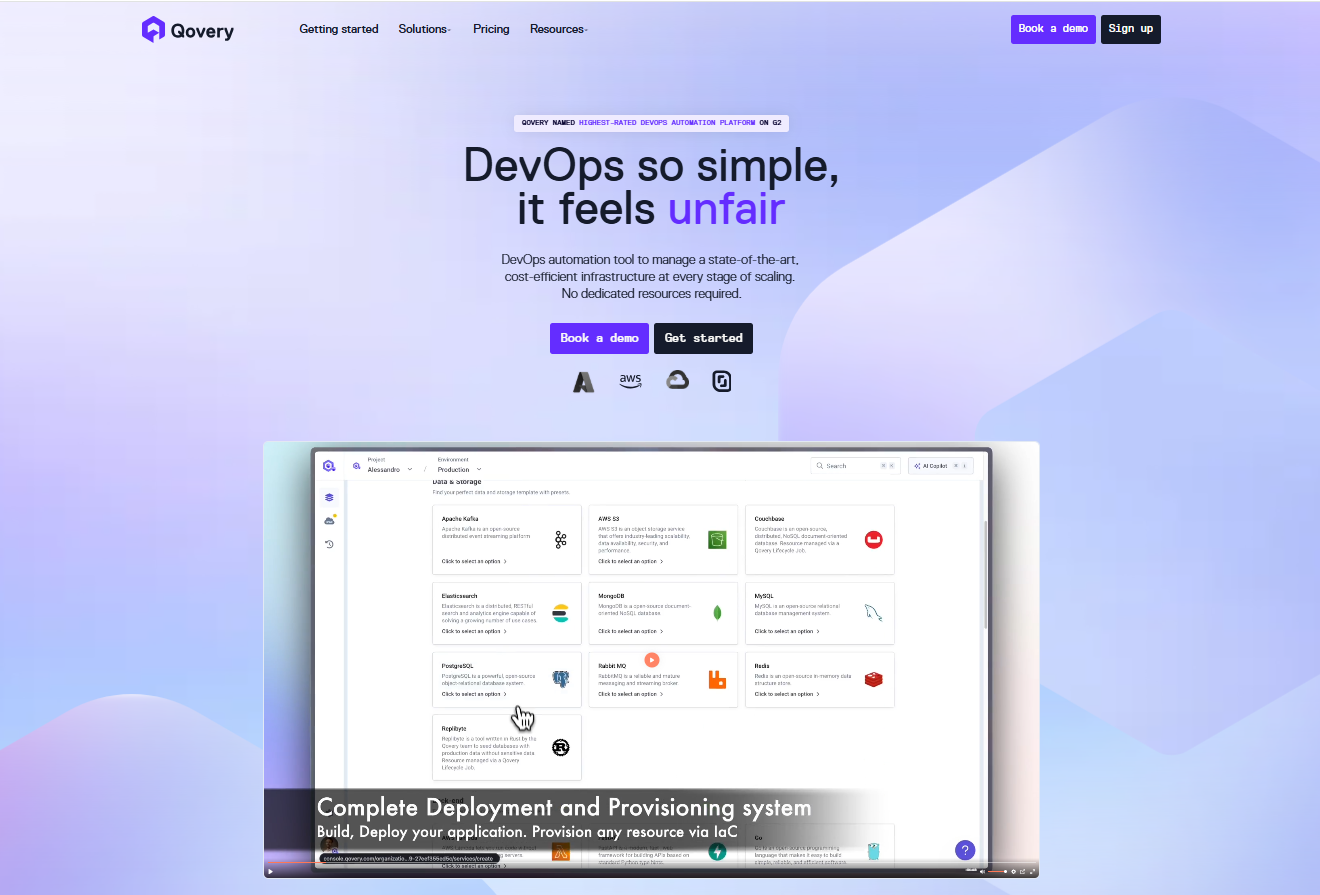
Qovery provides an innovative solution for building developer portals and internal developer platforms. It offers a range of features, including seamless integration with major cloud providers, cloning environments features but also provisioning new environments on pull requests, and enabling auto-deploy.
Qovery provides usage reports, smart cost optimization, and a text-based template system, enhancing user experience and cost efficiency.
With Qovery, teams can easily manage infrastructure, scale applications, and ensure continuous delivery. The platform's user-friendly interface and comprehensive documentation make it accessible to developers of all levels of expertise.
Qovery empowers organizations to focus on their core development tasks while abstracting away the complexities of infrastructure management.
2. OpsLevel
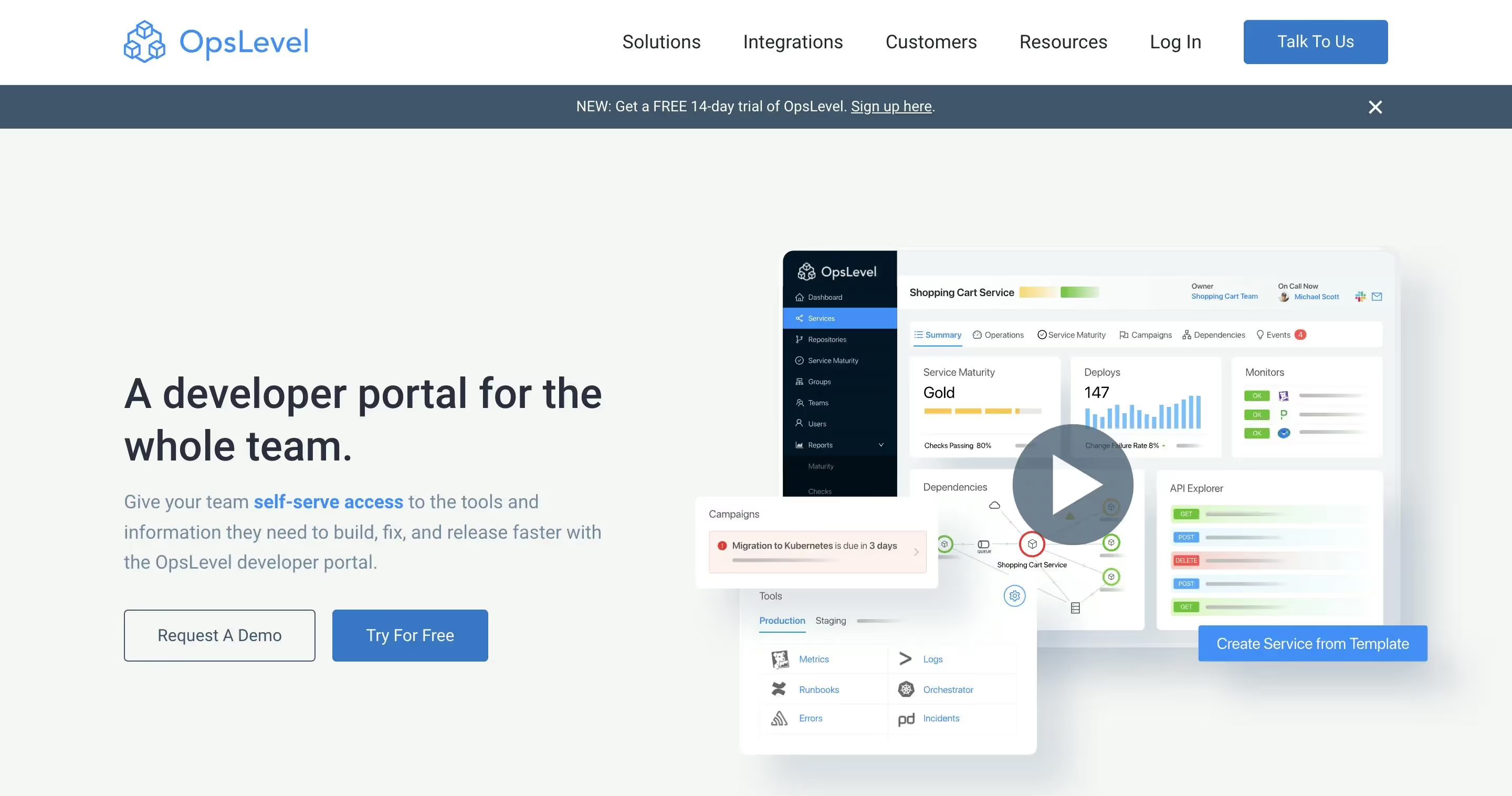
OpsLevel Platform
OpsLevel is a uniform interface that lets developers manage everything from one place, including their tools, services, and systems. It offers comprehensive visibility into services, their dependencies, and the overall health of the system. OpsLevel provides valuable insights and analytics, helping teams make informed decisions and ensure system reliability. With its intuitive interface and robust monitoring capabilities, OpsLevel empowers organizations to effectively manage complex architectures and maintain high-quality services.
3. Humanitec
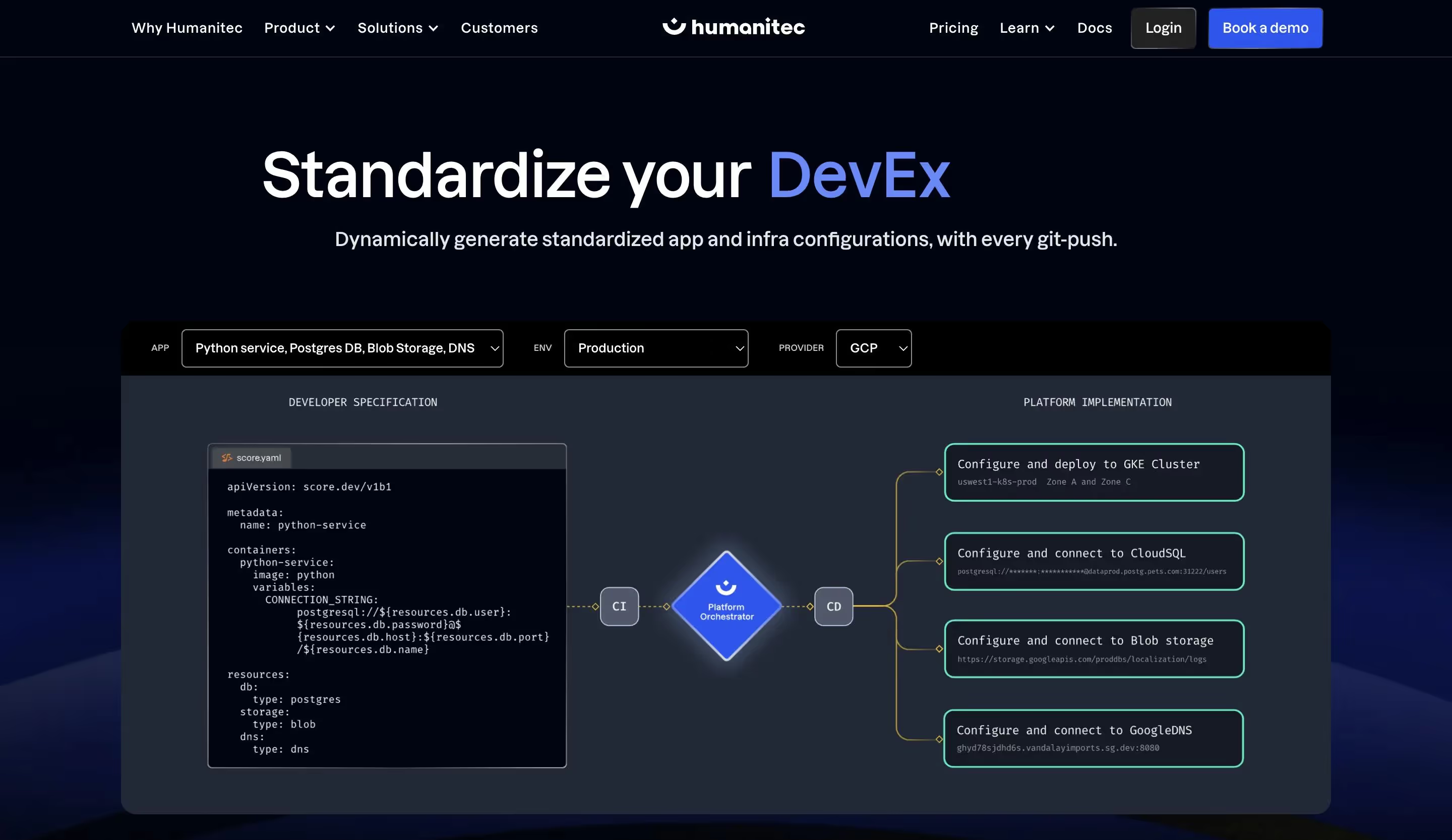
Humanitec Platform
Humanitec is an internal developer platform that focuses on enabling self-service infrastructure for developers. It provides a unified dashboard for managing applications, environments, and configurations across different stages of the development lifecycle. With Humanitec, developers can easily define and deploy their infrastructure, reducing dependencies on operations teams. The platform's simplicity and automation capabilities allow organizations to achieve faster delivery cycles and improved collaboration between developers and operations teams.
4. Coherence
Coherence Platform
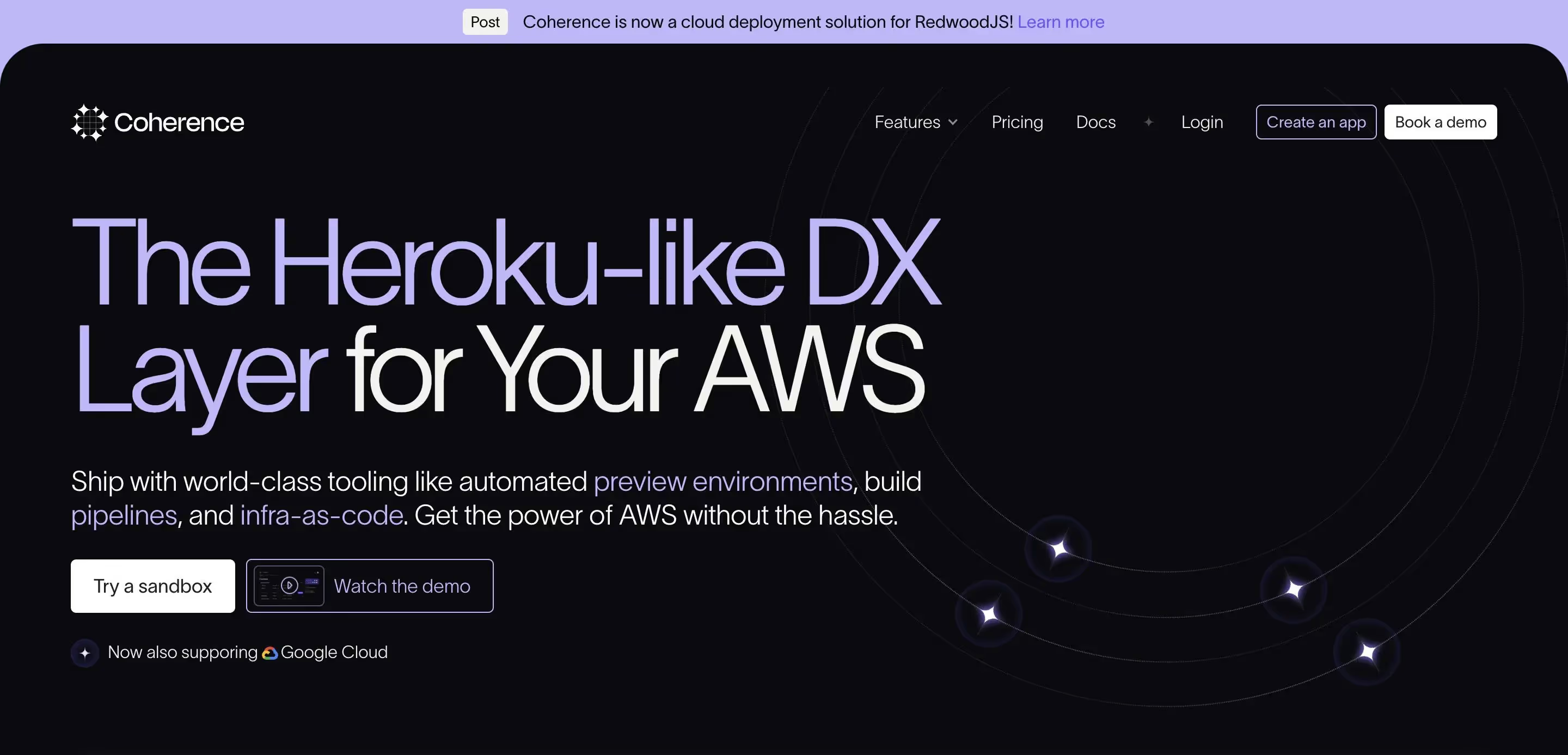
Coherence is more a PaaS platform that provides a full-cycle platform and enables the development, testing, and deployment of full-stack web apps, supporting and formalizing the full SDLC. Includes functionality to manage databases and other cloud resources in all environment types (dev/Cloud IDE, staging/ephemeral branch previews, & production).
5. Mia Platform
Mia Platform
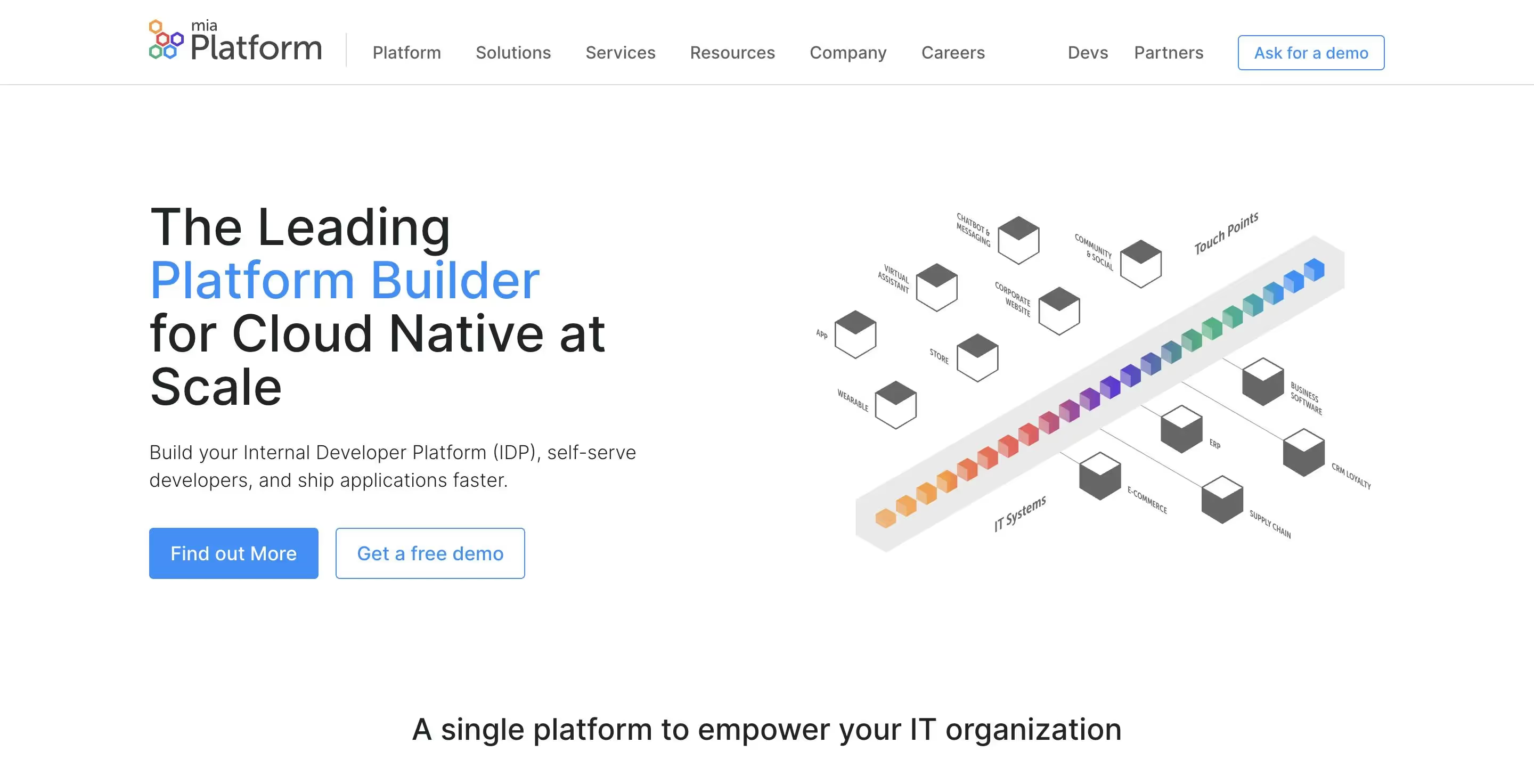
Mia Platform is a Developer Hub that manages the end-to-end life cycle of cloud-native applications and simplifies the life of Dev and Ops. it also provides a marketplace full of plug-and-play components to accelerate the construction of your own digital platform. Among its products, Mia-Platform Console is the core solution: it is a platform builder that industrializes development processes, accelerates the creation of microservices architectures, and improves the developer experience (DevX).
6. Portainer
Portainer Platform
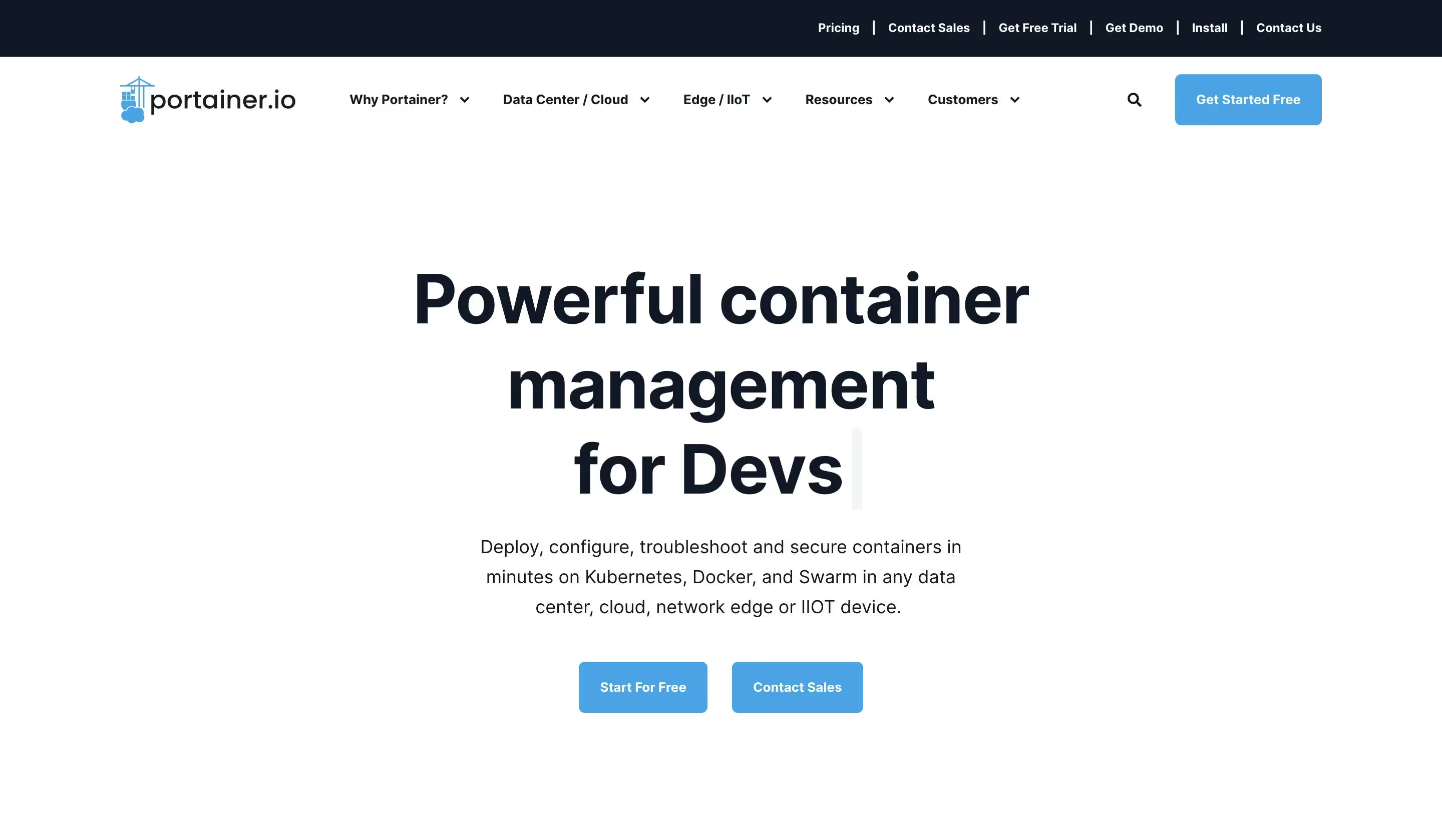
Portainer is an open-source tool that lets users set up, configure, and govern a container management portal that helps them get more value from Kubernetes sooner with the skills the team already has. With Portainer, you can manage any orchestrator, in the cloud, on-premise, or at the edge, in a single interface.
7. Appvia
Appvia Platform
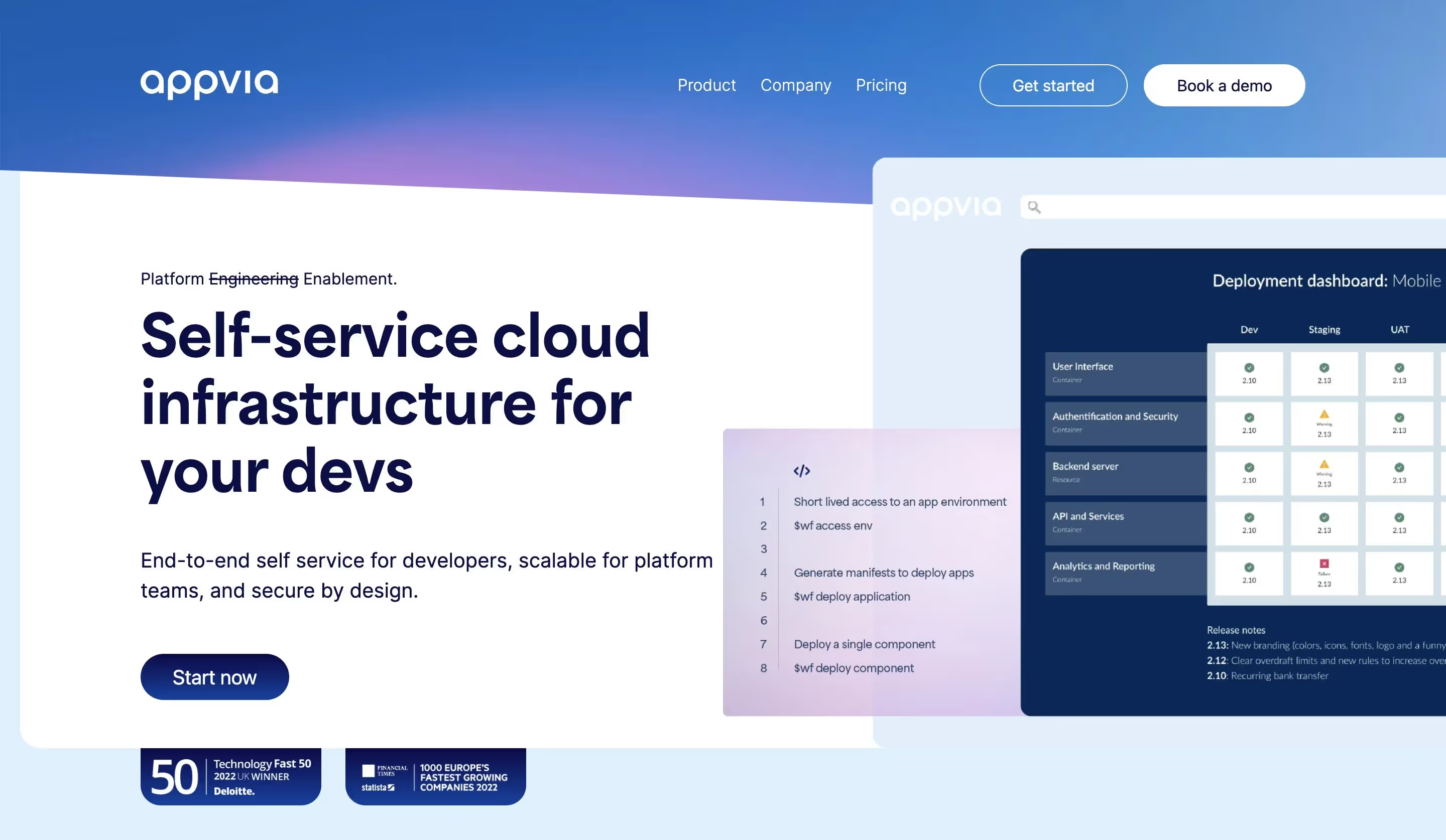
Appvia is a self-service cloud infrastructure platform designed to streamline software delivery processes. It offers a comprehensive set of features, including automated deployment, infrastructure management, and integration with major cloud providers. Appvia is dedicated to providing solutions that make public cloud delivery simple and secure. The solution empowers organizations to confidently pursue the cloud with solutions that make Kubernetes secure, cost-effective, and scalable.
8. Argonaut
Argonaut Platform
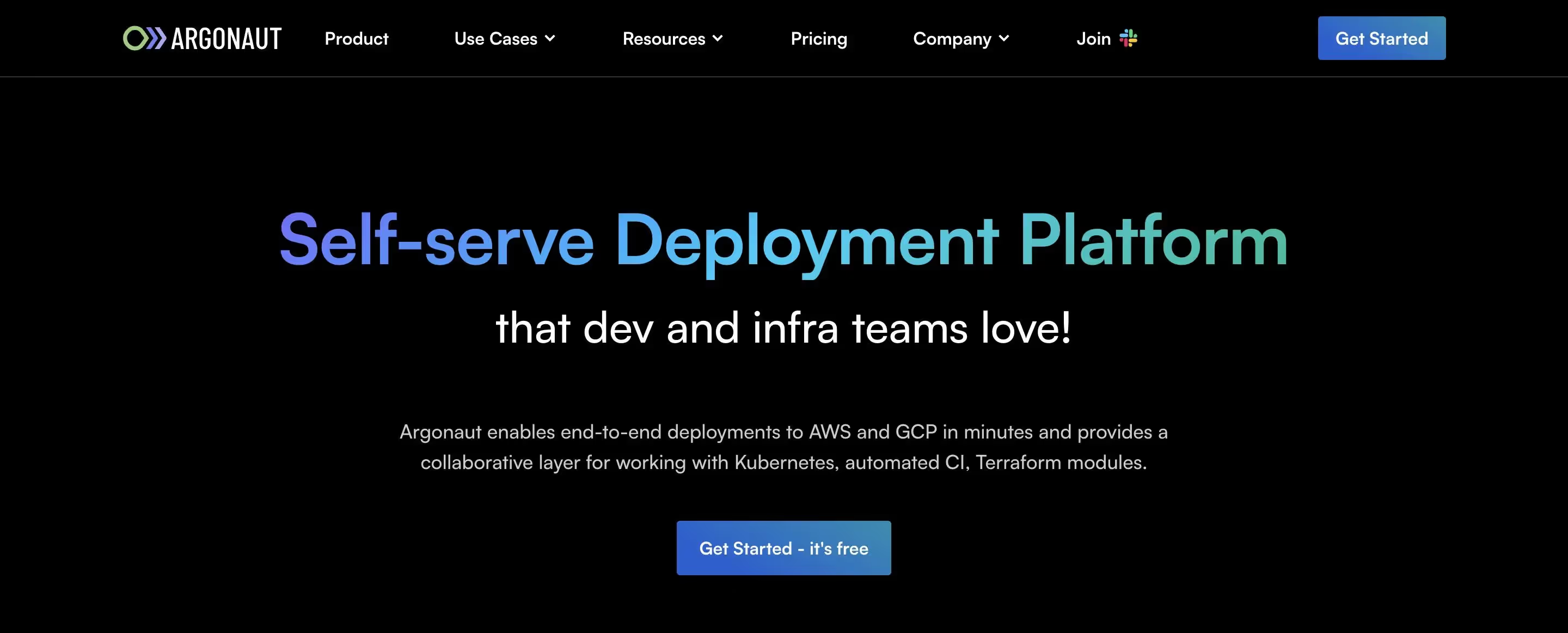
Argonaut is a self-service deployment platform focused on simplifying complex development workflows. Argonaut was founded in 2021 with the mission of automating deployment workflows on the cloud. It empowers developers with self-service capabilities for tasks such as configuration, deployment, and application management. Argonaut.dev includes features like automated testing and continuous integration, making it a valuable choice for organizations looking to optimize their software development processes.
9. Nullstone
Nullstone Platform
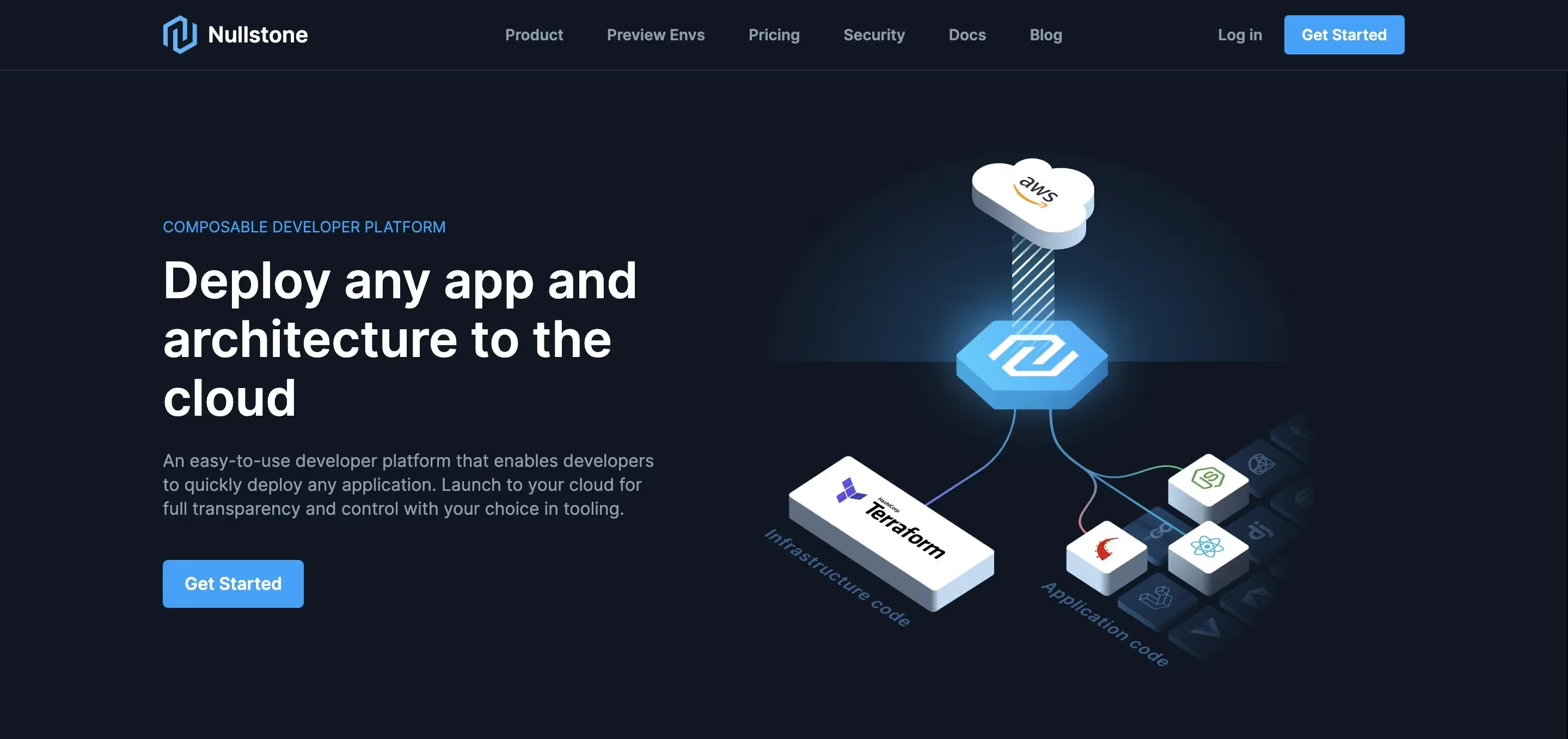
Nullstone is an internal developer platform that emphasizes self-service infrastructure management for developers. It offers a unified dashboard for managing applications and environments, streamlining the development lifecycle. Nullstone.io includes automation features and robust monitoring, enabling organizations to achieve faster delivery cycles and maintain high-quality services. It's a solution that promotes collaboration between development and operations teams, facilitating innovation and efficiency in software development.
10. Mogenius
Mogenius Platform
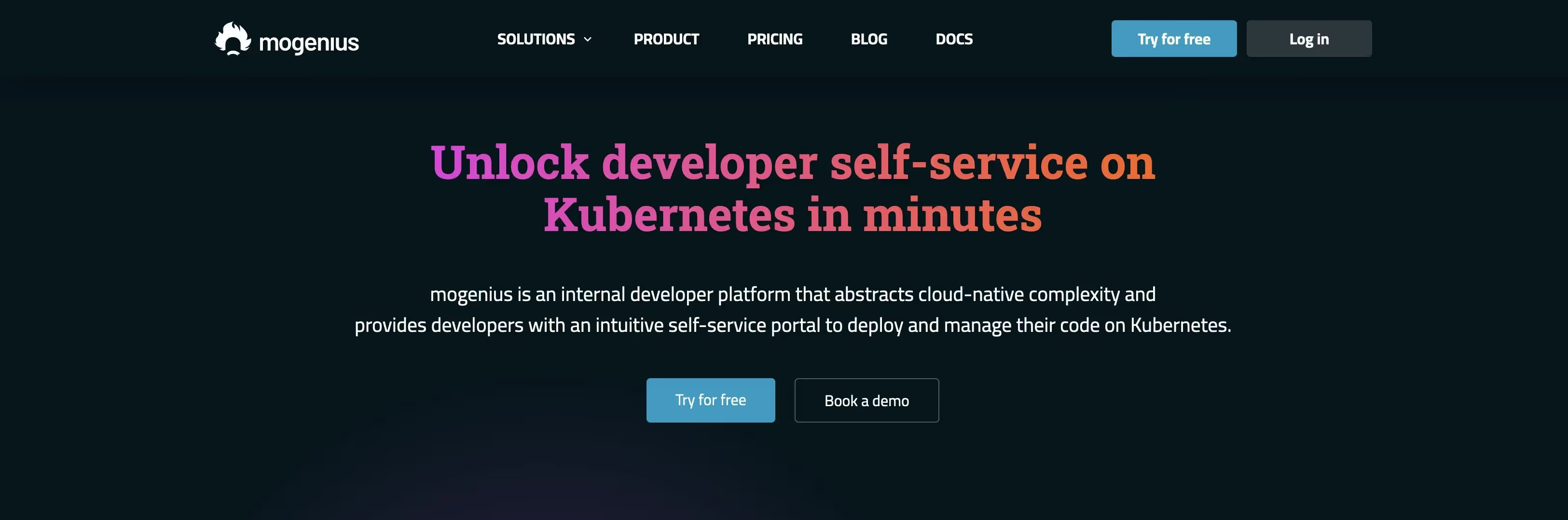
Mogenius is an Internal Developer Platform designed to accelerate the digital transformation process for enterprises. Unlike many other platforms that focus solely on deployment or testing, Mogenius offers a complete array of services that cover the entire software development lifecycle. From rapid prototyping to full-scale production deployments, Mogenius aims to be a one-stop-shop for all your development needs.
Agents ship fast. Guardrails keep them safe.
Qovery ensures every agent action is scoped, audited, and policy-checked. Start deploying in under 10 minutes.
How to Select the Right Internal Developer Platform
When it comes to selecting the best internal developer platform for your organization, it's essential to evaluate and compare the featured platforms based on various factors. Consider the following aspects to make an informed decision:
1. Scalability
Assess the scalability features of each platform to determine its ability to handle growing demands. Consider whether the platform can accommodate your organization's future growth and support increased workloads without compromising performance.
2. Integration Capabilities
Examine the integration options offered by each platform. Consider how well it integrates with your existing tools, technologies, and infrastructure. Look for platforms that provide seamless integration and interoperability, as this will simplify your development processes and enhance collaboration.
3. Ease of Use
Evaluate the user experience and interface of each platform. A user-friendly platform reduces the learning curve for developers and allows them to quickly adapt to the new environment. Look for platforms that offer intuitive interfaces, comprehensive documentation, and developer-friendly features to ensure a smooth onboarding experience.
4. Security and Compliance
Examine the security features and compliance standards supported by each platform. Data protection, access controls, and encryption capabilities should be evaluated to ensure the confidentiality, integrity, and availability of your applications and data. Consider any industry-specific compliance requirements your organization needs to adhere to.
5. Cost
Compare the pricing models and licensing structures of the platforms. Consider the overall cost of ownership, including any additional expenses such as training, support, and infrastructure requirements. Evaluate the value provided by each platform in relation to its cost and align it with your organization's budget.
6. Use Case Suitability
Assess how well each platform aligns with your specific use case and development requirements. Some platforms may be more suitable for specific types of applications, architectures, or development methodologies. Consider the unique needs of your organization and choose a platform that best addresses those requirements.
7. Support and Documentation
Consider the level of support provided by the platform's vendor. Look for platforms that offer robust customer support, including timely responses to queries, access to knowledge bases, and active developer communities. Comprehensive documentation and tutorials are also valuable resources that can aid in troubleshooting and maximizing the platform's capabilities.
8. User Reviews and Feedback
Research user reviews, testimonials, and feedback from organizations using the platforms. This can provide valuable insights into the real-world experiences of other developers and organizations. Consider both positive and negative feedback to gain a balanced perspective.
Conclusion
Choosing the right internal developer platform is paramount in driving productivity and efficiency within software development teams. The featured platforms in this comprehensive guide offer a wide range of features, functionalities, and benefits, catering to diverse organizational needs.
By evaluating each platform's strengths, weaknesses, and unique characteristics, organizations can make informed decisions that align with their specific requirements. Whether it's Qovery, Opslevel, Humanitec, or any other platform, the key is to leverage internal developer platforms to unlock the full potential of your development teams this year and beyond.
Frequently asked questions
What is an internal developer platform?
An IDP is the set of tools and automation that gives developers self-service access to configuration, deployment, provisioning and environment management. The point is not the tooling itself but the abstraction: developers ship without filing tickets or learning the underlying infrastructure, and the platform team encodes the guardrails once.
What is the difference between an internal developer platform and an internal developer portal?
A portal is the interface: a catalogue, documentation and templates, with Backstage as the reference implementation. A platform is the machinery underneath that actually provisions infrastructure and deploys applications. A portal without a platform behind it is a directory of links to systems developers still cannot operate themselves.
Should you build or buy an internal developer platform?
Building gives you an exact fit and a permanent maintenance obligation. The honest question is whether platform engineering is a differentiator for your business or overhead. Teams under roughly 50 engineers rarely recover the cost of a bespoke platform; the build case gets stronger with unusual compliance, network or multi-tenancy requirements.
What should an internal developer platform actually do?
At minimum: provision environments on demand, deploy applications without hand-written manifests, manage secrets and configuration, and expose logs and metrics in one place. Anything that still requires a platform engineer in the loop for a routine change is a gap, not a feature.
Do you need Kubernetes to run an internal developer platform?
No, but most serious ones assume it, because Kubernetes provides the scheduling, networking and resource primitives an IDP would otherwise have to invent. What varies is how much of Kubernetes reaches the developer. The better platforms keep it as the substrate and never make it the interface.
Morgan co-founded Qovery and leads engineering. He writes about Kubernetes architecture, DevOps best practices, and building resilient infrastructure at scale.
Next step
Agents ship fast. Guardrails keep them safe.
Qovery ensures every agent action is scoped, audited, and policy-checked. Start deploying in under 10 minutes.