AI is everywhere, and for good reason: it transforms how software is built and how companies operate. Agents are now a new persona in your org chart.
Today Qovery, in partnership with several clients, is building a platform for this new AI era-one that lets you run AI workflows entirely inside your own infrastructure instead of someone else's account.
When we started talking to clients, we expected the first questions to be about model quality, latency, or cost. They weren't. Almost every conversation converged on one word: governance.
Once you give an agent a seat in your org chart and execution rights in prod, you ask the same questions you would of any senior engineer-only now the answers have to hold against a system that is fast, autonomous, and occasionally wrong.
Data control. You decide what an agent can read and reach. No blanket access to every system or your whole backlog-only the data a workflow actually needs.
Limited access. Each agent gets exactly the access its job requires and nothing more, scoped per workflow. A support agent has no path to billing or write access to databases.
Auditability. Every action is recorded, so you can replay what an agent did, what it touched, and why. When compliance asks, the answer is a log.
Governance starts at the network
You can write the most careful prompts in the world, but a determined prompt injection will find its way around them. So we enforce governance where the model can't argue with it: at the network level.
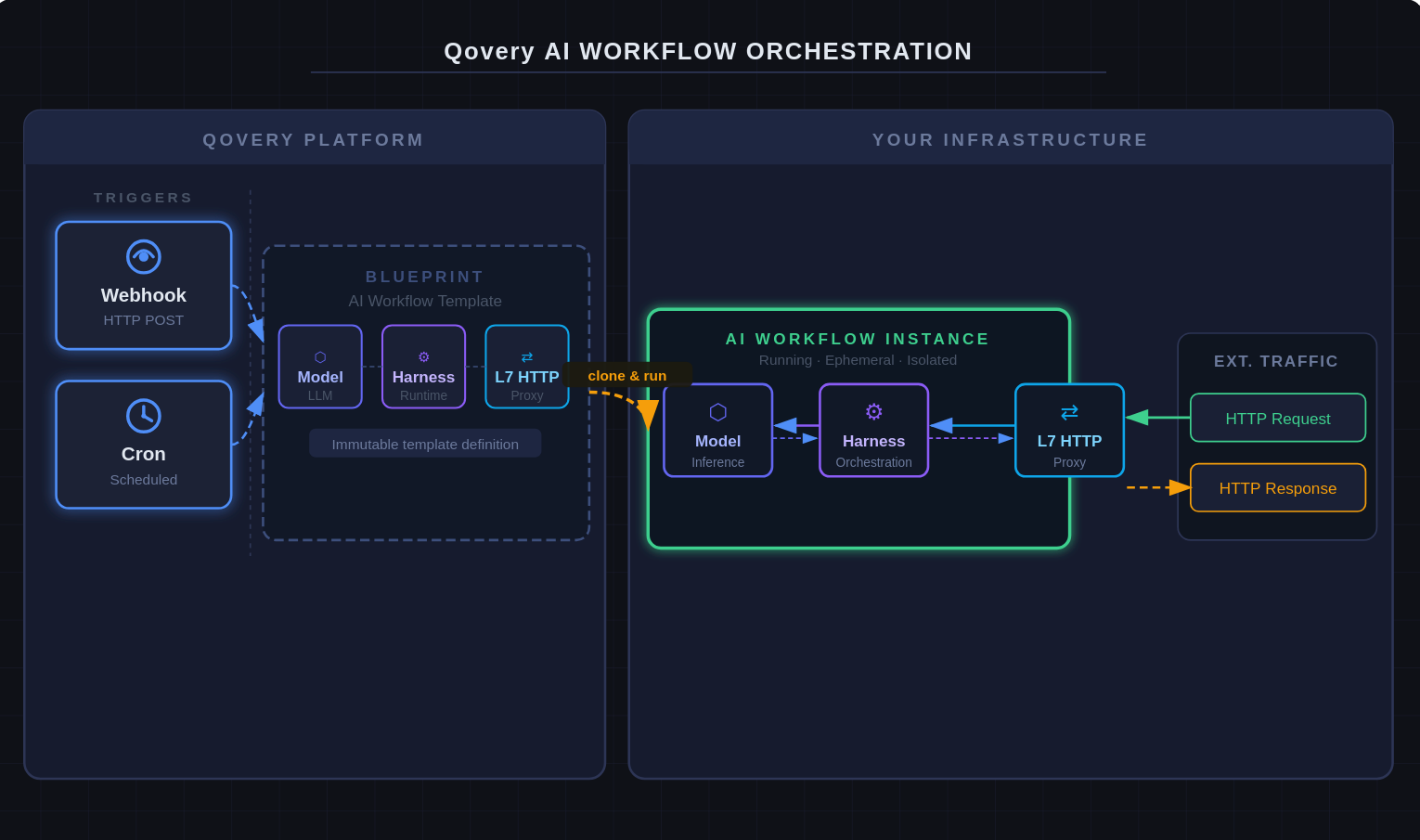
Every AI workflow runs behind a custom layer 7 proxy. Because it understands the application layer-hosts, HTTP requests, and payloads, not just IPs and ports-it gives you two things a firewall can't:
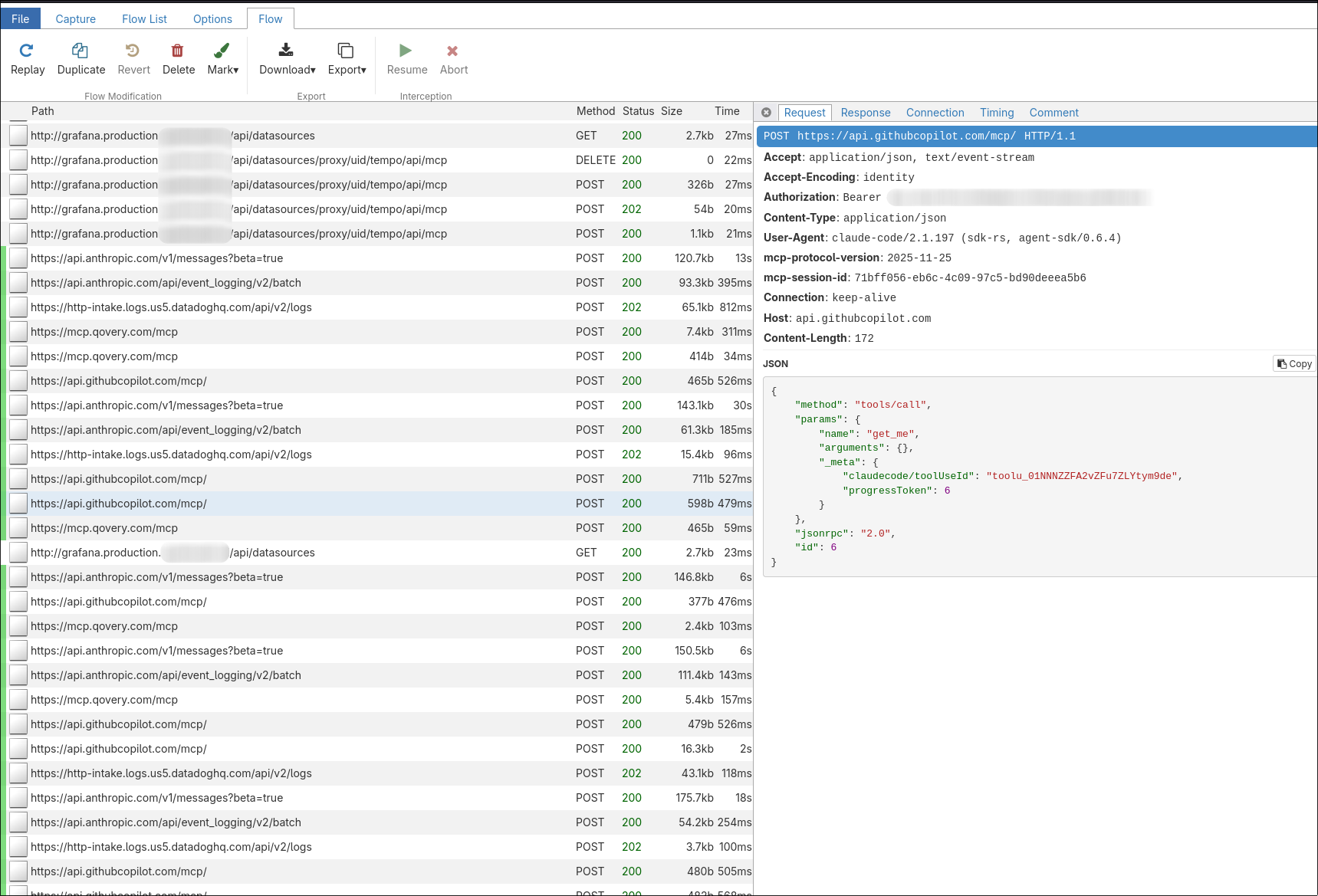
Restriction. You declare which destinations a workflow may reach. Any attempt to exfiltrate data, hit an internal service it shouldn't, or phone home is stopped at the proxy-no matter what the model was convinced to try.
Audit. Every outbound call is captured: where it went, what it carried, and when. You can replay exactly what an agent tried to reach and why it was allowed or denied.
Running it all on your own infrastructure is what makes this possible: the orchestration, the tools, and the proxy execute inside a perimeter you own, and the rules about what may leave it are yours to write and enforce. Therefore, sensitive data never leaves your environment.
Qovery AI workflow orchestration, with a layer 7 proxy governing traffic inside customer infrastructure
What this unlocks
Guardrails are only worth building if there's something valuable to run inside them. Here are three workflows we already run with clients:
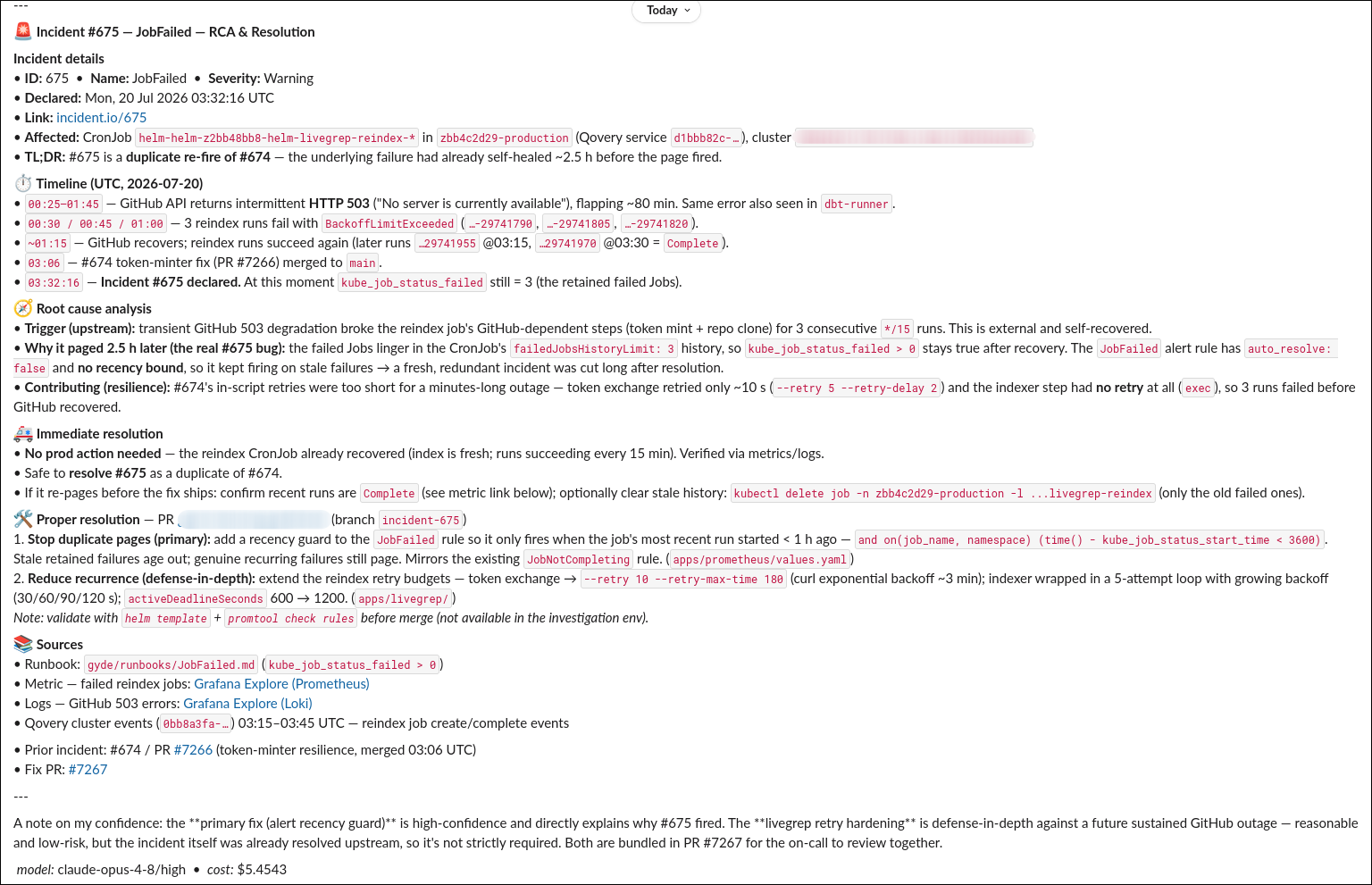
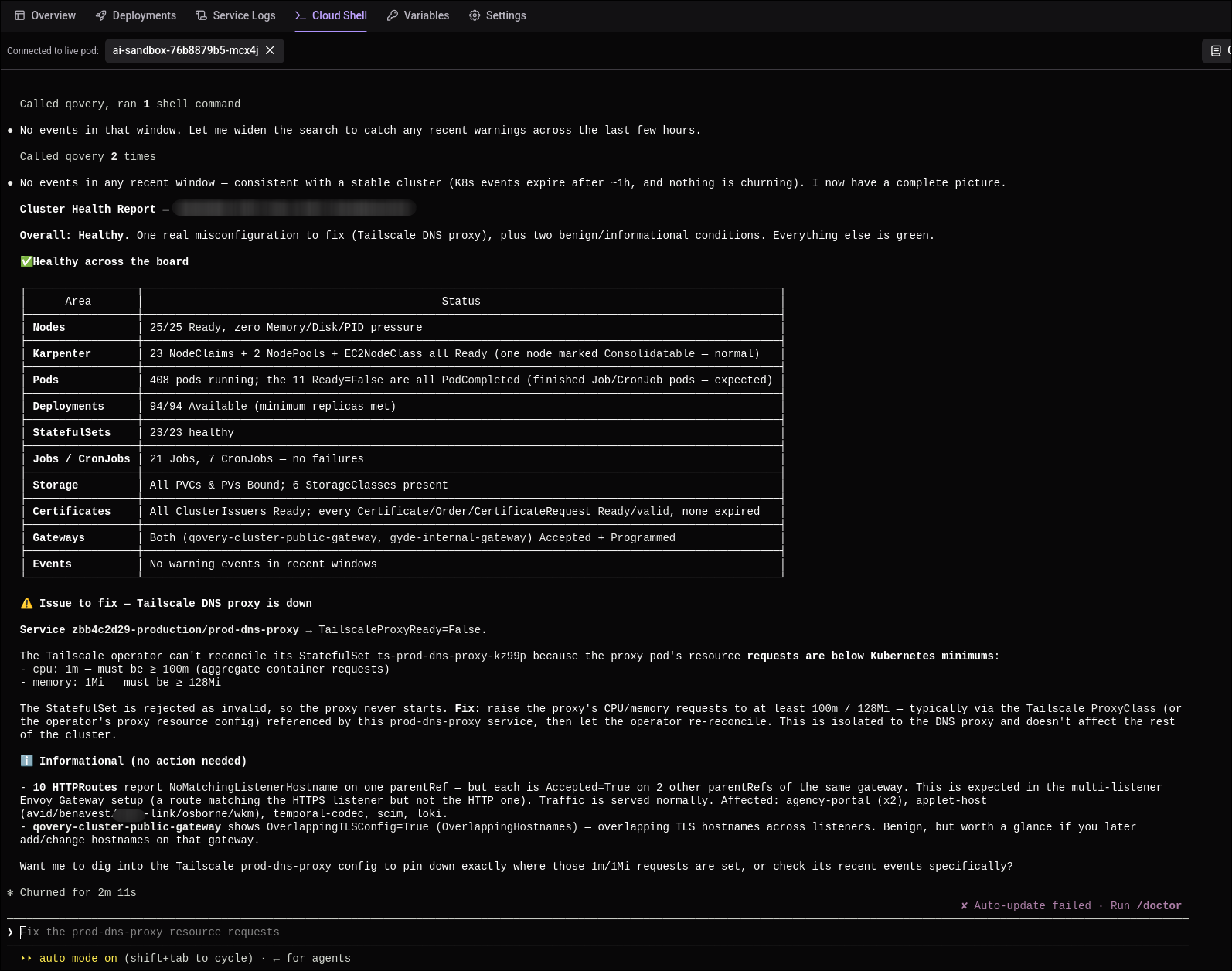
Incident response. Our Qovery MCP server helps on-call engineers investigate. When an incident fires, the agent scans the runbooks and cross-references logs, metrics, events, and Kubernetes state into a root cause analysis sent to Slack-and, where the fix is clear, a pull request. The agent does the legwork; the engineer reviews, decides, and spends less time doing on-call work.
An AI agent producing a cluster health report in Qovery Cloud Shell
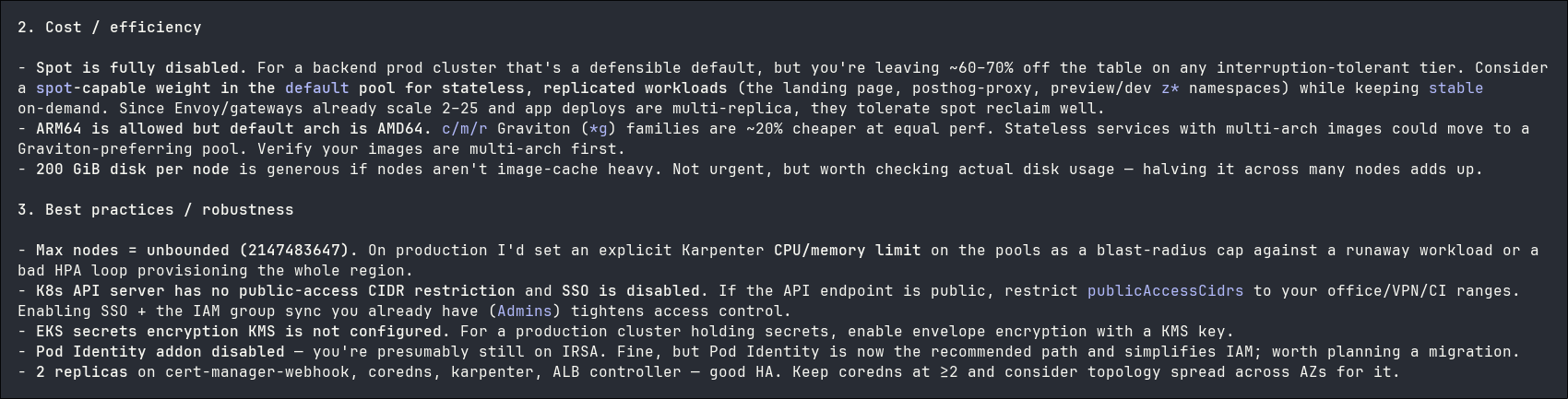
Cost analysis. By connecting your cloud bill and infrastructure through Qovery, a workflow maps spend and then turns that into concrete optimization guidance-automatically, every month.
AI-generated monthly AWS cost analysis and optimization recommendations
Feature bootstrap. Code is faster to write than ever, so the bottleneck has moved to review and testing. Triggered by a Jira or Linear ticket, an agent bootstraps a pull request and an isolated test environment wired to that change, ready to test end to end. It doesn't replace engineers-it clears their runway so they jump straight to the real work: reviewing, refining, deciding, and finally delivering ahead of competitors.
Run AI workflows you can govern in production
Keep agent orchestration, tools, and network controls inside infrastructure you own.
Putting governance at the infrastructure level isn't just a safety measure; it's an operational multiplier for leadership:
Unlocks real velocity. Engineers don't waste hours on low-value tasks or aggregating knowledge to solve problems. Guardrails let you move from AI as a passive coding helper to autonomous agent execution for your whole team without fear.
Turnkey compliance. When SOC 2, ISO, or HIPAA auditors ask how you secure agentic workflows, you don't show prompt files-you hand them automated, deterministic network logs and whitelisted data sources.
Bringing it together
AI workflows will run your incident response, your analysis, your internal tooling, and much we haven't imagined yet. The question is not whether to adopt them, but whether you can do it without handing over the keys to your production.
By putting governance first-enforced at the network, with a full audit trail-Qovery lets you give agents real responsibility without sacrificing control. Your data stays yours. Your boundaries stay enforced.
Qovery AI workflow orchestration architecture
AI agent governance settings for allowed and blocked network destinations
We're building this today with several forward-thinking engineering teams to make Qovery your platform for the AI era. If you want to run AI workflows you can actually govern in production, we'd love to talk.
Romain is a staff engineer at Qovery working on the control plane and AI integrations. He writes about distributed systems, incident response, and MCP-based tooling.
Next step
Run AI workflows you can govern in production
Keep agent orchestration, tools, and network controls inside infrastructure you own.