Starting up means every dollar counts, especially when it comes to infrastructure. What if you could explore the power ofAzure Kubernetes Service (AKS)without the heavy initial investment? Good news : you can!
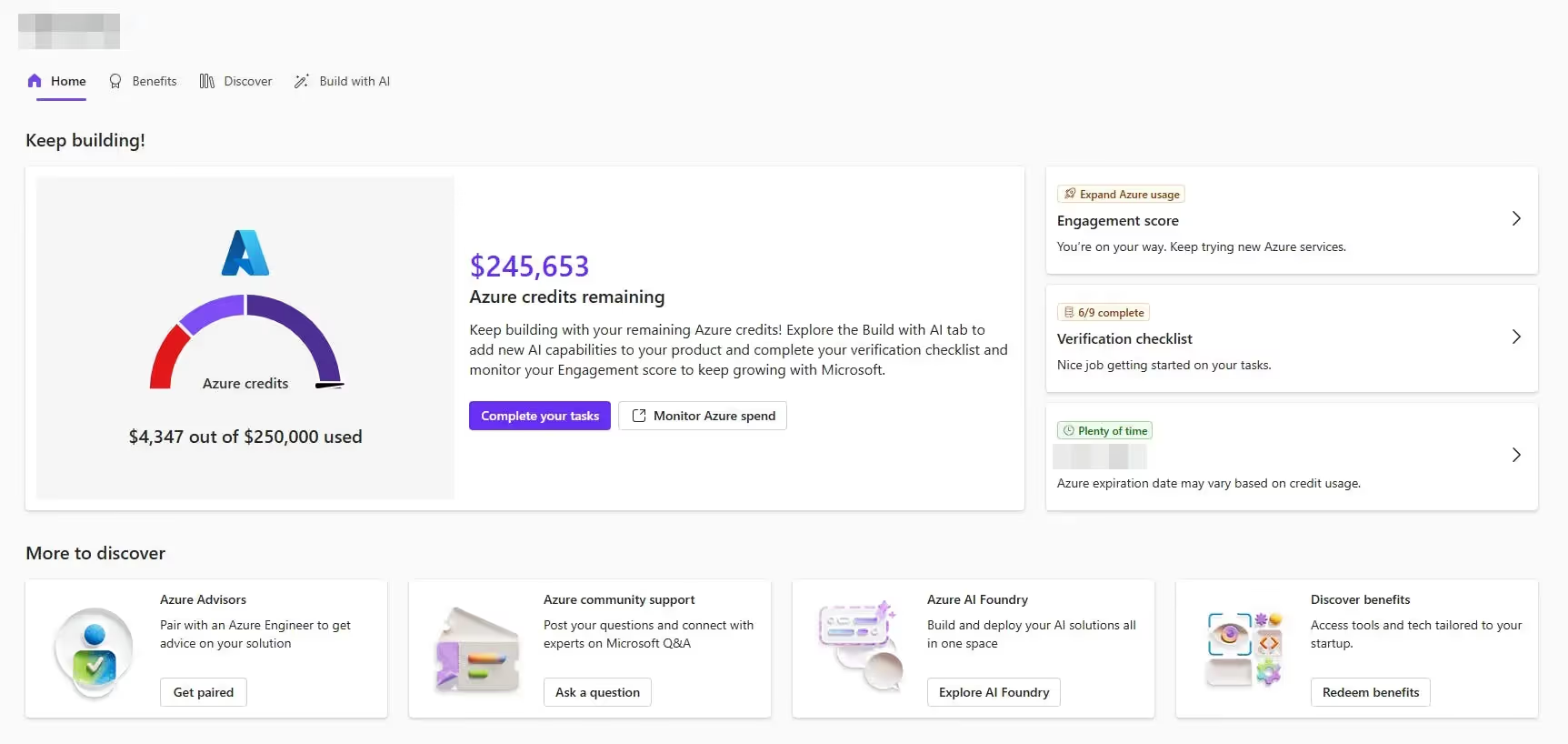
Microsoft offers generous startup programs that provide up to $150,000 in Azure credits (and sometimes even more!), designed to fuel your innovation without breaking the bank. And with Qovery, leveraging these credits to deploy and manage your Kubernetes clusters on Azure AKS has never been easier.
Why Azure Credits are a Game Changer for your Company
Cloud infrastructure can represent a significant investment, especially when you're exploring new technologies or scaling your operations. Azure credits directly address this challenge by providing you with the resources to:
Experiment freely with powerful services like Azure AKS.
Scale your applications without immediate financial strain.
Innovate faster by removing cost as a barrier to trying new technologies.
Test Qovery on Azure AKS comprehensively, understanding its full potential for your projects.
Visit the Microsoft for Startups page and review the eligibility criteria. Generally, you need to be:
Affiliated with an investor who is a part of the Microsoft for Startups Investor Network. Not eligible for the full amount? No worries! You can kick off with $5,000 in Azure credits.
A registered startup (independent, less than 7 years old) Not yet heavily funded (specifics vary by program)
Building a software-based product or service
2. Apply to the program
Once you've confirmed your eligibility, the next step is to apply.
I went through the process myself and honestly, it’s pretty straightforward. It’s mostly just filling out a few forms, and you’ll get a response quickly. No complex paperwork or long waiting times. If you're a startup, it's definitely worth taking a few minutes to apply.
The main route is Microsoft for Startups. You check eligibility on the Microsoft for Startups page, submit an application with details about your company, and wait for a decision. The process is mostly form-filling rather than a technical review, and responses typically come back quickly.
Who is eligible for Azure startup credits?
Eligibility is set by Microsoft and checked on their Startups page rather than by a fixed public rule. It generally targets early-stage companies that are building a software product, and the criteria cover things like company age, funding stage and whether you already have a significant Azure commitment.
How much are Azure startup credits worth?
The amount depends on the tier you qualify for and on Microsoft's current programme terms, which change over time. Treat any figure you read as indicative and confirm the current allocation on the Microsoft for Startups page before you plan a budget around it.
Can you use Azure credits alongside AWS or Google Cloud credits?
Yes. Provider credit programmes are independent and nothing stops you holding several at once. The practical constraint is operational, not contractual: running production across multiple clouds to chase credits usually costs more in duplicated tooling and expertise than the credits are worth.
What happens when Azure credits run out?
Billing switches to standard pay-as-you-go rates on the same subscription, which is why credits are worth treating as a runway rather than a discount. Set a budget alert well before the expiry date so the transition is a planned decision rather than a surprise invoice.
Julien is a Senior Product Manager at Qovery. He bridges engineering and product, writing about deployment workflows, environment management, and DevOps patterns.
Next step
Agents ship fast. Guardrails keep them safe.
Qovery ensures every agent action is scoped, audited, and policy-checked. Start deploying in under 10 minutes.