ArgoCD is only one piece of the puzzle. While powerful for GitOps, it requires teams to manually manage complex infrastructure, networking, and other components, leading to a high operational burden and a slow, complex setup process.
A full-stack platform is the better solution. Unlike single tools like ArgoCD or FluxCD, comprehensive platforms like Qovery offer a complete, automated experience that handles infrastructure, deployment, and scaling from a single, easy-to-use interface.
Qovery empowers developers with simplicity and control. It automates complex Kubernetes tasks and GitOps workflows, providing a simple "git push and deploy" experience while running on your own cloud account to ensure you maintain full ownership and avoid vendor lock-in.
ArgoCD has become a staple in the GitOps world, helping teams automate deployments to Kubernetes. It's a powerful and popular tool, but it’s not for everyone. While it excels at what it does-synchronizing Kubernetes manifests from a Git repository-it leaves a lot of work to the user. For many teams, setting up a full-fledged deployment pipeline with ArgoCD can be complex and time-consuming.
The truth is, ArgoCD is just one piece of the puzzle. You still need to manage infrastructure provisioning, networking, databases, and a dozen other components to get a production-ready application running. This is where a more comprehensive platform, like Qovery, can be a game-changer.
The Top 10 ArgoCD Alternatives: Simplify Your Deployment Strategy
To help you find a platform that offers the control and flexibility you need, we've broken down the top alternatives to ArgoCD. Here’s a look at how they stack up.
1. Qovery
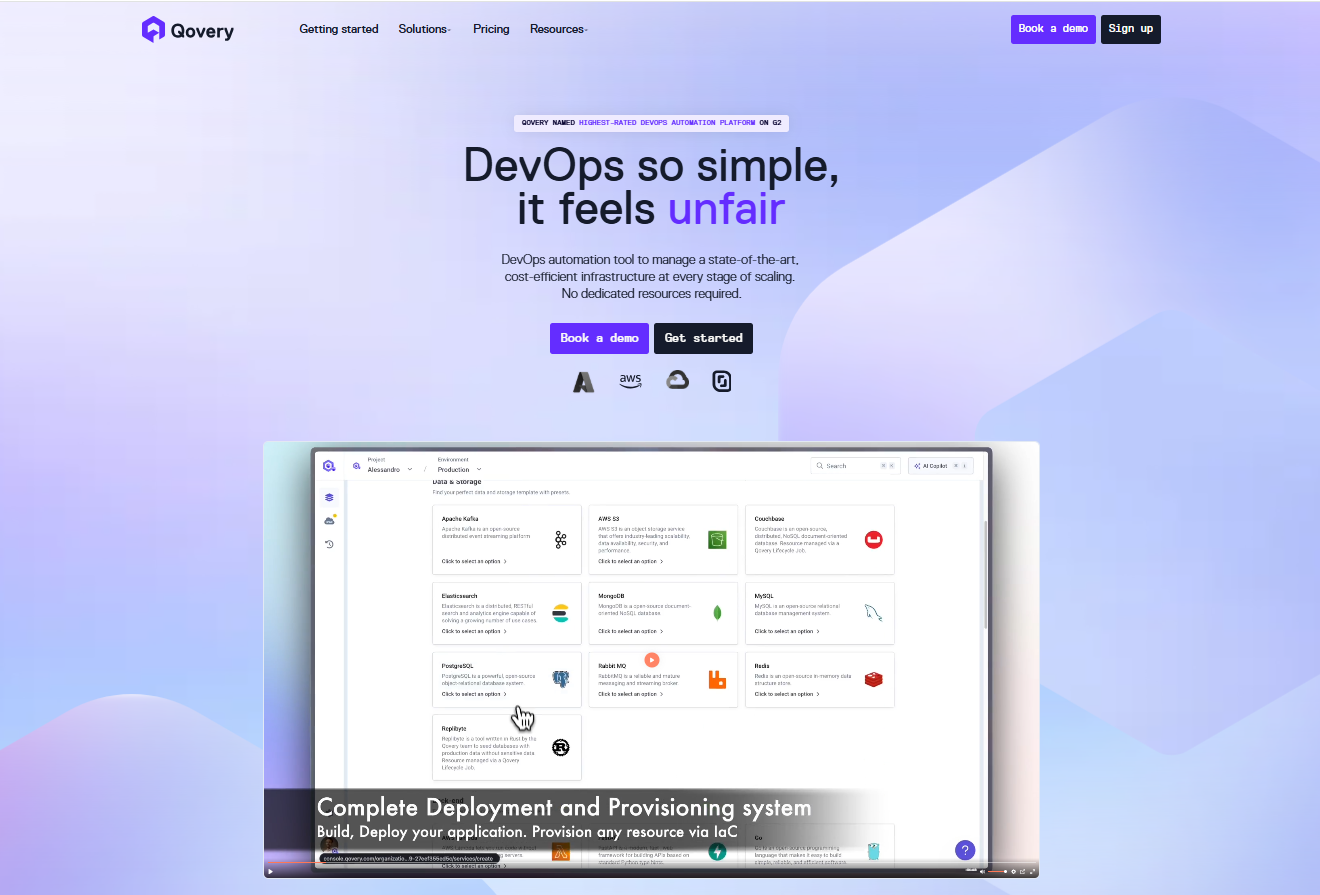
Qoveryis the developer-centric Kubernetes management tool that brings the simplicity of a Platform as a Service (PaaS) to the power and flexibility of Kubernetes. It automates the entire application lifecycle, from infrastructure provisioning to deployment and scaling, all on your own cloud account.
Pros:
Full Platform Experience: Handles infrastructure, networking, databases, and more, so you don’t have to piece together multiple tools.
Unparalleled Developer Experience: Offers a simple, Heroku-like “git push and deploy” workflow that abstracts away all Kubernetes complexity.
Automatic GitOps: Automates the creation and management of Kubernetes manifests, giving you the benefits of GitOps without the manual overhead.
Complete Control: Runs on your AWS, GCP, or Azure account, giving you full data ownership and avoiding vendor lock-in.
Enterprise-Ready: Comes with robust features like comprehensive RBAC, detailed audit logs, and SOC 2/HIPAA compliance.
Cons:
As a managed platform, it offers less low-level control than a fully DIY setup with open-source tools.
How’s Qovery different from ArgoCD?
A Full Platform Experience: ArgoCD is a single, powerful component. Qovery is a complete platform that handles infrastructure provisioning, application deployment, networking, and databases. You don’t have to piece together a dozen other tools.
Unparalleled Developer Experience: ArgoCD requires a deep understanding of Kubernetes manifests. Qovery abstracts this away completely, offering a "git push and deploy" experience that empowers developers without them needing to be Kubernetes experts.
GitOps, Automatically: Qovery is built on GitOps principles, but it automates the entire process, including the creation and management of Kubernetes manifests. You get the benefits of GitOps without the manual overhead.
Rapid Time-to-Value: Getting a production-grade setup with ArgoCD requires significant time and expertise. With Qovery, you can have a fully automated, multi-cloud platform up and running in minutes.
2. FluxCD
Similar to ArgoCD, FluxCD is an open-source GitOps engine for continuous delivery. It’s a core component that automates the syncing of your Git repository with your Kubernetes cluster.
Pros:
Open-Source & Community-Driven: Free to use and benefits from a large, active community.
Highly Extensible: Integrates with other open-source tools like Helm and Kustomize.
Focuses on GitOps: Provides a solid, battle-tested engine for continuous delivery.
Cons:
Partial Solution: It's just a single tool for continuous delivery and doesn’t handle infrastructure provisioning, networking, or other aspects of the application lifecycle.
Steep Learning Curve: Requires deep knowledge of Kubernetes, YAML, and other open-source tools.
High Operational Burden: You are responsible for all setup, maintenance, and troubleshooting.
3. Rancher
Rancher is a Kubernetes management platform that simplifies running clusters, particularly for teams with multiple clusters or on-premise deployments.
Pros:
Multi-Cluster Management: Excellent for managing Kubernetes clusters across different cloud providers or on-premise from a single dashboard.
User-Friendly Interface: Provides an intuitive UI for managing clusters and applications.
Built-in Catalog: Includes a catalog of Helm charts for easy application deployment.
Cons:
Setup Complexity: The initial setup can be challenging for beginners.
Kubernetes-focused: While it simplifies Kubernetes, it still assumes a level of Kubernetes expertise and doesn't offer the full PaaS experience for developers.
4. Portainer
Portainer is a lightweight, open-source management tool with a user-friendly UI for managing Docker and Kubernetes environments.
Pros:
Simplicity: Very easy to use for managing individual containers and simple deployments.
Lightweight: A great choice for resource-constrained environments like a Raspberry Pi or home labs.
Self-Hosted: Gives you full control by running on your own infrastructure.
Cons:
Limited Kubernetes Support: Offers basic Kubernetes management but lacks advanced features like custom resource definitions (CRDs) and robust scalability for large deployments.
Not for Large Scale: Insufficient for the complex, large-scale deployments that enterprise teams require.
5. Porter
Porter is an open-source PaaS built on Kubernetes that aims to provide a Heroku-like experience on your own cloud.
Pros:
Simple UI: Provides an approachable user interface for getting started with deployments.
Open-Source Core: Benefits from the open-source community and can be self-hosted.
Cloud Agnostic: Can be deployed on your AWS, GCP, or Azure account.
Cons:
High Maintenance Burden: You are responsible for all platform-level updates, security patching, and troubleshooting.
Lacks Flexibility: The closed add-on system limits your ability to deploy custom Helm charts or integrate with external tools.
Not Enterprise-Ready: Lacks essential enterprise features like robust RBAC and detailed cost management.
6. DuploCloud
DuploCloud is a low-code platform that focuses on automating infrastructure and compliance for DevOps teams.
Pros:
Infrastructure Automation: Automates the provisioning of infrastructure to meet compliance and security standards.
Cloud Agnostic: Can be deployed on multiple cloud providers.
High Scalability: Built to handle high-scale, production-ready applications.
Cons:
DevOps-Centric: The platform's focus on infrastructure can make it less intuitive for developers.
Slower Deployment: The focus on complex infrastructure management can result in a more involved setup process compared to more developer-centric platforms.
Vendor Lock-in: The low-code approach can create a dependency on the platform’s specific abstractions.
7. Northflank
Northflank is a managed PaaS that provides a developer-friendly experience for deploying and managing applications.
Pros:
Friendly UI: Offers an intuitive interface for managing applications and resources.
Integrated CI/CD: Provides a built-in CI/CD pipeline for automated deployments.
Limited Cloud Support: Primarily runs on its own managed infrastructure, with limited support for deploying to your own cloud accounts, leading to vendor lock-in.
Not for Enterprise Scale: Best suited for startups and small teams and may lack the robust features required for large-scale, production-grade workloads.
Heroku is a pioneer in the PaaS space, known for its extreme simplicity and developer-friendly workflow.
Pros:
Ease of Use: Offers an unparalleled simple "git push" deployment model.
Add-on Marketplace: Provides a wide range of managed services (databases, monitoring, etc.) through its marketplace.
Great for Prototyping: Ideal for quickly deploying small projects and prototypes.
Cons:
Vendor Lock-in: A closed ecosystem that runs on its own infrastructure, locking you into its specific services and pricing. Recent, widespread outages have highlighted the risks of this dependency.
High Cost at Scale: Becomes prohibitively expensive as your application and team grow.
Limited Control: Offers limited control over the underlying infrastructure, performance, and security.
9. Platform9
Platform9 is a SaaS-managed cloud platform that provides a simplified way to deploy and manage Kubernetes environments on any infrastructure.
Pros:
Enterprise-Grade Features: Offers a robust set of features for large-scale production deployments, including high availability and disaster recovery.
Kubernetes-Focused: Built specifically for managing Kubernetes, offering deeper integration and a wider range of features.
Excellent Support: Provides dedicated customer support, which is critical for enterprise customers.
Cons:
Cost: Can be expensive, especially for smaller deployments, and pricing is not always transparent.
Complexity: While it simplifies Kubernetes, it still requires expertise to use effectively and can feel overwhelming to non-DevOps teams.
10. Mirantis Kubernetes Engine
Mirantis Kubernetes Engine is an enterprise-grade Kubernetes platform built on Docker technology.
Pros:
Avoids Lock-in: Based on open standards, giving you the freedom to choose your own infrastructure.
Focus on Apps: Provides a streamlined platform that takes care of the infrastructure, so you can focus on building applications.
Leverages Open Source: Benefits from the collective knowledge of the open-source community.
Cons:
Overkill for Small Teams: Its advanced features and capabilities may be too much for smaller projects or startups.
Steeper Learning Curve: Requires a deep understanding of Kubernetes concepts.
Agents ship fast. Guardrails keep them safe.
Qovery ensures every agent action is scoped, audited, and policy-checked. Start deploying in under 10 minutes.
Qovery is a strong alternative that takes the core benefits of GitOps and wraps them in a complete, easy-to-use solution. Unlike ArgoCD, which requires you to manually write and manage complex Kubernetes manifests, Qovery automates the entire process. You get a "git push and deploy" workflow that empowers developers to ship code faster without becoming Kubernetes experts.
While ArgoCD is a great tool for DevOps specialists, a full-stack Kubernetes management tool like Qovery offers a faster path to value and a better experience for the entire team. It handles everything from provisioning your infrastructure to managing your applications, so you can focus on what you do best: building great software.
Frequently asked questions
What are the main alternatives to Argo CD?
Flux CD is the closest like-for-like open-source GitOps engine. Rancher and Portainer approach the problem as cluster management with a UI. Porter, Northflank, Heroku and Qovery replace GitOps with a full platform that also owns provisioning, networking and databases. Which fits depends on whether you want a component or a platform.
What is the difference between Argo CD and Flux CD?
Both reconcile Kubernetes state against Git. Argo CD leads on its web UI and application-centric model, which suits teams who want a visual view of sync state. Flux is more modular and controller-oriented, composing from smaller pieces, which suits teams who prefer everything expressed as custom resources.
Why would you replace Argo CD?
Rarely because it does GitOps badly. Usually because GitOps is only one piece: you still have to provision clusters, wire networking, manage databases and secrets, and build the developer-facing layer yourself. Teams switch when the surrounding operational burden, not the sync engine, is the problem.
Do you need Argo CD if you use a deployment platform?
Often not, because the platform owns the cluster state and reconciliation itself. The pairing still makes sense when a platform team wants Git as the single source of truth for infrastructure manifests while application deployment is handled elsewhere. Running both without dividing that ownership creates two systems fighting over the same resources.
Is Argo CD free?
The project is open source and free to run. The cost is operational: you install it, upgrade it, secure it, integrate SSO and RBAC, and handle it during incidents. That is the same trade-off as any self-hosted component, and it is the reason total cost of ownership rather than licence cost is the right comparison.
Melanie leads content at Qovery. She covers platform engineering trends, Kubernetes operations, FinOps, and the tools that help engineering teams ship faster.
Next step
Agents ship fast. Guardrails keep them safe.
Qovery ensures every agent action is scoped, audited, and policy-checked. Start deploying in under 10 minutes.