A Hundred Organizations Trust Us: Why and How they Use Qovery
Since our start in 2019, we are proud to say that a hundred engineering teams from fast-growing organizations trust us to deploy their Production, Staging, and Development Environments on AWS in a few seconds. But why do they use Qovery, and how? That’s what you’re about to discover today!
To prevent bugs in production, reduce development costs and improve performance, testing is mandatory in the development cycle.
Now, even if you test your code, have you ever wanted to test the changes in one of your teammate's pull requests? Validating this new feature that is about to be released? Or this urgent fix that you must apply before leaving the office? There are plenty of cases where testing needs to go beyond a simple GitHub action pass.
And to unlock all this testing potential, the Qovery Preview Environment is the answer!
null
2. Increase Developer productivity
Many tech startups experience rapid growth. This means they must scale, develop new features quickly, and find the best talent to grow significantly. While rapid growth is usually a good sign that the business is going well, things can get messy quickly and slow down the developer’s productivity.
null
3. Faster Time to Market
A secure product is an absolute must in every business, and it’s no different for the tech industry. On top of the security measure that you can take on your side, there might be some compliance ones to add on top; those can be confusing and take a while to put in place.
We have several ways to keep your product secure, by being HIPAA compliant, for example, but using our multi-clusters and multi-environments is a way to speed many compliance processes.
null
How these fast-growing organization leverage Qovey to accelerate the team’s velocity?
Suppose you recognize yourself in some of those needs. In that case, you might want to know how our customers are taking advantage of Qovery to unlock their testing potential and increase their developer productivity and security!
1. Preview Environments to unlock their testing potential
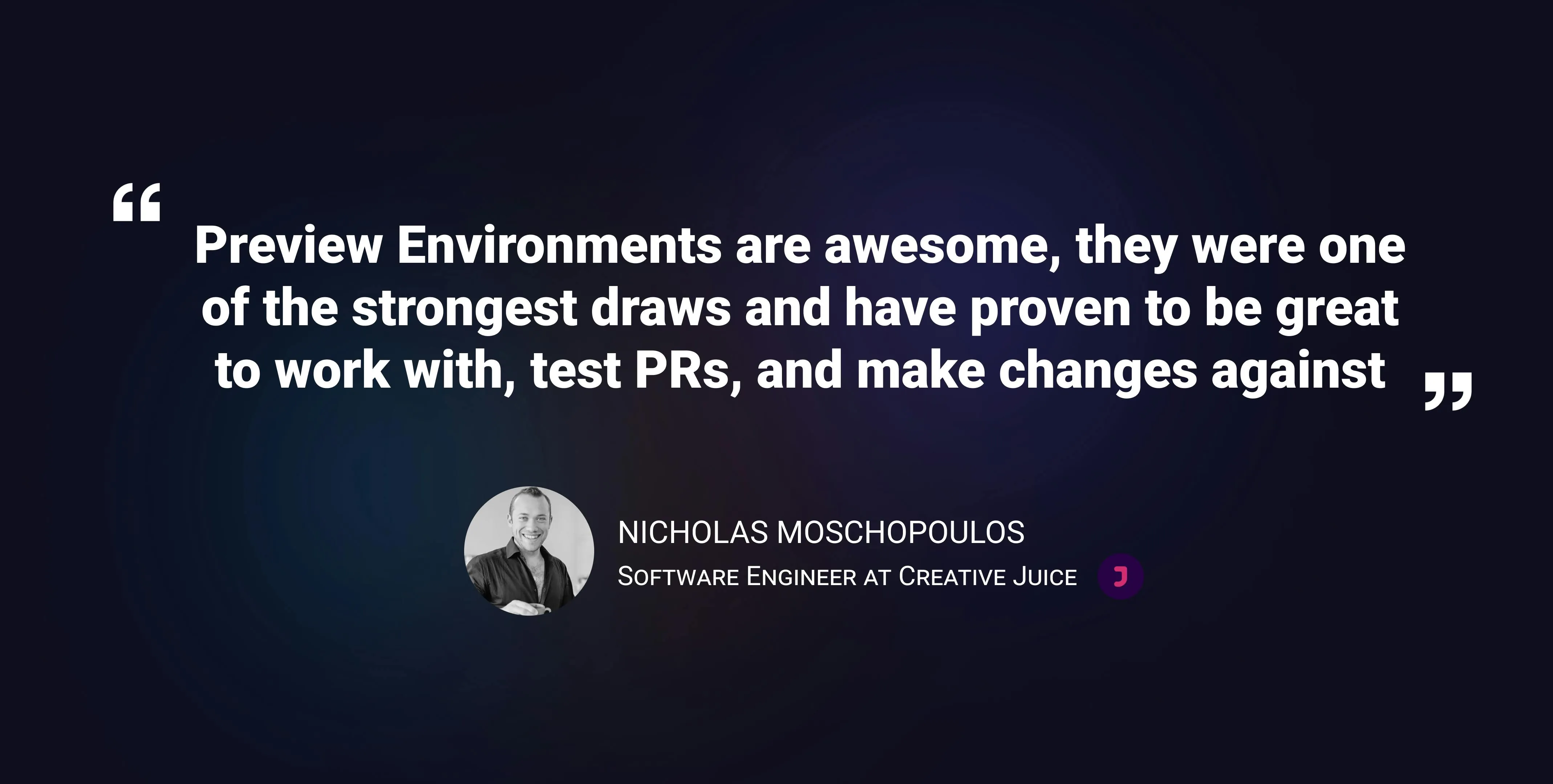
Qovery provides a feature called “Preview Environments”. When turned on, you get a complete replica of your production environment for every pull request. Every pull request can be tested in an isolated and ephemeral environment. When the pull request is merged, the Preview Environments are destroyed, and the consumed resources are released.
If you want to know everything about it, here is the link to our documentation.
And if you want to know how it works, take a look at this demo below:
2. Cloning Feature to increase developer productivity
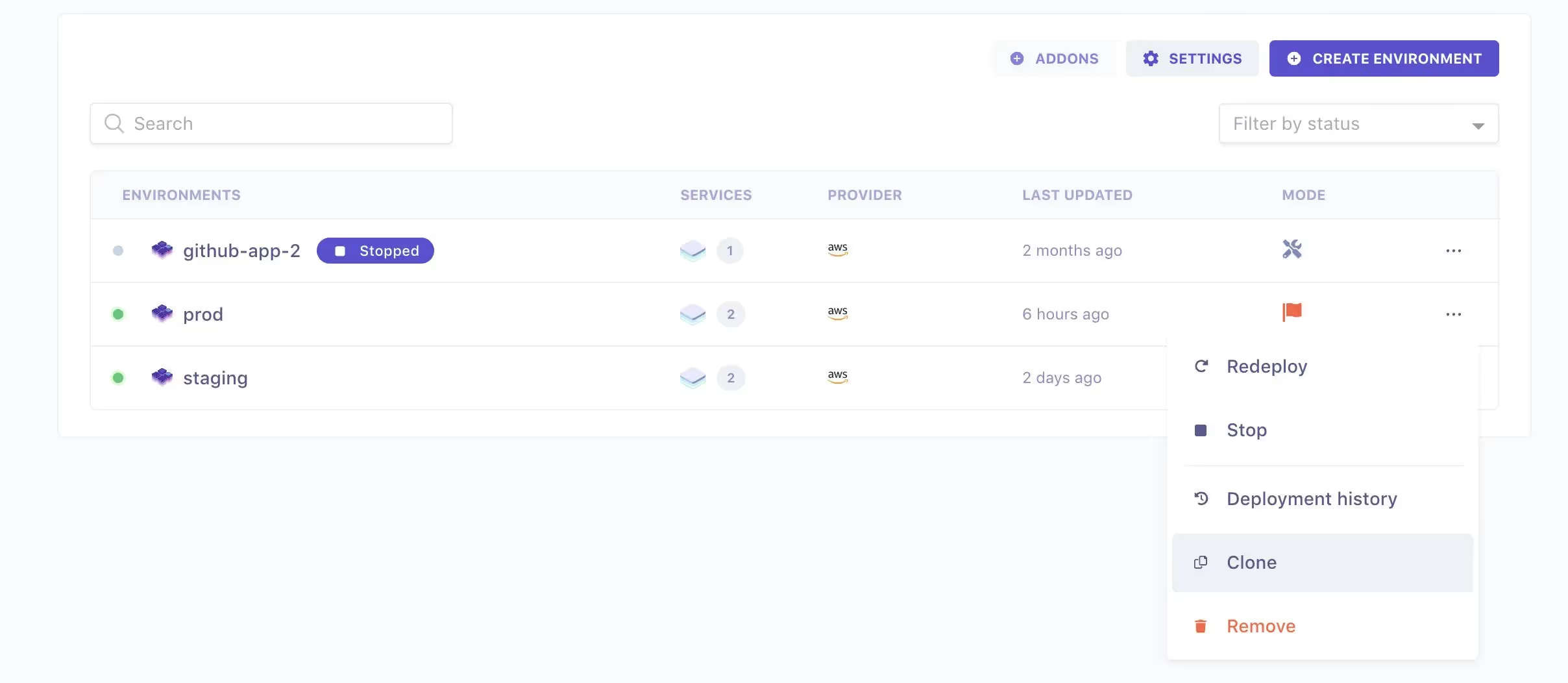
If a development team needs to validate a feature that needs to reflect the original Environment or make a demo without impacting the original Environment, the cloning feature will be a lifesaver, nothing complicated here; you need to head to the console, select the environment you want to clone and click on the “clone” button on the panel.
Cloning environment panel
3. Multi-cluster to faster time to market
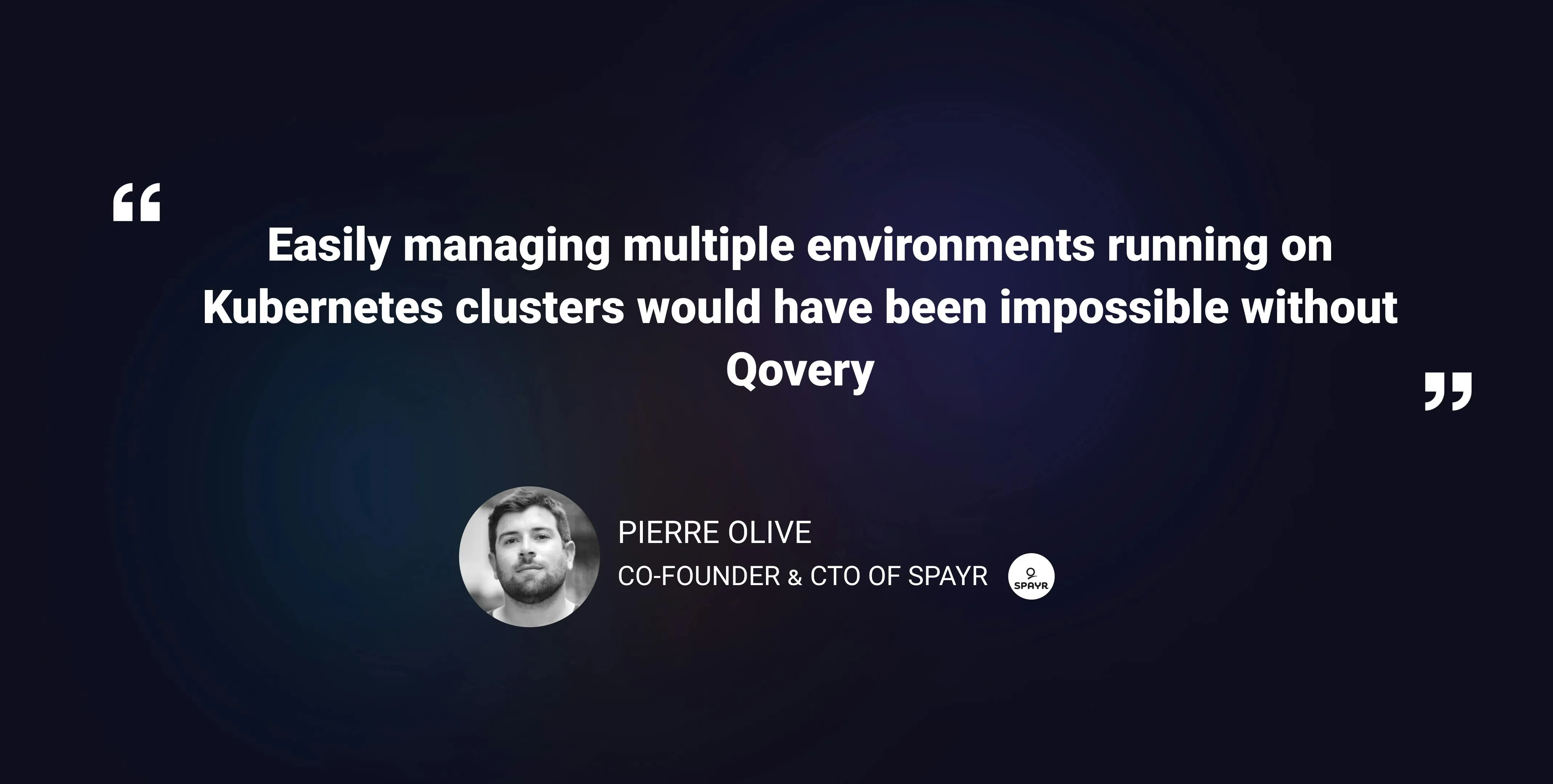
Multi-cluster allows you to create and manage several Kubernetes clusters.
In this article, we’ve covered the case where you must create a single-tenant application and physically isolate your applications for each customer. It’s a valid and widespread use case for companies working in the healthcare industry. Suppose each Kubernetes cluster is for one user, then you can have thousands of clusters to manage.
If that’s not your case, you might, however, want to isolate your production from the staging cluster, so you can decide to give access to the production cluster to a reduced number of people, so it reduces the risk of human error, or if you have a set of debugging tools and framework testing in your production cluster, it can give anyone in the team access to some sensible data. Your team should do all the testing before going to production; it’s better to add those debugging tools and framework testing for your staging cluster only so you can reduce the risk of a data leak. In both cases, multi-cluster is a way to be quickly ready in terms of security and compliance and will permit you to launch your product faster to the market.
To use our multi-cluster feature, nothing easier; follow the tutorial right below:
Agents ship fast. Guardrails keep them safe.
Qovery ensures every agent action is scoped, audited, and policy-checked. Start deploying in under 10 minutes.
Bonus - They use Qovery for total control of their environment
After this article, you probably know more about why our customers love Qovery. Still, to finish on a high note, this testimony probably groups every feature we have and the fact that our interface is easy to use. Still, Emanuel, Software Engineering & Team Leader at Detech.ai, and many other users love the fact that:
We have total control of "what is in" and "how are" our environments without having to dig in on our tools, and the best part is that we can visualize that control and health all in one place and take action if needed with just a couple of clicks.
We hope this gave you a deeper understanding of our customers' key challenges and how Qovery helps them achieve significant results; now, if you want to accelerate your team’s velocity, Give a try to Qovery and start deploying on-demand environments in just seconds. 🚀