Our Blog

Learn, build, and scale with the Qovery Blog. Access practical insights that help teams solve problems faster and deliver real results.
AI
Developer Experience
Kubernetes
 minutes
MCP Server is the future of your team's incident’s response
Learn how to use the Model Context Protocol (MCP) to transform static runbooks into intelligent, real-time investigation tools for Kubernetes and cert-manager.
Compliance
Developer Experience
 minutes
Beyond the spreadsheet: Using GitOps to generate DORA-compliant audit trails.
By adopting GitOps and utilizing management platforms like Qovery, fintech teams can automatically generate DORA-compliant audit trails, transforming regulatory compliance from a manual, time-consuming chore into an automated, native byproduct of their infrastructure.
Kubernetes
DevOps
11
 minutes
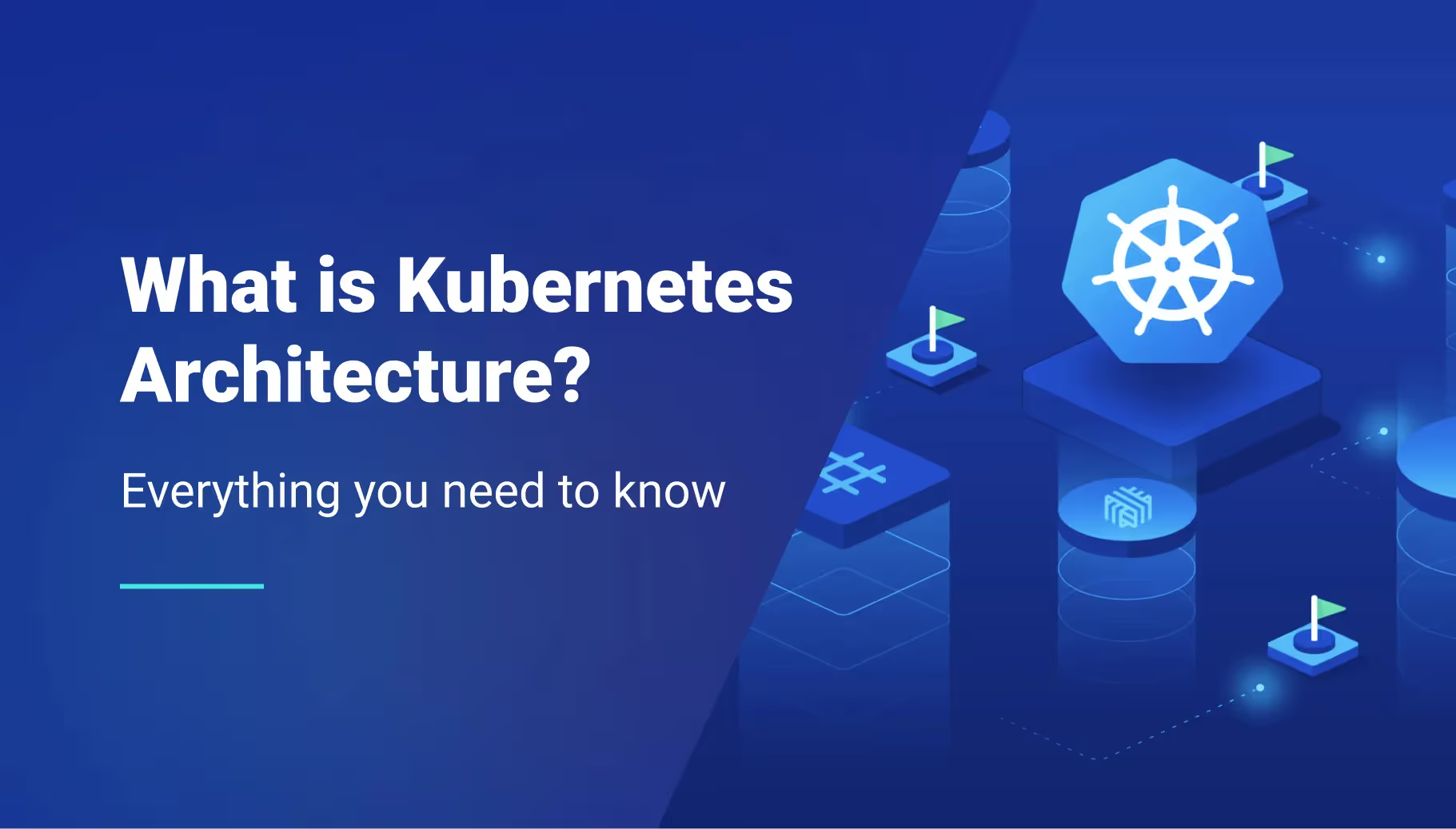
Kubernetes architecture: building resilient, multi-tenant control planes
Kubernetes architecture splits into the Control Plane (management) and Data Plane (workloads). For SaaS providers, this architecture must be tuned for high availability and multi-tenancy. Understanding the interplay between these components is critical to diagnosing bottlenecks that cause operational toil as user demand spikes.

Latest articles

No items found.
9
 minutes
Interview of Oliver Juhl - CTO of Medusa

I am pleased to interview Oliver Juhl, CTO and co-founder of Medusa - an open-source headless commerce platform.

Qovery
2
 minutes
We lost 3800 stars on Github in 1 click 😭

Yesterday was my worst day for a very long time. We spent so much time promoting our Qovery Engine to the open-source community and getting those ~3800 stars. I woke up and discovered that we had lost all the stars and forks from our repository. But what happened?

Romaric Philogène
CEO & Co-founder
No items found.
7
 minutes
Interview of Quentin de Quelen - CEO of MeiliSearch

We are pleased to interview Quentin De Quelen, CEO and co-founder at MeiliSearch - an open-source search engine written in Rust.

Engineering
7
 minutes
How we manage CI sensitive data for our Open Source deployment Engine

Making an Open Source Software with sensitive data and dozens of external integrations is a real challenge, here are feedbacks and tradeoffs we've made.

Pierre Mavro
CTO & Co-founder
Product
1
 minutes
Preview Environment in Early Access

This is the most exciting feature we launched since Qovery v2 has been released - the Preview Environment feature!

Romaric Philogène
CEO & Co-founder
No items found.
10
 minutes
How DoorDash migrated from Heroku to AWS

We are launching a new series of articles, called Tech Stories, dedicated to the stories behind today's most inspiring companies (and people) about their technology choices, decisions, or new implementations. For the first article in this series, I will relate the DoorDash migration story and give you a closer look at when the engineering team realized they needed to switch, how they operated the switch, and their recommendations for others doing the same. Let’s go!

Business
Heroku
GCP
Scaleway
AWS
6
 minutes
Best Heroku Alternatives for 2023

So you’ve just created a new project and want to start distributing it, but you still don’t know how to manage its deployment. Then there’s the monitoring, network request, and a lot of other problems related to modern apps. At the same time, you want to avoid working directly with AWS due to its intricacy.

Romaric Philogène
CEO & Co-founder
No items found.
8
 minutes
Feedback - Kotlin on the server-side - the good, and the bad

I've used Java as my primary server-side programming language for years. Before joining Qovery, I worked at SAP, where Java was the default choice to bootstrap new projects. Besides its known limitations and cumbersomeness.

Patryk Jeziorowski
Software Engineer
Engineering
8
 minutes
Best Practices and Tips for Writing a Dockerfile

Docker is a high-level virtualization platform that lets you package software as isolated units called containers. Containers are created from images that include everything needed to run the packaged workload, such as executable binaries and dependency libraries. Images are defined in Dockerfiles. These resemble sequential scripts that are executed to assemble an image. Dockerfiles can include several kinds of instructions, such as RUN, to execute a command in the container’s file system, and COPY to add files from your host. In this article, you’ll learn about the key characteristics of Dockerfiles and some best practices to be aware of when you’re writing your own Dockerfiles. Adhering to these guidelines helps you reap the benefits of the containerization movement while minimizing risks in terms of security and performance issues.

Romaric Philogène
CEO & Co-founder
Thank you! Your submission has been received!
Oops! Something went wrong while submitting the form.

It’s time to change
the way you manage K8s

Turn Kubernetes into your strategic advantage with Qovery, automating the heavy lifting while you stay in control.