Blog
Qovery
Product
3
minutes

3 Pro Tips To Get The Most Out Of Qovery - Part 1

Some people spend hours on a spreadsheet and call themselves “Excell Ninja” here at Qovery; we spend hours on our console because, in case you don’t know yet, we test and deploy using Qovery for Qovery. After a year of using our console almost every day, I started to make a list of all the small tips and tricks that I was able to gather, and because sharing is caring, here are my top three tips to use on Qovery:
Albane Tonnellier
Product Marketing Manager
Summary
Twitter icon
linkedin icon

1. Filter the logs

For the first tip, we’ll be speaking about logs; let’s say you have plenty of pod names in your application logs. Still, suppose you want to focus on only one. In that case, looking for all the pods with the same name can become quickly messy and time-consuming. To avoid the headache, you can filter the logs by pod name.

How does it work?

  • Head to your application logs
  • Click on the pod name you wish to select
  • A filter will make only the one select visible.
  • To unselect, click on the cross near your pod name

Here is a small video to show you how it works in action 🎬

2. Cost Optimization

Developers in your company work from 9-to-5, five days a week. Keeping all development environments running during the weekend, at night, and outside working hours may be a considerable expense that gives you no benefits.

Using the Deployment Rules is a good practice to reduce your cost drastically. Indeed, Qovery knows how to optimize your Cloud resources when your applications are not running. Then you can expect to reduce your Cloud cost by up to 60% using the Deployment Rules.

How does it work?

  • Navigate to Console
  • Select your project
  • In the project overview, click the Settings button:
Setting button
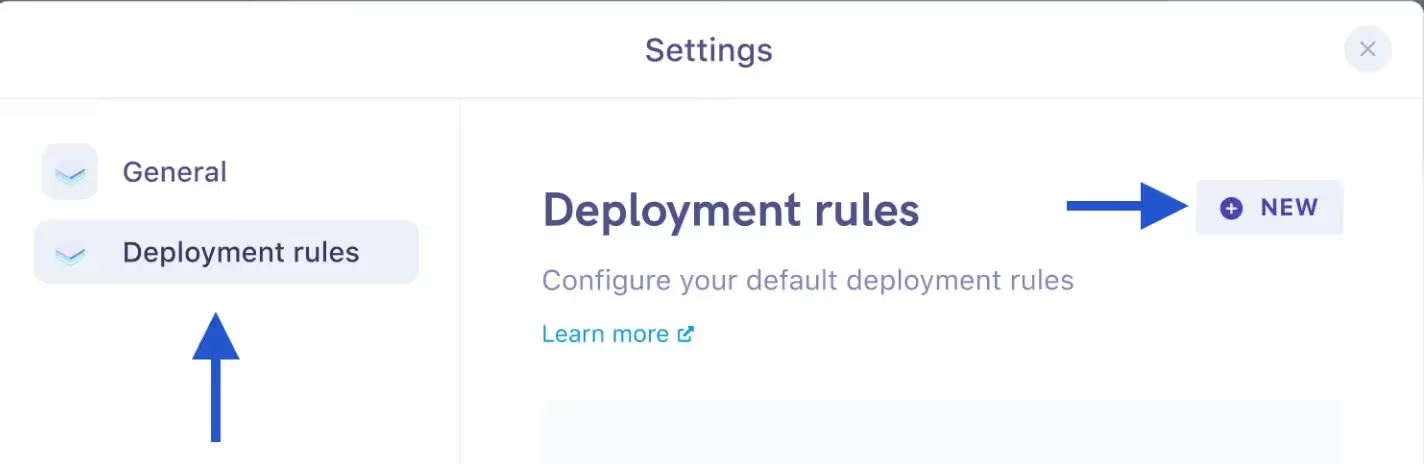
  • In the popup, select Deployment Rules and add New:
Deployment rules in the popup

Then you need to add the rules that apply to your company, and all set 🤩

3. Clickable message on Rollback

This tip will be handy if you are using the rollback feature (more about it on this changelog); when you make a rollback, the commit messages are clickable, so you can easily access your commit on git without having to search for it for hours, camera, live, action!

How does it work?

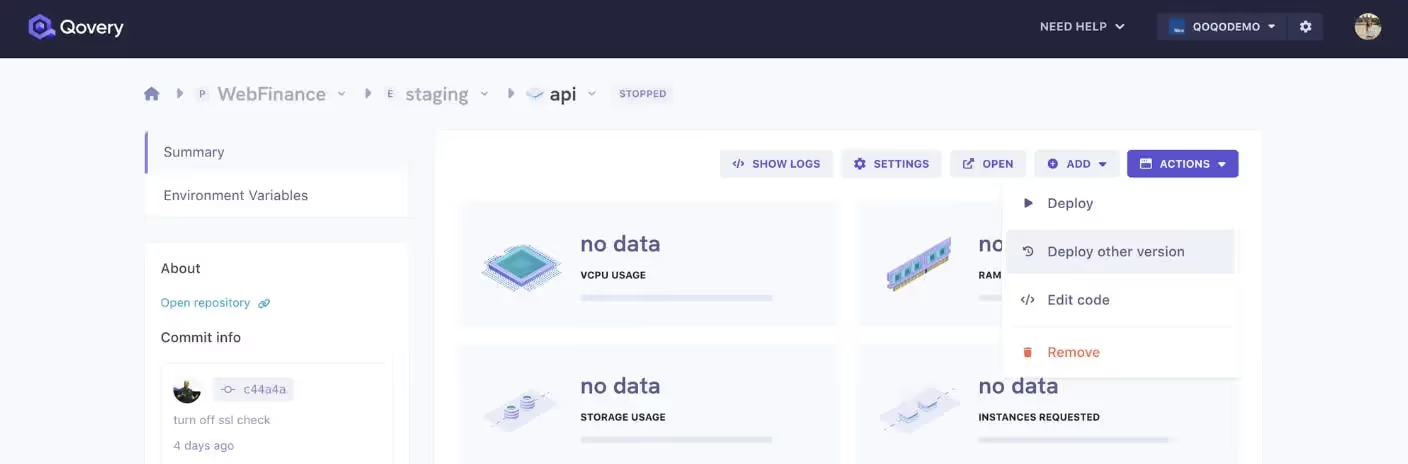
  • Head to the console and in your application, click on the action panel.
Rollback button
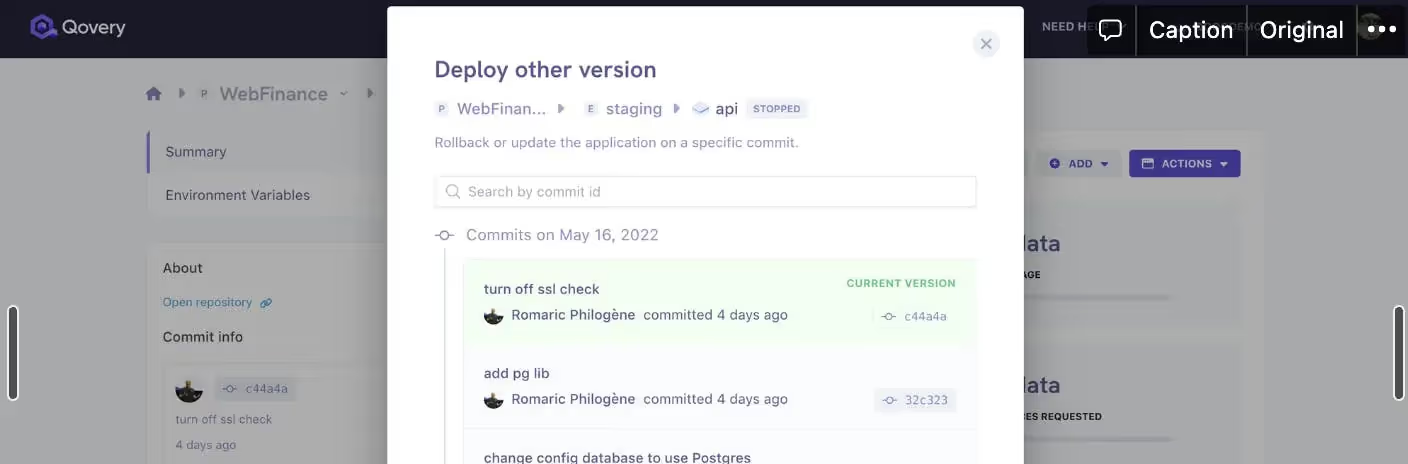
  • Then click on deploy other version and choose the version you want to open.
Other versions
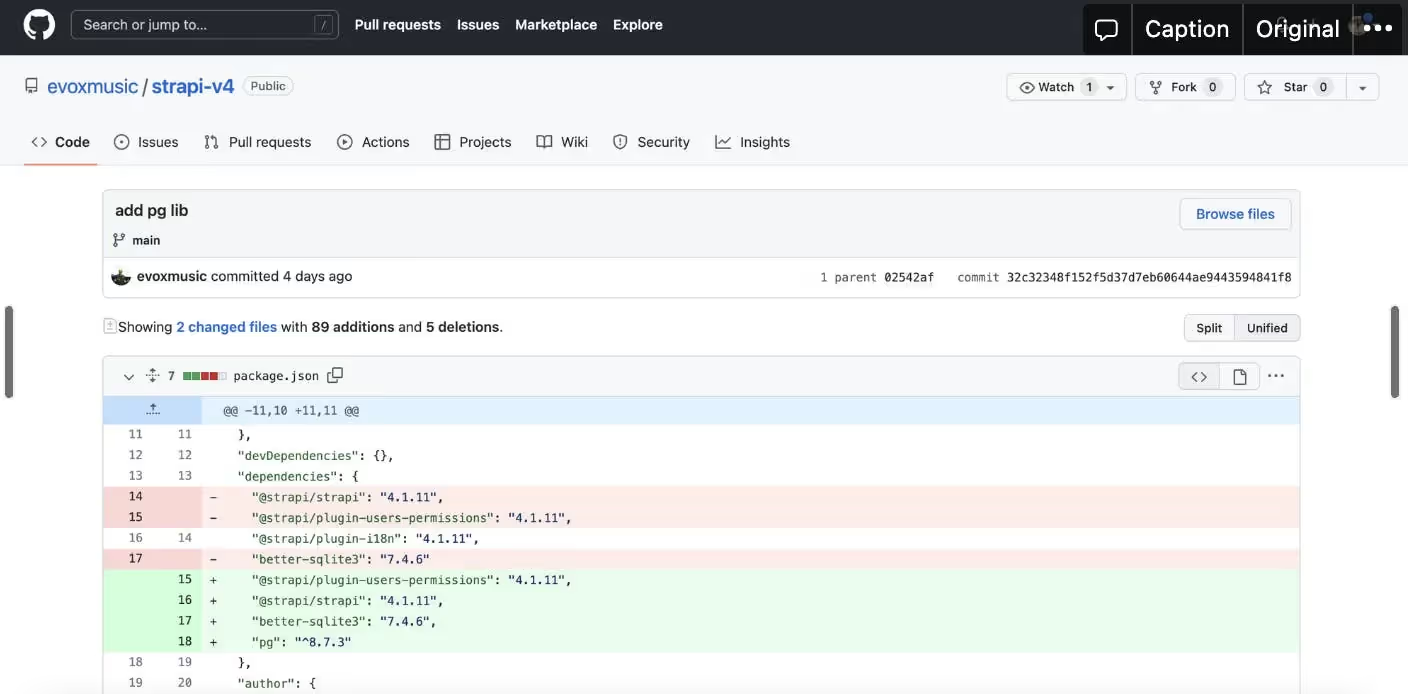
  • Once clicked, you will be automatically redirected to the Git page of the selected branch.
Git page with selected branch

Magic, isn’t it? 🪄

Wrapping up

Whether you’re planning to filter the logs, click on a rollback message, or start with cost optimization, I hope that those small tips were helpful to you and if after your time spent on Qovery you have tips or tick, don’t hesitate to post it on the forum and maybe we can even share one of yours in the second part 🚀


Share on :
Twitter icon
linkedin icon
Tired of fighting your Kubernetes platform?
Qovery provides a unified Kubernetes control plane for cluster provisioning, security, and deployments - giving you an enterprise-grade platform without the DIY overhead.
See it in action

Suggested articles

Kubernetes
6
 minutes
When Kubernetes Becomes the Bottleneck, and How to Fix It

Struggling with Kubernetes configuration sprawl and long deployment queues? Discover how to identify technical vs. workflow bottlenecks and why shifting to a self-service Kubernetes management platform like Qovery is the key to scaling your engineering velocity.

Mélanie Dallé
Senior Marketing Manager
DevOps
Kubernetes
Platform Engineering
6
 minutes
10 Red Hat OpenShift alternatives to reduce licensing costs

Is OpenShift too expensive? Compare the top 10 alternatives for 2026. Discover how to transition to Rancher, standard EKS, or modern K8s management platforms.

Morgan Perry
Co-founder
DevOps
6
 minutes
The enterprise guide to DevOps automation: scaling kubernetes and delivery pipelines

Scale your enterprise DevOps automation without configuration sprawl. Learn how a Kubernetes management platform like Qovery enables secure, self-service infrastructure.

Mélanie Dallé
Senior Marketing Manager
Product
Infrastructure Management
5
 minutes
Migrating from NGINX Ingress to Envoy Gateway (Gateway API): behind the scenes

Following the end of maintenance of the Ingress NGINX project, we have been working behind the scenes to migrate our customers’ clusters from Kubernetes Ingress + NGINX Ingress Controller to Gateway API + Envoy Gateway.

Benjamin Chastanier
Software Engineer
DevOps
Kubernetes
 minutes
How to reduce AI infrastructure costs with Kubernetes GPU partitioning

Stop wasting expensive AI compute. Learn how to reduce infrastructure costs using Kubernetes GPU partitioning (NVIDIA MIG) and automated scheduling.

Mélanie Dallé
Senior Marketing Manager
Kubernetes
DevOps
6
 minutes
Top Nutanix Alternatives for Kubernetes Management

Looking for alternatives to Nutanix Kubernetes Platform (NKP)? Compare the top 10 solutions. Review pros and cons to find tools that offer greater flexibility and lower costs.

Mélanie Dallé
Senior Marketing Manager
Kubernetes
DevOps
6
 minutes
Top Mirantis Alternatives That Developers Actually Love

Explore the top 10 alternatives to Mirantis. Compare pros and cons of modern Kubernetes platforms like Qovery, Rancher, and OpenShift to find your best fit.

Mélanie Dallé
Senior Marketing Manager
Kubernetes
DevOps
6
 minutes
Top 10 enterprise Kubernetes cluster management tools in 2026

Compare the best enterprise Kubernetes management tools for 2026. From Qovery and OpenShift to Rafay and Mirantis, discover which platform best suits your multi-cluster strategy.

Mélanie Dallé
Senior Marketing Manager

It’s time to change
the way you manage K8s

Turn Kubernetes into your strategic advantage with Qovery, automating the heavy lifting while you stay in control.